
Choosing the right wheel size impacts more than just your vehicle's appearance. Upgrading to larger wheels can decrease your vehicle's fuel efficiency by 4-10% due to increased weight and rolling resistance. At Performance Plus Tire, we help customers understand exactly how wheel size affects car performance before making their upgrade decision.
The choice between bigger wheels vs smaller wheels depends on your priorities. Larger wheels deliver that sporty look and improved cornering performance you want, while smaller wheels provide a smoother, more comfortable ride and better fuel economy. Testing by Car and Driver on a Volkswagen Golf showed a 4% drop in acceleration when switching from 15-inch to 19-inch wheels. Larger wheels may look impressive and significantly reduce braking distance, but smaller wheels require more stopping distance. During wet conditions, testers found that 17-inch wheels offered easier, more predictable handling compared to 19-inch options.
We'll guide you through the impact of wheel size on your vehicle's performance, comfort, and operating costs. Whether you're considering an upgrade for style or chasing performance benefits, understanding these trade-offs helps you make the right choice for your driving needs.
Understanding the connection between rim size and ride comfort starts with tire sidewall height. Larger rims require low-profile tires with shorter sidewalls, which changes how your car feels on every mile.
Tire sidewall height works as your vehicle's cushioning system. Taller sidewalls flex over road imperfections, essentially providing extra suspension. Smaller wheels with higher-profile tires create a natural shock absorption layer between your vehicle and the pavement. Larger wheels with low-profile tires send more road imperfections straight to your seat.
Cabin noise levels change significantly with different wheel sizes. Low-profile tires have less rubber to absorb sound, allowing more road noise into the cabin. Testing revealed that 18-inch wheels were quietest overall, striking an optimal balance.
Pothole encounters present a major concern with larger rims. Damage risk increases dramatically as sidewalls get thinner. A pothole that smaller wheels handle easily can cause expensive damage to larger wheels with thin sidewalls.
Suspension components work harder with larger wheels. The increased impact transmitted through the suspension system wears out control arms and bushings faster over time. Many drivers accept this trade-off for the improved cornering stability and sporty appearance that larger wheels provide.
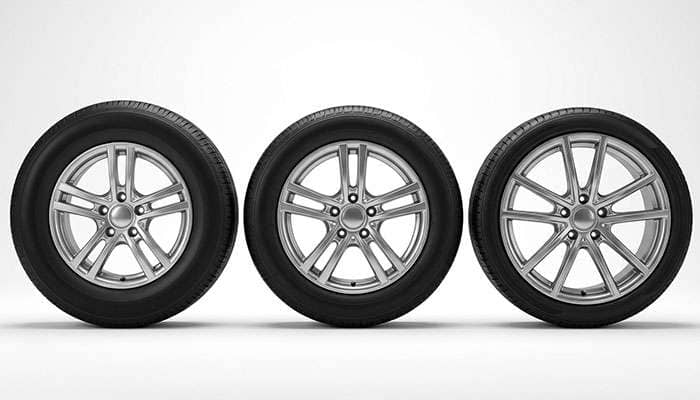
Larger wheels change your vehicle's handling dynamics fundamentally. Testing shows wider wheels provide better lateral stability by supporting tire sidewalls more effectively, creating a larger, more stable contact patch with the road. This improved contact delivers sharper cornering response and better control during aggressive driving.
Physics works against larger rims when it comes to acceleration. The VW Golf test revealed 0-60 mph times increased from 7.6 seconds with 15-inch wheels to 7.9 seconds with 19-inch wheels. This performance gap widened at higher speeds, with larger wheels requiring over a second longer to reach 100 mph. Heavier wheels increase rotational mass that your engine must overcome.
Braking efficiency follows a similar pattern. Research shows a 10% increase in wheel diameter reduces braking performance by approximately 10%. Adding 10 pounds per wheel decreases braking effectiveness by about 1%. The extra weight requires more force to stop, affecting your vehicle's overall braking capability.
Moderate upsizing delivers the best balance. Tests found 17-inch wheels outperformed both 16-inch and 18-inch options in overall performance. Need to find your next set of discount rims? The perfect wheel balances multiple factors rather than simply maximizing size. Consider your driving style and priorities when selecting the right diameter for your vehicle.
Your choice of rim size creates long-term financial consequences that go well beyond the initial purchase price.
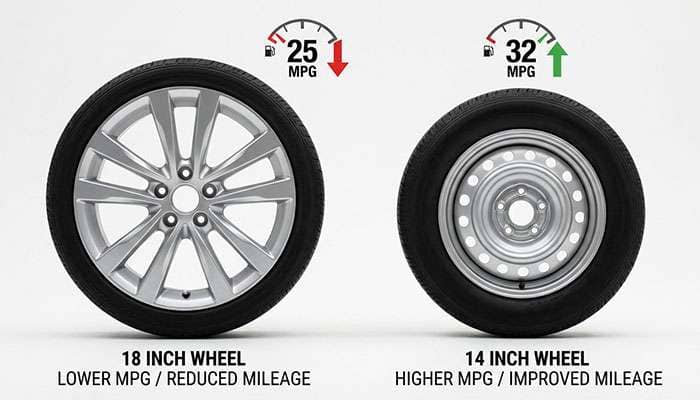
Larger wheels increase rolling resistance—the force opposing motion when wheels roll on a surface. This resistance comes from tire deformation and requires more engine power, increasing fuel consumption. The effect adds significant costs over your vehicle's lifetime, especially with today's fuel prices.
Heavier wheels demand more energy to accelerate and maintain speed. Switching from 15-inch to 19-inch wheels on a Volkswagen Golf resulted in a 10% drop in fuel efficiency. That's money directly out of your pocket every time you fill up.
Low-profile tires for larger wheels cost more to replace and stay more vulnerable to pothole damage. These tires wear faster than standard profiles, particularly on heavier vehicles like electric cars with battery weight. When you're looking for the best deals on wheels, factor in these replacement costs.
Speedometer accuracy becomes another consideration. Larger tires rotate more slowly, causing speedometers to register lower speeds than your actual travel pace. A tire just 3% larger results in traveling 63.3 mph when your speedometer shows only 60 mph.
Premium all-season tires now last between 55,000-85,000 miles regardless of size. Proper maintenance extends lifespan considerably. Monthly pressure checks alone can add approximately 4,700 miles to your tire's usable life. We believe in providing top-notch tires at prices that won't break the bank, and proper care helps you get maximum value from your investment.
Wheel size selection comes down to balancing competing priorities. Larger rims enhance cornering stability and visual appeal, but these benefits come with notable drawbacks including reduced fuel efficiency, higher replacement costs, and a harsher ride. Smaller wheels deliver superior comfort, better fuel economy, and lower long-term maintenance expenses.
Testing consistently shows that moderate upsizing provides the best compromise. Many drivers find that 17-inch wheels strike an ideal balance between performance benefits and practical considerations. These mid-range options offer improved handling without severely compromising ride comfort or drastically increasing fuel consumption.
Your driving habits should guide your decision. Daily commuters who prioritize comfort and efficiency will prefer smaller wheels with taller sidewalls. Enthusiasts seeking sharper handling might accept the tradeoff of reduced comfort and higher costs associated with larger rims.
Weather conditions factor into this equation. Worth noting, 17-inch wheels demonstrated more predictable handling in wet conditions compared to their larger counterparts. This safety advantage alone might justify choosing mid-sized options for drivers in rainy climates.
Ready to upgrade based on this knowledge? Find your next set of discount rims without compromising quality or breaking your budget. Regardless of which size you select, regular maintenance remains crucial — particularly tire pressure checks that can add thousands of miles to your tires' lifespan.
The perfect wheel size varies between vehicles and drivers. With this understanding of how rim dimensions affect everything from handling to fuel consumption, you can make an informed choice that aligns with your specific driving needs and preferences.
Understanding how rim size affects your vehicle's performance helps you make informed decisions that balance esthetics, comfort, and costs.
• Larger wheels reduce fuel economy by 4-10% due to increased weight and rolling resistance, significantly impacting long-term operating costs.
• Smaller wheels with taller sidewalls provide better ride comfort by absorbing road imperfections, while larger rims transmit more vibrations to the cabin.
• Mid-size 17-inch wheels often deliver the optimal balance between handling performance and ride comfort for most drivers.
• Low-profile tires on larger wheels cost more to replace and are more vulnerable to pothole damage than standard-profile options.
• Acceleration suffers with larger wheels—testing shows 0-60 times can increase by 0.3 seconds when upgrading from 15-inch to 19-inch wheels.
The key is matching wheel size to your driving priorities: choose smaller wheels for comfort and efficiency, or larger ones for enhanced handling and appearance, keeping in mind that moderate upsizing typically provides the best overall compromise.
Larger rims typically result in a stiffer ride due to shorter tire sidewalls, which provide less cushioning against road imperfections. Smaller wheels with taller sidewalls generally offer better ride comfort by absorbing more road vibrations and bumps.
Many drivers find that 17-inch wheels offer an optimal balance between handling performance and ride comfort. This mid-range size often provides improved cornering stability without severely compromising comfort or fuel efficiency.
Upgrading to larger wheels can decrease fuel efficiency by 4-10% due to increased weight and rolling resistance. For example, switching from 15-inch to 19-inch wheels on a Volkswagen Golf resulted in a 10% drop in fuel economy.
Contrary to popular belief, larger wheels can negatively impact acceleration and braking. Tests show that 0-60 mph times can increase by 0.3 seconds when upgrading from 15-inch to 19-inch wheels. Additionally, braking distances may increase with larger, heavier wheels.
Larger wheels often lead to higher long-term costs. Low-profile tires for bigger wheels typically cost more to replace, wear faster, and are more susceptible to pothole damage. Additionally, the reduced fuel efficiency associated with larger wheels can significantly increase operating costs over time.



