
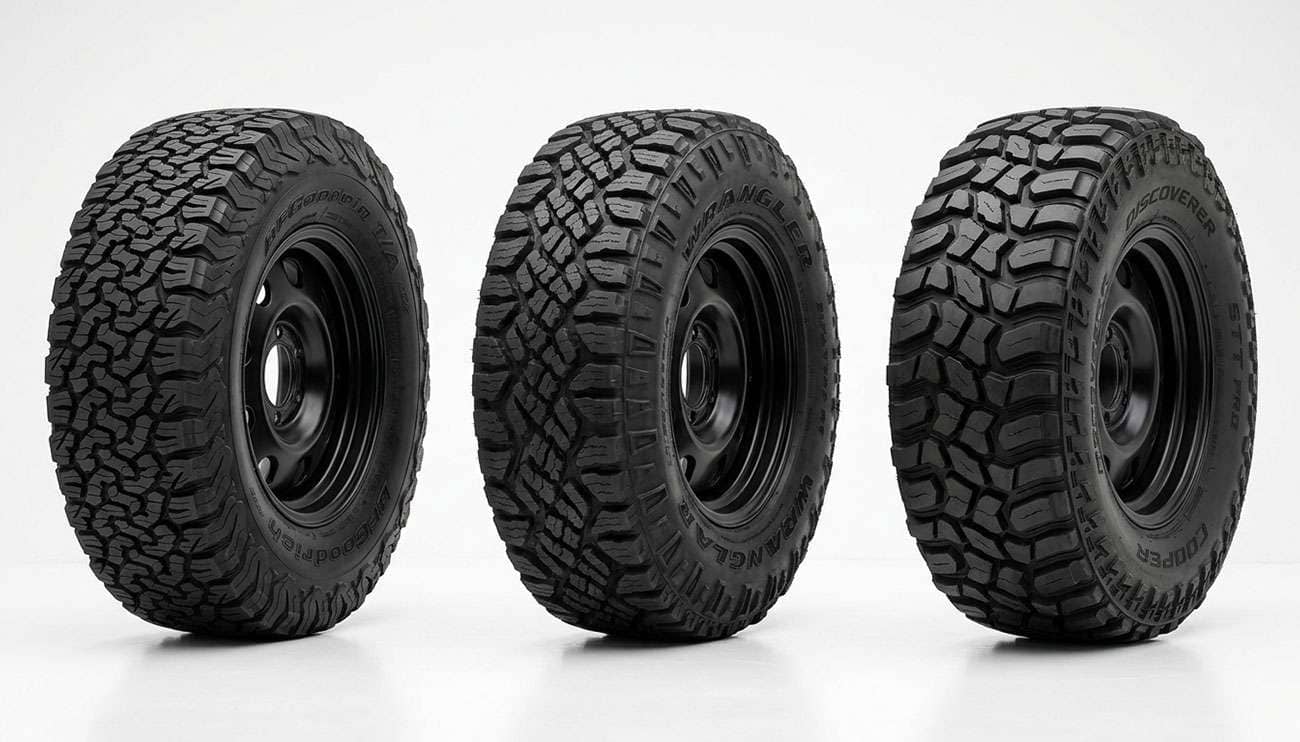
Off-road tires are tires built to grip loose, broken ground - dirt, mud, sand, gravel, and rock - instead of smooth pavement. What sets them apart is right there in the rubber: deep tread blocks with wide gaps between them, tougher sidewalls that are often three plies thick, a stiffer casing rated to carry heavier loads, and biting lugs that wrap around onto the shoulder of the tire. If a tire has those traits, it counts as off-road. If it just looks chunky but rides like a street tire, it does not. I have mounted a whole lot of both over the years, and the difference always shows up the first time the pavement ends.
Folks get hung up on the look of a tire, but the look is the last thing I check. Here is what actually earns a tire the off-road badge on my shop floor.
Deep tread and a high void ratio. Void ratio is just the fancy term for how much of the tread is open space versus rubber on the ground. Street tires want lots of rubber touching the road for grip and quiet. Off-road tires flip that on purpose. The big open channels between the blocks are what let mud, dirt, and small rock squeeze out instead of packing in and turning your tread into a slick. When the tread can clean itself, it keeps biting.
Tough, reinforced sidewalls. On a trail, the sidewall takes as much abuse as the face of the tire. Sharp rock, ruts, and airing down for traction all put a load on that side wall. A real off-road tire carries a heavier casing, frequently a three-ply sidewall, so it shrugs off a cut that would end a street tire's day.
A load range and construction that mean business. Most true off-road tires come as LT (light truck) or a stiffer flotation size in load range C, D, or E. That extra ply rating is what holds up under a loaded rig on rough ground. If you see a soft passenger-rated casing, you are usually looking at a street tire in off-road clothing.
Shoulder and sidewall lugs that bite. Look at the outer edge of a trail tire and you will see chunky lugs running down onto the shoulder and part way onto the sidewall. Those are there so the tire can claw its way through a rut or up a rock ledge when you are aired down and the tire is bulging out at the edges.
Winter and mud markings. Most off-road tires carry an M+S (mud and snow) stamp, and a good number now carry the three-peak mountain snowflake (3PMSF) rating for real winter grip. Those little marks on the sidewall tell you the tread was designed to work where the road quits.
This is the question I answer most, so let me draw the line clean. A highway terrain (H/T) tire is a street tire for a truck or SUV. It has a tight, closed tread for a quiet, smooth ride and long, even wear on pavement. It is a fine tire and it is the right call for most people who never leave the road. But it is not an off-road tire. Pack that tight tread with mud and it turns into a hockey puck.
An off-road tire gives up some of that pavement comfort - a little more noise, a little more wear, a touch less fuel economy - in exchange for open tread, a tougher casing, and grip on loose ground. So the line is not about the tread looking mean. It is about what the tire was engineered to do. If it was built to stay glued to smooth asphalt, it is a highway tire. If it was built to keep biting when the surface falls apart, it is off-road. Simple as that.
Under the off-road umbrella there are three main families, and picking the right one is really about how much time you spend on pavement versus in the dirt. I walk through the trade-offs in more depth in our guide to H/T vs A/T vs M/T tires, but here is the short version.
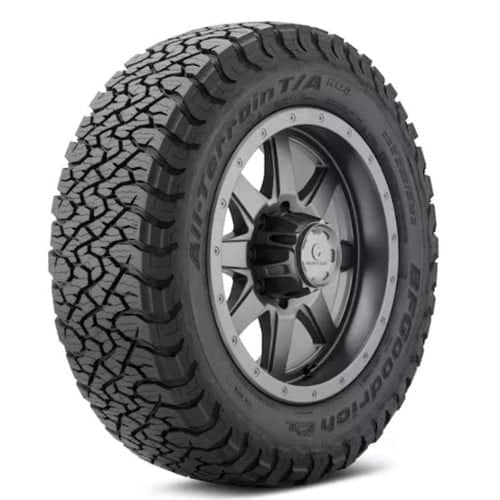
All-terrain tires are the daily-driver's off-road tire. They run a moderate tread with tighter gaps than a mud tire, so they stay reasonably quiet and smooth on the highway while still grabbing dirt, gravel, and light snow. If you drive to work all week and hit the trail on the weekend, this is almost always the family you want. Good picks off our shelves are the BFGoodrich All-Terrain T/A KO3, the Falken Wildpeak A/T4W, and the Toyo Open Country A/T III. Want the full rundown on this family? Read what all-terrain tires are for.
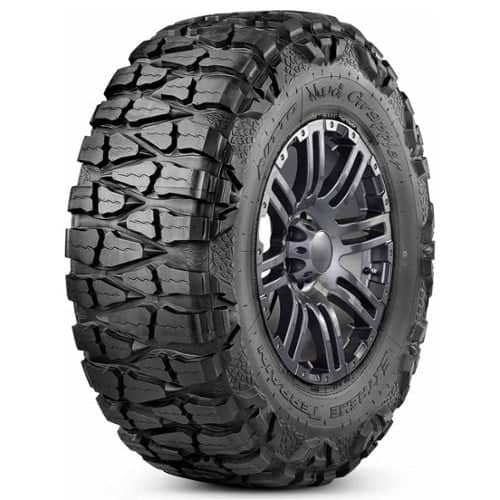
Mud-terrain tires are the specialists. They run massive lugs with wide, deep gaps so the tread can dig into deep mud and rock and then fling that muck right back out so it never clogs. That is exactly what you want in the nasty stuff, but it comes at a price on the street: more noise, a firmer ride, and softer manners on the highway. If your rig lives on the trail, that trade is worth it. Strong choices here are the BFGoodrich Mud-Terrain T/A KM3, the Nitto Mud Grappler, and the Mickey Thompson Baja Boss M/T. For more on where these shine, see what mud-terrain tires are good for.
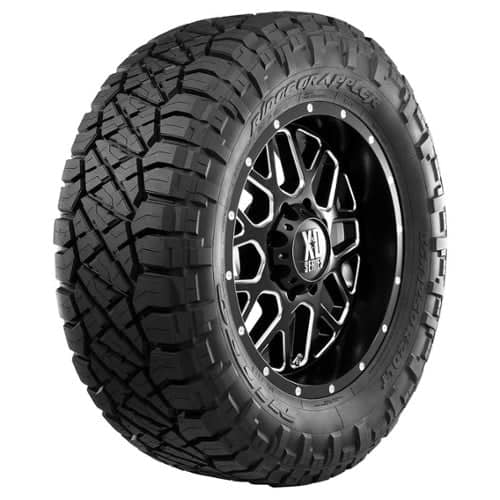
Rugged-terrain tires, sometimes called hybrids, split the difference. They give you the aggressive, biting look and much of the off-road grip of a mud tire, but they use a variable-pitch tread and tighter center blocks to knock down the road noise you would get from a full M/T. For a lot of folks who want the tough look and real trail ability without living with a growl on the highway, this is the sweet spot. The Nitto Ridge Grappler and the Falken Wildpeak R/T01 are two of the best in this class. If you are new to the category, our guide on what a hybrid tire is lays it out.
Here is how the three families stack up at a glance.
Feature |
All-Terrain (A/T) |
Mud-Terrain (M/T) |
Rugged-Terrain (R/T) |
|---|---|---|---|
Best for |
Daily driving with weekend trails |
Deep mud, rock, and ruts |
Trail-heavy use with highway miles |
Tread and gaps |
Moderate tread, tighter gaps |
Big lugs, wide open gaps |
Aggressive lugs, medium gaps |
On-road manners |
Smooth and quiet |
Firm ride, more noise |
In between the two |
Road noise |
Low |
High |
Moderate |
Winter rating |
Often 3PMSF rated |
M+S, some 3PMSF |
Often 3PMSF rated |
From our shelves |
KO3, Wildpeak A/T4W |
KM3, Nitto Mud Grappler |
Ridge Grappler, Wildpeak R/T01 |
Yes. An all-terrain tire is a true off-road tire - it is just the mildest one in the family. It carries the open tread, the tougher casing, and the shoulder bite that define the category, so it will take you down a fire road, through gravel, and across a muddy field with room to spare. What it is not is a mud-terrain tire. If you spend your weekends in axle-deep mud or crawling rock, an A/T will run out of bite before an M/T will. So the honest answer is that an all-terrain absolutely counts as off-road, but it sits at the mild end of the scale. If you want to see exactly where the two part ways, our comparison of all-terrain vs mud tires spells it out.
Here is the shop-floor truth I give everybody: match the tire to how you actually drive, not to how you wish you drove. The quick way to figure it out is your pavement split. If you are on the road ninety percent of the time and hit dirt now and then, a mild all-terrain is plenty and you will thank yourself for the quiet ride. Split it more like seventy-thirty and lean toward a rugged-terrain that can handle rougher trails without punishing you on the commute. Live on the trail and only touch pavement to get there? That is when a full mud-terrain earns its keep.
Do not buy more tire than your driving calls for. A big aggressive tire on a rig that never leaves the pavement just means more road noise, faster wear, and worse fuel economy for a look. If you are weighing your options, our guide on how to choose off-road tires walks you through it, and if you plan to commute on them, read up on daily driving on off-road tires before you commit.
So what is considered an off-road tire? Any tire built to grip loose, broken ground with deep self-cleaning tread, a tough reinforced casing, and biting shoulder lugs. Those traits split into three families - all-terrain, rugged-terrain, and mud-terrain - that trade pavement comfort for trail grip in bigger and bigger steps. Pick the family that fits your driving and you will get years of good service. When you are ready, browse our full lineup of all-terrain tires, rugged-terrain tires, and mud-terrain tires, or give the shop a call and we will help you dial in the right set for your rig.
Off-road tires are tires built to grip loose, broken ground like dirt, mud, sand, gravel, and rock. They are defined by deep tread with wide self-cleaning gaps, a tough reinforced sidewall, an LT or flotation casing in load range C, D, or E, and biting shoulder lugs. They break into three families: all-terrain, rugged-terrain, and mud-terrain.
Yes. An all-terrain tire is a true off-road tire, just the mildest one. It has the open tread, tougher casing, and shoulder bite that define the category, so it handles fire roads, gravel, and light mud well. It simply runs out of grip before a mud-terrain tire in deep mud or on rock.
Mud tires are one type of off-road tire, not a separate thing. Off-road is the whole umbrella; mud-terrain tires are the most aggressive family under it, with the biggest lugs and widest gaps for deep mud and rock. All-terrain and rugged-terrain tires are also off-road tires, just milder.
You can, but the family matters. All-terrain and rugged-terrain tires commute comfortably. A full mud-terrain will be louder, ride firmer, and wear faster on pavement, so it is best saved for a rig that spends real time on the trail rather than a pure daily driver.
Generally yes, because the softer compounds and open tread that grip off-road also wear quicker on pavement, especially with mud-terrains. All-terrains are the closest to regular tire life. Rotation, correct pressure, and alignment go a long way, which we cover in our guide to off-road tire tread life.



