
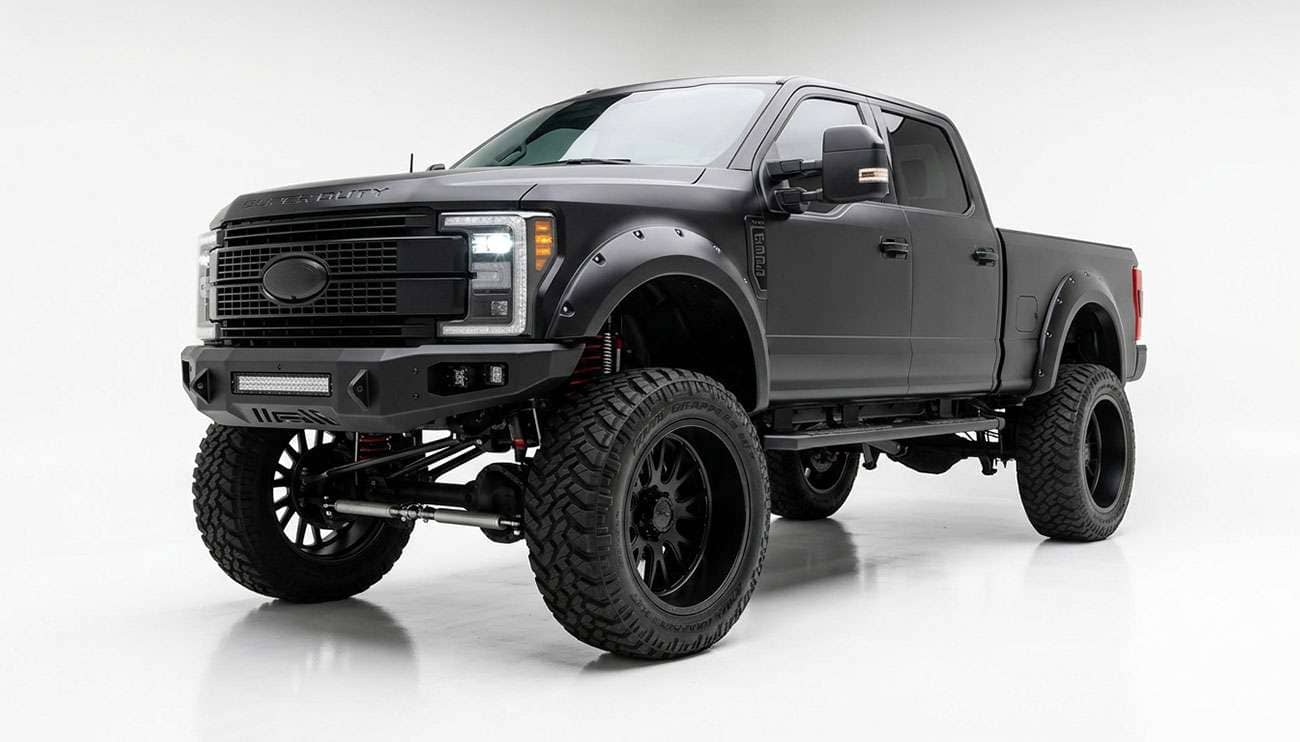
The sizes people actually run on a 24x14 are 33x12.50R24, 33x13.50R24, 35x13.50R24, 37x13.50R24 and 40x15.50R24, plus metric options like 375/40R24. Any of those will mount.
Here is the number the size lists leave out. A tire's approved rim width runs roughly 70 to 90 percent of its section width, which means a 12.50-inch tire is designed for an 8.75 to 11.25-inch rim. Put it on a 14 and you are three inches past the top of its range. Every one of those popular sizes is stretched on a 24x14, and only the 15.50-wide flotation tires land inside spec at all, right at the ceiling. That is not a reason to avoid the setup. It is the reason you pick the tire deliberately instead of off a list.
Rim width is not a suggestion. The Tire and Rim Association publishes an approved rim width range for every tire size, and tire manufacturers publish a recommended width plus a range on the data sheet for each model. The working rule behind those numbers is that rim width should sit at roughly 70 to 90 percent of the tire's section width in inches.
Run the math on a 14-inch rim and the picture gets clear fast.
Tire Size |
Section Width |
Typical Approved Rim Range |
On a 14 Inch Rim |
Verdict |
|---|---|---|---|---|
33x12.50R24 |
12.5 inches |
8.75 to 11.25 inches |
About 2.75 inches over max |
Heavy stretch, show setups only |
35x12.50R24 |
12.5 inches |
8.75 to 11.25 inches |
About 2.75 inches over max |
Heavy stretch, taller sidewall helps slightly |
33x13.50R24 and 35x13.50R24 |
13.5 inches |
9.5 to 12.15 inches |
About 1.85 inches over max |
Moderate stretch, the common compromise |
37x13.50R24 and 38x13.50R24 |
13.5 inches |
9.5 to 12.15 inches |
About 1.85 inches over max |
Moderate stretch, most popular real-world pick |
375/40R24 |
14.8 inches |
10.3 to 13.3 inches |
About 0.7 inches over max |
Light stretch, street-biased option |
33x14.50R24 to 40x14.50R24 |
14.5 inches |
10.15 to 13.05 inches |
About 0.95 inches over max |
Light stretch, limited selection |
35x15.50R24 to 42x15.50R24 |
15.5 inches |
10.85 to 13.95 inches |
At the top of the range |
The only sizes that land in spec |
Read down the last column. There is one row that is not a stretch, and it is the 15.50-wide flotation family. Everything else is somewhere between a little over and a lot over.
Those ranges are typical, not universal. Flotation tires with thick sidewalls sometimes carry wider approved ranges than the rule of thumb predicts, and the only authoritative number is the data sheet for the exact model you are buying. Look it up before you order. Every major tire brand publishes it, and any shop worth using will know it.
None of this makes a 24x14 a bad wheel. It makes it a wheel with a narrow window of tires that fit it properly, and a much bigger list of tires that will mount on it. Those are different things and the difference is the whole article.
I have mounted enough of these to know what the trade looks like in practice. Here is the mechanism, because it is worth understanding rather than just accepting.
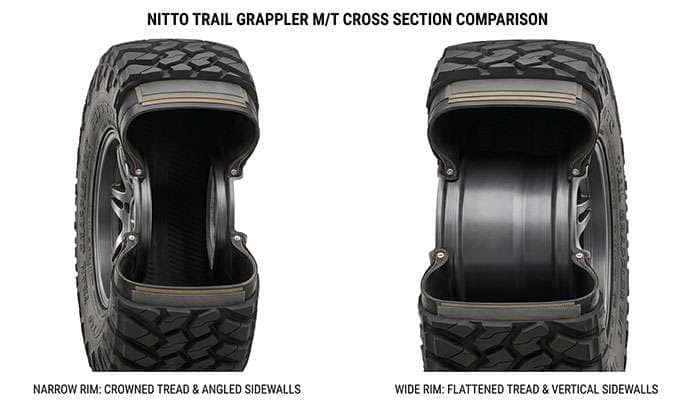
A tire's beads sit in the bead seats and the sidewalls rise from there to meet the tread. On the rim the tire was designed around, those sidewalls run at a gentle outward angle and the tread sits with a slight crown. Widen the rim and you pull the beads apart. The sidewalls straighten up toward vertical and the tread flattens out.
Three things follow from that geometry.
The tread loads at its edges. A flattened tread carries more weight on the outer ribs than the center. You will see the shoulders wear ahead of the middle, and you cannot align your way out of it because it is a shape problem, not a camber problem.
The sidewall sits in the line of fire. A stretched sidewall leans out at a steeper angle and puts more rubber where a pothole edge or a curb can reach it. On a truck with 24-inch wheels there was already not much sidewall to give. Stretching moves what is left into a worse position.
The bead is closer to letting go. This is the one that matters. The bead is held in its seat by air pressure pushing it outward against the rim flange. Stretch the tire and the sidewall pulls at the bead from a straighter angle, which reduces the margin holding it there. Drop pressure for a car show or a beach run, or take a hard turn on a loaded truck, and you have narrowed the gap between normal and debeaded.
Our breakdown of what putting the same size tire on different rim widths does goes through the geometry in more depth if you want the full picture.
Almost entirely lifted show trucks and heavy-duty pickups built for presence. A 14-inch-wide wheel in a 24-inch diameter is not a functional off-road choice and it is not a towing choice. It is a stance choice, and there is nothing wrong with that as long as you are honest about what you are buying.
The bolt patterns tell the story. The 24x14 market runs almost entirely on truck patterns: 8x165.1 and 8x170 for three-quarter and one-ton pickups, 6x135 and 6x139.7 for half-tons, 8x180 for modern GM heavy duty, plus a large share of blank-drilled wheels that get custom drilled to order. The brands building them are the show-truck names, and roughly half of what exists is forged or multi-piece construction because a wheel this wide with this much overhang needs the strength. If you are still deciding on diameter, our piece on 24 inch wheels benefits covers what the size buys you and what it costs.
What You Are Building |
Best Tire Choice |
Why |
|---|---|---|
Show truck, trailered or light street |
33x12.50R24 or 35x12.50R24 |
Maximum stretched look, lowest overall height, accepts the trade knowingly |
Daily driven lifted truck |
37x13.50R24 |
The common balance, moderate stretch, widest selection at this bead size |
Street-biased, comfort priority |
375/40R24 |
Closest to in-spec of the common options, quieter road manners |
You want it in spec |
35x15.50R24 or 40x15.50R24 |
The 15.50 family is the only width whose approved range reaches 14 inches |
Truck that actually tows or hauls |
Consider a 24x12 instead |
Two inches narrower puts the common 13.50 sizes back inside their range |
That last row is the advice I give across the counter more than any other. If the truck works for a living, a 24x12 gets you most of the look with none of the stretch, because a 12-inch rim sits inside the approved range for a 13.50-wide tire. If the truck is a statement, the 14 is the right call and you buy the tire accordingly.
Two different answers depending on what you mean by biggest.
Tallest. In common production the ceiling for a 24-inch bead is a 42x15.50R24, a 42-inch-tall tire. There are taller specialty and equipment sizes out past 50 inches, but they are not street tires and not something you order for a pickup. For a truck you can actually drive, 40x15.50R24 and 42x15.50R24 are the top of the range.
Widest. 15.50 inches is the widest flotation section width commonly available in a 24-inch bead, and it is the same family. On the metric side, 405/25R24 is about as wide as it gets at roughly 15.9 inches of section width, though the ultra-low aspect ratio makes it a very different tire in character.
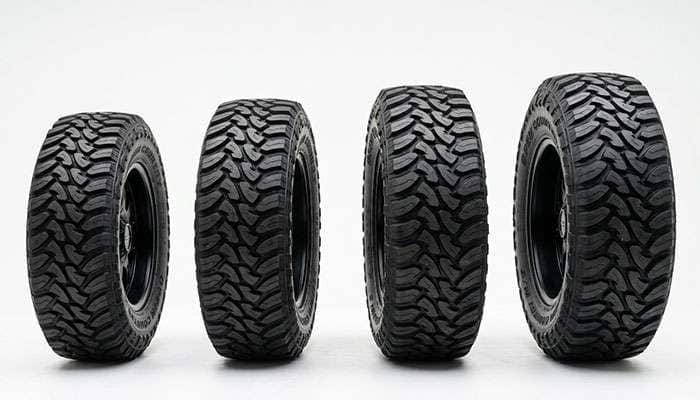
The practical answer for most people is different from either of those. The most-stocked flotation size in a 24-inch bead is 37x13.50R24, followed by 35x13.50R24 and 40x15.50R24. Selection matters when you need a replacement in a hurry, and a size with three options is a size you will regret when one gets punctured on a Friday.
If you are cross-shopping heights, our conversion guide on what 35x12.50R24 is equivalent to covers the metric translations for this bead size.
Here is a trap that has nothing to do with the tire, and I see people fall into it constantly.
Wheels carry a load rating, and 24x14 wheels are built across a wide spread of them. The range in current production runs from about 1,870 pounds per wheel at the low end up to 3,800 pounds at the top, with big clusters around 2,500 pounds and 3,640 pounds. Those are not close numbers.
Now put that against the truck. A three-quarter-ton pickup typically carries a front gross axle weight rating somewhere around 5,200 to 6,000 pounds, which is 2,600 to 3,000 pounds per corner before you add a plow, a winch or a heavier bumper. A wheel rated at 2,500 pounds is under that number on a truck it looks like it was built for.
Nothing on the wheel face tells you which one you are holding. The rating lives on the spec sheet and sometimes stamped on the back. Check it, add up the axle rating on your door placard, divide by two, and make sure the wheel clears it with margin. Our wheel load rating guide walks through where to find the number and how to read it.
Aftermarket wheels are validated to SAE J2530, which puts them through cornering fatigue, radial fatigue and impact testing at their rated load. That certification describes the wheel at its number, not above it. A 14-inch-wide wheel with a lot of overhang past the hub is already working harder than a narrow one, and running it over its rating removes the margin the test was built to prove.
Tire size is only half of whether the setup works. The other half is where the wheel puts that tire.
The dominant offset on a 24x14 is -76mm, with the rest of the market clustered between about -55mm and -127mm. Take the common one and run the numbers. A 14-inch-wide wheel at -76mm offset has roughly four and a half inches of backspacing, which means the mounting face sits well inboard and almost the entire wheel hangs outside it. Compared to a zero-offset wheel of the same width, you are pushing the tire about three inches further out per side, or six inches of added track across the axle.
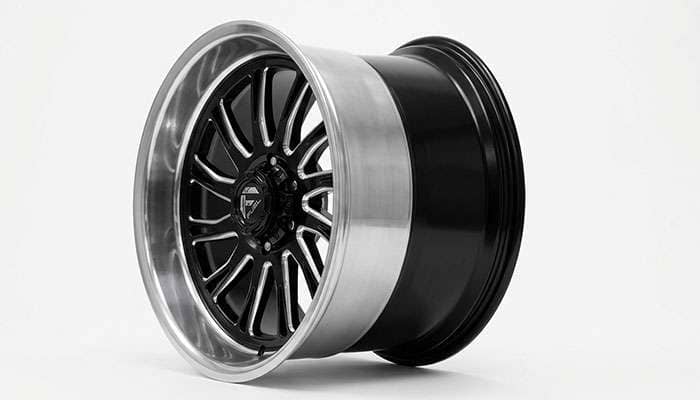
That is the poke people are buying, and it comes with a list.
Fender coverage is the first item, and it is a legal question in a lot of places. Many states have provisions requiring the tire tread to be covered by the fender or a flare. A 24x14 at -76 will put tread outside the factory sheet metal on most trucks, so flares are usually part of the build rather than an afterthought.
Then there is scrub radius. Moving the wheel centerline outboard increases the distance between the steering axis and the center of the contact patch, which multiplies every bump input into the steering. On a truck with a heavy tire this shows up as tugging at the wheel over broken pavement and as noticeably heavier parking effort. It also loads the wheel bearings differently, because the load is now applied further from the bearing centerline than the truck was engineered around. The added rotating mass reaches further back than the bearings, too, and our look at whether big rims damage a transmission covers what a heavy wheel and tire package asks of the driveline.
The full geometry is covered in wheel offset explained, and if you are planning the rest of the build, best wheels for lifted trucks covers what pairs with what.
This question gets asked two ways and they have nothing to do with each other, so it is worth separating them.
A 14-inch-wide rim, which is what a 24x14 is, wants a tire with a section width of at least about 15.5 inches to stay inside the approved range. Below that you are stretching, and the table above tells you by how much.
A 14-inch-diameter rim is an entirely different part, the small wheel that went on classic cars and older compacts. Those take sizes like 185/65R14, 195/75R14 and 205/75R14, and the widest passenger tire made for that bead is a 265/50R14. The two questions share a number and share nothing else.
Google runs them together because the string "14 inch" appears in both, but a 33x12.50R24 and a 195/75R14 are not in the same conversation. Check whether the 14 in your wheel spec is the second number, which is width, or the first, which is diameter. On a 24x14 it is the width.
A stretched tire does not blow apart on the way home from the shop. It gives you a sequence, and knowing the sequence is what lets you catch it.
The first week. Steering feels heavier at parking speeds and lighter than you expect at highway speed. The flattened tread has less self-centering than the tire was designed to produce. Most people put this down to the size of the tire and stop thinking about it.
The first thousand miles. Shoulder wear starts showing on both outer ribs. Not one side, both, which is the tell that separates a stretch problem from an alignment problem. An alignment shop will chase camber and find nothing wrong.
The first real pothole. A stretched sidewall sits at an angle that presents more rubber to the impact edge, and there is less sidewall height to absorb it. This is where you get the pinch damage and the bubbles. On a 24-inch wheel the rim flange is also right there, so a hit that would have been a bruised tire on a 33-inch sidewall becomes a bent wheel and a bruised tire.
Any time you drop pressure. Airing down for a beach run or a show floor is the exact condition a stretched bead does not have margin for. The bead is held by pressure pushing it outward against the flange. Less pressure, less margin, and the sidewall is already pulling at a straighter angle than it should be.
At the warranty claim. Tire manufacturers exclude damage from mounting outside the approved rim width range. If a stretched tire fails, that exclusion is the first thing the adjuster looks at, and the rim width is stamped right on the wheel.
None of that means do not build the truck. It means build it with your eyes open, keep the pressure where it belongs, and inspect the shoulders and sidewalls more often than you would on a stock setup.
When you have your numbers, browse the 24x14 wheels we stock and filter by your bolt pattern and load rating first.
33x12.50R24, 35x13.50R24, 37x13.50R24 and 375/40R24 all mount on a 24x14, and people run every one of them. What the size lists do not put in front of you is that all of them are past the top of their approved rim width, and the 12.50s are past it by nearly three inches. Only the 15.50-wide flotation sizes land in spec, right at the ceiling.
That is a real trade, not a dealbreaker. A show truck can absolutely live with a stretched 33, and it will look exactly the way it is supposed to. A truck that tows should either move to a 15.50 or drop to a 24x12, where the common 13.50 sizes fit properly.
Pick the tire on purpose, check the wheel's load rating against your axle, and plan the flares before the wheels arrive. Do those three things and the setup works.
Lifted show trucks and heavy-duty pickups built for presence. The combination of 24-inch diameter, 14-inch width and deep negative offset is a stance choice rather than a functional off-road or towing choice. The market runs almost entirely on truck bolt patterns like 8x165.1, 8x170, 8x180, 6x135 and 6x139.7, with a large share of blank-drilled wheels drilled to order, and roughly half the offerings are forged or multi-piece because a wheel this wide needs the strength.
In flotation sizing, 15.50 inches is the widest section width commonly available in a 24-inch bead, found in sizes like 35x15.50R24, 38x15.50R24, 40x15.50R24 and 42x15.50R24. On the metric side, 405/25R24 runs about 15.9 inches of section width but with a very low aspect ratio that makes it a different tire in character. The 15.50 family is also the only width whose approved rim range actually reaches 14 inches.
For a truck you can drive on the street, 42x15.50R24 is the practical ceiling, with 40x15.50R24 being far more commonly stocked. Taller sizes exist in the 24-inch bead diameter, out past 50 inches overall, but those are specialty and equipment tires rather than pickup tires. Availability drops sharply above 40 inches, which matters when you need a single replacement quickly.
It depends whether you mean 14 inches wide or 14 inches in diameter. A 14-inch-wide rim like a 24x14 wants a tire with a section width around 15.5 inches to stay inside its approved range, though most people run 13.50 sizes at a moderate stretch. A 14-inch-diameter rim is the small classic-car and compact size, taking tires like 185/65R14, 195/75R14 and 205/75R14, with 265/50R14 as the widest passenger option. Check whether the 14 in your spec is the first number or the second.
We stock 24x14 wheels across the major show-truck brands in the common truck bolt patterns, plus blank-drilled options that can be drilled to your pattern. When you shop, filter by bolt pattern and load rating before you filter by finish, because those two decide whether the wheel works on your truck and the finish only decides how it looks. Confirm the load rating against your front gross axle weight rating divided by two.
It is a trade rather than a yes or no. Stretching flattens the tread so it loads at the edges, straightens the sidewall so it sits more exposed to impacts, and reduces the pressure margin holding the bead in its seat. A moderate stretch on a 13.50 tire, run at correct pressure on a truck that is not loaded heavily, is what most of these builds do. A heavy stretch on a 12.50, run at low pressure, is where problems start. Keep pressure at the placard value, inspect the shoulders and sidewalls regularly, and know that mounting outside the approved rim range voids most tire warranties.



