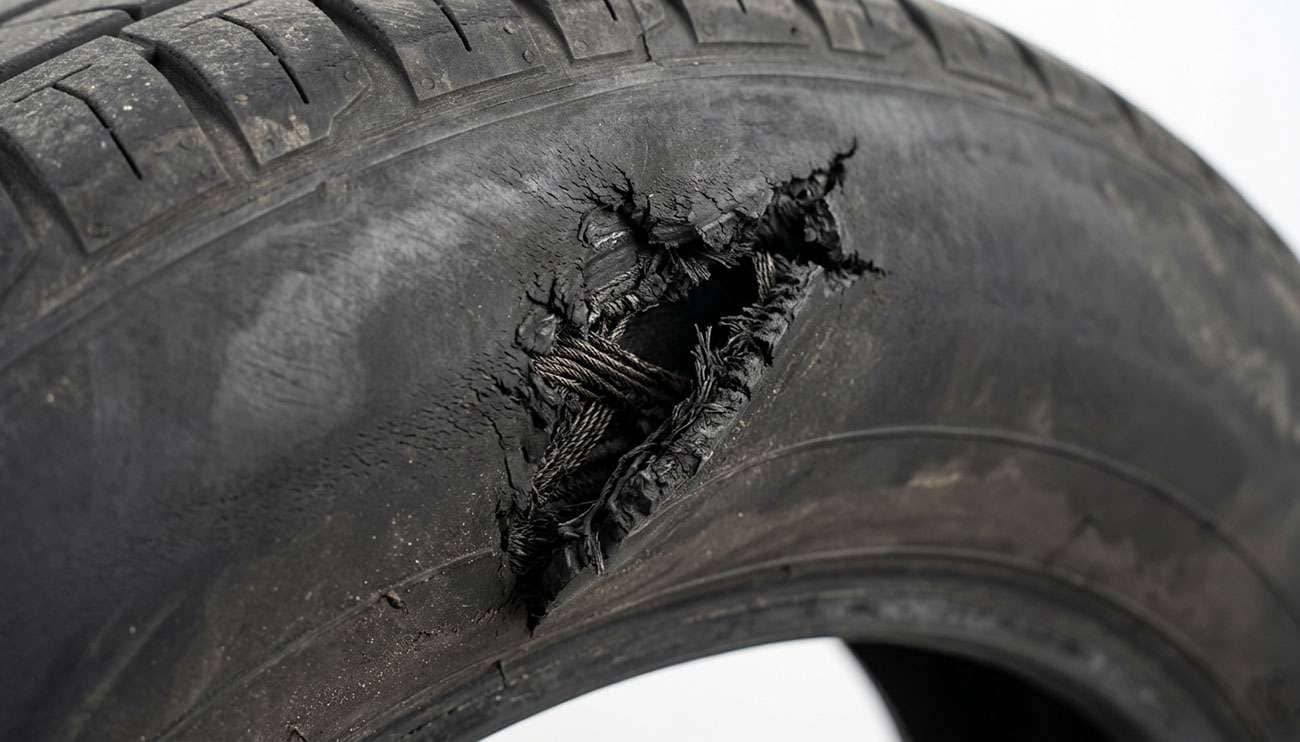
The sidewall can't be repaired. Neither can the shoulder, and that's the one that catches people out. The repairable area on a tire is only the crown, meaning the center of the tread, roughly an inch to an inch and a half in from each shoulder, or everything inside the first major groove on both sides. A nail sitting in the outer tread rib looks like a tread puncture to any driver on earth, and it is still in the no-repair zone. So the honest answer isn't one part. It's everything except a band up the middle.
I've been having this conversation across a counter for forty years. Fella walks in holding a tire with a nail in it, already reaching for his wallet expecting to hand me twenty-five bucks, and I've got to tell him he's buying a tire instead. He points at the nail and says, "Hank, it's in the tread." And he's right, it is in the tread. That's the problem with how everybody explains this. Search it and you'll get one word, sidewall, and then nothing about where the tread stops being repairable, which is the part that actually decides whether you're paying for a patch or a replacement. Here's the table I wish I could hand people before they drive over.
Where the puncture is |
Repairable? |
Why |
What happens next |
|---|---|---|---|
Center tread, inside the first major groove on both sides |
Yes, if it passes the other tests |
Belt-backed and barely flexes, so a patch bond survives |
Proper patch-plug from inside, tire off the wheel |
Outer tread rib, outboard of the first major groove |
No |
Looks like tread, sits in the flex zone where bonds peel |
Replacement, and this is the one nobody expects |
Shoulder, where tread curves into sidewall |
No |
Highest flex, belt edges terminate here |
Replacement, no exceptions from any reputable shop |
Sidewall, anywhere between shoulder and rim |
No |
No belt reinforcement, flexes through a large arc every rotation |
Replacement, do not let anyone talk you into a plug |
Bead area, down at the rim seat |
No |
Seals the tire to the wheel, damage there loses the seal |
Replacement, often with a wheel inspection too |
Center tread, but you drove on it flat |
Usually no |
Internal damage from running flat, nothing to do with the hole |
Inspection inside, and expect bad news |
This is the whole ballgame, so let's be precise about it rather than waving a hand at "the tread."
The repairable area is called the crown. The Tire Industry Association puts puncture repairs in the center of the tread area only, and says flatly that punctures or damage in the shoulder or the sidewall are not repairable. Cooper and the U.S. Tire Manufacturers Association say the same thing in the same words. The useful part, the part that turns a rule into something you can check standing in your driveway, is the measurement: the crown runs roughly one to one and a half inches in from each shoulder. On most passenger tires you can skip the tape measure entirely and use the first major circumferential groove on each side as your boundary. Inside those two grooves, you might have a repairable tire. Outside them, you don't.
Go look at your own tire for a second and you'll see why this trips people up. A modern all-season tread might be nine inches wide. Take an inch and a quarter off each side and you're down to six and a half inches of repairable width. That's still most of the tread, but it means roughly a quarter of what you'd call "the tread" is off the table. And the outer ribs are exactly where road debris tends to find you, because that's the part of the tire that's tracking through the edge of the lane where the junk collects.
So when a customer tells me the nail is in the tread, he isn't wrong and he isn't being difficult. He's using the word the way any reasonable person would. The tire industry just uses it more narrowly than the rest of us do, and nobody ever explains that until you're standing at a counter getting told no.
Everybody knows the sidewall is a no. Very few people can tell you why, and the why is what makes the rest of the rules make sense instead of feeling arbitrary.
Look at how a tire is built. Under the tread you've got steel belts, a couple of layers of them, running around the circumference. Those belts are the reason the tread stays flat and round and doesn't balloon out under pressure. Now run your eye down the sidewall. Those belts aren't there. The sidewall is body plies and rubber and nothing else, and it's deliberately built that way, because the sidewall has a job the tread doesn't: it has to flex.
Every single rotation of your wheel, the section of sidewall entering the contact patch gets squashed and bowed outward, then springs back as it comes around. At highway speed that's happening seven to fourteen times a second, on every tire, forever. Now imagine gluing a patch onto a surface that's bending through a meaningful arc that many times per second. The bond line at the edges of that patch is being peeled, cycle after cycle, and rubber cement was never going to win that fight. It isn't that a sidewall repair fails if you're unlucky. It's that it's guaranteed to fail, and the only question is whether it lets go in your driveway or at seventy miles an hour with your family in the car.
There's a second reason on top of the first. When something punctures a sidewall, it usually cuts body cords on the way through, and cords don't heal. The tire's structure is now weaker at that spot permanently, and no amount of rubber on the outside puts the cords back. This is the same reason a sidewall bulge means the tire is finished rather than fixable, which our piece on what a sidewall bubble actually is gets into. And if you're staring at damage on a sidewall right now trying to decide whether to move the car at all, read our guide on whether sidewall damage is safe to drive on before you turn the key.
Now you know why the sidewall is out, the shoulder answers itself, and this is the section I'd staple to the forehead of every driver in America if they'd let me.
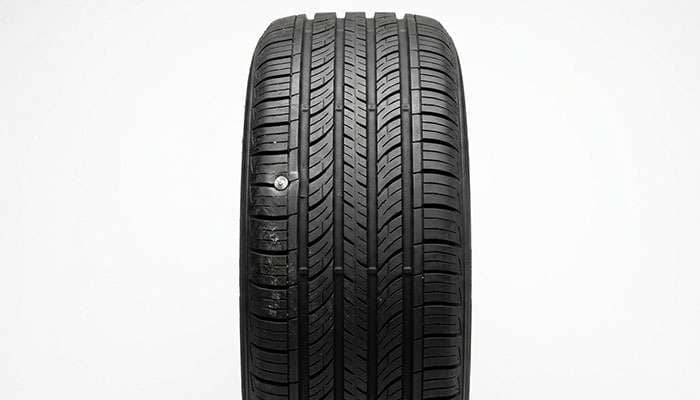
The shoulder is the transition. It's where the flat, belt-backed tread starts curving over to become the flexing, unbelted sidewall. That means it gets the worst of both worlds. It flexes considerably more than the crown does, so a patch bond is under the same peeling attack that kills a sidewall repair. And it's where the steel belt edges terminate, which is a stress concentration point in its own right. Belt edges are already the spot where tires tend to come apart under heat and fatigue. Punching a hole through that zone and then gluing something over it is asking for a tread separation down the road.
Tire Rack shows a tire punctured clean through the shoulder where the nail head had partly worn away, meaning the driver had been rolling on it for a good while, and the verdict is replacement because the puncture sits outside the permitted repair area. That's the ordinary outcome, not a harsh one. Every reputable shop in the country is going to give you the same answer, and the ones that don't are the ones you should walk out of.
I'll say the uncomfortable part plainly, because it's the reason this article exists. Shops get accused of upselling on this constantly. A man watches me point at a nail that is visibly sitting in rubber with tread blocks around it and hears me say I can't fix it, and he figures I'm working him for a tire sale. I understand why it looks that way. But the boundary isn't mine, it's published by TIA and USTMA and every tire manufacturer, and any shop that patches a shoulder puncture is taking on liability no sane business wants. If you ever get told no on a shoulder puncture, that shop is doing right by you.
Location gets you in the door. Size is the next gate, and it's a hard number rather than a judgment call.
A quarter inch. Six millimeters. TIA's guidance is never to repair a tread puncture larger than that, and Cooper puts the same limit in the same terms, applying to passenger and light truck tires through load range E. Above a quarter inch you're no longer plugging a hole, you're trying to bridge a gap, and the patch has to carry structural load it was never designed to carry.
A roofing nail or a drywall screw is comfortably under the limit, which is why most nail punctures in the crown come out fine. Where people get surprised is with anything that isn't round. A long straight cut, an irregular gash, a chunk torn out by something on a construction site, those are not punctures in the sense the rule means, and they don't get repaired even at modest size, because the damage isn't a neat channel through the rubber.
The other size trap is what the object did on the way in. A nail that went in straight makes a channel a patch-plug can fill. A screw that went in at a shallow angle can travel sideways under the tread for an inch before it stops, and now the injury path is nothing like the small hole you see on the outside. You can't tell any of that from looking at the tread face, which is one of several reasons the tire has to come off the wheel before anyone can honestly tell you yes or no.
Here's the part that blindsides people worst of all. Your puncture can be dead center in the crown, smaller than a quarter inch, perfectly textbook, and the tire still gets scrapped for a reason that has nothing to do with the nail.
The disqualifier |
What's actually wrong |
Could you have avoided it? |
|---|---|---|
You drove on it flat or nearly flat |
Sidewall got crushed between rim and road, inner liner is chewed up |
Yes, and this is the most common self-inflicted one |
Tread is at 2/32 or down to the wear bars |
Tire is legally worn out, repairing it buys nothing |
No, it was due anyway |
Second puncture too close to the first |
Repairs would overlap, or injuries sit directly opposite |
No, bad luck |
Somebody already put a plug in it from outside |
Improper prior repair, and the liner may already be damaged |
Yes, skip the roadside plug kit |
Tire got a can of sealant shot into it |
Sealant coats the liner, a patch can't bond through it |
Sometimes, depends how stuck you were |
It's a run-flat, or the tire is simply old |
Manufacturer policy often prohibits repair, or rubber has aged out |
No, check your manufacturer's stance |
The first row is the one to burn into your memory, because it's the one you control. A nail in your crown is a repairable tire right up until you decide to drive four miles home on a tire that's lost most of its air. Once you've done that, the sidewall has been folded between the rim and the pavement, the inner liner is scuffed and shredded, and there's heat damage through the whole casing. The nail was never the problem. The drive home was. Our guide on how long you can drive on a slow leak covers where that line sits, and if you're deciding right now whether to move the car at all, our piece on whether you can still drive with a nail in the tire is the one to read first.
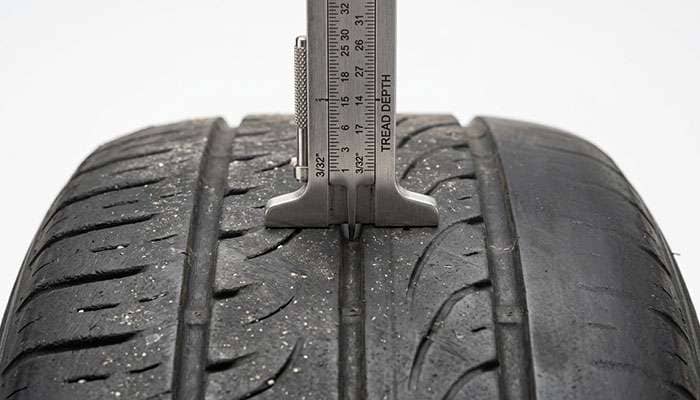
The tread depth row catches people too, and it's worth understanding rather than resenting. TIA says tires worn to the wear indicators or down to 2/32 in any area of the tread shouldn't be repaired. That isn't a shop being fussy. A tire at 2/32 has maybe a few hundred miles of legal life left in it, and putting a repair in it means asking a worn casing to hold a patch it barely has rubber to support. Our guide to what tread depth means it's time to replace walks through how to measure yours.
Usually yes, and this surprises folks who assume one repair means the tire is used up.
A tire can carry more than one proper repair, provided each one independently passes every test and provided the repairs don't interfere with each other. The interference rules are the ones to know. If two repairs would overlap, the tire is scrapped. If two injuries sit directly across from each other, meaning on opposite sides of the tire, it's scrapped as well, because you've now got weakened spots working against each other as the tire rotates. Some shops apply a minimum separation of around sixteen inches between repairs as their working rule, and a common shop policy caps a passenger tire at two or three repairs total regardless of spacing.
What doesn't fly is repairing a puncture that a previous repair already covers, or patching over a spot where somebody jammed a plug in from the outside years ago. Both of those come back as no.
This one causes arguments, and I've had plenty. Somebody's uncle has been running plugs for thirty years and never had a problem, so what's my objection.
My objection is that a plug does one job, which is to stop air escaping, and a repair has to do two. The second job is sealing the inner liner so that air and moisture can't get into the body of the tire around the injury. That inner liner is the airtight membrane on the inside of a modern tubeless tire. When a nail goes through it, it makes a hole in that membrane. A plug rammed in from the outside fills the channel through the tread but does nothing reliable about the liner, so air keeps working its way sideways into the casing. Given time, that air and the moisture riding along with it get to the steel belts, and steel plus moisture equals rust, and rusted belts let go of the rubber around them. That's a tread separation, arriving months or years after the plug, by which point nobody connects the two events.
There's a second problem with an outside-in plug that matters just as much. Nobody looked inside the tire. The tire never came off the wheel, so nobody checked whether the nail chewed up the liner on its way through, whether there's a second injury, whether the casing was already damaged from being run low. You've sealed a hole and skipped the inspection, and the inspection was arguably the more valuable half. Our piece on what a broken tire belt means for safety covers where that road ends.
Roadside plug kits have their place, and that place is getting you off the shoulder of a highway and to a shop. Treat one as a tow strap, not a repair.
If you know what the right job looks like, you can tell in about ten seconds whether a shop is doing it.
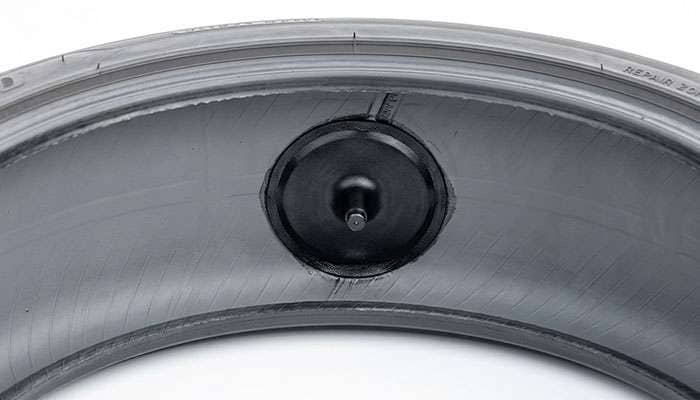
The tire comes off the wheel. That's not optional and it's the fastest tell there is, because a repair done on the wheel is not a repair. With the tire off, the technician inspects the inside of the casing, which is where all the information lives that you can't see from the outside. Then the injury channel gets cleaned and prepared, and a combination unit goes in, meaning a single piece that fills the channel like a plug and seals the liner like a patch, installed from the inside and pulled through. The liner around it gets buffed and cemented so the patch portion bonds properly, and the exposed stem gets trimmed. Then the tire is remounted, balanced, and inflated to spec.
Plug and patch together, from the inside, tire off the wheel, casing inspected. That's the standard, and it's what USTMA and TIA both describe. If you want the full walkthrough, our guide on how to repair a punctured tire takes it step by step.
One more thing worth saying about sealants in a can. They're marketed as a fix and they aren't one. They'll sometimes get you moving, but the goo coats the inside of the tire, and a patch can't bond to a liner covered in it. Plenty of shops will decline to repair a tire that's had sealant in it, and some will charge you extra just for the cleanup. If you use one to escape a bad spot, tell the shop straight away so they're not surprised when they break the bead.
The bill for getting this wrong climbs in stages, and every stage is worse than the one before it.
What you did |
What it turns into |
What it costs |
|---|---|---|
Found the nail, aired it up, went straight to a shop |
Best case, a proper repair if it's in the crown |
One repair, cheapest outcome available |
Drove a few miles on it soft |
Heat and flex damage to a casing that was fine an hour ago |
One new tire instead of one repair |
Drove it home flat rather than fitting the spare |
Crushed sidewall, shredded liner, possible wheel damage |
Tire, sometimes the wheel with it |
Plugged it from outside and carried on for a year |
Moisture into the belts, rust, bond breaking down |
Tread separation at speed, and whatever that takes with it |
Talked someone into patching a shoulder or sidewall |
A repair that is engineered to fail, on a timeline nobody can predict |
A blowout you paid money to arrange |
The jump from row one to row two is the one worth staring at. That's an hour of impatience turning a twenty-five dollar job into a two hundred dollar one, and it happens to somebody every day. The tire didn't fail because of the nail. It failed because of what got done after the nail.
You've got a nail in a tire and you want to know where you stand. Work these in order.
1. Don't pull it out. That nail is partly plugging its own hole. Yank it and you go from a slow leak to a fast one, possibly in a parking lot with no spare fitted. Leave it where it is.
2. Find the first major groove on each side of the tread. Is the nail between those two grooves, or outboard of one of them? Between them, you have a chance. Outboard, or anywhere on the curve or the sidewall, you're buying a tire and you may as well know now.
3. Look at how big it is and what shape. Anything wider than a quarter inch, or a cut or gash rather than a round hole, is out regardless of where it sits.
4. Check your pressure and be honest with yourself about how far you've driven on it. If it's been sitting low and you've been commuting on it all week, say so at the counter. The casing may be the deciding factor, not the nail.
5. Air it up and go straight there, or fit the spare. If it holds air, top it up and drive directly to a shop. If it won't hold air, put the spare on. Do not drive on a flat to save twenty minutes, because that's the single decision most likely to turn a repairable tire into scrap.
6. Ask the shop to show you the inside. A good technician will happily show you the liner and point out what they found. If a shop offers to plug it without pulling the tire off the wheel, that's your cue to go somewhere else.
7. If it's a no, replace in pairs at minimum. A single new tire alongside three worn ones puts different diameters on the same axle, which your differential will notice on an all-wheel-drive vehicle. When it comes to that, our team can help you match what's already on the car so you're not creating a second problem while solving the first.
So what part of a tire can't be repaired? The sidewall, the shoulder, the bead, and the outer ribs of the tread that most people would swear are tread. What's left is the crown, a band up the middle bounded by the first major groove on each side, and even inside that band the repair only goes ahead if the hole is under a quarter inch, the tread isn't worn out, nobody has already plugged it, and you didn't drive it home flat. That's a lot narrower than the one-word answer everybody gives you, and the gap between the two is exactly where the arguments at my counter happen.
The thing I'd want you to walk away with isn't the boundaries though. It's that you have more say in this than you think. Location and size are luck. But whether you drive on it flat, whether you let somebody jam a plug in from the outside, whether you empty a can of sealant into it, those are all yours. I've scrapped a lot of tires over forty years that arrived here perfectly repairable and left as cores because of what happened in the hour after the nail went in. Air it up, or put the spare on, and come see somebody. That's most of it.
The sidewall, the shoulder, the bead area, and the outer ribs of the tread outboard of the first major groove. The only repairable zone is the crown, meaning the center of the tread, roughly one to one and a half inches in from each shoulder. A puncture that looks like it is in the tread can still fall outside that zone, which is why many drivers are surprised to be told their tire cannot be fixed.
The sidewall has no steel belt reinforcement and is built to flex, bending through a large arc seven to fourteen times per second at highway speed. A patch bonded to a surface flexing that hard gets peeled apart at the edges, so the repair is not unlikely to fail, it is certain to. Punctures through a sidewall also cut body cords, which permanently weakens the structure in a way no external repair can restore.
A quarter inch, or 6mm, is the industry limit for passenger and light truck tires through load range E. Above that the patch has to bridge a gap rather than fill a channel and cannot carry the structural load. Long cuts and irregular gashes are not repairable at any size, because the damage is not a clean channel through the rubber.
Usually not. Driving on a flat or badly underinflated tire folds the sidewall between the rim and the road, shreds the inner liner, and heats the casing, and that damage disqualifies the tire regardless of where the original puncture sits. This is the most common way drivers turn a repairable tire into a replacement, which is why fitting the spare is better than driving a short distance on a flat.
No. A plug stops air escaping through the channel but does not seal the inner liner, so air and moisture continue working into the body of the tire around the injury. Over time that reaches the steel belts, and moisture on steel causes rust and loss of bond, which can lead to a tread separation. A proper repair combines a plug and a patch installed from inside with the tire off the wheel.
Yes, provided each repair independently meets the location, size, and condition requirements and the repairs do not interfere with each other. If two repairs would overlap, or the injuries sit directly across from each other on opposite sides of the tire, it must be scrapped. Many shops apply a minimum separation of around sixteen inches and cap a passenger tire at two or three repairs in total.
No. The nail partially fills the hole it made, and pulling it out usually turns a slow leak into rapid deflation, potentially leaving you stranded. Leave it in place, check the pressure, inflate the tire if it holds air, and drive straight to a shop. If it will not hold air, fit the spare rather than driving on it.
Often, yes. Sealant coats the inner liner, and a patch cannot bond properly to a surface covered in it. Some shops will decline to repair a tire that has had sealant used in it, and others charge extra for the cleanup required. If you have used a sealant to get out of a difficult spot, tell the technician before they break the bead so they can plan for it.