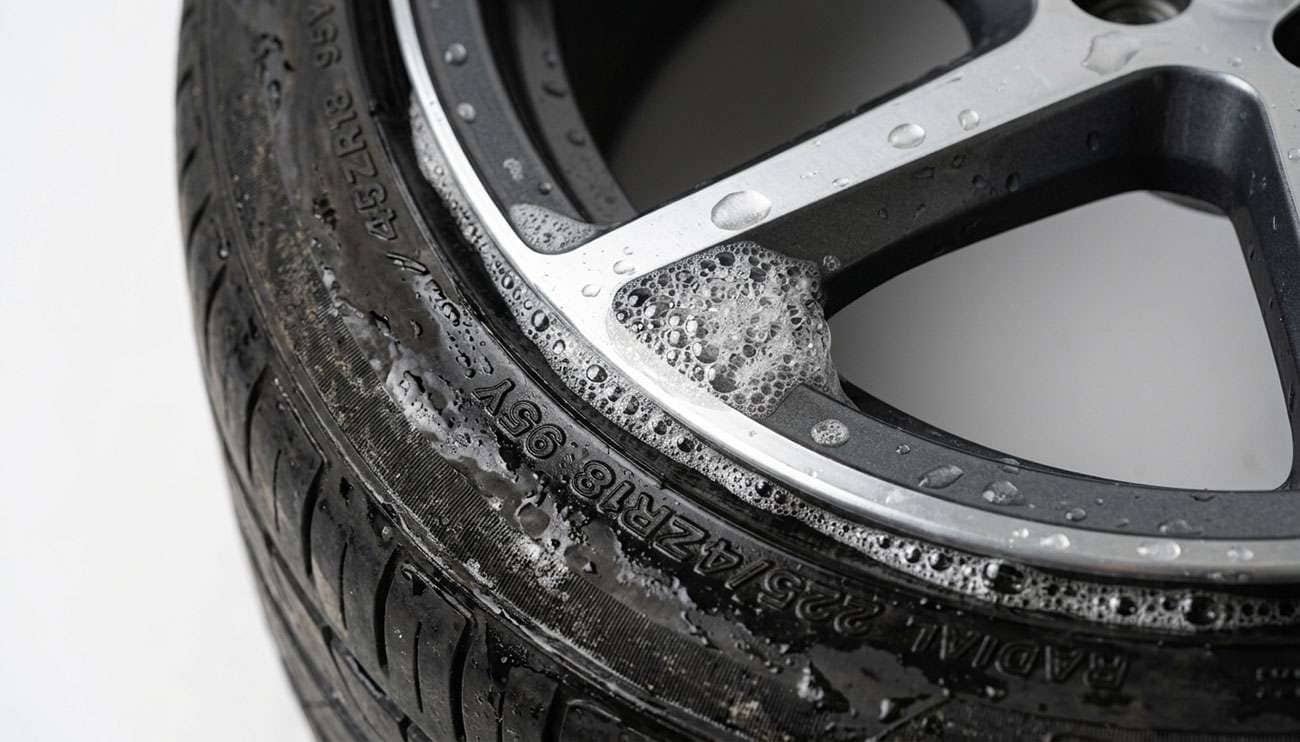
Air leaks from the bead when the seal between the tire's bead and the wheel's bead seat breaks somewhere around the circle. Only a handful of things do that: a bad install, a bent flange, corrosion on the wheel, or a tire whose bead rubber has aged out. Most answers list those causes and stop. The fastest way to know which one you have is to ask when the leak started, because each cause shows up at a different moment.
I have been mounting tires at our shop in Long Beach since 1971, and a bead leak is one of the few problems where the calendar tells you more than the tire does. A leak that starts the week after new tires went on is almost never corrosion. A leak that creeps in over three winters is almost never the install.
Find the row that matches when you first noticed the tire going soft.
When the Leak Started |
Most Likely Cause |
Where the Fault Is |
Usual Fix |
|---|---|---|---|
Within days of new tires being mounted |
Bead not fully seated, dirty bead seat, wrong lubricant, or a bead damaged on the machine |
The install |
Dismount, clean, inspect the bead, remount with approved lubricant |
Right after a pothole or curb hit |
Bent or dented rim flange |
The wheel |
Straighten if minor and not cracked; replace if cracked |
Slowly, after a few winters on the same wheels |
Corrosion on the wheel's bead seat |
The wheel |
Clean to bare metal and reseal; replace the wheel if pitted |
Soon after a balance with clip-on weights |
Weight clip broke the finish at the flange and let corrosion start |
The wheel finish |
Clean and reseal; switch to adhesive weights |
On a tire six or more years old, leaking all the way around |
Hardened or cracked bead rubber |
The tire |
Replace the tire |
Only once the weather turns cold |
A marginal seal that stiff, cold rubber can no longer cover |
Usually the wheel |
Find the spot, clean and reseal |
After someone used a can of sealant |
The original cause, now covered in residue |
Unchanged from before the can |
Clean out the sealant, then fix the real cause |
On brand-new aftermarket wheels |
Tire width outside the rim's approved range, or finish damaged during mounting |
The fitment or the install |
Check the size combination, inspect the seat, remount |
If more than one row fits, the most recent event is usually the one that matters. A wheel can carry light corrosion for years without leaking, then start the week someone mounts a new tire over it without cleaning the seat.
Before you blame the bead, prove it. Plenty of "bead leaks" turn out to be a valve core, a nail, or a cracked spoke.
If the bubbles are slow and you cannot pin them down, a shop can do a dunk tank test, where the whole wheel goes underwater. We cover the leak-rate side of this, including how long you can drive on it, in our guide to a slow tire leak.
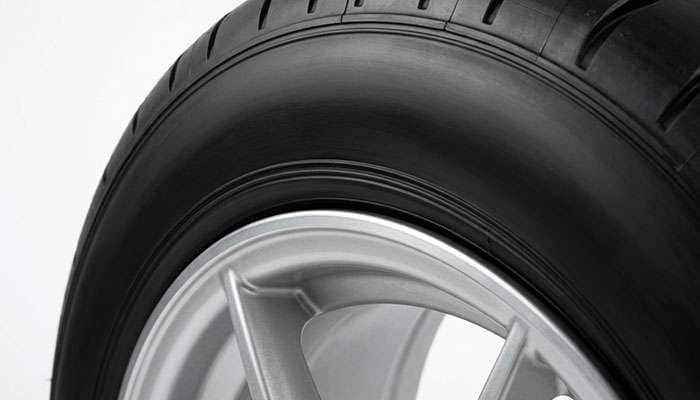
When a fresh set of tires has one corner going soft within a week, the install is the first suspect. Mounting a tire is a dozen small steps, and a bead leak only takes one of them going wrong.
Every tire has a thin molded ring on the lower sidewall, often called the bead indicator line. When the bead is fully seated, that line sits the same distance above the rim flange all the way around. If it dips closer in one spot, the bead has not climbed fully over the wheel's safety hump onto the seat. It can hold air on the lift and leak once the tire flexes on the road. We explain the hump in the tire bead seat and safety hump. Look at the line on both sides of the leaking tire; if it is uneven, go back to the installer.
The U.S. Tire Manufacturers Association's mounting procedures say to clean the components before mounting. A new tire pressed onto old rubber, dirt or oxidation can leak from the first day. A seat that was already corroding often starts leaking the moment a new tire goes on, because the old tire's bead had molded itself around the rough spots.
The USTMA's procedures call for an approved, non-petroleum tire lubricant and never antifreeze, silicone or petroleum-based products. Those can let the tire slip on the rim, and petroleum attacks the rubber.
Low-profile performance tires, run-flats and heavy LT truck tires are stiff and hard to mount. A USTMA service bulletin warns that mounting machines can damage the inside of the bead or the bead seat area, and that undetected bead damage can lead to tire failure. A small tear at the toe of the bead breaks the seal, and the tire has to be replaced.
Every tire size has a range of approved rim widths. Outside that range, the bead does not sit square on the seat. This shows up most often on new aftermarket wheels, where the width changed and the tire size did not.
Yes, and it is one of the most common causes I see. A hard pothole hit pinches the tire between the road and the rim flange, and the flange takes the blow. If it bends even slightly, it leaves a dip or a flat spot in the lip, and the bead cannot seal across it.
The giveaway is timing. The tire was fine, you hit something, and within a day or two the pressure starts dropping. Spray the bead line and the bubbles will usually come out right at the dent. Look closely at the outer lip of the wheel for a flat spot, a ripple or a scrape.
A minor bend in an aluminum wheel can sometimes be straightened by a wheel repair shop. A crack cannot be safely welded on a road wheel, and a crack at the flange will keep leaking no matter what sealer goes on it. We go through how to tell a cosmetic bend from a dangerous one in whether a bent rim is safe to drive.
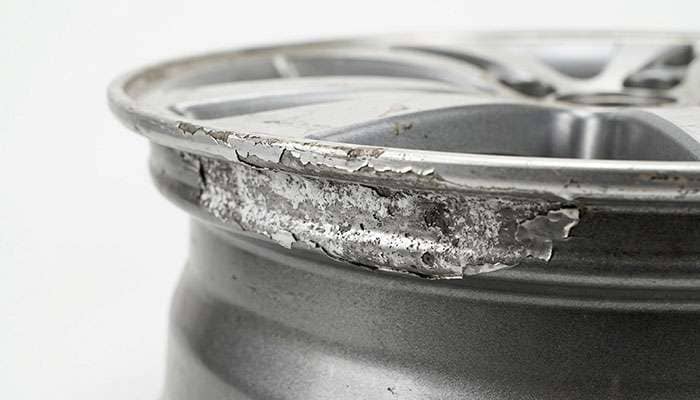
If the leak crept in slowly on wheels that have seen a few winters, bead seat corrosion is the most likely cause. Aluminum reacts with water and road salt and grows a white, crusty oxide that lifts the bead off the metal in spots. GM published a service bulletin on aluminum wheel bead seat corrosion covering many years of its cars and trucks, which tells you how common it is.
The corrosion usually starts where the wheel's finish has been broken, and the most common culprit is a hammer-on balance weight. Its steel clip bites through the clear coat at the rim flange, right next to the bead seat, and water works in from there. That is why we balance alloy wheels with adhesive weights; our rundown of wheel weights and what they do covers the difference.
On chrome-plated wheels, corrosion that gets under the plating at the bead seat lifts and flakes it, and a smooth sealing surface is hard to restore. If you run chrome through the winter, read our guide to protecting chrome wheels from road salt.
We cover corrosion in depth, including how far a wheel can be cleaned before it should be replaced, in why a wheel can leak air when the tire is fine.
A lot of customers tell me the tire was fine all summer and started leaking in November. The bead rubber is softer when it is warm, so it presses into small imperfections on the bead seat and seals over them. When the temperature drops, the rubber stiffens and the seal that was barely holding lets go. The roughness was there all along. The cold just stopped covering for it.
Most bead leaks are the wheel or the install, but the tire does fail sometimes. Three situations point at the tire.
A bead leak is only diagnosed for certain once the bead is broken and both surfaces can be seen. Here is what the shop is looking for, and what each finding means for your wallet.
What the Shop Finds |
Can It Be Fixed? |
What You Will Need |
|---|---|---|
Clean bead seat, bead indicator line uneven before dismount |
Yes |
A proper remount |
Old rubber, dirt or light white oxidation, smooth underneath |
Yes |
Clean to bare metal and reseal |
Pitting or flaking finish on the bead seat |
Rarely holds for long |
A new wheel |
Bent flange, no cracks |
Sometimes |
Wheel straightening, or a new wheel |
Cracked flange or spoke |
No |
A new wheel |
Torn, kinked or cut bead on the tire |
No |
A new tire |
Hardened, cracked bead rubber on an old tire |
No |
A new tire |
Old sealant coating the seat and the inside of the tire |
Depends on what is underneath |
Cleanup first, then whichever row above applies |
Do not count on it. Emergency tire sealants are made to plug small punctures in the tread. Slime's own emergency formula, for example, is rated for tread-area punctures up to 1/4 inch and is meant to come out within three days or 100 miles. A bead leak is a different problem: a gap that runs along the edge of a corroded, bent or dirty seal. Sealant may slow it for a while, but it does nothing to the corrosion or the dent that caused it.
It also makes the real repair harder. Consumer Reports notes that sealants coat the inside of the tire and wheel with residue the shop has to clean out, and some can gum up the TPMS sensor. Not every formula is sensor-safe either; Slime says some of its formulas are TPMS safe and others are not. A shop cannot clean and inspect a bead seat that is buried in sealant until all of it is washed off.
The same goes for Fix-a-Flat and other aerosol inflators. They are a way to get a punctured tire to a shop, not a bead leak repair. The USTMA does not endorse any tire sealant.
No. WD-40 is not a sealer, and it is the wrong thing to put on a tire bead. It is a petroleum-based product, and the USTMA's tire mounting procedures say never to use petroleum-based or silicone lubricants on a tire. Petroleum attacks the rubber over time, and anything that stays slick can let the tire slip on the rim under hard braking or acceleration, which throws off the balance.
You will find people online who say they have done it for years. The rubber does not fail the next day. It hardens and loses its grip on the wheel over time, which is the same thing that causes a bead leak in the first place. Shops use a lubricant made for tire mounting, and a bead sealer made for the job when the seat needs it.
There is no real driveway fix for a bead leak, because the problem is underneath the tire. Spraying something into the gap does not clean or smooth the seat. Here is how it is done properly.
On a seat that was cleaned down to sound metal, a bead seal usually holds for the life of that tire, because nothing disturbs it until the next tire change. On a seat that is pitted, it may only last weeks, because the corrosion keeps growing underneath. If a properly cleaned and sealed bead starts leaking again within a season, the wheel is telling you it is done.
It depends entirely on what the shop finds, which is why the second table above matters more than any single number.
The expensive outcome is the one you get by waiting. A tire that is run low because of a leak can be ruined, and then you pay for the tire and the wheel repair together.
Short term, if it is slow and you keep it at the correct pressure. Long term, no. A bead leak does not usually go suddenly, but it does not seal itself either. If anything, it gets worse as the corrosion grows or the dent keeps working.
The real danger is driving between top-offs. A tire running low builds heat in the sidewall, and a low tire is more likely to roll the bead off the seat in a hard turn. If you are adding air more than once a week, stop driving on it and get it to a shop.
Often, yes. Driving heats the air inside and raises the pressure, and the tire flexes at the bead every revolution, which works the leak open. Some bead leaks behave the opposite way and show up overnight after the car cools. Either way, the leak rate is not steady, so check pressure cold, before you drive, and compare it day to day.
Living with a bead leak feels cheap, because air is free. Here is what the slow version actually costs, in the order it usually happens.
Compare that with fixing it once. If the shop finds the wheel is too far gone, replacing it is a one-time cost, and it ends the weekly ritual for good. When you are ready to look, browse our wheels by your vehicle and match the size and offset you run now.
A bead leak always comes down to the same failure: the tire's bead and the wheel's bead seat no longer meet cleanly all the way around. When the leak started is the quickest clue to why. New tires point to the install, a recent hit to the flange, several winters to corrosion, and an old tire leaking all the way around to the tire.
Prove it with soapy water, skip the shortcuts that only coat the problem, and get the tire off the wheel so both surfaces can be seen. Most bead leaks are a cleaning job. The ones that are not will tell you the moment the tire comes off.
Something breaks the seal between the tire's bead and the wheel's bead seat. The common causes are a bead that was not fully seated or a seat that was not cleaned when the tire was mounted, a rim flange bent by a pothole or curb, corrosion on an aluminum wheel's bead seat, and old, hardened bead rubber on the tire.
Not reliably. Emergency sealants are made for small tread punctures. They do not fix corrosion or a bent flange, and the residue has to be cleaned out before a shop can repair the bead.
No. WD-40 is a petroleum-based product, and tire industry mounting procedures say never to use petroleum-based or silicone lubricants on tires. It can attack the rubber and let the tire slip on the rim.
A clean, reseal and remount is labor only, usually similar to a flat repair plus a rebalance. A damaged or aged-out bead means a new tire, and a pitted bead seat or cracked flange means a new wheel.
On a bead seat cleaned down to sound metal, a bead seal usually lasts the life of that tire. On a pitted seat it may only last weeks, because the corrosion keeps growing underneath.
No. A bead leak from corrosion, a bent flange or a damaged bead will not fix itself, and corrosion leaks usually get worse. A leak can seem to stop in warm weather, then come back when it turns cold.