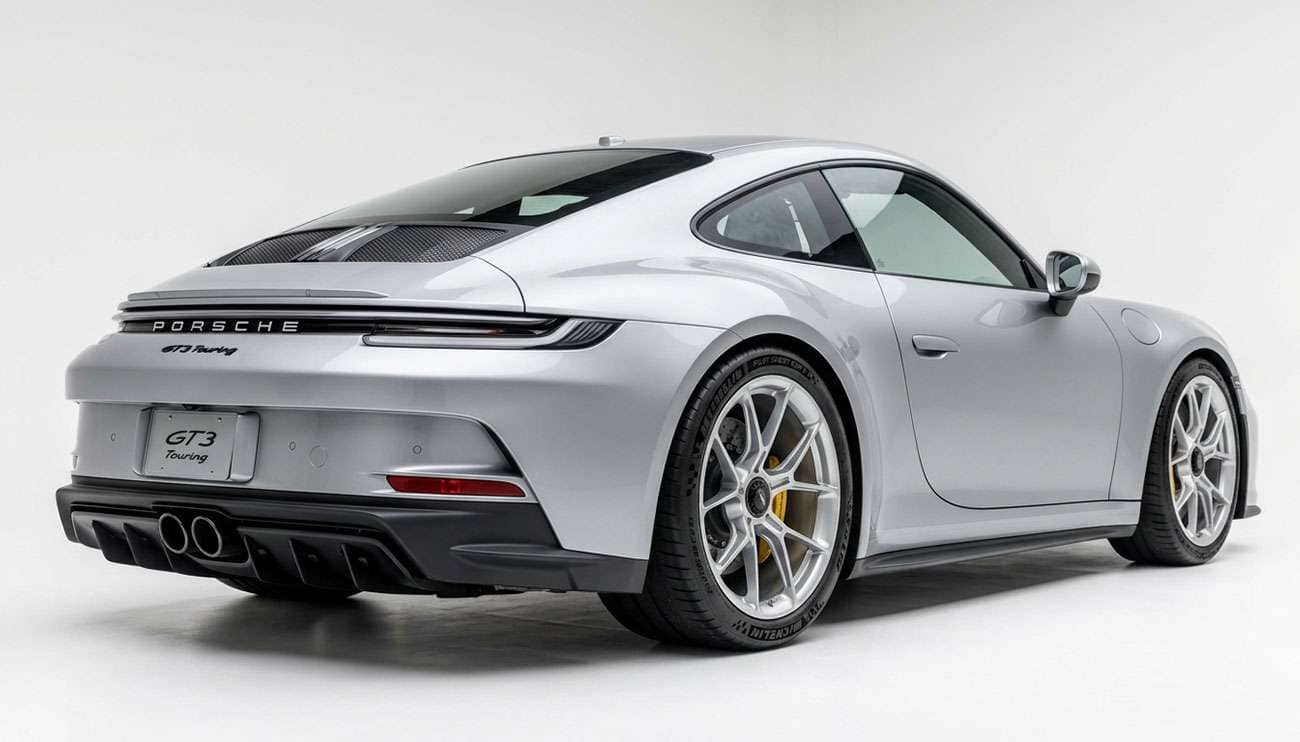
Short answer: no law requires them, but your Porsche was engineered on them, and the code that matters is more specific than "N-rated." Every Porsche approval code carries a model letter and a generation number, like NA0 for a 911 or NF1 for a Taycan. The match that decides how the car drives is code to code across an axle, and on an all-wheel-drive Porsche, across all four corners. A quality non-N tire can be legal and safe. A set with two different codes on it is the setup that quietly changes the car.
Most answers to this question stop at "Porsche recommends them" or "it depends." It depends on three things, and you can check all three in about two minutes: which code is on the car right now, which axle you are replacing, and whether the car drives all four wheels. Here is how each one plays out.
Your Situation |
Do You Need N-Rated? |
What Actually Matters |
|---|---|---|
Car under new-car warranty or lease |
Strongly recommended |
Dealer inspections and lease returns check for approved tires; it removes an easy argument in a claim |
Replacing the rear pair on a staggered 911 or 718 |
Yes, and the same code as the fronts |
Brand, model, and N-code should match front to rear |
AWD model (Carrera 4, Turbo, Cayenne, Macan, Taycan) |
Yes, one code on all four |
Rolling circumference differences load the AWD system |
One tire damaged, others fine |
Yes, exact same tire and code |
If the partner tire on that axle is past about 30 percent wear, replace the pair |
Your current code is discontinued |
Yes, move all four to a newer code |
A newer generation for your model, installed as a full set |
Dedicated track car on competition tires |
Not required |
You are setting the car up for the tire, not the other way around |
Pre-N classic (356, early 911, 912, 914) |
No N-code existed for original fitment |
Correct size, speed rating, and construction for the era |
An N-rating is Porsche's original-equipment approval. Porsche engineers develop a tire jointly with a manufacturer such as Michelin, Pirelli, Continental, Bridgestone, or Goodyear, and that tire runs through laboratory testing, proving-ground work, and track sessions before it earns the code on its sidewall. The priorities are specific: high-speed stability, dry handling at the limit, wet braking, hydroplaning resistance, and noise. A tire that passes gets an N molded into the sidewall next to the size.
Here is the part that trips people up. The N-rated version of a tire is not the same tire as the one sold under the same name without the code. A manufacturer can build a Porsche-approved version with a different compound, a different internal construction, and a different tread stiffness than the version it sells for a Corvette or a BMW. Same name on the sidewall, same size, different tire underneath. That is why "I bought the same tire Porsche uses" is often not true.
Porsche is not alone in this. BMW marks its approved tires with a star, and Mercedes-Benz uses MO. If you have been through the BMW star-marked tire question, the logic here is the same, with one Porsche-specific twist we will get to in the next section. For a broader look at how factory-fit tires differ from what you find on the shelf, see our breakdown of OEM versus aftermarket tires.
One point worth stating clearly: an N-code is not a federal requirement. Every passenger tire sold in the U.S. has to meet FMVSS 139, the federal safety standard NHTSA enforces for new passenger car tires, and a non-N tire from a major manufacturer meets that standard just like an N-spec tire does. The N-code is Porsche's engineering approval layered on top of the legal minimum. It tells you the tire was tuned for your specific car, not that other tires are unsafe.
This is the variable nobody puts in front of you. An N-code has up to three parts, and each one narrows the approval.
The N means Porsche approval. Nothing more.
The number is the generation. N0 is the first approved version of that tire design for that application. When the manufacturer revises the compound or construction and Porsche re-approves it, the number steps up: N1, N2, and so on. On older Porsches you will see codes run as high as N6. When a manufacturer launches an entirely new tire model, the numbering resets to 0. A higher number is not a higher grade. It is a later revision.
The letter is the newer part, and the one most owners miss. On current Porsche models, the code carries a second letter that identifies the car line the tire was approved for. That letter exists for a reason: a 911 and a Panamera can share a tire size, but they do not share weight, weight distribution, or suspension tuning. The model letter keeps a Panamera approval from ending up on a 911 just because the numbers on the sidewall line up.
Porsche Model Line |
Model Letter |
Example Codes |
What to Check Before You Buy |
|---|---|---|---|
911 |
A |
NA0, NA1 |
Staggered sizes; confirm front and rear codes match |
718 Boxster / Cayman |
B |
NB0, NB1 |
Staggered sizes; rear pair wears first |
Cayenne |
C |
NC0, NC1 |
AWD; all four on one code, check load index |
Panamera |
D |
ND0, ND1 |
Heavy car; do not accept a code approved for a lighter model |
Macan |
E |
NE0, NE1 |
AWD with staggered sizes on many trims |
Taycan |
F |
NF0, NF1, NF2 |
EV weight and torque; match code on all four |
Older generations |
None |
N0 through N6 |
Match the number exactly; no model letter to confirm |
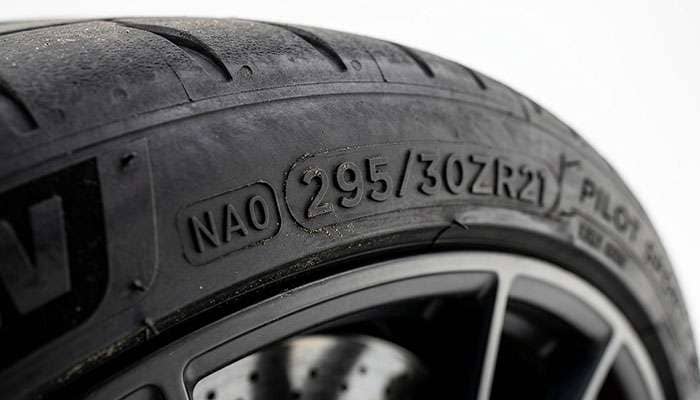
Practical reading tip: the code is molded into the sidewall near the size, in raised characters roughly the same height as the load index. It is small. Run a flashlight along the sidewall at a low angle and it will stand out. Write down the full string, size, load index, speed rating, and N-code, before you shop. That one line of text is your entire spec.
Porsche's own tire guidance says no. Only tires from the same manufacturer with the same specification code should be mounted on the car, and the non-Porsche version of a same-named tire is not an acceptable partner for the approved one. In practice, what matters most is that each axle is a matched pair, and the rules below tighten from there.
Why it matters on the same axle is easy to see. Two tires on one axle with different compounds or carcass stiffness build grip at different rates. Under braking, the car pulls toward the grippier side. In a hard corner, one side lets go before the other. On a street car with this much power, that is not a subtle difference. We cover the general version of this in whether you can mix tire brands, and a Porsche takes that answer and makes it stricter.
Front to rear is where most owners make a judgment call. A non-N set on the front with N-rated tires on the rear, or the reverse, will usually feel fine at the speed limit. The difference shows up at the edges: a hard stop in the rain, a sudden lane change, a long sweeper taken quickly. The car's grip balance was tuned with a specific relationship between front and rear tires, and a mixed set changes that relationship.
If you decide to run a non-N tire, run it as a complete set of four, from the same model line, with a load index and speed rating that meet or exceed the placard. The Tire Industry Association's replacement guidance is built around exactly that: never drop below the vehicle's specified load capacity or speed capability. On a 911 that usually means a ZR-rated tire with a Y speed symbol, and if you are curious what happens when you go lower, our piece on speed rating derating walks through it.
This is the question that comes up most in our shop, and it is the one almost nobody answers directly. The strict answer is no. Porsche wants the same generation on all four wheels. If your original code is no longer made, the guidance is to move all four tires to a newer code for your model, not to put two new-generation tires next to two old ones.
The reason is that a generation change is not cosmetic. When a tire goes from N0 to N1, the manufacturer changed something that Porsche had to re-test: compound, belt package, bead construction, or tread design. The tires may look nearly identical. They will not wear, warm up, or grip identically.
Where owners get caught is the model letter. An NA1 and an NB1 are both "N1," but one was approved for a 911 and the other for a 718. If you are buying online and the listing just says "N1," confirm the full code before you order. On older cars with no model letter, the number is all you have, so match it exactly.
The realistic minimum, if you absolutely cannot get four matching tires: never mix generations on the same axle, keep the same brand and tire model front to rear, and plan to bring the whole car onto one code at the next replacement. That is a stopgap, not a setup.
Here is the fitment reality that turns this from a theory question into a real one. The 911 and the 718 run staggered setups: narrower tires in front, wider tires in the rear, often on different wheel diameters. A current 911 Carrera S, for example, runs a 20-inch front and a 21-inch rear. You cannot rotate those tires front to rear.
Rear-engine, rear-drive, with the weight over the back wheels and the power going through them: the rears carry the traction load, and they wear faster. On a lot of 911s, owners go through two sets of rear tires for every set of fronts. That means the rear pair is the tire you replace alone, again and again. And every time you do, you are gambling that the same code is still available for the rear size.
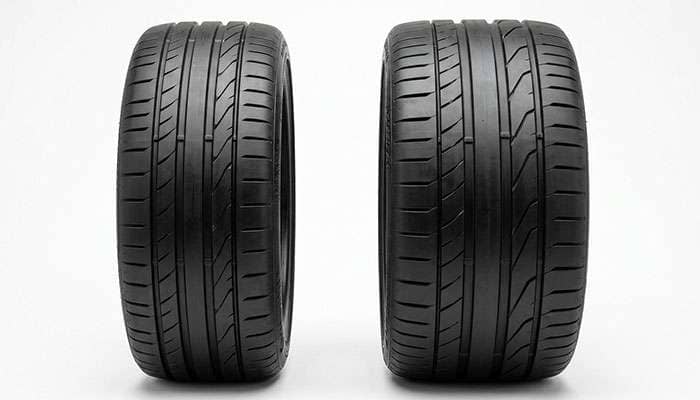
Tire generations do not change on your schedule. Two or three years into ownership, the rear size you need may only be available in the next code. Now you have N0 fronts and N1 rears, which is exactly the mismatch Porsche's guidance tells you to avoid. If you want the background on why this fitment style exists at all, our square versus staggered setup comparison covers the tradeoffs.
How to handle it, in order of preference:
If only two of your tires are worn on a non-staggered car, the rules are different, and we cover that case in what to do when you only need two tires.
Yes, and this is where the rule is least negotiable. Carrera 4 and 4S, Targa, Turbo, Cayenne, Macan, Panamera 4 models, and every Taycan with a front motor send power to both axles. The system that splits that power is calibrated around a specific difference, or lack of difference, in how far each axle's tires travel per revolution.
Tires from different generations or different lines rarely have exactly the same rolling circumference, even in the same printed size. Wear adds to the gap. When the front and rear tires rotate at slightly different speeds, the center coupling or front drive unit has to absorb that difference continuously. A small mismatch for a short time is normal. A persistent one adds heat and wear to hardware that is far more expensive than a set of tires.
On an AWD Porsche, the practical rule: one brand, one tire model, one N-code, on all four. If you replace a single damaged tire, match it exactly, and follow Porsche's guidance that the remaining tire on that axle should not be worn past roughly 30 percent. Past that, the diameter difference is large enough that replacing the pair is the right move.
Taycan owners get an extra variable: weight. An EV's battery puts a lot of mass on the tires, and the NF-coded tires were approved with that load and that instant torque in mind. Load index is not a place to compromise on any Porsche, and on a Taycan it is the first number to check.
Not automatically. Under the federal Magnuson-Moss Warranty Act, a manufacturer generally cannot void a warranty just because you used an aftermarket part. To deny a claim, they typically need to show that the part caused the failure. A non-N tire does not void your Porsche warranty.
That said, there is a practical difference between "does not void" and "does not matter." If you bring in a car with a drivetrain complaint on an AWD model and the tires are a mixed set, the conversation about cause gets more complicated. Tires themselves are generally warranted by the tire manufacturer, not by Porsche, so your coverage for the tire is whatever that brand offers.
Leases are a separate question. Many lease agreements and turn-in inspections expect tires that meet the manufacturer's specification, and "specification" on a Porsche often means the approval code. Read your lease terms before you put anything other than an N-rated set on a leased car. Certified pre-owned and trade-in inspections tend to look at this too, so a matched approved set also protects resale.
It depends on the year, which is exactly why this question needs a real answer. The N-code system came along well after the 356 and the early 911, 912, and 914. Those cars left the factory before Porsche approval codes existed, so there is no original N-code to match. For them, the right tire is about correct size, correct speed rating for the car's capability, and construction appropriate to the era.
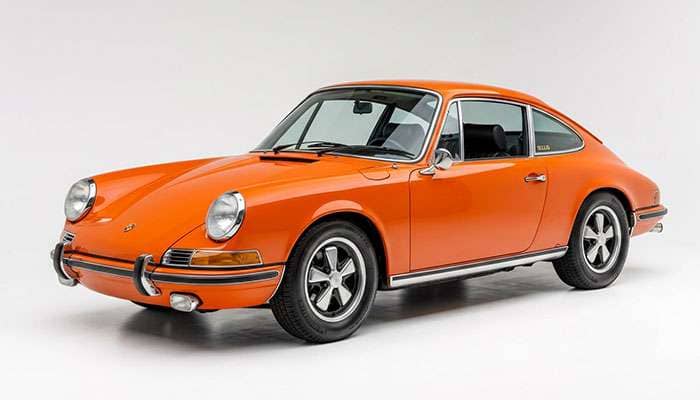
Later air-cooled and early water-cooled cars are a different story. Many of those cars did leave the factory on N-coded tires, and some classic tire lines are still produced in approved versions. The Pirelli P6000 in its N3 version and the Michelin Pilot Exalto PE2, which is offered in N0 sizes, are two examples built for that generation of Porsche. If your car originally carried an N-code, matching it is the most accurate way to restore the handling it had new.
Classic owners should also watch tire age closely. Porsche's own dealer guidance puts the ceiling at six years, and classic cars that sit most of the year are exactly the ones that hit that age with plenty of tread left. Tread depth tells you nothing about how hard the rubber has become.
Porsche approves winter and all-season tires, not just summer performance tires. N-coded winter tires exist for the 911, 718, Cayenne, Macan, Panamera, and Taycan, in sizes matched to Porsche's approved winter wheel fitments. Approved winter tires are also often rated for a lower top speed than the summer set, and Porsche's approval accounts for that.
The same rules apply: one code on all four, especially on AWD models. If you run a dedicated winter set on its own wheels, that is actually the easiest set to keep matched, because it goes on and comes off as a set and all four tires age and wear together.
A mixed set rarely announces itself. Here is how the cost builds, from least to most expensive, while you keep driving on it.
Every step on that list ends the same way: a matched set of tires with the correct code. The only question is how much it costs you to get there.
This is the process I run before I quote a Porsche set.
To start with the right sizes, look up your car on our 2025 Porsche 911 tire and wheel fitment page and pick your trim. Then match the code from your sidewall before you check out.
Do Porsches need N-rated tires? Legally, no. Engineering-wise, the car was developed on them, and the approval is more specific than most people realize: a model letter that ties the tire to your car line, and a generation number that ties it to one revision of that tire. The rule that matters is matching that code. On any axle, match it exactly. On an AWD Porsche, match it on all four. On a staggered 911 or 718, expect to face the generation question every time you replace the rears, and plan for a full set when the code changes.
Pull the code off your sidewall, confirm your sizes on the 2025 Porsche 911 fitment page, and buy the set that keeps your car on one approval.
A quality non-N tire with the correct size, load index, and speed rating is legal and can be safe, but the car's handling balance, wet braking, and stability-system behavior were tuned on the approved tire. The biggest risk comes from mixing codes, not from running a matched non-N set of four.
They are better matched to a specific Porsche, not better in every way. The N-rated version is tuned for that car's weight, balance, and speed capability, which can mean different compound and construction than the same-named tire sold for other cars.
Porsche's guidance says to keep the same generation on all four wheels. If your code is discontinued, move all four tires to the newer code. At an absolute minimum, never mix generations on the same axle.
N means Porsche approval, A identifies the 911 model line, and 0 means it is the first approved generation of that tire design. NB is 718, NC is Cayenne, ND is Panamera, NE is Macan, and NF is Taycan.
Not automatically. Under the Magnuson-Moss Warranty Act, a manufacturer generally has to show that an aftermarket part caused a failure before denying a claim. Lease agreements and inspections may still expect approved tires, so check your terms.
It is molded into the sidewall near the tire size and service description, in small raised characters. A flashlight held at a low angle along the sidewall makes it much easier to read.