
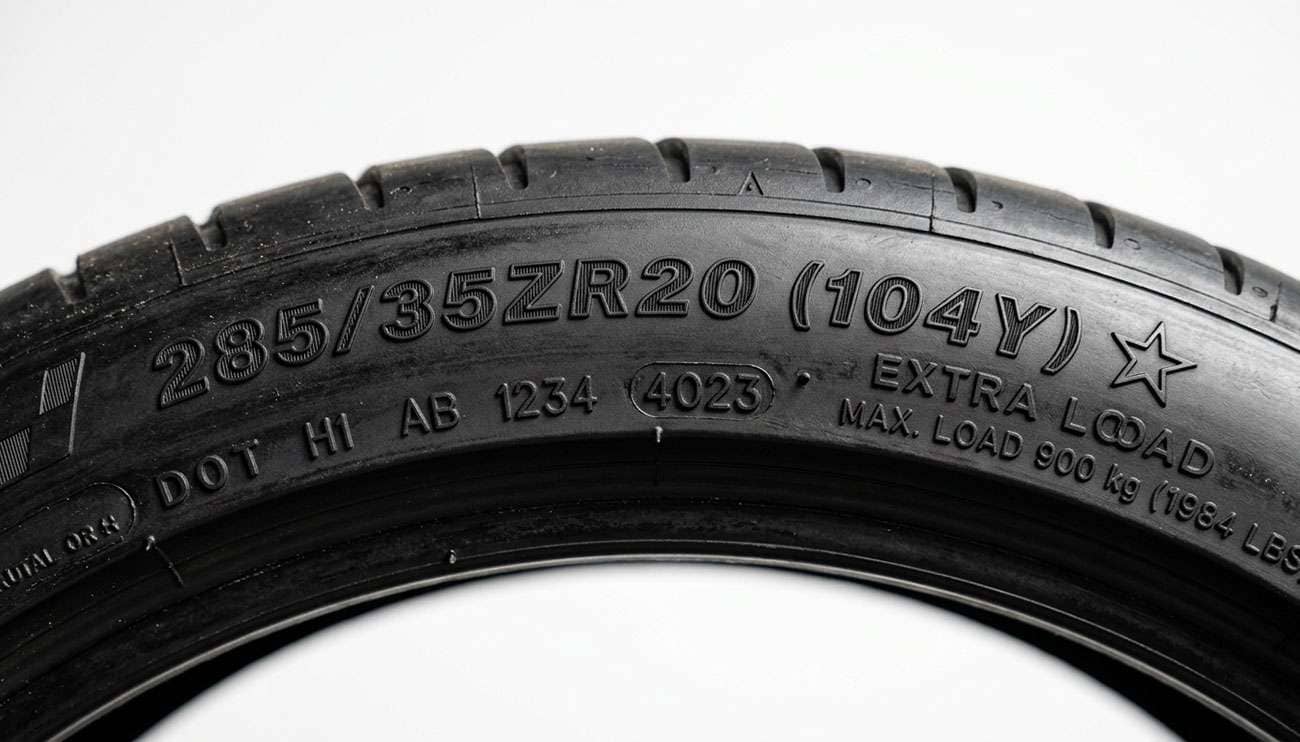
Short answer: no, not required. BMW's own US guidance uses the word "recommends," and a tire in the correct size, load index and speed rating is legal and safe on your car. But here is what nobody separates for you: the star, the run-flat marking and the foam noise liner are three different things stamped on the same sidewall. Most owners change all three at once, then credit the star for a difference the other two caused.
I have had this conversation across the counter more times than I can count. Fellow comes in with a 3 Series, tells me the dealer said he has to buy star tires, and he wants to know if we are about to take him for a ride.
The honest answer takes about five minutes, and it starts with the fact that he is not making one decision. He is making three, and only one of them is about the star.
The star is a five-pointed symbol molded into the sidewall. It means BMW went to the tire maker, asked for changes to a tire that already existed, tested the result on a specific BMW chassis, and approved it. The tire company molds the star under license once that approval is granted.
That is a manufacturer approval mark. It is not a legal or regulatory mark. The regulatory markings are already on that same sidewall and they are the ones that actually govern whether a tire may be sold and fitted: the DOT code, the load index, the speed rating, and the uniform tire quality grading. Michelin, which molds plenty of these stars, puts it about as plainly as anyone in the business: the OE marking is not a legal requirement, and a tire of the correct size, load rating and speed rating will fit and meet regulatory standards.
The development behind the mark is real work, not a sticker. Michelin has described adding roughly two and a half years of extra development for a BMW M approval, running dozens of tire versions through test loops at multiple locations. Pirelli describes a homologation cycle of two to three years covering dry and wet handling, aquaplaning, winter behavior, rolling resistance and high speed.
So the star is not nothing. It is also not a law, and it is not a safety certification. Those are three different categories, and the language around this subject blurs them constantly.
One small thing worth knowing: BMW does not use just one star. You will also run across marks like a star with a numeral, and Roman numeral variants. Those denote different approvals, which means the star is model-specific rather than brand-wide. A starred tire in your size may well have been validated on a different BMW than the one in your driveway. Nobody puts that on the shelf tag.
No. This is the single most common mix-up on the subject, and once you see it clearly the rest of this gets easy.
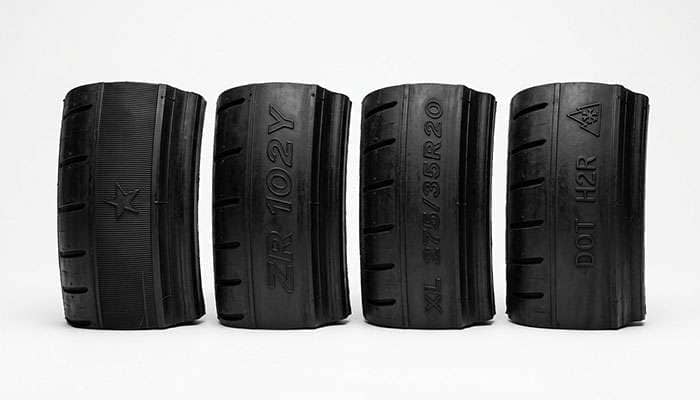
The star means BMW approved the tire. Run-flat means the tire has a reinforced sidewall that will carry the car's weight for a limited distance with no air in it. Those are unrelated properties. BMW marks run-flat construction separately, with RSC on the sidewall, and the tire maker adds its own construction code on top of that. Michelin calls theirs ZP, Bridgestone uses RFT, Continental uses SSR, Dunlop and Goodyear use their own.
Look at an OE run-flat off a BMW and you will often find three separate stamps: the star, RSC, and the maker's run-flat code. Three marks, because they are three facts. The industry's own product data treats them that way too. Pull up a BMW fitment at a major tire retailer and the original equipment field reads as a list, with the star and the run-flat designation sitting beside each other as separate entries rather than as one combined attribute.
Here is the proof in both directions. Plenty of star-marked tires are conventional tires with no run-flat construction at all. And plenty of run-flat tires carry no OE approval mark from anybody, because they are sold purely as aftermarket replacements. You can buy a popular performance summer tire in a starred conventional version and in a separate run-flat version, as two different products on the same shelf.
Where the confusion comes from is other carmakers. Mercedes and Audi fused the two ideas into single codes. On a Mercedes, MOE means the approval and the extended mobility construction together. On an Audi, AOE carries a run-flat meaning in the code itself. BMW chose to keep them apart. So owners coming from those brands, or reading a generic marking chart that lists all of them in one flat table, arrive at a BMW expecting one code to mean both things. It does not.
This is the table I wish somebody would hang in every tire shop. Three independent decisions, and they do not carry anything like the same weight.
Decision |
Sidewall Mark |
What It Actually Changes |
How Hard to Undo |
|---|---|---|---|
OE approval |
Star, sometimes with a numeral |
Small, undisclosed tuning changes aimed at handling and weight on a specific BMW chassis |
Free. Change your mind at the next tire change |
Run-flat construction |
RSC plus the maker's code such as ZP, RFT or SSR |
Stiff reinforced sidewall. Firmer ride, more road noise, heavier tire, and the ability to keep driving with no air |
Locked in for that tire's life, and it changes what you carry in the trunk |
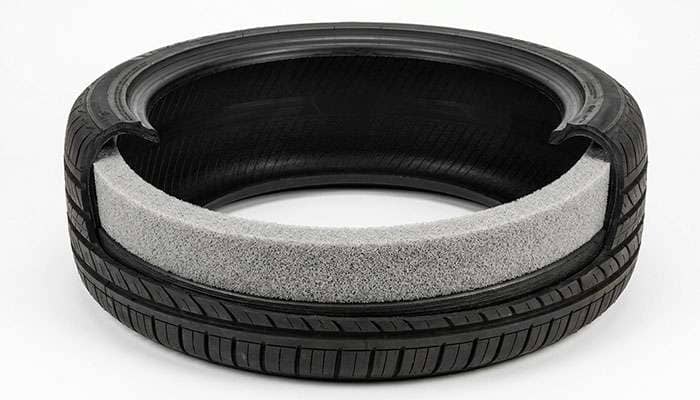
Acoustic foam liner |
Maker-specific, such as ContiSilent or an acoustic designation |
A foam strip bonded inside the tread that absorbs cabin drone |
Locked in for that tire's life |
Now look at what happens in the real world. An owner gets sick of the harsh ride on OE run-flats, goes shopping, and buys conventional non-starred tires without a foam liner. The car rides better and runs quieter, and he tells everybody the star was marketing.
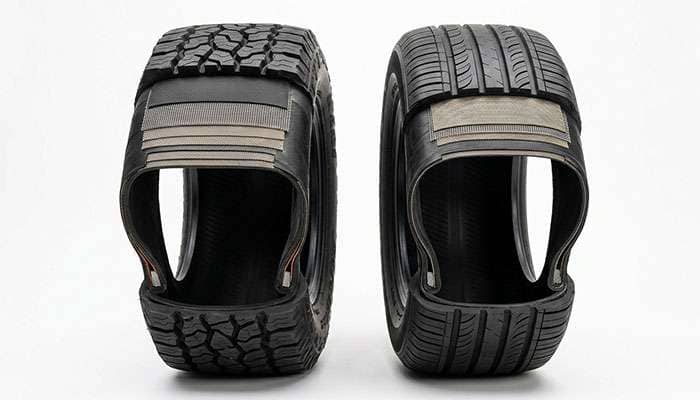
He changed all three variables at once. The ride improvement came from leaving run-flat construction behind, a sidewall stiffness change you can feel with your hands in the parking lot. Some of the quiet came from tread pattern and from the foam. Continental rates its foam liner at cutting the most irritating rolling noise by up to nine decibels, a bigger and better documented difference than anything ever published about the star.
The star may well have contributed something. Nobody can tell you how much, because no manufacturer publishes the delta. What we can say is that it is almost certainly the smallest of the three effects, and it is the only one of the three that costs nothing to reverse. The broader question of factory versus aftermarket rubber is covered in our piece on the difference between OEM and aftermarket tires.
No. And BMW's own wording is more measured than the wording you will hear at the counter.
BMW USA's guidance on the star symbol says that specially developed tires are marked with a star on the sidewall, and that after replacing wheels and tires the vehicle manufacturer recommends using star-marked tires again. Recommends. That is the word. The same guidance adds a second recommendation that gets far less attention and matters more, which we will come back to: use tires of the same make and tread design.
What you do have to match is not the star. It is the specification: the correct size for your wheel, a load index at least equal to the original, and a speed rating at least equal to the original. Those three are what the placard in your door jamb and the regulations actually care about. If you are unclear on how speed ratings work and what happens if you drop one, our guide on tire speed ratings explained covers it, and it matters more on a fast car than the star ever will.
There is a practical tell here that I find convincing. Run-flat construction is a structured, searchable specification across this industry. You can filter for it because it is a real attribute of the tire's build. The star is a molding on a sidewall that most tire catalogs do not carry as a searchable field at all. That difference tells you something about which of the two is a property of the tire and which is a property of a relationship between two companies.
You will find this claim repeated confidently in a lot of places. It does not hold up, and in the United States there is a specific reason why.
The Magnuson-Moss Warranty Act prohibits conditioning a vehicle warranty on the use of a specific brand of part, unless the manufacturer supplies that part free of charge. This is not a gray area, and BMW has been on the wrong end of it. In 2015 the Federal Trade Commission took action against BMW over its MINI division for telling consumers their warranty would be void unless they used MINI parts and MINI dealers for maintenance and repair. BMW settled, and the consent order required BMW to inform MINI owners that they may use third-party parts and service without jeopardizing warranty coverage.
So a shop telling you that fitting a correctly specified non-starred tire voids your factory warranty is telling you something the FTC has already acted on in this exact corporate family.
Two fair caveats, because I would rather you hear them from me than find out later. If a specific failure is genuinely caused by the part you fitted, a manufacturer can decline that specific claim, which is true of any part on any car and a long way from voiding a warranty. And tire road hazard programs are separate products whose eligibility generally runs on where you bought the tire and whether it is on the invoice, not on whether it wears a star. The tire's own treadwear warranty comes from the tire maker, and the star has nothing to do with it either way.
Here is where I have to be straight with you about the limits of what anybody knows.
A starred tire is genuinely a different tire from the unstarred version of the same model. Michelin describes the changes as touching tire geometry, layer tension, belt design, shoulder rigidity, groove depth and placement, and rubber compounds. That is a real list of real engineering.
What nobody publishes is how much. The most honest account I have read on the subject came from a tire testing outlet that asked this question directly and reported that the answer is generally "stuff," because the data is not made public. That is the state of the art for a consumer trying to evaluate this.
What is public is the direction of the changes, and it is more interesting than the size of them. The targets differ by carmaker. BMW approvals have been described as chasing dry and wet handling and a reduction in tire weight, and BMW M approvals as chasing lap time, weight and straight-line aquaplaning. Audi has asked for rolling resistance, noise and mileage. Porsche has asked for dry handling, braking and rolling resistance.
Read that again, because it undercuts the idea of an OE mark as a quality grade. These carmakers asked for different things, sometimes opposite things. A mark does not mean "better tire." It means "tuned toward what that carmaker wanted on that car." If BMW asked for lap time and weight on an M car and what you want is a quiet, long-wearing commuter tire, the starred version is optimized against your priorities, not for them.
One more thing the car cannot do: read the star. There is no mechanism by which your BMW knows what is molded on the sidewall. The pressure monitoring system reads sensors or wheel speed, not markings. Suspension and stability systems respond to what the tire physically does, not to its approval status. You will see marketing copy implying seamless integration with stability control and all-wheel drive, and when you look for the mechanism, none is ever named.
Now the part that actually deserves your worry, and it is not the star at all. It is that second recommendation in BMW's own guidance about using the same make and tread design.
Here is how it escalates.
It starts as a mismatch you cannot see. Two tires of the same printed size from different makers, or the same tire at different wear depths, roll at slightly different circumferences. On a rear-wheel-drive BMW this mostly shows up as uneven wear and a little steering pull.
On an xDrive car, that mismatch becomes a load. All-wheel drive systems expect the front and rear axles to turn at matched speeds. When circumferences differ, the system spends its life managing a difference that should not be there, and the transfer case and center differential absorb it. This is the mechanical reason behind the advice to replace in matched sets rather than one corner at a time, and it is the same reasoning that applies to any all-wheel-drive car.
Then the handling balance drifts. Mixing brands or tread patterns front to rear means the two ends of the car respond differently in the wet. On a staggered fitment, which many BMWs run with wider rears, you are already managing a deliberate front-to-rear difference. Adding an accidental one on top of it is how a car that used to feel predictable starts surprising people. Our guide to staggered wheel setups covers what that arrangement is already doing, and our guide to aftermarket BMW wheels covers sizing the wheel underneath it.
And the small stuff adds up. Fitting new wheels or a new set means sorting your sensors out, and a pressure warning you have learned to ignore is a pressure warning that will not help you when it matters. Our explainer on TPMS sensors for aftermarket wheels walks through that side of it.
Every bit of that is caused by mismatching, not by the absence of a star. Buy four of the same tire, in the right size, at the right load index and speed rating, and you have addressed a genuine mechanical concern. Buy four starred tires of two different models and you have satisfied a marketing requirement while creating a real one.
Take the three decisions in order and this gets simple.
Once you know your size, load index and speed rating, you can see what actually fits your specific car on our BMW wheel and tire fitment page.
Do BMWs need star-marked tires? No. BMW recommends them, in BMW's own word, and a correctly specified tire without a star is legal, safe and does not put your factory warranty at risk.
What the star buys you is a set of small tuning changes aimed at what BMW asked for on a particular chassis, which nobody quantifies publicly and which may or may not line up with what you want from a tire. It is worth paying for on a hard-driven M car. It is a defensible thing to skip on a commuter.
The bigger lesson is the one hiding underneath the question. The star, the RSC run-flat mark and the foam liner are three separate stamps describing three separate things, and two of them change how your car rides far more than the star does. Sort those out in the right order, buy four matching tires, and you will have made a better decision than most people arguing about this ever get around to.
It means BMW approved that specific tire for a specific BMW model after a joint development and testing program with the tire maker, and licensed the tire company to mold a five-pointed star on the sidewall. It is a manufacturer approval mark rather than a legal or safety certification. The DOT code, load index and speed rating on the same sidewall are the markings that actually govern whether a tire can legally be fitted to your car.
No. The two are completely independent. BMW marks run-flat construction separately with RSC on the sidewall, and the tire maker adds its own code such as ZP, RFT or SSR. Many star-marked tires are conventional tires with no run-flat construction, and many run-flat tires carry no approval mark from any carmaker. A BMW original equipment run-flat typically carries all of those marks at once, which is where the confusion comes from.
Yes. A tire in the correct size with a load index and speed rating at least equal to the original is legal and appropriate for your car. BMW's own guidance recommends star-marked tires rather than requiring them. What matters far more than the marking is that all four tires are the same make and model, particularly on an xDrive car, and that you have not dropped below the original load index or speed rating.
No. In the United States the Magnuson-Moss Warranty Act prohibits a manufacturer from conditioning warranty coverage on the use of a particular brand of part unless that part is supplied free of charge. The Federal Trade Commission took action against BMW over its MINI division in 2015 for telling owners their warranty required branded parts and service, and the resulting order required BMW to tell owners otherwise. A manufacturer can still decline a specific claim if a specific part genuinely caused a specific failure, which is different from voiding a warranty.
The starred version is genuinely a different build. Tire makers describe changes to geometry, belt design, shoulder rigidity, groove depth and placement, and rubber compound. What is not published is the size of the difference, so no consumer can evaluate it directly. It is also worth knowing that different carmakers ask for different things, so an approval mark indicates the direction a tire was tuned rather than a level of quality.
They are the same idea, applied differently. All are carmaker approval marks. The important practical difference is that Mercedes and Audi fold run-flat meaning into certain codes, so MOE indicates extended mobility construction and AOE indicates extended run-flat, while Porsche's N0, N1 and N2 designations indicate successive approvals and carry no run-flat meaning at all. BMW keeps approval and run-flat entirely separate, which is why a BMW sidewall can show a star and RSC as two distinct marks.



