Most "under $150" lists put a 15-inch track tire, a 17-inch all-season, and a steel race wheel side by side and call it a buying guide. The brand isn't what decides whether $150 buys you a performance part. Your rim diameter does. Across the performance tires on the market today, about 9 in 10 sizes at 15 inches sell for under $150. At 18 inches, it's about 1 in 4. The median price crosses $150 right at 17 inches. And there's a second variable that's easy to miss in a price-sorted list: whether the part is certified for the street at all.
I'm Dennis Feldman, VP at Performance Plus Tire. Here's the cutoff by size, what each kind of tire and wheel gives up to hit the price, and eight verified picks that land under $150 each.
Where $150 still buys a performance tire
Rim Diameter |
Performance Tires Under $150 |
Summer Performance Tires Under $150 |
Median Performance Tire Price |
|---|---|---|---|
15-inch |
About 9 in 10 |
About 7 in 10 |
$80 |
16-inch |
About 3 in 4 |
About half |
$107 |
17-inch |
About half |
About 3 in 10 |
$153 |
18-inch |
About 1 in 4 |
About 1 in 8 |
$206 |
19 and 20-inch |
About 1 in 6 |
About 1 in 10 |
$278 to $311 |
Yes, if your car rides on 15, 16, or 17-inch wheels. At 15 and 16 inches, under $150 is the normal price for a performance tire, not a bargain bin. At 17 inches you're at the median, so you'll have about half the field to choose from. At 18 inches and up, the options thin out fast, and the ones left are mostly all-season performance tires rather than summer compounds.
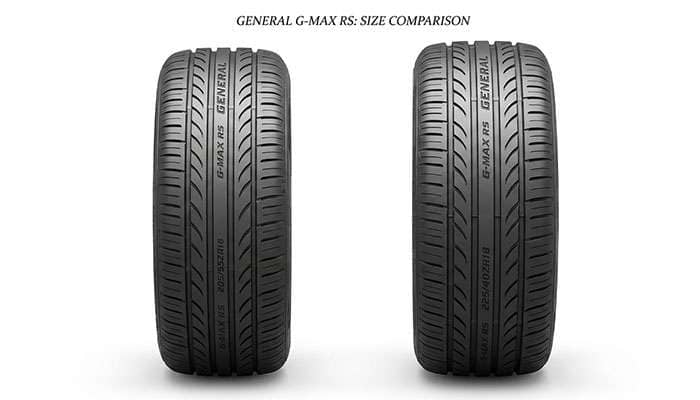
The clearest way to see it is to follow one tire up the size chart. The General G-MAX RS, a 360-treadwear summer performance tire, prices like this at publication:
Product |
15 or 16-Inch |
17-Inch |
18-Inch |
|---|---|---|---|
General G-MAX RS tire |
$143.99 (205/55ZR16) |
$153.99 (215/45ZR17) |
$167.99 (225/40ZR18) |
Konig Incident wheel |
$122.26 (15x6.5); $141.76 (16x7) |
$171.77 (17x7) |
Not offered |
Same tire, same compound, same tread. It crosses $150 between 16 and 17 inches. The Konig Incident wheel does the same thing. So before you compare brands, check where your size sits on that table. If you're on 18s and determined to stay under $150, you're shopping a different, much smaller market than someone on 16s.
Three things stack up as the rim diameter grows, and none of them are about the brand.
More material. A 225/40ZR18 is a physically bigger tire than a 205/55ZR16: wider tread, longer bead bundles, more steel belt, more rubber. Raw material is a large share of a tire's cost, and it scales with size.
Harder construction. Bigger performance sizes tend to come with lower aspect ratios, higher speed ratings, and Extra Load reinforcement. The G-MAX RS steps from a W rating in 205/55ZR16 to a Y rating and XL construction in 225/40ZR18. A short, stiff sidewall rated for higher speeds takes more engineering and more reinforcement to build.
Lower volume. Small performance sizes run on compact cars sold in big numbers. Large performance sizes serve fewer cars, and smaller production runs spread the tooling and testing cost over fewer tires.
Wheels follow the same logic. A 17-inch cast wheel uses more aluminum than a 15-inch version of the same design, and the bigger sizes sell in smaller numbers. That's why a price ceiling works like a size ceiling, for tires and wheels alike.
"Performance tire" covers everything from a 200-treadwear summer tire built for autocross to a 500-treadwear all-season with a mileage warranty. Under $150, those categories behave very differently.
Treadwear Grade |
Typical Category |
Share Under $150 |
Median Price |
|---|---|---|---|
250 and below |
Extreme and max performance summer |
About 1 in 16 |
$364 |
260 to 350 |
Max performance summer |
About 1 in 5 |
$250 |
360 to 450 |
Performance summer and all-season |
About half |
$153 |
460 and up |
Ultra high performance all-season |
About 4 in 10 |
$173 |
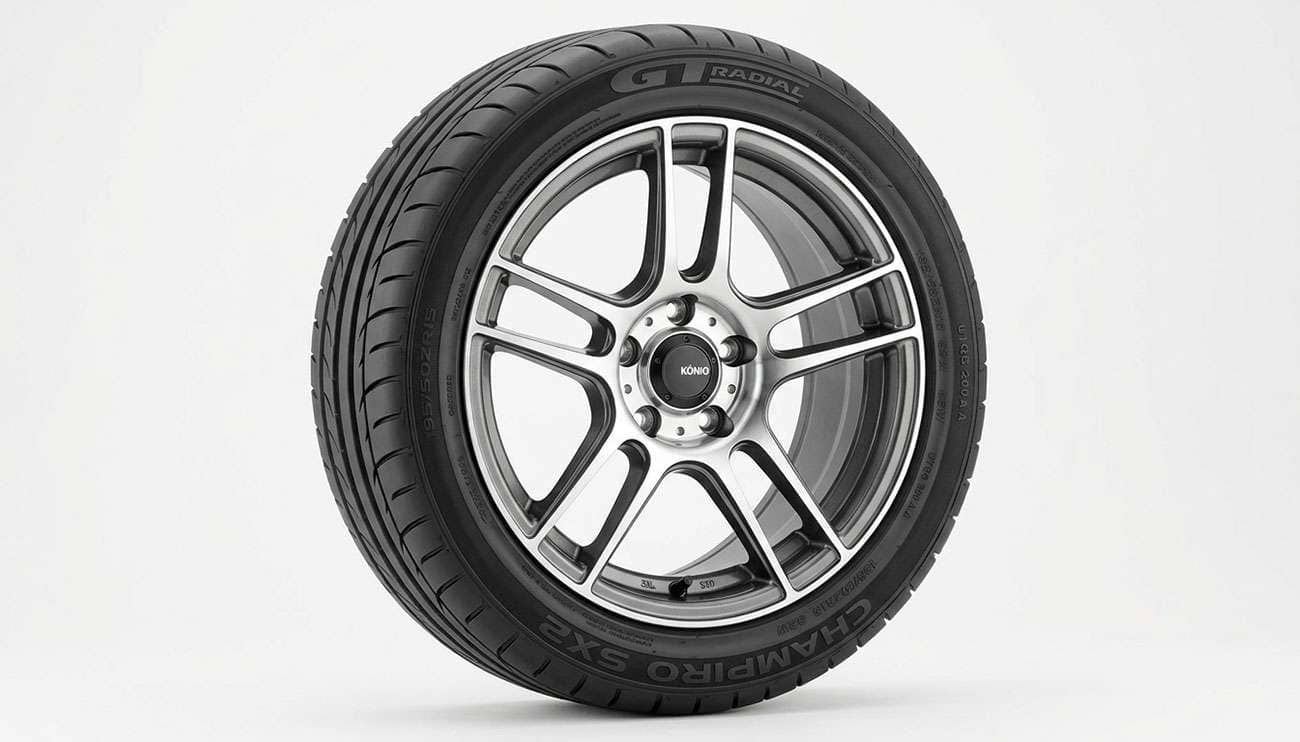
The 200-treadwear summer tire under $150 is the rarest thing on this list. You'll find it almost only in 15 and some 17-inch sizes. That's why a tire like the GT Radial Champiro SX2 in 195/50ZR15 stands out at $116.99.
Treadwear grades come from NHTSA's Uniform Tire Quality Grading system. Each manufacturer tests its tires against a control tire on a government course, and the grade is relative: a 400 should wear about twice as long as a 200 under those test conditions. Grades are most reliable for comparing tires from the same maker. They're not a mileage promise. Our guide to reading tire treadwear ratings covers the details.
Here's the practical split. A 200 to 360-treadwear summer tire gives you the most grip per dollar, but it usually carries no mileage warranty, it wears faster, and its compound stiffens as temperatures drop toward 40 degrees F, so it's a warm-weather tire. A 500-treadwear all-season like the Kumho Ecsta PA51 gives up some dry grip but comes with a 45,000-mile warranty. At $110.37, that works out to about $2.45 per 1,000 warranted miles. If your car sees winter mornings, our list of the best all-season performance tires is the better starting point.
No. And under $150, this is the part a price-sorted search result won't show you.
Every tire sold for highway use in the U.S. carries a DOT code on the sidewall, the manufacturer's certification that the tire meets the Federal Motor Vehicle Safety Standards for road tires, including FMVSS No. 139 for light-vehicle radials. A tire sold as "Track Only - Non DOT" hasn't been certified for the road. It's a competition part.
The trap is that the same model name can come in both forms. The Federal 595 RS-PRO and 595 RS-RR are sold in some sizes and versions labeled "Track Only - Non DOT," and Federal describes its competition tires as not intended for highway or road use, even when a version carries DOT approval. Same tread pattern, same name in a search result, different legal status on the street.
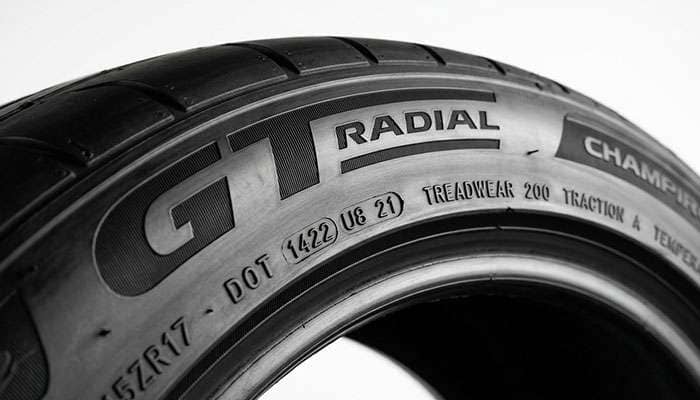
Before you buy any performance tire under $150, check two things on the product page: the full product title, where "Non DOT" or "Track Only" shows up, and the UTQG grade, which competition-only tires often don't list. If you're actually building a track-day set, our track day tire picks lay out the options by heat cycles and grip.
Every tire below is DOT-certified, verified under $150 each at publication, and chosen to cover a different size and category. Prices change, so confirm on the product page before you order.
Tire |
Size |
Category |
UTQG |
Price Each |
|---|---|---|---|---|
GT Radial Champiro SX2 |
195/50ZR15 82W |
Extreme performance summer |
200 A A |
$116.99 |
General G-MAX RS |
205/55ZR16 91W |
Performance summer |
360 AA A |
$143.99 |
Sumitomo HTR Z5 |
215/45ZR17 91Y XL |
Max performance summer |
320 AA A |
$135.99 |
Kumho Ecsta PA51 |
215/45ZR17 91W XL |
Ultra high performance all-season |
500 AA A |
$110.37 |
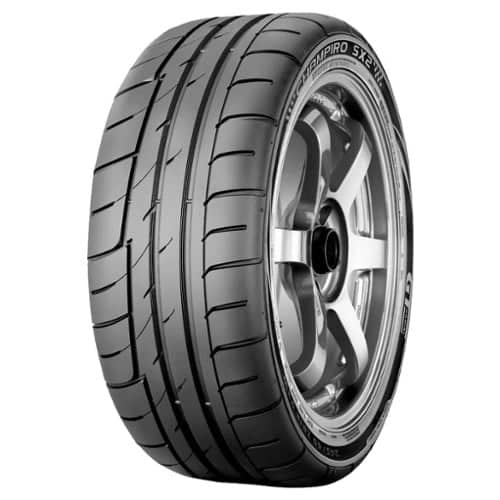
The GT Radial Champiro SX2 195/50ZR15 82W is a 200-treadwear, DOT-certified summer tire at $116.99, which puts it in the rarest corner of the under-$150 market. It's built for autocross and track days on light 15-inch cars. The trade-offs are the ones every 200-treadwear tire carries: short tread life, no mileage warranty, and poor cold-weather grip. If you want the background on the brand, read our take on whether GT Radial is a good tire brand. More options in this size are on our 195/50R15 tires page.
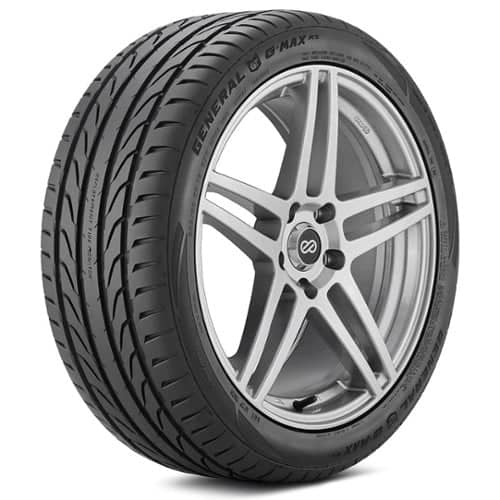
The General G-MAX RS 205/55ZR16 91W is a 360-treadwear summer tire at $143.99. That's a better fit for a daily-driven sport compact than a 200-treadwear tire: real summer grip, a compound that lasts longer on the street, and a size shared by a lot of compact cars. It's also the tire from the price table above, so if you're on 17s, expect to pay $153.99 for the same tread. Browse more 205/55R16 tires.
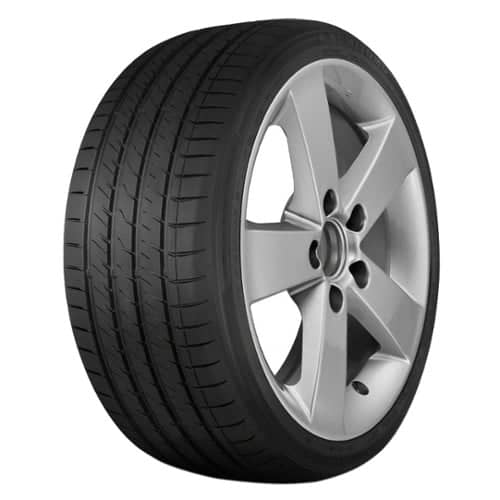
At 17 inches, summer tires under $150 are down to about 3 in 10, so a Y-rated max performance option at $135.99 is worth knowing about. The Sumitomo HTR Z5 215/45ZR17 91Y XL carries a 320 AA A grade, and the AA traction grade is the top wet-braking grade in the UTQG system.
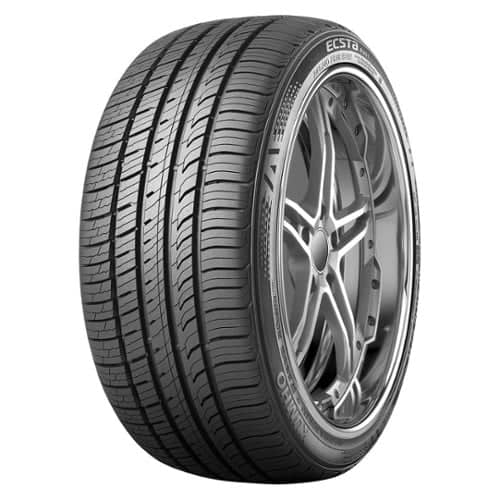
If your performance car also commutes through cold mornings, the Kumho Ecsta PA51 215/45ZR17 91W XL is the value play. It's a 500 AA A all-season with a 45,000-mile limited treadwear warranty at $110.37, the lowest price of the four. You give up some dry-road grip to the summer tires above, and you gain a tire you don't have to swap when the weather turns. See every 215/45R17 tire we carry, or browse all performance tires.
Three things, and the size cutoff is the first one. Under-$150 performance wheels live mostly at 15 and 16 inches. The Konig Incident goes from $141.76 at 16x7 to $171.77 at 17x7, and that pattern repeats across most of the market.
Load rating. Across the wheel market, wheels priced under $150 carry a median load rating of about 1,700 lb per wheel, versus about 2,000 lb across all wheels. The lightest-duty tenth of under-$150 wheels sits around 1,300 lb. That's fine on a compact car and worth checking on anything heavier. The rule: each wheel's rating should meet or beat half of your heaviest axle rating (GAWR) on the door-jamb label. If your label shows a 2,400-lb front GAWR, each wheel needs at least 1,200 lb. Our wheel load rating guide explains where to find it.
A universal fit. To hit the price, most under-$150 performance wheels are dual-drilled for two bolt patterns, like 5x100 and 5x114.3, with an oversized center bore around 72.56 or 73.1 mm so one casting fits many cars. Most car hubs are smaller than that, often somewhere between 54 and 67 mm, so the wheel needs hub-centric rings to center on the hub instead of hanging on the lug nuts. Rings are cheap. Skipping them can cause a vibration that no amount of balancing fixes. Here's more on whether you need hub rings.
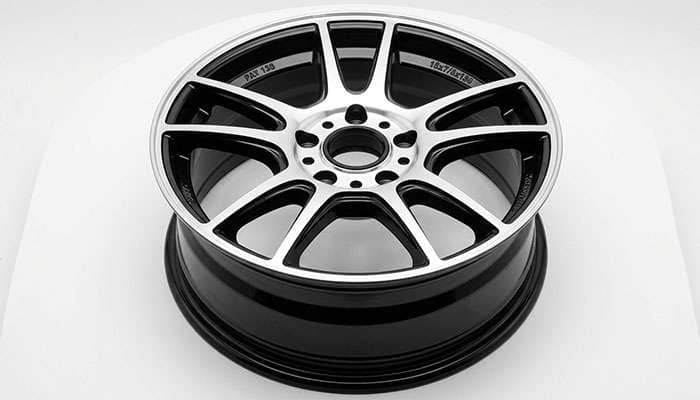
Construction and certification. Under $150, nearly every aluminum wheel is a one-piece cast wheel. Flow-formed wheels, which are lighter for the same strength, mostly price above $150; their median price is well over twice that. What you should still expect is a published load rating and testing to an industry standard such as SAE J2530 for aftermarket wheels or Japan's JWL standard. Purpose-built race wheels, like roll-formed steel circle-track wheels, are a different product category built for a specific job. If a wheel's listing shows no load rating and no street certification, ask before you bolt it on a road car. For the bigger picture on budget wheels, read the hidden costs of cheap rims.
All four wheels below are verified under $150 each at publication, carry a published load rating, and are drilled for common compact and midsize car patterns. Order hub-centric rings sized to your car's hub with any of them.
Wheel |
Size and Offset |
Bolt Patterns |
Center Bore |
Load Rating |
Price Each |
|---|---|---|---|---|---|
Konig Incident, Graphite Machine Face |
15x6.5, +40 mm |
4x100 and 4x10⁸ |
73.1 mm |
1,518 lb |
$122.26 |
Touren TR3 3130, Black Machined |
15x7, +40 mm |
5x100 and 5x114.3 |
72.56 mm |
1,600 lb |
$133.25 |
Konig Incident, Graphite Machine Face |
16x7, +40 mm |
5x100 and 5x114.3 |
73.1 mm |
1,518 lb |
$141.76 |
Touren TR9 3190, Hyper Silver |
16x7, +42 mm |
5x100 and 5x114.3 |
72.56 mm |
1,600 lb |
$143.38 |
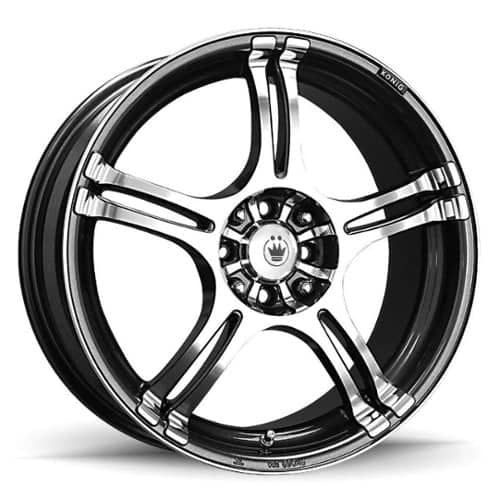
The Incident is one of Konig's value-priced tuner designs. The Konig Incident 15x6.5 4x100/4x108 at $122.26 is drilled for small four-lug cars, and the Konig Incident 16x7 5x100/5x114.3 at $141.76 covers a long list of five-lug compacts and midsize cars. Both run +40 mm offset and carry a 1,518-lb rating per wheel. Pair the 16x7 with the G-MAX RS 205/55ZR16 above for a summer set. See the full Konig wheels lineup.
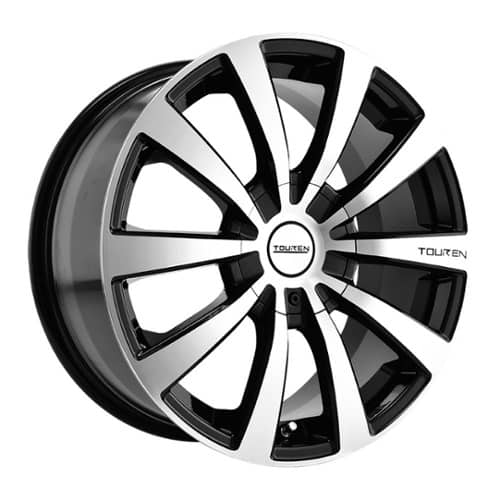
The Touren TR3 3130 15x7 5x100/5x114.3 at $133.25 is a full 7 inches wide, which matters for a 195/50ZR15 track tire. That size is approved for 5.5 to 7-inch rims, and the 7-inch wheel sits at the top of the range, where it supports the sidewall best under hard cornering. Rated 1,600 lb at +40 mm.
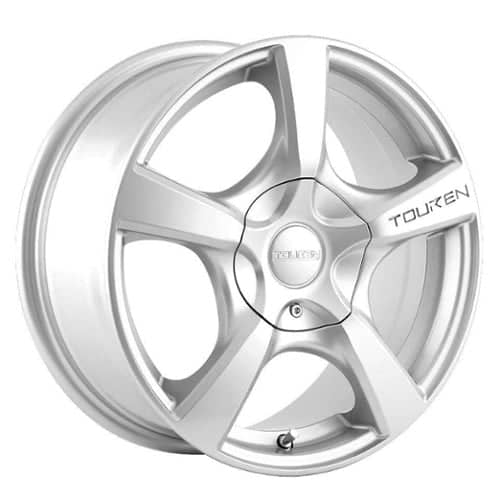
The Touren TR9 3190 16x7 5x100/5x114.3 at $143.38 is the highest-rated wheel of the four at 1,600 lb, with a +42 mm offset that suits most front-drive compacts. Browse more Touren wheels, every 16-inch wheel we carry, or our budget wheels.
The cheapest set is the one you only buy once. Here's how an under-$150 purchase goes wrong, from annoying to serious:
Every one of those costs more than doing it right: the right compound for your climate, a DOT-certified tire, a wheel rated for your car, and a set of hub rings.
"Under $150" sounds like a brand question. It's really a size question first. At 15 and 16 inches, most performance tires and a good selection of wheels sell under $150. At 17 inches, you're right at the median for tires and past it for most wheels. At 18 inches and up, the list gets short and the picks skew toward all-season tires.
Inside your size, the second filter is what you're actually buying: a 200-treadwear tire for the track, a summer tire for warm-weather driving, or an all-season with a warranty. And under $150, read the full product title, because some performance tires come in versions that were never certified for the road. Get those two calls right and $150 still buys a lot of performance.
In 15 and 16-inch sizes, often yes, because under $150 is the normal price range there rather than a discount tier. What matters more than price is matching the category to how you drive: a summer tire for warm-weather grip, an all-season for year-round use, and a 200-treadwear tire only for autocross or track days.
It depends on your size and use. At publication, good picks included the GT Radial Champiro SX2 195/50ZR15 for autocross at $116.99, the General G-MAX RS 205/55ZR16 for street summer driving at $143.99, the Sumitomo HTR Z5 215/45ZR17 for max performance at $135.99, and the Kumho Ecsta PA51 215/45ZR17 as a year-round all-season at $110.37.
Usually not. A 200-treadwear tire is built for maximum grip on warm pavement, so it wears quickly on a commute, rarely carries a mileage warranty, and loses grip in cold weather. A 300 to 360-treadwear summer tire or a 500-treadwear all-season is a better daily-driving choice.
No. Tires sold for highway use in the U.S. carry a DOT code certifying they meet federal safety standards. A tire labeled "Track Only - Non DOT" hasn't been certified for road use and belongs on a closed course. Some performance models are sold in both DOT and non-DOT versions, so check the full product title before you buy.
Usually. Most budget performance wheels are dual-drilled with a center bore around 72.56 or 73.1 mm so they fit many cars. Most car hubs are smaller, so hub-centric rings are needed to center the wheel on the hub and prevent vibration.
They can be, if the wheel carries a published load rating that covers half your heaviest axle rating and is tested to an industry standard such as SAE J2530 or JWL. Under-$150 wheels have a median load rating of about 1,700 lb, which suits most compact and midsize cars, but always check it against your door-jamb label.