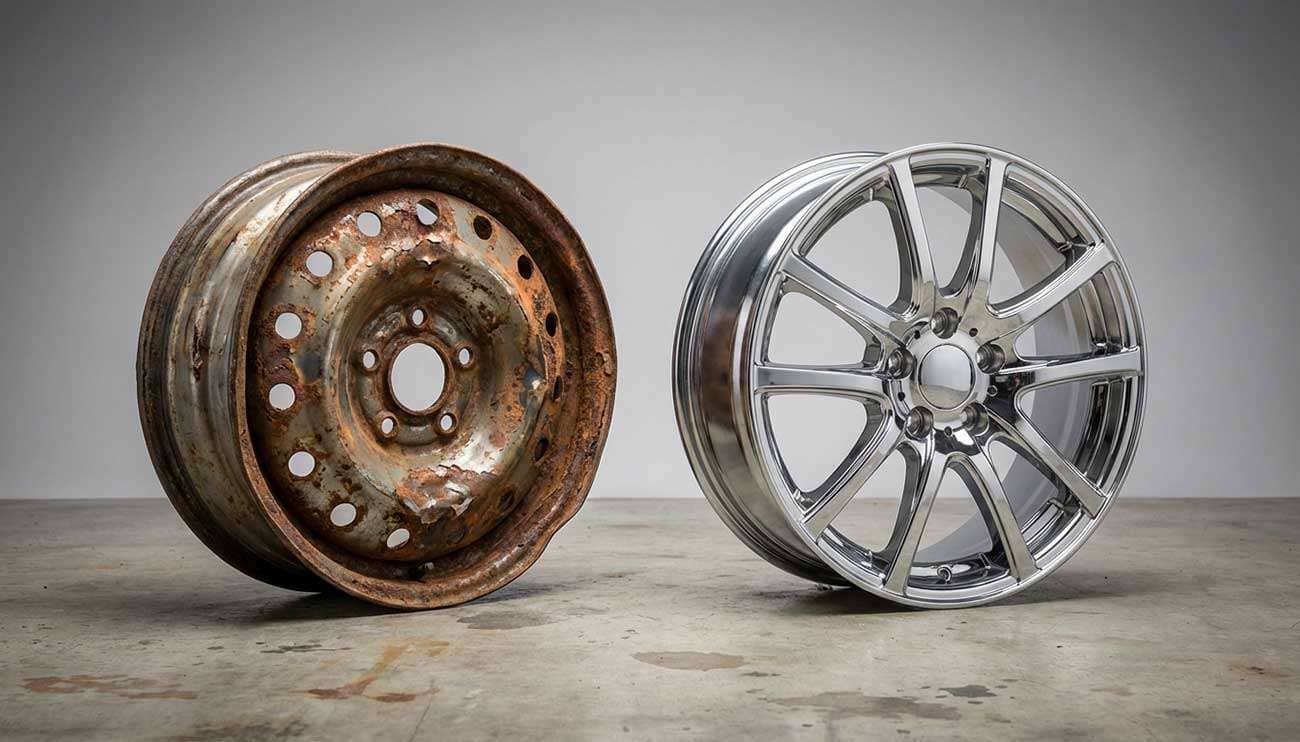
Cheap rims present a compelling option when you're facing the significant price differences between budget and premium wheel choices. Basic steel rims start at just $30 per rim, bringing a complete set to approximately $120. However, most drivers invest around $725 for a complete wheel replacement, indicating that value extends beyond the initial price point.
The numbers tell an interesting story. Affordable rim options for BMW average around $300, while comparable Lexus applications can cost as little as $100. Yet understanding what drives these price differences becomes essential before making your selection. Complete rim replacement for your vehicle ranges from $200 to $2,000, depending on materials and manufacturing quality.
Budget-friendly options like the F1R FC5 cast aluminum wheels deliver solid performance for everyday driving enthusiasts. These wheels handle regular driving demands effectively, though they may not provide the enhanced performance characteristics or extended durability found in higher-tier alternatives. Your vehicle type, driving preferences, and budget constraints ultimately determine the right choice.
We'll guide you through the key factors that influence rim pricing, the true ownership costs that extend beyond the purchase price, critical safety considerations, and proven strategies for making intelligent wheel selections that deliver lasting value. Understanding these elements helps you make informed decisions that balance immediate savings with long-term performance and reliability.
Three primary factors determine why rim prices vary from $50 to several thousand dollars: materials, manufacturing methods, and size. These elements directly influence both performance and cost, making them essential considerations for informed wheel selection.
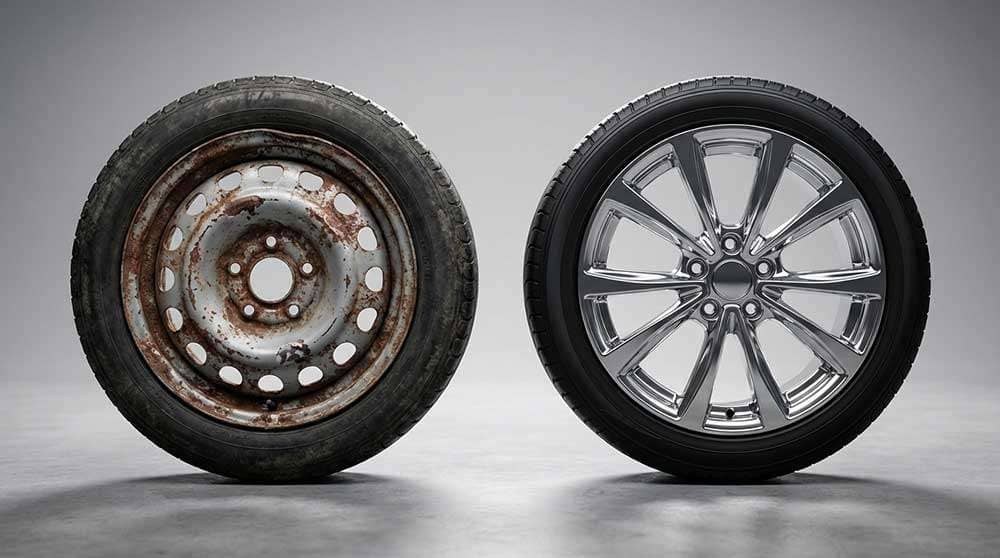
Material composition establishes the foundation of rim pricing across all categories. Steel rims offer the most economical entry point, typically ranging from $50-$200 per wheel. These wheels deliver exceptional strength through straightforward manufacturing processes, making them ideal for drivers who prioritize durability and function over appearance.
Steel wheels demonstrate superior resistance to scratches, dents, and surface damage. This durability comes with a notable weight penalty—steel wheels weigh approximately 2.5-3 times more than comparable aluminum alternatives. The additional mass impacts acceleration, braking performance, and fuel economy, though it can enhance traction during winter driving conditions.
Aluminum alloy wheels occupy the middle market position, priced between $100-$500 per rim. These wheels blend aluminum with metals like nickel, manganese, or magnesium to enhance specific performance characteristics. The primary advantage centers on significantly reduced weight compared to steel, which directly improves vehicle handling and responsiveness. Most modern vehicles feature aluminum alloy wheels as standard equipment because they provide an excellent balance of performance, appearance, and manufacturing cost.
Carbon fiber wheels represent the premium tier—extremely strong and remarkably lightweight, but commanding correspondingly high prices. Complete carbon fiber wheel sets can reach $10,000-$13,500.
Manufacturing methods create dramatic differences in rim quality and pricing beyond material selection. Cast wheels comprise approximately 90% of factory-equipped wheels on most vehicles. This process involves pouring molten aluminum into molds using gravity or low-pressure techniques.
Gravity casting represents the most basic and affordable manufacturing approach. The method relies on Earth's gravity to fill molds with molten metal. While cost-effective for large-scale production, this technique produces less dense wheels with potential defects and air bubbles. To address these structural limitations, manufacturers add extra material, creating heavier finished wheels.
Low-pressure casting improves upon basic gravity methods by injecting molten aluminum into molds under controlled pressure. This approach creates denser, more consistent wheels with enhanced mechanical properties compared to gravity-cast alternatives. Most contemporary cast wheels employ this method due to superior results while maintaining reasonable production costs.
Forged wheels represent the opposite end of the manufacturing spectrum. The process starts with solid aluminum blocks heated and compressed under 8,000-10,000 tons of pressure. This compression aligns the metal's grain structure, eliminating porosity and creating significantly denser material. Forged wheels typically weigh 10-20% less than comparable cast wheels while delivering approximately three times the strength.
This impressive strength-to-weight ratio allows manufacturers to use less material while maintaining structural integrity. Measurements of 18-inch wheels show cast versions typically weigh 11.2 kg compared to forged wheels at 8.5 kg—a difference of 2.7 kg. These performance advantages explain why forged wheels command premium pricing, starting around $645 per rim and potentially exceeding $2,500 each for high-end custom applications.
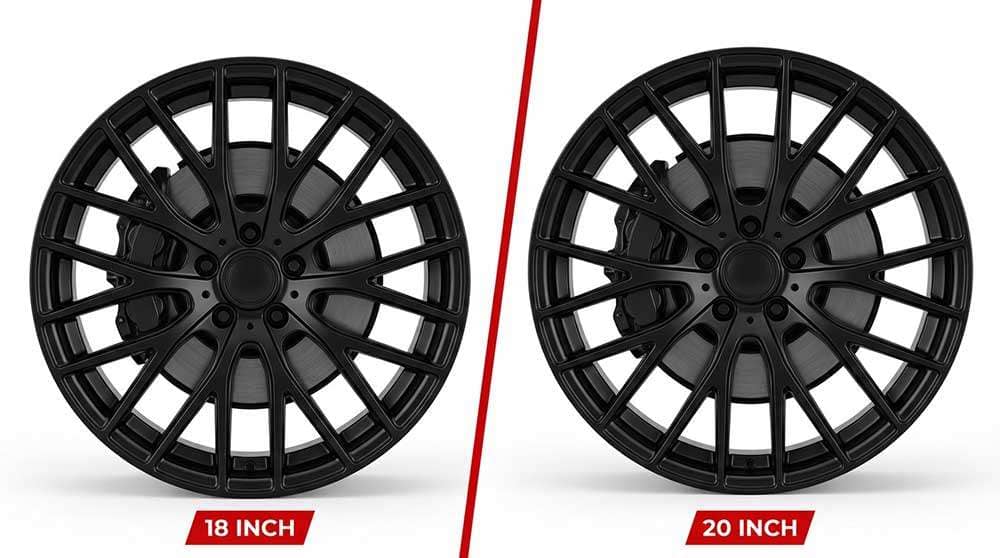
Wheel diameter directly affects manufacturing costs regardless of material or construction method. Smaller diameter wheels require less raw material, reducing production expenses. Standard sizes benefit from economies of scale, making them more affordable than specialized dimensions.
Entry-level steel wheels in common sizes (15-16 inches) represent the most economical option, starting around $30-50 per rim. Costs increase proportionally with wheel diameter since larger wheels demand more material to maintain structural integrity and rigidity.
Rim width also affects pricing structures. Wider wheels require additional material and potentially more complex manufacturing processes to ensure proper strength distribution. This size-to-price relationship explains why performance vehicles with larger wheel diameters generally face higher replacement costs than compact cars equipped with modest-sized rims.
The sticker price tells only part of the story when it comes to budget wheel selections. Smart buyers look beyond the initial purchase cost to understand the complete financial picture of rim ownership.
Basic steel rims deliver the best value for budget-conscious drivers, typically priced between $30-$150 each or approximately $120-$600 for a complete set. Standard alloy wheels range from $100-$500 per rim, with pricing determined by design complexity and finish quality. Budget-friendly aftermarket alloy wheels start around $75-$300 each, offering significant savings compared to OEM options that run $250-$500+ per rim.
The lowest prices? Standard steel wheels in 15-16 inch sizes represent the most economical choice, starting at just $30-$50 per rim. These sizes benefit from mass production efficiencies and minimal material requirements.
Professional mounting and balancing adds $80-$200 to your total investment. Individual tire balancing services range from $15-$50 per wheel, bringing the full set cost to $60-$200.
Professional installation covers essential services:
Labor and specialized equipment use
Valve stems or TPMS sensor kits
Precision mounting and balancing
Disposal fees for old wheels
Complete inspection and safety verification
Many shops offer "life of tire" maintenance packages including future rotations, rebalancing, flat repairs, and safety inspections. These comprehensive packages often provide better value than paying for individual services later.
The biggest hidden expense comes from accelerated replacement cycles. Car wheel rims typically require replacement every 4-5 years or 40,000-60,000 kilometers under normal driving conditions. Cheap rims often fail earlier due to inferior materials or manufacturing shortcuts.
Repair costs vary significantly by damage severity:
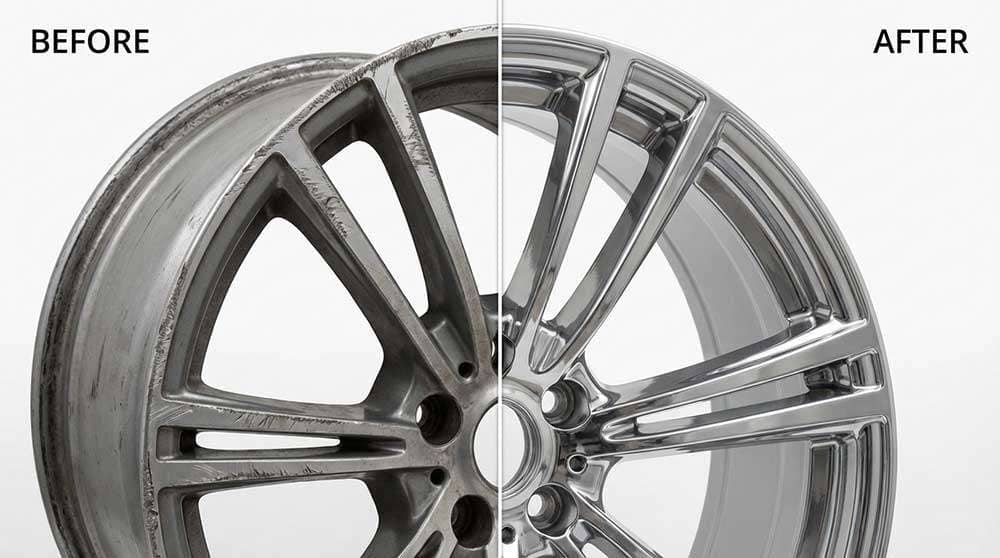
Minor scratches and curb rash: $50-$150 per wheel
Bent rim straightening: $100-$150 per wheel
Cracked rim replacement: Up to $500 per wheel
Timing your repairs makes financial sense. Minor bends and scratches cost 30-50% less to repair than complete replacement. However, delaying necessary repairs can generate $100-$200 in additional tire wear or alignment expenses. Budget rims frequently require total replacement rather than repair, particularly when structural integrity becomes compromised.
Safety represents the most critical factor when evaluating budget wheel options. While price and appearance matter, cheap rims can create serious hazards that compromise your vehicle's performance and put you at risk.
Load rating indicates the maximum weight a single wheel can safely support without failure. This specification ensures your wheels can handle your vehicle's weight plus cargo and passengers. When manufacturers reduce costs to create inexpensive rims, structural integrity often becomes compromised.
Calculate proper wheel load requirements by dividing your vehicle's heaviest gross axle weight rating by two. You'll find this information on the driver's side door jamb or in your glove compartment. Exceeding rated wheel capacity can lead to catastrophic failures at highway speeds.
Manufacturing methods create the primary safety difference between quality and budget wheels. Many inexpensive rim manufacturers rely on gravity casting—pouring molten metal into molds and allowing natural cooling. This process creates uneven density throughout the material, producing potential weak spots.
These cost-cutting measures result in serious structural vulnerabilities:
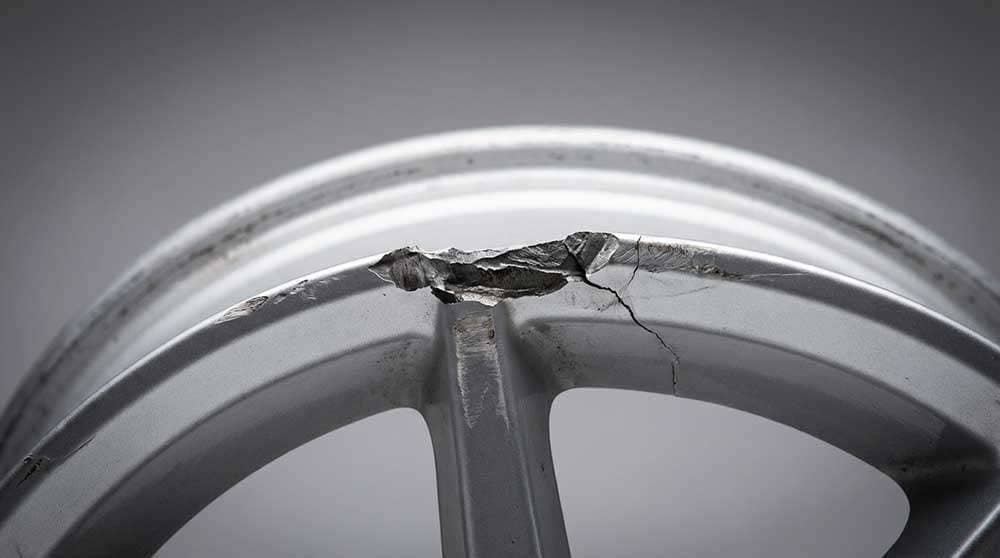
Cracking or complete failure when hitting potholes or during emergency braking
Spoke breakage under lateral cornering forces
Rim edge separation due to insufficient tensile strength
Increased susceptibility to impact damage from road debris
Budget wheels typically fail at critical stress points like spoke junctions and rim edges. Quality wheels distribute forces evenly across the structure, while cheap alternatives concentrate stress in vulnerable areas. Additionally, inexpensive rims often lack protective coatings that resist moisture and road salt, accelerating deterioration.
Legitimate safety certifications provide assurance that wheels meet established safety standards. Two certifications deserve your attention:
JWL (Japan Light Alloy Wheel) represents one of the industry's most demanding testing protocols. This standard subjects wheels to radial stress tests, rotational bending fatigue tests, and impact evaluations to verify durability and safety.
VIA (Vehicle Inspection Association) certification offers additional verification through independent third-party testing. Only wheels passing VIA's rigorous examination can legally display their logo, typically stamped or machined into the wheel face.
Many budget manufacturers falsely claim these certifications. Authentic VIA-certified wheels appear in a searchable online database maintained by Japanese authorities. At Performance Plus Tire, we stock only properly certified wheels that meet or exceed these safety standards, ensuring your investment protects both performance and safety.
Your wheel selection shapes every aspect of your driving experience. Price-focused choices often create compromises that become apparent with daily use.
Wheel specifications directly affect your vehicle's efficiency and responsiveness. Larger and heavier wheels increase rolling resistance, demanding more energy to maintain speed. This typically reduces fuel economy by 4-10%. A vehicle that normally achieves 30 MPG drops to approximately 27-28.8 MPG with heavier wheel choices.
Weight distribution plays a crucial role in handling characteristics:
Lighter wheels enhance acceleration performance—every pound removed from wheel weight effectively reduces overall vehicle mass by 6-10 pounds
Larger diameter wheels paired with low-profile tires improve cornering precision
Heavier wheels increase unsprung weight, reducing suspension responsiveness and overall vehicle dynamics
Steel wheels deliver initial cost savings but force your engine to work harder, reducing both performance and efficiency. This trade-off becomes noticeable during acceleration and highway driving.
Material selection determines longevity across various environments. Steel rims provide exceptional durability with superior resistance to impacts, bending, and cracking. These wheels excel in challenging conditions including off-road driving and harsh weather like heavy snow or muddy terrain.
Aluminum alloy wheels balance weight reduction with adequate durability. Forged aluminum options deliver enhanced strength while maintaining lightweight characteristics.
Chrome wheels offer visual appeal but present maintenance challenges. They tend to chip, peel, or corrode when exposed to road salt, making them less suitable for year-round use in harsh climates.
Budget wheel choices create stress throughout your vehicle's systems. Heavy rims increase load on suspension components, accelerating wear on control arms and bushings. Lower-profile tires commonly paired with larger wheels reduce your suspension's ability to absorb road impact.
Braking performance suffers with increased wheel weight. A 10% increase in wheel weight extends stopping distances by approximately 1%. Changes in wheel offset affect tire positioning relative to the vehicle, potentially complicating alignment and causing uneven tire wear.
Mid-range aluminum alloy wheels provide the optimal balance of performance, durability, and value for most driving applications without the compromises inherent in the cheapest alternatives.
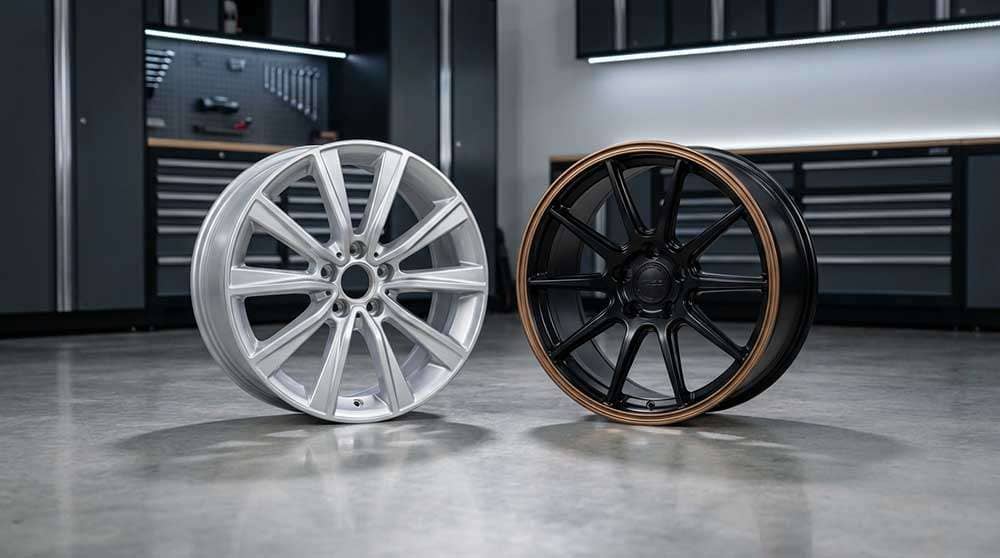
Quality wheels at reasonable prices exist when you know which manufacturers to trust and where to shop. Smart purchasing requires research and careful inspection, but finding reliable rims that deliver both value and safety becomes achievable with the right approach.
Konig wheels deliver exceptional value through advanced flow-forming techniques that reduce weight while maintaining structural strength. These wheels provide performance benefits typically found in higher-priced options. Enkei, the largest aluminum wheel manufacturer worldwide, offers complete sets ranging from $1000-$1300 while bringing serious racing expertise to consumer applications.
Stage Wheels ($1080-$1380/set) and F1R ($700-$900/set) provide striking designs without sacrificing structural integrity for drivers on tighter budgets. American Racing balances classic styling with modern engineering standards at mid-range prices, making them an excellent choice for those seeking both aesthetics and reliability.
Discount Tire offers wheels under $150 each from reputable manufacturers like Fuel Wheels, Method Wheels, and Black Rhino. Discounted Wheel Warehouse provides access to over 80,000 wheels from 850+ brands with warranty protection.
Check out our selection of affordable, quality rims at Performance Plus Tire where expert guidance helps match your vehicle with properly certified wheels at competitive prices.
Look for proper certifications first—JWL and VIA stamps indicate wheels meet rigorous safety standards. Inspect for structural damage including cracks, dents, corrosion, and damaged lug holes. These visual cues reveal potential safety issues before purchase.
Wheel and tire packages often provide the best overall value, including professional mounting, balancing, and warranty benefits. Avoid deals that appear too good to be true—these frequently involve counterfeit products using inferior materials. Quality wheels maintain consistent pricing across reputable retailers, so dramatically low prices should raise immediate concerns.
Smart rim selection requires balancing immediate costs with long-term value and safety requirements. We've covered the essential factors that separate budget options from premium alternatives, helping you make informed decisions that match your driving needs and budget constraints.
Material quality and manufacturing methods create the primary differences in rim pricing. Steel rims offer exceptional durability at entry-level prices, while aluminum alloy options provide the best balance of weight, performance, and cost for most drivers. Manufacturing shortcuts in budget wheels often compromise structural integrity, making safety certifications like JWL and VIA essential verification points.
The true cost extends beyond the purchase price. Installation, balancing, and potential repair expenses can significantly impact your total investment. Mid-range aluminum alloy wheels from established manufacturers like Konig, Enkei, or Stage Wheels typically deliver the optimal combination of affordability and reliability without the compromises found in bottom-tier alternatives.
Safety considerations should guide your selection process. Proper load ratings ensure your wheels can handle your vehicle's requirements, while quality manufacturing processes prevent the structural failures common in poorly made budget options. Browse our collection of budget-friendly rims at Performance Plus Tire where you'll find properly certified wheels that deliver lasting value without compromising your safety.
Your specific driving conditions, vehicle type, and performance expectations ultimately determine the right choice. Budget-conscious drivers can find reliable options by focusing on reputable manufacturers, proper certifications, and avoiding deals that seem too good to be true. The smartest approach balances immediate savings with long-term reliability, ensuring your wheels perform consistently for years to come.
When considering cheap rims, understanding the true costs and safety implications helps you make an informed decision that balances budget constraints with performance needs.
Cheap rims often use inferior materials and manufacturing methods, resulting in heavier wheels that reduce fuel efficiency by 4-10% and compromise handling performance.
Hidden costs include frequent repairs ($50-$500 per wheel), installation fees ($80-$200), and earlier replacement needs, making cheap rims potentially more expensive long-term.
Safety certifications like JWL and VIA are crucial - many budget manufacturers falsely claim these standards, creating potential hazards during driving.
Mid-range aluminum alloy wheels from reputable brands like Konig or Enkei offer the best value, balancing affordability with quality and safety standards.
Steel rims provide exceptional durability at low cost but add significant weight, while forged aluminum delivers superior strength-to-weight ratios at premium prices.
The smartest approach involves purchasing certified wheels from established manufacturers rather than choosing the absolute cheapest option, ensuring both safety and long-term value for your investment.
While cheap rims can be tempting, they may compromise safety. Low-quality rims are more prone to bending, cracking, or breaking, especially when hitting potholes or during hard braking. Look for rims with JWL or VIA certifications to ensure they meet minimum safety standards.
Cheap rims can negatively impact your car's performance. They are often heavier than quality alloy wheels, which increases unsprung weight and rotational mass. This can lead to reduced acceleration, longer braking distances, and decreased fuel efficiency. The difference is most noticeable in sporty or performance-oriented vehicles.
While cheap rims have a lower upfront cost, they may lead to higher long-term expenses. They are more likely to require frequent replacements or repairs due to damage from road conditions. Additionally, their lower quality can result in increased wear on other vehicle components like suspension and brakes.
To find affordable yet reliable rims, consider mid-range aluminum alloy wheels from reputable manufacturers like Konig or Enkei. These often provide a good balance of quality and cost. You can also look for OEM (Original Equipment Manufacturer) wheels from owner forums or reputable online marketplaces, which may offer better quality at reasonable prices.
For winter use, especially in areas with harsh conditions, steel wheels are often a practical and cost-effective choice. They're durable, less prone to damage from salt and winter conditions, and typically cheaper to replace if damaged. However, ensure they meet the correct specifications for your vehicle, including proper load ratings.