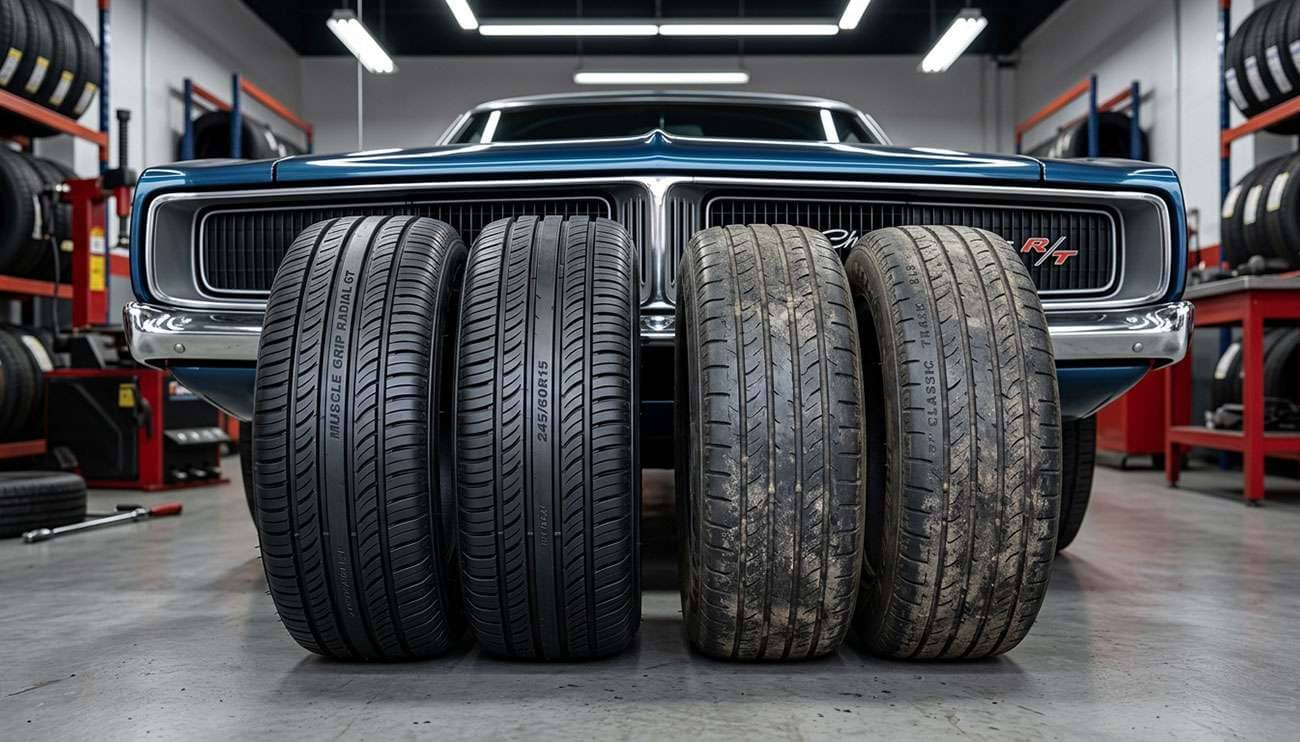
If your car is front- or rear-wheel drive and the other two tires still have close to the same tread, two will do, and the new pair goes on the rear. All-wheel drive usually needs four. That is the answer you will hear everywhere, and it is right as far as it goes. It quietly assumes your tires wear out before they age out. On a collector car, a weekend cruiser, or anything that rolls a couple thousand miles a year, that assumption runs backwards. What actually decides 2 or 4 is the age gap and the construction match between the pair you are buying and the pair you are keeping. Tread depth is the last thing to check, not the first.
I have been mounting tires in Long Beach since 1971, and the most expensive mistake I see on classics is a beautiful new pair bolted next to a pair that looks fine and is fifteen years old. Here is how to tell which situation you are in.
Feature |
Buy |
Why |
|---|---|---|
FWD or RWD, same construction, all tires under 6 years old, tread within 4/32 inch |
2 |
The keepers are close enough in grip; new pair goes on the rear |
Full-time AWD, tread spread over 2/32 inch between any two tires |
4 (or shave the new ones) |
Unequal rolling diameters load the center differential |
The pair you would keep is 6 or more years old by DOT date |
4 |
Many automakers call for replacement at 6 years regardless of tread |
Any tire on the car is 10 or more years old |
4 |
Most tire makers set 10 years as the outside limit, tread or no tread |
Switching from bias-ply to radial, or radial back to bias-ply |
4 |
The two constructions corner differently and should not be mixed |
Staggered setup, rears worn, fronts under 6 years old |
2 (rear pair) |
Staggered tires cannot rotate front to rear, so rears always go first |
Staggered setup, fronts 6 or more years old |
4 |
The fronts have aged out even though their tread looks new |
Show car, and the old whitewall width or tread pattern is no longer available |
4 |
A pair that does not match reads wrong from twenty feet away |
Now look at it by vehicle. The same question routes to a different buy depending on what is sitting in your garage.
Feature |
Usual Answer |
What to Buy |
Watch For |
|---|---|---|---|
Daily-driven FWD or RWD sedan |
Often 2 |
Matching pair, mounted on the rear |
Tread gap over 4/32 inch |
Full-time AWD crossover or wagon |
4 |
Full set, or one shaved to match |
Manufacturer tread tolerance, often 2/32 inch |
Classic part-time 4x4 (Bronco, K5 Blazer, CJ, square-body pickup) |
4, often 5 |
Full set plus a matching full-size spare |
Spare that is years older than the set |
Muscle car or hot rod on a staggered setup |
2 at a time, until the fronts age out |
Rear pair in the same brand and model as the fronts |
Front date codes |
Original-look restoration on bias-ply |
4 |
Full bias-ply set in the period size |
Never pairing bias-ply with radials |
Garage-kept classic driven under 2,000 miles a year |
4 |
Full set chosen by date code |
Age, not tread |
Yes, on a two-wheel-drive car, when three conditions line up. The tires you keep must be the same size and construction as the new ones. Their tread should be within about 4/32 inch of the new pair. And they need to be young enough to trust.
When those line up, the new pair goes on the rear axle. Every time, front-wheel drive included. Michelin, the Tire Industry Association, and every shop worth its air hose say the same thing for one reason: the rear is where you lose the car. Worn tires on the front in the wet make the car push wide, and your instinct to slow down fixes it. Worn tires on the rear make the back end step out, and most drivers have no instinct for that at all. We go deeper on placement in New Tires: Front or Back?
For the full set of daily-driver rules, the wear-percentage tiers, the 4/32 inch gap, the shop questions to ask, read Replace All 4 Tires or Not? This article is about what those rules leave out.
On a full-time all-wheel-drive car, usually yes. The mechanism is simple once you see it. A tire with less tread has a slightly smaller rolling diameter, so it turns more revolutions per mile than a new one. On a full-time system, the center differential or coupling has to absorb that difference every mile you drive. Many manufacturers allow only about 2/32 inch of tread spread between any two tires. Go past it and the drivetrain works against itself, building heat and wear in parts that cost far more than a set of tires.
If only one tire is damaged on a nearly new set, tire shaving is the alternative. A shop trims the new tire's tread down to match the other three.
Here is where the vintage truck crowd catches a break. An early Bronco, a K5 Blazer, a CJ, or an old square-body pickup with a part-time transfer case runs in two-wheel drive most of the time. The front axle is disconnected, so a small diameter difference front to rear does not fight anything. Lock it into four-wheel drive on dirt or snow and the tires can slip to relieve the difference. These trucks are far more forgiving than a modern crossover. Check the owner's manual for the actual tolerance.
The catch on these trucks is the spare. Most carry a full-size spare, and the smart owners rotate all five. If yours has been riding under the bed since the Reagan administration, it is not a spare. It is a liability. When you buy, buy five.
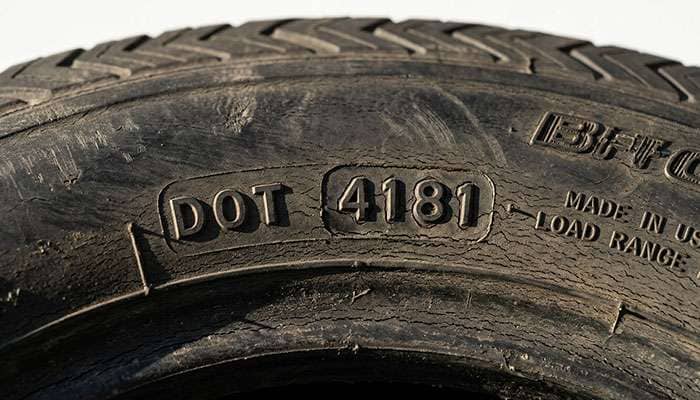
This is the variable that decides 2 or 4 on most of the cars that roll into our shop, and almost nobody asks about it.
Run the math on a weekend car. A typical passenger tire starts around 10/32 inch and wears to the 2/32 inch legal floor in something like 50,000 miles. Drive 1,500 miles a year and that tire would take more than 33 years to wear out. It will not last 33 years. The rubber gives up long before the tread does.
There is no federal age limit on tires. The guidance comes from the people who build cars and tires:
The date lives in the last four digits of the DOT code on the sidewall: week and year. "1419" means the 14th week of 2019. If you have never hunted for it, we show you where in How to Tell How Old Your Car Tires Are.
Tire rubber contains waxes and antiozonants that protect it from ozone and oxygen. They work by migrating to the surface, and flexing is what keeps that migration going. A tire that rolls every day keeps refreshing its own protective layer. A tire that sits in a garage for eleven months does not. The compound hardens, the surface develops fine cracks in the sidewall and between the tread blocks, and the internal bond between rubber and cord weakens with every year.
A hardened tire with plenty of tread can grip worse than a younger tire that is half worn. That is the whole problem with buying two. You put a new pair on the rear and leave a hard, old pair on the front, and the front of the car now does most of the braking on the weakest rubber you own. On a classic with drum brakes or early discs, you need every bit of grip up there.
My rule on a collector car: if the pair you plan to keep is past 6 years, buy four. If anything on the car is past 10, buy four and do not argue with me about it.
Never on the same axle. And on a car you drive on the street, not at all if you can help it. That means if you are switching construction, the answer is four tires, period.
The reason is how each one builds cornering force. A bias-ply tire has cord plies running diagonally across each other, which makes the sidewall and tread work as one stiff unit. A radial has its cords running straight across from bead to bead, with steel belts under the tread. The sidewall flexes on its own while the tread stays flat on the road. Radials develop their cornering grip at a smaller slip angle, meaning with less twist between where the wheel points and where the tire actually goes. Put the two constructions on opposite ends of a car and the front and rear respond to the steering wheel at different rates. That is a handling imbalance built right into the car.
If you are ever stuck with a mix for a short trip, the radials go on the rear. Michelin publishes that same placement rule for the rare cases where mixing cannot be avoided. Treat it as a way to get home, not a way to drive.
Choosing between the two for your restoration is its own decision. We lay out the trade-offs in Radial vs Bias-Ply Tires for Classic Cars. Whichever way you go, go all four.
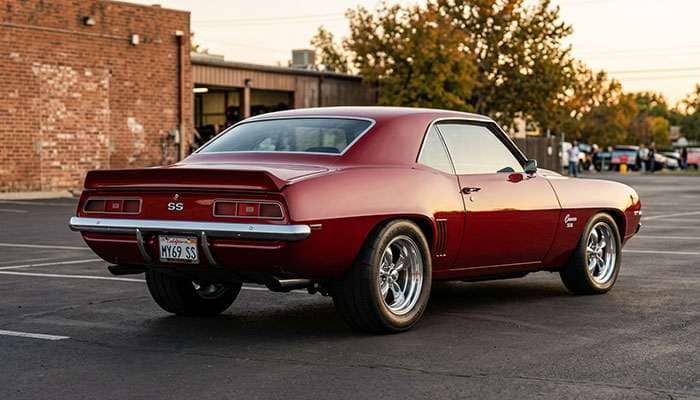
Yes, and on a staggered car, buying in pairs is normal. A staggered setup runs wider tires on the rear than the front, which is how a lot of muscle cars, pro-touring builds, and hot rods put their power down and get their stance. Because the sizes differ, you cannot rotate them front to rear. The rears take all the drive torque, all the burnouts you swear you are not doing, and they wear out first.
So the normal cycle is rears, rears again, then everything. Here is why the "everything" comes sooner than people expect. The fronts on a staggered car often outlive two sets of rears on tread. They do not outlive them on age. By the second rear replacement, those good-looking fronts can easily be 8 or 10 years old. That is the moment to buy four.
When you do buy a rear pair, match the fronts in brand and model. Staggered cars are tuned around a particular balance of front and rear grip, and a different tire model on one end shifts that balance. More on getting the setup right in Muscle Car Staggered Setup.
On a classic, yes, for two different reasons.
Function. Different tread patterns and compounds grip differently, especially in the wet. Same brand and model on each axle is the minimum. Same brand and model on all four is the goal.
Appearance. This one gets underestimated until the car is parked at a show. Whitewall widths vary between makers and between production runs. Put a new pair with a 2-1/4 inch whitewall on one end and an old pair with a 2-3/4 inch whitewall on the other, and anyone who knows the car will spot it before they spot the paint. Bias-look radials are the same story: the sidewall profile and tread look are the whole reason you bought them, and a mismatched pair breaks the illusion.
If the whitewall or pattern on your old pair has been discontinued, buying two is not really an option. Buy four and get the look right. Our Whitewall Width Guide shows which widths suit which era.
You can, but understand what it does. Two rules cover it:
Load index works the same way, with less room to bend. Never put a tire on any corner that carries less than the load the door placard or your period specification calls for. On a classic that has gained a big-block swap, air conditioning, or a trunk full of show gear, be honest about what the car weighs now.
Period sizes add a wrinkle. Many classic tire sizes from the 1960s and 1970s carry no load index on the original paperwork at all, so confirm the modern replacement's load index against the car's actual corner weights before you buy.
Buying two when you needed four does not cost you anything the day you drive out. The bill comes in stages.
Stage 1: Uneven grip, front to rear. One end of the car grips better than the other. On a dry, sunny Sunday you will not feel it.
Stage 2: Wet-road surprises. The first heavy rain finds the weaker end. If it is the rear, the car rotates when you lift or brake mid-corner. If it is an aged front pair, stopping distances stretch on the end that does most of the braking.
Stage 3: Accelerated wear on the keepers. The old pair works harder to keep up with the new pair, and it wears or cracks faster than it would have on its own.
Stage 4: Sidewall cracking and damage. Aged rubber cracks first at the sidewall, where flexing is greatest and there is no tread to protect it. If you are already seeing cracks or a bulge, read Tire Sidewall Damage: Is It Safe to Drive? before your next run.
Stage 5: Tread separation on the old pair. As the bond between rubber and cord gives up with age, heat from a long highway run can be enough to let the tread peel away from the casing. On an old car without modern stability systems, that ends badly.
Stage 6: Drivetrain wear on AWD and 4WD. On full-time systems, the diameter gap shows up as heat and wear in the center differential or coupling. A repair there costs many times what the two extra tires would have.
Every stage ends at the same counter: a full set, matched in construction, size, and age. Buying it at Stage 1 costs exactly what it costs at Stage 5, minus the damage in between.
Step 1: Read every date code. Find the four-digit date on all four tires, and the spare if it rotates. Anything past 10 years means four. A keeper pair past 6 years means four.
Step 2: Check construction. Bias-ply and radial do not mix. If the new tires will be a different construction from the old, buy four.
Step 3: Identify the drivetrain. Full-time AWD needs all four within the manufacturer's tread tolerance. Part-time 4x4 and two-wheel drive are more forgiving.
Step 4: Measure the tread gap. Use a tread depth gauge, not a penny. On two-wheel drive, keep the gap within about 4/32 inch. On full-time AWD, often 2/32 inch.
Step 5: Match the look and the ratings. Same brand and model per axle at minimum. Whitewall width and pattern matched if appearance matters. Lower speed rating on the front. Load index at or above spec on every corner.
Step 6: Mount new tires on the rear. If everything above says two is fine, the new pair goes on the back.
If the steps point to four, start with our classic tires lineup, sorted by size and era.
The everyday answer is true: two tires on a front- or rear-wheel-drive car if the others are close in tread, new pair on the rear, and four on full-time all-wheel drive. But it was written for cars that wear out their tires. Most classics, cruisers, and garage-kept cars never get the chance. On those, age and construction decide the question first. Read the date codes, match the construction, then measure the tread. Do it in that order, and the answer to 2 or 4 picks itself.
Replace all four when your car is full-time all-wheel drive, when the tires you would keep are 6 or more years old, when anything on the car is 10 or more years old, or when you are switching between bias-ply and radial. Otherwise, a matching pair on a two-wheel-drive car is fine.
The back, on every drivetrain, front-wheel drive included. Better tires on the rear keep the back end planted in the wet. Worn tires on the rear are what lets a car spin.
Only if the other two are within your manufacturer's tread tolerance, often 2/32 inch. Otherwise, buy four or have the new tires shaved to match. Classic part-time 4x4s running in two-wheel drive are much more forgiving.
Many automakers recommend replacement at 6 years from the manufacture date, and most tire makers set 10 years as the outside limit, even with full tread. Read the last four digits of the DOT code for the week and year.
Never on the same axle, and avoid it entirely on a street car. The two constructions build cornering grip differently, which creates a front-to-rear handling imbalance. If you must mix temporarily, put the radials on the rear.
Different brands on different axles is acceptable if size, construction, and ratings match, though handling balance shifts slightly. Different brands on the same axle is not. On a staggered or show car, match brand and model on all four.