
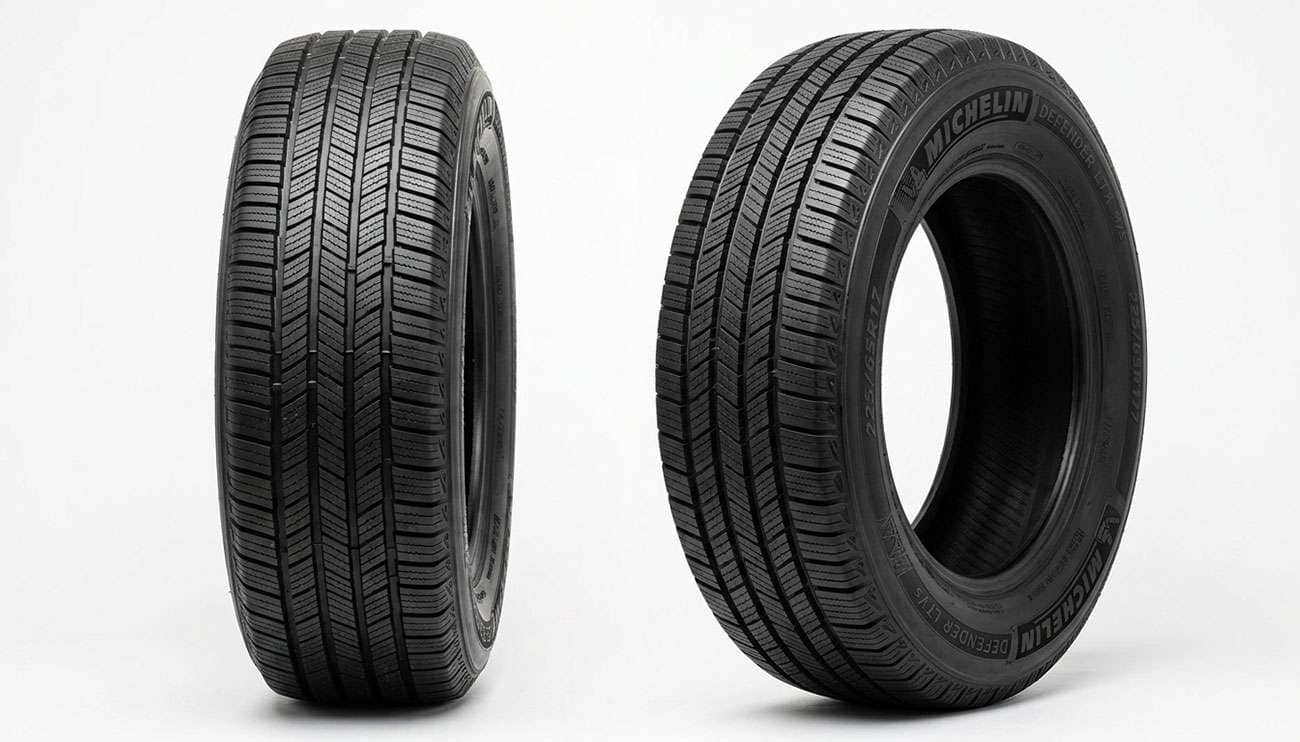
Here is the short version, and it is the same answer I have given every customer who rolls into the shop with two tires in the cart for the better part of forty years: your new tires go on the rear axle. Front-wheel drive, rear-wheel drive, all-wheel drive, it does not matter one bit. The pair with the deepest tread belongs in the back, because a planted rear end is what keeps your car from swapping ends when the road turns wet. Now let me walk you through why that trips so many good folks up.
New tires go on the back. That is the rule, and it holds no matter what is under the hood or which wheels are driving your car. I know it feels backward. Most people figure the fresh rubber ought to go up front where all the action is, and half the customers I tell this to give me a look like I mounted their tires on the roof. But every major tire maker and every carmaker landed on the same recommendation for one simple reason: deeper tread on the rear axle keeps the tail of the car steady when the pavement gets slick.
Fresh tread has more depth to bite through standing water. Worn tread cannot move that water out of the way, so a bald tire starts skating, or hydroplaning, long before a fresh one does. Put the tires that skate first up front, and the tires that grip longest in back, and you have built yourself a car that stays pointed the right direction when things go sideways. Here is a quick cheat sheet you can keep in your back pocket.
Situation |
Where the New Tires Go |
Why |
|---|---|---|
Front-wheel drive, buying two |
Rear axle |
Keeps the back planted and stops a wet-road spin |
Rear-wheel drive, buying two |
Rear axle |
Grip and stability where the power goes down |
All-wheel drive |
Usually all four |
The driveline wants all four treads matched closely |
Staggered setup, different sizes |
Like-for-like on the same axle |
Fronts and rears are not the same size, so they stay put |
Buying a full set of four |
One at each corner |
Matched tread all around gives the most balanced handling |
Let me explain it the way I explain it on the shop floor, without the engineering lecture. When a car loses grip, it does one of two things. If the front tires let go first, the car pushes wide and plows straight ahead. That is called understeer, and it is the friendly kind of trouble. You lift off the gas, the nose hooks back up, and you carry on with your heart still in your chest. If the rear tires let go first, the back end steps out and tries to overtake the front. That is oversteer, and it will spin you around before most drivers can even think about correcting.
Now think about weight. When you hit the brakes, weight shifts forward onto the nose. When you take a corner, weight shifts to the outside. In both of those moments the rear tires are carrying less load and working harder to hang on, so they are the ones most likely to break loose. Put your best grip back there and the tail stays hooked up. I have always told folks to picture the back tires as the rudder on a boat. A steady rudder keeps you tracking true. A loose one sends you into a spin, and no amount of steering up front will save you.
This is also why reading your rubber matters. If you learn to spot uneven tire wear patterns early, you can catch an alignment or inflation problem before it eats a fresh set. A tire wearing funny on one edge is trying to tell you something.
This is where the argument usually starts, and I get it. On a front-wheel-drive car the front tires steer, they do most of the braking, and they put the power down. Three jobs. So it feels dead obvious that the freshest tires belong up front. My own dad swore by putting new tires on the front for fifty years, and plenty of sharp people still do.
Here is the catch. Those three jobs are exactly why the front tires wear out faster on a front-driver, which is what tempts you to slap the new pair up there in the first place. But wearing faster does not earn them first claim on the new rubber. In the dry, new tires up front feel great. In a hard rain, the worn rears run out of grip first, the back end skates, and you are spinning through an intersection wondering what happened. Michelin and the rest of the tire world all point the deeper-tread pair to the rear on front-wheel-drive cars for that one reason: wet stability wins over dry feel every time.
The smarter play is to keep all four tires wearing evenly in the first place so you are not stuck choosing. Stay on top of the correct way to rotate your tires every 5,000 to 7,500 miles and you can often replace all four together, which sidesteps the whole front-or-back debate.
Buying two? The new pair goes on the back and the older pair moves up front. Simple as that. It surprises people every time, but it is the same answer you will get from any honest shop in the country.
The one thing I will nag you about is matching. When you run two new and two older tires, keep them the same size, and try to keep the same type and tread design front to back. Mixing a grippy touring tire with a worn-out bargain tire, or crossing brands with wildly different personalities, gives you a car that behaves one way at the front and another at the back. If you want the full rundown on that, we wrote up whether you can mix tire brands and where the lines are. When you are ready for a fresh pair, here are three long-wearing all-season tires I hand keys back to customers on all the time.
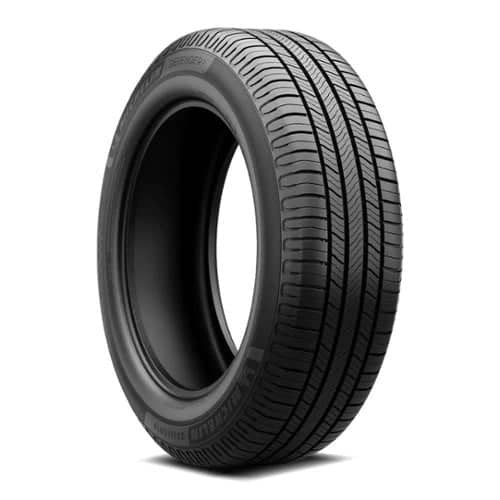
Michelin Defender 2 - about USD 199.99. The long-haul champ. Quiet, planted in the wet, and it just keeps going. A great choice for the rear pair on a daily driver. Shop Michelin at Performance Plus Tire.
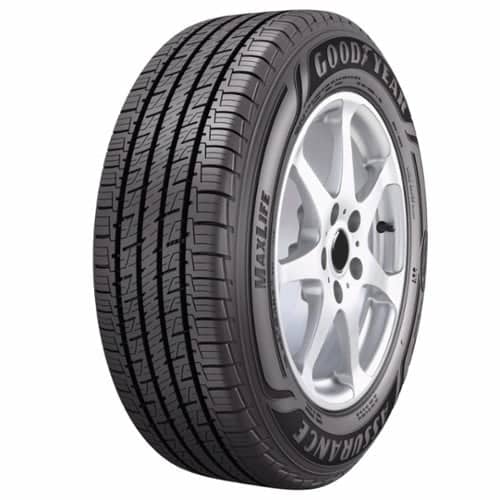
Goodyear Assurance MaxLife - about USD 178.82. Built for miles. If you want a fresh pair that will still be biting through puddles a few winters from now, this is the one. Shop Goodyear at Performance Plus Tire.
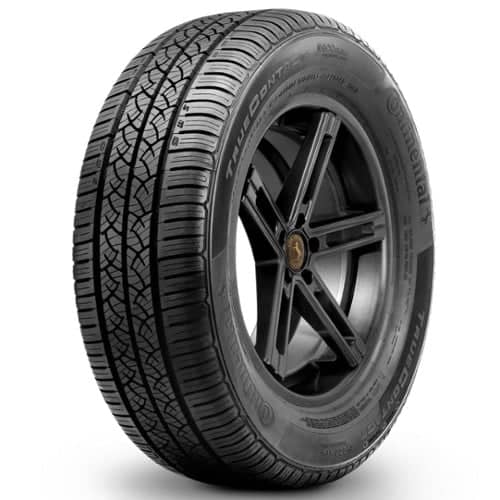
Continental TrueContact Tour - about USD 134.74. The value pick that does not feel like one. Strong wet grip and an easy ride without stretching the budget. Shop Continental at Performance Plus Tire.
Rear-wheel drive does not change the rule. The new pair still goes on the back, where the power hits the ground and where you most need the car to stay settled. If anything a rear-driver rewards good rear tires even more, because a light throttle in the wet with worn rears is a quick way to see where you have been.
All-wheel drive is the real exception, and it is worth knowing before you spend. Most AWD systems want all four tires within a tight tread window, often a couple of thirty-seconds of an inch of each other. Slap on just two new tires and the fresh pair spins at a slightly different rate than the worn pair, and over time that difference can wear on the center differential or transfer case. On an AWD car, check the owner manual, and more often than not you are better off buying four.
Then there are the fun ones. If you are running a staggered setup, meaning skinnier tires up front and fat meats out back, which plenty of muscle cars and pro-touring builds wear proudly, the fronts and rears are different sizes. You cannot swap them front to back, so you replace like-for-like on each axle and they stay put. If you are dialing in a build like that, our guide to the muscle car staggered setup covers how to size it right so the stance and the grip both work.
Some tires are built to spin one direction only. You will see an arrow molded into the sidewall, and the tread is shaped like a V to shovel water out the back. Those are directional tires, and they change how you can shuffle rubber around. Because they only turn one way, you can only move them straight front to back on the same side of the car, unless you dismount them and flip them on the wheel, which is extra labor.
None of that changes the golden rule. When you put two new directional tires on, they still go on the rear axle, mounted for the correct rotation. If you are not sure whether your set is directional or symmetrical, our breakdown of directional tires and wheels shows you exactly what to look for on the sidewall.
Sometimes the front-or-back question answers itself, because the smart move is a full set of four. Buy all four when every tire is worn down together, when the old pair is aged, cracked, or cupped, when you drive all-wheel drive, or when the gap between your old tires and the new ones is just too big to run safely side by side. A matched set gives you the same tread, the same age, and the same behavior at all four corners, and that makes the car easier to read in a hard rain or a panic stop.
Not sure whether you are at the two-tire or four-tire stage? Grab a penny or a tread gauge and check what you have got. Our guide on tread depth and when to replace tires gives you the numbers to measure against. If two of your four are down to the wear bars and the other two are close behind, four is almost always the better value over the life of the car.
So there it is, straight from the shop floor. New tires go on the back, every single time, whether you drive a front-wheel-drive commuter, a rear-drive cruiser, or a four-wheel-drive rig. The deeper tread out back is what keeps your tail planted and stops a wet road from turning your afternoon into a spin. Buying two, put the fresh pair on the rear. Buying four, put one at each corner and drive happy. And when the old rubber is tired all around, do it right and replace the whole set. When you are ready, come see us and shop a fresh set of all-season tires that will keep you gripping through whatever the road throws at you.
New tires go on the back. The deeper tread on the rear axle keeps the car stable in the wet and prevents the rear from sliding out into a spin, which is far harder to recover from than the front pushing wide.
No. Even though the front tires steer, brake, and power a front-wheel-drive car, the new pair still belongs on the rear. Worn rear tires lose grip first in the rain, and that is what causes a dangerous spin, so the fresh tread goes in back.
It is not recommended. Putting the newer pair on the front leaves worn tires on the rear, which raises the risk of oversteer and hydroplaning-induced spins in wet weather. Tire makers and carmakers agree the new pair should go on the rear axle.
Yes, as long as the new pair goes on the rear and all four tires are the same size. For the best handling, keep the same tire type and tread design front to back, and avoid pairing very different tires. If the old pair is aged or cracked, replace all four instead.
Because rear grip keeps the car stable. If the rear tires lose traction before the front, the car can spin, which most drivers cannot catch. Fresh tread on the rear axle keeps the back end planted and the car predictable, especially in wet or slippery conditions.
Yes. Most all-wheel-drive systems require all four tires to be within a small tread-depth tolerance, so mixing two new with two worn tires can strain the driveline. Check your owner manual, and in most cases replacing all four tires is the safer choice.



