
I've been mounting tires on Mopar muscle since the Pentastar still meant something to people outside the brand. Hemi Chargers, 440 Six Pack Super Bees, AAR Cudas with the side-pipes, R/T Challengers, '69 Road Runners with the Beep-Beep horn that still made grown men laugh — they've all rolled through this shop. And the question that comes up on every single one of them is the same: what wheels and tires are right for this car?
The honest answer is that Mopar fitment is different from Ford or GM fitment in ways that catch first-time builders by surprise. The bolt patterns vary by body style and year more than other makes did. The torque profiles of the big-block and Hemi engines create wheel-and-tire challenges that small-blocks and 327s never produced. And the proportions of E-body and B-body bodywork demand specific wheel sizes and offsets to look right. This guide is the working version of what I tell customers when they walk in with a Mopar build and want to do it correctly.
Three things separate classic Mopar wheel and tire work from the equivalent on a '69 Camaro or '68 Mustang:
None of this is hard once you know what you're looking at. But it does mean Mopar builds reward owners who do the homework before they order parts.
This is the table I wish came stapled to every Mopar's title. Verify against your specific car before ordering — there are exceptions within trim levels and option packages — but this covers the standard fitments:
Body Class |
Example Models |
Years |
Bolt Pattern |
|---|---|---|---|
A-body (standard) |
Dart, Valiant, Duster, Demon, Scamp |
1960–1972 |
5 x 4.0" (5 x 101.6 mm) |
A-body (HD / Disc Brake) |
Dart GTS, Duster 340, Demon 340 |
1968–1972 |
5 x 4.5" (5 x 114.3 mm) |
B-body |
Charger, Road Runner, Super Bee, GTX, Coronet, Belvedere, Satellite |
1962–1976 |
5 x 4.5" (5 x 114.3 mm) |
E-body |
Challenger, Cuda |
1970–1974 |
5 x 4.5" (5 x 114.3 mm) |
C-body (early) |
Polara, Fury, Newport, 300 |
1962–1968 |
5 x 4.5" (5 x 114.3 mm) |
C-body (later) |
Polara, Fury, Newport, 300, Imperial |
1969–1973 |
5 x 5.0" (5 x 127 mm) |
The takeaway: most Mopar muscle — the B-body and E-body cars everyone wants to build — runs the 5 x 4.5" (5 x 114.3 mm) pattern. Same pattern as a Ford F-100 or a '67 Mustang, which means more wheel options than you'd guess at first glance. A-body builders need to check the brake package; an HD or disc-brake car will run the larger pattern, and a base-trim drum car will run the smaller. For more on measuring and verifying bolt patterns when you're not sure, our offset and bolt pattern guide walks through the measurement methodology.
Mopar builds tend to land in one of five wheel directions. Pick a direction and commit — the cars that look right have a clear point of view.
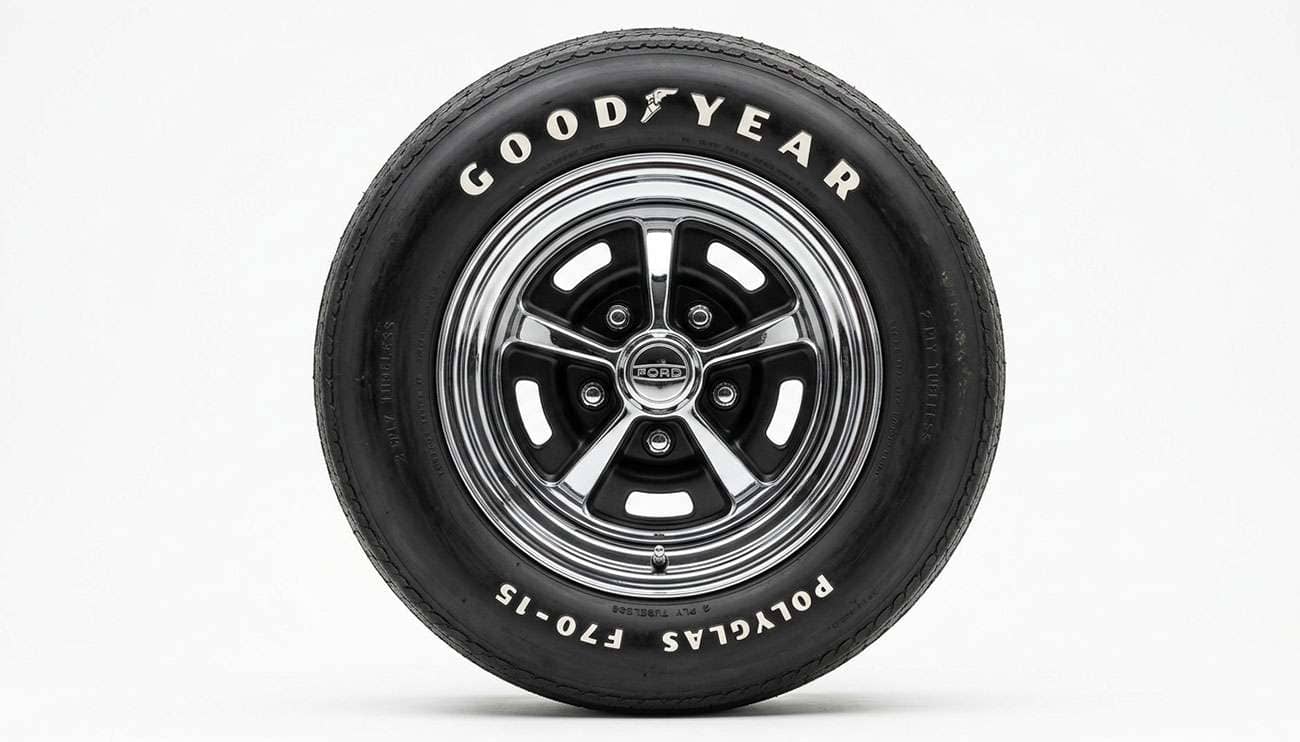
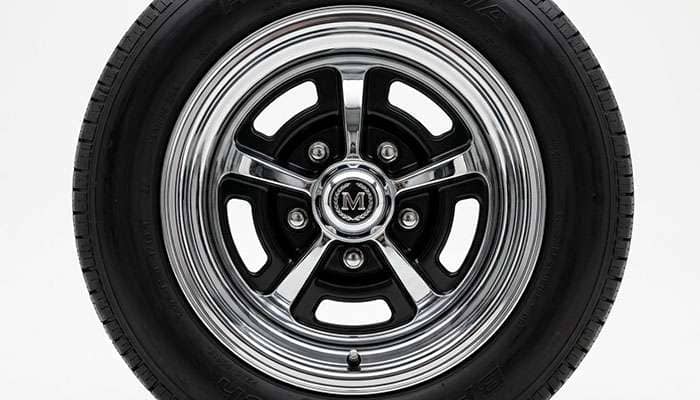
The Magnum 500 is the Mopar wheel. It came on the R/T Charger, the Road Runner, the Super Bee, the Hemi Cuda — the cars that built the brand's muscle car reputation. Five-slot styling, chrome outer with painted (usually black) recessed centers, OE-correct on most B-body and E-body Mopar muscle from 1969 forward.
The Boyd Coddington 54 Series Magnum 500 is the modern reproduction with the right OE silhouette and modern construction standards. The HK Wheels Magnum 500 is a more affordable alternative that hits the same look. The Scott Drake Magnum 500 Reproduction takes the budget-friendly approach if you're building a driver rather than a show car.
Best for: R/T trim cars, Hemi cars, Road Runner and Super Bee builds — any car that came from the factory with a Magnum 500 should have one when it leaves the shop. Available in 14-, 15-, and 17-inch diameters for plus-sized options on restomod-leaning builds.
The Rallye was the other OE Mopar wheel. Where the Magnum 500 went on the muscle trims, the Rallye showed up on a broader range of cars — base R/Ts, Dart Swingers, regular Chargers, GTXs, performance Plymouth Satellites. Steel construction (originally), open-spoke styling, painted center with chrome trim ring.
For modern reproductions, the U.S. Wheel Chrysler Rallye 667 is the closest to OE-correct visual. The Allied Wheel 63 Silver Rallye is the aluminum version for guys who want the look with less weight. The Fairway Alloy FA137 Rallye goes hand-polished aluminum for a cleaner, brighter look than original steel.
Best for: Driver-quality builds where authentic OE-direction matters more than showroom shine. A-body GTS Darts, base R/T Chargers, Dusters, Demons. The wheel that says "this car is correct, not flashy."
Plenty of Mopar muscle didn't leave the factory with the OE wheel still on it. By 1971, swap meets and speed shops were selling Cragar S/S faster than Chrysler could push Magnum 500s. The Cragar look on a B-body or E-body Mopar reads as period-correct hot rod culture — exactly what a lot of these cars wore in their first decade of life.
The Cragar 614C S/S Modern Muscle Chrome is the modern version that delivers the original look with current load standards. For more on the brand's history and where it sits today, our Cragar S/S history piece covers it.
Best for: Mopars built with period hot rod attitude rather than concours authenticity. Pro-Street builds with narrowed rear ends. Drag-strip-leaning cars. Any Mopar where the build philosophy is "this is what guys actually ran in 1973."
The Torq Thrust is the universal classic five-spoke, and it works on Mopar muscle the same way it works on Camaros and Mustangs — through sheer rightness of proportion. Not OE-correct on any Mopar, but right at home aesthetically.
The American Racing AR605M Torq Thrust M Chrome is the classic muscle direction. The American Racing VN105 Torq Thrust D in satin black with machined lip takes the same DNA in a more aggressive direction that pairs well with modern brake kits.
Best for: Mopar builders who like the muscle car five-spoke look but don't want to run the same Magnum 500 every other R/T at the show is wearing. Works on B-body and E-body equally well.
For Mopar builds that have moved beyond restoration into restomod territory — modern coilovers, big brake kit, EFI on the 440 or a Gen III Hemi swap — the wheel direction shifts. Modern forged construction, larger diameters (17 to 19 inches), proportions tuned for modern brake and suspension geometry.
The Foose Legend F104 is the classic-inspired modern pick that anchors a lot of clean Mopar restomod builds. The Boze Alloys B1 brings forged construction with five-spoke classic DNA. The US Mags Rambler U110 hits the right note for builders wanting a more aggressive period-modern look. Our restomod wheel and tire setup guide goes deeper on the engineering side of these builds.
Best for: Hemi-swapped builds, full Pro-Touring Mopars, restomod E-bodies with modern subframes. Anywhere the chassis has been modernized enough that the rest of the build philosophy needs to follow.
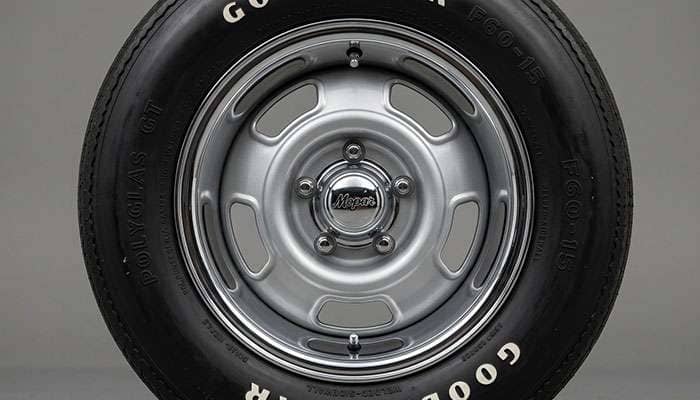
The tire question on a Mopar splits three ways, depending on how you actually use the car.
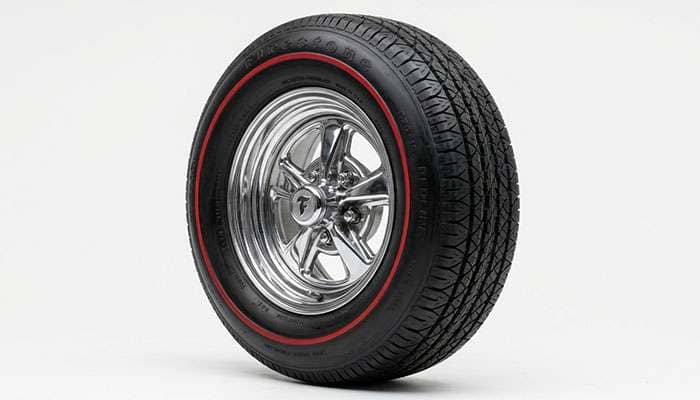
Hemi cars and a lot of R/T Mopars came from the factory with redline tires — narrow red stripe around the sidewall, blackwall everything else. By the early '70s, the look had shifted to raised white letters (the famous BFG Radial T/A and similar). Either direction reads as authentic Mopar muscle.
The American Classic Redline Radial is the right call for Hemi-era period correctness with modern radial construction underneath. The BFGoodrich Radial T/A in raised white letter is the segment standard for early-to-mid-'70s Mopar muscle — same tire that was on these cars when they were new, now built to modern construction standards. The Firestone Wide Oval Radial is the right choice if your specific Mopar came from the factory with Firestone — Chrysler used Firestone as well as Goodyear OE during the era.
For Mopars that get driven hard and need genuine modern grip, the answer is a UHP all-season radial that still looks correct on the car. The BFGoodrich g-Force COMP-2 A/S+ is the muscle car pick of choice — raised white letter aesthetic available, modern grip and wet performance, period-flavored looks. The Cooper Cobra Radial G/T is the slightly more aggressive alternative with broader size availability on classic Mopar fitments.
For the broader picture on modernizing tires under a classic, our modern tires for classic cars buyer's guide covers the decision framework.
This is the Hemi car category. A Six Pack 440 or a 426 Hemi making 500-plus horsepower on pump gas needs a tire that can hook up at the strip without falling apart on the way home. The Nitto NT555R II is the modern street/strip drag radial that does both jobs convincingly. Mickey Thompson ET Street rubber lives in the same segment but commits further to the strip side at the expense of street manners.
Sizing note: Most B-body and E-body Mopars with stock rear ends can fit up to about a 275-section rear tire without significant fender work. A '70 Cuda or '70 Challenger can run wider with mini-tubbing. A '69 Charger with the factory wheel wells handles a 295 on a clean install if you have the right backspacing.
Three issues come up on Mopar builds more often than the equivalent on a Ford or Chevy build:
For the broader measurement guidance, our backspacing measurement guide covers how to measure your existing setup before ordering replacements.
We keep prices honest across the whole whitewall and classic tire catalog and the American Racing, Cragar, and Foose wheel lines. The Hot Rod Hank's wheels program packages wheels and tires mounted and balanced for classic Mopar fitments — call the shop if you want a complete setup quote.
Classic Mopar muscle deserves a wheel and tire setup that matches the heritage of the car. Magnum 500s on a Hemi R/T, Rallyes on a clean GTS Dart, Cragars on a Pro-Street '69 Charger — there's a right answer for every build, and the cars that look correct have an owner who picked a direction and stuck with it. Get the bolt pattern verified, choose a wheel direction that matches your build philosophy, pick tires that respect both the era and the way the car gets used, and you'll have a Mopar that looks right from twenty feet away and from twenty inches away. That's what these cars deserve.
All 1970–1974 E-body Mopars (Challenger and Cuda) run a 5 x 4.5" (5 x 114.3 mm) bolt pattern. This is the same pattern used on B-body Mopars from the same era (Charger, Road Runner, Super Bee, GTX) and also on Ford F-100s and classic Mustangs, which means there's wide aftermarket wheel support available. Verify against your actual hub before ordering on rare or modified cars.
Depends on the brake package. A standard-trim 1969 Dart with drum brakes runs a 5 x 4.0" (5 x 101.6 mm) pattern. A Dart with the HD or disc-brake option package runs the larger 5 x 4.5" (5 x 114.3 mm) pattern. The same applies to other A-body Mopars like the Duster, Valiant, and Demon. Verify by measuring your actual hub or by checking your build sheet before ordering wheels.
No. Magnum 500s were the OE muscle-trim wheel — they came on R/T Chargers, Hemi cars, Road Runners with the optional wheel upgrade, Super Bees with the right option package. Base-trim Mopars typically wore Mopar Rallye wheels or basic steel wheels with hubcaps. If you're chasing authentic OE correctness, verify what your specific car would have left the factory with using the build sheet or fender tag.
For modern reproductions of the Magnum 500 (Boyd Coddington, HK Wheels, Scott Drake), yes — these are built to current standards and handle modern radials without issue. For original-era 1969–1972 Magnum 500s, the safety margin is questionable on a serious build. Original-era wheels weren't engineered for the cornering loads modern radial tires generate. Inspect carefully and consider replacing if the build is doing real performance driving.
Most '70–'74 E-body Mopars with stock rear ends can fit up to about a 275-section rear tire on a 17 x 8 or 17 x 9 wheel without fender modification, assuming correct backspacing (typically around 4.75" to 5"). Wider tires require mini-tubbing or full rear-wheel-tub modification. Front fitment is typically 235/45R17 to 245/45R17 on a 17 x 7 or 17 x 8 wheel. Always measure your specific car at full lock and full suspension compression before committing.
For a dual-purpose street/strip Hemi car, a DOT-legal drag radial is the right answer. The Nitto NT555R II is the modern segment leader for street/strip duty — hooks up well at the strip, drives acceptably to the track. Mickey Thompson ET Street rubber lives in the same category but leans further toward the strip side. Either option requires a chassis that can handle the grip — pinion snubber upgrades and SuperStock or CalTracs leaf spring kits are recommended on serious-power cars.



