

I have lost count of how many people have walked into the shop, dropped their keys on the counter, and said the same sentence: my car pulls to the right, I need an alignment.
Maybe half of them do. The other half are about to pay for an alignment that will not fix anything, because the alignment was never the problem. And a good number of that second group will come back six weeks later, annoyed, convinced we did the job wrong, when what actually happened is that we aligned the car around a bad tire and the bad tire went right on being bad.
Here is the thing about a pull. Every article you can find on the subject is organized by cause. Cross camber, cross caster, thrust angle, brake drag, conicity, ply steer, torque steer. That is a fine way to write a textbook, and it is a useless way to help somebody standing in their driveway, because if you already knew the cause you would not be reading anything. You would be buying the part.
So we are going to do it backwards. We are going to start with the two things you actually know: what the car does, and what changed right before it started doing it. Those two answers together will get you most of the way to the real problem, and six tests that cost nothing will get you the rest of the way.
Find the row that matches your situation. That second column is the one nobody asks about and it is worth more than everything else on this page.
What the Car Does |
When It Started |
Most Likely Cause |
Who Fixes It |
|---|---|---|---|
Steady pull, same direction always |
Right after new tires or a rotation |
Tire conicity or radial pull |
Tire shop, often under warranty |
Steady pull, same direction always |
Right after an alignment |
Bad alignment, or conicity it stopped hiding |
Back to the alignment shop |
Steady pull, same direction always |
Gradually, over months |
Alignment drift, worn bushings, uneven wear |
Alignment shop |
Steady pull, same direction always |
The day you hit the pothole |
Bent wheel, bent control arm, bent knuckle |
Inspection before any alignment |
Tracks straight, pulls only when braking |
Any |
Sticking caliper, collapsed hose, uneven pads |
Brake shop, not alignment |
Pulls only under hard acceleration |
Always been there on a front driver |
Torque steer, usually normal |
Nobody, unless mounts are worn |
Wanders both directions, feels loose |
Gradually |
Worn tie rods, loose steering, low caster |
Front end inspection first |
Tracks straight but wheel sits crooked |
After alignment or steering work |
Toe set with wheel off center, thrust angle |
Back to whoever did the work |
Drifts right on the highway only |
Always, on certain roads |
Road crown, probably not a fault at all |
Nobody, verify with the crown test |
If two rows fit, run the tests below and let the car break the tie. Cars are honest. They will tell you what is wrong if you ask the question the right way.
These are in order of cost, which is to say all six are free and they get progressively more annoying. Do them in this order. I have watched people skip straight to number three and waste a Saturday.
Test one, cold pressures. Not warm. Cold, first thing in the morning, before the car moves. Set all four to the door placard number, and I mean all four, not just the two that look low. A two or three psi difference side to side on the front is enough to lead a car noticeably. If your pull disappears after this, you are done, and you just saved yourself an alignment. If you are not sure what your placard says, our guide on how to find your recommended tire pressure covers where the sticker lives and how to read it.
Test two, the road crown test. This is the step nearly everybody skips and it is the single most common reason people bring me a car with nothing wrong with it. Roads are built with a crown in the middle so water runs off. That slope makes almost every car drift gently toward the shoulder. Find an empty flat surface, a big parking lot works, and see if the pull is still there. Or drive the same stretch of road in both directions. If the car drifts right heading north and right heading south, that is a real pull. If it drifts toward the shoulder both times, that is drainage engineering doing its job.
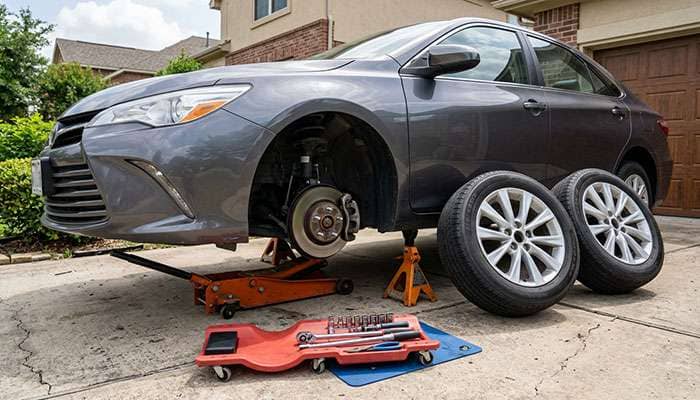
Test three, the cross swap. Swap the two front tires left to right. Nothing else, just those two. Drive the same road you drove for test two. Now watch what happens. If the pull switches sides, the problem moved when the tire moved, which means it is the tire. If the pull stays pointed the same direction, the tire moved and the problem did not, which means it is the car. That is the whole test, and it splits your repair bill into two completely different numbers.
Test four, forward and reverse. This one is old school and almost nobody publishes it. On an empty lot, let the car roll straight forward with a light grip and note the direction of drift. Then do the same in reverse. If the drift changes direction when you change direction of travel, you are looking at ply steer, which is a force built into the tire by how the belts sit. Alignment angles do not reverse when you back up. Tire forces do.
Test five, brakes only. Get up to about 35 in a straight line with a light hand on the wheel, then brake moderately. Does the car track straight until you touch the pedal and then dive to one side? That is a brake problem and no amount of alignment will touch it.
Test six, the hot wheel check. Drive fifteen or twenty minutes with normal, gentle braking. Park and carefully hold the back of your hand near each wheel, close but not touching. All four should feel about the same. One that is noticeably hotter has a brake dragging on it, and a dragging brake will pull the car toward that side all day long. You may also catch a hot, acrid smell. That is the pad cooking.
A steady pull that shows up in both directions on flat ground, does not care about the brakes, and does not care about the throttle, is your classic alignment or tire pull. Test three tells you which one.
On the alignment side, the two angles that cause a pull are camber and caster, and specifically the difference between the left and right sides rather than either number by itself. A car will lead toward the side with more positive camber, and toward the side with less positive caster. Most shops try to hold that side to side difference under about half a degree. Toe does not usually cause a pull on its own, but it will absolutely eat your tires while you ignore it. If those three words are fuzzy, our breakdown of camber, caster and toe lays out what each one actually does.
The part worth knowing is that alignment angles do not drift on their own. Something moved. A collapsed control arm bushing, a weak spring, a bent strut, a shifted subframe. That is why a good shop inspects the front end before it puts the car on the rack, and why an alignment that will not hold means somebody skipped that step.
If the car goes down the road arrow straight and only veers when your foot moves to the left pedal, stop thinking about alignment entirely. You have a brake problem, and it is one of a short list.
The car pulls toward the side with the stronger brake, which usually means the other side is the one that quit. A frozen caliper piston, a floating caliper stuck on its slides, a collapsed brake hose acting like a one way valve and holding pressure on one corner, or contaminated pads on one side from a leaking seal. Different pad compounds side to side will do it too, which happens more often than you would think when somebody replaces one caliper and its pads and leaves the other side alone.
The tell that separates a dragging brake from an unequal brake is test six. A dragging caliper makes heat all the time, so that wheel is hot even when you have barely used the brakes, and the car pulls constantly rather than only under braking. An unequal brake only shows up when you apply it.
Either way this is not a tire question and not an alignment question. Send it to a brake shop and do not let anybody sell you a four wheel alignment for it.
Front wheel drive car, you get on it hard from a light, and the wheel tugs to one side. Then you lift and it goes away.
That is torque steer and on most front drivers it is built in rather than broken. It comes from unequal length driveshafts. The suspension on the side with the longer shaft flexes into a slightly different toe position under load than the side with the shorter one, and the car veers toward the longer shaft side. Cars engineered with equal length shafts, usually by way of an intermediate shaft, mostly do not do it.
You cannot eliminate it. You can make it worse, though, and if yours has gotten noticeably worse over time then something is worn. Look at collapsed control arm bushings, tired tie rod ends, and especially engine or transaxle mounts. A broken mount lets the whole drivetrain shift under torque and it will make a mild characteristic feel like a defect.
This is the one I want people to internalize, because it is the most misdiagnosed pull there is.
If your car drove straight on Tuesday, you had tires put on or rotated on Wednesday, and it pulled on Thursday, the alignment did not change. Nobody touched the alignment. The only variable that moved was which rubber is on which corner. That is tire conicity, and it is a manufacturing characteristic, not damage.
The rotation version catches people off guard. The tire was always slightly off, but it was living on a rear corner where it could not steer the car. Rotate it to the front and suddenly the car leads. Nothing broke. The problem just got promoted to a position where it matters.
Run test three. If the pull flips sides with the swap, you have found it, and you have found which of the two front tires it is by putting the suspect one on the back and confirming the car goes straight. Then go back to whoever sold you the tires, because this is normally a warranty claim.
Two possibilities, and they point in opposite directions.
The first is that the alignment is simply wrong. It happens. Angles set outside spec, steering wheel not centered before toe was adjusted, rear thrust angle never checked on a car that needed it. Go back and ask to see the before and after printout. Any shop worth using will hand it to you without being asked.
The second one is sneakier and it is the one that starts arguments. Sometimes a car has had a mild tire pull for months and the alignment was quietly compensating for it, either because a previous shop dialed in a deliberate cross camber to cancel it or because the angles happened to drift in a helpful direction. Set everything back to factory spec and the tire pull that was being masked comes out into the open. The alignment is now correct and the car drives worse, which is a genuinely infuriating thing to explain to a customer.
Test three settles it in fifteen minutes. If the pull follows the tire, the alignment shop did their job and you have a tire problem that has been there all along. If the pull stays put, go back to the rack.
If you can name the exact moment it started and that moment involved a bang, do not go straight to an alignment. Go to an inspection.
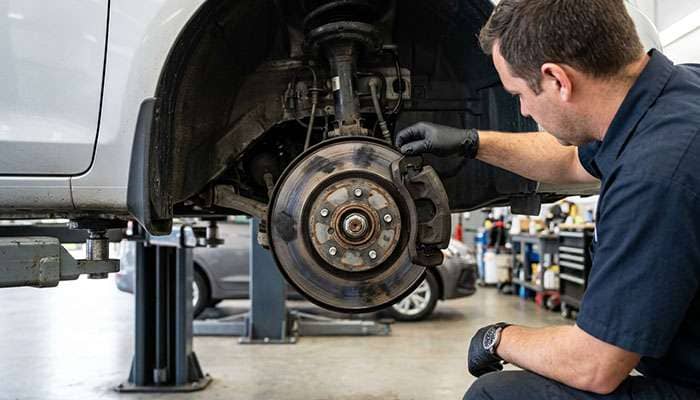
An alignment machine measures angles. It does not tell you why the angle is wrong. If a control arm is bent, a strut is tweaked, or a subframe has shifted, a technician can sometimes drag the numbers back into spec by robbing adjustment from somewhere else, and the car will drive acceptably for a while and then go right back out. You will have paid for an alignment and still own a bent part.
Check the wheel too. Impact damage to a wheel changes how the tire sits and can produce both a pull and a vibration, and it often comes with a slow leak you have not noticed yet. Our piece on whether a bent rim is safe to drive covers what to look for and what it costs. And if what you are feeling is more of a shake through the wheel than a steady lead, read whether steering wheel vibration is your tires or your wheels instead, because vibration and pull are different symptoms with different causes and people mix them up constantly.
There is an important difference between a car that pulls and a car that wanders, and the fix is completely different.
A pull is consistent. It goes one direction and it keeps going that direction and you hold steady pressure against it. A wander is a car that will not settle. It drifts left, then right, follows every groove and rut in the pavement, and you find yourself making small corrections constantly. That is not an alignment angle problem in the usual sense. That is slop.
Look at tie rod ends, inner tie rod sockets, idler arm and center link on older steering setups, rack mounts, and steering column couplings. As a rough gauge, play at the rim of the steering wheel should generally be under a quarter inch, though you should check your specific spec. Loose wheel bearings will do it. So will insufficient caster, which is why a car that got lifted in the back or lowered in the front sometimes starts wandering when nothing is actually worn out.
Very low tire pressure will also make a car feel vague and wandering, which brings us back to test one for the third time. Set your pressures first. Always.
A crooked steering wheel and a pull are two different complaints, and you can have either one without the other.
If the car tracks perfectly straight but the wheel sits at ten degrees, the front toe was almost certainly adjusted without the steering centered first. Both tie rods need to be equalized with the wheel locked straight, then toe set. It is a redo, not a new problem.
If the wheel is crooked and the car also feels like it is walking slightly sideways down the road, look at rear thrust angle. When the rear axle is not square to the chassis, the car dog tracks, and you end up holding the wheel off center just to make it go straight. That takes a four wheel alignment, not a front toe and go. Our comparison of alignment versus rotation versus balancing spells out which service actually addresses which symptom, because these three get sold interchangeably and they are not interchangeable.
Worth understanding, because it is the cause people find hardest to believe.
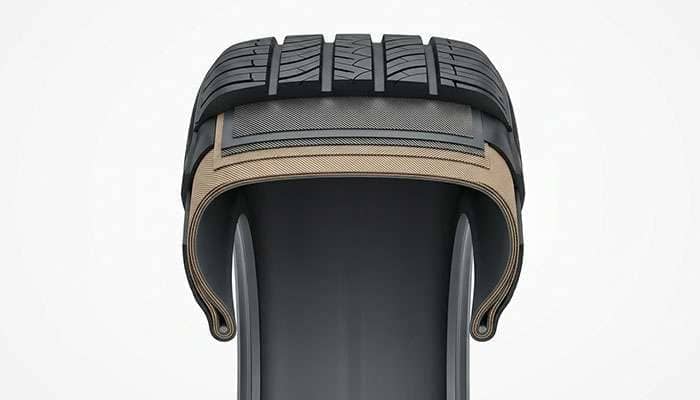
Inside a radial tire, steel belts sit under the tread. They are supposed to be centered almost perfectly. When a tire gets built, if that belt package ends up sitting slightly off to one side, the tire inflates into a very subtle cone shape instead of a cylinder. A cone rolls in a circle. Put a paper cup on its side and push it, and watch which way it goes. Your tire is doing the same thing at a scale you cannot see, and the car steers toward the small end.
Some manufacturers will tell you a belt out of position by more than a millimeter is enough to lead certain vehicles. A millimeter. You will never spot it looking at the tire.
The part that trips people up is that this is not about one bad tire in isolation. Every tire ever made has some conicity value, positive or negative. What produces a pull is the difference between the two tires on the front axle. Two tires that both lean the same way cancel each other out and the car goes straight. One that leans hard left paired with one that leans hard right gives you a big difference and a big pull, even though neither tire is defective by itself.
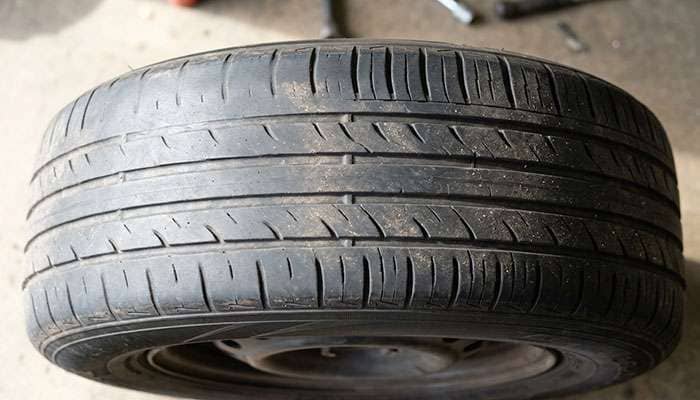
Uneven wear creates the same effect mechanically. When one shoulder is worn considerably more than the other, that tire is now shaped like a cone whether it started that way or not, and it will lead just like a factory conicity tire. That is a second reason to take tire wear patterns seriously, and our guide on what tire wear patterns are telling you walks through reading them.
Here is where I get on my soapbox for a paragraph.
A technician can cancel a tire pull by deliberately setting an alignment angle off spec in the opposite direction. Add a bit of camber on one side, take a bit of caster off the other, and the car goes straight down the road. Customer is happy. Everybody goes home.
Then five thousand miles later the tires get rotated. That conicity tire moves to a different corner or the other side of the car. Now the deliberate alignment error is no longer canceling anything, it is adding to the problem, and the car pulls twice as hard as it did originally. The customer comes back furious at the last shop that touched it, which is not the shop that caused it.
Worse, the car has now been driving around with an alignment angle intentionally out of spec, and that angle has been quietly grinding one shoulder off every tire on that corner the whole time.
Fix the tire. Set the alignment to spec. That is the order, and there is no version of this where doing it the other way ends well.
People live with a mild pull for a long time. It is worth knowing what the meter is running at.
You are wearing tires unevenly. Whatever is causing the pull, whether that is an alignment angle out of spec or a tire fighting the road, is scrubbing rubber off at an angle. A set that should have gone sixty thousand miles goes forty.
The wear makes the pull worse. Uneven shoulder wear creates its own conicity, which adds to the original pull, which accelerates the wear. It compounds.
If it is a brake, you are cooking parts. A dragging caliper does not stay a caliper problem. It overheats the pads, warps the rotor, and puts real heat into the wheel bearing on that corner. Cheap fix on Monday becomes an expensive one by the end of the month.
If it is a bent part, everything downstream suffers. A bent control arm is not just an alignment number. It changes how the suspension moves through its travel and it works the bushings and joints around it harder than the ones on the other side.
And you are tired. Holding steady pressure against a pull for two hours on the interstate wears you out in a way you do not notice until you stop. That one is hard to put a dollar figure on and it matters anyway.
If the tests pointed at a tire and it is out of warranty or too worn to claim, you are buying rubber. Replace in pairs across the same axle, not one corner, or you have just created a new mismatch to go with the old one. Prices are per tire.
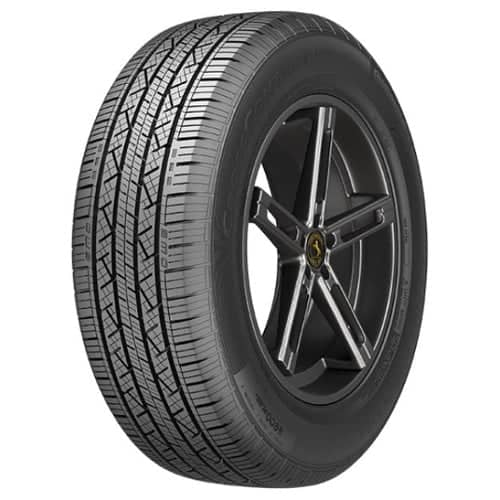
Continental CrossContact LX25, 225/65R17, around 175 dollars. The crossover and SUV all season that is hard to argue with. Strong wet braking, and we carry it deep enough that matching a pair in your size is rarely a problem.
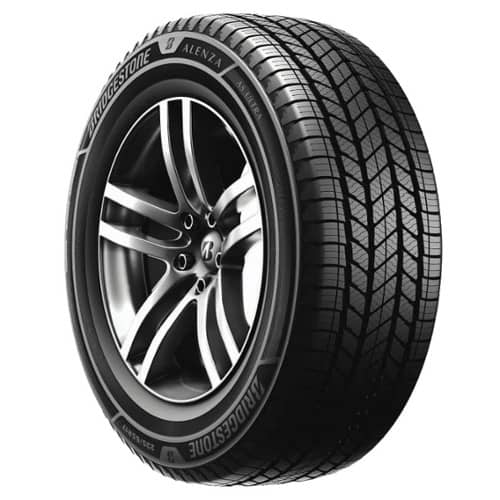
Bridgestone Alenza AS Ultra, 225/65R17, around 228 dollars. Rides a little softer than the Continental and carries a longer mileage warranty. If the pull came with a set that also rode rough, this is the direction I would go.
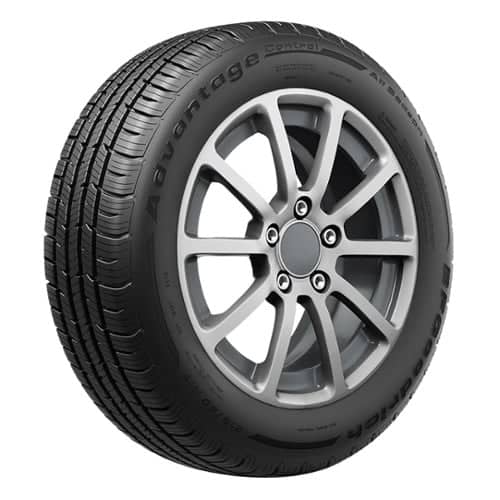
BFGoodrich Advantage Control, 215/55R17, around 166 dollars. For the passenger car and smaller crossover sizes. Sensible money for a tire that behaves itself, and a good middle of the road choice when you are replacing a pair you did not plan on buying.
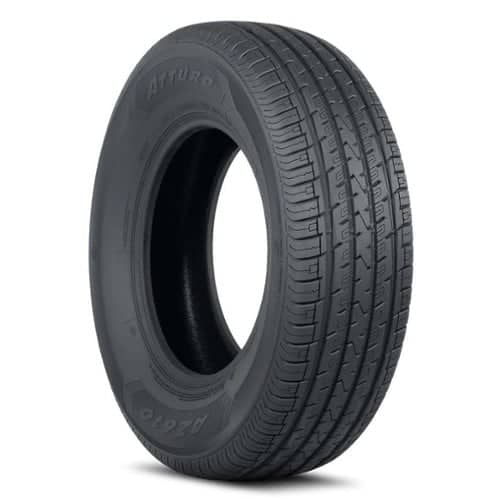
Atturo AZ610, 225/65R17, around 113 dollars. The value pick, and I put it here on purpose. A conicity tire is an expense nobody budgeted for, and if the other three on the car are most of the way through their life anyway, buying an affordable matched pair now and a full set later is a perfectly reasonable call.
Whatever you land on, match brand and model across the axle and get them balanced properly on the way out the door. You can browse the full range at our all season tires section. And if it turned out to be the alignment after all, our 2026 wheel alignment cost guide will tell you what a fair price looks like before you get quoted.
A pull is not one problem with one fix. It is at least six problems that all feel identical from the driver's seat, and the difference between them is thousands of dollars and a lot of wasted Saturdays.
Ask the two questions first. What does the car do, and what changed right before it started doing it. Then set your pressures, rule out the road crown, and swap the front tires side to side. Those three steps cost nothing and they will sort a tire problem from a car problem more reliably than anything a shop can tell you over the phone.
And if somebody offers to make your pull go away by adjusting the alignment off spec, find a different shop. That is not a repair. That is moving the problem somewhere you will not see it until the next rotation.
Almost always tire conicity, sometimes called radial pull. It is a manufacturing characteristic where the steel belts inside the tire sit slightly off center, so the tire inflates into a subtle cone shape and rolls toward one side. Nothing about your alignment changed when the tires went on. Swap the two front tires left to right, and if the pull switches sides you have confirmed it. This is normally covered under the tire manufacturer's warranty.
A mild steady pull that you can hold against is not an emergency, but it should not be ignored either. A pull that only appears under braking is more serious, because uneven braking lengthens stopping distances and can upset the car in a panic stop. A pull that started with a bang from a pothole or curb should be inspected before you drive it much further, since a bent suspension component or a damaged wheel can fail rather than just steer badly.
Only if the alignment is what is wrong. Roughly half the pull complaints that come through a shop are tires, brakes, or road crown, and an alignment will not touch any of those. Run the cross swap test before you book one. If the pull follows the tire, an alignment is money spent on the wrong thing, and a shop that cancels the pull by setting angles off spec has created a problem that comes back worse at your next rotation.
Swap the two front tires left to right and drive the same road. If the pull reverses direction, the fault moved with the tire and the tire is the cause. If the pull continues in the same direction, the tire moved and the fault did not, so the cause is in the car. To identify which of the two tires it is, put the suspect one on a rear corner and see whether the car tracks straight.
Because one front brake is doing more work than the other. The car pulls toward the side with the stronger brake, so the fault is usually on the weaker side. Common causes are a frozen caliper piston, a floating caliper stuck on its slide pins, a collapsed brake hose restricting flow, contaminated pads from a leaking seal, or different pad compounds installed side to side. This is a brake repair, not an alignment.
Often, yes. Roads are crowned in the center so water drains toward the shoulder, and that slope makes most vehicles drift gently to the right in right hand traffic. Test it on a flat parking lot or drive the same stretch in both directions. If the drift always goes toward the shoulder regardless of which way you are pointed, that is the road, not the car.



