
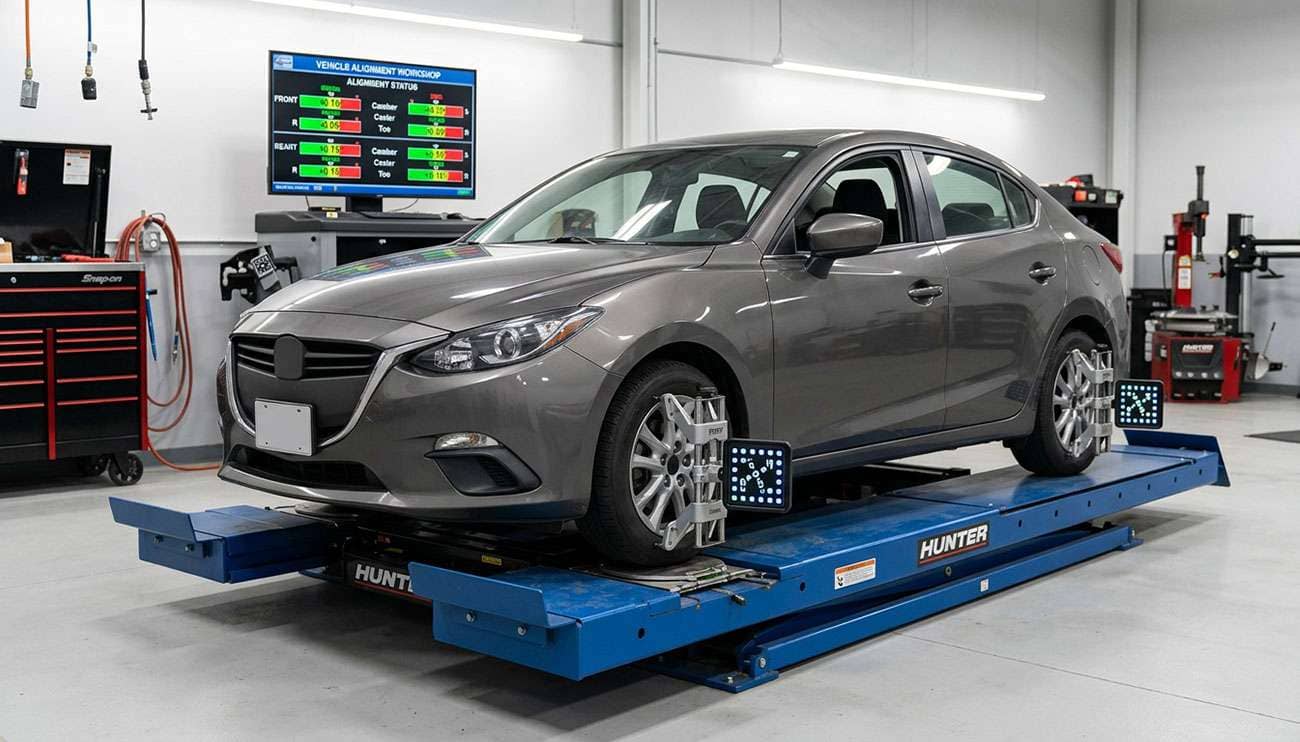
Wheel alignment costs in 2026 range from $65 for basic front-end work at a budget tire chain to $450+ for ADAS-calibrated alignments on modern luxury vehicles at the dealership. The 7x spread isn't arbitrary — specific factors drive the pricing, and understanding those factors lets vehicle owners avoid both overpaying for unnecessary services and underpaying at shops that lack the equipment to handle their specific vehicle properly. The national average for a complete 4-wheel alignment lands between $100 and $175 for mainstream passenger vehicles, with luxury and modified vehicles running 30-100% higher than that range.
The cost question matters because alignment isn't optional maintenance — it's required maintenance with substantial economic consequences when skipped. Misaligned tires wear 10-30% faster than properly aligned tires, with the wear concentrating on specific edges (inner or outer, depending on the alignment issue) rather than distributing across the full tread width. A vehicle running a $200 set of long-warranty tires with poor alignment can cost the owner the full tire replacement at 25,000-30,000 miles instead of the 65,000-80,000 miles those tires were designed to deliver. The math on skipping a $130 alignment to save money typically results in spending $500-1,000 in premature tire replacement.
This guide provides specific pricing data, identifies the factors that move costs up or down, compares the service provider options (dealer vs tire chain vs independent shop), and quantifies the real economic consequences of skipping alignment. The numbers come from 2025-2026 pricing surveys across major service providers, manufacturer service guidelines, and the engineering relationship between alignment specifications and tire wear patterns. Every recommendation is data-driven rather than estimation-based.
Service Type |
Price Range (2026) |
Typical Provider |
Best For |
|---|---|---|---|
Front-end (2-wheel) alignment |
$65 - $125 |
Tire chains, independent shops |
Solid rear axle vehicles, older trucks |
4-wheel alignment (mainstream) |
$100 - $175 |
Tire retailers, independent shops |
Most modern passenger cars |
4-wheel alignment (dealer) |
$130 - $200 |
Manufacturer dealership service |
Warranty vehicles, OEM-specific specs |
4-wheel alignment (luxury/European) |
$175 - $300 |
Luxury dealer or marque specialist |
BMW, Mercedes, Audi, Porsche, Tesla |
Alignment with ADAS calibration |
$350 - $700+ |
Dealer or ADAS-equipped specialist |
Modern vehicles with driver assistance |
Performance/modified vehicle alignment |
$150 - $400 |
Performance specialist shops |
Lowered, lifted, race-prepped vehicles |
Lifetime alignment package |
$150 - $250 one-time |
Tire chains, national service networks |
Vehicles needing frequent alignment |
Alignment check (no adjustment) |
$0 - $40 |
Tire shops (often free with purchase) |
Diagnostic before commit to service |
The pricing varies substantially based on multiple factors, but the general rule: budget for $100-$175 on a typical 4-wheel alignment for a mainstream passenger vehicle. Add $50-$125 if the vehicle is luxury European, modified, or requires ADAS calibration. Subtract $20-$40 if running a tire chain promotion or lifetime package amortization.
The fundamental pricing split between alignment services is whether the technician adjusts only the front two wheels or all four wheels.
Front-end (2-wheel) alignment: The technician measures and adjusts caster, camber, and toe on the front two wheels only. This service typically costs $65 to $125 and works for vehicles with solid rear axles where the rear wheel alignment can't be adjusted independently. Common applications: older pickup trucks (Ford F-150 pre-2015 4WD models, Chevrolet/GMC trucks with solid rear axles), older SUVs (Jeep Wrangler, Toyota 4Runner pre-2010), some commercial vehicles. The labor and equipment requirements are reduced compared to 4-wheel service, which explains the lower pricing.
4-wheel alignment: The technician measures and adjusts all four wheels (caster and camber on the front, camber and toe on the rear, plus thrust angle to verify the rear wheels track straight). This service typically costs $100 to $175 for mainstream vehicles and is required for the vast majority of modern vehicles. Most front-wheel-drive cars, all-wheel-drive vehicles, vehicles with independent rear suspension (essentially all modern passenger cars and crossovers), and any vehicle where rear toe and camber can be adjusted independently of the front need 4-wheel alignment. Doing only the front on these vehicles is incomplete work — the rear wheels can also drift out of specification, and rear misalignment produces handling issues and uneven rear tire wear that front-only alignment can't address.
For deeper alignment service comparison, see our tire alignment vs rotation vs balancing guide.
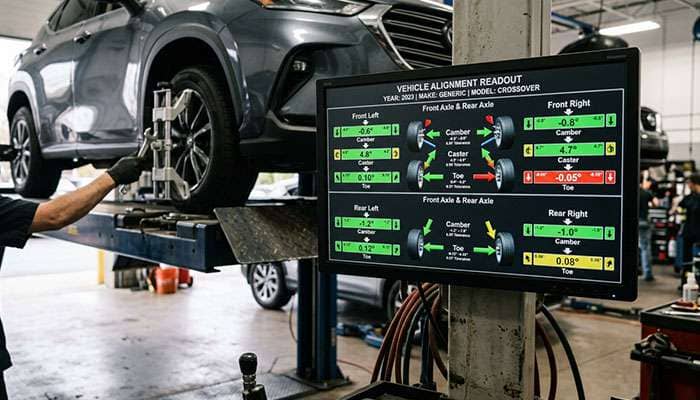
Five specific factors move alignment pricing up or down from the baseline range.
1. Vehicle category (mainstream vs luxury vs performance). Mainstream passenger vehicles (Toyota Camry, Honda Accord, Hyundai Sonata, Nissan Altima, Ford F-150) typically run at the $100-$175 4-wheel alignment range because the alignment equipment and procedures are standardized across these mass-market vehicles. Luxury European vehicles (BMW, Mercedes-Benz, Audi, Porsche, Tesla) add $50-$125 to the typical alignment cost because the alignment specifications are tighter (requiring more precise adjustment), the suspension components may require specialized equipment (BMW E-chassis vehicles have specific alignment procedures), and the labor rates at luxury dealerships are higher than mainstream service providers.
2. Service provider type. Dealership service departments charge 20-50% more than independent shops or tire chains because dealer labor rates run higher and the dealer overhead structure builds in higher costs. Tire chains (Firestone, Pep Boys, Mavis, NTB) run competitive pricing with frequent coupons (4-wheel alignments advertised at $89-$99 are common during promotional periods). Dedicated tire retailers (Discount Tire, America's Tire) typically land at $100-$150. Independent repair shops vary widely based on equipment quality and labor rates — high-end independent shops can match or exceed dealer pricing while budget independent shops can match tire chain pricing.
3. ADAS calibration requirements. Modern vehicles (2018+ typically) include advanced driver assistance systems (ADAS) — adaptive cruise control, lane keep assist, automatic emergency braking, blind spot monitoring — that depend on sensors and cameras whose calibration is affected by suspension geometry changes. When alignment work changes the vehicle's geometry, the ADAS sensors may require recalibration to function properly. ADAS calibration adds $200-$450 to the alignment service depending on the vehicle and the specific sensors requiring calibration. Tesla, BMW, Mercedes-Benz, Audi, and Volvo vehicles often require ADAS calibration after alignment; mainstream vehicles (Toyota, Honda, Hyundai) may or may not depending on the specific year and trim.
4. Suspension modifications. Lifted trucks (3-inch and higher lift kits), lowered vehicles, performance vehicles with aftermarket camber kits, vehicles with adjustable control arms, and similar modifications add $30-$120 in labor to the alignment process because the technician needs to adjust components that don't exist on stock vehicles. Modified rear ends, mini-tubbed muscle cars, and pro-touring resto-mods with non-OE suspension geometry typically require performance specialist shops rather than mainstream alignment providers.
5. Geographic location. Labor rates vary substantially by region. High-cost metropolitan areas (San Francisco, Los Angeles, New York, Boston, Seattle) run alignment pricing 30-50% above national averages. Lower-cost regions (Midwest, Southeast outside major metros) run alignment pricing 15-25% below national averages. The pricing variation reflects general labor cost differences across regions rather than service quality differences.
Five categories of service providers offer alignment services, each with different cost and quality characteristics.
Provider Type |
Typical 4-Wheel Price |
Equipment Quality |
Best For |
|---|---|---|---|
Dealership service department |
$130 - $200 (mainstream) |
OEM-spec systems with vehicle-specific calibration |
Warranty work, OEM-specific concerns, ADAS |
Dedicated tire retailers |
$100 - $150 |
Hunter or Snap-on 3D alignment systems |
Standard alignment with new tire purchase |
National tire chains |
$89 - $129 (with coupons) |
Modern systems but quality varies by location |
Budget-conscious standard alignment |
Independent repair shops |
$80 - $175 |
Varies widely by shop quality |
Long-term customer relationships |
Performance specialist shops |
$150 - $400 |
Specialized equipment for non-OE applications |
Modified, lowered, lifted, race-prepped |
Quick-lube chains |
$70 - $110 |
Older systems, generalist technicians |
Not recommended for alignment |
The pattern: dealerships deliver expertise and OEM-specific equipment at premium pricing (best for warranty work and luxury vehicles). Dedicated tire retailers deliver strong value with experienced alignment-focused technicians (best for routine alignment with new tire purchases). National tire chains deliver competitive pricing with promotional opportunities (best for budget-conscious standard alignment). Independent shops vary widely (best when you've built a relationship with a quality independent). Performance specialists handle modified vehicles that mainstream providers can't (best for lifted, lowered, race-prepped applications). Quick-lube chains exist as an alignment option but typically don't deliver the equipment quality or technician expertise for precision work — alignment isn't their core competency.
Advanced Driver Assistance Systems (ADAS) have become standard equipment on most 2018+ model year vehicles, and the calibration requirements add substantially to alignment costs in 2026 when modern vehicles need service.
What ADAS does: The systems include adaptive cruise control, lane keep assist, automatic emergency braking, blind spot monitoring, rear cross-traffic alert, and similar driver assistance technologies. These features depend on cameras, radar sensors, and ultrasonic sensors mounted at specific locations on the vehicle (front grille, windshield, rear bumper, side mirrors) that must be precisely aimed at known reference points to function correctly.
Why alignment affects ADAS: When alignment work changes the vehicle's suspension geometry (caster, camber, toe adjustments), the sensor aim points change relative to the road surface. A camera that was looking 50 feet ahead at the correct angle before alignment may be looking 45 or 55 feet ahead at a slightly different angle after alignment. The system can still function but may produce false alerts, missed detections, or inaccurate adaptive cruise control behavior. ADAS recalibration after alignment restores the sensor aim to factory specifications.
The cost impact: ADAS calibration adds $200-$450 to alignment services on vehicles that require it. The variability reflects different sensor types (camera-only systems calibrate cheaper than camera+radar combination systems), different vehicle complexity (luxury vehicles typically have more sensors requiring more calibration time), and different shop equipment requirements (proper ADAS calibration requires specialized targets and equipment that not all alignment shops own). Tesla vehicles, BMW (especially 5 Series and 7 Series), Mercedes-Benz, Audi, and Volvo applications consistently require ADAS calibration after alignment. Mainstream vehicles (Toyota, Honda, Hyundai) may require ADAS calibration depending on the specific model and year.
When ADAS calibration is required: Mainstream vehicles often need ADAS calibration only after windshield replacement (the front camera is typically attached to the windshield), suspension repair affecting geometry significantly, or major alignment adjustments that move sensor aim points substantially. Routine alignment adjustments within normal specification ranges may not trigger calibration requirements on mainstream vehicles. For luxury European vehicles, ADAS calibration is more commonly required even for routine alignment work because the tighter alignment tolerances mean even small geometry changes can affect sensor aim significantly. Ask the service provider before service whether your specific vehicle requires ADAS calibration.
Modified vehicles (lifted trucks, lowered cars, performance applications) typically require specialized alignment work that mainstream alignment providers can't deliver properly.
Lifted trucks (3-inch and higher lifts): Lift kits change the vehicle's suspension geometry substantially — control arm angles, steering geometry, and tire contact patch orientation all shift from factory specifications. Standard alignment racks and procedures designed for stock vehicles may not have adjustment range for the changed geometry, and the technician needs experience with lifted truck specifications to dial in proper angles. Performance specialist shops typically handle lifted trucks better than mainstream alignment providers. Expect $150-$300 for proper alignment on a lifted truck, with the higher end of the range for more aggressive 6+ inch lifts. For deeper lifted truck context, see our 2026 best wheels for lifted trucks.
Lowered vehicles (coil-overs, lowering springs, air suspension): Lowered vehicles often need camber kits, adjustable control arms, or similar suspension modifications to achieve proper alignment angles. Without these modifications, lowered vehicles typically can't be aligned to safe specifications — the suspension geometry causes excessive negative camber or other angle issues that produce accelerated tire wear and compromised handling. Performance specialist shops handle lowered vehicles properly. Expect $175-$350 for alignment on a properly-modified lowered vehicle, with additional costs for installing the necessary suspension modifications if they aren't already on the vehicle.
Performance vehicles with aftermarket suspension: Performance applications (track day cars, autocross vehicles, race-prepped street cars) often run alignment specifications that differ substantially from OE specifications — more negative camber for cornering grip, different toe settings for response, different caster for stability. Performance specialists understand the trade-offs between street and track alignment specifications and can dial in settings appropriate to the specific use case. Expect $200-$400 for performance alignment with custom specifications, often more if the technician needs to make multiple test drives between adjustments to verify behavior.
The bottom line on modified vehicles: Don't try to save money by taking a modified vehicle to a mainstream alignment provider. The result is often either an alignment that won't take (the shop can't adjust to specifications outside their normal range) or an alignment done to wrong specifications that produces tire wear and handling problems. Performance specialist shops cost more but deliver work appropriate to the vehicle's modifications.
National tire chains and service networks offer lifetime alignment packages priced at $150-$250 one-time, with unlimited alignment services for the life of vehicle ownership (subject to specific terms).
When lifetime packages make economic sense: If a single alignment costs $130 at the same provider, the lifetime package breaks even after 2 uses. For vehicles that need frequent alignment (lifted trucks operating off-road, lowered vehicles with adjustable suspension, performance applications with regular setup changes), lifetime packages deliver strong economics. For vehicles that need rare alignment (typical passenger cars driven on paved roads with normal driving habits), the lifetime package may not pay off — paying $130 once every 2-3 years totals less than the $200 lifetime package over a 6-year ownership period.
Fine print considerations: Lifetime alignment packages typically include specific terms that affect their economic value. Some packages require service at the same physical location (limiting flexibility if you move or sell the vehicle). Some packages exclude camber adjustments or other specific service types. Some packages charge per-visit fees ($20-$40) that offset the "lifetime" pricing benefit. Read the specific terms before purchasing — the marketing language often suggests broader coverage than the actual contract provides.
When lifetime packages don't make sense: If your vehicle rarely needs alignment, if you frequently move between regions (limiting access to the specific provider), if you might sell the vehicle within 2-3 years, or if the per-visit fees plus lifetime price exceed what individual alignments would cost. For most typical passenger vehicle owners, the standard $100-$150 4-wheel alignment cost paid every 2-3 years is more economical than committing to a lifetime package upfront.
The economic argument for paying for alignment isn't theoretical — the costs of skipping alignment are substantial and measurable.

Premature tire replacement: Misaligned vehicles wear tires 10-30% faster than properly aligned vehicles, with the wear concentrating on specific edges rather than distributing across the full tread width. A $200 set of long-warranty tires designed for 65,000-80,000 miles often delivers only 30,000-45,000 miles with consistent misalignment. The math: $800 set of tires replaced at 35,000 miles instead of 75,000 miles represents $800 in premature replacement cost over the vehicle's tire ownership period. A single $130 alignment that could have prevented the premature wear represents a 6:1 return on investment.
Fuel economy reduction: Misalignment increases rolling resistance — the engine works harder to overcome the resistance produced by tires fighting against their proper rolling direction. Industry studies suggest 1-3% fuel economy reduction with significant misalignment. For a typical 12,000 mile per year driver getting 25 MPG, that translates to 5-15 additional gallons of fuel consumption per year. At $4 per gallon, that's $20-$60 per year in additional fuel costs from alignment-related rolling resistance. Across a 5-year ownership period, $100-$300 in additional fuel costs from skipped alignment work.
Handling and safety compromise: Misaligned vehicles pull to one side, require constant steering correction to maintain straight-line travel, and produce reduced cornering grip due to compromised contact patches. The handling issues become safety issues in emergency maneuvers — a vehicle that requires steering correction in normal driving has less margin for emergency steering inputs. The safety cost can't be quantified directly but represents real risk that proper alignment addresses.
Suspension component wear: Misalignment puts additional stress on suspension components (ball joints, tie rods, control arm bushings, wheel bearings) that aren't designed to handle the geometric stress. The additional stress accelerates wear on these components, leading to premature replacement of $200-$800 suspension parts that would have lasted longer with proper alignment.
The total cost calculation: A skipped $130 alignment typically costs $300-$800 in premature tire wear, $20-$60 per year in fuel waste, and additional suspension wear over time. The annual cost of skipping alignment exceeds the cost of doing alignment annually within the first year. For owners who can't afford the $130-$175 alignment cost, the right answer isn't skipping the service — it's finding alignment promotions or coupons that bring the immediate cost within budget.
Specific symptoms and events indicate alignment is needed or strongly advisable.
Symptoms that suggest current misalignment:
Events that warrant alignment check:
Preventive alignment check schedule: Check alignment annually or every 12,000-15,000 miles regardless of whether symptoms are present. Most shops offer free alignment checks (the technician runs the vehicle through the alignment rack and produces a readout showing whether specifications are within tolerance). The free check helps identify minor misalignment before it produces noticeable tire wear or handling issues. For deeper preventive context, see our alignment for longer tire life guide.
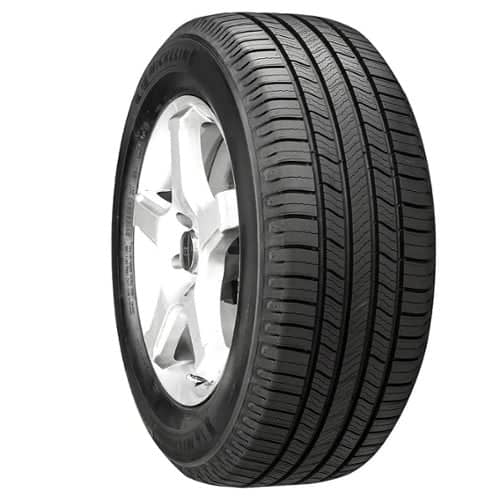
Category: Grand Touring All-Season • Warranty: 90,000 miles • Alignment Impact: High
The Michelin Defender2 carries one of the longest treadwear warranties in the all-season category at 90,000 miles, which makes proper alignment particularly important for protecting the warranty value. The warranty assumes proper maintenance practices including documented rotation at specified intervals and alignment within manufacturer specifications. Skipping alignment work that results in premature wear typically voids prorated warranty adjustment claims — the wear pattern indicates misalignment-related causation rather than normal wear, and the manufacturer's responsibility ends where owner maintenance practices fail.
For Toyota Camry, Honda Accord, Hyundai Sonata, Nissan Altima, Toyota Corolla, Honda Civic, and similar mainstream passenger applications running the Defender2 for full warranty service life, the math on alignment discipline is straightforward. A $130 4-wheel alignment performed annually across the tire's 8-10 year service life totals $1,040-$1,300 in alignment costs. Skipping those alignments and replacing the tires at 40,000 miles instead of 90,000 miles costs $800 in premature tire replacement plus the higher per-mile cost across the truncated tire life. Browse Michelin Defender2 sizes.
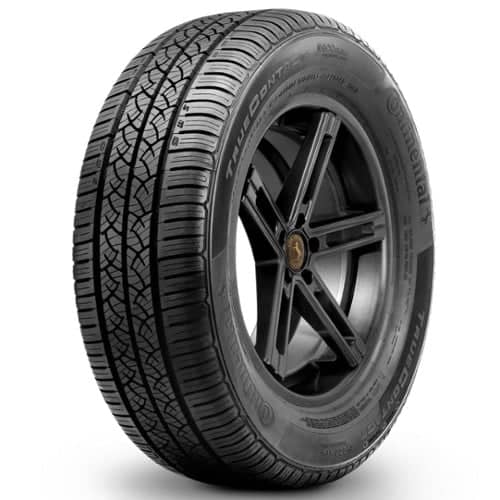
Category: Grand Touring All-Season • Warranty: 80,000 miles • Alignment Impact: High
The Continental TrueContact Tour delivers 80,000 mile manufacturer treadwear warranty at meaningfully lower pricing than premium Michelin alternatives, which makes alignment-related warranty protection important for the value proposition. The warranty terms parallel Michelin's — documented rotation and alignment within specifications required for prorated wear claims. The economics also parallel — skipped alignment on TrueContact Tour applications produces the same premature wear curve and the same warranty claim denial risk as Defender2 applications.
The TrueContact Tour is OE specification on multiple mainstream applications including various Toyota, Honda, and Hyundai models, which means alignment specifications for the specific vehicle apply directly to the OE-spec tire. For value-conscious mainstream applications where buyers want premium-tier warranty protection at meaningfully better pricing than premium-tier alternatives, the TrueContact Tour delivers strong economics — provided the alignment discipline matches the warranty assumptions. Browse Continental TrueContact Tour sizes.
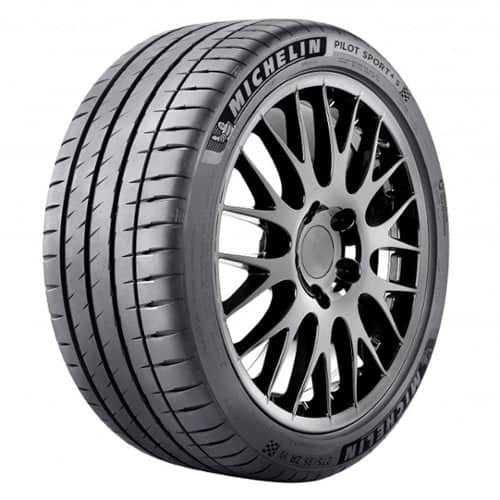
Category: Max Performance Summer (UHP Summer) • Warranty: Typically 30,000 miles • Alignment Impact: Very High
The Michelin Pilot Sport 4 S is alignment-sensitive in ways that touring tires aren't. UHP summer compound chemistry combined with low-profile sidewall construction means misalignment produces visible wear patterns within 5,000-10,000 miles rather than the slower wear development on grand touring tires. The performance characteristics that justify the premium pricing (peak cornering grip, sharp turn-in response, balanced handling at the limit) all depend on the tire's contact patch operating with proper geometry — misalignment fundamentally compromises the performance characteristics buyers paid premium pricing to obtain.
For Mustang GT, Camaro SS, Challenger Scat Pack, BMW M3, Mercedes-Benz AMG C63, Audi RS4, and similar performance applications running PS4S, alignment work needs to match performance-vehicle precision rather than mainstream tolerance ranges. Performance specialist shops typically handle these applications better than mainstream alignment providers. The pricing differential (performance specialist $200-$300 vs mainstream $130-$175) is justified by the equipment quality and technician expertise required for proper performance-vehicle alignment. Browse Michelin Pilot Sport 4 S sizes.
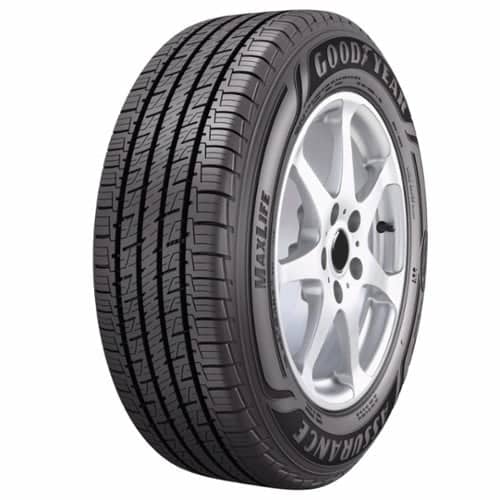
Category: Grand Touring All-Season • Warranty: 85,000 miles • Alignment Impact: High
The Goodyear Assurance MaxLife sits in the 80,000-90,000 mile warranty category alongside Michelin Defender2 and Continental TrueContact Tour, with similar alignment-related warranty considerations. The 85,000 mile warranty delivers strong economics across full service life, but the warranty assumes proper alignment maintenance throughout. The TredLife Technology compound chemistry is specifically engineered for extended tread life, and that engineering benefit gets compromised when misalignment concentrates wear on specific edges rather than distributing across the full tread.
For mainstream passenger applications where buyers want maximum tire life from their tire investment, the Assurance MaxLife pairs well with annual alignment discipline. The economics align: regular $130 alignment cost across the tire's 7-year typical service life totals $900, which is justified by the tire warranty value the alignment protects. Browse Goodyear Assurance MaxLife sizes.
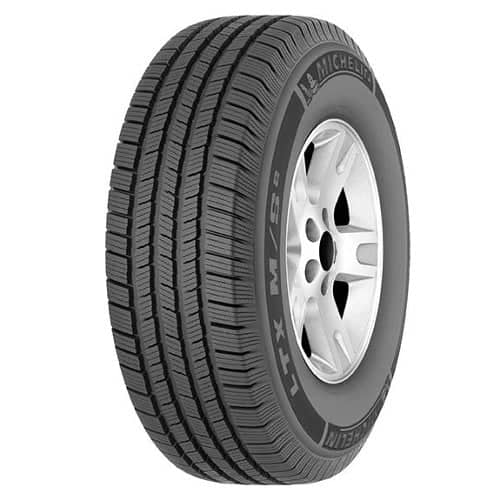
Category: Highway Truck and SUV • Warranty: 70,000 miles (most sizes) • Alignment Impact: High (load amplification)
The Michelin Defender LTX M/S 2 is the truck and SUV tire where alignment matters for the additional reason that truck and SUV applications carry heavier loads that amplify misalignment-related wear patterns. A misaligned passenger car wears tires faster than a properly aligned passenger car. A misaligned truck or SUV (Ford F-150, Chevrolet Silverado, GMC Sierra, RAM 1500, Toyota Tundra, Ford F-250, RAM 2500) wears tires substantially faster than a properly aligned truck because the higher loads concentrate the misalignment-induced wear into more aggressive wear patterns.
For truck and SUV applications used for towing, hauling, or commercial work, the alignment discipline becomes even more important. The 70,000 mile warranty assumes light-to-moderate use; aggressive use (frequent heavy towing, commercial duty cycles, off-road operation) typically reduces actual service life by 20-30% even with proper alignment. Without proper alignment, the service life reduction compounds the use-pattern effects, often producing tire replacement at 30,000-40,000 miles instead of the 70,000 mile warranty maximum. For deeper context on lifted truck alignment specifically, see our 2026 best wheels for lifted trucks. Browse Michelin Defender LTX M/S 2 sizes.
Five strategies reduce alignment costs without compromising service quality.
1. Bundle alignment with tire purchase. Tire retailers (Performance Plus Tire, Discount Tire, dedicated tire chains) often discount alignment when bundled with new tire purchase — typically $20-$40 savings on the alignment service. The bundling makes economic sense because new tires combined with proper alignment maximize the tire investment value.
2. Use national chain promotional pricing. Firestone, Pep Boys, Mavis, NTB, and similar national tire chains run regular promotional pricing on 4-wheel alignment — $89-$99 advertised pricing during promotional periods versus $129-$149 standard pricing. Sign up for email newsletters and watch for promotional periods to time alignment work around discounts.
3. Consider lifetime alignment packages for high-frequency needs. Vehicles requiring alignment 2-3+ times per year (lifted trucks operating off-road, lowered vehicles with adjustable suspension, performance applications with regular setup changes) can save substantially with lifetime alignment packages priced at $150-$250 one-time. The break-even point is typically 2-3 uses, after which the package delivers ongoing savings.
4. Replace worn suspension components before alignment. If suspension components are worn (tie rod ends, ball joints, control arm bushings, struts), alignment work won't hold properly — the worn components allow the geometry to shift back out of specification within a short period. The right sequence is replacing worn components first, then performing alignment. Replacing worn components first ensures the alignment investment delivers full service life rather than requiring re-alignment in 3-6 months when the worn components allow drift.
5. Get free alignment checks before committing to service. Most tire shops offer free alignment checks (the technician runs the vehicle through the alignment rack and produces a readout showing whether specifications are within tolerance). If the readout shows specifications within tolerance, you've avoided paying for service that wasn't needed. If the readout shows specifications out of tolerance, the check provides documentation of what the alignment work needs to address and lets you compare quotes across multiple providers with accurate baseline information.
Alignment Type |
Mainstream Vehicle |
Luxury/Performance |
Modified Vehicle |
|---|---|---|---|
Front-end (2-wheel) |
$65 - $100 |
$90 - $150 |
$125 - $200 |
4-wheel alignment |
$100 - $175 |
$175 - $300 |
$175 - $400 |
With ADAS calibration |
$300 - $450 |
$400 - $700+ |
$425 - $800+ |
Performance specialist |
$150 - $250 |
$200 - $350 |
$250 - $500 |
Lifetime package |
$150 - $200 |
$200 - $300 |
$250 - $400 |
Free alignment check |
$0 (most shops) |
$0 - $40 |
$0 - $40 |
Wheel alignment costs in 2026 range from $65 for front-end work at budget tire chains to $700+ for ADAS-calibrated alignment on modern luxury vehicles at the dealership. The national average for a complete 4-wheel alignment on a mainstream passenger vehicle lands between $100 and $175. Front-end (2-wheel) alignment costs less at $65-$125 but only works on vehicles with solid rear axles. Luxury European vehicles (BMW, Mercedes-Benz, Audi, Porsche, Tesla) typically cost $175-$300 due to specialized equipment and tighter tolerances. Modern vehicles with Advanced Driver Assistance Systems (ADAS) may require additional calibration adding $200-$450. Modified vehicles (lifted trucks, lowered cars, performance applications) typically run $150-$400 at performance specialist shops. The 10x cost spread reflects vehicle category, service provider, ADAS requirements, suspension modifications, and geographic location.
For most modern vehicles, yes — 4-wheel alignment is required rather than optional. Front-end (2-wheel) alignment only adjusts the front two wheels and works correctly on vehicles with solid rear axles where rear alignment can't be adjusted independently. Common solid-rear-axle applications include older pickup trucks, some commercial vehicles, and certain off-road SUVs. The vast majority of modern passenger vehicles (any front-wheel-drive car, all-wheel-drive vehicle, or vehicle with independent rear suspension) have adjustable rear alignment specifications and require 4-wheel alignment to address them. Doing only the front on these vehicles is incomplete work — the rear wheels can drift out of specification, and rear misalignment produces handling issues and uneven rear tire wear that front-only alignment can't address. The extra $35-$75 for 4-wheel alignment over front-end alignment is genuinely required service for most modern vehicles, not an upsell.
Dealerships charge 20-50% more than independent shops or tire chains for three reasons. First, dealer labor rates run higher — typically $130-$200 per hour at dealerships versus $80-$130 per hour at independent shops or tire chains. Second, dealerships have higher overhead structures including manufacturer-imposed equipment requirements, training requirements, and facility standards that drive operational costs. Third, dealership service departments typically use OEM-spec alignment systems calibrated to vehicle-specific factory specifications, which delivers expertise advantages for warranty work and luxury vehicles but at premium pricing. For routine alignment on mainstream vehicles outside warranty, dealerships typically cost more than independent shops or tire chains deliver equivalent quality at lower pricing. For warranty work, ADAS-equipped modern vehicles, or luxury European applications with tight tolerances, dealership pricing may be worth the premium.
ADAS calibration after alignment depends on the specific vehicle and the magnitude of alignment adjustments. Modern vehicles (typically 2018+ model years) with Advanced Driver Assistance Systems use cameras, radar, and ultrasonic sensors that must be precisely aimed at known reference points. When alignment work changes suspension geometry, sensor aim points can shift, potentially affecting system function. Tesla, BMW (especially 5 Series and 7 Series), Mercedes-Benz, Audi, and Volvo vehicles consistently require ADAS calibration after alignment. Mainstream vehicles (Toyota, Honda, Hyundai, Ford, Chevrolet) may or may not depending on the specific model and year — minor alignment adjustments within normal specification ranges may not trigger calibration requirements. The calibration cost adds $200-$450 to alignment services. Ask the service provider before service whether your specific vehicle requires ADAS calibration. Verify with the vehicle owner's manual or manufacturer recommendations if uncertain.
Preventive alignment checks are recommended annually or every 12,000-15,000 miles, with alignment service performed when specifications fall outside manufacturer tolerances. Most tire shops offer free alignment checks where the technician runs the vehicle through the alignment rack and produces a readout showing whether specifications are within tolerance. The free check helps identify minor misalignment before it produces noticeable tire wear or handling issues. Alignment is also strongly recommended after specific events: major pothole hits at speed, curb impacts or other suspension impacts, suspension component replacement (tie rods, ball joints, control arms, struts), new tire installation, vehicle ride height changes (lift kit, lowering springs), and off-road use on rough terrain. Symptoms that suggest immediate alignment include vehicle pulling to one side, steering wheel off-center when driving straight, visible uneven tire wear, and squealing tires during normal cornering at low speeds.
Standard auto insurance does not cover routine alignment services — alignment is considered maintenance rather than damage repair. However, if suspension components were damaged in a covered collision or comprehensive event (pothole damage may be covered under comprehensive in some policies), the alignment work performed as part of the repair may be reimbursed subject to your deductible. The coverage decision depends on specific policy terms and the nature of the alignment work — routine maintenance alignment is never covered, while collision-related alignment may be covered when the underlying suspension damage is covered. Check your specific policy terms before assuming coverage. Even if covered, the deductible may exceed the alignment cost, in which case paying out of pocket makes economic sense rather than filing the claim.
Lifetime alignment packages priced at $150-$250 one-time make economic sense for vehicles requiring alignment 2-3+ times per year. The break-even point is typically 2 uses (when a single alignment costs $130, the $200 package breaks even after 2 uses, with subsequent uses delivering pure savings). Lifted trucks operating off-road, lowered vehicles with adjustable suspension, performance applications with regular setup changes, and similar high-frequency alignment applications benefit most from lifetime packages. For typical passenger vehicles driven on paved roads with normal habits, alignment is needed every 12-24 months — the $130 single-alignment cost paid every 1-2 years totals less than the $200 lifetime package over a 6-year ownership period. Read the fine print before committing: some packages have per-visit fees ($20-$40), location restrictions, or exclusions for camber adjustments that affect the economic value. Lifetime alignment packages are valuable for high-frequency needs and rarely valuable for typical low-frequency needs.
National tire chains (Firestone, Pep Boys, Mavis, NTB) typically offer the most aggressive promotional pricing on 4-wheel alignment — frequently $89-$99 during promotional periods, sometimes lower. The trade-offs: equipment quality varies by location (modern shops typically run Hunter or Snap-on 3D alignment systems but quality can be inconsistent), and higher technician turnover means service consistency varies. Always ask for the before-and-after printout from the alignment system to verify the work was actually performed properly. Dedicated tire retailers (Discount Tire, Performance Plus Tire, dedicated tire chain networks) typically run $100-$150 standard pricing with experienced alignment-focused technicians — often the best balance of pricing and consistent quality. Quick-lube chains (Jiffy Lube, Valvoline Instant Oil Change) sometimes offer cheaper alignment ($70-$110) but typically run older equipment with generalist rather than alignment-specialist technicians — not recommended for precision alignment work. Independent repair shops vary widely; shops with good reputations may match dealer quality at independent pricing.



