
I have been selling tires to commuters for a long time, and I can tell you the question people ask at the counter is almost never the question they actually need answered. They ask what the cheapest set is. What they mean is what will cost them the least to drive on. Those are two different tires, and on this list they are separated by about 250 dollars a set going one way and about 20,000 miles going the other.
So we did the arithmetic nobody else in this business seems willing to publish. Eleven touring tires, real prices out of our own inventory this month, divided by the treadwear warranty each manufacturer actually backs. The result is cost per mile, and it reorders the list in ways that will surprise you.
Every price below is for 215/55R17, one of the most common commuter fitments in America, priced from our current stock. A set means four tires. Cost per mile is the set price divided by the manufacturer treadwear warranty.
Tire |
Price Per Tire |
Set of Four |
Treadwear Warranty |
Cost Per Mile |
|---|---|---|---|---|
Goodyear Assurance MaxLife |
136.69 |
546.76 |
85,000 miles |
0.64 cents |
Kumho Solus TA51a |
148.73 |
594.92 |
75,000 miles, T rated |
0.79 cents |
Toyo Extensa A/S II |
152.29 |
609.16 |
75,000 miles |
0.81 cents |
Yokohama Avid Ascend LX |
175.99 |
703.96 |
85,000 miles |
0.83 cents |
Continental PureContact LS |
164.90 |
659.60 |
70,000 miles |
0.94 cents |
Continental TrueContact Tour |
190.49 |
761.96 |
80,000 miles, T and H rated |
0.95 cents |
Falken Aklimate |
164.00 |
656.00 |
65,000 miles |
1.01 cents |
Yokohama Avid Ascend GT |
167.99 |
671.96 |
65,000 miles |
1.03 cents |
Goodyear Assurance ComfortDrive |
169.99 |
679.96 |
65,000 miles |
1.05 cents |
Michelin Defender 2 |
209.99 |
839.96 |
80,000 miles |
1.05 cents |
Michelin CrossClimate2 |
193.29 |
773.16 |
60,000 miles |
1.29 cents |
Look at what happened in the middle of that table. The Yokohama Avid Ascend LX costs 12 dollars more per tire than the Falken Aklimate, and it is cheaper to drive on by a fifth. The Continental TrueContact Tour costs 26 dollars more per tire than the Aklimate and it also comes out ahead. Sticker price told you the opposite in both cases.
Put it in yearly terms, because that is how a commute actually feels. At 15,000 miles a year, the Assurance MaxLife costs you about 96 dollars annually. The CrossClimate2 costs about 193. That is double, on the same car, on the same road, driven the same way.
Before you lean too hard on the right-hand column, you should know exactly what you are leaning on, because I have had this conversation with unhappy customers more times than I would like.
A treadwear mileage warranty is not a guarantee that your tire lasts that long. It is a promise that if the tire wears down to the wear bars at 2/32 of an inch before the stated mileage, the manufacturer will give you a prorated credit toward a replacement. Prorated is the word doing all the work. If you got 60,000 miles out of an 80,000 mile tire, you used 75 percent of what you were promised, so you are credited for the remaining 25 percent against the price of a new one. You do not get a check, and you do not get a free tire. Our breakdown of how tire mileage warranty proration works walks through the math with real numbers.
There are conditions attached, and manufacturers do enforce them. You generally need proof of purchase, documented rotations at the recommended interval, and tires that wore evenly. A set that wore out fast because of a bad alignment or chronic low pressure is not a warranty claim, it is a maintenance problem, and the inspection will show which one you had.
So why use the warranty number at all? Because it is the only figure every manufacturer publishes on the same basis, and because it correlates well with real-world life. A tire backed for 85,000 miles genuinely has more rubber and a harder compound than one backed for 60,000. Treat cost per mile as the best available comparison, not as a contract.
Three tires separate themselves at the top, and the gap between first and fourth place is smaller than most people would guess.
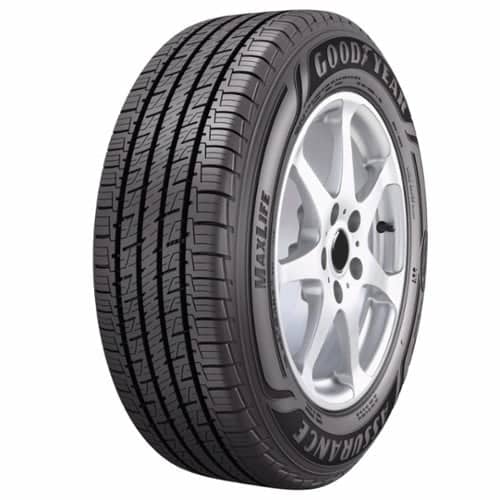
The Goodyear Assurance MaxLife wins outright and it is not close. At 0.64 cents a mile it is 19 percent cheaper than the next tire on the list, and that comes from both ends of the equation at once: it is the least expensive tire here and it carries the longest warranty at 85,000 miles. Goodyear built this one specifically to be their longest-wearing tire and the name is not marketing fluff. It also has wear gauges molded into the tread so you can read remaining life without a depth gauge, which I appreciate more than I expected to.
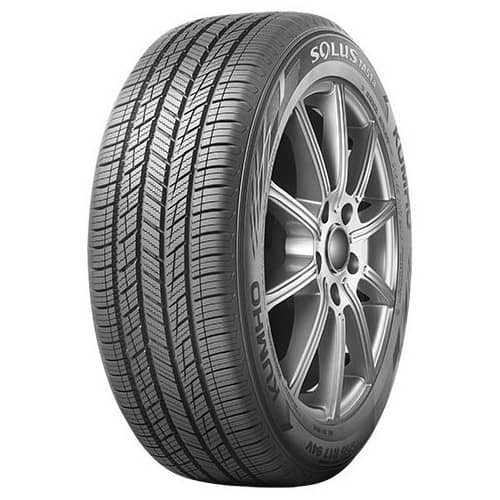
The Kumho Solus TA51a takes second at 0.79 cents. Kumho launched this one in 2023 to replace three separate product lines and it shows, because it does a little of everything without being obviously compromised anywhere. Read the speed rating note further down before you buy this one, though, because its warranty is not a single number.
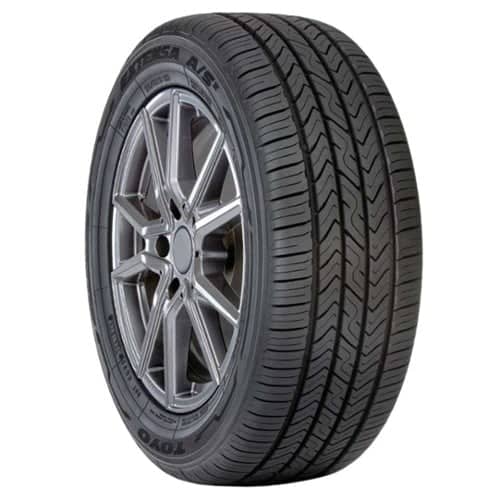
The Toyo Extensa A/S II lands third at 0.81 cents with a 75,000 mile warranty, and Toyo backs it with a 500-mile trial offer, which is a rare thing in this category and worth something if you are nervous about committing.
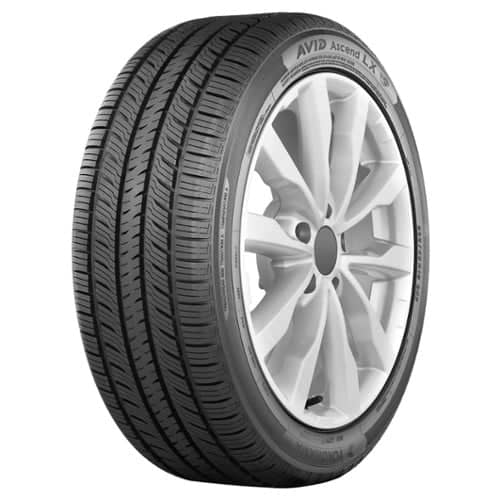
Fourth is the interesting one. The Yokohama Avid Ascend LX is the fourth most expensive tire on this list per unit at 175.99, and it still finishes fourth cheapest per mile at 0.83 cents, because that 85,000 mile warranty ties it with the MaxLife for longest here. If your budget can absorb the higher day-one cost, you are buying miles at nearly the best rate available.
If your commute is forty minutes of freeway each way, noise stops being a luxury concern and starts being the thing that decides whether you arrive tired. This is the one area where I will tell a customer to spend past the value pick.
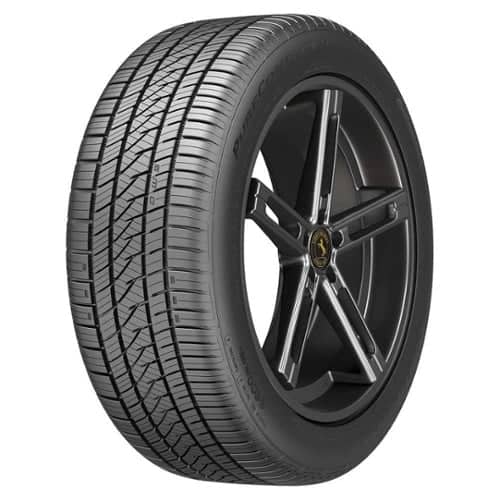
Continental has owned this category for years. Both the PureContact LS and the TrueContact Tour use a sub-tread layer Continental calls ComfortRide, which sits under the tread blocks and absorbs the high-frequency vibration that turns into cabin drone. It is a real engineering feature, not a sticker, and you can hear the difference on coarse concrete.
The Goodyear Assurance ComfortDrive is built around the same priority and it is worth noting that it gives up almost nothing on cost per mile against the tires ranked above it, at 1.05 cents. If quiet is your first requirement and you do not want to pay Continental money, that is the pick.
The Michelin Defender 2 also belongs in this conversation, using Michelin's MaxTouch 2.0 construction to spread load evenly across the footprint, which keeps the tire quiet as it ages rather than just when it is new. One practical caution: our stock on the Defender 2 covers a narrower range of sizes than the rest of this list, so check that your fitment is available before you set your heart on it.
Wet braking is the one specification where I refuse to let a customer economize, because it is the difference that shows up exactly once and it shows up at the worst possible moment.
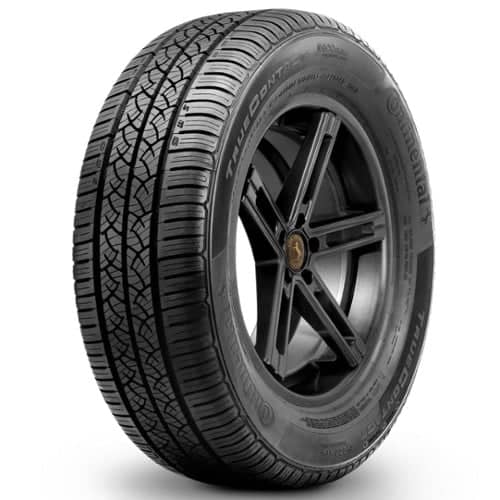
The Continental TrueContact Tour is the tire I hand people who commute in the rain. Three wide circumferential grooves work with angled laterals and a dense sipe network to route water out from under the contact patch instead of letting it build in front of the tire. At 0.95 cents a mile it is not a value sacrifice either, which makes the decision easy.
The Michelin CrossClimate2 is the other serious answer, and Michelin's own testing claims it stops shorter than four leading competitors on wet pavement even when the tread is worn down. That last part matters more than the new-tire number, since your tires spend most of their life partly worn. We compare it directly against the Continental in CrossClimate2 versus Continental all season if you are torn between the two.
The Continental PureContact LS deserves a mention for the D, W and S markers molded into its tread. As the tire wears, the letters disappear in order, telling you when it is no longer at its best for snow, then wet, then dry. It is the most honest wear indicator anyone puts on a tire.
Three tires on this list carry the three-peak mountain snowflake symbol, which means they passed a standardized snow traction test rather than just claiming all-season capability. That symbol is the only winter marking on a tire that means anything measurable.
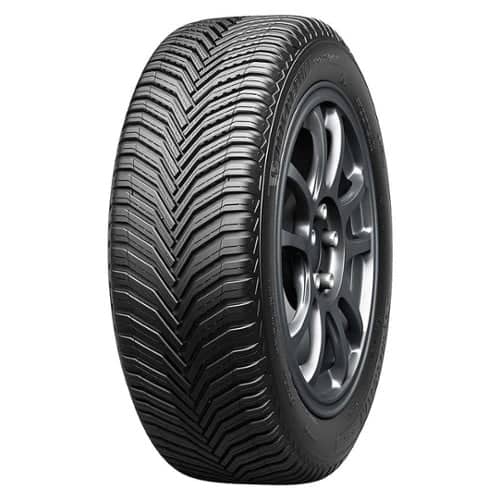
The Michelin CrossClimate2, the Toyo Celsius II, and the Falken Aklimate are your three. Notice where they sit in the cost per mile table: the CrossClimate2 is dead last and the Aklimate is in the bottom half. That is not a failure of those tires, it is what winter capability costs. The softer, more flexible compound that grips at low temperature is the same compound that wears faster in July.
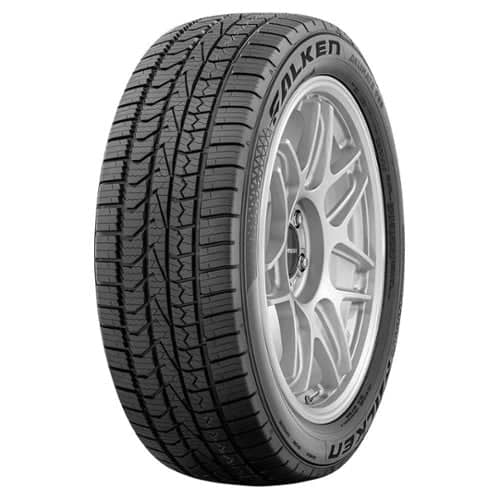
So the honest way to read the table is this. If you get real snow, you are not overpaying for the CrossClimate2, you are buying a different product. If you get three dustings a year and the plows are out by seven, the extra 0.65 cents a mile is buying you something you will barely use, and a MaxLife or a Solus TA51a plus good judgment on the bad mornings will serve you better. Our comparison of winter versus all season tires covers where that line falls.
Plenty of people come in with a hard number and no interest in being talked past it. Fair enough. In 215/55R17 there are exactly two sets on this list that land under 600 dollars, and both of them happen to be the top two on cost per mile.
The Goodyear Assurance MaxLife at 546.76 a set and the Kumho Solus TA51a at 594.92 a set are the whole list. The Toyo Extensa A/S II misses by nine dollars at 609.16 and is worth the overage if your budget has any flex in it at all.
What I want you to notice is that the budget answer and the value answer are the same answer here. That is unusual. Most categories force a real trade, where the cheap option costs you more over time. In commuter touring tires right now, the tire with the longest warranty is also the least expensive one on the shelf, and there is no clever reason to spend more unless you need quiet, wet grip, or snow specifically.
The MaxLife being both cheapest and longest-lasting is the exception, not the rule, and I do not want anyone walking away thinking sticker price is a reliable guide. Look at what happens just below it.
The Falken Aklimate at 164.00 a tire looks like a better deal than the Yokohama Avid Ascend LX at 175.99. It is twelve dollars cheaper per corner, 48 dollars cheaper per set. But the Yokohama is warranted for 20,000 more miles. Over the life of the set, the Yokohama costs 0.83 cents a mile and the Falken costs 1.01. On a 15,000 mile year that is a 27 dollar annual difference in the Yokohama's favor, and you paid 48 dollars once to get it.
The same trap runs the other direction. The Michelin Defender 2 at 209.99 is the most expensive tire in this comparison and it finishes mid-pack on cost per mile, tied with a Goodyear that costs 40 dollars less per corner. It is an excellent tire. It is not, by this measure, a better value than the tires above it.
The general rule I give people: divide the set price by the warranty before you compare anything. It takes ten seconds on your phone and it is the only number that reflects what you will actually spend. Sticker price tells you what leaves your account today. Cost per mile tells you what the tires cost you to own.
Here is the part that catches people out, and it is the reason I cannot just hand you one number and send you on your way.
Several tires on this list carry different warranties depending on the speed rating of the specific size you buy. Same model, same tread pattern, same box, different promise.
The logic is straightforward once you know it. Higher speed ratings require softer, grippier compounds and different construction, and those wear faster. So the V rated version of a tire is genuinely a shorter-lived tire than the T rated version, and the manufacturer prices that promise accordingly.
What this means practically is that the cost per mile figures above apply to the speed rating listed, and if your vehicle calls for a different one, your number changes. A TrueContact Tour in a V rated size goes from 0.95 cents a mile to 1.09 at the same price. That moves it from sixth on this list to tenth.
Check the sidewall of what is on your car now, or your door jamb placard, and confirm the warranty for your exact size before you commit. Any shop worth dealing with will tell you without being asked. If they cannot, that tells you something too.
I have pulled a lot of tires off cars well short of their warranty mileage, and in almost every case the brand on the sidewall had nothing to do with it. Three things do the damage.
Low pressure, quietly, for months. An underinflated tire flexes more, runs hotter, and wears its shoulders off while the center still looks fine. It also costs you fuel the whole time. Most people check pressure when the warning light comes on, and that light does not illuminate until you are 25 percent below spec. Check monthly with your own gauge, cold. Our piece on whether tire pressure affects gas mileage has the numbers on what the neglect costs.
Skipped rotations. On a front-wheel-drive commuter the fronts do the steering, most of the braking, and all of the power delivery. Left in place they will be finished while the rears still have half their life. Rotating on schedule is the single cheapest thing you can do to hit your warranty mileage, and it is usually free where you bought the tires. See how often to rotate tires for the interval.
Alignment nobody checked. A car that is out of alignment by a small amount will scrub a set of tires down in a fraction of their rated life, and the wear pattern is the giveaway. If one edge is going faster than the rest, that is not the tire's fault. Get it checked when you buy tires, not after you have ruined them.
Do those three things and the warranty mileage is realistic. Skip them and it does not matter which tire you bought. For where the finish line actually is, our guide to tread depth to replace tires covers what to measure and when.
For most people commuting on a passenger car in 2026, the Goodyear Assurance MaxLife is the tire to buy. It is the least expensive set on this list and it carries the longest warranty on this list, which is a combination that almost never happens, and at 0.64 cents a mile nothing else here comes within 19 percent of it.
Buy something else when you have a specific reason. Buy the Continental TrueContact Tour if you commute in rain. Buy the Continental PureContact LS or the Goodyear Assurance ComfortDrive if freeway noise wears you out. Buy the Michelin CrossClimate2 if you see real snow and want one set of tires to handle the whole year. Buy the Yokohama Avid Ascend LX if you want maximum life and can absorb the higher day-one price.
What I would not do is choose on sticker price alone, and I would not choose on brand reputation alone either. Run the division. Set price divided by warranty miles. It is the only comparison that survives contact with your actual driving.
Browse touring and all season tires by type to find your size, or call the shop and tell us what you drive and how far. We will tell you which of these makes sense for your fitment, and we will tell you the warranty for your exact speed rating before you buy, not after.
Most touring tires on this list carry warranties between 60,000 and 85,000 miles, and a well-maintained set on a commuter car will generally get somewhere near that figure. At the U.S. average of roughly 13,500 miles a year, an 80,000 mile tire is close to six years of driving, which means many drivers will hit the six-year age mark before they wear the tread out. Pressure, rotation, and alignment influence real-world life more than the brand does.
They overlap almost completely but describe different things. All season refers to the compound and tread being usable year round in moderate conditions. Touring, or grand touring, refers to the tire's design priorities: ride comfort, low noise, long tread life, and low rolling resistance rather than maximum grip. Nearly every grand touring tire is an all season tire, but plenty of all season tires are built for performance or off-road use rather than touring comfort. If you are ranking primarily on weather capability rather than running cost, our 12 best all season tires for 2026 approaches the same shelf from that angle.
Sometimes, but not automatically, and the reason has to be specific. On this list the most expensive tire finishes mid-pack on cost per mile, which means the premium bought something other than longevity. Paying more is justified when you are buying a measurable capability you will use, such as wet braking, cabin quiet, or certified snow traction. Paying more for brand reputation alone does not show up in the arithmetic.
Grand touring all season tires are the quietest category for highway use, because noise reduction is an explicit design goal rather than a byproduct. Within that category, look for tires with a dedicated comfort layer beneath the tread, such as Continental's ComfortRide construction used in the PureContact LS and TrueContact Tour. Narrower tires with a higher sidewall are generally quieter than wide, low-profile fitments, so a plus-sized wheel setup will cost you cabin quiet regardless of which tire you choose.
It depends on whether the specific tire carries the three-peak mountain snowflake symbol. A touring tire with that marking, such as the Michelin CrossClimate2, Toyo Celsius II, or Falken Aklimate, has passed a standardized snow traction test and will handle a real winter commute. A touring tire without it is rated for light snow at best, and the marketing phrase all season does not change that. In severe winter conditions a dedicated winter tire still outperforms any all season tire.
Mileage is the wrong measure. Replace based on tread depth and age. The legal minimum is 2/32 of an inch, marked by the wear bars molded into the grooves, but wet performance degrades well before that and most shops recommend replacing around 4/32. Separately, tires should be inspected annually after five years and replaced by ten years regardless of remaining tread, because the rubber degrades with time whether you drive on it or not.



