
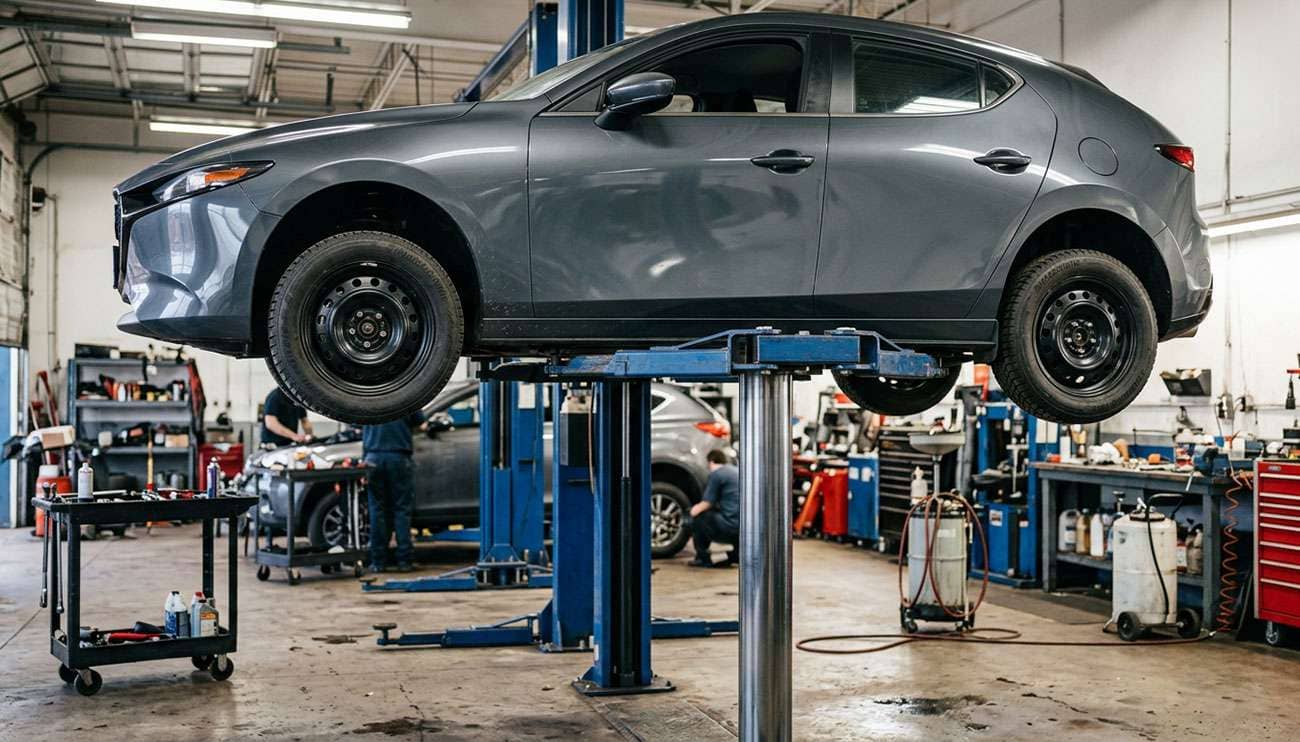
The right tire rotation frequency depends on three engineering variables that most generic recommendations don't address specifically: drivetrain configuration (FWD, RWD, AWD, or 4WD), tire type (standard all-season, performance, off-road, or specialty), and operating conditions (daily commute mileage, load patterns, climate, road surface). The general recommendation of "every 5,000 to 7,500 miles" works as a baseline for typical front-wheel drive and rear-wheel drive applications running standard all-season tires under moderate conditions — but it's not the right answer for every situation. AWD and 4WD drivetrains need rotations every 3,000 to 5,000 miles. EVs with their additional weight and instant torque delivery need 4,000 to 6,000 mile intervals. Off-road and high-load applications need 3,000 to 5,000 mile intervals regardless of drivetrain.
This guide provides specific frequency recommendations matched to your specific vehicle and driving situation, with the engineering reasoning behind each interval. The recommendations come from major tire manufacturer guidelines (Michelin, Bridgestone, Continental, Goodyear), vehicle manufacturer requirements, and decades of accumulated tire shop experience. Where the recommendations conflict, this guide explains which considerations take priority based on your specific application.
The cost of missing rotation intervals isn't just uneven tire wear. AWD and 4WD vehicles with tread depth variation greater than 2/32 inch between tires can experience drivetrain damage that costs $2,000 to $8,000 to repair. Tire manufacturer warranties (Michelin Defender2's 90,000 mile, Continental TrueContact Tour's 80,000 mile, Goodyear Assurance MaxLife's 85,000 mile) can be voided if you can't demonstrate documented rotation at the manufacturer's specified interval. The actual cost of skipping rotations extends well beyond replacement tires when factored across drivetrain damage risk and warranty implications.
Vehicle Type / Configuration |
Mileage Interval |
Time Interval |
Priority Level |
|---|---|---|---|
FWD passenger car (typical) |
5,000 - 7,500 miles |
6 months |
Standard |
RWD passenger car (typical) |
5,000 - 7,500 miles |
6 months |
Standard |
AWD passenger car |
3,000 - 5,000 miles |
4-6 months |
Critical (drivetrain risk) |
4WD truck/SUV |
3,000 - 5,000 miles |
4-6 months |
Critical (drivetrain risk) |
EV (any drivetrain) |
4,000 - 6,000 miles |
5-6 months |
High (weight + torque) |
Performance vehicle (staggered) |
Side-to-side every 5,000 miles* |
6 months |
Limited (no front-to-rear) |
Off-road truck/SUV |
3,000 - 5,000 miles |
4-6 months |
High (heavy loads, uneven wear) |
Towing/heavy hauling regularly |
3,000 - 5,000 miles |
4-6 months |
High (rear wear acceleration) |
*Staggered setups with different front and rear sizes can only rotate side-to-side (left-to-right within front pair, left-to-right within rear pair), not front-to-rear.
Drivetrain configuration is the single most important variable in rotation frequency because it determines which tires receive the engine's torque and how that power affects tire wear.
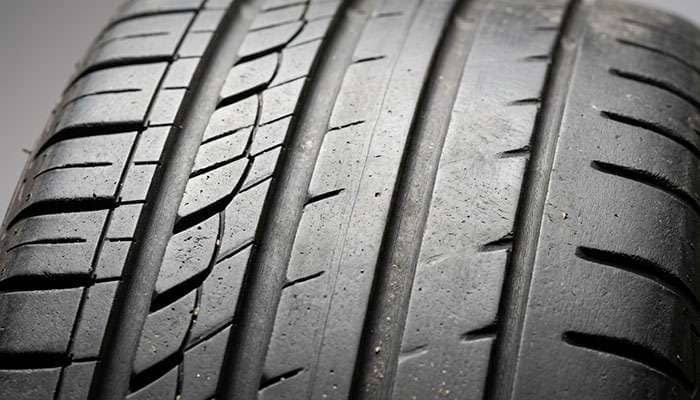
FWD (Front-Wheel Drive): Power goes to the front wheels, which also handle steering and most braking force (front brakes handle approximately 70% of braking on most vehicles). The front tires consequently wear faster than the rears in three different ways simultaneously: torque transmission (acceleration), steering scrub (cornering), and braking friction (deceleration). Without rotation, front tires can be 50-80% worn while rear tires retain 90%+ of original tread depth. This produces unsafe handling characteristics where the front tires have lost grip while the rears still have full grip.
RWD (Rear-Wheel Drive): Power goes to the rear wheels, but steering and most braking remain at the front. The wear distribution is more balanced than FWD because the front handles steering/braking while the rear handles acceleration — but the rear tires still wear faster than the fronts under typical conditions due to the acceleration loads. Without rotation, rear tires wear 30-50% faster than fronts.
AWD (All-Wheel Drive): Power distributes to all four wheels, but rarely equally. Most AWD systems run primarily front-wheel drive with rear engagement when slip is detected, or primarily rear-wheel drive with front engagement. The dynamic power distribution produces wear patterns that vary based on driving conditions — and this is where the drivetrain damage risk becomes critical. AWD systems use viscous couplings, differentials, or clutch packs to manage the front-to-rear power distribution. When tire tread depth varies more than 2/32 inch between tires (front vs rear or side-to-side), the AWD system fights against the size mismatch, generating heat in the coupling/differential that causes premature failure. Repair costs for damaged AWD systems run $2,000 to $8,000 depending on vehicle.
4WD (Four-Wheel Drive): Traditional 4WD with selectable engagement (typically found on trucks and SUVs) operates in 2WD mode most of the time with 4WD engaged only when needed. The 4WD system is more tolerant of tread depth variation than full-time AWD because it disengages when not needed — but heavy off-road use, frequent 4WD engagement, and uneven wear from rough terrain still demand frequent rotation. For deeper drivetrain context, see our how to rotate tires guide.
Recommended interval: every 5,000 to 7,500 miles, or every 6 months
Front-wheel drive vehicles represent the majority of modern passenger cars (Toyota Camry, Honda Accord, Hyundai Sonata, Nissan Altima, Toyota Corolla, Honda Civic, Mazda3, and the vast majority of compact and mid-size sedans). The rotation pattern for FWD is the forward cross: the rear tires move forward and cross sides (rear-left to front-right, rear-right to front-left), while the front tires move straight back (front-left to rear-left, front-right to rear-right).
The 5,000-7,500 mile range accommodates the variation in driving conditions:
The 6-month time interval applies regardless of mileage because rubber compounds degrade with time as well as with use. A tire that sits in one position for 6+ months even with low mileage develops position-specific wear patterns from suspension load and parking-related flat-spot formation. Time-based rotation prevents this position-specific degradation.
Recommended interval: every 5,000 to 7,500 miles, or every 6 months
Rear-wheel drive vehicles include most performance cars (Mustang, Camaro, Challenger, BMW 3/5 Series, Mercedes-Benz C/E-Class, Lexus IS/RC), most pickup trucks (F-150, Silverado, RAM 1500 in 2WD configuration), and some larger sedans. The rotation pattern for RWD is the rearward cross: the front tires move backward and cross sides (front-left to rear-right, front-right to rear-left), while the rear tires move straight forward (rear-left to front-left, rear-right to front-right).
The same 5,000-7,500 mile range applies as FWD, with similar adjustments for driving conditions. However, RWD applications have one specific consideration: staggered tire setups (different sizes front and rear) cannot use the standard rearward cross pattern. Staggered RWD setups (most performance variants of Mustang GT, Camaro SS, Challenger R/T+) can only rotate side-to-side within each axle pair — left front to right front, left rear to right rear. This limited rotation pattern means staggered setups effectively can't equalize tire wear front-to-rear, which is why most staggered pony cars and sports cars develop noticeably more wear on their drive (rear) tires than non-driven (front) tires.
For deeper sizing analysis on staggered setups, see our best wheels and tires for pony cars 2026.
Recommended interval: every 3,000 to 5,000 miles, or every 4-6 months
This is where rotation frequency becomes genuinely critical from a drivetrain damage perspective rather than just a tire wear perspective. AWD vehicles (Subaru Outback, Subaru Forester, Audi Quattro applications, BMW xDrive applications, Mercedes 4Matic applications, Toyota RAV4 AWD, Honda CR-V AWD, Mazda CX-5 AWD) use dynamic power distribution between front and rear axles through center differentials, viscous couplings, or electronically-controlled clutch packs.
The technical issue: AWD systems assume all four tires have approximately the same effective diameter. When tread depth varies more than 2/32 inch between tires (which translates to roughly 1/8 inch difference in tire circumference), the AWD system detects the diameter mismatch as a slip condition and engages the coupling/differential to compensate. The continuous engagement under normal driving conditions (rather than just when actual slip occurs) generates heat in the coupling/differential, which accelerates wear and eventually causes catastrophic failure. Repair costs for damaged Audi Quattro center differentials run $3,000-5,000. Subaru transfer case repairs run $2,500-4,000. Toyota AWD coupler replacement runs $1,800-3,500.
The shorter 3,000-5,000 mile rotation interval prevents the tread depth variation from reaching the 2/32 inch threshold. Combined with replacing all four AWD tires at once (rather than just two as is sometimes done on FWD/RWD applications), the rotation discipline protects the drivetrain investment.
For 4WD trucks and SUVs (Toyota Tacoma, Toyota 4Runner, Ford F-150 4WD, Chevrolet Silverado 4WD, Jeep Wrangler), the drivetrain damage risk is lower because most 4WD systems disengage in 2WD mode for normal driving. However, frequent 4WD engagement (regular off-road use, severe weather driving) and heavy load applications still demand the same 3,000-5,000 mile rotation discipline. For broader off-road tire context, see our 2026 best truck wheels for off-road performance.
Recommended interval: every 4,000 to 6,000 miles, or every 5-6 months
Electric vehicles create unique tire wear characteristics that demand tighter rotation intervals than equivalent internal combustion vehicles. Three factors drive the difference:
1. Substantially higher vehicle weight. EV battery packs add 800-1,500+ pounds of weight versus comparable ICE vehicles. A Tesla Model Y weighs approximately 4,400 pounds versus a Toyota RAV4 at approximately 3,400 pounds. A Rivian R1T weighs approximately 7,100 pounds versus a Ford F-150 at approximately 4,500 pounds. The additional weight produces higher tire loads, accelerated tread wear, and more aggressive wear pattern development.
2. Instant torque delivery. Electric motors produce maximum torque from zero RPM, which creates substantially more aggressive acceleration loads on the drive tires than internal combustion engines (which produce torque progressively as engine speed builds). The instant torque delivery accelerates wear on drive tires specifically, demanding more frequent rotation to equalize wear.
3. Regenerative braking. EVs use regenerative braking that decelerates the vehicle through electric motor reversal rather than friction braking. The regenerative braking loads concentrate on the drive tires (front for FWD EVs, rear for RWD EVs, all four for AWD EVs) rather than distributing across all four tires the way conventional friction braking does. This adds additional wear concentration on drive tires.
The combination produces tire wear rates 15-25% faster than equivalent ICE vehicles. Tesla Model 3 Performance owners typically replace tires at 20,000-25,000 miles versus 35,000-45,000 miles for comparable BMW M3 applications. The 4,000-6,000 mile rotation interval helps equalize the wear distribution and extends total tire service life.
EV-specific tires (Michelin Pilot Sport EV, Continental EcoContact 6, Bridgestone Turanza EV, Hankook Ventus iON) are engineered specifically for EV applications with reinforced sidewalls, lower rolling resistance compound chemistry, and noise-reducing technology. These tires still benefit from the tighter rotation intervals despite their EV-specific engineering.
The time-based rotation interval (every 6 months) applies regardless of mileage because three engineering factors operate on time rather than mileage:
1. Position-specific wear patterns develop over time. A tire that sits in one position for 6+ months develops wear patterns specific to that position's load distribution. Front tires develop wear patterns matching front weight distribution. Rear tires develop wear patterns matching rear weight distribution. The longer a tire stays in one position, the more position-specific its wear pattern becomes — and the harder it is to equalize wear through subsequent rotation.
2. Parking-related flat-spot formation. Tires that sit stationary for extended periods (typical for vehicles that aren't driven daily) develop flat spots from the contact patch sitting under the vehicle weight in one position. The flat spots typically work themselves out within the first few minutes of driving as the tire warms up, but extended sitting can produce permanent flat spotting that requires tire replacement. Time-based rotation moves tires to different positions, reducing the duration any single position bears the static load.
3. Compound aging. Tire rubber compounds age chemically over time through oxidation, ozone exposure, and UV degradation. The aging affects different positions differently based on sun exposure (which side of the vehicle faces the sun during typical parking) and temperature cycling. Rotation distributes the aging effects across all four positions rather than concentrating them on specific tires.
For low-mileage applications where 6,000-7,500 miles takes longer than 6 months to accumulate, the time-based interval takes priority. A daily driver that puts on 5,000 miles per year still needs rotation at the 6 month interval, not at the mileage interval that would take 18+ months to reach.
Specific operating conditions accelerate uneven wear and demand rotation more frequently than the standard intervals.
Condition |
Frequency Adjustment |
Why |
|---|---|---|
Frequent towing or heavy hauling |
3,000 - 5,000 miles |
Rear tires bear concentrated load |
Regular off-road or trail use |
3,000 - 5,000 miles |
Uneven wear from rough terrain |
Aggressive driving (acceleration, braking, cornering) |
4,000 - 6,000 miles |
Drive tire wear acceleration |
Stop-and-go urban commuting |
5,000 - 6,500 miles |
Front tire braking/steering loads |
Hilly or mountainous terrain |
5,000 - 6,500 miles |
Increased braking and acceleration loads |
Poor road surfaces (potholes, rough pavement) |
5,000 - 6,000 miles |
Impact damage accelerates wear |
Frequent high-speed highway driving (75+ mph) |
5,000 - 6,500 miles |
Heat buildup accelerates compound wear |
Carrying extra weight regularly (passengers, cargo) |
5,000 - 6,500 miles |
Higher load accelerates wear rate |
The general rule: any condition that produces wear concentration on specific tires (drive tires under aggressive acceleration, front tires under heavy braking, rear tires under towing loads) demands more frequent rotation to equalize wear before it becomes uneven.
Certain conditions produce more even baseline wear and allow rotation at the longer end of the standard range.
Highway-dominant driving with light loads: Sustained highway speeds on smooth pavement with minimal cargo produces relatively even wear across all four tires. The 7,500 mile end of the FWD/RWD range works for this driving pattern. Highway-dominant drivers can typically reach the 7,500 mile interval without unacceptable wear differential development.
Moderate driving style with consistent patterns: Drivers who maintain consistent driving habits (similar routes, similar loads, smooth acceleration and braking) produce more predictable wear patterns that can be managed at the longer end of the rotation range. Variable driving patterns produce variable wear that demands tighter rotation discipline.
Climate-controlled storage between trips: Vehicles stored in climate-controlled garages between uses experience less compound aging and position-specific wear than vehicles parked outdoors. Climate-controlled storage reduces (but doesn't eliminate) the time-based aging factors that drive the 6-month interval recommendation.
Even under favorable conditions, the absolute outer limit for rotation interval should not exceed 10,000 miles or 12 months. Beyond those thresholds, position-specific wear patterns develop that subsequent rotation cannot effectively equalize.
Specific tire types have rotation constraints that affect the standard recommendations.
Directional tires. Directional tires have V-shaped or arrow-pattern treads designed to rotate in one specific direction. These tires can only rotate front-to-rear on the same side of the vehicle (left-side stays on the left, right-side stays on the right). Side-to-side rotation requires demounting the tires from the wheels and remounting them on the opposite side wheels — adding $80-160 to the rotation cost. Most owners with directional tires only rotate front-to-rear within the same side at standard intervals, accepting the reduced wear equalization that pattern produces.
Asymmetric tires. Asymmetric tires have different tread patterns on the inside vs outside of the tire (typically optimized for wet performance on the outside and dry performance on the inside). Asymmetric tires can rotate normally (front-to-rear with side switching) without constraint, because the inside-vs-outside orientation is determined by the wheel mounting rather than the rotation direction.
Staggered setups. Vehicles with staggered setups (different tire sizes front vs rear, common on performance applications like Mustang GT, Camaro SS, Challenger Scat Pack, Corvette, Porsche 911) cannot rotate front-to-rear because the sizes don't match. Staggered setups can only rotate side-to-side within each axle pair. The resulting limited rotation pattern means drive tires (rear on RWD) wear faster than non-drive tires (front on RWD) and require more frequent replacement.
Run-flat tires. Run-flat tires require visual inspection during every rotation to check for internal damage from any periods of low pressure operation. The reinforced sidewall construction can mask damage that would be obvious on conventional tires, so rotation becomes an opportunity for thorough inspection beyond just position swap. For deeper run-flat analysis, see our 2026 run-flat tires pros and cons.
Studded winter tires. Studded winter tires can only rotate front-to-rear (same-side) because studs wear directionally — a stud that has been rotating clockwise (right-side tire) cannot be flipped to rotate counter-clockwise (left-side tire) without the wear pattern producing reduced grip and accelerated stud failure.
Tire manufacturer warranties (typically 60,000-90,000 mile treadwear warranties) include rotation requirements that, if not met, void the warranty.
Manufacturer |
Typical Warranty |
Rotation Requirement |
|---|---|---|
Michelin (Defender2, Defender LTX) |
80,000 - 90,000 miles |
Every 6,000 - 8,000 miles |
Continental (TrueContact Tour) |
80,000 miles |
Every 5,000 - 8,000 miles |
Goodyear (Assurance MaxLife) |
85,000 miles |
Every 5,000 - 8,000 miles |
Bridgestone (Turanza, Ecopia) |
65,000 - 80,000 miles |
Every 5,000 miles |
Pirelli (most touring tires) |
50,000 - 70,000 miles |
Every 5,000 - 8,000 miles |
The warranty requirements typically demand documented proof of rotation at the specified interval. Service records from authorized dealers, tire shops, or certified service providers document the rotation. Self-performed rotations without documentation typically don't satisfy warranty requirements — even if the rotations were performed at the correct interval. For owners running tires with long mileage warranties, the rotation documentation matters as much as the actual rotation.
If rotation intervals are missed (typically defined as exceeding the specified mileage by more than 25% between rotations), manufacturers can deny prorated tread life adjustment claims when tires wear out prematurely. The cost of an $800-1,000 tire replacement claim denial typically exceeds the cost of years of regular $25-40 rotation services.
Specific symptoms indicate the tires need rotation regardless of mileage interval.
Visible wear differential. Comparing tread depth across all four tires using a tread depth gauge — if any tire shows more than 2/32 inch difference from the others, rotation is overdue. Visual inspection often misses subtle wear differentials that the gauge detects.
Vibration at highway speeds. Vibration that wasn't present previously, especially at sustained highway speeds (50-70 mph), often indicates uneven tire wear that's developing into out-of-balance conditions. Rotation alone may not solve the vibration (balancing may also be needed), but it should be performed before continuing to drive on the unevenly-worn tires.
Pulling or steering wheel correction. If the vehicle pulls to one side when driving in a straight line on level pavement, or if continuous steering wheel correction is needed to maintain a straight line, the front tires likely have developed uneven wear that's affecting handling. Rotation (combined with alignment check) addresses the wear-related component.
Increased road noise. Tires that have worn unevenly (specifically the "feathering" pattern where tread blocks wear into a sawtooth profile) produce noticeably more road noise than evenly-worn tires. The noise increase typically develops gradually, so comparison to your earlier experience with the same tires is the best indicator.
Inner or outer edge wear. When the inside or outside edge of tires shows accelerated wear compared to the center, the problem is typically alignment-related rather than rotation-related. However, rotation distributes the alignment-related wear across more tires rather than concentrating it on specific positions. Address the underlying alignment issue, but rotation helps in the interim.
Five tires where the rotation discipline produces meaningful service life improvements and warranty protection.
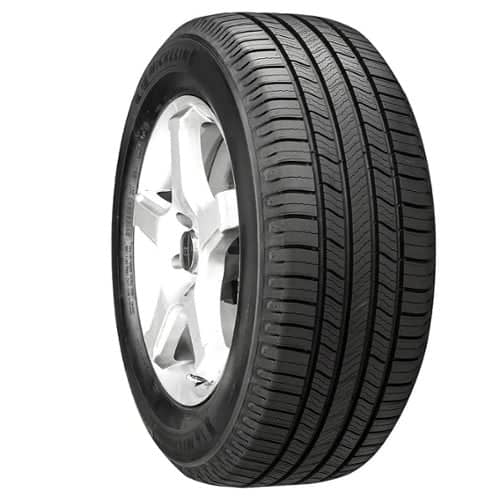
Michelin Defender2: 90,000 mile manufacturer treadwear warranty — among the longest in the all-season category. Rotation at 6,000-8,000 mile intervals is required to maintain warranty eligibility. Skipping rotations on tires with this long warranty period creates the biggest financial exposure when wear becomes uneven and the warranty claim gets denied. Browse Michelin Defender2 sizes.
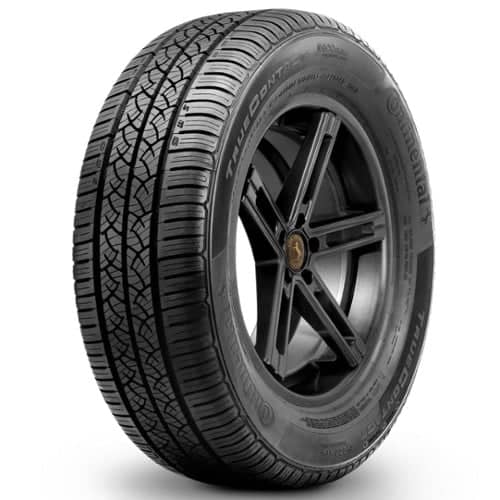
Continental TrueContact Tour: 80,000 mile manufacturer warranty with 5,000-8,000 mile rotation requirement. Continental's warranty terms are typical for the long-life touring category. The TrueContact Tour represents strong value-tier all-season pricing where the warranty value is a meaningful portion of total tire economics. Browse Continental TrueContact Tour sizes.
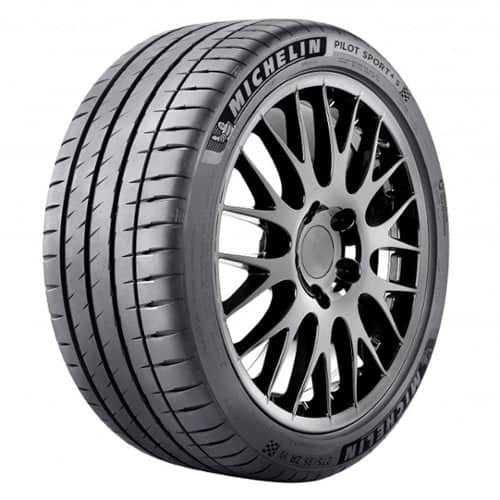
Michelin Pilot Sport 4 S: UHP summer tire where rotation strategy depends entirely on whether the vehicle runs square (rotation as normal) or staggered (side-to-side rotation only) setup. The 30,000 mile typical tread life for UHP summer compounds makes the rotation discipline particularly important — losing tread life through skipped rotations costs more per mile than on long-warranty touring tires. Browse Michelin Pilot Sport 4 S sizes.
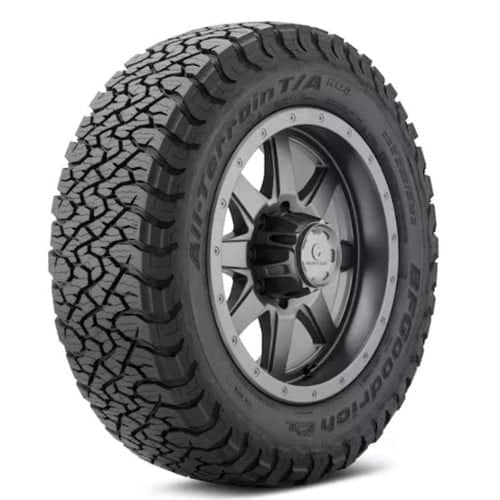
BFGoodrich All-Terrain T/A KO3: Off-road tire where the 3,000-5,000 mile rotation interval becomes critical due to the uneven wear patterns that rough terrain produces. The KO3 is the latest generation of BFGoodrich's legendary All-Terrain platform with improved tread life over the KO2 predecessor — but the off-road wear acceleration still demands tight rotation discipline. Browse BFGoodrich All-Terrain T/A KO3 sizes.
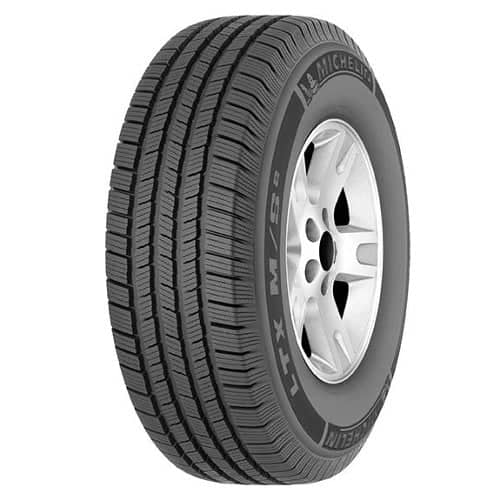
Michelin Defender LTX M/S 2: Truck and SUV tire where heavy load capacity and 4WD applications demand the tighter 3,000-5,000 mile rotation interval. The Defender LTX M/S 2 ships with 70,000 mile treadwear warranty on most sizes — the warranty value is significant enough that rotation discipline materially affects total tire economics. Browse Michelin Defender LTX M/S 2 sizes.
Application |
Interval (Mileage) |
Interval (Time) |
Primary Risk if Skipped |
|---|---|---|---|
FWD passenger car (standard) |
5,000 - 7,500 miles |
6 months |
Front tire premature replacement |
RWD passenger car (standard) |
5,000 - 7,500 miles |
6 months |
Rear tire premature replacement |
AWD passenger car |
3,000 - 5,000 miles |
4-6 months |
Drivetrain damage ($2,000-$8,000) |
4WD truck/SUV |
3,000 - 5,000 miles |
4-6 months |
Transfer case damage |
EV (any drivetrain) |
4,000 - 6,000 miles |
5-6 months |
Accelerated drive tire wear |
Performance (staggered) |
Side-to-side every 5,000 miles |
6 months |
Limited equalization possible |
Off-road or heavy towing |
3,000 - 5,000 miles |
4-6 months |
Uneven wear acceleration |
Long-warranty tires (any drivetrain) |
Per manufacturer spec |
6 months |
Warranty claim denial |
AWD vehicles need tire rotation every 3,000 to 5,000 miles, or every 4-6 months, whichever comes first. This is substantially shorter than the standard 5,000-7,500 mile interval for FWD and RWD applications because AWD drivetrains are sensitive to tread depth variation between tires. When tread depth varies more than 2/32 inch between any two tires, AWD systems (Subaru's symmetrical AWD, Audi Quattro, BMW xDrive, Toyota Dynamic Torque Control AWD, Honda Real Time AWD) detect the diameter mismatch as continuous slip and engage the coupling/differential to compensate. The continuous engagement generates heat that accelerates wear on AWD components, eventually causing failure that costs $2,000-$8,000 to repair. The shorter rotation interval prevents the tread variation from reaching the damage threshold. Consult your owner's manual for the specific recommendation for your AWD vehicle — some manufacturers (especially Subaru) require even shorter intervals.
Yes. Visible uniformity doesn't mean rotation isn't needed — it typically means the rotation has been keeping the wear uniform. Even wear that looks uniform to the eye usually develops into uneven patterns over time if the tires stay in the same positions. The 5,000-7,500 mile rotation interval is what produces the uniform appearance you're seeing, not a sign that rotation can stop. Additionally, tread depth differences as small as 2/32 inch between tires can be invisible without measurement but still create AWD drivetrain damage risk or warranty claim issues. Use a tread depth gauge to check tread depth across all four tires every few months — if any tire shows more than 2/32 inch difference from the others, the rotation is overdue regardless of visual inspection results.
Three things happen when rotations get skipped consistently. First, drive tires wear faster than non-drive tires. On FWD vehicles, front tires can wear out at 30,000 miles while rear tires still have 60-70% of original tread depth remaining at 30,000 miles. This forces premature replacement of drive tires at uneven mileage intervals rather than full-set replacement at planned intervals. Second, tire manufacturer warranties get voided. Most warranty terms require documented rotation at 5,000-8,000 mile intervals, and missed rotations void prorated tread life adjustment claims. Third, on AWD and 4WD applications, drivetrain damage develops over time from continuous tread depth variation. Repair costs run $2,000-$8,000 depending on the specific AWD system. The financial impact of skipped rotations compounds over time — what saves $25-40 per rotation costs hundreds in premature replacement and potentially thousands in drivetrain damage.
Staggered setups (different tire sizes front vs rear, common on Mustang GT, Camaro SS, Challenger Scat Pack, Corvette, Porsche 911, BMW M3, and most performance vehicles) cannot rotate front-to-rear because the sizes don't match. Staggered setups can only rotate side-to-side within each axle pair: left front to right front, left rear to right rear. The limited rotation pattern means staggered setups can equalize side-to-side wear but cannot equalize front-to-rear wear. The result is that drive tires (rear on RWD applications) wear faster than non-drive tires and require more frequent replacement. Track-focused performance vehicle owners often switch to square setups (same size all four corners) specifically to enable full rotation patterns and equalize wear across all four tires.
EVs need tire rotation every 4,000 to 6,000 miles, or every 5-6 months. The shorter interval compared to equivalent internal combustion vehicles reflects three EV-specific factors: substantially higher vehicle weight (800-1,500+ lbs additional from battery pack), instant torque delivery (electric motors produce maximum torque from zero RPM versus ICE engines that build torque progressively), and regenerative braking concentration on drive tires (regenerative braking decelerates through the motor rather than friction brakes, concentrating deceleration loads on drive tires). The combined factors produce tire wear 15-25% faster than comparable ICE vehicles. Tesla Model 3 Performance owners typically replace tires at 20,000-25,000 miles versus 35,000-45,000 for comparable BMW M3 applications. The 4,000-6,000 mile rotation interval helps equalize the accelerated wear distribution. Consult your specific EV's owner's manual — some manufacturers (especially Lucid and Rivian) recommend even shorter intervals.
Yes, meaningfully. Regular tire rotation at the recommended intervals can extend total tire life by 15-30% compared to skipping rotations. The mechanism: without rotation, drive tires wear out at substantially shorter intervals than non-drive tires, forcing premature replacement of the worn pair (or full set if matching is needed). With proper rotation, wear distributes more evenly across all four tires, extending the service life of the slowest-wearing tire (which becomes the limiting factor for full-set replacement). For long-warranty grand touring tires (Michelin Defender2 at 90,000 miles, Continental TrueContact Tour at 80,000 miles), rotation discipline can be the difference between reaching the warranty mileage versus replacing at 50,000-60,000 miles. The 15-30% life extension typically translates to $200-400 in delayed replacement costs over a typical tire ownership period.
Tire rotation typically costs $25-50 at most tire shops and dealerships, with some service centers offering free rotation as part of tire purchase agreements or maintenance package programs. Performance Plus Tire offers free rotation for life on tires purchased from us. The cost variation reflects regional pricing differences, included services (some shops include brake inspection, tire pressure check, and tread depth measurement; others charge separately for these), and shop type (dealerships typically charge more than independent tire shops). For tires with directional tread patterns that require demounting for side-to-side rotation, expect an additional $80-160 charge for the dismount/remount labor. Most owners who purchase tires from a dedicated tire retailer with included rotation programs find the rotation cost is effectively zero across the tire ownership period.
When replacing tires, the new tires typically go on the rear axle regardless of drivetrain configuration — this is the industry-standard safety recommendation. Newer tires with more tread depth handle wet conditions better, and putting them on the rear prevents oversteer (rear-end loss of traction) which is harder for most drivers to recover from than understeer (front-end loss of traction). This applies even on FWD vehicles, where intuition might suggest the drive tires (front) should get the newer tires. After installation, the standard rotation schedule begins fresh — first rotation at the recommended interval for your drivetrain. If you're replacing only two tires while keeping two existing tires (typical for AWD applications where all four should be replaced together, but sometimes done for FWD/RWD), the new pair goes on the rear and the rotation interval continues from there.



