
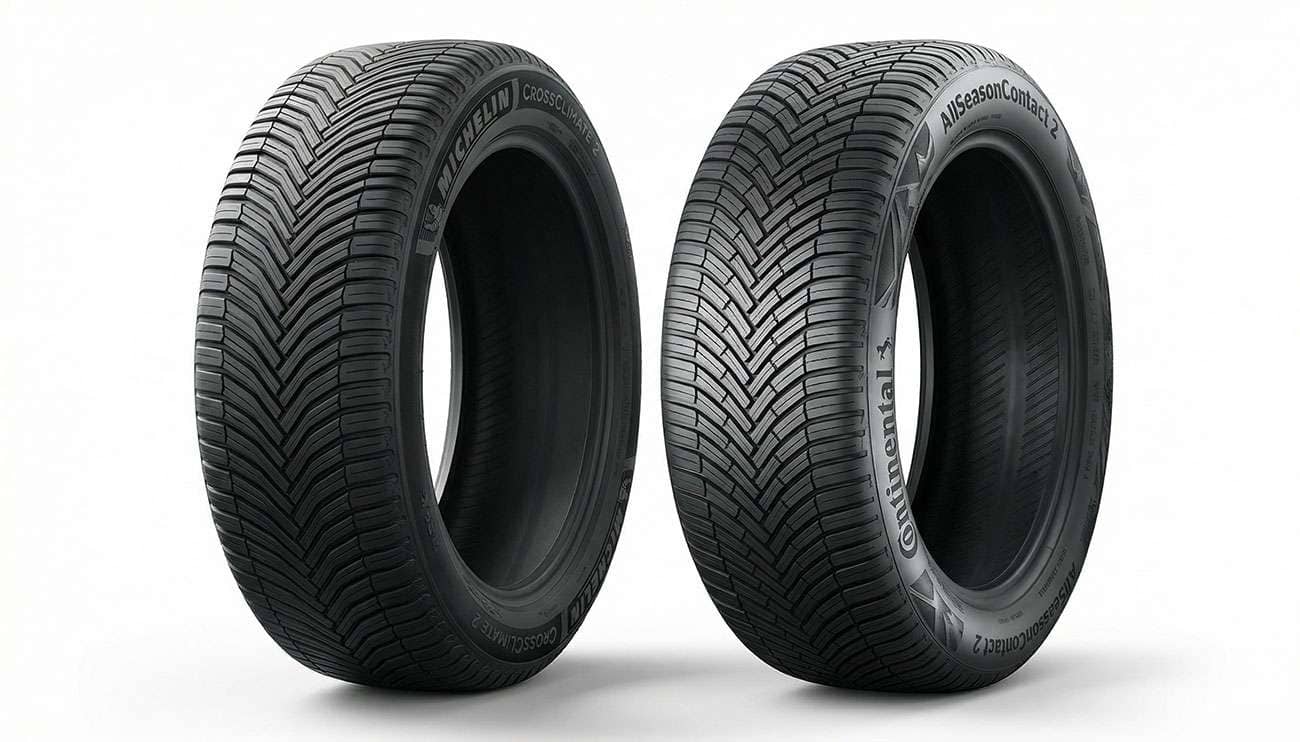
Michelin CrossClimate 2 and Continental AllSeasonContact 2 represent two of the most advanced all-season tire options available today. Both tires feature directional tread patterns designed for winter performance and carry the 3-peak mountain snowflake ratings, ensuring reliable traction across all weather conditions.
The CrossClimate 2 delivers exceptional winter grip and smooth ride comfort. Its thermal adaptive tread compound responds to temperature changes, providing strong performance on dry, wet, and snow-covered roads. The Continental AllSeasonContact 2 brings practical benefits to the table with 15% better mileage and 6% lower rolling resistance than its predecessor.
CrossClimate 2 excels when safety, durability, and all-weather performance matter most. The tire's interlocking central sipes and reinforced shoulder sipes create outstanding traction on ice. Continental's ExtremeContact DWS06 offers sharper handling and sportier feel on both wet and dry surfaces, making it the choice for drivers who prioritize responsive steering.
We'll examine how these premium all-season tires perform in real driving conditions, compare their comfort and longevity, and help you select the right option for your specific needs and driving environment.
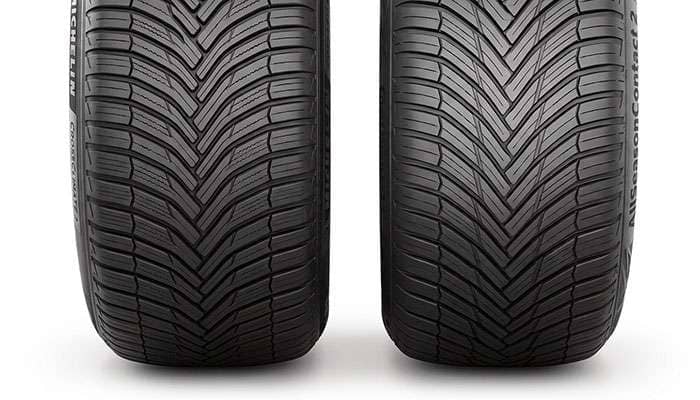
Michelin and Continental have engineered two distinctly different approaches to all-season tire performance. Each tire targets specific driving priorities and weather conditions.
Released in 2020 as the CrossClimate+ successor, the CrossClimate 2 uses V-shaped directional tread design with Thermoactive technology. This system adapts compound flexibility based on temperature changes. The tire incorporates 3D SipeLock technology that maintains wet and cold weather grip while preserving dry road performance.
Stopping power sets this tire apart from competitors. The CrossClimate 2 stops up to 56 feet shorter on wet surfaces even when worn. Dry braking distances measure between 37.7-37.9 meters, earning top ratings in shared comparison tests.
Size availability spans 175-285mm width with 40-70% height ratios and 15-22" rim compatibility. The tire carries three-peak mountain snowflake (3PMSF) certification for severe snow service. Michelin backs the CrossClimate 2 with a 60,000-mile warranty. EU efficiency ratings show B-C for fuel consumption and B for wet grip.
Continental launched the AllSeasonContact 2 in May 2023 with adaptive tread block technology. C-block design provides enhanced stiffness while V-shaped blocks end in open shoulder grooves for water evacuation.
The tire uses Chili Blend Compound technology that merges five different compounds from Continental's proven summer and winter tire lines. This formulation achieves class-leading wet grip and superior aquaplaning resistance, consistently winning wet braking, wet handling, and wet circle evaluations.
Performance improvements over the previous generation include 15% longer mileage and significantly reduced rolling resistance. Available sizes range from 165-285mm width, 40-70% height ratios, and 15-22" rim options. EU efficiency ratings span B-E for fuel consumption with B ratings for wet grip.
Both tires serve drivers who want year-round performance without seasonal tire changes. They fit passenger cars, sedans, coupes, station wagons, crossovers, and medium SUVs.
CrossClimate 2 works best for drivers who face regular snow conditions or need maximum dry braking security and ride comfort. AllSeasonContact 2 suits drivers in mild, wet climates who value standing water stability and lower initial cost. Both tires feature electric vehicle optimizations that address specific EV driving requirements.
Real driving conditions reveal the true differences between these all-season contenders. Each tire shows distinct advantages depending on the surface and weather you encounter.
The Continental AllSeasonContact 2 delivers solid steering response when changing lanes or taking corners, but test results show longer stopping distances on dry pavement. Michelin CrossClimate 2 dominates dry braking performance, stopping up to 56 feet shorter than competing tires. Temperature makes a difference here - Continental performs better when the pavement is cold, while Michelin gains the advantage as temperatures climb, stopping 1.1 meters shorter in warm conditions.
Heavy rain conditions favor the Continental tire. Testing shows it stops 1.2 meters shorter than the Michelin in wet braking evaluations. The CrossClimate 2 still earns impressive wet traction scores of 9-10 out of 10, though it requires 3.1 meters more stopping distance on wet roads. Both tires use directional tread patterns that channel water away effectively to prevent hydroplaning.
Michelin's SipeLock siping technology creates exceptional snow grip. Tire Reviews describes the CrossClimate 2 as "ridiculously good in the snow". Continental holds its own in winter conditions, with both tires earning the demanding 3PMSF winter certification.
Continental takes the lead in dry handling tests, recording better speeds through measured courses. Both tires maintain stable cornering when roads are slippery. Some drivers notice the CrossClimate 2 feels firmer with less road feedback compared to dedicated summer tires.
Road comfort matters as much as performance when you're spending hours behind the wheel. The Michelin CrossClimate 2 and Continental AllSeasonContact 2 take different approaches to delivering a quiet, comfortable ride.
Continental's ContiSilent technology cuts cabin noise by up to 9 decibels. The secret lies in polyurethane foam attached to the tire's inner tread surface, which blocks vibrations from reaching the wheel. Michelin uses a similar foam layer approach, focusing on absorbing road vibrations and noise. Continental consistently wins the quiet ride battle, with test results showing the lowest rolling noise levels.
CrossClimate 2 delivers a noticeably smoother ride thanks to its vibration-absorbing polyurethane construction. Many drivers describe the experience as "dead silent" with minimal road noise intrusion. Continental tires with the Conti-Seal System can feel somewhat rigid, though they still earn a solid 2/3 comfort rating.
Continental AllSeasonContact 2 handles urban driving well, smoothing out bumpy roads and potholes across varied terrain. You'll notice consistent humming below 40 mph, but this noise fades above 60 mph. For long highway trips, the Michelin CrossClimate 2 provides excellent comfort while maintaining fuel efficiency.
The choice comes down to priorities: Continental for the quietest cabin experience, or Michelin for the smoothest ride feel.
Long-term ownership costs matter more than initial purchase price when selecting between the Michelin CrossClimate 2 and Continental AllSeasonContact 2.
Continental AllSeasonContact 2 maintains consistent performance in extreme heat, operating effectively at temperatures above 30°C. Test data shows a lifetime exceeding 15,000 kilometers, making it ideal for hot climate conditions. Michelin CrossClimate 2 outlasts many competitors by approximately 15,000 miles, potentially providing two additional years of service. The CrossClimate 2 edges ahead in wear testing with an average projected tread life of 51,708 km compared to Continental's 51,338 km.
Michelin provides a 6-year limited warranty from manufacture date plus an impressive 100,000 km mileage warranty. Continental takes a different approach with a 72-month limited warranty from purchase date, including free replacement during the first year. Both manufacturers offer 60-day satisfaction guarantees and 3-year roadside assistance programs.
Continental AllSeasonContact 2 delivers superior rolling resistance, making it the better choice for fuel economy and electric vehicle range. EU efficiency ratings span A to C, with most sizes rated B and C. However, independent testing reveals the Michelin CrossClimate 2 consumed 1.31% less fuel on average, measuring 5.29L/100km versus Continental's 5.36L/100km.
Michelin CrossClimate 2 costs £124.99-£339.99 fully fitted while Continental ranges from £89.99-£279.99. Cost-per-distance analysis shows Michelin offers slightly better value at 6.26€/1000km versus Continental's 6.35€/1000km. Budget-conscious drivers will find Continental AllSeasonContact 2 provides the lower initial cost combined with strong wet weather safety.
When comparing these premium all-season tires directly, the performance differences become clear. Here's how the Michelin CrossClimate 2 and Continental AllSeasonContact 2 stack up across key specifications and real-world metrics:
Feature |
Michelin CrossClimate 2 |
Continental AllSeasonContact 2 |
|---|---|---|
Key Technology |
Thermoactive technology, 3D SipeLock |
C-block technology, Chili Blend Compound |
Dry Braking |
37.7-37.9 meters |
Slightly longer distances than Michelin |
Wet Performance |
Stops 3.1m longer than Continental |
Superior wet handling, shorter wet braking by 1.2m |
Snow Performance |
"Ridiculously good in snow" with SipeLock siping |
Competent snow handling |
Size Range |
175-285mm width, 40-70% ratio, 15-22" rim |
165-285mm width, 40-70% ratio, 15-22" rim |
EU Efficiency Rating |
B-C for fuel consumption, B for wet grip |
B-E for fuel consumption, B for wet grip |
Noise Reduction |
Polyurethane foam layer |
ContiSilent technology (up to 9dB reduction) |
Warranty |
6-year limited, 100,000 km mileage |
72-month limited, free replacement in first year |
Projected Tread Life |
51,708 km |
51,338 km |
Fuel Consumption |
5.29L/100km |
5.36L/100km |
Price Range (Fitted) |
£124.99-£339.99 |
£89.99-£279.99 |
Cost per Distance |
6.26€/1000km |
6.35€/1000km |
The data shows that each tire excels in different areas. Michelin dominates winter and dry conditions, while Continental leads in wet weather performance and offers better value pricing. Your choice depends on which performance characteristics matter most for your driving conditions.
Your driving environment and priorities determine which tire delivers the best value. Michelin CrossClimate 2 stands out for drivers who regularly face snow and ice conditions. Its thermal adaptive tread compound and SipeLock technology provide exceptional winter traction, while superior dry braking performance and 100,000 km warranty coverage add long-term value.
Continental AllSeasonContact 2 works best for those in wet-weather regions. The tire delivers shorter braking distances in rain, better wet handling, and quieter operation through ContiSilent technology. Budget-conscious buyers benefit from Continental's lower purchase price while getting comparable tread life.
Both tires eliminate seasonal tire changes while maintaining year-round safety. CrossClimate 2 excels on icy surfaces and provides all-weather confidence. AllSeasonContact 2 offers practical advantages with lower rolling resistance and stronger aquaplaning protection.
Electric vehicle owners should weigh their priorities carefully. Continental's reduced rolling resistance can extend driving range, while Michelin's lower measured fuel consumption provides efficiency benefits.
The performance differences between these premium options remain minimal across most conditions. Your typical weather conditions, vehicle type, and comfort preferences should guide your choice. Both tires deliver advanced all-season technology that provides reliable performance without seasonal changeovers.
At Performance Plus Tire, we stock both options and can help you determine which tire best matches your driving needs and vehicle requirements. Our expert team understands that the right tire choice depends on your specific situation, not just specifications.
When choosing between these premium all-season tires, your driving environment and priorities should guide your decision:
• Michelin CrossClimate 2 excels in winter conditions with superior snow/ice traction and dry braking, stopping up to 56 feet shorter than competitors
• Continental AllSeasonContact 2 dominates wet weather performance with better wet handling and braking, plus quieter ride quality through ContiSilent technology
• Both tires offer excellent longevity with similar projected tread life (~51,000 km) but Michelin provides longer warranty coverage (100,000 km vs 72 months)
• Continental offers better value for budget-conscious buyers at £89.99-£279.99 versus Michelin's £124.99-£339.99 price range
• Choose Michelin for snow-heavy regions and superior all-weather confidence; select Continental for predominantly wet climates and cost savings
Both tires eliminate the need for seasonal changeovers while delivering premium performance. The CrossClimate 2 suits drivers prioritizing winter safety and dry performance, while the AllSeasonContact 2 appeals to those valuing wet weather capability and acoustic comfort at a lower price point.
The Michelin CrossClimate 2 excels in dry braking and snow performance, while the Continental AllSeasonContact 2 demonstrates superior wet handling and braking. Both tires offer excellent all-season capabilities, with the Michelin being particularly strong in winter conditions and the Continental performing better in wet weather.
The Continental AllSeasonContact 2 is generally more budget-friendly, with a lower initial purchase price. However, the Michelin CrossClimate 2 offers a slightly better cost-per-distance ratio and a longer mileage warranty. The best value depends on your specific needs and driving conditions.
The Continental AllSeasonContact 2 is rated as the quieter option, featuring ContiSilent technology that reduces cabin noise by up to 9 decibels. The Michelin CrossClimate 2, while not as quiet, provides a noticeably smoother ride due to its vibration-absorbing polyurethane construction.
Both tires are optimized for electric vehicles, but they excel in different areas. The Continental AllSeasonContact 2 offers lower rolling resistance, potentially extending EV range. However, the Michelin CrossClimate 2 showed slightly lower measured fuel consumption in tests, which could also benefit EV efficiency.
Both tires carry the 3-peak mountain snowflake (3PMSF) certification for winter performance. However, the Michelin CrossClimate 2 is particularly praised for its exceptional snow and ice traction, thanks to its SipeLock technology. The Continental AllSeasonContact 2 also performs competently in snow, but may not match the Michelin's level of winter performance.



