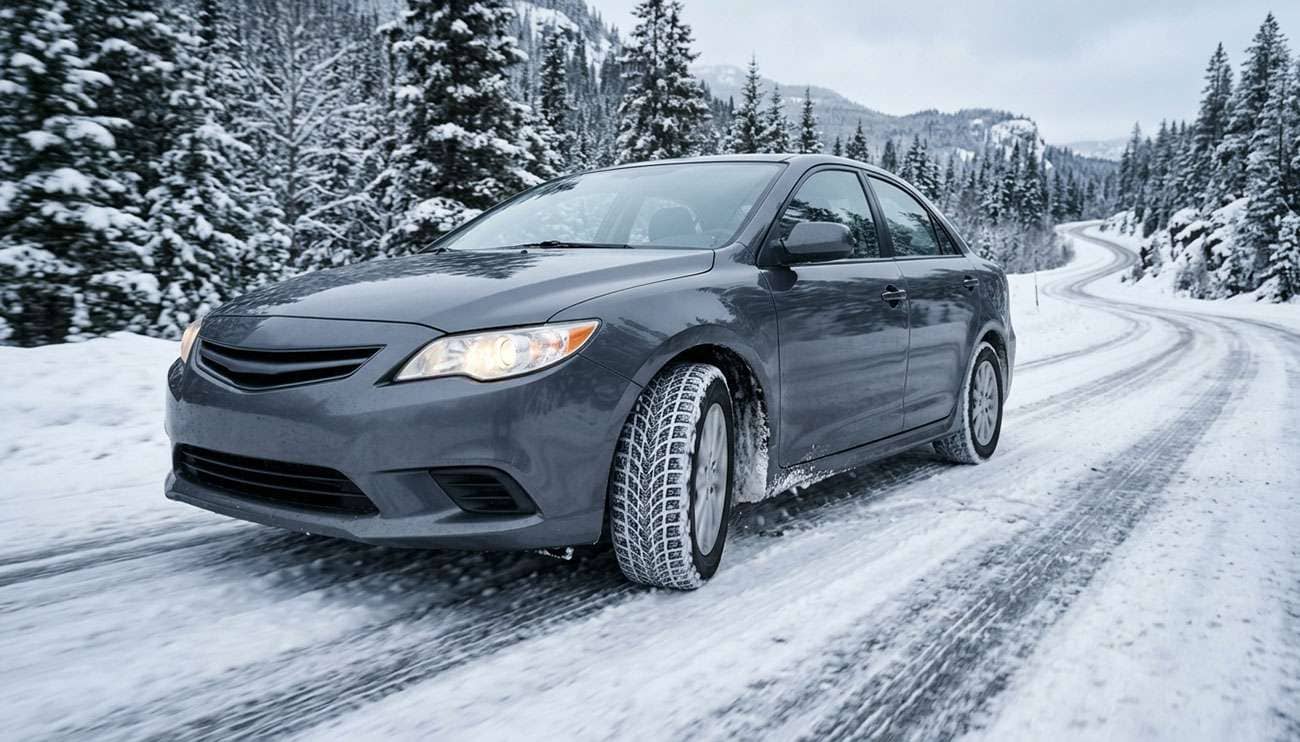
The decision between winter tires and all-season tires comes down to a single engineering principle: rubber compound chemistry behaves dramatically differently above and below approximately 45°F (7°C). Above that threshold, all-season tire compounds stay pliable enough to grip the road effectively in dry, wet, and warm conditions. Below that threshold, all-season compounds stiffen progressively, losing the molecular flexibility that produces road grip — while winter tire compounds remain pliable because they're chemically engineered with different rubber polymers, plasticizers, and silica concentrations specifically for cold-temperature operation.
The performance gap that the 45°F threshold creates is meaningful. On packed snow at 30 mph, winter tires stop in approximately 59 feet while all-season tires take an additional 30 feet — two car lengths of additional stopping distance that can determine whether a near-miss becomes an accident. On ice, winter tires accelerate over 60 feet in approximately 4.5 seconds while all-season tires require 6.5 seconds. Winter tires can shorten stopping distance up to 30% compared to all-season tires in snowy conditions. The data is consistent across decades of independent testing.
The trade-offs are equally real. Winter tires wear faster in warm conditions, produce more road noise, deliver shorter tread life (typically no treadwear warranty since manufacturers expect single-season seasonal use), and cost more in total ownership when you factor in the seasonal storage and mounting fees. All-season tires sacrifice winter performance for year-round usability, longer tread life, lower noise, and the simplicity of running one set of tires through the entire year. The right choice depends on your climate zone, driving frequency in cold weather, vehicle, and personal priorities.
This guide breaks down exactly when each category makes sense, presents the engineering data honestly, and recommends four specific tires across each category. Every tire is in current Performance Plus Tire inventory.
Scenario |
Winter Tires |
All-Season Tires |
|---|---|---|
Regular winter snow & ice driving |
Required |
Inadequate |
Occasional light snow (3-5 events/year) |
Helpful but optional |
Acceptable |
Climate that stays above 45°F year-round |
Wasteful |
Correct choice |
Daily commuter in snow belt states |
Strongly recommended |
Risky compromise |
Highway driver crossing varied climates |
Seasonal swap ideal |
Compromise option |
Single-vehicle household, no storage |
Logistically difficult |
Practical default |
Budget-conscious driver |
Higher total cost |
Lower total cost |
Performance vehicle, snow exposure |
Performance winter tire |
UHP all-season compromise |
The decision rule: If your region experiences temperatures consistently below 45°F for two or more months per year AND you drive regularly during that period, dedicated winter tires deliver meaningful safety advantages that justify the cost and logistics. If your region rarely drops below 45°F or you can avoid driving during cold-weather events, premium all-season tires (particularly 3-Peak Mountain Snowflake rated alternatives like the Michelin CrossClimate2 or Goodyear Assurance WeatherReady) deliver acceptable safety margins with substantially better year-round economics.
The 45°F (7°C) temperature threshold isn't arbitrary — it represents the point at which rubber compound chemistry behaves dramatically differently. Understanding why this threshold matters explains everything else about winter vs all-season tire decisions.
Above 45°F: All-season tire compounds remain pliable enough to deform around road surface irregularities at the molecular level, which is what produces grip. The rubber molecules slide past each other freely, the silica reinforcement particles dissipate heat effectively, and the tire's contact patch maintains the chemical adhesion that translates into traction during acceleration, braking, and cornering.
Below 45°F: All-season compounds progressively stiffen. The rubber molecules slow down, sliding past each other less freely, which reduces the tire's ability to deform around road surface irregularities at the molecular level. The contact patch becomes harder, the chemical adhesion weakens, and the grip that the tire delivered at 70°F disappears progressively as temperatures drop. At 32°F (freezing), all-season compounds may have lost 30-50% of their warm-weather grip. At 20°F, the loss can exceed 60%.
Winter tire compounds are engineered differently. The rubber polymer blend, plasticizer concentrations, and silica formulations are tuned for cold-temperature pliability rather than warm-temperature durability. A modern winter tire compound stays pliable at temperatures as low as -22°F (-30°C), maintaining the molecular flexibility that produces grip in conditions where all-season compounds have essentially given up.
The trade-off goes the other direction in warm weather. Winter tire compounds remain pliable above 45°F but become too soft for ideal warm-weather performance. They wear faster (the soft compound abrades against pavement more readily), produce more road noise (the soft compound transmits more vibration), and deliver inferior dry-pavement handling (the soft compound can't generate the same lateral grip that all-season compounds achieve in warm temperatures). This is why winter tires are seasonal — they should come off when consistent temperatures return above 45°F. For more detail on the temperature threshold, see our cold weather temperature guide.
The 3-Peak Mountain Snowflake (3PMSF) symbol is the most important marking on the sidewall when evaluating winter capability. The symbol is a mountain with three peaks containing a snowflake icon, and tires that display the 3PMSF marking have been independently tested to meet specific snow traction performance standards established by the ASTM (American Society for Testing and Materials).
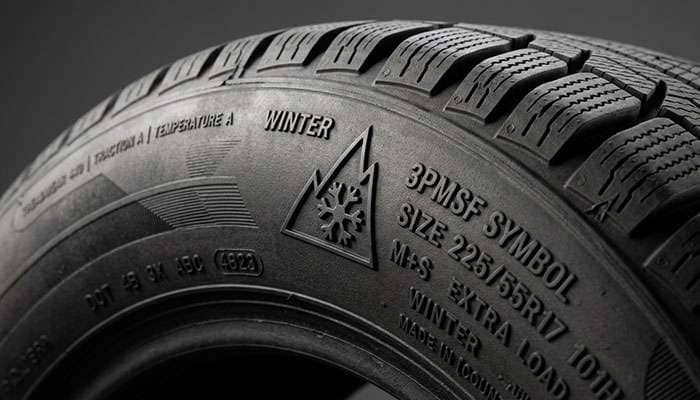
3PMSF testing requirements: The tire must demonstrate snow traction performance at least 110% of an industry-standard reference tire. The test measures acceleration capability on packed snow, providing a quantifiable performance baseline that distinguishes genuine winter-capable tires from regular all-season tires that simply carry M+S (Mud and Snow) markings.
M+S marking limitations: The M+S marking on tire sidewalls indicates a tire is designed for mud and snow conditions, but the M+S marking has no specific performance testing requirement — manufacturers can apply M+S based on tread pattern characteristics alone. Most all-season tires carry M+S markings, but their actual snow performance varies dramatically. M+S indicates intent. 3PMSF indicates verified capability.
Both winter tires and certain all-season tires carry 3PMSF. Dedicated winter tires (Blizzak WS90, Michelin X-Ice Snow, Nokian Hakkapeliitta, Continental VikingContact) universally carry 3PMSF — winter capability is their entire purpose. Some premium all-season tires also carry 3PMSF — most notably the Michelin CrossClimate2 and Goodyear Assurance WeatherReady, which deliver snow traction performance meeting the 3PMSF standard while remaining usable year-round. These 3PMSF-rated all-season tires occupy a middle ground that didn't exist a decade ago, and they're a meaningful option for drivers in transitional climate zones who want better winter capability than typical all-season tires without the logistics of seasonal tire swaps. For deeper M+S vs winter context, see our M+S vs winter tires guide.
Three engineering elements differentiate winter tires from all-season tires.
1. Cold-flexible rubber compound chemistry. As covered in the 45°F threshold section, winter tire compounds maintain molecular flexibility at temperatures where all-season compounds stiffen. The compound chemistry uses different polymer blends, higher silica concentrations, and specialized plasticizers tuned for cold-temperature operation. This is the foundation of winter tire performance — without the cold-flexible compound, the other engineering elements wouldn't matter.
2. Aggressive sipe density and pattern. Sipes are the thin slits cut into tread blocks (versus tread grooves, which are larger channels). Sipes create thousands of biting edges that grip snow and ice at the micro level. Modern winter tires have sipe densities 3-5 times higher than typical all-season tires, with sipe patterns engineered to open and close as the tire rotates, providing both gripping edges during braking and acceleration AND mechanical interlocking with snow particles during cornering. Some winter tires also include studs (small metal pins) that bite into ice for additional traction, though studded tires are illegal or restricted in many states.
3. Tread pattern for snow and slush evacuation. Winter tire tread patterns are deeper and more aggressive than all-season patterns, with directional grooves engineered to channel snow and slush away from the contact patch. Snow stuck in the tread reduces traction, so winter tires actively evict accumulated snow as the tire rotates. The aggressive tread pattern also creates additional biting edges beyond what the sipes provide, particularly useful in deeper snow conditions.
The trade-offs that produce these benefits: shorter tread life (the soft compound and aggressive tread wear faster on dry pavement), more road noise (aggressive sipe patterns transmit more vibration), and reduced dry-pavement handling sharpness (the soft compound can't generate as much lateral grip in warm conditions). Winter tires are seasonal specialists, not year-round generalists.
All-season tires are designed for the opposite engineering priority: year-round capability through compromise rather than specialization in any single condition.
Balanced compound chemistry. All-season compounds are tuned for usable performance across the broadest possible temperature range — typically 32°F to 100°F+ for typical all-season applications. The compound stays pliable enough to grip in cool conditions (above the 45°F threshold) while remaining durable enough to deliver acceptable tread life in warm conditions. The compromise produces acceptable performance everywhere and exceptional performance nowhere.
Moderate tread pattern complexity. All-season tread patterns balance snow/wet capability against dry handling and tread life. The patterns include some sipes (for cold-weather grip and wet traction) but at lower density than winter tires. The patterns include directional or asymmetric grooves for water evacuation but not the aggressive channeling that winter tires require. The result: acceptable performance in wet conditions, acceptable performance in light snow, acceptable performance in dry conditions — without excellence in any specific condition.
Longer tread life optimization. All-season tires are engineered for treadwear ratings typically in the 60,000-80,000 mile range — substantially longer than the 30,000-50,000 mile range that winter tires deliver. The harder compound chemistry that produces longer wear is exactly what compromises cold-weather grip below the 45°F threshold.
The all-season category itself has evolved in recent years. Premium "all-weather" alternatives like the Michelin CrossClimate2 and Goodyear Assurance WeatherReady carry 3PMSF certification, delivering genuine winter snow traction performance while remaining usable year-round. These tires occupy a category between traditional all-season and dedicated winter — they don't match true winter tire performance on ice and deep snow, but they significantly outperform standard all-season tires in winter conditions. For broader category context, see our all-season vs all-weather vs winter tires comparison.
The performance gap between winter and all-season tires in cold conditions is well-documented through decades of independent testing.
Test Condition |
Winter Tires |
All-Season Tires |
Difference |
|---|---|---|---|
30 mph snow braking distance |
59 feet |
89 feet |
30 feet shorter (-34%) |
10 mph ice braking distance |
~33 feet |
~42 feet |
9 feet shorter |
Ice acceleration (60 ft from stop) |
4.5 seconds |
6.5 seconds |
2 seconds faster (-31%) |
25 mph snow cornering |
Completes corner |
Slides out |
Binary safety difference |
Cold dry braking (40°F) |
Reduced vs warm |
Substantially reduced |
Winter ~10-15% better |
Warm dry braking (75°F) |
Acceptable |
Excellent |
All-season ~10-15% better |
Typical tread life |
30,000-50,000 miles |
60,000-80,000 miles |
All-season ~50-60% longer |
Road noise (subjective) |
Moderate to high |
Low to moderate |
All-season quieter |
The pattern that emerges: winter tires win decisively in cold-weather snow and ice conditions (30-34% performance advantages in braking and acceleration), while all-season tires win in warm-weather dry braking, tread life, and noise. The 25 mph snow cornering test produces a binary safety outcome — winter tires complete the corner while all-season tires slide out, which can mean the difference between staying on the road and ending up in a ditch.
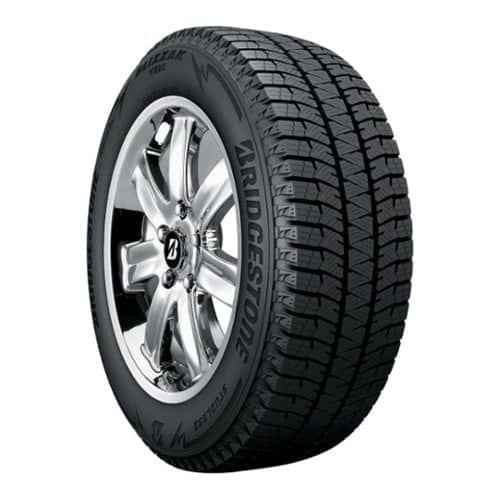
Category: Winter / Studless Ice & Snow • Best For: Passenger cars and small SUVs in severe winter conditions • Typical Price: $150-220 per tire
The Bridgestone Blizzak WS90 is the ice traction benchmark in the studless winter tire category, and it's the most-recommended winter tire across independent testing publications. Bridgestone's NanoPro-Tech multi-cell compound technology uses microscopic hydrophilic-coated particles within the rubber matrix that actively absorb the water film that ice creates as tires apply pressure — the tire essentially "bites" through the water layer to contact the ice itself, producing dramatically better ice traction than conventional winter compounds.
The WS90 builds on Bridgestone's three-decade Blizzak engineering heritage with refined tread block geometry that maintains the brand's signature ice grip while improving wet handling and tread life compared to earlier Blizzak generations. For Toyota Camry, Honda Accord, Hyundai Sonata, Nissan Altima, Toyota RAV4, Honda CR-V, and similar passenger car and compact SUV applications operating in regions with regular snow and ice exposure (Northeast, Midwest, Mountain West, Pacific Northwest), the Blizzak WS90 is consistently the right answer when peak winter capability matters more than tread life or warm-weather usability. Browse Bridgestone Blizzak WS90 sizes.
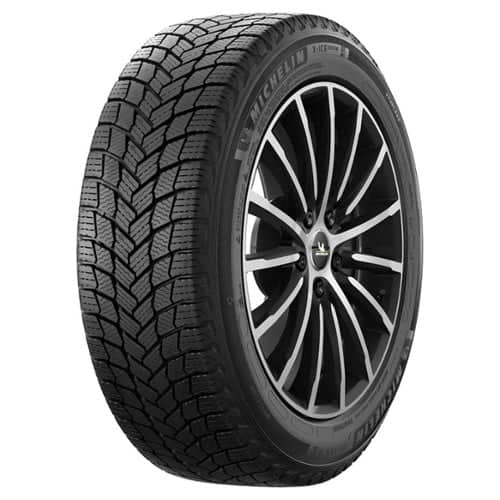
Category: Winter / Studless Ice & Snow • Best For: Comfort-focused winter drivers, luxury sedans, and SUVs • Typical Price: $170-260 per tire
The Michelin X-Ice Snow brings Michelin's premium engineering reputation to the winter tire category specifically for drivers who want winter capability without sacrificing ride comfort and noise characteristics. The Flex-Ice 2.0 compound stays pliable in extreme cold while maintaining the dimensional stability that produces longer tread life than typical winter tire alternatives (Michelin claims approximately 8,000 mile longer tread life vs the previous X-Ice Xi3 generation). The tire's micro-pumping action uses specialized sipe geometry to expel water from the contact patch on ice, complementing the V-shape tread pattern's water evacuation capability in slush and wet snow.
What separates the X-Ice Snow from the Blizzak WS90 is the priority weighting. The Blizzak emphasizes peak ice traction, while the X-Ice Snow emphasizes balanced winter performance with comfort and tread life. For BMW, Mercedes-Benz, Audi, Lexus, and similar luxury sedan applications where winter capability needs to coexist with the comfort and noise characteristics that premium vehicles demand, the X-Ice Snow is typically the right answer. The tire is also available in SUV sizes for Cadillac Escalade, GMC Yukon, Ford Expedition, Lincoln Navigator, and similar premium SUV applications. Browse Michelin X-Ice Snow sizes.
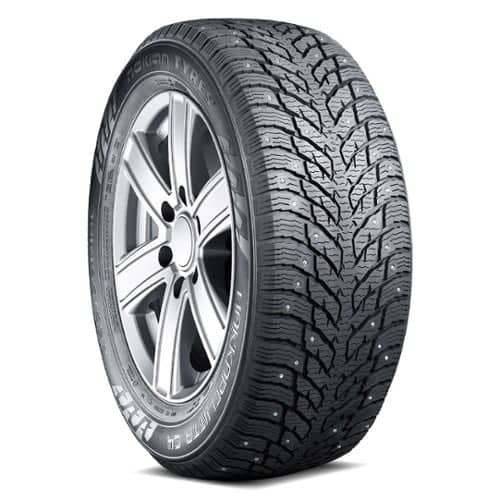
Category: Winter / Nordic Specialist (Commercial Van) • Best For: Commercial vans, fleet vehicles, severe winter conditions • Typical Price: $180-260 per tire
The Nokian Hakkapeliitta C4 brings Finnish winter tire engineering specifically to commercial van applications. Nokian has produced winter tires longer than any other manufacturer — the company invented the studless winter tire in 1934, and Hakkapeliitta has been the flagship name in serious winter tire applications for decades. The C4 designation indicates commercial vehicle (C) construction with the load capacity that commercial vans and fleet vehicles require, paired with Hakkapeliitta-grade winter traction.
For Mercedes-Benz Sprinter, Ford Transit, RAM ProMaster, Nissan NV, and similar commercial van applications operating in regions with serious winter conditions, the Hakkapeliitta C4 delivers the load-rated structural integrity that commercial applications need alongside the Nordic-engineered winter traction that fleet safety demands. The tire's tread pattern uses Nokian's signature aggressive sipe geometry with specialized snow grip features engineered for the deeper snow conditions common in Scandinavian winters. The load index ratings match commercial van payload requirements that lighter passenger winter tires can't handle. For fleet operators, delivery services, and small business owners running commercial vehicles through serious winters, the Hakkapeliitta C4 is consistently the right answer. Browse Nokian Hakkapeliitta C4 sizes.
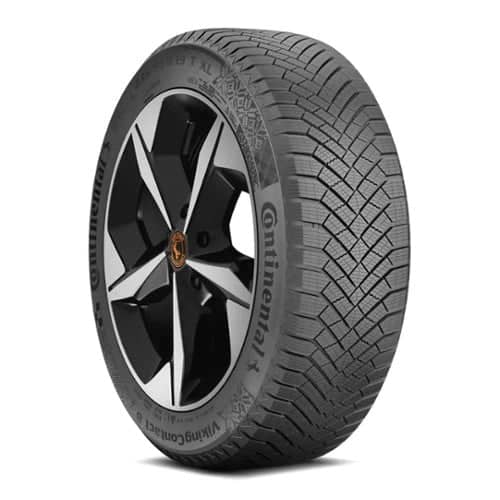
Category: Winter / Studless Ice & Snow • Best For: European performance vehicles, premium sedans, luxury SUVs • Typical Price: $190-280 per tire
The Continental VikingContact 8 delivers Continental's European winter tire engineering optimized for the performance vehicle market that demands winter capability alongside the handling precision that drivers of premium European vehicles expect. The tire's Polar Plus compound technology produces strong ice and snow traction while maintaining the steering response and cornering precision that BMW, Mercedes-Benz, Audi, and similar performance applications require — meaningful for drivers who don't want winter tires that turn their performance vehicle into a slow, vague-handling appliance during the cold months.
What separates the VikingContact 8 from other premium winter tires is the European tuning bias. Where the Blizzak WS90 emphasizes maximum ice grip and the X-Ice Snow emphasizes comfort, the VikingContact 8 emphasizes the handling precision that European performance applications need to remain enjoyable in winter conditions. For BMW 3-Series, 5-Series, X-line, Mercedes-Benz C-Class, E-Class, GLC, GLE, Audi A4, A6, Q5, Q7, and similar premium European applications, the VikingContact 8 preserves the OE-tuned driving character through winter operation better than less-precise winter alternatives. The 3PMSF certification confirms the tire meets the snow traction performance standard for genuine winter capability. Browse Continental VikingContact 8 sizes.
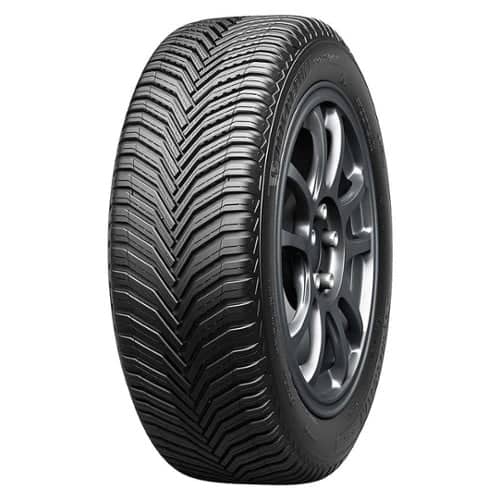
Category: Grand Touring All-Season (3PMSF Rated) • Best For: Year-round drivers who want maximum winter capability in an all-season • Typical Price: $190-280 per tire
The Michelin CrossClimate2 is the standout all-season tire for buyers who want winter capability without the logistics of seasonal tire swaps. The CrossClimate2 carries 3-Peak Mountain Snowflake (3PMSF) certification — meaning it meets the snow traction performance standard typically reserved for dedicated winter tires while remaining usable in summer conditions. The Thermal Adaptive tread compound stays pliable across a wider temperature range than typical all-season compounds, maintaining grip below the 45°F threshold where standard all-season tires lose grip dramatically.
The CrossClimate2 doesn't match dedicated winter tire performance on deep snow and severe ice — Bridgestone Blizzak WS90, Michelin X-Ice Snow, and Continental VikingContact 8 all deliver superior peak winter capability. But the CrossClimate2 significantly outperforms standard all-season tires in winter conditions while preserving the year-round usability that all-season buyers want. For drivers in transitional climate zones (Pacific Northwest, mid-Atlantic, parts of California mountain regions, southern New England) where winter conditions occur but aren't severe enough to justify dedicated winter tires, the CrossClimate2 delivers the best balance available in the all-season category. Tread life typically runs 60,000-70,000 miles. Browse Michelin CrossClimate2 sizes.
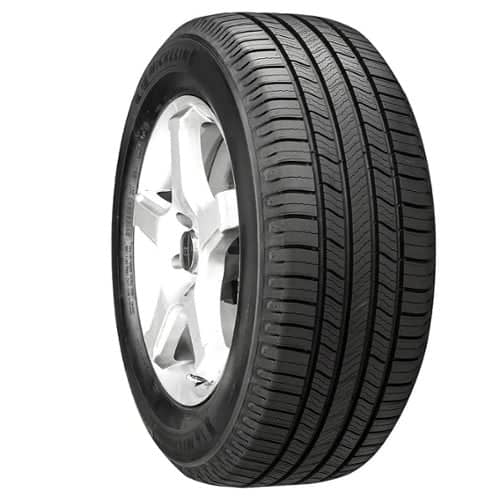
Category: Grand Touring All-Season • Best For: Long-tread-life all-season focus, warm-climate drivers • Typical Price: $160-240 per tire
The Michelin Defender2 brings Michelin's longevity engineering reputation to the standard all-season category, delivering one of the longest treadwear ratings in the segment (90,000 mile manufacturer treadwear warranty on most sizes). The tire's MaxTouch Construction optimizes the contact patch for even pressure distribution across the tread width, which reduces irregular wear and extends usable tread life substantially beyond typical grand touring all-season alternatives.
The Defender2 doesn't carry 3PMSF certification — it's designed as a standard all-season tire focused on year-round usability with moderate winter capability rather than the enhanced winter capability the CrossClimate2 delivers. For drivers in warm-climate regions (Southwest, Southeast, much of California, much of Texas) where serious winter conditions aren't a concern, the Defender2's longer tread life and modest cost advantage versus the CrossClimate2 make it the more economical choice. For Toyota Camry, Honda Accord, Toyota RAV4, Honda CR-V, Hyundai Sonata, Nissan Altima, and similar mainstream sedan and crossover applications in warm-climate markets, the Defender2 consistently delivers strong economics with acceptable performance across the conditions these drivers actually face. Browse Michelin Defender2 sizes.
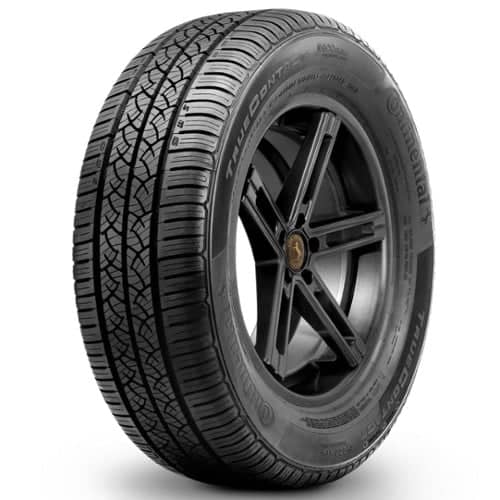
Category: Grand Touring All-Season • Best For: Value-conscious all-season buyers with mixed climate exposure • Typical Price: $140-220 per tire
The Continental TrueContact Tour delivers Continental's grand touring engineering at meaningfully lower pricing than premium Michelin alternatives while maintaining strong all-around performance characteristics. The EcoPlus Technology compound balances rolling resistance (which improves fuel economy by 1-2% versus competitive alternatives) with wet traction and cold-weather grip. The tire's PolyPlus Construction uses high-tensile steel belts and polyester reinforcement that maintain dimensional stability through the tire's service life.
For Toyota Camry, Honda Accord, Hyundai Sonata, Nissan Altima, Kia K5, Toyota Corolla, Honda Civic, and similar mainstream sedan applications in mixed-climate regions where buyers want acceptable all-season performance at value pricing, the TrueContact Tour delivers strong economics. The tire's 80,000 mile manufacturer treadwear warranty matches premium Michelin alternatives while typically pricing 15-20% lower at equivalent sizes. The trade-off versus the CrossClimate2 is winter capability (TrueContact Tour doesn't carry 3PMSF) and the trade-off versus the Defender2 is brand recognition. For value-focused buyers who want premium European engineering at attainable pricing, the TrueContact Tour is consistently a strong choice. Browse Continental TrueContact Tour sizes.
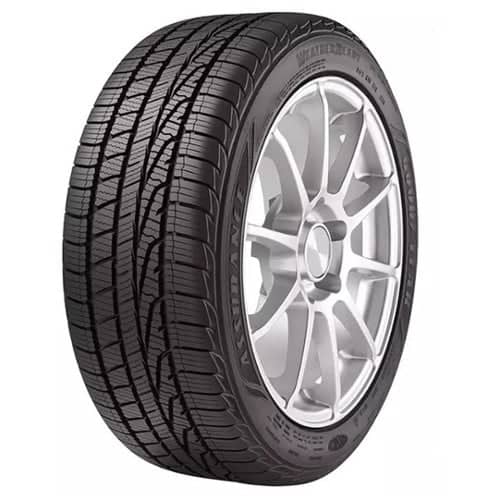
Category: Grand Touring All-Season (3PMSF Rated) • Best For: Winter-capable all-season alternative at value pricing • Typical Price: $150-240 per tire
The Goodyear Assurance WeatherReady is the value-tier alternative to the Michelin CrossClimate2 — also carrying 3-Peak Mountain Snowflake (3PMSF) certification while delivering all-season year-round usability. Goodyear's EvolvingTraction Grooves change shape as the tire wears, maintaining wet and winter traction longer than fixed-pattern alternatives. The Soybean Oil-infused tread compound stays pliable in cold conditions where standard all-season compounds stiffen, producing meaningfully better winter capability than non-3PMSF all-season alternatives at competitive pricing.
For drivers in transitional climate zones who want 3PMSF winter capability without paying premium Michelin CrossClimate2 pricing, the Assurance WeatherReady delivers strong value. The tire typically prices 15-25% below the CrossClimate2 at equivalent sizes while delivering 85-90% of the winter capability and competitive performance across the other all-season metrics (dry handling, wet traction, tread life). For Honda Accord, Toyota Camry, Subaru Outback, Honda CR-V, Toyota RAV4, Mazda CX-5, and similar mainstream applications where 3PMSF winter capability matters but premium pricing doesn't fit the budget, the Assurance WeatherReady consistently delivers the strongest value proposition. Tread life typically runs 60,000 miles with manufacturer warranty. Browse Goodyear Assurance WeatherReady sizes.
Match yourself to the right tire category based on your specific climate exposure.
Climate Zone |
Primary Tire |
Reasoning |
|---|---|---|
Severe winter (snow belt, mountain west, northeast) |
Dedicated winter tires (Blizzak WS90, X-Ice Snow, VikingContact 8) |
Regular snow/ice exposure justifies seasonal swap cost |
Moderate winter (mid-Atlantic, Great Lakes shoulder regions) |
Dedicated winter OR 3PMSF all-weather (CrossClimate2, WeatherReady) |
Either approach acceptable, personal priority decides |
Transitional (Pacific Northwest, mid-California mountains) |
3PMSF all-weather (CrossClimate2, WeatherReady) |
Winter conditions occur but not severe enough for seasonal swap |
Mild winter (mid-South, southern California valleys) |
Standard all-season (Defender2, TrueContact Tour) |
Rare winter exposure doesn't justify enhanced winter capability cost |
Warm climate (Southwest, Florida, Texas, southern California coastal) |
Long-life all-season (Defender2) |
Tread life and warm-weather performance optimization |
Variable (heavy travel across climate zones) |
3PMSF all-weather (CrossClimate2) |
Single tire works across the full climate range traveler encounters |
Commercial van fleet (any winter exposure) |
Commercial winter (Hakkapeliitta C4) |
Load-rated winter capability essential for fleet safety |
European performance vehicle, winter exposure |
Performance winter (VikingContact 8) |
Preserves OE chassis tuning through winter operation |
The pattern that emerges: dedicated winter tires for severe winter exposure with regular driving during cold months, 3PMSF all-weather alternatives for moderate winter exposure or transitional zones, standard all-season for mild winter or warm climate applications. For typical mainstream drivers, the 3PMSF all-weather category (Michelin CrossClimate2 or Goodyear Assurance WeatherReady) has emerged as the new default — delivering meaningful winter capability without the logistics of seasonal swaps. For drivers in genuinely severe winter conditions, dedicated winter tires still deliver advantages that 3PMSF all-weather alternatives can't fully match. For deeper winter buying guidance, see our how to buy winter tires guide.
If you choose dedicated winter tires, you're committing to seasonal logistics that affect total cost of ownership and convenience.
Mounting and balancing costs. Each seasonal swap requires mounting and balancing — typically $80-120 for a complete set of four tires at most tire shops. Over a 5-year tire ownership period with two swaps per year (winter on in November, off in April), that's $800-1,200 in mounting and balancing costs. Many drivers reduce this cost by purchasing a second set of wheels (typically $400-800 for steel wheels suitable for winter tire mounting), which lets the tires stay mounted permanently on their dedicated wheels — only requiring wheel swap rather than tire swap. Second-set wheels typically pay for themselves over 3-5 years through avoided mounting costs.
Storage requirements. Off-season tires need indoor storage (basement, garage, tire storage service). Outdoor storage degrades tires through UV exposure and temperature cycling. Tire storage services typically cost $50-100 per season, adding another $500-1,000 to 5-year tire ownership costs.
Tread life implications. Winter tires used only during cold months (typically 4-5 months per year) deliver substantially longer service life than running them year-round. A 30,000 mile rated winter tire used only during winter months will deliver approximately 5-6 years of winter service rather than 2-3 years if used year-round. The economics of seasonal swaps improve when amortized over longer service periods.
5-year total cost comparison. Dedicated winter setup (winter tires + second wheel set + storage) typically costs $2,000-3,500 over 5 years versus $1,200-2,200 for a single set of premium 3PMSF all-weather tires. The premium for dedicated winter tires is $800-1,300 over the five-year period — meaningful but potentially justified by the peak winter performance advantages for drivers who actually need them.
Tire |
Category |
3PMSF |
Best For |
|---|---|---|---|
Bridgestone Blizzak WS90 |
Winter / Studless Ice & Snow |
Yes |
Ice traction benchmark |
Michelin X-Ice Snow |
Winter / Studless Ice & Snow |
Yes |
Comfort-focused luxury winter |
Nokian Hakkapeliitta C4 |
Winter / Commercial Nordic |
Yes |
Commercial vans, fleet vehicles |
Continental VikingContact 8 |
Winter / Studless Ice & Snow |
Yes |
European performance vehicles |
Michelin CrossClimate2 |
All-Season Winter-Capable |
Yes |
Year-round drivers wanting winter capability |
Michelin Defender2 |
Grand Touring All-Season |
No |
Long tread life, warm climate |
Continental TrueContact Tour |
Grand Touring All-Season |
No |
Value all-season for mixed climate |
Goodyear Assurance WeatherReady |
All-Season Winter-Capable |
Yes |
Value 3PMSF winter-capable alternative |
All-season tire compounds begin to stiffen progressively below approximately 45°F (7°C). The performance loss is gradual rather than instantaneous, but becomes meaningful by freezing point (32°F / 0°C) where all-season compounds may have lost 30-50% of their warm-weather grip. By 20°F (-7°C), all-season grip loss can exceed 60%. Winter tire compounds are chemically engineered to maintain pliability through temperatures as low as -22°F (-30°C). The 45°F threshold is the practical decision point — if your region experiences temperatures consistently below 45°F for two or more months per year, dedicated winter tires deliver meaningful safety advantages over all-season alternatives.
Using winter tires year-round is technically possible but creates three problems. First, winter tire compounds are too soft for warm-weather performance — they produce inferior dry handling, longer braking distances in warm conditions, and harsh ride characteristics. Second, winter tires wear dramatically faster on warm pavement — a 30,000 mile winter tire used year-round may deliver only 15,000-20,000 miles of service versus 5-6 years of winter-only use. Third, winter tires produce more road noise than all-season alternatives at typical highway speeds. The right approach is seasonal use: install winter tires when temperatures consistently drop below 45°F, remove them when temperatures consistently return above that threshold. For year-round single-tire applications, premium 3PMSF-rated all-season tires (Michelin CrossClimate2, Goodyear Assurance WeatherReady) deliver better warm-weather characteristics than winter tires while maintaining acceptable winter capability.
For drivers in regions with regular snow and ice exposure, winter tires deliver meaningful safety advantages that typically justify the cost. Winter tires stop 30 feet shorter at 30 mph on packed snow compared to all-season alternatives — a 34% improvement that can determine accident outcomes. The 5-year total cost premium for dedicated winter tire setups (including second wheel set and storage) typically runs $800-1,300 over comparable premium 3PMSF all-weather tires. For drivers who actually face severe winter conditions regularly, the premium is well-justified by peak winter performance. For drivers in transitional climate zones with moderate winter exposure, 3PMSF-rated all-weather tires deliver acceptable winter capability without the seasonal swap logistics, and may be the more economical choice. The decision depends on actual winter exposure rather than theoretical winter capability needs.
M+S (Mud and Snow) markings indicate a tire's tread pattern is designed for mud and snow conditions, but the marking has no specific performance testing requirement. Most all-season tires carry M+S markings based on tread pattern characteristics alone. 3-Peak Mountain Snowflake (3PMSF) markings indicate the tire has been independently tested to meet specific snow traction performance standards established by the ASTM (American Society for Testing and Materials) — typically requiring snow traction performance at least 110% of an industry-standard reference tire. 3PMSF is verified performance capability; M+S is intent without performance verification. When evaluating winter capability, look for 3PMSF certification on the sidewall — both dedicated winter tires and certain premium all-season tires (Michelin CrossClimate2, Goodyear Assurance WeatherReady) carry this certification.
All-wheel drive helps with acceleration on snow and ice but does nothing for braking or cornering. The vehicle's ability to stop and turn on cold-weather road surfaces depends entirely on the tires' ability to grip — and below the 45°F threshold, all-season tires lose grip dramatically regardless of drivetrain configuration. Winter tires deliver 30-foot stopping distance improvements over all-season alternatives at 30 mph on packed snow whether the vehicle is front-wheel drive, rear-wheel drive, all-wheel drive, or four-wheel drive. All-wheel drive complements winter tires but doesn't substitute for them. For drivers in serious winter conditions, the combination of all-wheel drive and winter tires delivers the strongest safety package. For drivers with all-wheel drive but only all-season tires, the AWD helps with acceleration but doesn't address the braking and cornering gaps that all-season tires create in cold conditions.
The Michelin CrossClimate2 is better than dedicated winter tires for year-round single-tire applications because it delivers acceptable winter capability alongside genuine year-round usability. The CrossClimate2 carries 3-Peak Mountain Snowflake certification, meaning it meets the snow traction performance standard typically reserved for dedicated winter tires. However, the CrossClimate2 doesn't match peak winter tire performance on deep snow and severe ice — the Bridgestone Blizzak WS90, Michelin X-Ice Snow, and Continental VikingContact 8 all deliver superior peak winter capability. For drivers in severe winter conditions who can manage seasonal tire swaps, dedicated winter tires remain the right answer. For drivers in transitional climate zones who want winter capability without seasonal swap logistics, the CrossClimate2 delivers the best balance available in the all-season category.
Winter tire tread life depends substantially on seasonal use patterns. Used only during cold-weather months (typically November through April, approximately 4-5 months per year), modern winter tires deliver 30,000-50,000 miles of service over 5-6 years of seasonal use before requiring replacement. The Bridgestone Blizzak WS90, Michelin X-Ice Snow, and Continental VikingContact 8 typically deliver toward the higher end of this range with proper seasonal use. Used year-round, winter tires wear dramatically faster — the soft compound that produces cold-weather grip abrades quickly on warm pavement, reducing tread life by 50-60%. Winter tires typically don't carry treadwear warranties since manufacturers expect seasonal-only use rather than year-round operation. The economics of dedicated winter tires improve when properly amortized over longer seasonal service periods rather than premature replacement from year-round use.
Studded winter tires include small metal pins (studs) embedded in the tread that bite into ice for additional traction. They deliver meaningfully better ice traction than studless winter tires but create three trade-offs: substantial road noise (studs are noisy on dry pavement), road surface damage (studs scratch asphalt and concrete, leading to studded tire restrictions in many states), and inferior performance on dry pavement (the studs reduce contact area between rubber and road). Studded tires are illegal in some states, restricted to specific months in others, and generally appropriate only for drivers facing serious ice conditions in rural areas. Most drivers should use modern studless winter tires (Bridgestone Blizzak WS90, Michelin X-Ice Snow, Continental VikingContact 8) which deliver excellent ice traction through advanced compound technology without the trade-offs studded tires create. Verify state regulations on studded tires before purchase.