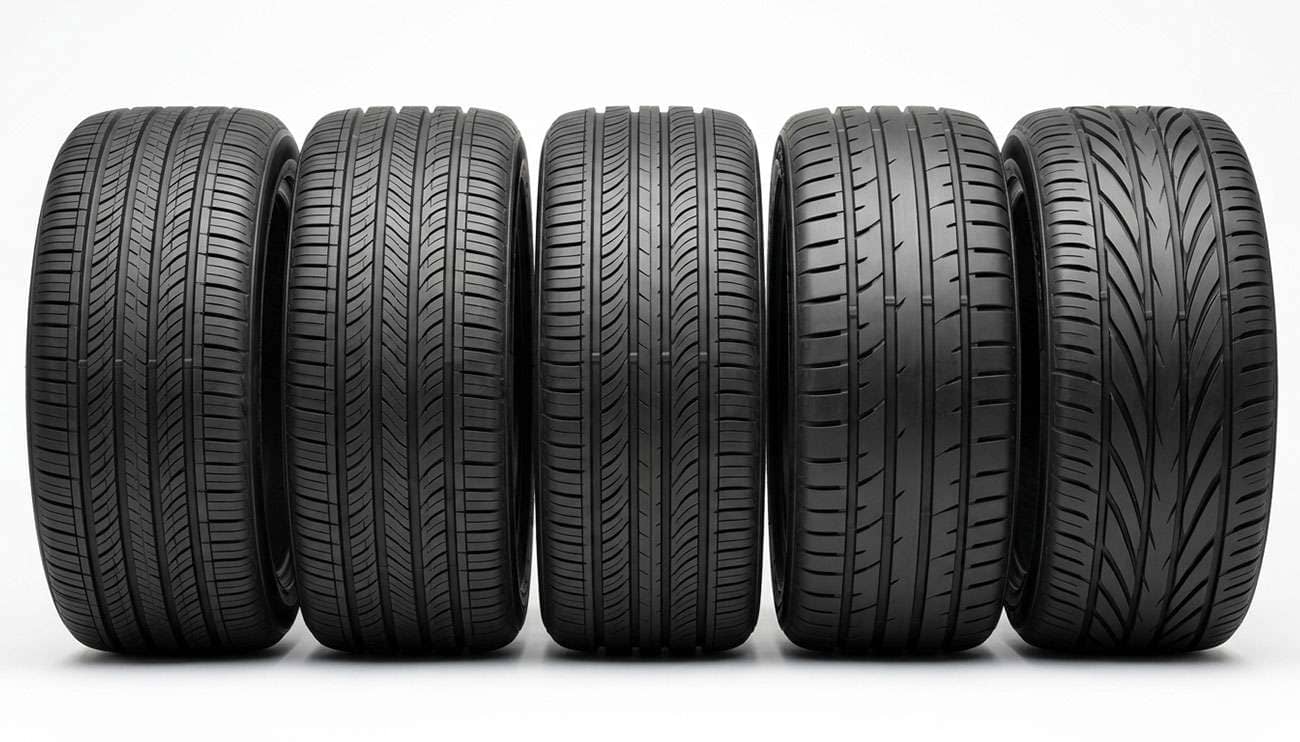
The short answer: the best brand for 235/45R17 depends on whether your door placard calls for load index 94 or load index 97. That two-digit number splits this size into two different tires. A 94 carries 1,477 pounds per corner; a 97 carries 1,609. Most brand lists for this size name three manufacturers and never mention it. Michelin, Continental, Pirelli, Goodyear, Bridgestone, Hankook, Toyo, Falken and Yokohama all build a good 235/45R17. Only some of them build it in your load index.
I am Dennis Feldman, and fitment is what I do here. When a customer calls about 235/45R17, the first thing I ask is not which brand they like. It is what the two numbers after the size read on the sidewall of the tires currently on the car, or on the placard inside the driver's door jamb.
There is a reason. 235/45R17 is one of the widest-spread passenger sizes in production. It went on the 1995 Acura TL and it went on the E39 BMW M5. Those two cars are separated by roughly a thousand pounds of curb weight and about forty miles per hour of top speed. The tire industry solved that by building the same size in two load ratings and five speed ratings, and letting the vehicle manufacturer specify which combination the chassis needs.
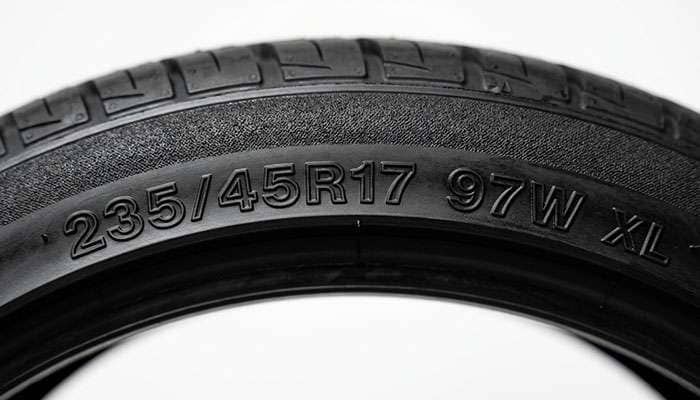
Here is what the two ratings mean in pounds. Load index 94 equals 1,477 pounds of maximum load per tire. Load index 97 equals 1,609 pounds. That is a 132-pound difference per corner and 528 pounds across the axle set. A 94 tire is almost always marked SL, for standard load. A 97 in this size is almost always marked XL, for extra load, which means it is built to carry that extra weight at a higher inflation pressure, typically 41 PSI cold maximum rather than 35 or 36.
Roughly six in ten 235/45R17 tires in current production carry the 97 rating. That sounds like the safe default, and for a lot of German sedans it is. But the popular touring and grand touring tires that top most recommendation lists for this size are frequently built here as 94 SL, because Honda, Acura and Chrysler applications wanted the softer ride and the lower rolling resistance. Buy on brand reputation alone and it is entirely possible to end up 528 pounds short of what your chassis was engineered around.
That is the whole game. Read the placard, then read the list.
Your Placard Reads |
What You Must Buy |
What Happens If You Go Lower |
Typical Applications |
|---|---|---|---|
94 (SL) |
94 or 97. A 97 XL is a legal and common upgrade. |
Nothing lower exists in volume. You are at the floor. |
Acura TL, Chrysler PT Cruiser, lighter sport sedans |
97 (XL) |
97 XL only. Do not substitute a 94. |
Under-rated by 528 lb across the set. Sidewall runs hotter under the same load. |
Audi A4 and A6, BMW 5 Series and M5, Cadillac BLS |
93 or 91 |
Treat as 94 minimum. These are legacy or motorsport-specific ratings. |
Not applicable. Move up, never down. |
Older European fitments, competition tires |
Placard missing or illegible |
97 XL. It covers both cases. |
You are guessing on the wrong side of a load calculation. |
Any 235/45R17 vehicle of unknown spec |
Going up is fine. Going down is the mistake. If you want the longer explanation of why the XL sidewall is constructed differently and not just inflated differently, we covered it in SL vs XL tires and which you should really choose.
These are the all-season picks, which is what most 235/45R17 buyers are after. I have listed the load index and speed rating with every one, because in this size that is not a footnote.
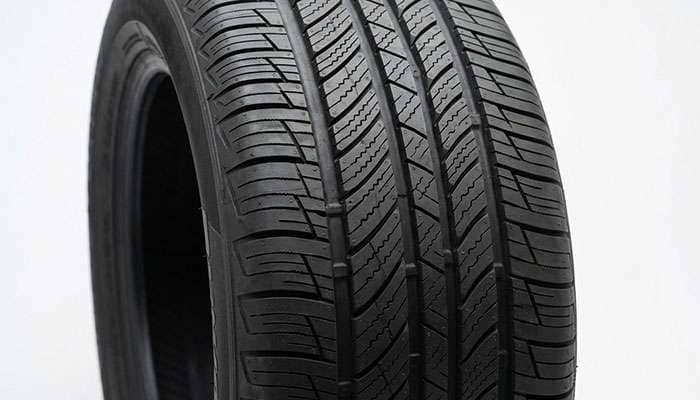
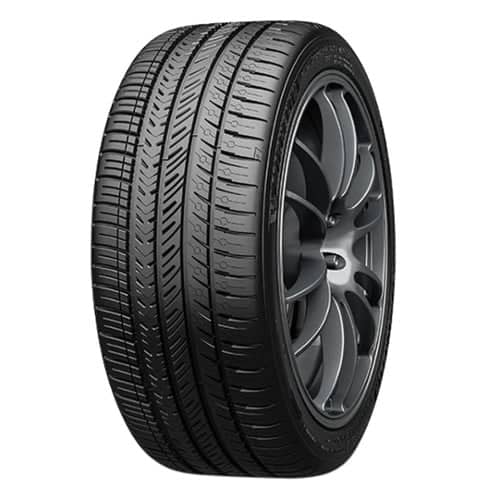
In 235/45R17 the Michelin Pilot Sport All Season 4 comes as a 97Y XL at around 222 dollars, with a 540 treadwear grade and a 45,000-mile warranty. That combination is what makes it the default recommendation for anyone whose placard says 97. You get a Y speed rating, which is 186 mph of certified capability, on a tire that still clears the three-peak mountain snowflake threshold for severe snow service. Michelin's compound holds its wet grip deeper into the tread life than most of the segment, which matters more on a 45-series sidewall than it does on a taller tire.
The trade is price. It is one of the more expensive all-seasons in the size, and if you drive 8,000 miles a year in a mild climate you will replace it on age before you wear it out.
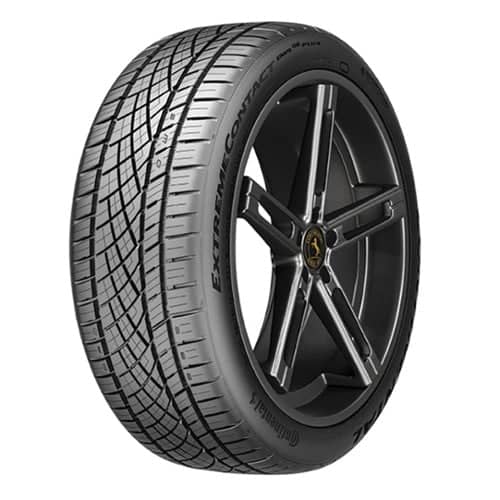
The Continental ExtremeContact DWS06 Plus is the tire that shows up at the top of almost every 235/45R17 list, and it earns that. Around 196 dollars, 560 treadwear, 50,000-mile warranty, and the dry and wet performance that made the DWS family the ultra-high-performance all-season benchmark. Here is the part the lists leave out: in this size it is built as a 94W SL. If your Audi or BMW placard reads 97, this specific tire in this specific size is below your spec, and the right move is a different Continental.
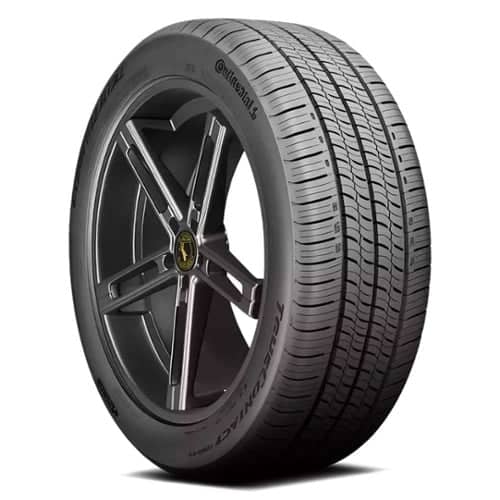
That different Continental is the TrueContact Tour 54, a 97V XL around 202 dollars carrying an 840 treadwear grade and an 80,000-mile warranty. That is the longest-wearing 235/45R17 you can buy from a tier-one brand in the XL rating. You give up the DWS06's outright dry cornering for a tire that will outlast two sets of it. For a commuter that is not a downgrade, it is the correct answer. Treadwear grades are comparative within a manufacturer, not across brands, which we explain in UTQG tire ratings decoded.
The Pirelli P7 All Season Plus 3 lands at roughly 213 dollars as a 97V XL with a 740 treadwear grade and 70,000-mile coverage. Pirelli tunes this one toward quiet, which is the complaint most often leveled at 45-series tires on a luxury sedan. If your car came with Pirelli from the factory and you liked how it drove, staying in the family avoids the ride-quality surprise that comes from switching compound philosophies mid-life.
Around 185 dollars in 97W XL, the Goodyear Eagle Exhilarate is the sharpest-steering all-season on this list at that price. A 500 treadwear grade and a 45,000-mile warranty tell you where the compromise went. If you want the car to feel alert and you accept replacing tires more often, this is a well-judged buy. Goodyear also builds the Assurance WeatherReady in 97V XL for buyers who want the three-peak snow rating with a softer highway ride.
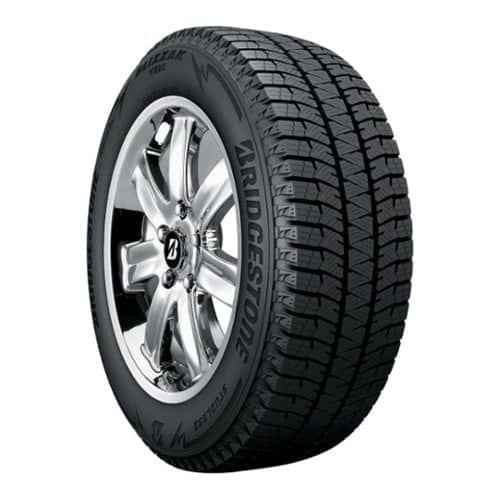
The Bridgestone Potenza RE980AS Plus runs about 214 dollars as a 97W XL with a 500 treadwear grade and 50,000-mile coverage. Bridgestone's strength in this size is wet braking consistency, and the RE980AS Plus is the one I recommend to people who commute through Pacific Northwest or Northeast rain nine months of the year and never see real snow.
At roughly 189 dollars, the Hankook Kinergy PT H737 in 97V XL carries an 800 treadwear grade and a 90,000-mile warranty, the longest mileage coverage available in 235/45R17 from any brand. It is not a performance tire and does not pretend to be. It is a high-mileage touring tire that happens to come in the XL rating that European sedans need, and that combination is rare enough to be worth knowing about.
The Toyo Proxes Sport A/S at around 145 dollars in 97W XL is the value pick that does not feel like one. You are 70 dollars a tire under the Michelin for a tire that gives up dry limit grip and some tread life but nothing important in wet braking. For a car that gets driven hard occasionally rather than constantly, this is where the money makes the most sense.
The Falken Ziex ZE960 A/S comes in near 132 dollars as a 97V XL with a 600 treadwear grade and 65,000-mile warranty, which is a genuinely strong spec sheet for the money. The Yokohama Advan Sport A/S Plus at about 170 dollars gives you a 97W with a firmer, more European feel. Both are legitimate tier-two tires. Neither will match the Michelin at the limit, and both are far better choices than an off-brand 94 bought because the price was low and nobody checked the load index.
Tire |
Load and Speed |
Treadwear |
Mileage Warranty |
Approx. Price |
|---|---|---|---|---|
97Y XL |
540 |
45,000 mi |
222 USD |
|
97V XL |
840 |
80,000 mi |
202 USD |
|
94W SL |
560 |
50,000 mi |
196 USD |
|
97V XL |
740 |
70,000 mi |
213 USD |
|
97W XL |
500 |
50,000 mi |
214 USD |
|
97V XL |
800 |
90,000 mi |
189 USD |
|
97W XL |
500 |
45,000 mi |
185 USD |
|
97W XL |
460 |
50,000 mi |
145 USD |
|
97V XL |
600 |
65,000 mi |
132 USD |
If you want the wider view of this segment across all sizes, the nine best all-season performance tires breakdown covers how these compounds behave outside of 17-inch fitments.
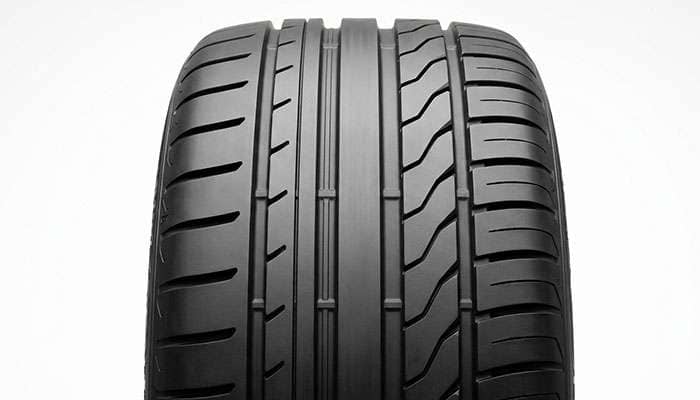
If the car sees track days, canyon roads, or simply never sees temperatures below 45 degrees Fahrenheit, a summer tire in this size is a step change, not an incremental gain. The mechanism is compound glass transition: an all-season compound is formulated to stay pliable near freezing, which means it is already past its optimum at 90 degrees on hot asphalt. A summer compound is the reverse.
Tire |
Load and Speed |
Treadwear |
Best For |
Approx. Price |
|---|---|---|---|---|
97Y XL |
300 |
Street and occasional track, best all-round |
255 USD |
|
97Y |
300 |
Wet grip in a summer compound |
195 USD |
|
94W SL |
340 |
Steering response on 94-spec cars |
232 USD |
|
97Y XL |
300 |
Value XL summer tire |
166 USD |
|
94W SL |
200 |
Track-focused street legal grip |
242 USD |
Note the pattern in that table. The dedicated track-oriented tires cluster at 94 SL, because the cars they were designed around are lighter. The grand touring summer tires cluster at 97 XL. That is not a coincidence, and it is the same load-index logic operating one segment over. If you are still deciding between compound types, summer versus all-season tires lays out the temperature crossover in detail.
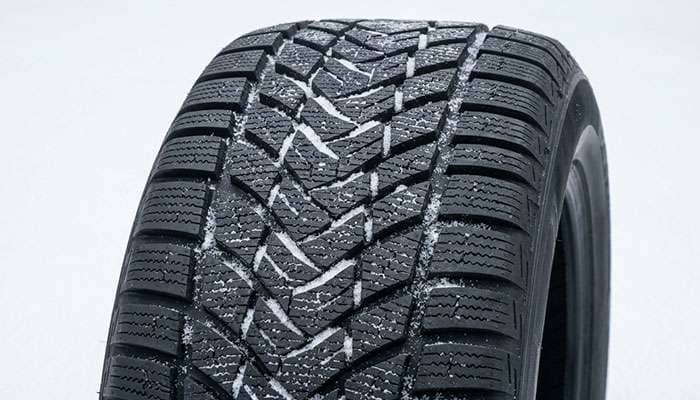
Winter tires in 235/45R17 are almost universally 97 XL, and almost universally T or H speed rated. That drop from W or Y to T is intentional. A winter compound cannot sustain the heat load of a 168 mph certification, so the manufacturer certifies it lower and the vehicle manufacturer accepts that on the understanding that nobody is running 168 mph on snow tires.
235/45R17 appears as a factory size on roughly 97 vehicle models across 36 manufacturers. The list runs wider than most people expect, which is the source of the load-index confusion.
Manufacturer |
Common Models and Years |
Typical Load Index |
|---|---|---|
Audi |
A4 2000-2009, A6 1997-2005, Cabriolet 1991-2000 |
97 XL |
BMW |
5 Series 1988-2004, M5 1988-1995 and 1998-2003, 7 Series, 8 Series |
97 XL |
Acura |
TL 1995-1998, TL 2004-2008 |
94 SL |
Chrysler |
PT Cruiser 2006-2010 |
94 SL |
Chevrolet |
Caprice 1999-2006 |
97 XL |
Cadillac |
BLS 2005-2010 |
97 XL |
Alpine |
A110 2017 and later |
94 SL |
It is also a very common plus-size and aftermarket fitment. Owners of Mustangs, Camaros, Accords, Camrys and Golfs move into 235/45R17 when they go to a wider 17-inch wheel. In that case the placard no longer tells you the whole story, because the placard describes the original size. The load requirement does not change with wheel width, so the original placard load index is still your floor. Read the number, not the size.
The overall diameter of a 235/45R17 is about 25.3 inches, with a sidewall height of roughly 4.16 inches. That geometry is the whole benefit and the whole compromise.
Reliability in a tire is not a brand property. It is a compound and construction property that varies model to model inside the same brand, and the honest answer changes depending on what you mean by reliable.
If Reliable Means |
The Brand That Delivers It in This Size |
Why |
|---|---|---|
Consistent grip from new to worn |
Michelin |
Compound is engineered so wet performance degrades slowly rather than falling off a cliff at half tread. |
Predicted mileage actually achieved |
Continental and Hankook |
The 840 and 800 treadwear XL options carry 80,000 and 90,000-mile warranties and generally get there. |
No surprises in the rain |
Bridgestone and Goodyear |
Both prioritize wet braking consistency over dry limit numbers in their all-season lines. |
Cheapest cost per mile |
Falken and Toyo |
600 and 460 treadwear at 132 and 145 dollars beats premium tires on pure math. |
Never having a warranty argument |
Michelin, Continental, Bridgestone, Goodyear |
The four largest manufacturers maintain the deepest North American dealer networks for adjustment claims. |
What actually causes tire failures in this size is not brand. It is running a 94 where a 97 was specified, running 32 PSI in a tire that needs 41, and running a summer compound through a cold snap. Fix those three and every brand in the table above will be reliable.
After load index, speed rating is the other spec that quietly changes what you are allowed to buy. In 235/45R17 the rating runs from T all the way to Y, and the difference is not just top speed.
Rating |
Certified To |
What It Signals About Construction |
Common In This Size |
|---|---|---|---|
T |
118 mph |
Winter compound, softer belt package, maximum cold flexibility |
Winter tires only |
H |
130 mph |
Touring construction, ride comfort prioritized over lateral stiffness |
Long-wear all-seasons |
V |
149 mph |
Grand touring, stiffer belts, the volume rating for XL touring tires |
Very common |
W |
168 mph |
Performance construction, reinforced bead and shoulder |
The most common rating in 235/45R17 |
Y |
186 mph |
Maximum performance, highest heat tolerance and sidewall stiffness |
Summer and top-tier all-season |
Roughly half of all 235/45R17 tires on the market carry a W rating, which is why W is the safe default if your placard is unreadable. The rule is the same as load index: match or exceed, never drop. Dropping from W to H on a car whose suspension was tuned around a W-rated sidewall changes turn-in feel noticeably, and it changes the tire's heat headroom in sustained high-speed running. There is one exception, which is a dedicated winter set, and that exception is covered in tire speed rating derating explained.
This is the part nobody puts in front of you when you are comparing prices. Running load index 94 on a car that specifies 97 does not fail immediately. It fails progressively, and the progression costs money at every stage.
Weeks one through twelve. Nothing you can feel. The tire is carrying more than its design load only when the car is fully loaded, and most of the time it is not. Fuel economy drops a fraction because the sidewall is deflecting more and rolling resistance is up.
Months three through eight. Shoulder wear starts running ahead of center wear. You are now paying for the mistake in tread life, and you will replace the set thousands of miles early. Because the sidewall is flexing beyond its intended range on every corner, steering feel goes vague and the car starts to feel like it wanders on the highway. Most people blame the alignment and pay for an alignment that will not fix it.
Months eight through eighteen. Repeated flex past design range works heat into the belt package. Heat is what breaks the bond between the steel belts and the rubber. This is the actual mechanism behind most highway-speed tread separations, and it is why the National Highway Traffic Safety Administration treats load rating as a safety specification rather than a preference. Once belt separation begins there is no repair and no warning you can see from outside.
The endpoint. A separation at 70 mph on a front tire of a 4,000-pound sedan. The cost of avoiding all of this is the difference between a 94 and a 97 in the same model line, which in 235/45R17 is usually under 15 dollars per tire.
The same escalation applies in a milder form to underinflation, which is why an XL tire needs its higher cold pressure. An XL run at standard-load pressure is functionally a standard-load tire with a stiffer casing, and you have paid extra for nothing.
Performance Plus Tire has been fitting this size out of our Long Beach shop at 3910 Cherry Avenue since long before it became the default sport sedan fitment, and we ship nationwide. You can browse every all-season, summer and winter option in the size, filtered by load index and speed rating, on our 235/45R17 tires page.
When you order, filter to your load index first and your brand second. The site lists load index and speed rating on every product page for exactly this reason. If you are not certain what your car requires, call the shop with your year, make, model and trim and we will pull the OE spec before you buy anything.
If you are cross-shopping adjacent sizes because your wheel package allows it, the same load-index logic applies one step up in sidewall height, and we walked through it for the best 235/55R17 tires.
Michelin, Continental, Pirelli, Goodyear, Bridgestone, Hankook, Toyo, Falken and Yokohama all build a 235/45R17 worth putting on a car. That is not the hard part. The hard part is that this one size covers everything from a 1990s Acura to an E39 M5, and the industry handled that spread by building the size in two load ratings that look nearly identical on a spec sheet and are 528 pounds apart across the axle set.
Read the placard first. If it says 97, your list is the Michelin Pilot Sport All Season 4, the Continental TrueContact Tour 54, the Pirelli P7 All Season Plus 3, the Bridgestone Potenza RE980AS Plus, the Hankook Kinergy PT H737, the Goodyear Eagle Exhilarate, the Toyo Proxes Sport A/S and the Falken Ziex ZE960. If it says 94, the Continental ExtremeContact DWS06 Plus moves to the top of the list and stays there. Brand comes after spec, every time.
Michelin, Continental, Pirelli, Bridgestone, Goodyear, Hankook, Toyo, Falken and Yokohama all build strong options in 235/45R17. The right one depends on your load index. For 97 XL cars the Michelin Pilot Sport All Season 4 and Continental TrueContact Tour 54 lead. For 94 SL cars the Continental ExtremeContact DWS06 Plus is the standout.
No. A 94 carries 1,477 pounds per tire against the 1,609 pounds a 97 carries, leaving you 528 pounds short across the axle set. The sidewall flexes beyond its design range, which builds heat in the belt package and can lead to tread separation. Going up from 94 to 97 is fine. Going down is not.
Around 97 models across 36 manufacturers use it from the factory, including the Audi A4 and A6, BMW 5 Series and M5, Acura TL, Chrysler PT Cruiser, Cadillac BLS, Chevrolet Caprice and Alpine A110. It is also a very common aftermarket plus-size on Mustangs, Camaros, Accords and Golfs running wider 17-inch wheels.
The 4.16-inch sidewall gives sharper steering response than a taller tire, the 235-millimeter width delivers strong dry braking without heavy tramlining, and the 17-inch diameter clears larger brake packages. The size has also been in production for three decades, so selection runs from competition compounds to 840-treadwear touring tires.
Reliability varies by model more than by brand. Michelin is the most consistent from new to worn, Continental and Hankook deliver the longest verified mileage in this size, and Bridgestone and Goodyear are strongest in wet braking consistency. Most failures in 235/45R17 trace to wrong load index, underinflation or running summer compound in the cold rather than to the manufacturer.
Performance Plus Tire stocks the full range of 235/45R17 in all-season, summer and winter, with load index and speed rating listed on every product page. We ship nationwide and install at our Long Beach shop at 3910 Cherry Avenue. Filter by your load index first, then compare brands.
Use the pressure on your door placard, not the maximum molded into the sidewall. XL tires in this size typically carry a 41 PSI cold maximum against 35 or 36 for a standard load version, and vehicles specifying XL usually call for a placard pressure in the high 30s. Running an XL at standard-load pressure gives up the load capacity you paid for.