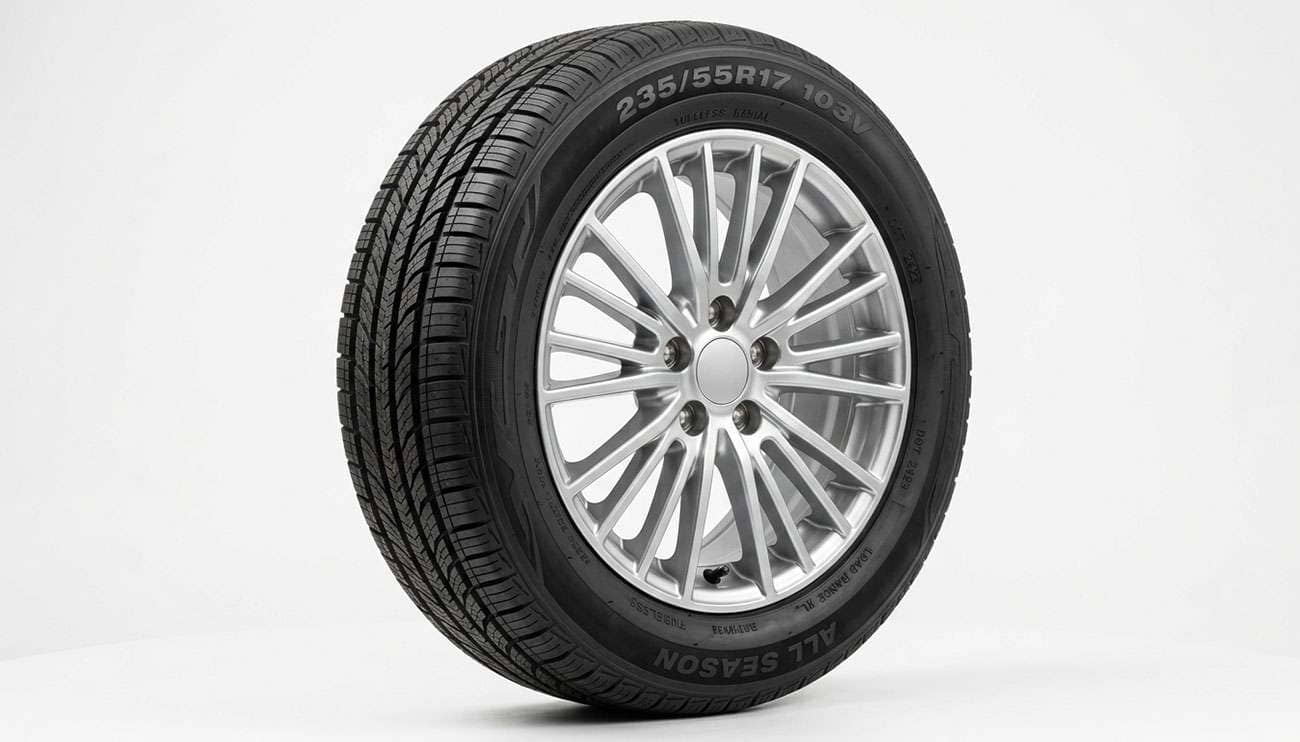
The best 235/55R17 for your vehicle comes down to load index, not brand. This size gets fitted to two completely different kinds of vehicle: heavier crossovers and small SUVs that need a load index of 103, and big comfortable sedans that are perfectly happy on a 99. That is a 220-pound difference in carrying capacity at each corner, 880 pounds across the vehicle, and it is printed right after the size on every sidewall. Get it right and any decent tire will serve you. Get it wrong and the best tire in the world is the wrong tire.
I have been in this business a long time and I will tell you what happens with this size. Somebody with a BMW X3 or a mid-size crossover comes in with a printout of a ranked list. Every tire on it is scored on dry grip and comfort. Not one of those lists asked what the vehicle weighs, and about a third of the tires on the page cannot legally carry it.
Every list ranks these tires. Almost none of them start by asking what you are bolting them to. So that is where we are going to start.
Look at the full size string on your sidewall. It does not stop at 235/55R17. It reads something like 235/55R17 99H or 235/55R17 103V. Those two or three digits after the size are the load index and the speed rating, and the load index is the one that matters most here.
Load Index |
Capacity Per Tire |
Marking |
Typical Vehicle |
What Happens If You Go Lower |
|---|---|---|---|---|
98 |
1,653 lbs |
SL, standard load |
Lighter sedans and older crossovers |
Below most factory specs in this size |
99 |
1,709 lbs |
SL, standard load |
Full-size sedans, most common spec in this size |
Fine for sedans, short for many crossovers |
101 or 102 |
1,819 to 1,874 lbs |
Usually XL |
Mid-weight crossovers |
Running at the edge with a full load |
103 |
1,929 lbs |
XL, extra load |
SUVs and heavier crossovers |
Under factory spec, sidewall runs hot |
Here is the mechanism, because I would rather you understand it than just take my word. A tire's load rating is not a suggestion printed for lawyers. It is the load at which the casing can flex through its designed cycle and shed the heat that flexing generates. Put more weight on it than that and the sidewall flexes further on every rotation. Further flex means more internal friction, more friction means more heat, and heat is what breaks down the bond between the tread package and the belts underneath it.
That failure does not happen on the drive home from the shop. It happens eight months later on a hot afternoon on the interstate with the family and the luggage aboard, which is exactly the day the tire was carrying the most weight. That is why I am tedious about this one.
Industry fitment data across the roughly 112 vehicle models that wear 235/55R17 from the factory shows about half spec a load index of 99, and roughly one in five spec 101 or higher. Meanwhile the tires built in this size skew heavily toward 99. So the odds of walking into a mismatch are real, and nothing on a scored ranking list will warn you.
Your placard is inside the driver's door frame. It lists the size and the load index together. Match it or beat it. If you want the full explanation of how load index differs from load range, we cover it in load range versus load index.
If your placard calls for 101 or higher, this is your list. Every tire here carries a load index of 103, which covers essentially every vehicle that wears this size.
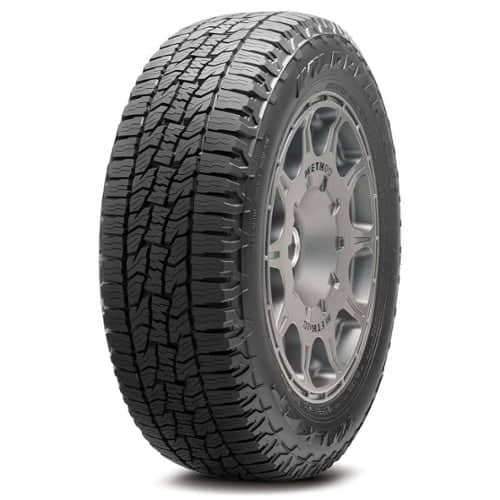
Falken Wildpeak A/T Trail at $211.00 is the one I recommend most for a crossover that sees a dirt road or a snowy driveway. It is a genuine all-terrain built on a car-friendly casing, so you get the tread without the truck-tire noise. Load index 103, 65,000 mile warranty.
Nokian Entyre 2.0 at $86.09 is the sleeper of this entire article. Load index 103, a treadwear grade of 720, and an 80,000 mile warranty at a price most budget tires cannot match. Nokian builds for Nordic winters, so wet and cold traction is a strength.
Tire |
Price |
Load Index |
Warranty |
Best For |
|---|---|---|---|---|
Kumho Crugen Premium KL33 |
$69.87 |
103 XL |
60,000 mi |
Lowest-price tire that meets XL spec |
Achilles Desert Hawk H/T 2 |
$83.97 |
103 XL |
60,000 mi |
Budget highway tire for a light SUV |
Nokian Entyre 2.0 |
$86.09 |
103 XL |
80,000 mi |
Best value in the size, longest warranty |
Landsail CLV2 |
$101.32 |
103 XL |
50,000 mi |
Value highway terrain |
Maxxis Bravo HP-M3 |
$158.27 |
103 XL |
60,000 mi |
Quiet highway manners, 700 treadwear |
Nitto Nomad Grappler |
$196.00 |
103 XL |
60,000 mi |
All-terrain look without the harshness |
Falken Wildpeak A/T Trail |
$211.00 |
103 XL |
65,000 mi |
Real all-terrain capability, my top pick |
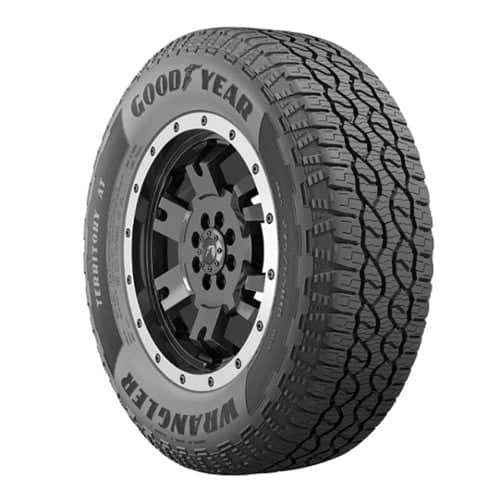
Goodyear Wrangler Territory AT |
$252.99 |
103 XL |
See dealer |
Premium all-terrain, strongest wet grip |
If your placard says 98 or 99, you have got the run of the aisle, and this is where the size really shines. Big comfortable sedans on this size want quiet, long-wearing rubber, and there is a lot of it.
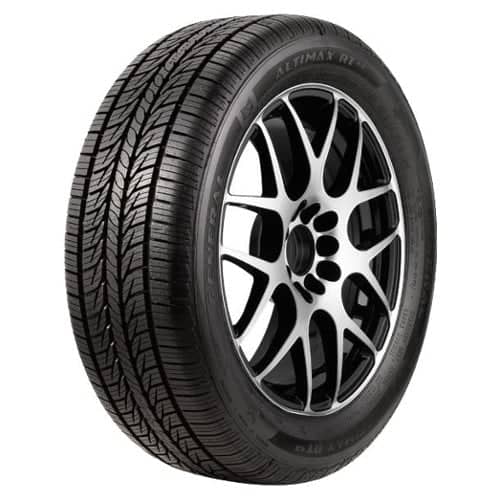
General AltiMax RT43 at $130.79 is the tire I hand most sedan owners. A treadwear grade of 700 with a 65,000 to 75,000 mile warranty depending on the exact build, from a Continental-owned brand, at a price that leaves money in your pocket. It is not exciting. It is right.
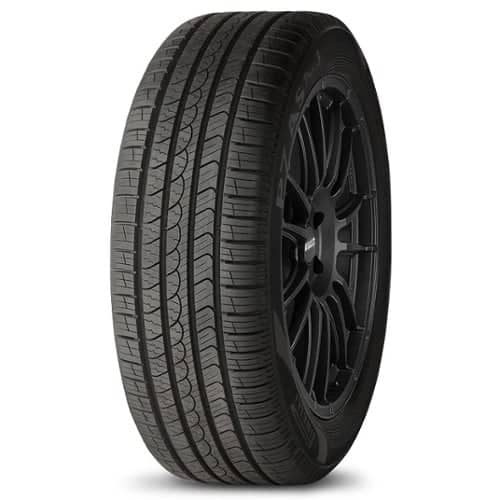
Pirelli P7 All Season Plus 3 at $146.67 carries the highest treadwear grade in the group at 740 with a 70,000 mile warranty, and it brings a firmer European feel if your car leans toward sport.
Tire |
Price |
Treadwear |
Warranty |
Best For |
|---|---|---|---|---|
Michelin Premier A/S |
$81.08 |
640 |
60,000 mi |
Premium wet braking at a value price |
General Exclaim HPX A/S |
$101.29 |
700 |
65,000 mi |
Long wear on a budget |
General AltiMax RT43 |
$130.79 |
700 |
65,000 to 75,000 mi |
Best all-around sedan pick |
Cooper Evolution Tour |
$138.39 |
600 |
65,000 mi |
Comfort-focused ride quality |
Pirelli P7 All Season Plus 3 |
$146.67 |
740 |
70,000 mi |
Highest treadwear grade, firmer feel |
Falken Sincera SN250 A/S |
$153.00 |
720 |
80,000 mi |
Longest mileage warranty for a sedan |
Hankook Kinergy ST H735 |
$155.99 |
680 |
70,000 mi |
Quiet highway cruising |
For a broader look at this category across sizes, our roundup of the best touring tires for daily commuters compares these same lines with road-tested notes.
Prices in this size start under $50, which is about as cheap as a 17-inch tire gets. I am not going to pretend a $47 tire is the same as a $150 tire. It is not, and the difference shows up in wet stopping distance, which is the number that matters on the one day you need it.
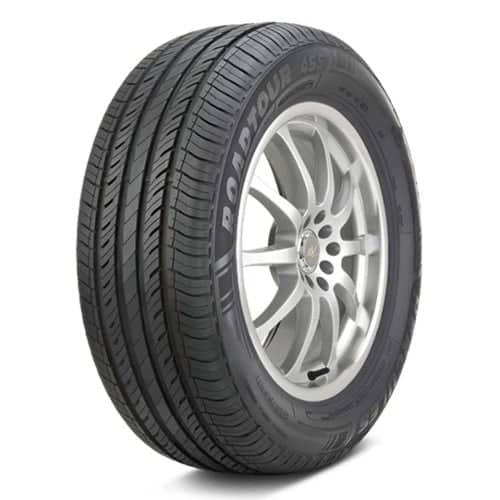
But money is money and I would rather point you at the smart end of cheap than watch you guess. Two things to hold onto down here: check the load index every single time, because budget lines skew standard load, and look at the treadwear grade before the price.
Tire |
Price |
Load Index |
Treadwear |
Notes |
|---|---|---|---|---|
Ohtsu FP0612 A/S |
$46.61 |
99 SL |
Not published |
Lowest price in the size, Falken's budget arm |
Kumho Crugen Premium KL33 |
$69.87 |
103 XL |
440 |
Real brand, XL rating, best budget crossover option |
Hercules Roadtour 455 |
$74.77 |
99 SL |
520 |
Decent ride for the money, sedans only |
Michelin Premier A/S |
$81.08 |
99 SL |
640 |
A Michelin at a budget price, hard to beat |
Nokian Entyre 2.0 |
$86.09 |
103 XL |
720 |
80,000 mile warranty, the standout value here |
Falken Ziex ZE950 A/S |
$97.96 |
99 SL |
500 |
More grip, shorter life, for the sportier sedan |
Look at that Michelin Premier A/S sitting at $81.08 next to tires costing the same with half the treadwear grade. That is the kind of thing that only turns up when you compare the whole aisle instead of the top of a list.
Roughly 112 vehicle models across 38 manufacturers, and they split into two camps that explain everything about this size.
Crossovers and small SUVs make up the heavier camp. The BMW X3 from roughly 2004 through 2010 is the best known, along with a range of mid-size crossovers. These are the vehicles that typically call for a load index of 101 or 103.
Full-size and near-luxury sedans make up the other camp. The Cadillac CTS and DTS, Buick Lucerne and Park Avenue, and Audi A8 all appear on this size across various model years. These are heavy cars, but the weight sits lower and spreads differently, and they generally spec a 98 or 99.
That split is the whole story of 235/55R17. It is a genuinely unusual size in that it straddles two vehicle categories with different needs, which is why a single ranked list cannot serve both. It is also why you will see all-terrain tires and luxury touring tires sitting in the same size on the same page.
As always, the list is a starting point, not a fitment. Trim level and model year both change tire size, and the same nameplate in the same year can leave the factory on three different sizes. The placard inside your driver's door frame is the only source that counts. If it disagrees with anything here, follow the placard.
Between 45,000 and 65,000 miles for a decent all-season, and the two numbers that predict it are printed on the tire and in the warranty.
Mileage warranties in this size run from 30,000 miles at the short end to 80,000 at the long end, clustering around 50,000 to 65,000. UTQG treadwear grades run from about 220 on the grippiest performance compounds up to 740 on the longest-wearing touring tires. As a rough rule, a treadwear grade of 600 or better paired with a 65,000 mile warranty means you have got a tire built to go the distance.
Treadwear Grade |
Realistic Life |
Tradeoff |
|---|---|---|
Under 400 |
20,000 to 35,000 miles |
Soft compound, best grip, shortest life |
400 to 550 |
35,000 to 50,000 miles |
Balanced, most performance all-seasons land here |
600 to 700 |
50,000 to 65,000 miles |
The sweet spot for a daily driver |
700 and up |
60,000 to 80,000 miles |
Harder compound, slightly longer wet stops |
Three things shorten that life faster than anything else. Running underinflated, which wears the shoulders and builds heat. Skipping rotations, which lets one axle do all the work. And running a tire at the top of its load rating with a loaded vehicle, which brings us right back to load index. A 99 on a crossover that wanted a 103 will not just be under spec, it will wear out early doing it.
Our guide to reading tire treadwear ratings explains what those UTQG numbers actually measure and where they mislead.
Moderate. 235 millimeters is 9.25 inches of section width, which puts it in the middle of the passenger car range and on the narrow end for anything truck-shaped.
Where that sits: compact cars run 195 to 215. Mid-size sedans and crossovers run 225 to 245. Performance cars run 255 to 305. Half-ton pickups run 265 to 285. So a 235 is a mid-size tire, which is exactly right for the vehicles that wear it.
The 55 matters as much as the 235. That aspect ratio means the sidewall stands 55 percent as tall as the tire is wide, which works out to 5.09 inches. That is a genuinely tall sidewall by modern standards, and it is why this size rides so well. All that rubber between the wheel and the road is soaking up bumps that a 45-series would send straight into the cabin.
Overall the tire stands about 27.2 inches tall and mounts on wheel widths from roughly 6.5 to 8.5 inches. If you want the same width in a taller sidewall, our breakdown of 235/65R17 measurements covers the next size up.
Seventeen inch is the deepest, most competitive wheel size in the business, and that is good news for you. Every major manufacturer treats it as a core size, which means you get their real engineering rather than a leftover mold.
The brands I would put at the top for 17-inch touring and crossover tires: Michelin, Continental, Goodyear, Bridgestone, and Pirelli in the premium tier. General and Falken punch well above their price. Kumho, Hankook, Toyo, and Nokian make up a strong value-premium tier where Nokian in particular deserves more attention than it gets in this country.
What separates the tiers in practice is not peak grip on a dry road. Almost everybody is fine there. It is wet braking at 40,000 miles, which is where a cheap compound has gone hard and a good one has not. That is the money you are actually spending when you buy up.
Our brand-by-brand comparison in 15 best tire brands ranked by safety and performance gets into the track records in more detail.
Michelin, and it has been for as long as I have been doing this. But let me tell you what I actually mean by reliable, because it is not the same as best.
A reliable tire brand is one where the compound behaves the same in year five as it did in year one, where the warranty gets honored without a fight, and where the tire you buy this year performs like the one the magazines tested three years ago. Michelin has been the most consistent name in the business on all three counts. Continental sits right behind and usually costs less. Goodyear, Bridgestone, and Pirelli are all genuinely good, and any of them will serve you well.
Here is the thing I would rather you took away though. In this size, matching your load index matters more than which of those five badges you pick. A correctly-rated Kumho will do right by your crossover longer than an underrated Michelin will. Get the spec right first, then spend up on the brand.
My five picks for this size, one per job:
Yes, dimensionally. A 225/60R17 stands 27.63 inches tall against 27.18 for a 235/55R17. That is 1.7 percent taller, comfortably inside the 3 percent tolerance the industry works to, so your speedometer, odometer, and stability control all stay honest.
That makes it one of the cleanest size swaps you will find. But there are three things to check before you order.
Going the other way from a 225/60R17 down to a 235/55R17 works the same and is equally safe on the numbers. Where I would push back is on anyone doing this to save money. The two sizes usually price close enough that it is not worth giving up the exact fitment your vehicle was engineered around.
For the size directly below this one in width, our writeup on 225/55R17 in inches has the full dimensional comparison.
The best 235/55R17 is the one that matches your load index first and your driving second. If your placard says 103, the Falken Wildpeak A/T Trail at $211.00 is my pick for anything crossover-shaped, and the Nokian Entyre 2.0 at $86.09 is the value play that nothing else in this size touches. If your placard says 98 or 99, the General AltiMax RT43 at $130.79 is the sedan tire I recommend most, and the Michelin Premier A/S at $81.08 is a genuine premium tire hiding at a budget price.
This size straddles two very different kinds of vehicle, which is what makes a single ranked list a poor way to shop it. Read your placard, pick your camp, then pick your tire. Those two digits after the size will do more for you than any score in a comparison chart.
Shop all 235/55R17 tires at Performance Plus Tire, or call the shop with your year, make, model, and trim and we will confirm your load index before you spend a dollar.
It depends on your load index. For a crossover or small SUV needing 103, the Falken Wildpeak A/T Trail at $211.00 is the best all-around choice and the Nokian Entyre 2.0 at $86.09 is the best value, with an 80,000 mile warranty. For a sedan on a 98 or 99, the General AltiMax RT43 at $130.79 is the strongest all-around pick and the Michelin Premier A/S at $81.08 is premium rubber at a budget price.
Roughly 112 vehicle models across 38 manufacturers, split between crossovers and small SUVs such as the BMW X3 from about 2004 to 2010, and full-size or near-luxury sedans including the Cadillac CTS and DTS, Buick Lucerne and Park Avenue, and Audi A8. The two groups have different load index requirements, so always confirm against the placard in your driver's door frame.
Between 45,000 and 65,000 miles for a decent all-season. Mileage warranties in this size run from 30,000 to 80,000 miles, and UTQG treadwear grades range from about 220 to 740. A treadwear grade of 600 or better with a 65,000 mile warranty indicates a long-wearing tire. Underinflation, skipped rotations, and running below your required load index all shorten that figure.
Yes. A 225/60R17 stands 27.63 inches tall versus 27.18 inches for a 235/55R17, which is 1.7 percent taller and comfortably within the 3 percent industry tolerance. Your speedometer and stability control stay accurate. Confirm the specific tire meets your placard's load index, since a narrower tire has a smaller air chamber and load capacity does not automatically carry over.
Moderate. 235 millimeters equals 9.25 inches of section width, which sits in the middle of the passenger car range. Compact cars run 195 to 215, mid-size sedans and crossovers run 225 to 245, and performance cars run 255 and up. For a truck it would be narrow.
Michelin, Continental, Goodyear, Bridgestone, and Pirelli lead the premium tier. General and Falken deliver more than their prices suggest, and Kumho, Hankook, Toyo, and Nokian form a strong value-premium group. Seventeen inch is a core size for every major manufacturer, so you get their real engineering rather than a leftover design.
Michelin has the most consistent long-term record, with Continental close behind at a lower typical price, followed by Goodyear, Bridgestone, and Pirelli. In this size specifically, though, matching your vehicle's load index matters more than the badge. A correctly rated tire from a value brand will serve a crossover better than an underrated premium tire.
Whatever your door placard specifies, which in this size is usually 98 or 99 for sedans and 101 or 103 for crossovers and SUVs. A load index of 99 carries 1,709 pounds per tire and a 103 carries 1,929 pounds. Fitting a lower rating than specified makes the sidewall flex further and run hotter under load, which degrades the bond between the tread and the belts over time.