
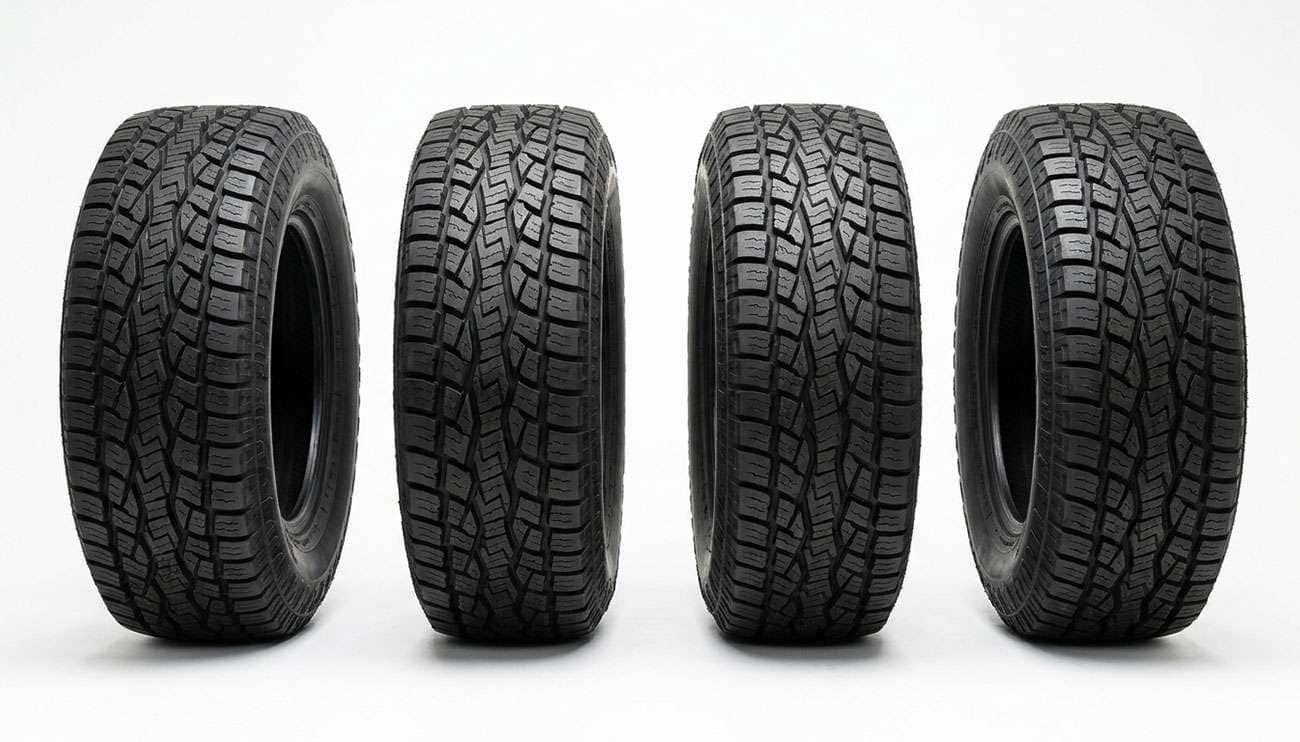
The best 265/60R18 depends on something most rankings never mention: the load construction your vehicle's door placard calls for. This size ships as standard load (109 or 110), extra load (114), and LT (114/110 or 119/116). Those three are not interchangeable, and swapping between them changes what the tire carries at your placard pressure. Pick the construction first. Then pick the category. A ranked list that skips step one is ranking tires you may not be able to legally run.
Search this size and you get a leaderboard. Dry grip percentages, comfort scores, a top pick. What you almost never get is the one number that decides whether a tire on that list belongs on your truck at all: the service description.
Look at the sidewall of what is on your vehicle right now. After the size you will see two or three digits and a letter, like 110T or 114T or 119/116S. That number is the load index, and it is not decoration. It tells you the maximum weight that tire carries at its rated inflation pressure. In 265/60R18 the market splits three ways, and each split behaves differently at the pressure printed on your door jamb.
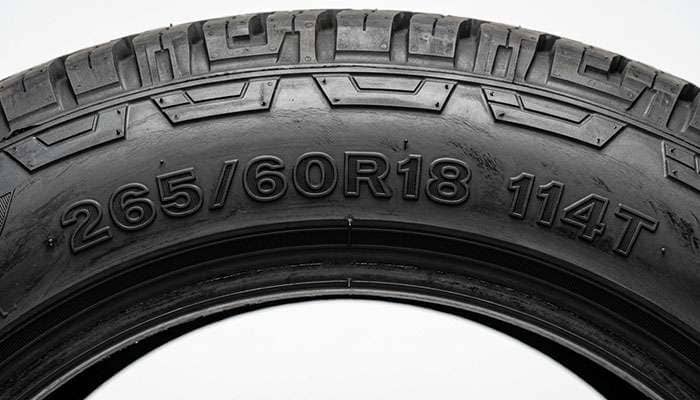
Standard load, marked SL with a load index of 109 or 110, reaches its rated capacity at 35 psi. Extra load, marked XL with a load index of 114, does not reach its rated capacity until roughly 41 psi. LT tires, marked with a load range letter and a dual load index like 119/116, need 65 to 80 psi depending on load range. Bolt an LT Load Range E onto a vehicle whose placard says 35 psi, inflate to 35, and that tire carries substantially less than the standard load tire it replaced. The stiffer sidewall feels reassuring. The math is not.
There is a second layer. Under Federal Motor Vehicle Safety Standard 571.120, and per the Tire and Rim Association load tables, a P-metric tire fitted to a light truck or SUV has its load capacity reduced by a factor of 1.10. That is the engineered safety margin your manufacturer counted on. A P265/60R18 with a 110 load index is rated at 2,337 pounds on paper, but only 2,125 pounds once it is on a truck. A Euro-metric 265/60R18 with no P prefix carries the full 2,337. An LT tire is not de-rated at all, because it was built for trucks from the start. Same numbers on the sidewall, three different answers.
What Your Placard Says |
What You Can Buy |
Rated Load Per Tire |
Pressure to Reach Rating |
|---|---|---|---|
P265/60R18 109 or 110 (SL) |
P-metric or Euro-metric SL, or anything higher |
2,271 to 2,337 lb, de-rated to 2,065 to 2,125 lb on a truck |
35 psi |
265/60R18 110 (Euro-metric SL) |
Euro-metric SL or higher; no de-rating applied |
2,337 lb |
35 psi |
265/60R18 114 (XL) |
XL only. An SL tire will not substitute |
2,601 lb, de-rated to 2,365 lb if P-metric on a truck |
About 41 psi |
LT265/60R18 114/110 (Load Range C) |
LT Load Range C or higher only |
2,601 lb single, no de-rating |
50 psi |
LT265/60R18 119/116 (Load Range E) |
LT Load Range E |
2,998 lb single, no de-rating |
65 to 80 psi |
Notice the fourth row. An LT Load Range C in this size carries load index 114, exactly the same number as a P-metric XL. But the LT is not de-rated on a truck and the XL is, so the LT actually carries 236 more pounds per corner. That is the kind of distinction a percentage score cannot express. If the difference between these ratings is new to you, our breakdown of load range versus load index covers the mechanics, and SL versus XL tires gets into when the upgrade is worth it.
A 265/60R18 is roughly 30.5 inches tall and 10.4 inches wide at the widest point of the sidewall, mounted on an 18-inch wheel.
The numbers decode cleanly. The 265 is section width in millimeters, measured sidewall bulge to sidewall bulge, not tread width. The 60 is the aspect ratio, meaning sidewall height equals 60 percent of section width. That works out to 159 millimeters, or about 6.26 inches of sidewall. Double it and add the 18-inch wheel and you get an overall diameter of 30.52 inches. The R stands for radial construction.
Two numbers matter more than the headline dimensions when you are cross-shopping.
Revolutions per mile lands at about 661. Your vehicle's speedometer, odometer, ABS, and stability control were calibrated against that figure. Change it and you change what the dashboard tells you.
Approved rim width runs 7.0 to 9.0 inches, with 7.5 inches as the measuring rim. Most factory 18-inch truck and SUV wheels fall between 7.5 and 8.5, so the size drops onto stock wheels without drama. Go wider than 9.0 and you stretch the sidewall, which changes the contact patch shape and pulls the shoulder into the load path in a way the tire was not designed for.
Tread width, the part actually touching pavement, runs closer to 8.5 inches on most 265/60R18 designs. That gap between section width and tread width is why two tires with identical sidewall markings can put down noticeably different contact patches.
For a passenger car, yes. For a truck or SUV, no. It is the middle of the road.
At 10.4 inches of section width, a 265 is wide enough that it would look aggressive under a sedan. On a light truck it is the most common width sold in North America. The truck and SUV market runs from about 215 on small crossovers up past 315 on serious off-road builds, and 265 sits comfortably in the center of that band. Your Tacoma, 4Runner, Ranger, or Grand Cherokee left the factory on it because it is the balance point between contact patch and rolling resistance that manufacturers keep landing on.
Where the width does matter is in what it costs you. A wider tire displaces more water and needs deeper, better-shaped grooves to stay ahead of hydroplaning. It also generates more rolling resistance than a narrower tire of the same construction, which is worth one to two miles per gallon depending on how you drive. And it puts more rubber in the path of curbs and debris. That last one is not theoretical, and it is worth knowing what to look for if you catch something. Our guide to tire sidewall damage and whether it is safe to drive walks through which marks are cosmetic and which end the tire.
It is a light truck and midsize SUV size, and it shows up across a wide swath of the market.
Common fitments include the Toyota Tacoma and 4Runner, Ford Ranger and select F-150 trims, Chevrolet Colorado, Jeep Grand Cherokee, Dodge Durango, Lexus GX460 and GX470, Nissan Frontier, Pathfinder, and Xterra, and Mercedes G-Class and GL-Class. Cadillac Escalade and RAM 1500 appear on some trims as well.
Here is the part that matters more than the vehicle list. Two trucks of the same model and year can carry different constructions in the same size, because trim, drivetrain, and payload package all move the number. A base Colorado and a Z71 with a towing package may both wear 265/60R18 and need different load indexes. The tire information placard inside your driver's door jamb is the authority. It lists the original size, the original service description, and the cold inflation pressure the vehicle was engineered around.
Read it before you shop, not after. If the placard shows an LT size and you are being steered toward a P-metric, that is a downgrade and the Rubber Manufacturers Association replacement guidelines are explicit that the substitution requires equal or greater load capacity at the placard pressure. Our comparison of P-metric versus LT tires works through the towing thresholds where the jump becomes mandatory rather than optional.
Same width, taller sidewall. The 265/65R18 stands about 31.6 inches tall against 30.5 for the 265/60R18, a difference of roughly 1.04 inches in diameter.
That single inch moves four things.
Ground clearance goes up by half the diameter change, about 0.52 inches at the differential. Modest, but real on a trail.
Sidewall height goes from 6.26 to 6.78 inches. More sidewall means more compliance over broken pavement and more sidewall flex when you air down, which is why the 65 series is popular with people who actually leave pavement.
Speedometer reading goes optimistic. Revolutions per mile drop from about 661 to about 639, roughly 3.4 percent. At an indicated 70 miles per hour you are actually traveling about 72.4. Your odometer undercounts by the same margin, which quietly stretches your service intervals. We cover the full correction math in our piece on how bigger tires affect your speedometer, and the dimensional breakdown lives in 265/65R18 in inches.
Effective gearing goes taller. A larger diameter behaves like a numerically lower axle ratio, which softens off-the-line response and can push an automatic to hunt between gears when towing.
Specification |
265/60R18 |
265/65R18 |
|---|---|---|
Overall diameter |
30.52 in |
31.56 in |
Sidewall height |
6.26 in |
6.78 in |
Section width |
10.43 in |
10.43 in |
Revolutions per mile |
About 661 |
About 639 |
Speedometer at indicated 70 mph |
70 mph actual |
About 72.4 mph actual |
Best suited to |
Factory fitment, on-road handling, unchanged gauges |
Clearance, airing down, off-road sidewall compliance |
Once the construction is settled, the choice comes down to what the vehicle does on a normal week. Here is the routing, with a representative pick in each lane and typical street pricing.
How You Drive |
Category |
Representative 265/60R18 |
Typical Price |
|---|---|---|---|
Commuting, road trips, mostly pavement |
Highway terrain |
Michelin Defender LTX M/S 2, XL 114H |
$278 |
Quiet daily driving on a budget |
Highway terrain |
Continental TerrainContact H/T, SL 110T |
$244 |
Mostly pavement, some gravel and dirt |
All-terrain |
Falken Wildpeak A/T4W, XL 114T |
$300 |
Real trail use, year-round |
All-terrain |
Toyo Open Country A/T III, SL 110T |
$309 |
Aggressive look, mud and rock, still daily driven |
Rugged terrain |
Nitto Ridge Grappler, XL 114S |
$303 |
Towing, hauling, or a placard that says LT |
LT all-terrain |
BFGoodrich All-Terrain T/A KO3, LT 114/110S |
$315 |
One set, four seasons, occasional snow |
All-weather, 3PMSF rated |
Michelin CrossClimate2 CUV, SL 110V |
$270 |
Dedicated winter set, real snow country |
Winter |
Nokian Hakkapeliitta R5 SUV, XL 114R |
$280 |
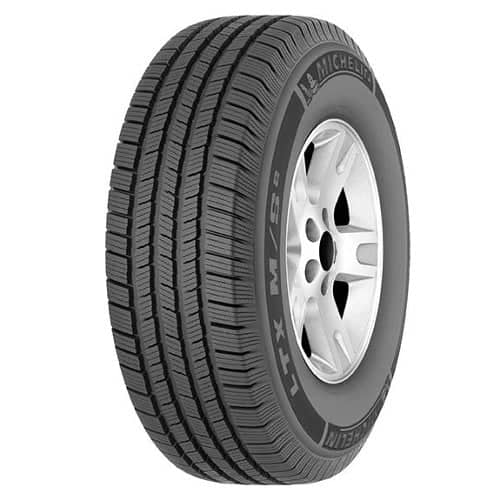
If your truck sees a dirt driveway and nothing more aggressive, a highway terrain tire is the honest answer, and most drivers who buy all-terrains do not need them. The Defender LTX M/S 2 is the reference point in this size, with the tread life and low noise floor that make a long commute tolerable. The Continental TerrainContact H/T lands under it on price with a similar road manner. The Goodyear Wrangler Steadfast HT sits between them at around $259.
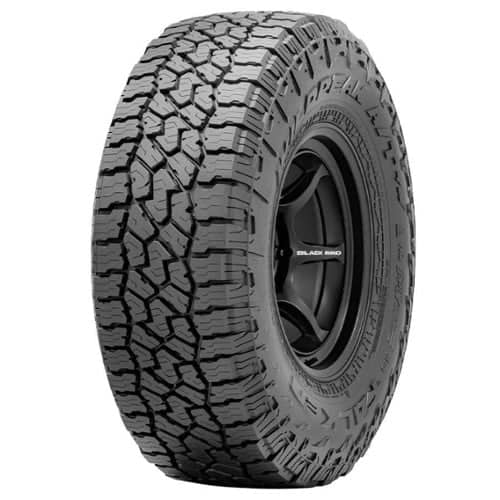
The Falken Wildpeak A/T4W is the successor to the A/T3W and carries the Three-Peak Mountain Snowflake rating, which means it has passed a measured snow traction test rather than simply wearing an M+S stamp. In XL 114T it also solves the load problem for placard-XL vehicles without stepping up to LT stiffness. The Toyo Open Country A/T III is the alternative if you want more aggressive shoulder blocks. Below both, the Hankook Dynapro AT2 RF11 at roughly $225 and the Continental TerrainContact A/T at about $239 deliver most of the capability for less. If you are still deciding whether the category is right for you, all-terrain versus all-season tires lays out the real trade in noise, wear, and wet grip.
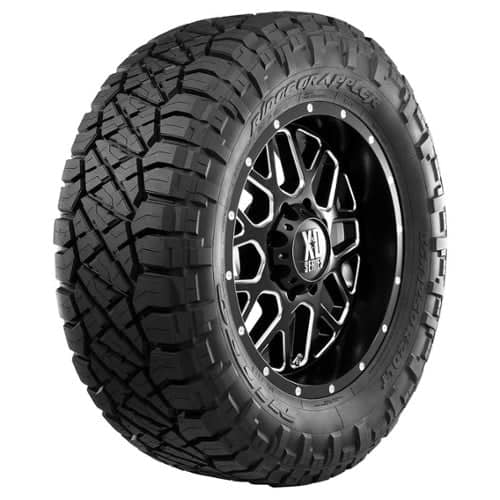
The Ridge Grappler sits between all-terrain and mud-terrain, with mud-terrain shoulder aggression and an all-terrain center rib that keeps highway noise from becoming unbearable. The Cooper Discoverer Rugged Trek at about $287 and the Goodyear Wrangler DuraTrac RT at roughly $305 occupy the same territory. Expect a fuel economy penalty and more road noise than a highway tire regardless of which you pick.
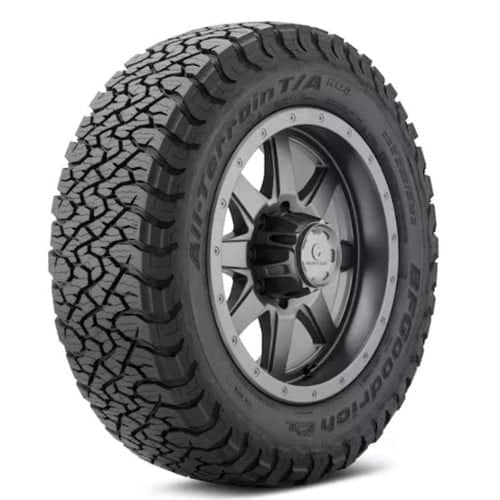
The KO3 in LT265/60R18 comes as a Load Range C at 114/110S, which is a lighter, more streetable LT than the 10-ply options and a sensible landing spot for a truck that tows occasionally. If you need the full Load Range E rating, the Hankook Dynapro AT2 Extreme RF12 at about $308, the Toyo Open Country A/T III LT at roughly $317, and the Cooper Discoverer AT3 LT at around $324 all carry 119/116. Remember the pressure requirement. An LT tire run at car pressures is an underinflated tire, and underinflation is the leading contributor to heat-related tire failure that NHTSA tracks.
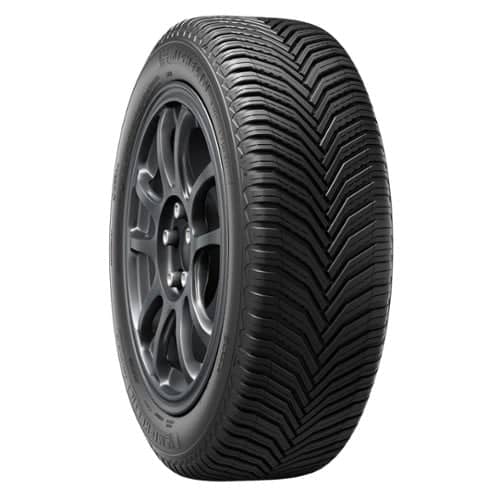
All-weather is the compromise worth knowing about. The CrossClimate2 CUV carries the Three-Peak rating while remaining a genuine year-round tire, as does the Goodyear Assurance WeatherReady 2 at about $253 and the Nokian Remedy WRG5 at roughly $270. If you live somewhere that gets sustained sub-freezing temperatures, a dedicated winter set still wins by a wide margin, and the Nokian Hakkapeliitta R5 SUV or Michelin X-Ice Snow SUV at about $253 are the ones to look at.
Ratings are useful once you have narrowed to a category, and misleading before that. A winter tire and a highway tire scored on the same dry-grip scale will always rank in the same order, and that order tells you nothing about which one belongs on your vehicle in February.
With that framing, here are five that consistently earn their price in this size, each the leader of a different lane.
Notice that no single tire appears in more than one lane. That is the point. The top five are five different answers to five different questions, and yours is decided by the placard and your week, not by a leaderboard.
Mismatched construction does not announce itself. It bills you slowly.
Week one, you lose fuel economy and comfort. An LT tire on a vehicle that never needed one adds unsprung weight and a stiffer carcass. Expect one to two and a half miles per gallon and a noticeably harsher ride over expansion joints. If you went the other direction and dropped from XL to SL, the ride softens and the steering goes vague under load.
Month one, the wear pattern goes wrong. An XL tire running at 35 psi when it needs 41 carries its load on the shoulders instead of across the full contact patch. You get shoulder wear that looks like an alignment problem and will not respond to an alignment. An LT at 35 psi does the same thing more severely, because the gap between actual and required pressure is far larger.
Month six, the casing is running hot. Underinflation relative to load is what generates heat in a tire, and heat is what degrades the bond between belt and casing. This is the failure mode behind most highway blowouts, and it is why the Tire Industry Association puts load and inflation matching at the center of its technician training. You will not see it from the outside.
Month twelve, you are buying tires again. Shoulder-worn tires reach the wear bars thousands of miles early. A set that should have gone 60,000 goes 35,000, and the difference is real money spread across four corners.
The day it matters, you are short on capacity. Load a trailer, fill the bed, put five people and gear in the SUV, and a set that was 236 pounds per corner light is now the reason the vehicle feels unsettled in an emergency lane change. That margin is not conservatism. It is the reserve the vehicle's stability control was tuned to expect.
The fix is inexpensive and takes ten minutes. The alternative compounds.
Step one. Open the driver's door and read the placard. Write down the original size, the full service description, and the cold inflation pressure for front and rear. If the placard is missing, the sidewall of your current tire is the fallback, but only if you know it is the original size.
Step two. Identify the prefix. A leading P means P-metric and de-rating applies on a truck. No letter means Euro-metric and no de-rating. LT means light truck construction and higher pressures. These are not stylistic differences.
Step three. Match or exceed the load index. Equal or greater, never less. If your placard says 114, an SL 110 is not a substitute at any price.
Step four. Pick your category from the second table above. Be honest about the week you actually drive, not the weekend you are planning. Most people over-buy aggression and pay for it in noise and fuel for four years.
Step five. Check the Three-Peak Mountain Snowflake marking if you see snow. An M+S stamp is a tread-pattern claim. The Three-Peak symbol means the tire passed a measured traction test on packed snow. They are not the same certification.
Step six. Set pressure to the placard, then adjust for construction. If you stayed with the original construction, run the placard number. If you moved to XL or LT, the placard number is a starting point and the load and inflation tables for your new tire determine the actual figure. Any competent tire shop can pull that number for you.
The 265/60R18 is one of the deepest sizes in the light truck market, built by nearly every major manufacturer across every category, which is exactly why a ranked list is a poor tool for choosing one. Three different constructions share the same three numbers, and the difference between them is measured in hundreds of pounds of load capacity per corner.
Read the placard. Match the construction. Then pick the tire that fits how you actually drive. Once you have done that, the choice narrows from dozens of options to a handful, and every one of them will be right.
Ready to shop? Browse the full 265/60R18 tire selection and filter by the load index your placard calls for.
A 265/60R18 is approximately 30.5 inches in overall diameter and 10.4 inches in section width, mounted on an 18-inch wheel. Sidewall height is about 6.26 inches, which is 60 percent of the 265 millimeter section width. It turns roughly 661 revolutions per mile and fits rim widths from 7.0 to 9.0 inches.
Same width, different sidewall height. The 265/65R18 stands about 31.56 inches tall versus 30.52 for the 265/60R18, a difference of roughly 1.04 inches. That adds about half an inch of ground clearance and half an inch of sidewall compliance, but it also makes your speedometer read about 3.4 percent slow and your odometer undercount by the same margin.
Common fitments include the Toyota Tacoma and 4Runner, Ford Ranger and select F-150 trims, Chevrolet Colorado, Jeep Grand Cherokee, Dodge Durango, Lexus GX460 and GX470, Nissan Frontier, Pathfinder, and Xterra, and Mercedes G-Class and GL-Class. Trim level and payload package can change which load index your specific vehicle requires, so check the door jamb placard rather than relying on a model list.
Not for a truck or SUV. At 10.4 inches of section width, 265 sits in the middle of the light truck range, which runs from about 215 on small crossovers to 315 and beyond on dedicated off-road builds. It would be considered wide under a passenger car, but on a Tacoma or Grand Cherokee it is the standard factory width.
You can, but not at the placard pressure. An LT tire reaches its rated load capacity at 50 to 80 psi depending on load range, so running one at the 35 psi printed on a passenger vehicle placard leaves it carrying less than the tire it replaced. If you make the switch, have a shop pull the load and inflation table for your specific tire and set pressure to match your vehicle's axle loads.
Each leads a different category rather than competing head to head. The Michelin Defender LTX M/S 2 leads on highway tread life and quiet, the Falken Wildpeak A/T4W on all-terrain balance, the Nitto Ridge Grappler on aggressive capability that still commutes, the Michelin CrossClimate2 CUV on year-round all-weather performance, and the BFGoodrich All-Terrain T/A KO3 on LT-rated load capacity. Pick the lane first, then the tire.



