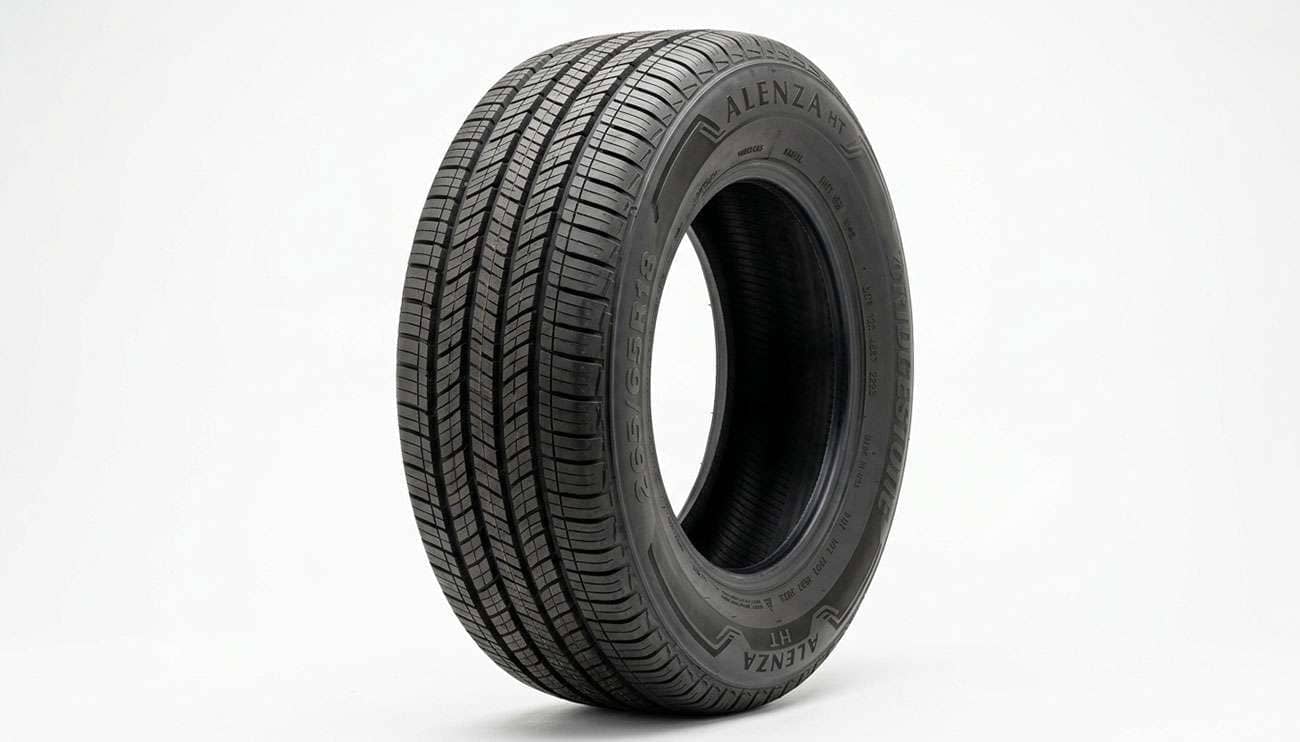
A 265 65R18 tire measures 31.6 inches in overall diameter and 10.4 inches in section width on an 18 inch wheel. The sidewall stands 6.8 inches tall, the circumference is 99.2 inches, and the tire turns approximately 639 revolutions per mile. It belongs to the 32 inch class of truck and SUV tires, sits between the shorter 265 60R18 and the taller 265 70R18, and mounts on rims from 7.5 to 9.5 inches wide. Every dimension is worked out below.
The conversion is straightforward: millimeters divide by 25.4, and the 65 is a percentage of the width, not a fixed number. Sixty-five percent of 265 mm gives a 172 mm sidewall, and the rest follows.
Measurement |
Metric |
Inches |
|---|---|---|
Overall Diameter |
801 mm |
31.6 in |
Section Width |
265 mm |
10.4 in |
Sidewall Height |
172 mm |
6.8 in |
Wheel Diameter |
457 mm |
18.0 in |
Circumference |
2517 mm |
99.2 in |
Revolutions Per Mile |
397 per km |
639 per mile |
Recommended Rim Width |
191 to 241 mm |
7.5 to 9.5 in |
If the 17 inch version of this size class is what your truck runs, we broke down its near-twin in our 265 70R17 in inches guide: interestingly, both sizes land at the same 31.6 inch overall diameter on different wheels.
Height, and only height. Both tires are 265 mm (10.4 inches) wide on an 18 inch wheel, but the 70 series carries a taller sidewall: 186 mm versus 172 mm. That adds just over an inch of overall diameter, taking the 265 70R18 to 32.6 inches against the 265 65R18's 31.6. The taller tire raises the truck about half an inch, absorbs impacts a little better, and reads the speedometer about 3.3 percent slow if the truck was calibrated for the 65. Going the other way, the 65 gives slightly crisper steering response and a marginally lower stance. Most trucks with factory 265 65R18 fitments will clear the 70 without rubbing, but always check at full steering lock before committing.
The 70. The middle number is the aspect ratio, the sidewall height as a percentage of width, so a bigger number means a taller sidewall. On a 265 width, each 5-point step in aspect ratio changes the sidewall by 13.25 mm (0.52 inches), and since the sidewall counts twice in overall diameter, the 70 series tire stands 1.04 inches taller than the 65.
Not in this fitment. A 265 65R18 is 31.6 inches tall, which puts it firmly in the 32 inch class, more than an inch short of a true 33. The 265 number alone only tells you width; the height depends entirely on the aspect ratio and wheel size. To reach genuine 33 inch territory on an 18 inch wheel you need something like a 275 70R18 at 33.2 inches, which we measured in our 275 70R18 in inches guide. For the full picture of how 31s, 32s, and 33s stack up, see our 31s vs 33s vs 35s tires comparison.
By passenger car standards, yes; by truck standards, it is the middle of the road. At 10.4 inches of section width, a 265 is wider than the 225 to 245 mm tires on most sedans and crossovers, but it is the standard width for midsize and full-size trucks, sitting between the narrower 255 and the wider 275 and 285 fitments. It is wide enough for solid grip and towing stability without the fuel economy and hydroplaning penalties that come with truly wide rubber.
At the same aspect ratio and wheel size, the 275 is taller, because the sidewall is calculated from the width. A 275 65R18 measures 32.1 inches against the 265 65R18's 31.6, a difference of half an inch, and it also adds 0.4 inches of width. This is why moving up one width step is the most common subtle upgrade: a little more height, a little more footprint, no drama.
Three sizes are the natural next steps up, all on the same 18 inch wheel.
Upgrade Size |
Diameter |
Width |
Change |
|---|---|---|---|
275/65R18 |
32.1 in |
10.8 in |
+0.5 in tall, +0.4 in wide, the easy step |
265/70R18 |
32.6 in |
10.4 in |
+1.0 in tall, same width, more sidewall |
285/65R18 |
32.6 in |
11.2 in |
+1.0 in tall, +0.8 in wide, verify clearance |
Keep the diameter change under about 3 percent and your speedometer, ABS, and transmission behavior stay essentially stock. The 275 65R18 at 1.7 percent is the safest jump; the two 32.6 inch options run 3.3 percent and deserve a clearance check at full lock and full compression.
This size is a factory fitment across two very different fleets. On the full-size side, it has served as an original-equipment size on the Chevrolet Silverado 1500, Tahoe, Suburban, and Avalanche, the GMC Sierra and Yukon, the Cadillac Escalade, and earlier Ram 1500 trims with 18 inch wheels. On the midsize and global-truck side, it appears on the Toyota Tacoma with the factory 18 inch wheel package, the 2023-and-newer Chevrolet Colorado and GMC Canyon, the Ford Explorer, and international workhorses like the Toyota Hilux, Land Cruiser Prado, and Isuzu D-Max. That double life means manufacturers build the size in everything from quiet touring patterns to three-peak-rated all-terrains; if you are choosing between those categories, our HT vs AT vs MT tires guide sorts out the trade-offs. And for context on how this size compares with the 20 inch wheel equivalents on the same trucks, our 275 65R20 in inches breakdown covers the bigger-wheel side of the lineup.
We stock more than 100 tire models in 265 65R18. These four cover the field from budget highway duty to premium and all-terrain.
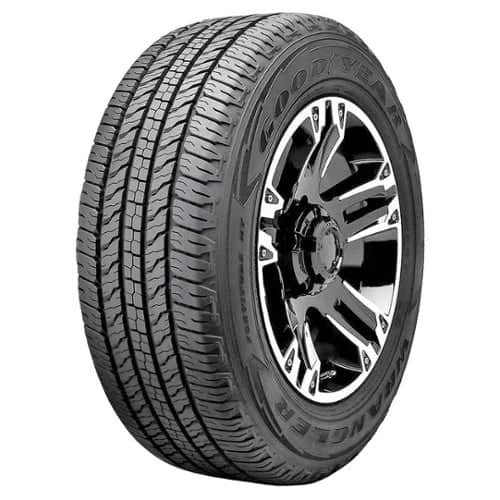
The value leader. The Goodyear Wrangler Fortitude HT is the original-equipment replacement for a huge share of the GM trucks that wear this size from the factory, and at 132 dollars it is one of the cheapest name-brand tickets in the segment.
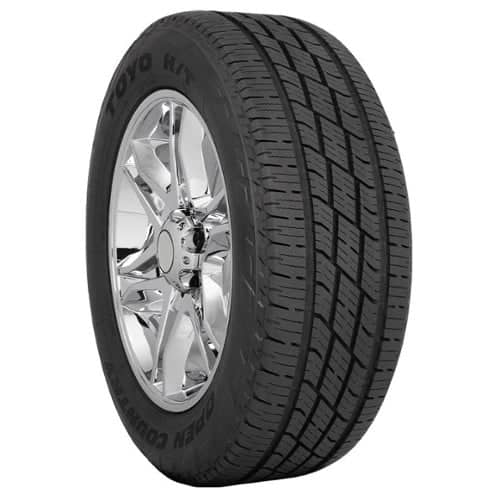
The Tacoma crowd favorite. The Toyo Open Country H/T delivers quiet highway manners with the durability reputation Toyo built its name on, at 170 dollars.
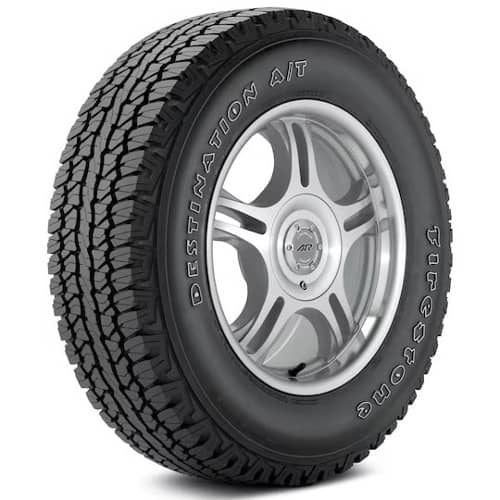
The all-terrain workhorse. The Firestone Destination A/T adds genuine dirt and gravel capability plus outlined white letters for the classic truck look, at 195 dollars.
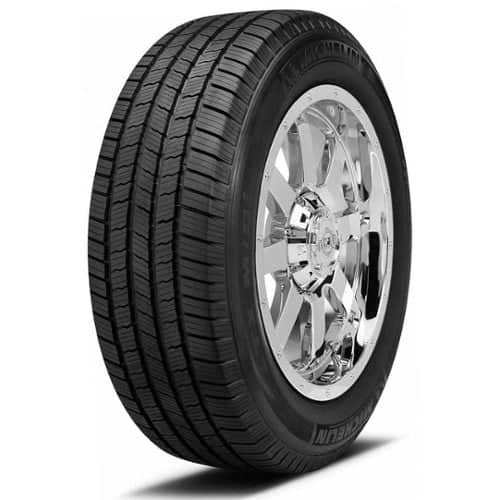
The premium pick. The Michelin LTX M/S2 brings Michelin's benchmark tread life and wet braking to the size at 205 dollars, the tire to buy when you plan to keep the truck past 70,000 miles.
A 265 65R18 converts to 31.6 inches tall and 10.4 inches wide: a 32-class tire that serves everything from Silverados and Tahoes to Tacomas and Colorados. Step to a 275 65R18 for the easy half-inch upgrade, a 265 70R18 for a taller sidewall, or a 285 65R18 for maximum footprint. Browse every pattern we carry on our 265 65R18 tires page, and if you are cross-shopping other 18 inch fitments, our 235 55R18 in inches and 245 45R18 in inches guides cover the passenger side of the wheel diameter.
The approved rim width range is 7.5 to 9.5 inches, and the 8.0 to 8.5 inch wheels fitted to most factory trucks sit in the ideal middle of that window for even tread wear and proper sidewall support.
Yes, slightly. The 265 65R18 is about 3.4 percent taller than the 30.5 inch 265 60R18, so the speedometer will read roughly 2 mph slow at highway speed. Verify fender and suspension clearance before making that swap, as it also raises the truck about half an inch.
The size is built in Standard Load with 112 and 114 load indexes, in XL versions with 116, and in LT constructions with Load Range C through E for heavy towing. Match or exceed the load index printed on your door placard.
Yes, both measure 31.6 inches in overall diameter. The 17 inch version simply carries more sidewall on a smaller wheel, which rides softer and resists pothole damage better, while the 18 inch version steers more precisely. It is one of the most common wheel-size crossover pairs in the truck world.