
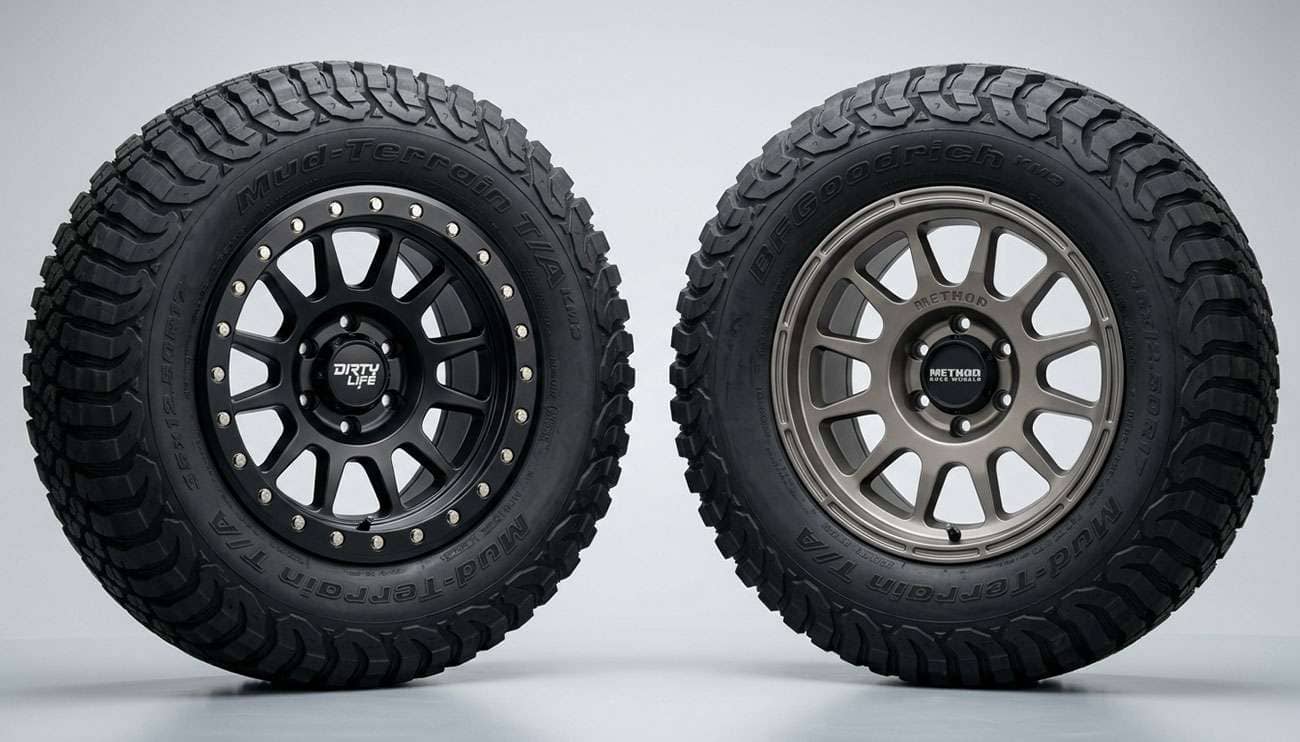
Air down a 35-inch tire to 12 PSI on a rocky climb and physics goes to work against you. The sidewall folds, the bead unseats, and now you're rebuilding a tire on the side of a mountain. The whole reason both beadlock and Bead Grip wheels exist is to push that failure point lower — but they take very different paths to get there, and that difference matters for what you can legally drive home on Monday morning.
Beadlock wheels solve the problem with a mechanical clamp. Method Race Wheels' patented Bead Grip® technology solves it with precision-machined grooves and an aggressive bead seat profile. One lets you run 5 PSI through Hell's Revenge. The other lets you run 10 PSI on the trail and still pass a DOT inspection on the way home. Choosing between them is less about "which is better" and more about which trade-offs match your rig's actual job.
The bead is the reinforced inner edge of the tire — a hoop of steel cable wrapped in rubber that seats against the wheel's bead seat to form an airtight seal. At highway pressure (32–35 PSI), the air inside the tire pushes outward against the sidewall, which pulls the bead tight against the rim's safety hump. Friction between the bead and the wheel does the rest. Conventional steel-on-rubber friction has a coefficient between roughly 0.5 and 0.7, which is plenty when 35 PSI is doing most of the holding work.
Drop the pressure to 8 or 10 PSI, though, and that math falls apart. The sidewall flexes, the bead loosens against the rim, and a hard side-load — a rock strike, a sharp turn at speed, a sudden compression — can pop the tire off the wheel. That's a "debead," and it ends your trail day. Off-roaders want low pressure because it expands the contact patch, softens the ride, and dramatically improves traction on loose terrain. The whole engineering challenge is keeping the bead seated when air pressure isn't doing its job anymore. Beadlock and Bead Grip are two different answers to that exact problem. For a deeper look at the bead itself, see our breakdown of what a tire bead actually is and why it matters.
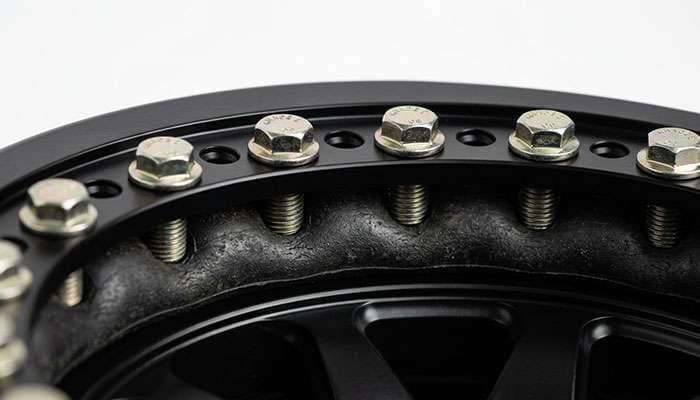
A true beadlock uses a separate outer ring bolted to the face of the wheel. The tire's outer bead sits between that ring and the wheel itself, and 24 to 32 grade-8 bolts (depending on the design) physically clamp the bead in place. The tire isn't relying on air pressure to stay seated anymore — it's mechanically pinned. That's why hardcore rock crawlers can run 5–7 PSI without losing a bead, and why competition rigs sometimes run as low as 3 PSI.
The trade-offs are significant. Beadlocks add weight — typically 4 to 8 pounds per wheel over a comparable non-beadlock — which is unsprung, rotating mass that hurts acceleration, braking, and ride quality on pavement. Most aftermarket beadlocks are not DOT-approved for highway use because the bolted ring can theoretically loosen at speed, and a bolt backing out at 70 mph becomes a road hazard. Mounting requires specialized labor — most tire shops won't touch them — and the bolts demand monthly torque checks to stay safe. Pricing typically runs $300 to $600 per wheel for cast options and well over $1,000 each for forged competition wheels. For a deeper look at when that investment makes sense, our guide on the purpose of beadlock wheels covers the use case in detail.
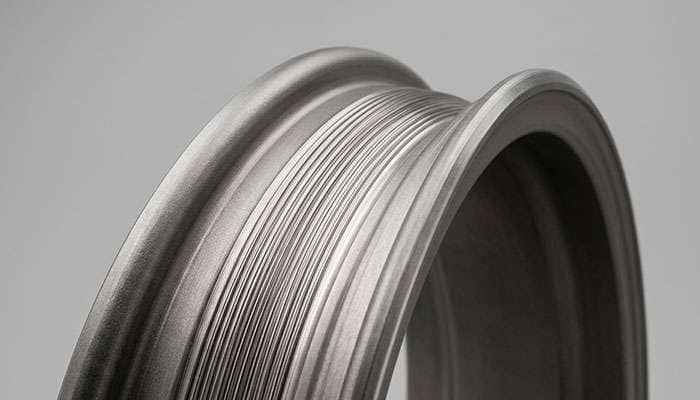
Bead Grip® is Method Race Wheels' patented answer to the same problem, and it goes about it without a bolted ring. Instead, the wheel features precision-machined grooves on both the inner and outer bead seats, paired with a more aggressive "safety hump" profile than you'd find on a conventional wheel. When the tire is mounted at normal pressure, those grooves bite into the soft rubber of the tire bead. When you air down on the trail, the bead presses harder into the grooves rather than walking off the seat. It's friction-based retention, just engineered way past what a stock wheel offers.
The performance numbers tell the story. NHTSA-tested versions of Method's MR701 are validated to hold a bead at 10 PSI on standard off-road tires. Plenty of trail riders run them at single digits without issue, though Method publishes 10 PSI as the conservative spec. The whole wheel is fully DOT-compliant — there's no external hardware to loosen, nothing to torque-check, no special mounting procedure. You install Bead Grip wheels exactly like any conventional wheel, and they pass any inspection a regular alloy would pass.
The catch: Bead Grip is proprietary to Method Race Wheels. If you want a different brand's design language or a wheel style Method doesn't offer, you're out of luck on this technology. There are friction-based competitors (ICON's bead retention pin systems, fifteen52's bead-grip-style ridges), but Bead Grip® specifically is a Method patent.
Here's how the two technologies compare across the specs that actually drive the buying decision:
Feature |
Traditional Beadlock |
Bead Grip® (Method) |
|---|---|---|
Retention method |
Mechanical clamp via bolted outer ring |
Machined grooves on inner and outer bead seats, plus aggressive safety hump |
Minimum safe PSI |
3–7 PSI (competition can go lower) |
10 PSI (NHTSA-tested), with reports of single-digit use on the trail |
DOT / street legal |
Most aftermarket beadlocks are not DOT-approved for highway use |
Fully DOT-compliant, no restrictions |
Maintenance |
Monthly bolt torque checks (24–32 bolts per wheel) |
None beyond standard wheel care |
Mounting |
Specialized; many tire shops decline beadlock work |
Standard tire mounting at any shop |
Weight (typical 17-inch) |
32–38 lbs, depending on construction |
26–32 lbs |
Tire compatibility |
Most off-road tires; some designs require specific bead profiles |
Most standard off-road tires; no special bead requirement |
Price per wheel (cast) |
$300–$600 |
$250–$400 |
Style options |
Wide — many brands and finishes |
Limited to Method's lineup |
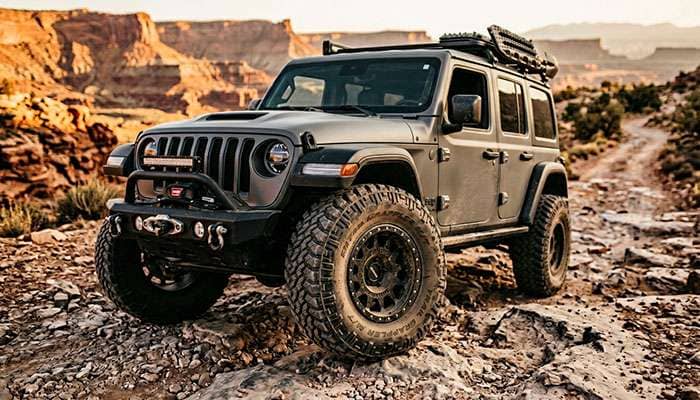
If your rig sees serious rock crawling — Hell's Revenge, the Rubicon, John Bull at competition pace — beadlocks are still the gold standard. The difference between 5 PSI and 10 PSI on slick rock is enormous. That extra contact patch turns a near-vertical line from "scary" into "doable." Same logic applies to desert racing, where high-torque launches over loose surfaces will spin a tire on the wheel without mechanical retention, and to extreme dune work where you want to run 4 or 5 PSI to float on soft sand.
Beadlocks also make sense for dedicated trail rigs that get trailered to events. If the truck isn't a daily driver, the DOT issue and the maintenance burden don't really apply. You torque your bolts before each event, run them at 5 PSI all weekend, and put them away. For a competition Jeep or a desert race truck, that's a workflow, not a hassle.
The Bead Grip case is built around mixed-use rigs: vehicles that drive to the trailhead, see weekend wheeling, and then drive back to work Monday. If your Jeep or 4Runner is also your daily driver, three things matter that beadlocks don't deliver well — DOT compliance for a clean inspection, no monthly maintenance ritual, and lower unsprung weight that shows up in steering response and fuel economy on pavement. Bead Grip checks all three.
The PSI numbers are the only place a moderate off-roader might second-guess the choice. Going from 5 PSI on beadlocks to 10 PSI on Bead Grip costs you some traction in extreme low-pressure scenarios. But for the 90% of trail use that involves moderate rock, sand, and dirt — overlanding, forest service roads, the kind of weekend wheeling most owners actually do — 10 PSI is more than enough to expand the contact patch dramatically over a 35 PSI street setup. You're getting most of the benefit without any of the daily-driver penalty. Method's testing on the MR701 and MR703 with the Ford Ranger Raptor and Bronco platforms backs that up across thousands of trail miles.
Beadlock maintenance is the single biggest reason Bead Grip exists as a product category. A torque check on a set of four beadlocks means inspecting and re-torquing somewhere between 96 and 128 bolts every 30 days, plus a fresh check before any trail run. It takes about an hour for a full set if you're efficient about it. Skip a month, and bolt vibration on the highway can loosen things to the point where a failure becomes possible. Owners who daily-drive beadlocks describe it as a part-time job.
The other less-discussed issue is shop access. Most tire shops won't mount, balance, or repair beadlock wheels because of liability concerns around the locking ring. That means your roadside flat repair option is "trailer it home" rather than "stop at the next Discount Tire." Bead Grip wheels mount at any shop, balance the same way conventional wheels do, and don't trigger any of those refusals. For a rig that lives on the street between adventures, that operational difference is bigger than most people realize until it matters.
For Bead Grip, the Method 705, 706, and 707 series are the workhorses across most trucks and Jeeps in 17 and 18-inch sizes. The MR701 and MR703 are the originals — the wheels Method built the Bead Grip patent around — and they're proven on factory builds like the Ford Bronco and Ranger Raptor. The MR709 HD adds heavy-duty load ratings for 3/4 and 1-ton platforms. All are available through our Method wheels lineup.
On the beadlock side, the KMC KM450 Mesa, KM235 Grenade Crawl, and KM238 VI are popular cast options that balance price and durability. The Method 105 and 106 beadlocks are well-regarded for desert and rock applications. Black Rhino's Primm and Reno series and the Dirty Life 9302 Roadkill round out the options at the more affordable end. Browse the full KMC wheels selection to see what fits your bolt pattern. If you're still narrowing down what diameter makes sense for your build, our breakdown on off-road wheel sizes by use case walks through the trade-offs at 15, 17, 18, and 20-inch.
For background on what separates a real off-road wheel from a styled-to-look-like-one, see our piece on what makes a great off-road wheel, which covers construction, load ratings, and bead retention design in more detail.
Beadlock and Bead Grip aren't really competing for the same buyer. Beadlocks are purpose-built tools for extreme low-pressure off-roading where the maintenance burden and the legal gray area are acceptable trade-offs for unmatched tire retention. Bead Grip is engineering for the much larger group of owners who want serious trail capability without sacrificing the daily driver. Pick the technology that matches how the rig actually gets used, not the spec sheet you wish applied to your weekend.
Bead Grip wheels match or exceed beadlock load ratings — Method's lineup runs 1,850 to 3,640 lbs per wheel using A356 aluminum with T6 heat treatment. Strength isn't the difference; the gap is in minimum safe air pressure. Beadlocks let you run lower because the mechanical clamp doesn't depend on bead-seat friction.
No. Bead Grip wheels are one-piece designs without the mounting bolt pattern needed for an external locking ring. If you want true beadlock capability, you need a wheel engineered for it from the start. Some manufacturers like Method offer beadlock-specific lines (the MR105, MR106, MR108) separately from their Bead Grip lineup.
Method publishes 10 PSI as the NHTSA-tested floor for the MR701 and similar designs. Plenty of trail riders report running 8 PSI without losing a bead, and some have pushed lower in controlled conditions. The conservative spec is 10 PSI, which is dramatically lower than the 15–20 PSI floor most conventional wheels can handle safely.
No. Simulated beadlocks are styling cues — a stamped or machined ring around the outer face that mimics the look of a real beadlock without any functional bead retention beyond what a standard wheel offers. They air down to the same minimum pressure as any conventional wheel, roughly 15–20 PSI. Bead Grip is a functional engineering feature that actually changes the bead retention performance.
Yes — and noticeably. Beadlocks add 4 to 8 pounds per wheel of unsprung rotating mass, which dampens steering response, hurts acceleration, and can be harder to balance precisely. Daily drivers running beadlocks often report road vibration that wasn't present on the previous wheel setup. Bead Grip wheels avoid this trade-off because they don't carry the extra ring-and-bolt hardware.
For most sand work, yes. Bead Grip handles the 10–15 PSI range that covers the majority of dune driving and beach use. If you're running competition-level sand at 5 PSI or below — Glamis, King of the Hammers — you'll want true beadlocks. The line falls roughly where pressure drops below 8 PSI for extended periods.



