
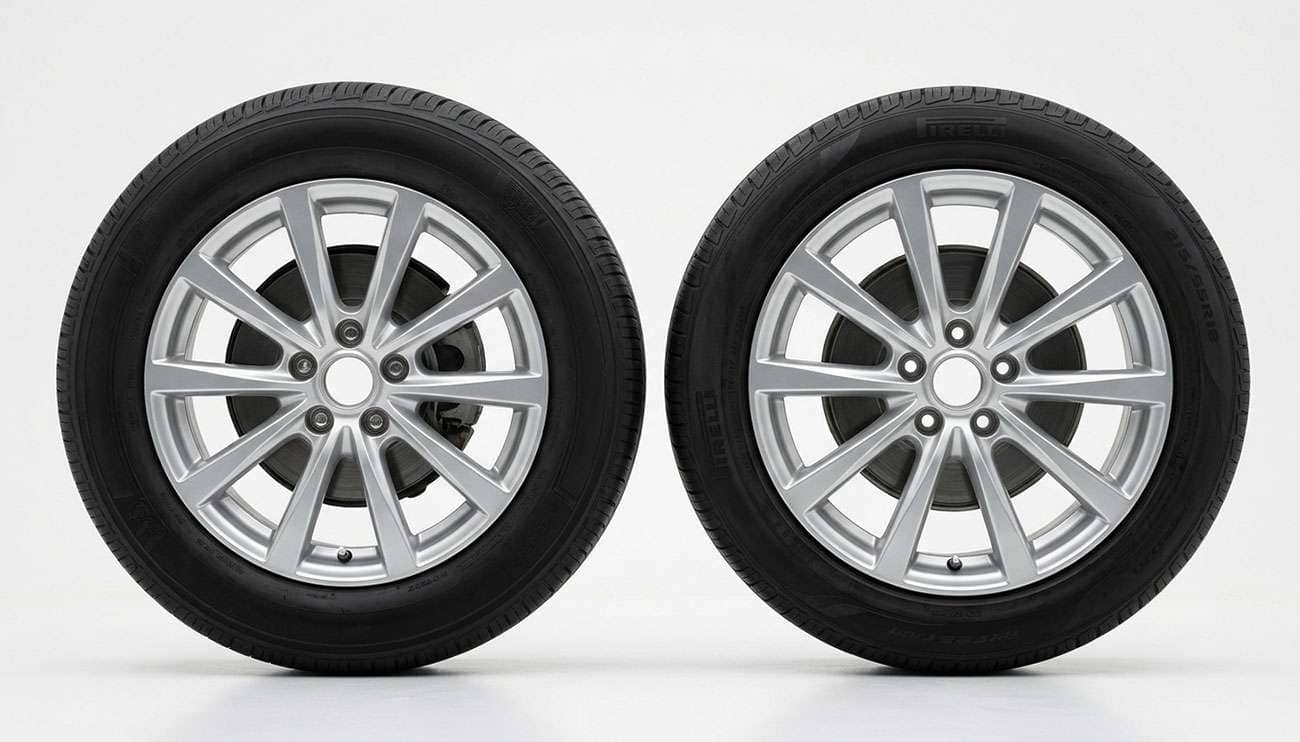
Neither size is better in the abstract, and the thing that decides it is not ride quality or looks. It is whether your car was engineered around the size you are running. A 17 that came on your trim from the factory was matched to specific spring rates, damper valving and steering calibration. A 17 bolted onto a car that shipped on 16s is working outside the envelope the engineers tuned. Same wheel diameter, two completely different cars. Find out which one you have before you decide anything else.
Most comparisons of these two sizes list the same trade-offs, sidewall against steering response, and stop there. What they leave out is that those trade-offs assume the manufacturer did the work. When a manufacturer offers 16s on the base trim and 17s on the sport trim, the two cars usually do not share dampers. When you buy 17s for a car that only ever came with 16s, nothing under the fender knows you did it.
So the first question is not which size is better. It is which situation you are in.
Your Situation |
What It Means |
What to Expect |
Better Size |
|---|---|---|---|
Car shipped with 17s on your trim |
Suspension was validated on that package |
Ride and handling as designed |
Stay at 17 unless cost is the priority |
Car shipped with 16s, 17s were an option |
Both packages were engineered and tested |
Either works. The difference is preference |
Whichever matches your roads |
Car only ever came with 16s |
No 17-inch package was ever validated |
Firmer ride, more impact harshness |
16, unless you accept the trade knowingly |
Car came with 17s, you want 16s |
Brake clearance decides whether it is possible |
Softer ride and cheaper tires if it fits |
16, if the rotors leave room |
Here is the part that gets skipped, and it is the reason two people can run the same wheel size on similar cars and come away with opposite opinions.
A damper is a valve. It is tuned to control a specific amount of unsprung mass moving at specific frequencies, and the tire is part of that system. A tire is a spring, and its vertical stiffness is set largely by sidewall height and inflation pressure. Change the sidewall and you have changed a spring rate in the suspension without touching a spring.
When a manufacturer offers two wheel packages on the same platform, they do not just check that both clear the fenders. They revalve. Spring rates sometimes change too, and on cars with electronically controlled dampers the software carries different maps for different wheel packages. That is engineering work, and it is why a factory 17-inch car can ride better than an aftermarket 17-inch version of the same car wearing the identical wheels.
When you retrofit, none of that happens. You have shortened the sidewall, raised the tire's effective spring rate, added unsprung mass at each corner, and left the dampers exactly where they were. The suspension now controls a stiffer, heavier package with valving sized for a softer, lighter one. The car does not fall apart. It just rides worse than it should, and most owners blame the tires.
Check your options list. If your model year offered both sizes, you are choosing between two validated packages and the rest of this article is a straightforward preference question. If your car only ever came in 16, understand that stepping to 17 is a modification, not an upgrade, and it will cost you ride quality that no tire choice fully recovers. Our broader piece on how wheel size affects car performance covers what changes across the whole system when you move diameter.
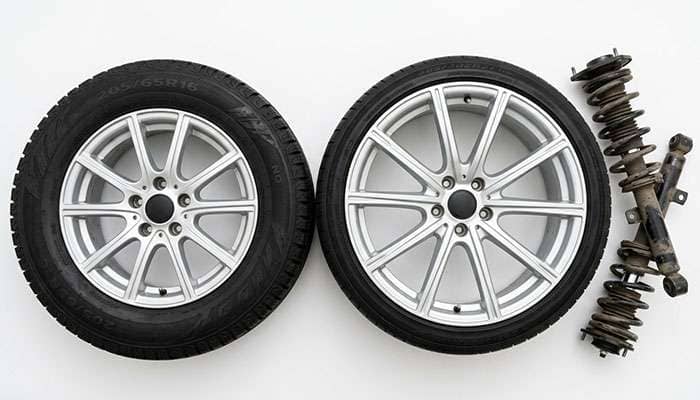
The 17 wins on three things, and they are real rather than cosmetic.
Steering response. A shorter sidewall deflects less under lateral load. When you turn the wheel, less of your input gets absorbed by the tire rolling over on itself before the tread starts changing direction. The car feels like it responds sooner. This is the single biggest reason manufacturers moved this direction across the last twenty years.
A flatter contact patch under load. The stiffer sidewall holds the tread face more square to the road during hard cornering, which puts more rubber in contact when you actually need it. On a dry road being driven with intent, that is measurable grip.
Tire selection. Seventeen-inch is the deepest single category in the current tire market, running above a fifth of all fitments. Whatever you need, whether that is a summer performance tire, an all-weather with a snowflake rating, or a long-wear touring line, the 17-inch shelf has more of it than the 16-inch shelf does. That matters more than people expect when you are shopping a specific compound.
There is also a fourth advantage that nobody frames as an advantage. Seventeen inches of wheel diameter clears brake packages that a 16 cannot. As cars gained weight and power, rotors grew, and a lot of vehicles now require the 17 as a physical minimum. If you drive one of those, the 17 is not better in a philosophical sense. It is simply the only one that fits. We go deeper on the specifics in our article on the advantage of 17-inch wheels.
The 16 wins on four things, and the first one is money.
Cheaper tires, permanently. Across the current market, the median 16-inch tire runs around $148 while the median 17-inch runs around $179. Call it $30 a tire and roughly $122 a set. That is not a one-time difference. You pay it every time you replace tires for as long as you own the car.
More sidewall. At the same overall diameter, dropping to a 16 gives you roughly half an inch more rubber at each corner. That rubber is the first stage of your suspension and it absorbs the sharp edge of an impact before the strut ever feels it. It is also what stands between your rim and the pothole. Bent alloys are expensive, and the 16 is meaningfully harder to bend.
Less unsprung weight. A 16-inch package generally weighs less at each corner. Lower unsprung mass means the damper has an easier job keeping the tire on the pavement over broken surfaces, which is grip, not just comfort. It also costs a little less fuel to accelerate.
Better winter economics. If you run a dedicated snow set, the 16 is the conventional target, and for good reasons. The narrower, taller tire cuts down through snow toward pavement rather than floating on it. The tires cost less. And steel wheels in the size are cheap enough that you are not exposing an expensive alloy to salt and curbs for four months a year.
One honest caveat. While the tire market still supports 16 well at roughly fifteen percent of fitments, the aftermarket wheel market has largely moved past it. Sixteen-inch wheels are a small fraction of what manufacturers currently offer compared to 17, 18 and 20. If your plan is factory wheels or winter steelies, you are in good shape. If your plan is a stylish aftermarket set in 16, expect thin choices.
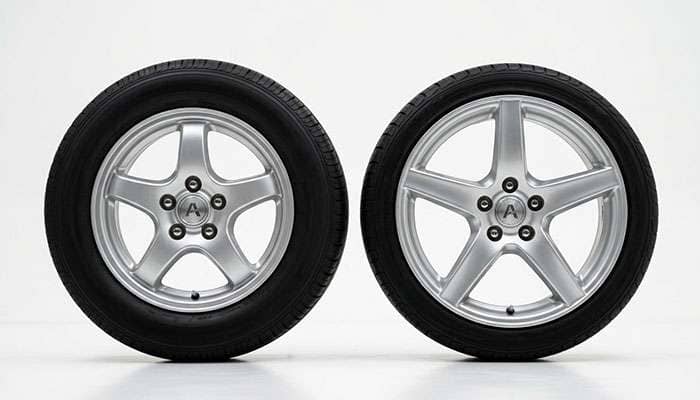
Everything the 16 gains, the 17 gives up. Stated as a list of costs rather than benefits:
Roughly $122 more per set of tires, repeating on every replacement cycle rather than once at purchase.
Around half an inch less sidewall per corner, which means less impact absorption and a higher chance of a bent rim or a damaged sidewall on rough pavement. If you are inspecting a wheel and tire after a hard hit, our guide to tire sidewall damage covers which findings are cosmetic and which mean the tire comes off the car today.
A firmer ride. Imperceptible on smooth freeway, noticeable on the patched and seamed pavement most of us actually commute on, and cumulative over a long drive.
More unsprung mass, asking more of the dampers and costing a little in efficiency.
Higher replacement cost when something breaks. A 17-inch alloy costs more to replace than a 16-inch one, and it is the more likely of the two to need replacing.
None of that makes the 17 a bad choice. It makes it a choice with a price, and the price is worth paying if you value what it buys. What is not defensible is paying it without knowing you are paying it.
Two different answers, depending on whether you are counting what is rolling around or what people buy to replace it.
By tire volume, 17 inch leads. Seventeen-inch fitments account for roughly a fifth of the current tire market. Eighteen-inch runs a very close second at just under twenty percent, with 20-inch and 16-inch following at around fifteen percent each. That distribution reflects what manufacturers have actually been fitting at the factory over the last fifteen years or so.
By aftermarket wheel volume, 20 inch dominates. Roughly three in ten aftermarket wheels sold are 20-inch, well clear of 18 and 17. Sixteen-inch barely registers.
Wheel Diameter |
Share of Tire Market |
Share of Aftermarket Wheels |
What That Tells You |
|---|---|---|---|
16 inch |
About 15 percent |
Small |
Still widely driven, rarely bought new |
17 inch |
About 21 percent |
Moderate |
The most common size on the road |
18 inch |
About 20 percent |
Moderate |
The current factory default on many models |
20 inch |
About 15 percent |
Largest by a wide margin |
Where upgrade money actually goes |
Read those two columns against each other and the story is clear. People are not replacing wheels in the size their car came with. They are going up, mostly for appearance, and the tire market absorbs the consequences quietly in the form of higher replacement costs and less sidewall.
Which is worth knowing before you treat the crowd as guidance. Every inch of diameter added removes an inch of sidewall and adds cost to every tire you will ever buy for that vehicle. If you want to run the numbers on your own car rather than take a rule of thumb, our plus sizing calculator guide walks through holding overall diameter constant while you change wheel size.
Sometimes, and it is not up to you. Your front brake rotor sets the floor.
The working rule is rotor diameter plus four inches. Twelve-inch rotors need a 16-inch wheel as a minimum. Thirteen-inch rotors need a 17, and if that is what your car has, no 16-inch wheel ever made will clear it. Pull one front wheel, measure straight across the rotor face, add four, and you have your answer in about ten minutes.
Two clearance problems exist and people confuse them constantly. Radial clearance is the caliper fitting inside the barrel, and if you fail that one, nothing fixes it. Axial clearance is the caliper fitting behind the spokes, and a spacer can sometimes solve that by moving the wheel outboard. The advice to run spacers when a wheel does not clear gets handed out freely, and half the time it is being given to somebody with a radial problem that spacers cannot touch. Our deeper treatment of brake and wheel clearance covers why two wheels with identical published specs can behave differently on the same car.
If the brakes do leave room, the tire size has to change with the wheel so your overall diameter stays put. The rule is to add roughly ten points of aspect ratio at the same section width when you drop an inch of wheel. A 225/45R17 becomes a 225/50R16. A 215/55R17 becomes a 215/60R16. Aim to land within one percent of your original overall diameter, because your speedometer, odometer, transmission shift points and stability control were all calibrated around it. Budget for moving or replacing TPMS sensors while you are at it.
Most people compare these two sizes on the showroom difference and never run the ownership math. Here is what the gap actually looks like over the life of a car.
Tires. About $122 per set at the median. Most drivers replace tires every three to four years, so over a decade that is roughly three sets and somewhere near $370 in additional spend for the 17.
Wheel replacement risk. This one is harder to price but it is real. Less sidewall means a higher probability of bending a rim on the kind of pothole that a taller tire would have absorbed. A single replacement alloy plus mounting and balancing can erase several years of tire savings in one afternoon, and the 17 is both more likely to need it and more expensive when it does.
Fuel. Small, but not zero. Additional unsprung and rotating mass costs energy every time you accelerate. Across a decade it is a modest number, and it points the same direction as everything else.
What the 17 buys back. Steering response you feel every time you turn the wheel, a deeper tire catalog when you want a specific compound, and on a lot of modern cars, the ability to clear the brakes at all. If you drive with any intent, that first item is not a small thing to trade away for $370 over ten years.
That is the honest ledger. The 16 is cheaper to own. The 17 is better to drive. Which of those matters more is a question about you, not about the wheels.
Work through these in order.
Check what your trim came with. Look at the door placard and your original window sticker or build sheet. If both sizes were factory options on your model year, you are choosing between two validated packages and you can decide on preference alone. If only one was ever offered, that size is the one your dampers were tuned around.
Measure your front rotor. Rotor diameter plus four inches is your minimum wheel size. This can eliminate the 16 entirely, and it is worth knowing before you spend time deciding.
Be honest about your roads. Not the road in the brochure photograph. The one you drive to work on. If it is patched, seamed and potholed, the extra sidewall is worth more to you than the steering response is.
Be honest about how you drive. If you notice turn-in, the 17 earns its money. If your driving is commuting and errands, you are paying a premium for a characteristic you are not using.
Count the winter question. If you run a second set, the 16 is the cheaper platform for it, and running 17s in summer with 16s in winter is a completely legitimate answer that gets you both.
If you want a broader framework than these two sizes, our guide on choosing the right rim size covers the same decisions across the full diameter range, and our reference on how rim size affects ride quality puts measured numbers against the comfort claims.
Neither size is better. The 17 gives you steering response, a flatter contact patch under load, the deepest tire selection on the market, and on a lot of modern cars the only diameter that clears the brakes. The 16 gives you roughly $122 per set in savings that repeats forever, about half an inch more sidewall protecting your rims, less weight at each corner, and the cheaper platform for a winter package.
What decides it is the thing nobody asks first. If your car was engineered around 17s, they belong on it. If it was engineered around 16s and somebody put 17s on it, you are driving a modification and paying for it in ride quality. Check your build sheet before you check anything else.
Then measure your rotor, look honestly at your roads, and pick the one that fits how you actually drive. When you are ready, browse the 17 inch wheel selection and compare against what your placard specifies.
On the same car with the same suspension, yes, because the shorter sidewall absorbs less. But if the 17 was a factory package on your trim, the manufacturer revalved the dampers to compensate and the difference is much smaller than the raw sidewall math suggests. The harsh ride people complain about usually comes from retrofitting a larger wheel onto a car that never offered it.
Usually, though construction matters more than diameter alone. A forged 17 can weigh less than a cast 16. Comparing like for like, the 17-inch wheel and tire package is typically heavier, and that weight sits unsprung where it asks the most of your dampers. If you are chasing the lighter package, look at the construction method before you look at the diameter.
Slightly, from two directions. Extra rotating mass costs energy to accelerate, and wider tires that often accompany the larger wheel add rolling resistance and frontal area. The effect is small enough that most drivers will not spot it on a tank of gas, but it is consistently in the same direction and it compounds across years of driving.
Only if your model offered 17s from the factory, or you accept that you are modifying rather than upgrading. When a 17-inch package was a factory option, the suspension was validated for it and the change is a real improvement in response. When it was never offered, you gain appearance and steering sharpness while giving up ride quality that the dampers were not set up to recover.
The 16, in most cases. Winter traction favors a narrower tire that cuts down through snow to reach pavement rather than a wide one that floats on top, and the smaller wheel accommodates that narrower, taller tire. The 16 also makes a cheaper second set, since steel wheels in the size cost little and keep your good alloys out of the salt.
Yes, provided your brakes clear the 16. This is a common and sensible setup that gets you the steering response of the larger wheel for most of the year and the cost, traction and impact protection advantages of the smaller one when the weather turns. Match the overall diameter across both sets so your speedometer and stability control read the same either way.



