
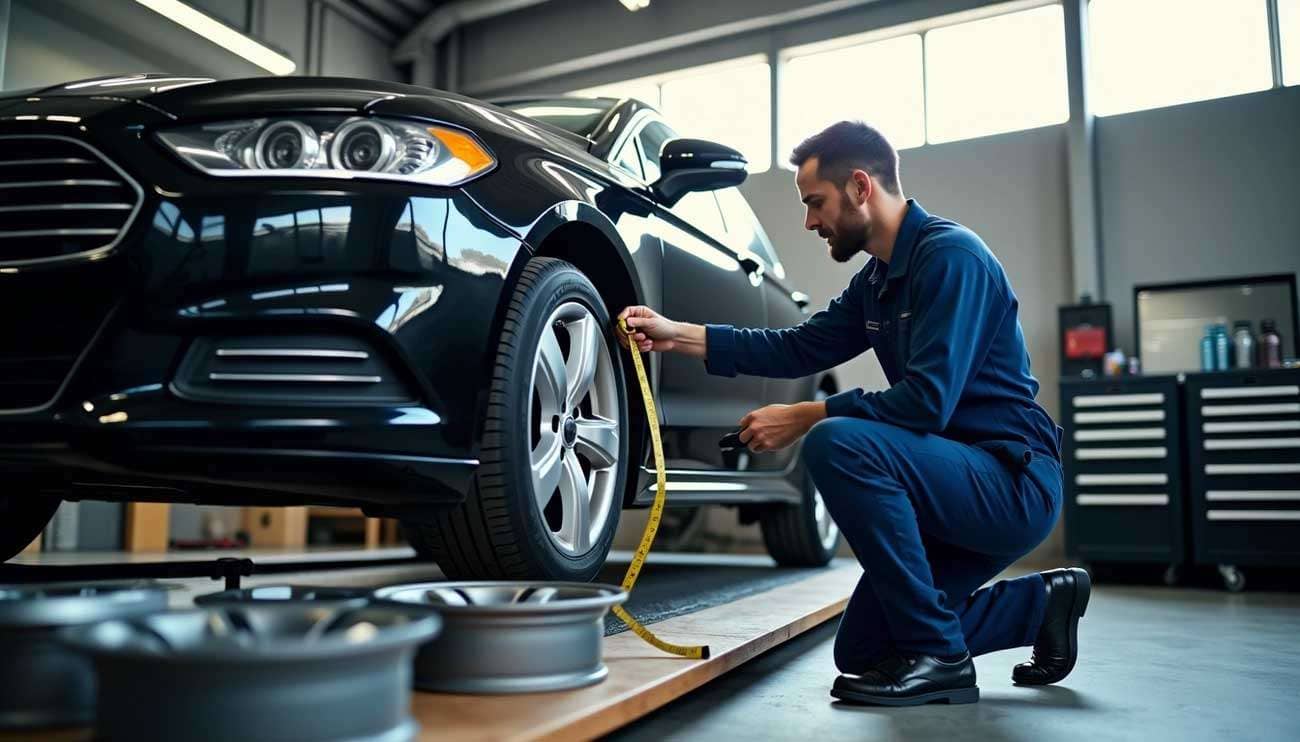
Wheel diameters typically range from 13" to 24" or even higher for specialized fitments. Choosing the right rim size for your car goes far beyond looks—it's a critical decision that impacts handling, safety, and performance.
Understanding the relationship between wheels and tires is essential when selecting new rims. Tires must match rims—that's a solid fact according to automotive experts. Larger tires can provide more grip on the road, improving your vehicle's handling and maneuverability. However, incompatible sizes can damage your suspension system, wheels, and the tires themselves.
We'll guide you through everything you need to know about rim sizing. From measuring diameter and width to understanding offset and bolt patterns, our expert advice ensures a perfect fit for your specific make and model. Whether you're upgrading for performance, replacing damaged wheels, or simply refreshing your vehicle's appearance, we've got you covered with professional guidance that delivers results.
Understanding rim size basics changes how you approach wheel upgrades. Rim size affects nearly every aspect of your driving experience, from proper fitment to vehicle performance.
Rim size comprises several key dimensions that work together to ensure proper fit and function. These dimensions include:
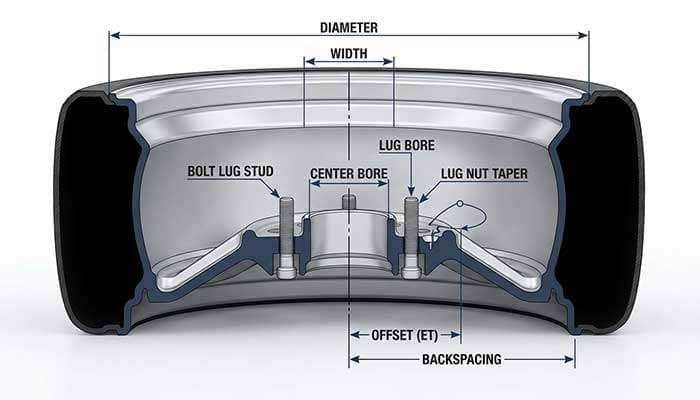
Diameter: The distance measured in inches across the wheel face from bead seat to bead seat (where the tire meets the wheel)
Width: The distance in inches across the wheel barrel, also measured from bead seat to bead seat
Bolt pattern: Two numbers indicating how many bolt holes a wheel has and the diameter of the circle those bolt holes create
Offset: The distance from the wheel's mounting surface to the wheel's centerline, measured in millimeters
Rim size matters because it directly impacts how your vehicle handles, performs, and looks. The wheels installed on your vehicle are specifically designed to fit your vehicle's suspension, gearing, and bodywork perfectly—all factors affecting ride quality and performance. Choosing the wrong size leads to issues with clearance, handling, and safety.
These terms refer to distinct components, though often used interchangeably:
The wheel is the complete metal assembly that attaches to your vehicle's hub and rotates to keep your vehicle moving. It includes the hub, spokes, center disk, and rim.
The rim specifically refers to the outermost circular part—the U-shaped outer edge that holds and secures the tire in place. Modern wheels, especially alloy ones, integrate the rim into the wheel's structure rather than being a separate component.
The tire is the rubber casing that wraps around the wheel rim and maintains contact with the road surface. Tires and wheels are not interchangeable terms—tires are just one part of the wheel setup.
Several technical terms are essential for understanding rim sizing:
Offset (ET value) refers to the distance from the hub-mounting surface to the wheel's centerline. It can be positive (mounting surface closer to the outside edge), zero, or negative (mounting surface closer to the inside edge). Proper offset prevents wheels from rubbing against brakes, fenders, or suspension components.
Backspacing measures the distance from the back of the mounting surface to the inner wheel lip—crucial for ensuring clearance inside the wheel well.
Bolt pattern consists of two numbers: the first indicates how many lug holes the wheel has (typically 4, 5, 6, or 8), while the second shows the diameter of the circle formed by these holes (in mm or inches). For example, a "5-100" pattern means 5 lug holes around a 100mm diameter circle.
Center bore is the hole in the center of the rim that centers it over the mounting hub. Wheels with a center bore that exactly matches the hub are called "hubcentric" and help reduce vibration.
Bead seat refers to the area where the tire bead sits on the rim, creating a seal to maintain air pressure.
Understanding these terms is essential before shopping for new rims. They ensure you select wheels that not only look great but also provide safe, optimal performance for your specific vehicle.
Getting accurate rim measurements is essential for proper fitment between your wheels, tires, and vehicle. These measurements prevent clearance issues, handling problems, and performance concerns that can arise from incorrect sizing.
Measuring rim diameter requires precision and the right technique. To determine your wheel diameter:
Place your wheel flat on a surface and measure from one bead seat to the opposite bead seat (where the tire sits against the wheel). This measurement is expressed in inches, with common diameters including 14", 15", 16", 17", 18", 19", 20", 21", 22", and beyond.
For wheel width measurement:
Place the wheel flat on a surface
Measure from the inside edge of one wheel lip across to the inside edge of the opposite wheel lip
Record this distance in inches
Wheel width is the measurement between the inner bead seats—not the outer edges of the rim. A common mistake is measuring from outer lip to outer lip, which typically adds about an inch to the true width.
Most wheels have their size stamped or embossed somewhere on the inside, often following a format like "7JJx16," indicating a 7" wide rim with a 16" diameter.
Offset and backspacing are related measurements that determine how your wheels sit in relation to your vehicle's suspension and body components.
Offset refers to the distance (in millimeters) between the wheel's mounting surface and the centerline of the wheel. This measurement can be:
Positive offset: The mounting surface is closer to the outside edge of the wheel, pushing the wheel inward toward your vehicle's centerline
Zero offset: The mounting surface aligns perfectly with the wheel's centerline
Negative offset: The mounting surface is closer to the inside edge, making the wheel extend outward
Backspacing measures the distance from the mounting surface to the back edge of the rim. Lower backspacing creates more "dish" and makes wheels stick out further, while higher backspacing tucks wheels in closer to the suspension.
Rim size charts provide the information you need for matching wheels to your specific vehicle. To use them effectively, first identify your vehicle's original wheel specifications, typically found on:
The tire sidewall of your factory wheels
The driver's door jamb sticker
Your vehicle owner's manual
When reading wheel specifications (such as 17 × 8.5 × +35), these numbers represent diameter (17 inches), width (8.5 inches), and offset (+35mm positive) respectively.
Consider your vehicle's hub size and bolt pattern when consulting rim charts. Matching the center bore size ensures your wheels are "hubcentric," reducing vibration by properly centering the wheel.
Wheel charts often include additional important measurements such as brake caliper clearance and hub diameter—essential information that helps ensure the wheels you choose will physically fit your vehicle without rubbing against critical components.
Proper tire and rim compatibility stands as the foundation of vehicle safety and performance. Getting this match right prevents unnecessary wear, improves handling, and keeps you safe on the road.
Tires are designed to mount on rims that conform to Tire and Rim Association (TRA) standards. Each tire size has specific approved rim widths that ensure optimal performance and safety. You'll need to know both your rim diameter and width measurements before making any selections.
For proper matching:
Rim diameter must exactly match the tire's indicated diameter (a 16-inch tire requires a 16-inch rim)
Rim width should fall within the tire manufacturer's approved range for that specific tire size
A P205/55R16 tire has TRA-approved rim widths of 5.50", 6", 6.50", 7", and 7.50". Mounting this tire on a narrower rim creates a taller, more rounded profile that increases comfort. Mounting it on a wider approved rim creates a flatter profile that enhances handling performance.
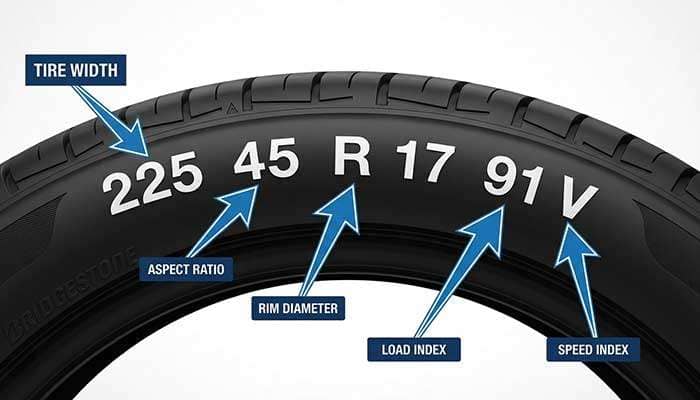
The load index indicates the maximum weight a properly inflated tire can safely carry. This numerical value appears after the rim diameter in the tire size designation. For instance, in P215/55R16 91H, "91" represents the load index.
A tire with load index 91 supports a maximum of 1,356 pounds. Four such tires could support up to 5,424 pounds when properly inflated. Never choose replacement tires with lower load indexes than your vehicle manufacturer recommends.
Speed ratings indicate the maximum speed at which a tire can safely carry its maximum load. Letters after the load index range from L (75 mph) to Y (186 mph). Our example P215/55R16 91H shows "H" indicates a maximum safe speed of 130 mph.
Choose tires with equal or higher speed ratings than originally specified. If different speed-rated tires must be used, install matching pairs on the same axle. Your vehicle's maximum speed becomes limited to the lowest-rated tire.
Incompatible tire and rim combinations compromise vehicle stability and control. A tire mounted on too narrow a rim risks inadequate bead seating, leading to sudden air loss. Tires too wide for the rim distribute pressure unevenly, resulting in unpredictable handling and accelerated wear.
Incorrect tire and rim pairing affects braking efficiency and negatively impacts steering response. Every car is engineered to function optimally with four tires of identical size, construction, and tread design.
Proper tire and rim compatibility ensures even load distribution, optimal contact with the road surface, and predictable handling during emergency maneuvers. This compatibility directly affects both vehicle performance and passenger safety.
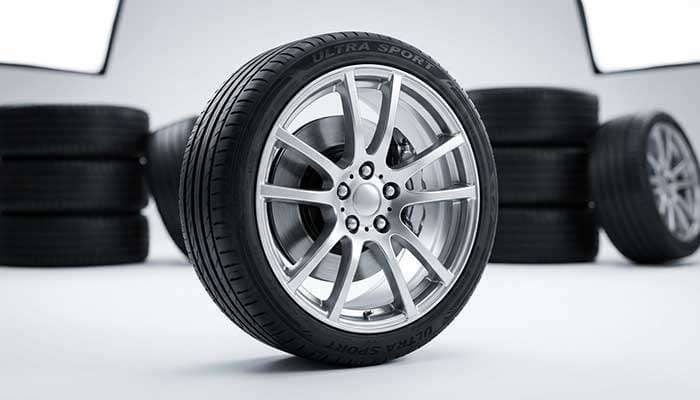
Customizing your vehicle's rim size offers both aesthetic and performance benefits. The right modification can transform your ride's appearance while enhancing specific driving characteristics.
Upsizing means installing wheels larger than your factory setup—typically increasing diameter while maintaining similar overall tire dimensions. Car enthusiasts choose this modification primarily for visual impact, as larger wheels create a sportier, more aggressive stance. Beyond looks, upsizing can sharpen handling by reducing tire sidewall flex during cornering. This improvement comes from the lower-profile tires typically paired with larger wheels.
Consider upsizing if you prioritize:
Enhanced dry-road handling and cornering stability
Improved brake performance (larger wheels can accommodate bigger brake components)
A more customized appearance
However, larger wheels add weight—increasing strain on your engine and potentially reducing fuel efficiency. The thinner sidewalls offer less cushioning, resulting in a harsher ride over bumps and potholes.
Many experts recommend downsizing for winter driving. Smaller wheels allow for tires with taller sidewalls that better absorb impacts from winter-damaged roads. Narrower winter tires cut through snow more effectively than wider ones, providing superior traction.
For winter use, consider reducing rim diameter by one inch (17-inch summer wheels to 16-inch winter wheels, for instance). This modification allows for more sidewall height while maintaining proper overall diameter.
Off-road enthusiasts similarly benefit from downsizing, as taller sidewalls provide better deflection over rough terrain and protect rims from rock damage.
Changing wheel size affects several vehicle systems. Most importantly, altering the overall tire diameter impacts speedometer accuracy. A 3% increase in diameter causes your speedometer to read approximately 3% slower than your actual speed. For example, at a displayed 60 mph, you might actually be traveling closer to 62 mph.
Plus-sizing (increasing wheel diameter while decreasing tire sidewall) helps maintain proper overall diameter and preserve speedometer accuracy. Staying within 3% of your original tire diameter preserves your vehicle's RPM, engine timing, and fuel economy.
Finding the perfect rim size requires accurate vehicle specifications. Your vehicle's exact requirements—not general assumptions—should guide your selection process.
The most reliable source for rim specifications is often stamped on your current wheels. Check the backside using a flashlight—you'll find markings like "18×7.5J" (diameter × width) alongside offset values like "ET45". Vehicle manufacturers also provide rim size information in the owner's manual, which includes recommended tire and wheel combinations specific to your vehicle's year, make, model, and trim level.
Your driver-side door jamb contains essential information. This sticker typically displays recommended tire pressure alongside original equipment tire size. The last number in your tire code (such as P235/60R18) indicates your wheel diameter in inches. Some vehicle placards explicitly list factory wheel sizes for both front and rear axles.
Start by identifying your vehicle's trim level, typically found as a badge on your trunk or tailgate. Your VIN provides another reliable method—use a VIN decoder tool to access your exact specifications. At Performance Plus Tire Performance Plus Tire, we have the most advanced fitment database that ensures proper compatibility based on your vehicle details.
Seek professional guidance when changing wheel sizes significantly. Issues like PCD (Pitch Circle Diameter)—the distance between stud holes—require precise measurement. We can verify critical measurements including center bore, backspacing, and offset that directly impact safety and performance. Remember that improper wheel sizing can lead to reduced turning radius, clearance issues, and accelerated wear.
Choosing the right rim size stands as one of the most important decisions for your vehicle's performance, safety, and appearance. We've covered the essential aspects of rim sizing that every car owner needs to understand before making modifications. Properly sized wheels ensure optimal handling, prevent unnecessary wear on suspension components, and maintain accurate speedometer readings.
Your vehicle was carefully engineered with specific wheel dimensions in mind. Deviating too far from manufacturer specifications can impact ride quality and safety. Always verify crucial measurements such as diameter, width, offset, and bolt pattern before purchasing new rims.
Tire and rim compatibility must never be overlooked. The right combination preserves handling characteristics while maintaining appropriate load capacity for your vehicle's weight. Whether upsizing for improved appearance and handling or downsizing for winter driving conditions, maintaining proper overall diameter helps preserve your vehicle's performance characteristics.
Take time to consult vehicle-specific resources like door jamb stickers, owner's manuals, or professional wheel specialists when uncertain about fitment issues. These simple steps prevent costly mistakes and ensure your new wheels enhance rather than compromise your driving experience.
Your vehicle deserves wheels that complement its engineering while reflecting your personal style. With the knowledge from this guide, you can confidently select rims that deliver the perfect balance of form and function—creating a safe, stylish ride you'll enjoy for years to come.
Understanding proper rim sizing is crucial for vehicle safety, performance, and longevity. Here are the essential insights every car owner should know:
• Measure precisely using manufacturer specs - Check door jamb stickers, owner's manual, or wheel stampings for exact diameter, width, offset, and bolt pattern requirements.
• Match tire and rim compatibility exactly - Rim diameter must match tire diameter perfectly, while width should fall within manufacturer-approved ranges for safety.
• Consider the trade-offs of sizing changes - Upsizing improves handling but reduces ride comfort; downsizing enhances winter performance and cushioning.
• Maintain overall diameter within 3% - Staying close to original tire diameter preserves speedometer accuracy, fuel economy, and vehicle performance characteristics.
• Consult professionals for significant changes - Complex measurements like offset, backspacing, and center bore require expert verification to prevent clearance issues and safety problems.
When in doubt, stick with manufacturer specifications or seek professional guidance. The right rim size enhances your vehicle's performance while maintaining the safety standards your car was engineered to deliver.
To find the right rim size, check your vehicle's owner's manual, door jamb sticker, or current wheels for specifications. Key measurements include diameter, width, offset, bolt pattern, and center bore. You can also use online fitment tools or consult a professional wheel specialist to ensure proper fit.
The 3% rule suggests keeping the overall tire diameter within 3% of the original when changing wheel size. This helps maintain speedometer accuracy, proper engine timing, and fuel economy. When upsizing wheels, choose tires with a lower profile to keep the total diameter close to the original.
Rim size impacts various aspects of vehicle performance. Larger wheels can improve cornering and brake performance but may reduce ride comfort. Smaller wheels often provide better acceleration and a smoother ride. The ideal size depends on your priorities between handling, comfort, and esthetics.
When choosing new rims, focus on diameter, width, offset, bolt pattern, and center bore. These measurements ensure proper fitment, clearance, and compatibility with your vehicle's suspension and brakes. Always verify these specifications match your vehicle's requirements or fall within the recommended range.
Moderate upsizing or downsizing can be safe if done correctly. Stay within the manufacturer's recommended range, typically within 1-2 inches of the original diameter. Ensure the new wheels maintain proper load capacity and don't interfere with brakes or suspension components. For significant changes, consult a professional to avoid compromising safety or performance.



