
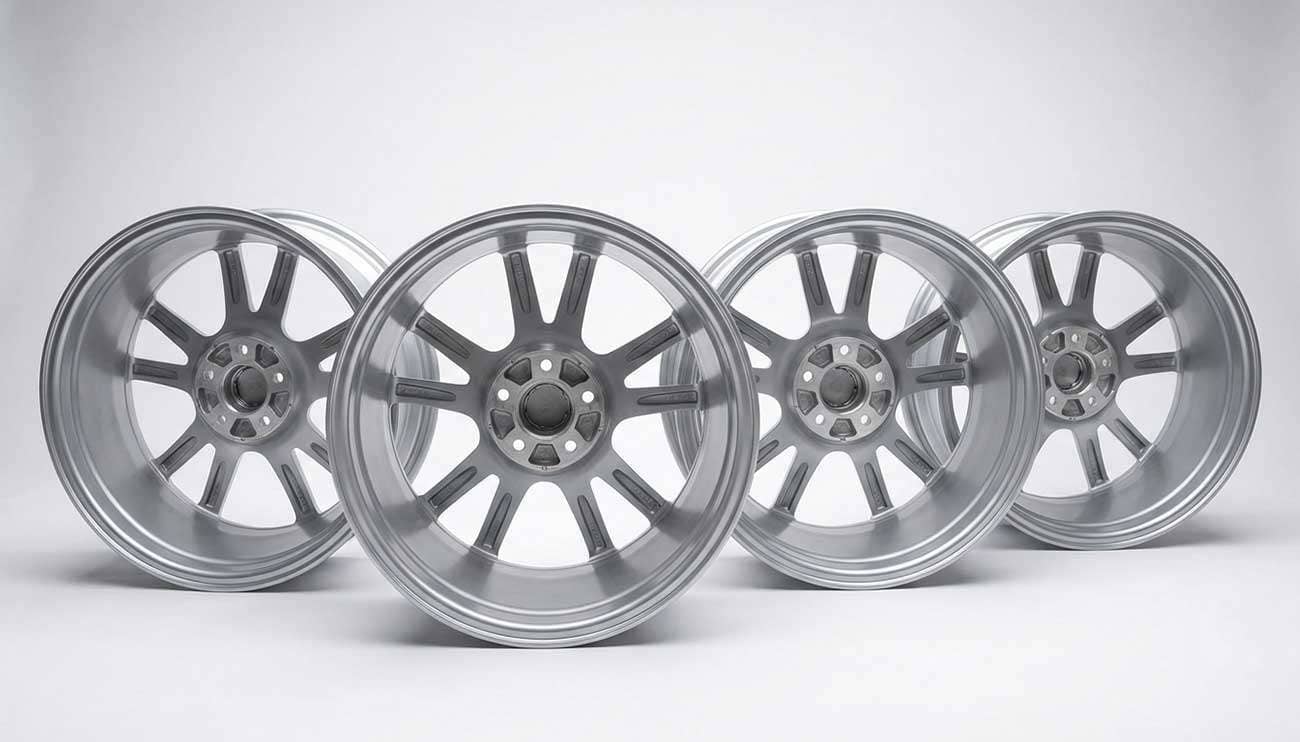
The 5x120 bolt pattern appears on some of the most popular vehicles on the road today, especially luxury and performance models. This specific wheel configuration features five bolt holes arranged in a circle with a diameter of 120mm.
Finding the right wheels for your vehicle starts with understanding bolt patterns. The 5x120 pattern has become a standard across prestigious brands including BMW, Acura, Bentley, Cadillac, and Chevrolet. BMW leads the pack with 31 different models using this bolt pattern, while Cadillac offers 11 models and Chevrolet has 9 models with the same configuration.
Popular BMW models like the 3 Series from 1986 to 2019, the M3 from 1986 to 2018, and the X5 from 1999 to 2018 all share the 5x120 bolt pattern. This pattern extends to various Land Rover models as well, creating excellent compatibility with aftermarket wheel designs.
We'll guide you through everything you need to know about 5x120 wheels and help you find the perfect match for your vehicle. Understanding this bolt pattern opens up a world of wheel options that can transform your vehicle's appearance while maintaining proper fitment and safety.
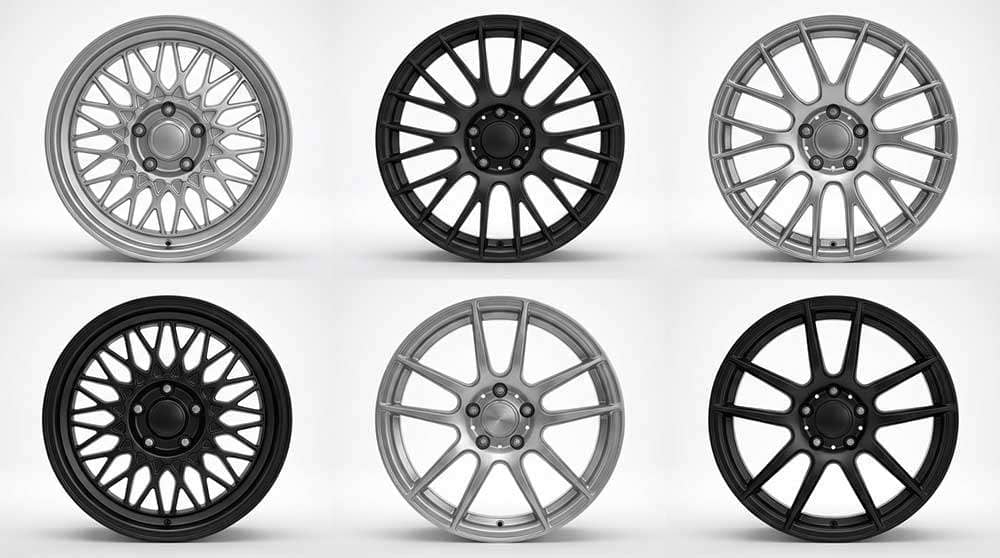
The bolt pattern serves as the foundation for proper wheel fitment. The 5x120 designation tells you exactly how your wheels connect to your vehicle - five bolt holes positioned in a circle measuring 120 millimeters across.
Bolt pattern numbers work like a simple code that reveals everything you need to know about wheel compatibility. The first number represents the total bolt holes on your wheel. The second number gives you the precise diameter measurement in millimeters of the circle formed by those bolt hole centers.
This pattern acts as your vehicle's unique fingerprint for wheel selection. Your new wheels must match this pattern exactly to ensure safe, proper fitment. Even tiny mismatches create serious problems - dangerous vibrations, poor handling, and potential wheel failure.
Understanding these numbers helps you identify which aftermarket wheels will work with your specific vehicle. This knowledge becomes essential when upgrading wheels, as the wrong pattern compromises both safety and performance.
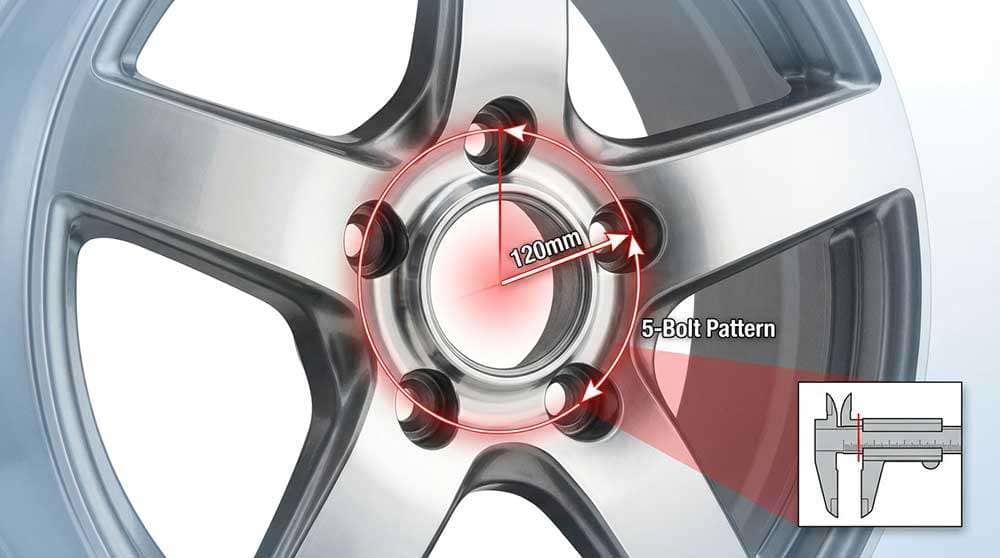
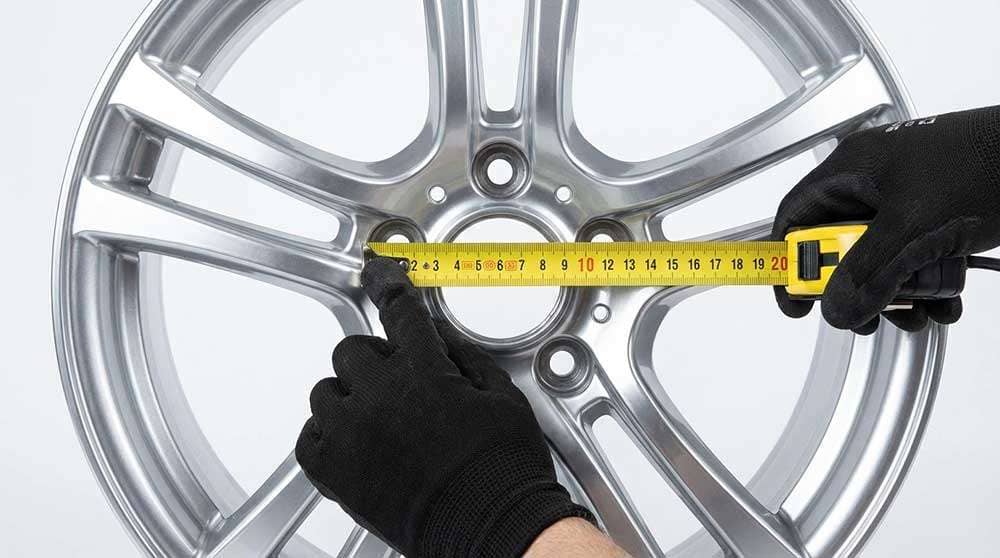
Measuring a 5-lug pattern requires a specific technique since the holes don't line up directly across from each other. Here's how to verify your 5x120 pattern:
Count the bolt holes to confirm exactly 5 holes in a circular arrangement
Pick one bolt hole, then skip the next hole and go to the following one
Measure from the center of your starting hole to the outer edge of the target hole
A true 5x120 pattern will measure exactly 120 millimeters
Professional shops use bolt pattern templates or digital calipers for precision measurements. These tools eliminate guesswork and prevent costly mistakes when ordering new wheels.
The 5x120 configuration has earned its popularity through widespread adoption by premium manufacturers. This pattern appears consistently across BMW, Land Rover, Chevrolet, Honda, and Cadillac lineups. BMW's extensive use throughout their model range demonstrates the pattern's reliability.
The 5-lug design offers superior strength compared to 4-lug patterns, making it perfect for performance vehicles that demand higher load capacity and stability. This extra strength translates to better handling and improved safety during spirited driving.
The pattern's popularity has created an extensive aftermarket ecosystem. Enthusiasts can choose from thousands of wheel options spanning every price range, finish, and construction method. From lightweight cast wheels for daily driving to premium forged options for track use, the 5x120 pattern delivers exceptional variety.
This versatility spans multiple vehicle categories - luxury sedans, performance coupes, SUVs, and even some sports cars. Whether you're commuting to work or tackling weekend adventures, the 5x120 pattern supports diverse driving needs. This flexibility explains why manufacturers continue expanding 5x120 applications across their vehicle lineups.
Proper 5x120 fitment ensures your vehicle maintains its engineered performance characteristics and safety standards. When correctly matched, these wheels deliver the precise handling response that manufacturers designed into your vehicle.
Getting your bolt pattern right isn't just about looks—it's about keeping you safe on the road. Mismatched bolt patterns create serious safety hazards that can lead to wheel failure and dangerous driving conditions.
Wrong bolt patterns put you and your passengers at risk every time you drive. Even small mismatches between your wheel and hub patterns cause dangerous vibrations, uneven tire wear, and poor handling. When bolt patterns don't line up correctly, wheel hardware can loosen over time, potentially causing wheels to separate from your vehicle.
Poor fitment affects more than just comfort. Professional automotive specialists consider proper bolt pattern matching essential for safe vehicle operation. Incorrectly fitted wheels make your car less responsive during emergency situations when you need precise control most.
Here's what happens when bolt patterns don't match:
Tires wear unevenly and need premature replacement
Handling becomes unpredictable, especially in challenging driving conditions
Severe mismatches can cause complete wheel detachment
Incorrect bolt patterns stress your wheels and vehicle components beyond their design limits. Wheels that don't seat properly against the hub create uneven pressure points that damage expensive parts over time.
This stress extends to your suspension system, causing accelerated wear and costly repairs. Steering components also suffer when wheels aren't properly mounted, reducing responsiveness and increasing maintenance expenses.
Proper installation requires correct torque specifications. Check your owner's manual for exact requirements—most passenger vehicles need approximately 100 ft-lbs of torque. Always re-torque your wheels after 50-100 miles of driving as components settle into place.
Accurate measurement matters because even 1-2mm differences can make wheels unsafe to install. You have several reliable options for verifying your pattern:
Start with your owner's manual or contact your vehicle manufacturer directly for official specifications. You can also examine your current wheels by counting the lug holes and measuring the circle diameter.
For precise measurement of a 5-lug pattern, use a bolt pattern gage designed for this purpose. Without specialized tools, measure from the center of one lug hole to the outer edge of another lug hole after skipping one hole.
Accuracy is critical regardless of your measurement method. Common mistakes include measuring from wrong points on lug holes or assuming wheels with the same number of lugs are interchangeable. When you're unsure about complex fitment situations, professional consultation provides valuable peace of mind.
The 5x120 bolt pattern spans across many vehicle segments, from luxury sedans to performance cars. Knowing which specific models use this pattern helps when shopping for aftermarket wheels or replacing damaged ones. Here are eight popular vehicles that share this bolt pattern.
The BMW 3 Series stands out as one of the most consistent users of the 5x120 pattern. Multiple generations including the E30, E36, E46, E90/E91/E92/E93, and F30/F31/F35 models all share this specification. This consistency from 1990 through 2019 creates excellent wheel interchangeability across BMW vehicles. Most 3 Series models feature a 72.6mm hub bore for a precise, vibration-free fit.
Modern Camaros from the fifth and sixth generations (2010-present) utilize the 5x120 bolt pattern across all trim levels. These performance vehicles accommodate wheels from 17" to 22" in diameter with widths ranging from 7" to 13". Many Camaro owners choose staggered setups with wider rear wheels for improved traction and handling.
Honda made a significant change with the Civic Type R, adopting the 5x120 pattern starting with the FK2 generation (2015-2017) and continuing through the FK8 (2017-2022) models. The 2017+ FK8 Type R comes factory-equipped with 20x8.5" wheels featuring +60 offset. These high-performance models use a 64.1mm hub bore with M14x1.5 lug studs.
Range Rover has maintained the 5x120 bolt pattern since the P38A generation debuted in 1994. This specification carries through multiple generations including the L322 (2002-2012), L405 (2012-2022), and current L460 models. Range Rovers typically use M14 x 1.5 lug nuts with wheel sizes ranging from 19x8 to 22x9.5.
The CTS sedan featured the 5x120 pattern throughout its second and third generations. These models, particularly the 2014-2019 variants, remain popular choices for custom wheel upgrades. Factory wheel sizes ranged from 16" to 20" with options for chrome, black, and machined finishes.
Every Tesla Model S produced between 2012 and 2022 uses the 5x120 bolt pattern. This applies to all variants including base models, Long Range, and Performance editions. Tesla standardized on a 64.1mm center bore across the entire Model S lineup.
Lexus adopted the 5x120 pattern for the flagship LS sedan beginning with the XF40 generation in 2006. This specification continued through the 2017 model year. Earlier LS models from 1989-2006 used the smaller 5x114.3 pattern before switching to the wider 5x120 configuration.
The MDX switched to 5x120 for the 2017 model year refresh and continues with this pattern today. Both the YD3 facelift (2017-2021) and current YD4 generation (2021-present) share this specification. Current models feature 20x8.5 inch wheels with offsets typically ranging from 45-55mm.
Wheel shopping can get confusing, especially when dealing with bolt pattern specifications. These frequently asked questions address the most common concerns about 5x120 wheels.
These measurements are nearly identical but technically different. The 5x120 pattern measures exactly 120mm in diameter, while 5x4.75 converts to 120.65mm. This creates a tiny difference of 0.65mm overall or about 0.325mm on each side.
The difference equals roughly the thickness of four sheets of paper. Most wheel manufacturers list these patterns together (5x120/5x4.75) on their packaging. For practical purposes, they're compatible in most situations, though they remain technically distinct measurements.
You'll find 5x120 bolt patterns across multiple premium brands. This configuration appears on Acura, BMW, Cadillac, Chevrolet, and select Bentley models. BMW uses this pattern more than any other manufacturer, with 31 different models featuring 5x120 wheels.
Some manufacturers mark 5x120 as 5x4.72 inches. This represents the same measurement converted to imperial units for American markets.
No, 5x120 wheels won't fit a Ford Mustang. Mustangs use a 5x114.3 pattern (also called 5x4.5), which differs significantly from 5x120. The center bore sizes also don't match - Mustangs require a 70.5mm center bore compared to other specifications for 5x120 vehicles.
Attempting to force incompatible patterns creates serious safety risks and improper fitment.
Most modern BMW models use the 5x120 bolt pattern, including the 1, 2, 3, 4, 5, 6, and 7 Series. This covers chassis codes like E8X, E9X, F3X, F1X, and F2X generations.
While 5x120 is BMW's standard pattern, proper wheel fitment requires matching the center bore as well, which measures 72.6mm on most BMW models. Even wheels with the correct 5x120 pattern may not work on BMWs without the proper center bore.
For BMW applications, premium manufacturers like BBS, Vorsteiner, HRE, Apex, and BC Forged offer wheels specifically engineered for BMW fitment requirements.
Finding the perfect 5x120 wheels for your vehicle doesn't have to be complicated. We recommend using these proven methods to ensure you get the right fitment every time.
Online fitment tools take the guesswork out of wheel selection. Wheel-Size.com allows you to search by vehicle make, model, year, or specific tire dimensions to identify compatible 5x120 wheels. These tools help you narrow down your options quickly and efficiently.
Wheel visualizers are particularly helpful - they show you exactly how different 5x120 rims will look on your car before you make a purchase. You can experiment with different styles, finishes, and sizes to find the perfect look for your vehicle.
Comparison calculators provide even more detailed information. They show the difference between your current setup and potential new wheels, highlighting changes in clearance and positioning. This helps you understand how the upgrade will affect your vehicle's appearance and performance.
Your vehicle identification number (VIN) contains the exact specifications you need for proper wheel fitment. Cross-reference your VIN with manufacturer specifications to confirm the requirements for your specific vehicle.
Beyond the bolt pattern, you need to verify several other important details. Check center bore measurements, load ratings, and proper certification markings like JWL/VIA stamps. These specifications ensure your new wheels will perform safely and correctly.
Consider the construction type that matches your driving needs. Cast wheels work well for daily driving, flow-formed wheels offer better performance, and forged wheels provide maximum strength for track use.
Professional consultation can save you time and money, especially with 5x120 patterns that appear on so many different vehicle makes. Fitment specialists understand the nuances of different applications and can provide personalized recommendations based on your specific vehicle and desired look.
Most wheel retailers offer expert advice via phone or email. Take advantage of these resources to avoid costly fitment mistakes. Many specialists have years of experience and can guide you toward wheels that will work perfectly with your vehicle.
Shops that specialize in European vehicles often have extensive experience with 5x120 applications, particularly for BMW models. Their expertise can be invaluable when selecting wheels for luxury and performance vehicles.
The 5x120 bolt pattern opens up excellent wheel options across many popular vehicles. This configuration appears on prestigious brands like BMW, Cadillac, Land Rover, and Chevrolet, giving you access to a wide selection of aftermarket wheels at competitive prices.
Proper bolt pattern matching protects your investment and ensures safe driving. Mismatched patterns create dangerous conditions that can compromise your vehicle's performance and put you at risk. Taking time to verify your specifications before purchasing saves you from costly mistakes and potential safety issues.
Center bore measurements, offset specifications, and load ratings work together with bolt patterns to create proper wheel fitment. A wheel that fits one 5x120 vehicle may not work correctly on another without matching these additional specifications. This is why professional guidance makes a difference when selecting wheels.
We recommend using manufacturer specifications as your starting point for any wheel purchase. Online fitment tools provide helpful guidance, but consulting with wheel experts ensures you get the right combination of style, performance, and safety for your specific vehicle.
Quality 5x120 wheels can transform your vehicle's appearance while maintaining the handling characteristics and performance you expect. The time you invest in proper selection pays off with wheels that look great, perform well, and provide years of reliable service.
Ready to upgrade your ride? Start with your vehicle's exact specifications and work with reputable wheel retailers who understand 5x120 fitment requirements. Your vehicle deserves wheels that fit perfectly and enhance both its appearance and performance.
Understanding the 5x120 bolt pattern is essential for safe wheel selection and proper vehicle performance. Here are the critical insights every car owner should know:
• 5x120 bolt pattern features 5 holes in a 120mm diameter circle - found on BMW, Chevrolet Camaro, Honda Civic Type R, and Tesla Model S among others
• Exact bolt pattern matching is crucial for safety - even minor mismatches can cause dangerous vibrations, wheel detachment, and compromised handling
• Measure accurately using proper techniques - for 5-lug patterns, skip one hole and measure from center to outer edge for precise 120mm confirmation
• 5x120 and 5x4.75 are nearly identical but technically different - 0.65mm variance means they're often interchangeable but not perfectly equivalent
• Use manufacturer specs and fitment tools before purchasing - verify center bore, offset, and load ratings beyond just bolt pattern for optimal performance
Proper wheel fitment goes beyond matching bolt patterns - it ensures your vehicle maintains its engineered safety standards and performance characteristics while providing the esthetic upgrade you desire.
The 5x120 bolt pattern is commonly found on vehicles from BMW, Chevrolet, Honda, Land Rover, Cadillac, and Tesla. BMW is particularly known for extensively using this pattern across many of its models.
While often used interchangeably, these patterns have a slight difference. The 5x120 pattern measures exactly 120mm in diameter, whereas 5x4.75 is 120.65mm. This 0.65mm difference is minimal and they are generally compatible in most situations.
To measure a 5x120 pattern, count five bolt holes arranged in a circle. Then, measure from the center of one bolt hole to the outer edge of another bolt hole (after skipping one hole). The measurement should be 120mm for a 5x120 pattern.
No, 5x120 wheels are not compatible with Ford Mustangs. Mustangs use a 5x114.3 bolt pattern, which is significantly different from the 5x120 configuration. Attempting to use incompatible patterns can lead to serious safety issues.
When selecting new wheels, you should also consider the center bore size, offset, load ratings, and wheel construction type. It's important to verify these specifications with manufacturer data or consult a wheel fitment expert to ensure proper compatibility and performance.



