
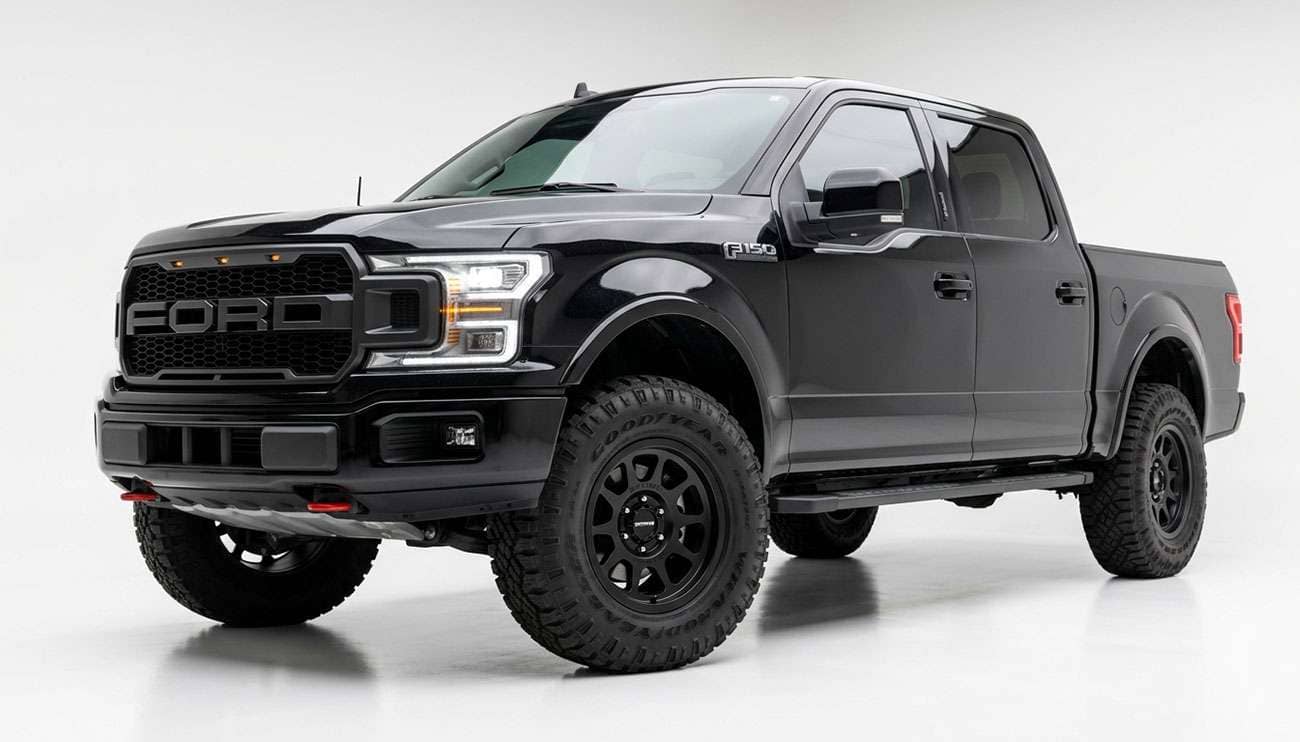
Short version, and I'll stand behind it: a leveling kit does not make room for a 35. It raises your frame while the truck is sitting still. The tire still swings up to the same place in the fender when the suspension compresses, because the kit never moved the bump stop and never moved the fender. You bought clearance you can see in the driveway and none of the clearance you actually needed.
Most write-ups on this answer with a height ladder. Two inches gets you a 33, three inches gets you a 35, that sort of thing. I've been fitting wheels and tires to trucks since 1971, and that ladder is why a guy calls me in November swearing his 35s cleared fine all summer until he backed down a steep driveway with a load of firewood in the bed. Height at rest is not the number that decides this. Travel is.
Here's what each thing on the shopping list actually buys you.
Modification |
Clearance at rest |
Clearance at full compression |
What it costs you |
|---|---|---|---|
2 in. strut spacer or cranked torsion keys |
About 2 in. gained |
None |
Steeper CV and ball joint angles, alignment, firmer ride |
3 in. level with upper control arms |
About 3 in. gained |
None from the height; the arms buy back bump stop clearance |
Arms, alignment, faster front end wear |
Bump stop spacers |
None |
Real, equal to the spacer thickness |
Less suspension travel, harsher over big hits |
Fender liner trim and pinch weld roll |
Some |
Real, exactly where the contact happens |
An afternoon and a heat gun; permanent |
Higher positive offset wheel, or keeping factory offset |
Some outboard |
Real at the fender lip; costs you inboard room |
Nothing, if you buy right the first time |
4 to 6 in. suspension lift |
4 to 6 in. gained |
Real, because the whole knuckle and arm assembly moved down |
The most money, driveline angles, and a taller step in |
Look down that middle column. Four of those six do something at full compression and the leveling kit is not one of them. That's the whole article in one table, but stay with me, because understanding why is what keeps you from spending twice.
Your Silverado left the factory with rake. Nose down, tail up, usually about two inches of difference. GM does that on purpose so the truck sits level when you drop a thousand pounds in the bed. It's a good engineering decision and it looks a little goofy in a parking lot, which is why the leveling kit business exists.
On the newer trucks a level is a spacer that sits on top of the strut assembly. On the older torsion bar trucks it's cranking the keys, or new keys that index differently. Either way the mechanism is the same: you're pushing the lower control arm further down at rest so the frame sits higher above it.
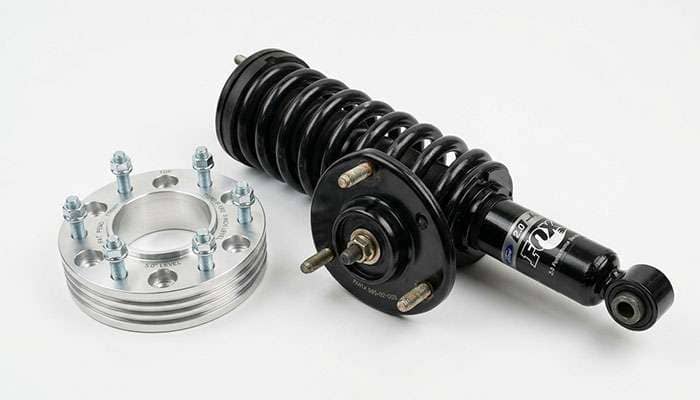
Now here's the part that almost never gets said out loud. The bump stop did not move. It's still bolted to the frame in the same spot, and the control arm still travels up until it hits that stop. The fender didn't move either, because it's hung on the same body. So the highest point your tire can reach inside that wheel well is exactly where it was before you spent the money.
What you changed is where the truck rests inside its own travel. Before the kit, the suspension sat somewhere in the middle. After the kit, it sits closer to full droop. You gained ride height and you gained the distance the truck can compress before it bottoms out, which is not the same thing as gaining room for a tire. It just means the tire takes a bigger bump to get all the way up there. It still gets all the way up there.
Most leveling kits are sold on the promise of clearance for larger tires, and there's truth in it as far as it goes. It clears a larger tire when the truck is parked, straight, and unloaded. That covers a good percentage of how most trucks live. It does not cover backing out of a steep driveway with the wheel cranked, or the moment the front end loads up under braking, or anything off pavement.
Go read any Silverado forum thread on this and you'll find the same sentence a dozen times: it doesn't rub going forward, only in reverse at full lock. Guys treat it like a quirk. It isn't. It's the clearest evidence there is that the leveling kit didn't do what they think it did.
Three things have to stack up before a tire touches anything. The suspension has to compress, the wheel has to be turned, and on a lot of trucks the steering has to be turned the direction that swings the tire's leading edge into the liner. Back down a driveway lip with the wheel cranked and you get all three at once. That's the worst case, and it's the only case that matters, because fitment is decided by the worst case and nothing else.
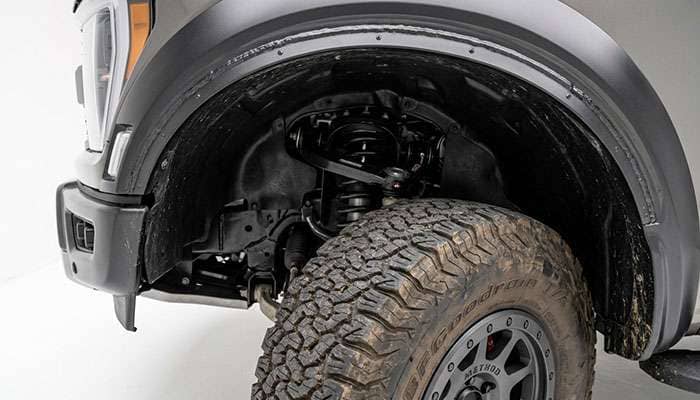
On an independent front suspension the tire and the fender are tied together through the body. As the arm cycles up, the tire climbs toward a fender that is holding still. Steering angle then swings the tire's contact patch and shoulder forward and back inside that arc, which is why a tire that has an inch of daylight above it can still put a scuff on the liner behind the front corner.
The truck that "cleared fine all summer" cleared fine because nobody stuffed the suspension all summer. Put weight in the bed, hit a dip, turn the wheel, and the geometry finds the tire. If you're already hearing it, our walkthrough on why your tires are rubbing helps you locate the contact before you start cutting anything you can't put back.
Let me do the arithmetic, because it's smaller than people expect and it changes the conversation.
If you're on a modern Silverado 1500 with the 20-inch wheels, your factory tire is a 275/60R20. Run that out and it's a hair under 33 inches tall. You are already running a 33 and nobody ever told you that. The 22-inch trucks are the same story at 275/50R22, also right around 33 inches.
Going to a 35 adds two inches of diameter. Only half of that goes up. One inch. That's the entire vertical difference between the tire you have and the tire you want, and it's the number a two-inch leveling kit is supposedly solving.
But the 35 also adds width, and that's where the real money is. A 275 section is about 10.8 inches across. A 35x12.50 is 12.5 inches across. That's an inch and two thirds of extra width, roughly half of it going outboard toward the fender lip and half of it going inboard toward the upper control arm and the frame. You did not gain an inch of problem. You gained an inch of height and better than an inch and a half of width, and the leveling kit addressed neither one at the moment the suspension was compressed.
So can you do it on a level alone? Plenty of guys have, on factory offset wheels, with the liner trimmed and the mud flaps gone, and they drive on pavement and they're happy. Plenty of others did the same thing, bought a low-offset wheel to go with it, and ended up cutting sheet metal they didn't plan to cut. The level is not what decided which group they landed in. For the bigger picture on stepping up in diameter, our comparison of 31s vs 33s vs 35s tires lays out what each jump asks for, and the lift kit tire size chart covers where the real suspension work starts paying off.
Four things create clearance at the moment you need it. None of them is a strut spacer.
Your wheel offset. A Silverado 1500 runs somewhere around plus 24 millimeters of factory offset, which tucks the wheel inboard. Drop to a zero offset wheel and you've moved the tire most of an inch straight toward the fender lip before you touched the tire size. Go negative and you've moved it further. I have watched more 35-inch fitment projects go sideways over a wheel purchase than over anything else, and the fix costs nothing if you make the decision before the order goes in. Our guide to choosing 6-lug Chevy wheels covers the offset ranges worth shopping on this bolt pattern, and the Silverado 1500 aftermarket wheel guide gets into what the factory numbers are on each generation.
Worth knowing: aftermarket wheels tested to SAE J2530 have been through fatigue and impact testing that a no-name wheel has not. When you're hanging a 35 with a heavier carcass off it, that matters more than the finish does.
Trimming. The mud flaps go first and they're free. The plastic inner liner comes next, and a heat gun and a trim tool get you further than a knife does. The pinch weld is the folded seam along the bottom lip of the fender, and you roll it rather than cut it. That work happens exactly where the contact happens, which is more than you can say for anything you bolted to the strut.
Bump stop spacers. Nobody wants to hear this one because it sounds backwards. Adding a spacer to the bump stop limits how far the suspension can compress, which means the tire physically cannot reach as far up into the fender. That is real clearance at full compression, bought honestly, and the price is less travel and a firmer landing on big hits. On a truck that lives on pavement it's a reasonable trade. On a truck that works, think about it harder.
An actual suspension lift. Four to six inches of proper lift moves the whole knuckle, arm, and hub assembly down relative to the body. That changes the geometry rather than just the resting point, and it's why a real lift clears a 35 when a level doesn't. It also costs real money and changes your driveline angles, so it's a decision, not a bolt-on.
Everybody says "35s" like it's one tire. It isn't. The sizes people mean when they say 35 on a Silverado spread out more than you'd guess, and the spread is mostly in width and weight rather than height.
Size |
Actual diameter |
Section width |
Typical load index and capacity |
|---|---|---|---|
275/60R20 (common factory size) |
33.0 in. |
10.8 in. |
115, about 2,679 lb |
275/65R20 |
34.1 in. |
10.8 in. |
126, about 3,748 lb |
285/65R20 |
34.6 in. |
11.2 in. |
127, about 3,858 lb |
295/65R20 |
35.1 in. |
11.6 in. |
129, about 4,079 lb |
35x12.50R20 |
35.0 in. |
12.5 in. |
121 to 125, about 3,197 to 3,638 lb |
35x12.50R18 |
35.0 in. |
12.5 in. |
123 to 128, about 3,417 to 3,968 lb |
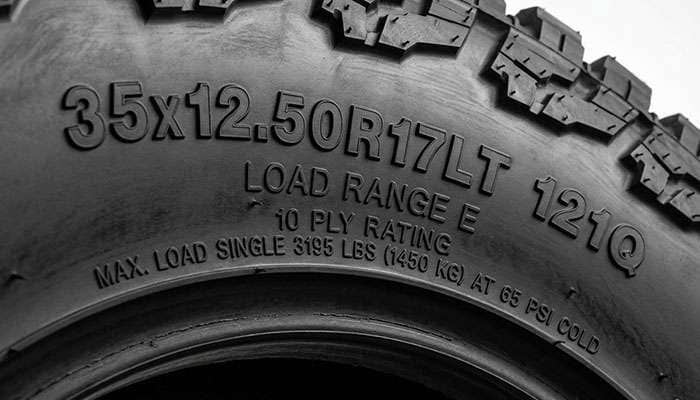
Two things jump off that table. The first is 295/65R20. It is a genuine 35 by diameter and it is nearly an inch narrower than a 35x12.50, which is the difference between trimming a liner and cutting a body mount. If your goal is the tall stance without the sheet metal work, that's the size I'd point you at first.
The second is the capacity column. Your factory tire is a passenger-rated tire carrying somewhere around 2,679 pounds. Every 35 on that list is a light truck tire carrying between three thousand and four thousand. That's a heavier carcass, stiffer sidewalls, and a tire that only reaches those numbers at its own rated inflation pressure, not at the number on your door jamb. Under FMVSS 110, the tires on each axle have to cover that axle's weight rating, and the placard pressure is calibrated to the tire that was on the truck when it left the line. Change the tire and you owe yourself a look at that tire's load and inflation table before you set your pressures. Our breakdown of 10-ply vs 12-ply load ratings gets into what those letters actually buy you.
I've pulled enough of these apart to know the order it goes in, and it always goes in the same order.
It starts as a scuff on the plastic liner and a noise you only hear in reverse. Ignore it and the liner tears at its clips, then it hangs, then it catches the tread every time the suspension loads instead of only at full lock. That's a twenty dollar part that costs you a hundred and fifty by the time it takes a fender clip with it.
Next the contact finds the pinch weld, and now you've got a folded steel edge working against a sidewall. Sidewall rubber is the thinnest structural area on the tire and it is the one area that cannot be repaired. Once that edge reaches the casing cords the tire is finished, no plug, no patch, no debate. If you're seeing shine or scuffing on a sidewall, read our piece on tire sidewall damage and whether it's safe to drive before your next trip out of town.
Then there's the guy who lets air out to soften the contact. I understand the instinct and it's the worst thing you can do. A light truck tire below its required pressure runs hot in the shoulder, wears the outer ribs off, and heat is what drives belt separation at highway speed. NHTSA has been pointing at underinflation as a leading cause of tire failure for years, and a 35 at passenger car pressure is underinflated no matter what the gauge says feels right.
Past that you're into the expensive stuff. Steering stops and tie rod ends take load they weren't drawn for. A cranked torsion bar or a tall spacer already put your ball joints and CV axles at a steeper angle, and contact at full lock adds to it. Front end parts on a leveled truck wear faster than a stock one, and that is true whether the tire rubs or not.
Every item on that list is avoidable, and not one of them is avoided by a leveling kit. They're avoided by picking a width your offset can carry, trimming the plastic where it actually contacts, and inflating the tire to what its own load table asks for.
Half an hour with a tape measure beats a week of reading forum threads where nobody lists their offset.
Read the door jamb. Write down the original tire size, the cold pressures, and the front and rear gross axle weight ratings. That's your target, not a suggestion.
Find your real wheel specs. Diameter, width, and offset are usually stamped on the back of the spokes or the inner barrel. If you bought the wheels, pull the invoice. Do not assume factory numbers unless the wheels are factory.
Measure your actual up-travel. Get the front wheel off the ground, then measure from the bump stop to the strike pad on the control arm. That gap is how far your tire can still climb toward the fender. Whatever you were told about your leveling kit, that measurement is the truth.
Pick the width before you pick the height. Every 35 on the market lands within a tenth or two of 35 inches. They do not land within an inch and a half of each other on width. The narrower 295-width 35 is the same height as a 35x12.50 and a whole different fitment job.
Check the load index against the placard. Confirm the tire covers your per-tire requirement, and remember that a light truck tire only delivers its rated number at its rated pressure.
Mock it up turned and loaded. Before you cut anything, put weight in the bed, cycle the steering to full lock both directions, and roll over a driveway lip slowly with somebody watching the fender. A tire that clears parked and straight has told you almost nothing.
Do you need a leveling kit for 35s on a Silverado 1500? You don't need one, and if you buy one expecting it to solve fitment, you're going to be back in my shop with a torn liner and a scuffed sidewall. Get one because you want the truck to sit level. That's an honest reason and it's a good-looking result. Just don't ask it to do a job it was never built for.
What actually gets a 35 under a Silverado is keeping your offset tucked in, choosing the narrower 35 if you'd rather not cut sheet metal, trimming the liner and rolling the pinch weld where the contact really is, and running the tire at the pressure its own load table calls for. Do those four things and a level becomes a styling choice instead of a load-bearing part of the plan.
When you're ready to shop the size your setup can actually carry, our off-road tire selection lets you line up diameter, width, and load range side by side before you commit.
On factory-offset wheels with the mud flaps removed and the fender liner trimmed, many owners run a 35 on a 2-inch level and are satisfied with it on pavement. The level itself is not what made it fit. It gained ride height at rest without changing where the tire sits at full compression, so contact at full lock under load is still possible. A narrower 35 such as a 295/65R20 makes the same setup considerably easier.
A 3-inch kit raises the nose further and usually requires aftermarket upper control arms to restore bump stop and ball joint clearance. The arms are doing useful work; the extra inch of static height is not adding clearance at compression. If you are going to spend at the 3-inch level plus arms, compare the total against a proper suspension lift, which does change the geometry.
Because that combination stacks suspension compression with maximum steering angle and swings the tire's leading shoulder into the liner. It is the worst case your front end can produce on pavement, and fitment is decided by the worst case rather than by how the truck sits parked. A tire that clears straight and level has not been tested yet.
On factory wheels and factory offset, most owners land around 33 to 34 inches with minor liner work, which is only a step or two above the roughly 33-inch tire the 20-inch trucks already wear. Stepping to a true 35 on stock height generally means trimming, keeping tucked-in offset, and accepting contact at full compression unless you also limit travel with bump stop spacers.
A 35 is roughly six percent taller than the factory 33, so the speedometer reads low and the truck feels a little lazier off the line. Most owners on the newer transmissions leave the gearing alone and correct the speedometer with a programmer. A truck that tows near its rating on 35s is the case where a mild ratio change earns its keep.
Only if your contact is inboard at the upper control arm or the frame. A spacer moves the tire outboard by its exact thickness, which buys inboard room and pushes the tire harder into the fender liner and pinch weld. If the rub is at the liner, a spacer makes it worse rather than better.



