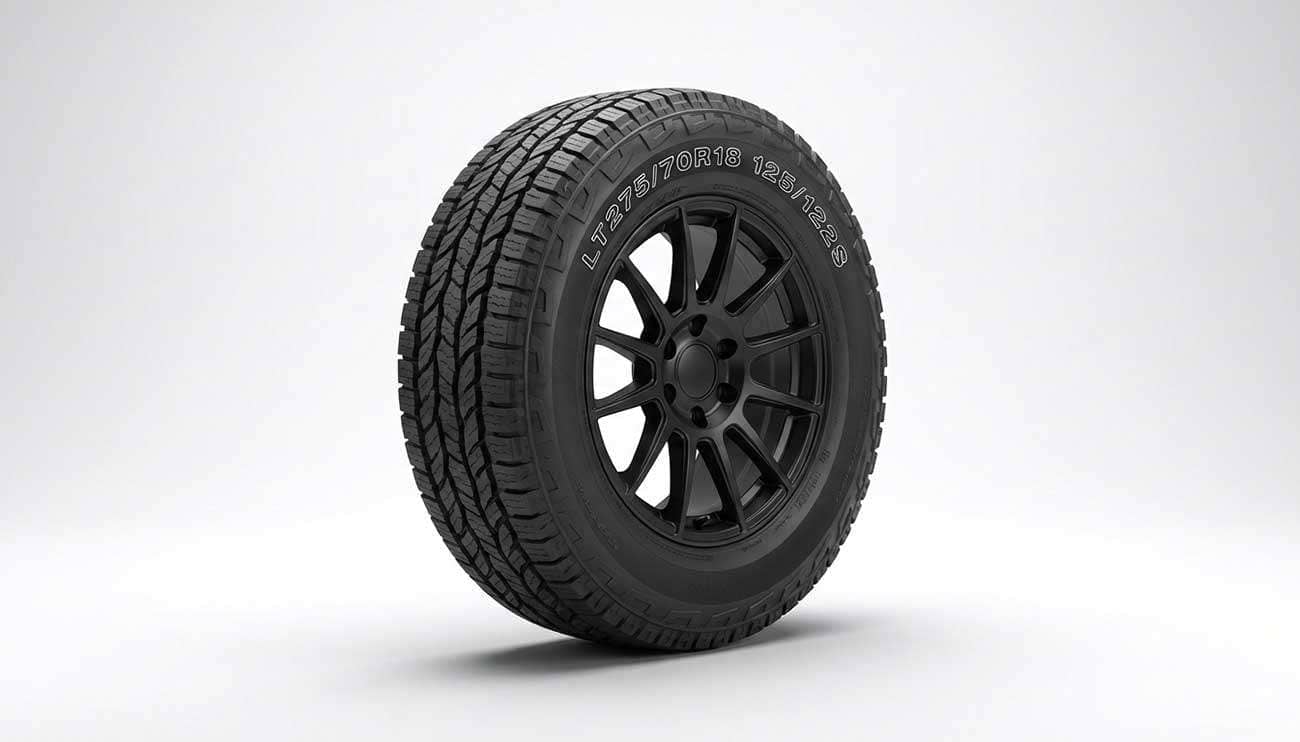
A 275/70R18 tire measures 33.16 inches (842.2 mm) in diameter, making it a popular choice for truck and SUV owners seeking improved ground clearance and enhanced appearance. The tire features a tread width of 10.8 inches (275 mm) and sidewall height of 7.6 inches (193 mm), providing the perfect balance between performance and comfort.
When it comes to selecting the right tire size, knowing these exact dimensions becomes crucial for proper fitment and vehicle performance. These tires complete a circumference of 104.17 inches (2645.85 mm) with approximately 608 revolutions per mile (378 revolutions per kilometer). Understanding how these measurements affect your vehicle's speedometer accuracy, ground clearance, and overall handling helps ensure you make the right choice.
This guide covers everything you need to know about 275/70R18 tire dimensions, including detailed comparisons with similar sizes and practical tips for using tire calculators. Whether you're upgrading from stock tires or replacing worn ones, these specifications will help you determine if this size fits your vehicle's requirements and driving needs.
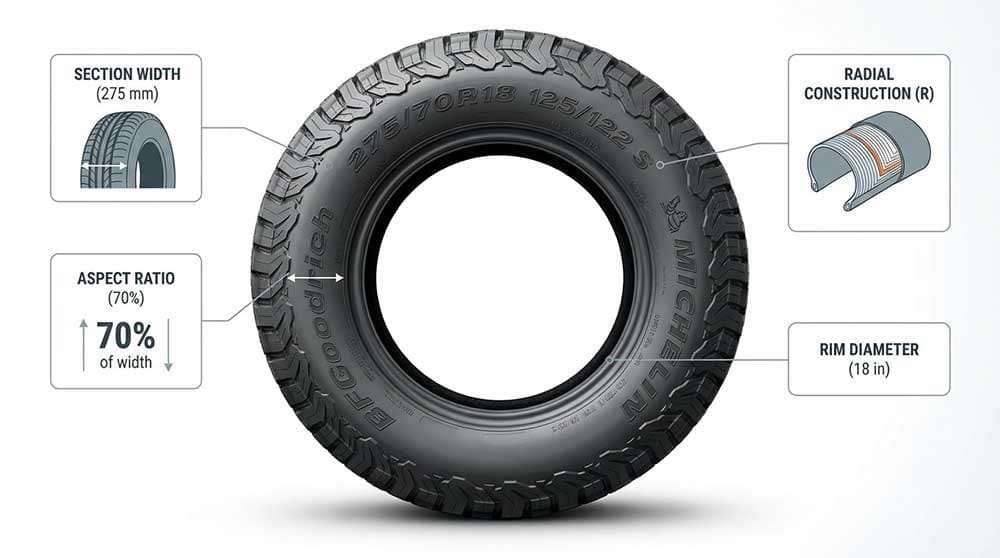
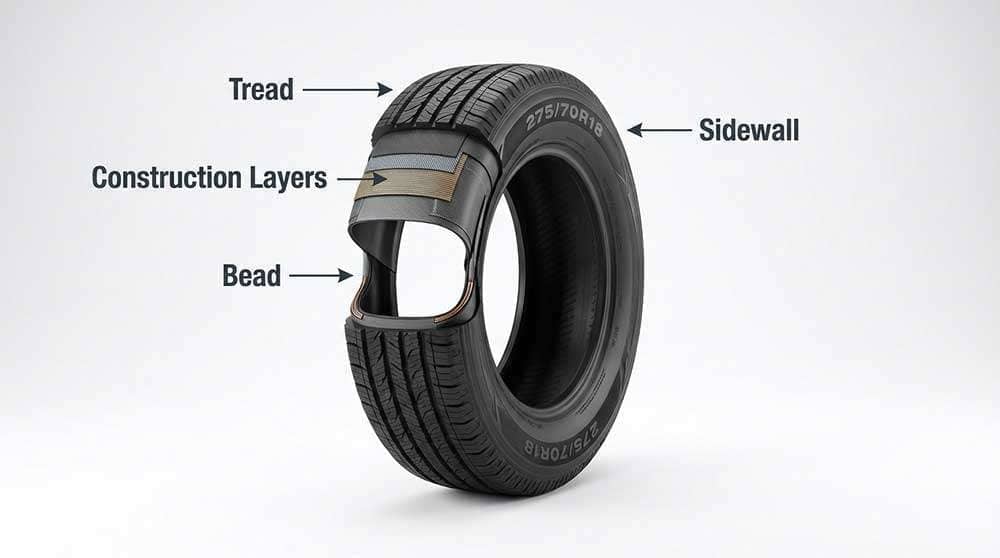
Understanding precise tire measurements requires breaking down each component of the 275/70R18 designation. These specifications directly impact vehicle performance, handling characteristics, and fitment requirements.
A 275/70R18 tire measures 33.2 inches (843 mm) from top to bottom when properly mounted and inflated. This overall diameter measurement determines ground clearance, affects speedometer readings, and influences vehicle appearance. For off-road applications, this additional height provides improved obstacle clearance compared to stock tire sizes. The diameter also affects your vehicle's effective gear ratio, changing how the engine and transmission work together.
The section width measures 10.8 inches (275 mm) across the tire's widest point. This first number in the tire designation tells you exactly how wide the contact patch will be. Wider contact patches improve stability during cornering and provide better traction when carrying heavy loads or towing. However, increased width can also affect fuel economy and may require wheel well clearance verification.
Sidewall height calculates to 7.6 inches (193 mm) using the 70% aspect ratio from the tire size. This measurement equals 70% of the section width (275 mm × 0.70 = 192.5 mm or 7.58 inches). Taller sidewalls provide better ride comfort by absorbing road impacts, while shorter sidewalls improve handling precision and steering response.
The circumference measures 104.2 inches (2647 mm), determining how far your vehicle travels with each wheel rotation. These tires complete approximately 608 revolutions per mile (378 revolutions per kilometer). This specification directly affects speedometer accuracy and odometer readings when switching from different tire sizes.
At Performance Plus Tire, we carry a wide selection of 275/70R18 tires that meet these exact specifications for various driving conditions and performance requirements.
Complete 275/70R18 Tire Dimensions:
Specification |
Inches |
Millimeters |
|---|---|---|
Overall Diameter |
33.2 |
843 |
Tread Width |
10.8 |
275 |
Sidewall Height |
7.6 |
193 |
Wheel Diameter |
18.0 |
457 |
Circumference |
104.2 |
2647 |
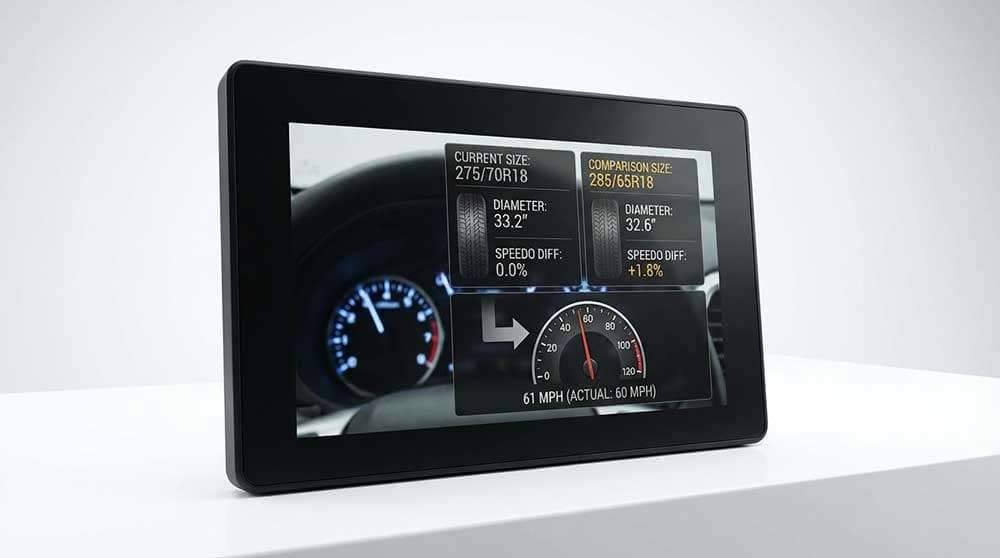
Upgrading to 275/70R18 tires affects your vehicle's performance in ways that extend far beyond appearance. Understanding these changes helps you prepare for the differences you'll experience behind the wheel.
Your speedometer will read slower than your actual traveling speed when you install 275/70R18 tires. The larger circumference causes each revolution to cover more distance than your vehicle's computer calculates for. When your dashboard shows 70 mph, your actual GPS-measured speed reaches 74-75 mph. This happens because your speedometer counts tire rotations rather than measuring true ground speed.
The error typically ranges from 3-4% with 275/70R18 tires compared to most stock tire sizes. You can correct this by using a speedometer calibration calculator or having a technician reprogram your vehicle's computer to match the new tire dimensions.
The larger tire diameter changes how your engine operates at highway speeds. With 275/70R18 tires and 3.73 gears, your engine turns fewer RPMs at 65 mph compared to smaller factory tires. This creates an effective gear change - your vehicle with 3.73 gears and these tires performs similarly to one equipped with 3.59 gears and stock-sized tires at cruising speeds. Based on gear ratio calculations, this typically results in a more relaxed engine operation during highway driving.
Most drivers experience a 0.5-1 mpg reduction in fuel economy after switching to 275/70R18 tires. This decrease stems from several factors:
Heavier tires demand more energy to accelerate and maintain speed
The effective gear ratio change may move your engine outside its most efficient RPM range
Increased rolling resistance, especially with aggressive tread designs
Acceleration feels slightly reduced due to the additional rotational mass, but highway cruising often improves thanks to the lower engine RPMs. The trade-off varies depending on your driving patterns and the specific tire construction you choose.
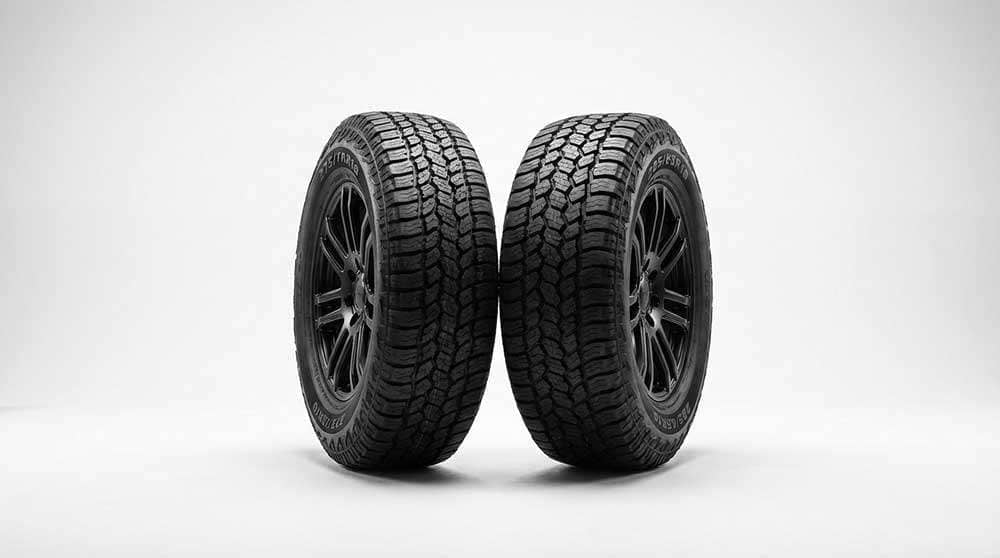
Selecting the right tire size means understanding how different options compare in real-world performance. These comparisons help you choose based on your vehicle's performance needs and appearance preferences.
The 285/70R18 offers a slightly larger footprint with a 33.71" diameter compared to 33.16" for the 275/70R18—a modest 1.7% increase. The width difference becomes more noticeable at 11.22" versus 10.83", giving you an additional 0.39" (10mm) of contact patch. This extra width provides improved stability during cornering and better load-carrying capacity. The sidewall height increases by 0.28" (7mm), with the 285/70R18 measuring 7.85" compared to 7.58" for the 275/70R18.
The 285/75R18 represents a significant step up in overall size, standing 34.83" tall versus 33.16" for the 275/70R18—a substantial 5% difference. The most dramatic change appears in sidewall height, where the 285/75R18 features an 8.42" sidewall versus 7.58" for the 275/70R18, delivering an 11% increase. This larger circumference (104.17" vs 109.42") will noticeably affect speedometer accuracy and may require recalibration.
While these sizes share similar diameters (33.16" vs 34.26"), the 295/70R18 provides significantly more width at 11.61" versus 10.83"—a 7.3% difference. Most vehicles can accommodate this size swap, but the additional width may create rubbing issues with certain suspension configurations or during full lock steering.
The 275/70R18 measures 33.16" in diameter, making it effectively equivalent to a 33" tire for practical purposes. When compared to an actual 33/12.5R18 tire (33.02"), the difference measures only 0.13" or 0.4%—virtually identical for most applications.
Looking for quality options in these sizes? Performance Plus Tire carries an extensive selection to meet your specific vehicle requirements.
Tire size calculators eliminate guesswork when comparing different tire options for your vehicle. These tools provide precise measurements and specifications that help you make informed decisions.
Start by locating your current tire information on the sidewall or vehicle door placard. Input the width (275mm), aspect ratio (70%), and wheel diameter (18") into the calculator's designated fields. The calculator immediately generates essential specifications including overall diameter, tread width, sidewall height, circumference, and revolutions per mile. This makes comparing a 275/70R18 to alternatives like 285/70R18 or 33-inch tires quick and accurate.
P-metric tires carry a "P" designation and are engineered for passenger vehicle use, featuring flexible sidewalls that deliver smoother rides. LT-metric tires display "LT" markings and feature reinforced construction designed for trucks and SUVs that regularly haul heavy loads or pull trailers. P-metric options typically offer better fuel economy and on-road handling, while LT tires excel in load capacity and durability under demanding conditions. You can upgrade from P-metric to LT tires, but never replace factory LT tires with P-metric alternatives.
Maintaining new tire diameter within 3% of original specifications protects your vehicle's systems and performance. Exceeding this tolerance creates speedometer errors, transmission problems, and handling changes that compromise safety. Large diameter variations affect suspension geometry and brake system operation, particularly anti-lock brake systems. For 275/70R18 tires measuring 33.16", safe replacement options range from 32.17" to 34.15" in diameter.
At Performance Plus Tire, we provide tire size calculators and expert guidance to help you select the perfect tire size for your specific vehicle and driving needs.
Selecting the right 275/70R18 tires becomes straightforward when you understand the key specifications and their real-world impact on your vehicle. These tires measure 33.16 inches in diameter, providing the ground clearance and appearance enhancement many truck and SUV owners seek.
The size affects more than just looks. Speedometer readings, fuel economy, and handling characteristics all change when you upgrade to 275/70R18 tires. Staying within 3% of your original diameter ensures proper vehicle function and prevents complications with your suspension and braking systems.
Comparing sizes like 285/70R18 and 295/70R18 reveals important differences in width and clearance requirements. Tire calculators help you evaluate these alternatives accurately, while understanding P-metric versus LT-metric designations ensures you choose tires that match your vehicle's load capacity needs.
At Performance Plus Tire, we carry a wide selection of 275/70R18 tires designed to meet different driving conditions and performance requirements. Our expert team can help you find the perfect match for your specific vehicle and driving style.
Ready to upgrade your ride? The right 275/70R18 tires enhance both performance and appearance while maintaining the safety and efficiency your vehicle was designed to deliver.
Understanding the exact dimensions and performance implications of 275/70R18 tires helps you make informed decisions for your vehicle upgrade or replacement needs.
A 275/70R18 tire measures 33.16 inches in diameter with 10.8-inch width and 7.6-inch sidewall height
Installing these tires affects speedometer accuracy by 3-4%, showing lower speeds than actual GPS readings
Stay within 3% of original tire diameter to maintain proper vehicle function and avoid transmission issues
Use tire calculators to compare sizes accurately and understand P-metric vs LT-metric differences for your needs
These tires complete 608 revolutions per mile and may reduce fuel economy by 0.5-1 mpg
When upgrading to 275/70R18 tires, you're essentially installing 33-inch tires that will change your vehicle's performance characteristics. The larger diameter creates an effective gear ratio change, reducing engine RPMs at highway speeds while slightly impacting acceleration. Most importantly, ensuring compatibility with your vehicle's clearance requirements prevents rubbing issues and maintains safe operation.
Yes, 275/70R18 tires are essentially equivalent to 33-inch tires. They measure approximately 33.16 inches in diameter, which is very close to a true 33-inch tire size.
Installing 275/70R18 tires can impact speedometer accuracy by 3-4%, showing lower speeds than actual. It may also reduce fuel economy slightly (0.5-1 mpg) and change the effective gear ratio, resulting in lower engine RPMs at highway speeds.
A 275/70R18 tire has an overall diameter of 33.2 inches (843 mm), a tread width of 10.8 inches (275 mm), and a sidewall height of 7.6 inches (193 mm). Its circumference is approximately 104.2 inches (2647 mm).
285/70R18 tires are slightly larger, with a diameter of 33.71 inches compared to 33.16 inches for 275/70R18. They are also 0.39 inches (10mm) wider and have a 0.28 inch (7mm) taller sidewall than 275/70R18 tires.
Staying within 3% of the original tire diameter is crucial to maintain proper vehicle function. Exceeding this tolerance can lead to speedometer inaccuracy, transmission issues, altered handling characteristics, and potential problems with suspension geometry and brake performance.