
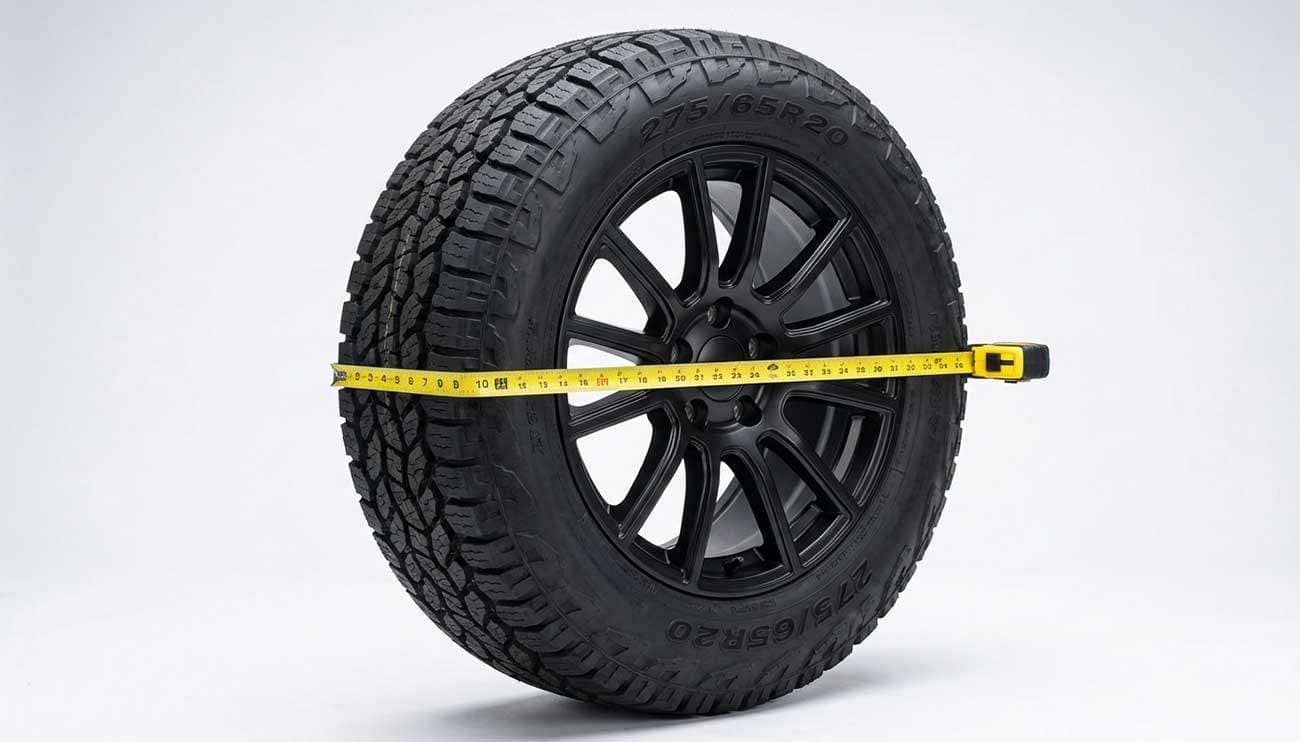
When shopping for truck or SUV tires, knowing what a 275/65R20 measures in inches makes all the difference between a perfect fit and costly mistakes. Those numbers and letters aren't just tire industry code – they translate to specific measurements that directly affect how your vehicle looks, handles, and performs on the road.
A 275/65R20 tire measures exactly 34.1 inches (866 mm) in diameter. The tread width spans 10.8 inches (275 mm), while the sidewall height reaches 7 inches (179 mm). This tire size has a circumference of 107.1 inches (2719.2 mm), completing approximately 592 revolutions per mile. Understanding these measurements before you buy ensures proper fitment and optimal performance for your vehicle.
We'll break down everything you need to know about the 275/65R20 tire size, show you how it compares to other popular sizes, and help you determine if it's the right choice for your truck or SUV. Whether you're replacing worn tires or upgrading for better performance, these dimensions are your foundation for making the right decision.
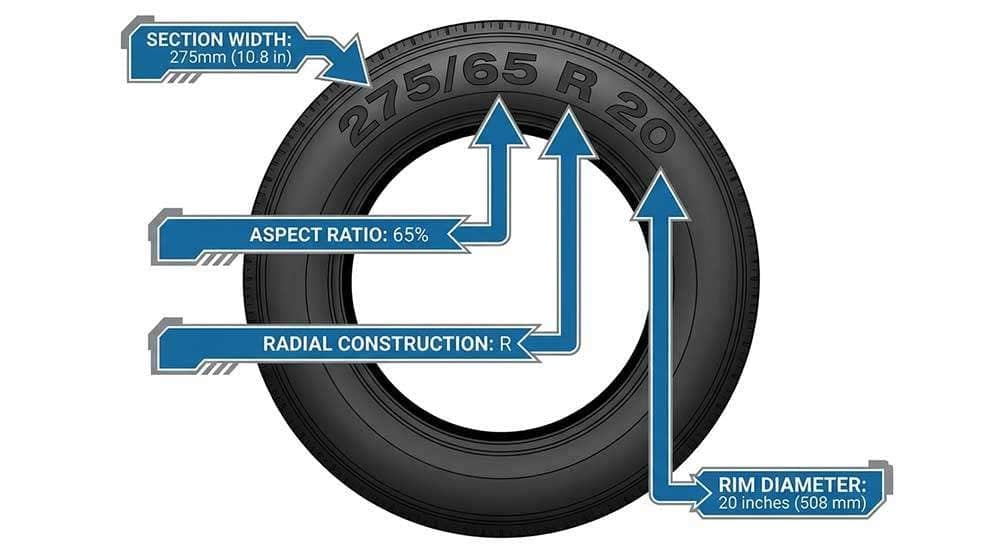
Breaking down the 275/65R20 tire code reveals exactly how tire manufacturers communicate size specifications. Each number and letter serves a specific purpose in describing the tire's dimensions and construction type.
The overall diameter represents the complete height of the mounted tire from top to bottom. This measurement comes from adding the 20-inch wheel diameter to twice the sidewall height (7 inches on each side). The resulting 34.1 inches provides substantial ground clearance that benefits both highway cruising and moderate off-road adventures. Larger diameters like this one allow your vehicle to roll over obstacles more easily while maintaining a commanding road presence.
That first number – 275 – indicates the tire's width measured in millimeters across the tread face, converting to 10.8 inches. This measurement spans from shoulder to shoulder where the tire contacts the road surface. Width directly impacts your vehicle's stability and grip characteristics. The 275mm width strikes an excellent balance between traction performance and reasonable fuel economy, providing confident handling during cornering and wet weather driving.
The "65" represents the aspect ratio – meaning the sidewall height equals 65% of the tread width. With a 275mm width, this calculates to approximately 179mm or 7.0 inches of sidewall. This relatively tall profile cushions your ride by absorbing road imperfections and providing flex that improves comfort. Taller sidewalls also offer better protection against wheel damage from potholes and curb strikes.
A circumference of 107.1 inches means these tires complete approximately 592 revolutions per mile. Understanding this relationship helps when calibrating speedometers or calculating gear ratio effects. Fewer revolutions per mile indicate a larger tire that covers more distance with each rotation, which affects everything from speedometer readings to transmission shift points.
Looking for quality 275/65R20 tires for your truck or SUV? Check out the selection at Performance Plus Tire for options that match these specifications.
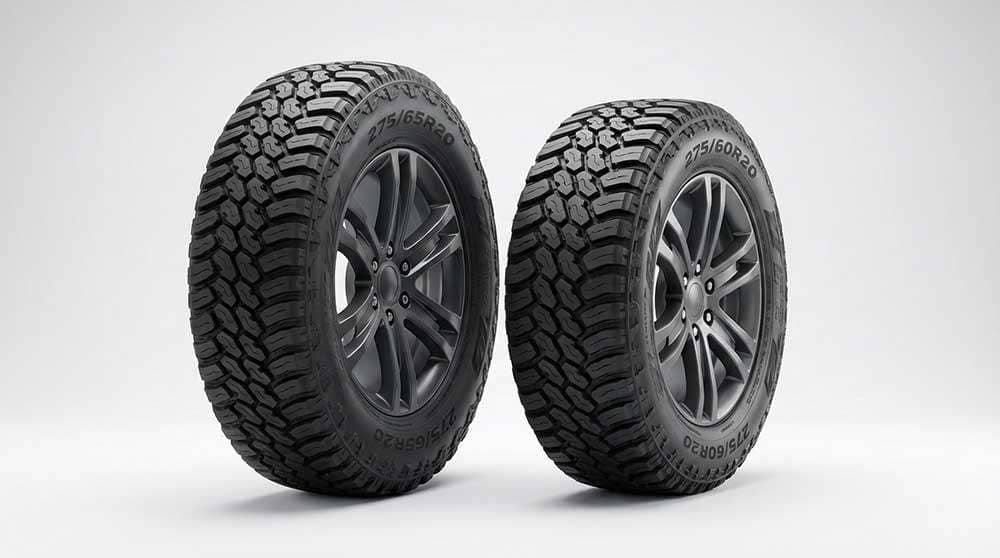
Choosing the right tire size means understanding how different options stack up against each other. Here's how the 275/65R20 compares to other popular truck and SUV sizes.
Same width, different height. The 275/65R20 stands 34.1 inches tall while the 275/60R20 measures 33 inches—a 1.1-inch height difference that's bigger than it sounds. The sidewall tells the real story: 7.0 inches versus 6.5 inches, an 8.3% increase that affects ride quality and ground clearance.
Circumference matters too. The 275/65R20 rolls 107 inches per revolution compared to 103.6 inches for the 275/60R20. This difference impacts speedometer readings and fuel economy.
Don't let the "35" fool you. A 35x12.5R20 measures 35.1 inches in diameter—only 1 inch larger than the 275/65R20's 34.1 inches. The real difference is width: 12.6 inches versus 10.8 inches, making the 35-inch tire 1.69 inches wider.
Weight adds up fast. The 35/12.5R20 typically weighs 66 pounds versus 55 pounds for the 275/65R20—that's 44 extra pounds of rotating mass on your truck.
No. A 275/65R20 measures 34.1 inches in diameter, placing it firmly in the 34-inch category. True 33-inch tires include the 275/60R20 or dedicated 33x12.5R20 off-road sizes. The 275/65R20 gives you an extra 1.1 inches of ground clearance over typical 33-inch options.
The numbers break down like this:
Diameter: 35.1 inches vs. 34.1 inches (1 inch taller)
Width: 12.6 inches vs. 10.8 inches (1.69 inches wider)
Sidewall: 7.6 inches vs. 7.0 inches (0.6 inches taller)
Revolutions per mile: 574 vs. 592 (18 fewer per mile)
The width difference is where you'll notice the biggest change. That extra 1.69 inches of contact patch improves off-road traction but increases rolling resistance on pavement. Choose based on where you drive most.
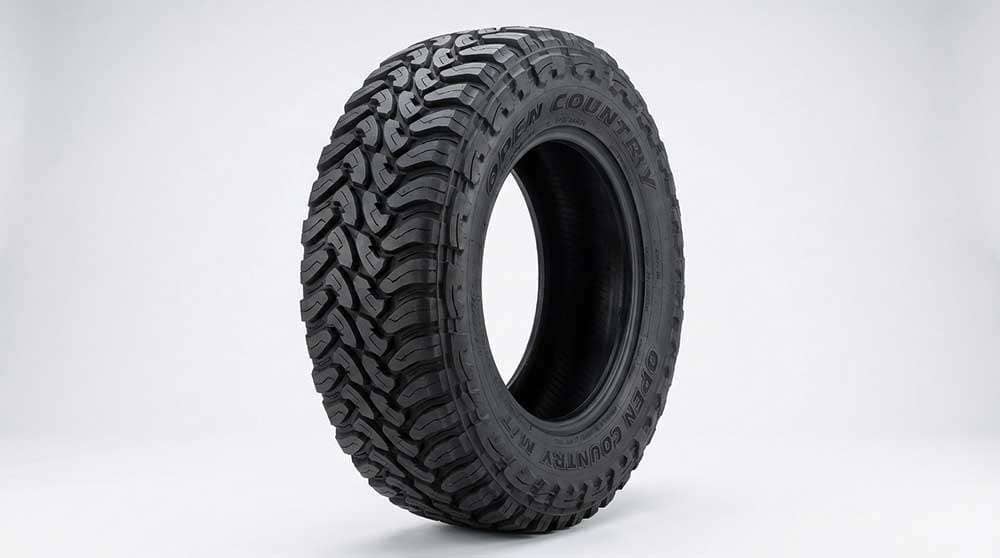
Proper fitment determines whether your tire upgrade succeeds or becomes a costly headache. The 275/65R20 tire size works well on most trucks and SUVs, but specific vehicle compatibility varies significantly.
These tires are specifically engineered for pickup trucks and heavy-duty SUVs. You'll find them as factory equipment on vehicles like the Chevrolet Silverado 3500 HD, Ford F-250 Super Duty, GMC Sierra 2500 HD, and Jeep Wrangler Sahara. The load ratings range from 2,756 to 3,750 pounds per tire, providing ample capacity for towing and hauling heavy loads.
Most truck owners successfully install 275/65R20 tires without suspension modifications. However, fitment depends on your specific vehicle model and year. Ram truck owners typically report no clearance issues with stock suspension, while certain Ford trucks may require minor adjustments depending on the model year.
Rubbing most commonly occurs during full steering lock or when the suspension compresses under load. The rear corner of wheel liners presents the biggest challenge during sharp turns. Wheel offset plays a crucial role in determining clearance - wheels with +18 offset create more rubbing problems than those with +44 offset. Most clearance issues resolve with minor trimming of plastic wheel wells.
For optimal tire performance and safety, mount 275/65R20 tires on wheels between 7.5 and 9.5 inches wide. Standard 8-inch wheels work perfectly with this tire size without any fitment concerns.
Looking for quality 275/65R20 tires for your truck? Check out Performance Plus Tire's selection for options that match your vehicle's specifications.
Larger tires change more than just your truck's appearance. The 275/65R20's increased diameter affects several performance metrics that directly impact your daily driving experience.
The larger diameter throws off your speedometer readings by approximately 6.2%. When your gauge reads 60 mph, you're actually traveling around 64 mph. At 75 mph on the speedometer, your true speed reaches roughly 80 mph. This discrepancy occurs because the larger tire covers more ground per revolution than the factory tire your vehicle's computer expects.
Many truck owners address this issue through dealership recalibration or aftermarket solutions like Forscan software. The speedometer error remains consistent across all speeds, making it predictable once you understand the difference.
Your transmission behavior changes with the larger tire diameter. The increased size effectively creates taller gear ratios, causing your transmission to hold lower gears longer during acceleration and hill climbing. Trucks equipped with 275/65R20 tires often maintain 5th gear at 75 mph on 6% grades instead of shifting to 6th. When towing, expect your vehicle to stay in 7th gear rather than reaching 8th on highway stretches.
Expect fuel economy to drop 1-2 mpg after installing 275/65R20 tires. Several factors contribute to this decrease:
Additional rotational mass (each tire weighs 55-65 pounds)
Increased rolling resistance from larger contact patch
More torque required to rotate the larger diameter
Four-ply construction helps minimize the weight penalty compared to heavier load range D/E options. Acceleration feels slightly reduced off the line, though most drivers find the improved ground clearance and aggressive appearance worth the tradeoff.
The 275/65R20 tire size delivers specific dimensions that directly impact your truck or SUV's performance and appearance. These tires measure 34.1 inches in diameter, 10.8 inches wide, with a 7-inch sidewall height – measurements that affect everything from ground clearance to speedometer accuracy.
Size comparisons reveal important differences for your decision. The 275/65R20 stands 1.1 inches taller than a 275/60R20 and nearly an inch shorter than most 35-inch tires. These variations matter when you're considering clearance issues, performance changes, and modification requirements.
Most trucks handle these tires on stock suspension, though some models may need minor adjustments to prevent rubbing during sharp turns. Wheel width between 7.5 and 9.5 inches provides the best performance and safety for this tire size.
Expect some changes beyond appearance when you upgrade. Your speedometer will read about 6.2% slower than actual speed, and fuel economy typically drops 1-2 mpg due to the added weight and rolling resistance. Many owners find these trade-offs worthwhile for the improved look and capability.
Ready to find the right 275/65R20 tires for your vehicle? Browse quality options at Performance Plus Tire, where you'll find tires that match these exact specifications.
The 275/65R20 offers an excellent middle ground for truck owners who want aggressive styling without major modifications. You now have the dimensional facts and comparison details needed to decide if this tire size fits your specific vehicle and driving needs.
Understanding tire dimensions helps you make informed decisions about upgrades and ensures proper fitment for your truck or SUV.
• A 275/65R20 tire measures 34.1 inches in diameter, 10.8 inches wide, with a 7-inch sidewall height • This size is 1.1 inches taller than 275/60R20 but nearly 1 inch shorter than typical 35-inch tires • Most trucks fit 275/65R20 on stock suspension, though minor rubbing may occur during sharp turns • Expect 6.2% speedometer error and 1-2 mpg fuel economy decrease due to increased size and weight • Optimal wheel width ranges from 7.5-9.5 inches for proper mounting and performance
These specifications make 275/65R20 an excellent middle-ground choice for truck owners seeking improved ground clearance and aggressive styling without major modifications. The size provides substantial load capacity (2,756-3,750 pounds per tire) while maintaining reasonable compatibility with most stock suspensions.
A 275/65R20 tire has an overall diameter of 34.1 inches, a tread width of 10.8 inches, and a sidewall height of 7 inches. Its circumference is 107.1 inches, resulting in approximately 592 revolutions per mile.
A 275/65R20 tire is slightly smaller than a 35-inch tire. It has a diameter of 34.1 inches, which is about 1 inch less than a 35x12.5R20 tire. The 35-inch tire is also wider, measuring 12.6 inches compared to the 10.8-inch width of the 275/65R20.
Many trucks can accommodate 275/65R20 tires on stock suspension, but fitment varies by vehicle model. Some may experience minor rubbing, particularly during full steering lock or when the suspension compresses. Minor modifications might be necessary for certain vehicles to ensure proper clearance.
Installing 275/65R20 tires typically causes the speedometer to read about 6.2% slower than the actual speed. For example, when the speedometer shows 60 mph, the vehicle is actually traveling at about 64 mph. This discrepancy may require speedometer recalibration.
Switching to 275/65R20 tires generally results in a decrease of 1-2 mpg in fuel economy. This reduction is due to factors such as increased rotational mass, more aggressive tread patterns, and the larger diameter requiring more torque to turn the wheels.



