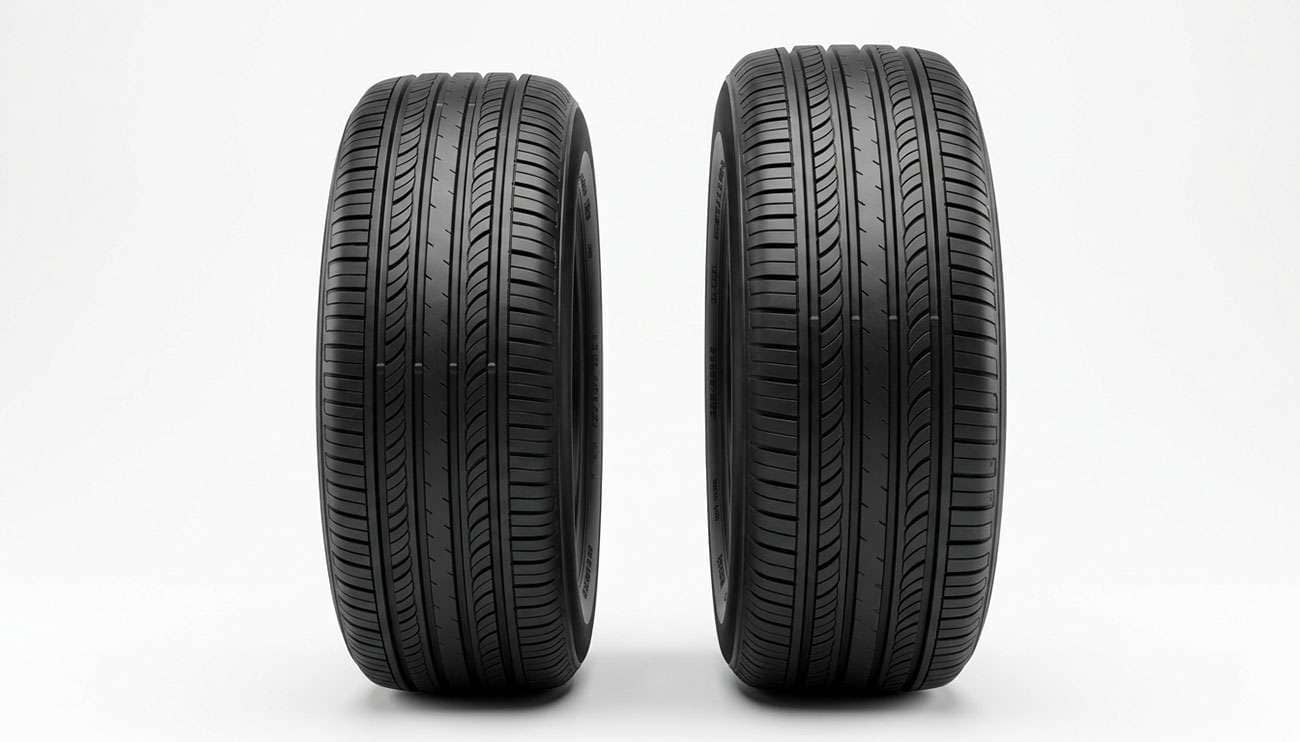
Yes, on most compact cars. A 215/55R16 mounts on the same 16-inch wheel, stands 0.43 inch taller, and carries more weight, and Honda made this very move on the Civic for 2016. The part most guides skip is what you can give up along the way. Plenty of tire lines sold V-rated in 205/55R16 drop to H in 215/55R16, so the wider tire can cost you speed rating. And on an AWD Subaru, you change all four tires or none.
Your Situation |
Verdict |
Why |
|---|---|---|
FWD car, replacing all four, wheels 6 to 7.5 inches wide |
Yes |
Diameter grows 1.74%, inside the usual 3% window |
AWD car, replacing all four |
Yes, with the checks below |
All four corners roll the same distance |
AWD car, replacing one or two |
No |
A 1.36-inch circumference gap between tires |
FWD car, front pair only |
Not recommended |
Two sizes on one car, with grip and wheel speeds out of balance |
Placard calls for 89 or 91 SL |
Yes |
A 93 SL or 97 XL carries more per tire |
Placard calls for 94 XL |
Only in 97 XL |
A 93 SL tops out at 1,433 lbs, under the 1,477 lbs you started with |
Placard calls for a V speed rating |
Only in V or W |
H is the most common rating in 215/55R16 |
Car came on run-flats with no spare |
Rarely |
Run-flats are close to extinct in 215/55R16 |
Wheel narrower than 6 inches |
No |
Below the 215's approved rim width |
Ten millimeters of width, and a little height that comes along for the ride. The 55 in both sizes is a percentage, not a fixed number. When the tire gets wider, the sidewall grows with it, so a wider 55-series tire is also a taller one. If you want the full breakdown of the smaller size, our guide to what size tire a 205/55R16 is walks through it.
Spec |
205/55R16 |
215/55R16 |
Difference |
|---|---|---|---|
Section width |
205 mm (8.07 in) |
215 mm (8.46 in) |
+10 mm (0.39 in) |
Sidewall height |
112.75 mm (4.44 in) |
118.25 mm (4.66 in) |
+5.5 mm (0.22 in) |
Overall diameter |
24.88 in |
25.31 in |
+0.43 in (+1.74%) |
Circumference |
78.16 in |
79.52 in |
+1.36 in |
Revolutions per mile |
811 |
797 |
-14 |
Approved rim width |
5.5 to 7.5 in |
6.0 to 7.5 in |
Overlap 6.0 to 7.5 in |
Measuring rim width |
6.5 in |
7.0 in |
+0.5 in |
Common load indexes |
91 SL / 94 XL |
93 SL / 97 XL |
+77 lbs SL / +132 lbs XL |
Those are design numbers. Real tires vary a bit by brand, and a tire measured on a narrower rim reads a touch narrower than its label. On paper, this is one of the smallest steps you can take in tire sizing. That doesn't mean it's automatic. It means the checks are short.
Almost always, yes. Both sizes share a 16-inch bead seat, and the approved rim widths overlap from 6.0 to 7.5 inches. Most compacts that came on 205/55R16 sit on 16x6.5 or 16x7 wheels, and those are squarely inside the range for both tires.
Here's the line that matters. A 205/55R16 is approved down to a 5.5-inch rim. A 215/55R16 stops at 6.0. If somebody put a narrow steel wheel on your car, look at the stamp on the back of a spoke or the inside of the barrel before you buy. Below 6 inches, the 215 pulls the beads together and rounds off the tread, and the shoulders end up carrying the load. The tire may mount and hold air, but it won't wear or steer the way it should.
On a 16x6.5, the 215 sits a half inch under its 7-inch measuring rim. That's fine. It's still in the approved range, and it gives you a slightly rounder sidewall than you'd get on a 16x7. You won't feel that on the way to work.
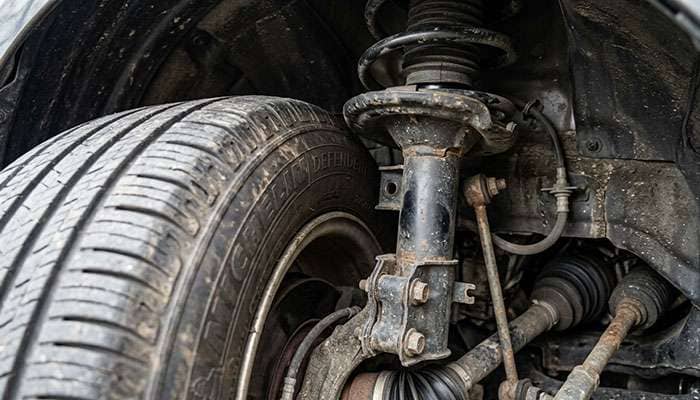
On a stock car with factory wheels, usually not. On the same wheel, the tire grows about 5 mm (0.2 inch) on each side and about 5.5 mm (0.22 inch) at the top. That's about the thickness of three stacked quarters at every edge.
The two places I look are the inside of the front tire at the strut and the top of the rear tire inside the wheel well. Turn the wheel to full lock and put a finger between the sidewall and the strut. If you have 3/8 inch or more with the 205 on there, the 215 will clear. If you have less, mount one 215 and check it before you buy four.
Three things change that answer. Lowering springs take away the clearance you're counting on. Aftermarket wheels with a different offset move the whole tire in or out, and that can use up more room than the size change does. A heavy load in the back seat and trunk pushes the rear tires up into the liners. If you hear a rhythmic scrub over bumps or in hard turns, our guide on why tires rub will help you track down where.
Yes, and this is where the swap pays you back. More width means more air, and more air carries more weight. Comparing like for like, the 93 SL carries 77 pounds more per tire than a 91 SL, and the 97 XL carries 132 pounds more than a 94 XL.
The one trap is crossing from XL to SL. If your placard or your current tire says 94 XL, a 93 SL 215 actually carries less at maximum load, 1,433 pounds against 1,477. So check what you have before you shop. Use the table below.
Placard Spec on Your 205/55R16 |
Minimum 215/55R16 to Buy |
What to Watch |
|---|---|---|
89 SL (1,279 lbs) |
93 SL or 97 XL |
Easy clear. You gain at least 154 lbs per tire. |
91 SL (1,356 lbs) |
93 SL or 97 XL |
The most common case. Either one clears. |
94 XL (1,477 lbs) |
97 XL |
Skip every 93 SL. |
H speed rating (130 mph) |
H, V, or W |
Skip T, S, and R ratings, which are mostly winter tires here. |
V speed rating (149 mph) |
V or W |
H is the most common rating, so filter for this one first. |
About two of every three 215/55R16 tires on the market are 97 XL, so that's likely what you'll end up with. Don't let the XL scare you. You still run the pressure on your door placard. At the same pressure, up to about 35 psi, an XL and an SL carry the same load, and the extra 176 pounds on that 97 only shows up at XL inflation of 41 to 42 psi. Our comparison of SL vs. XL tires goes deeper on that. An XL tire may ride a shade firmer, but on a compact you'd have to be paying close attention to notice.
Yes, and this is the one most people miss. You'd think a bigger tire from the same line would match or beat the smaller one. Often it doesn't. In 205/55R16, V-rated and better tires outnumber H-rated ones. In 215/55R16, it flips, and H outnumbers everything else combined.
Look at the Michelin CrossClimate2. It's a fine tire, and it's sold as a 91V in 205/55R16 and a 97H in 215/55R16. Buy the wider size and you pick up load but step down from 149 mph to 130 mph. Plenty of other lines make the same step.
Now, you're not doing 130 in a Corolla. So why care? Because the speed rating isn't only about top speed. It tells you how well the tire handles heat and high-speed stress, and it often comes with a stiffer build and sharper steering response. Toyo's replacement bulletin says it plainly: replacement tires must have an equal or greater speed rating than the original if the vehicle's speed capability is to be maintained. A shop should tell you if it's putting you on a lower rating.
If your door placard calls for H, this is a non-issue, and most 215s will do. If it calls for V, like a Subaru Impreza's 89V, shop V or W from the start. And if you're choosing between the two ratings, our article on H vs. V rated tires lays out the trade.
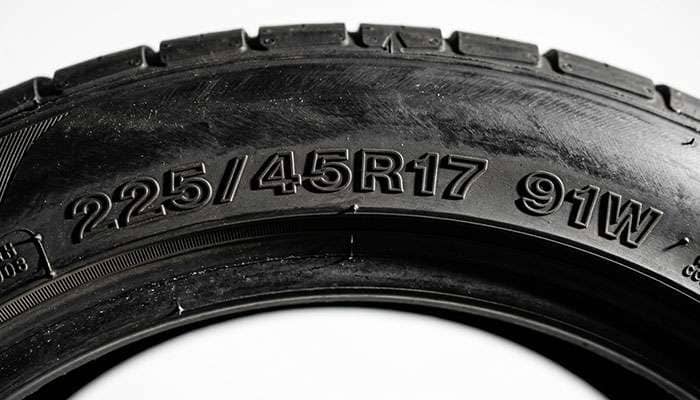
Only as a full set. This is the one case where there's no gray area. A 215/55R16 rolls 1.36 inches farther per revolution than a 205/55R16. Put two of each on an AWD car and the driveline has to absorb that difference on every turn of the wheels, for every mile you drive.
The Subaru Impreza is the one to think about here, since its base and Premium trims came on 205/55R16. Subaru's 2012 Impreza owner's manual says all four tires must match in size, circumference, construction, brand, and tread pattern, and it warns that mismatched tires may result in "severe mechanical damage to the drive train." It also tells you to use the same size as the original, so going up a size on an Impreza is your decision to make, not something Subaru endorses.
If you do it, buy four of the same tire, install them together, and rotate them on schedule. Never mix sizes on an AWD car, not even to get through a flat. We cover the rules in more detail in our guide to AWD tire requirements.
It'll roll, but I wouldn't set up a car that way. On a FWD compact, the front tires already do the steering, the driving, and most of the braking. Going wider up front gives the front axle more grip and leaves the rear with less. That's the wrong end to favor when you're trying to keep the back of the car planted in a wet emergency move.
There's a second problem. The stability control and ABS systems compare wheel speeds, and now the front and rear are 1.74% apart on purpose. Most cars will tolerate that, but you've built in a mismatch for no good reason. Your door placard calls for one size. Toyo's bulletin also says two new tires should go on the rear axle, which works against the whole idea of a front-only swap.
If two of your tires are worn out and the other two are fine, replace the pair in the size you already run. Then move to 215s when the whole set is due.
Not much. The tire covers 1.74% more ground per turn, so your speedometer reads a hair low. Compared with the same car on 205s, here's what it looks like:
Many factory speedometers read slightly high to begin with, so a taller tire can land you closer to true. If you want the details, our article on bigger tires and your speedometer covers why.
Your odometer shifts by the same amount. Every 1,000 miles it shows is about 1,017 actual miles. That also fools your trip computer: since it counts fewer miles, it'll show mileage about 1.7% worse than you're really getting, even if nothing else changed. A wider tire can cost you a little real fuel economy too, from extra weight and a wider contact patch, but on this step it's a small number. If your economy drops by a lot after a tire change, look at pressure first.
A little, and mostly for the better. You've got more rubber on the road and 5.5 mm more sidewall to soak up a bad patch of pavement. Expect the car to feel slightly more settled, and not much more than that from a 10 mm step.
Tire choice matters more than the size change. A good touring tire in 205 will beat a cheap 215 every day of the week. Don't buy a lesser tire just to get the wider number.
There's one place the 205 still wins, and that's deep snow. A narrower tire cuts down to the pavement instead of floating on top. If you run a separate winter set, there's nothing wrong with keeping 205s for winter and 215s for the rest of the year, as long as each set matches on all four corners. Snow chains are also worth a look, because compacts have tight wheel wells and your owner's manual may limit chains to the factory size.
Then this swap gets hard. BMW's 2006-2011 3 Series sedans came without a spare and relied on run-flat tires, and the 328i sedan wore this size. Run-flats are a small slice of the 205/55R16 market, but they exist. In 215/55R16, they're close to extinct.
So moving up a size likely means giving up run-flat protection. If your car has no spare and no jack, you'd need a plug kit and compressor, or a roadside plan, before you make that move. In that spot, I'd stay in the factory size.
Here's a sample of where each size shows up from the factory. Your door placard is the final word for your car, because trims within the same year can differ.
Vehicle |
Trim and Year |
Factory Size |
|---|---|---|
Toyota Corolla |
2018 LE and XLE |
P205/55R16 89H |
Toyota Corolla |
2024 LE |
P205/55R16 91H |
Volkswagen Jetta |
2017 1.4T S and SE |
205/55R16 |
Hyundai Elantra |
2023 SEL |
205/55R16 |
Kia Forte |
2023 LXS |
205/55R16 |
Subaru Impreza |
2023 Base and Premium |
205/55R16 89V |
Honda Civic |
2015 EX |
P205/55R16 |
Honda Civic |
2016 and 2022 LX |
215/55R16 93H |
The Civic is the proof of concept. Honda ran 205/55R16 on trims like the 2015 EX, then put the 2016 LX on 215/55R16 and a 16x7 wheel when the new generation arrived. Just remember that's a new car with its own suspension and wheel wells. It shows the size works on a compact. It doesn't promise that your 2015 clears it, so do the finger test on your own car.
Done right, this swap costs you nothing. Done wrong, the bill grows the longer you drive on it. Here's how that goes, from small to large:
Every one of those ends with you buying tires or parts sooner than you planned. The fix up front is ten minutes with your door placard, and a set of four that matches or beats it.
For most compacts, going from 205/55R16 to 215/55R16 is one of the safest size changes you can make. The factory wheel takes it, the load goes up, and the speedometer barely moves. Honda runs this very size on the Civic LX. Your job comes down to three checks: the speed letter on the exact tire you're buying, a load index that matches or beats your placard, and a full set of four on any AWD car.
When you've got your numbers, you can shop 215/55R16 tires by size and filter on load index and speed rating. If you'd like a second opinion, call us at 888-926-2689 with your year, make, and model, and we'll look at it with you.
Yes, on most compact cars, as long as your wheels are 6 to 7.5 inches wide and you have clearance. Replace all four, and pick a tire that matches or beats your placard's load index and speed rating. The diameter grows 1.74%, which sits inside the usual 3% window.
Yes, if the rim is at least 6 inches wide. A 215/55R16 is approved for 6.0 to 7.5-inch rims, and most factory 205/55R16 wheels are 16x6.5 or 16x7. A 205/55R16 can run on a 5.5-inch rim, but a 215/55R16 should not.
A 215/55R16 is 0.43 inch taller overall, at 25.31 inches against 24.88 inches. That raises the car about 0.22 inch and adds 1.36 inches of circumference.
Only slightly. Compared with a 205/55R16, the speedometer reads about 1.74% low, so showing 60 mph means you're going about 61 mph. Your odometer shifts by the same percentage.
Not on an AWD car, where mismatched tires can damage the driveline. On a FWD car it's not recommended either, because it upsets the grip balance between the front and rear axles. Never mix sizes on the same axle.
It's a reasonable step on a stock car with factory 16-inch wheels. Check clearance at the front strut, buy all four, and match your placard's load index and speed rating. Your owner's manual will still list the factory size, so the change is your decision.