
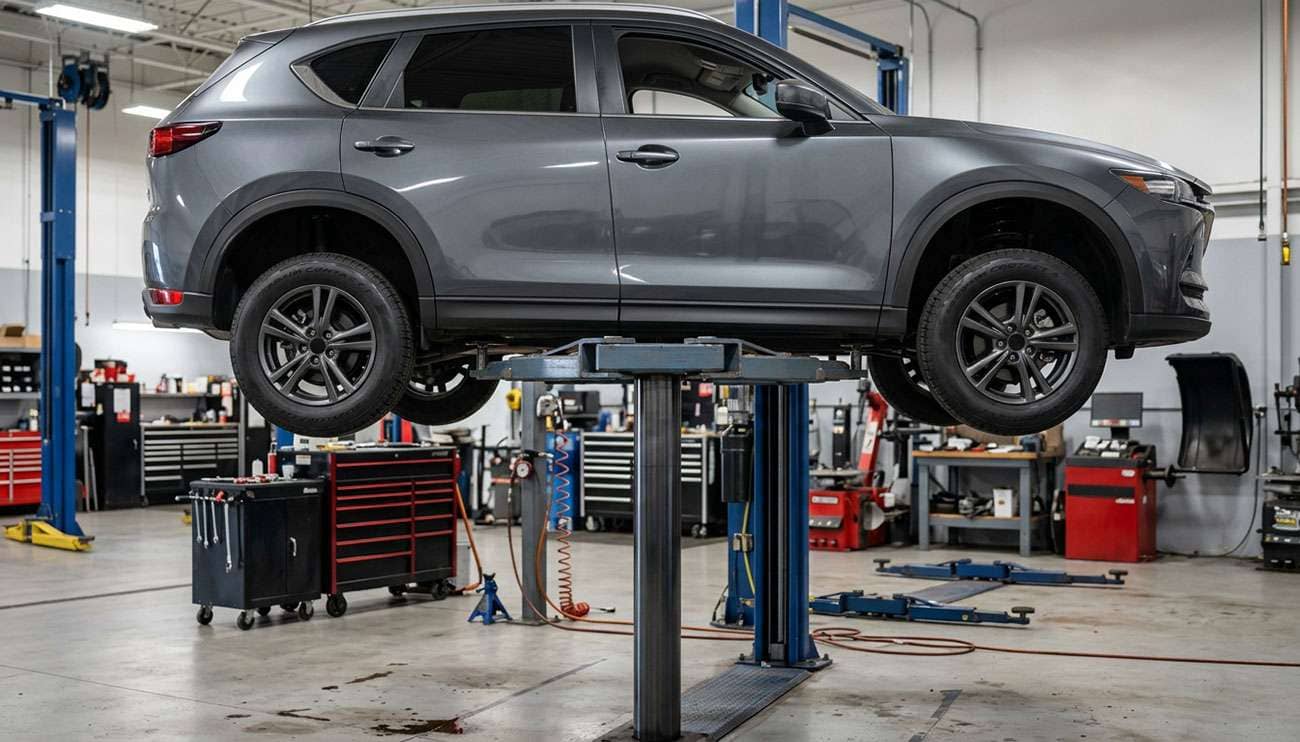
All-wheel drive vehicles require all four tires to maintain matched tread depth within manufacturer-specified tolerances — typically 2/32 of an inch difference maximum. When the tolerance is exceeded, the AWD system's center differential, viscous coupling, or electronic clutch pack interprets the rolling diameter difference as continuous wheel slip, engages the locking mechanism to compensate, and generates heat that progressively destroys the drivetrain components. The repair cost when this damage develops typically ranges from $1,000 to $5,000+, with premium AWD systems (Audi Quattro, Porsche AWD, Subaru Symmetrical, Honda SH-AWD) at the higher end of that range. The damage is real, the cost is substantial, and the rule isn't a sales tactic invented by tire shops.
The economic implications of this rule shape AWD tire purchasing decisions. Front-wheel-drive and rear-wheel-drive vehicle owners can typically replace tires in pairs (front pair or rear pair, depending on wear pattern) or even single tires when only one is damaged. AWD owners face a fundamentally different decision tree: replace all four tires together, accept drivetrain damage risk, or use specialized tire shaving services to match a single new tire's diameter to the existing three worn tires. Each option has specific cost and risk implications that this guide quantifies.
This guide explains the engineering behind the AWD tire matching requirement, identifies which AWD systems are most vulnerable, quantifies the drivetrain damage costs, describes the legitimate exceptions to the all-four-tires rule, and recommends specific tires across categories where AWD owners typically purchase. The data comes from manufacturer guidelines (Subaru, Audi, BMW, Honda, Toyota, Acura), industry technical analysis, and the engineering relationships between tire diameter and AWD drivetrain function. Every tire mentioned is in current Performance Plus Tire inventory and works on popular AWD applications.
The fundamental rule for AWD tire ownership has three components that work together as a single requirement.
1. All four tires must have similar tread depth. The manufacturer-specified tolerance for tread depth variation between any two tires on an AWD vehicle typically ranges from 2/32 of an inch (Subaru, Honda SH-AWD, Acura SH-AWD) to 4/32 of an inch (some Audi applications, some BMW xDrive applications). The variation across all four tires combined often has a tighter tolerance than the pair-to-pair tolerance. Always verify the specific tolerance in your vehicle's owner's manual rather than relying on generic AWD guidance.
2. All four tires must be the same brand, model, size, and construction type. Even if the tread depth measures identically between tires, mixing brands or models can produce different rolling diameters because tire manufacturers don't standardize the exact tread block height, sidewall construction, or carcass dimensions across brands. A 235/65R17 Michelin tire and a 235/65R17 Bridgestone tire may have slightly different rolling diameters despite identical size specifications. The variation can be enough to trigger AWD system compensation.
3. All four tires must have similar inflation pressure within specification. Pressure differences between tires (one tire at 35 PSI, another at 30 PSI) produce rolling diameter differences that affect AWD system function. The 5 PSI difference may translate to 0.5-1.0% rolling diameter variation — within typical AWD tolerance but worth maintaining consistency. The cold weather pressure dynamics we covered in our 2026 cold weather tire pressure guide apply directly to AWD tire requirements.
The combination of these requirements means AWD tire purchasing typically involves all four tires together (most common scenario), tire shaving services for single-tire replacement (when three tires still have substantial life), or specific tolerance management for pair replacements (less common but possible on some AWD systems with looser tolerances).
The engineering principle behind the AWD tire matching requirement is straightforward physics applied to mechanical drivetrain systems.
Step 1: Tire rolling diameter determines wheel rotation rate. A tire with greater overall diameter rotates fewer times per mile traveled than a tire with smaller diameter. A standard passenger tire with approximately 26 inches of overall diameter rotates approximately 770 times per mile. A tire with 2/32" less tread depth (roughly 0.06" smaller overall diameter) rotates approximately 772 times per mile — about 2 additional rotations per mile, or 0.25% more rotations than the larger tire.
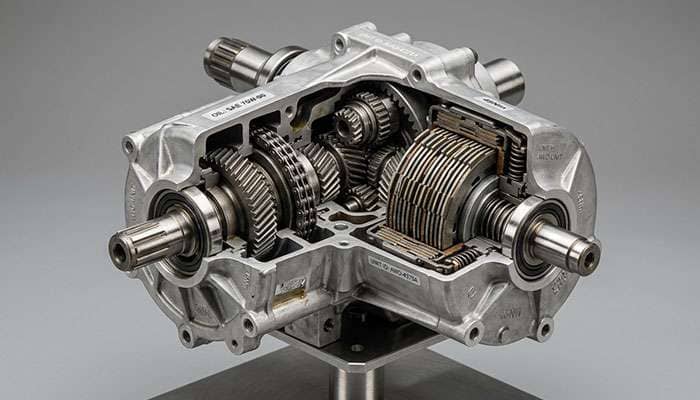
Step 2: AWD systems interpret rotational differences as slippage. Modern AWD systems (Subaru Symmetrical, Audi Quattro, BMW xDrive, Mercedes 4Matic, Honda Real Time AWD, Toyota Dynamic Torque Control, Mazda i-Activ AWD, and similar) use wheel speed sensors at each wheel to detect slip conditions. When the system detects wheel rotational speed differences exceeding the programmed threshold, the system engages its torque distribution mechanism to compensate. The mechanism varies by manufacturer — viscous coupling on older Subaru applications, electronically-controlled clutch pack on newer Subaru and Honda applications, mechanical center differential on Audi Quattro, electronic Haldex coupling on VW 4MOTION.
Step 3: Continuous engagement generates destructive heat. The torque distribution mechanism is designed to engage occasionally — when actual wheel slip occurs on snow, mud, gravel, or other low-traction surfaces. Continuous engagement (caused by permanent rolling diameter differences from mismatched tires) generates heat in the viscous fluid, clutch packs, or mechanical components. The heat degrades the specialized fluids that lubricate and operate the system, damages the friction surfaces, and progressively destroys the mechanism. The progression isn't immediate — typical failure develops over weeks to months of continuous operation with mismatched tires, with the damage becoming irreversible before symptoms appear.
Step 4: Repair cost depends on which component fails. Different AWD systems use different components, and the damaged component determines repair cost. Subaru viscous coupling replacement runs $2,500-$4,000 including labor. Audi center differential replacement runs $3,000-$5,000. BMW xDrive transfer case repair runs $2,000-$4,500. Honda SH-AWD clutch pack replacement runs $1,800-$3,500. Toyota AWD coupler replacement runs $1,800-$3,500. The high end of these ranges reflects premium luxury applications and dealer labor rates; independent shops can sometimes deliver repairs at the lower end. The full ranges fall between $1,000 minimum and $8,000+ maximum across the AWD spectrum.
The 2/32 inch (approximately 1.6mm) tread depth tolerance is the most commonly cited specification for AWD tire matching, originating with Subaru's manufacturer guidelines and adopted by Honda SH-AWD, Acura SH-AWD, and several other AWD system manufacturers.
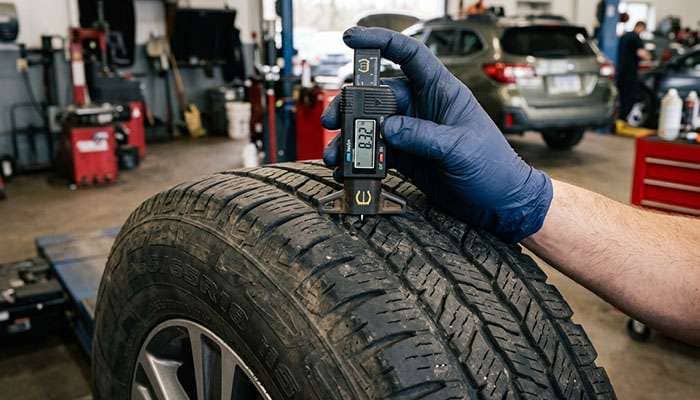
Why 2/32" specifically? The threshold correlates with the rolling diameter difference that triggers AWD system compensation under normal driving conditions. At 2/32" tread depth difference, the rolling diameter variation is small enough that the AWD system tolerates it without continuous engagement. Above 2/32" variation, the rolling diameter difference produces continuous wheel speed sensor variation that triggers the system's compensation mechanism. Below 2/32" variation, the system functions normally.
How to measure tread depth accurately:
Real-world example: A Subaru Outback owner damages one tire at 6,000 miles. The other three tires measure 10/32" average tread depth (down from 10.5/32" original new tread). A new replacement tire of the same brand, model, and size measures 10/32" (or close to it) — within the 2/32" tolerance. In this scenario, single tire replacement may be acceptable. The same Subaru Outback at 30,000 miles with damaged tire — the other three tires now measure 6/32" while the new tire measures 10/32" — represents 4/32" variation, exceeding the tolerance by 2/32". This scenario requires either four-tire replacement or tire shaving to match the new tire to 6/32" depth.
The measurement matters substantially. Eyeballing the tread depth is not reliable — visible differences typically appear only when the variation already exceeds 4/32" or more, which is well beyond the AWD tolerance. The dollar value of accurate measurement (preventing $2,000-$5,000 drivetrain damage) makes the $10-$20 cost of a quality tread depth gauge one of the highest-ROI tool investments AWD owners can make.
Not all AWD systems are equally sensitive to tire diameter variation. The vulnerability depends on the system's engineering — full-time AWD systems with mechanical torque distribution are most vulnerable, while on-demand AWD systems with electronic clutch engagement are typically more tolerant.
AWD System |
Vulnerability Level |
Specific Tolerance |
Example Vehicles |
|---|---|---|---|
Subaru Symmetrical AWD |
Very High |
2/32" max variation |
Outback, Forester, Crosstrek, Impreza, Legacy, Ascent, WRX |
Audi Quattro (mechanical) |
Very High |
2-4/32" depending on model |
A4, A6, A8, Q5, Q7, Q8, S-line, RS-line applications |
Honda SH-AWD / Acura SH-AWD |
Very High |
2/32" max variation |
Honda Pilot SH-AWD, Ridgeline SH-AWD, Acura MDX, RDX, TLX |
Porsche AWD (most applications) |
Very High |
2/32" max variation |
911 Carrera 4, Cayenne, Macan, Panamera 4, Taycan 4 |
Nissan GT-R ATTESA E-TS |
Very High |
2/32" max variation |
Nissan GT-R |
Mitsubishi Lancer Evolution S-AWC |
Very High |
2/32" max variation |
Lancer Evolution VIII-X (legacy applications) |
BMW xDrive |
High |
2-4/32" depending on model |
3 Series, 5 Series, 7 Series, X1, X3, X5, X7 xDrive applications |
Mercedes-Benz 4MATIC |
High |
2-4/32" typical |
C-Class, E-Class, S-Class, GLC, GLE, GLS 4MATIC applications |
Volkswagen 4MOTION (mechanical) |
High |
2-4/32" depending on model |
Tiguan, Atlas, Touareg (legacy), Passat 4MOTION (legacy) |
Volvo AWD |
High |
2-4/32" depending on model |
XC40, XC60, XC90, S60, S90, V60, V90 AWD applications |
Toyota Dynamic Torque Control AWD |
Moderate |
4/32" typical tolerance |
RAV4 AWD, Highlander AWD, Sienna AWD, Camry AWD |
Honda Real Time AWD |
Moderate |
4/32" typical tolerance |
CR-V AWD, HR-V AWD, Passport AWD (non-SH variants) |
Mazda i-Activ AWD |
Moderate |
4/32" typical tolerance |
CX-3 AWD, CX-30 AWD, CX-5 AWD, CX-9 AWD, CX-50 AWD |
Ford Intelligent AWD / 4WD on Demand |
Moderate-Low |
4-6/32" typical tolerance |
Edge AWD, Explorer AWD, Escape AWD, Bronco Sport |
Traditional 4WD with selectable engagement |
Low |
4-6/32" typical (when in 2WD) |
Toyota Tacoma 4WD, Tundra 4WD, F-150 4WD, Silverado 4WD, Jeep Wrangler |
The pattern: full-time AWD systems with mechanical torque distribution (Subaru Symmetrical, Audi Quattro, Honda SH-AWD, Porsche AWD) are most vulnerable to tire mismatch and demand the strictest 2/32" tolerance. Modern electronic AWD systems (Toyota Dynamic Torque Control, Honda Real Time AWD, Mazda i-Activ) are more tolerant because they disengage rear engagement during normal driving rather than continuously distributing torque. Traditional 4WD systems with selectable engagement (operated mostly in 2WD mode for normal driving) are most tolerant of tire mismatch because the 4WD mechanism disengages when not needed.
Always verify the specific tolerance in your vehicle's owner's manual. The table above provides typical ranges, but specific tolerances vary by vehicle year, trim level, and manufacturer specification. Some manufacturers have changed their tolerance specifications across model years as drivetrain components were updated, so a 2010 Audi A4 may have different tolerance specifications than a 2020 Audi A4 despite the same Quattro branding.
The cost data for AWD drivetrain repairs when tire matching is ignored isn't theoretical — published repair quotes from independent shops, dealership service departments, and AWD specialist mechanics provide consistent ranges.
Damaged Component |
Typical Repair Cost |
Failure Mode |
|---|---|---|
Subaru viscous coupling |
$2,500 - $4,000 |
Fluid breakdown, internal seizure |
Audi center differential |
$3,000 - $5,000 |
Gear damage from continuous compensation |
BMW xDrive transfer case |
$2,000 - $4,500 |
Clutch pack thermal failure |
Honda SH-AWD rear differential |
$1,800 - $3,500 |
Clutch pack failure, magnetic clutch damage |
Toyota AWD coupler |
$1,800 - $3,500 |
Electronic clutch pack failure |
Porsche AWD (PTV Plus, similar) |
$3,500 - $7,500+ |
Multiple component damage typical |
Mercedes 4MATIC transfer case |
$2,500 - $5,000 |
Internal damage from continuous engagement |
Volvo AWD Haldex unit |
$1,500 - $3,000 |
Haldex coupling failure |
The economic comparison: a full set of premium tires for a typical AWD application (Subaru Outback, Audi Q5, BMW X3, Honda Pilot) costs $800-$1,400. The repair cost when AWD drivetrain damage develops typically exceeds the full-set tire replacement cost by 2-5x. The math on cutting corners with single-tire replacement to save $600-$900 of tire cost rarely works in the owner's favor when factored against potential $2,000-$5,000 drivetrain repair exposure.
Important: the damage isn't always immediate or obvious. Continuous engagement of AWD compensation mechanisms produces wear that develops over weeks to months of operation. Symptoms typically appear only after substantial internal damage has occurred — at which point the repair has progressed from preventive maintenance (replacing fluid) to component replacement (replacing the damaged coupling, differential, or transfer case). The slow progression means the owner who ignored the matching requirement often has no idea their AWD system is being damaged until the system fails entirely.
Despite the general rule about replacing all four tires together, specific scenarios exist where partial replacement is acceptable on AWD vehicles. Understanding the exceptions prevents both unnecessary full-set replacement and dangerous corner-cutting.
Scenario 1: Damage early in tire life (less than 25% tread wear). A new replacement tire installed on AWD where the existing three tires have lost less than 25% of their original tread depth typically maintains tread depth variation within the 2/32" tolerance. For a tire with 10/32" original tread depth, less than 25% wear translates to 7.5/32" minimum remaining depth — within 2.5/32" of new tire's full depth, just at the tolerance margin. The safest scenario for single-tire replacement.
Scenario 2: AWD system with looser tolerance (4-6/32"). Toyota Dynamic Torque Control AWD, Honda Real Time AWD (non-SH variants), Mazda i-Activ AWD, and similar electronic on-demand systems typically tolerate 4/32" tread depth variation rather than the strict 2/32" requirement of full-time systems. For these applications, single-tire replacement remains viable later in tire life than for Subaru/Audi/Honda SH-AWD applications.
Scenario 3: Replacing two tires on the same axle (front pair or rear pair). For AWD vehicles with on-demand systems and looser tolerances, replacing both tires on a single axle (when both tires are damaged or both are worn enough to need replacement) maintains diameter consistency between the front pair and the rear pair — even if some difference exists between front and rear. This works better on rear-axle-engaged on-demand systems (engages rear axle only when slip detected at front) than full-time systems.
Scenario 4: Vehicle near end of ownership. If you're planning to sell or trade the AWD vehicle within 6-12 months, the damage timeline from mismatched tires may not develop to failure before the vehicle leaves your ownership. This is morally questionable (transferring the damage exposure to the next owner) but financially rational. Note that damage to AWD systems may be detectable through pre-purchase inspections, potentially affecting trade-in value.
Scenario 5: Vehicle operates in 2WD mode primarily. Some 4WD vehicles (Toyota Tacoma 4WD, F-150 4WD, Jeep Wrangler with selectable 4WD) operate in 2WD mode for normal driving with 4WD selectable only when needed. In 2WD mode, tire mismatch doesn't engage the 4WD system. For these vehicles, partial tire replacement is more acceptable than full-time AWD applications. However, frequent 4WD engagement (regular off-road use, severe weather driving) still benefits from matched tire diameters.
Always verify the specific scenario against your vehicle's owner's manual rather than assuming an exception applies. The cost of being wrong is substantially higher than the cost of being conservative.
Tire shaving is a specialized service that removes a precise amount of tread from a new tire to match the rolling diameter of existing worn tires. The service exists specifically because AWD vehicle owners frequently need to replace single damaged tires without exceeding the manufacturer's tolerance specifications.
How tire shaving works: A specialized lathe machine grinds the tread on the new tire to a precisely calibrated depth matching the existing tires. The technician measures the existing tire tread depth, calculates the required shaved depth for the new tire, then operates the machine to remove exactly that amount of material from the new tire's tread. The result is a new tire with reduced tread depth — typically 3-5/32" instead of the original 10-11/32" — that exactly matches the diameter of the existing three worn tires.
Cost and availability: Tire shaving services typically cost $25-$60 per tire at specialty retailers (Tire Rack offers the service nationally; many dedicated tire retailers including Performance Plus Tire can arrange shaving). The cost includes the labor for the precision measurement and machining, but you still pay full price for the new tire — shaving doesn't reduce the tire's purchase price despite reducing its useful tread life.
Trade-offs of tire shaving:
The math on shaving vs. full-set replacement: A scenario where existing tires have 6/32" tread depth (out of 10/32" original) and one tire is damaged. Full-set replacement of premium tires costs $1,000. Tire shaving the single replacement costs $200-$300 for the new tire plus $40 shaving = $240-340. Savings of $660-$760 in the short term, but with the trade-off that all four tires need replacement within 12 months anyway as the existing three reach end-of-life. The shaving option works best when existing tires have substantial remaining life (8/32"+ tread depth) and the damaged tire would otherwise force premature replacement of three good tires. For broader tire lifespan context, see our how many miles do tires last guide.
Five prevention strategies address AWD tire problems before they develop.
1. Aggressive tire rotation discipline (every 3,000-5,000 miles). AWD vehicles need shorter rotation intervals than FWD or RWD applications precisely because tread depth equalization is critical. Our 2026 tire rotation frequency guide details the engineering behind shorter AWD rotation intervals — the same principles that protect against AWD drivetrain damage from accumulated tread depth variation.
2. Replace all four tires together as standard practice. When tire replacement becomes necessary on AWD vehicles, plan for full-set replacement as the default approach rather than the exception. The economics work out better than the apparent savings of partial replacement when factored against drivetrain damage risk, and the matched-set approach eliminates the entire tire matching question.
3. Maintain consistent tire pressure across all four tires. Tire pressure differences produce rolling diameter variations that affect AWD system function. The cold-weather pressure dynamics we covered in our 2026 cold weather tire pressure guide apply directly — maintain all four tires at placard specification with checks every 2 weeks during winter operation.
4. Carry full-size matching spare when possible. Many modern AWD vehicles ship with temporary spare tires (donuts) or no spare at all (just inflator kits). For AWD applications, a full-size matching spare provides emergency capability that doesn't damage the AWD system if used for extended distances. The trade-off: the spare requires storage space and matched tire purchase upfront, plus periodic pressure checks to keep it road-ready.
5. Plan tire purchases for matched-set replacement timing. Calendar the typical replacement interval for your AWD application's tires (typically 40,000-60,000 miles for premium touring tires, 30,000-40,000 for UHP all-season alternatives). When you cross 75% of the expected life, plan for full-set replacement at the end-of-life threshold rather than waiting for damage to force the decision. Planned replacement allows budget preparation and matched-set purchasing at convenient timing.
Quick reference to the published tolerance specifications across major AWD vehicle manufacturers. Always verify with your specific owner's manual as specifications vary by model and year.
Manufacturer / System |
Stated Tolerance |
Practical Approach |
|---|---|---|
Subaru (all Symmetrical AWD) |
2/32" max variation, all four tires |
Replace all four together is standard |
Audi (Quattro applications) |
2-4/32" depending on model |
Strict — full-set replacement preferred |
BMW (xDrive applications) |
2-4/32" depending on model |
Strict — full-set replacement preferred |
Honda SH-AWD (Pilot, Ridgeline) |
2/32" max variation |
Replace all four together is standard |
Acura SH-AWD (MDX, RDX, TLX) |
2/32" max variation |
Replace all four together is standard |
Toyota Dynamic Torque Control |
4/32" typical max variation |
More flexible, single-tire replacement viable when fresh |
Honda Real Time AWD (CR-V, HR-V) |
4/32" typical max variation |
More flexible, single-tire replacement viable when fresh |
Mazda i-Activ AWD |
4/32" typical max variation |
More flexible, single-tire replacement viable when fresh |
Volkswagen 4MOTION (mechanical) |
2-4/32" depending on model |
Older mechanical systems strict; newer Haldex more flexible |
Mercedes-Benz 4MATIC |
2-4/32" depending on model |
Full-set replacement preferred for premium applications |
Porsche AWD (most applications) |
2/32" max variation |
Very strict — replace all four together |
Volvo AWD |
2-4/32" depending on model |
Strict on premium models, more flexible on entry |
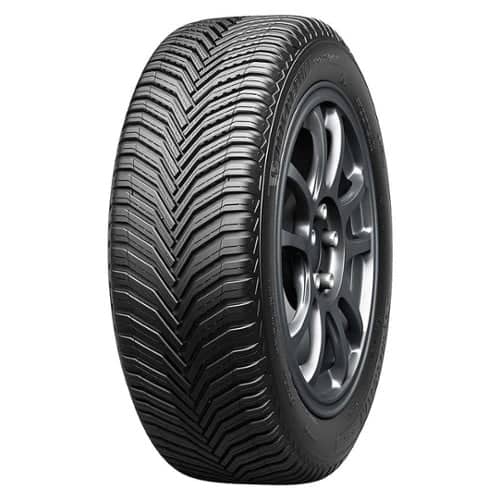
Category: Grand Touring All-Season (3PMSF Rated) • Best AWD Applications: Subaru Outback, Forester, Crosstrek; Honda CR-V AWD; Toyota RAV4 AWD; Mazda CX-5 AWD • Typical Price: $190-280 per tire
The Michelin CrossClimate2 is the most-recommended tire for full-time AWD applications in transitional and moderate winter climates. The 3-Peak Mountain Snowflake (3PMSF) certification delivers genuine winter capability while maintaining year-round usability, which matches the operating pattern of typical Subaru Outback, Honda CR-V AWD, and Toyota RAV4 AWD owners who don't want to manage seasonal tire swaps but need real winter performance. The Thermal Adaptive tread compound maintains grip below 45°F where standard all-season alternatives lose meaningful traction.
For AWD applications specifically, the CrossClimate2 delivers consistent rolling diameter across all four matched tires — meaningful for the AWD tire matching requirement. The premium pricing ($190-280 per tire, $760-1,120 for full set on typical AWD applications) reflects the engineering investment but justifies the cost through 60,000-70,000 mile tread life and the year-round capability. Browse Michelin CrossClimate2 sizes.
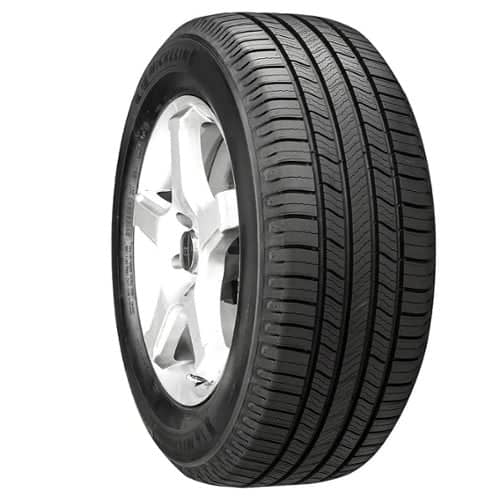
Category: Grand Touring All-Season • Best AWD Applications: Toyota Camry AWD, Honda Accord (FWD with similar applications), value-conscious AWD owners • Typical Price: $160-240 per tire
The Michelin Defender2 delivers the longest treadwear warranty in the mainstream all-season category at 90,000 miles, which makes the four-tire replacement economics particularly favorable. For AWD applications where buyers know they'll be replacing all four tires together, the 90,000 mile warranty translates to substantially longer service life per replacement cycle compared to standard 60,000-65,000 mile warranty alternatives. The trade-off: the Defender2 doesn't carry 3PMSF certification, so it's not the right answer for AWD applications in severe winter climates.
For warm and transitional climate AWD applications (Southwest, Southeast, southern California, much of Texas, mid-Atlantic), the Defender2 delivers the strongest economics in the long-warranty touring category. Full-set replacement of $640-960 on typical AWD applications with 90,000 mile tread life represents approximately $0.007-0.011 per mile in tire cost — competitive with cheaper alternatives that deliver less tread life. Browse Michelin Defender2 sizes.
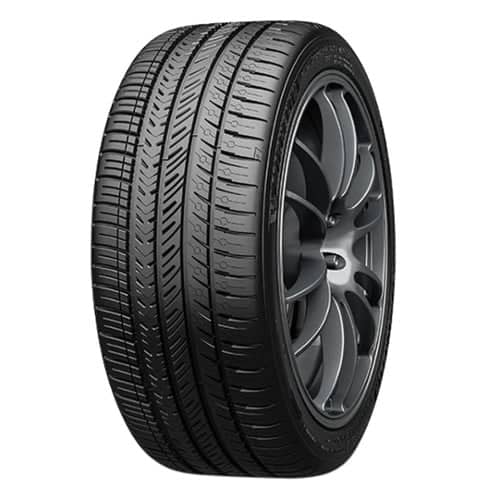
Category: Ultra-High Performance All-Season • Best AWD Applications: Audi A4/A6/Q5 Quattro, BMW xDrive applications, Mercedes 4MATIC, Volvo AWD performance, Porsche AWD • Typical Price: $240-380 per tire
The Michelin Pilot Sport All Season 4 delivers UHP all-season performance for premium European AWD applications where the OE specification typically demands performance-rated all-season tires rather than standard touring alternatives. Audi Quattro, BMW xDrive, Mercedes 4MATIC, and similar premium AWD applications run UHP-spec OE tires from factory, and the Pilot Sport All Season 4 provides the right replacement tire for owners who want OE-equivalent performance with year-round capability.
For AWD applications specifically, the Pilot Sport All Season 4's premium engineering ensures consistent rolling diameter and tread depth across matched sets — meaningful for the strict 2/32" tolerance that Audi Quattro and similar full-time AWD systems require. Premium pricing ($240-380 per tire, $960-1,520 for full set) reflects the OE-spec engineering and 45,000 mile tread life. Browse Michelin Pilot Sport All Season 4 sizes.
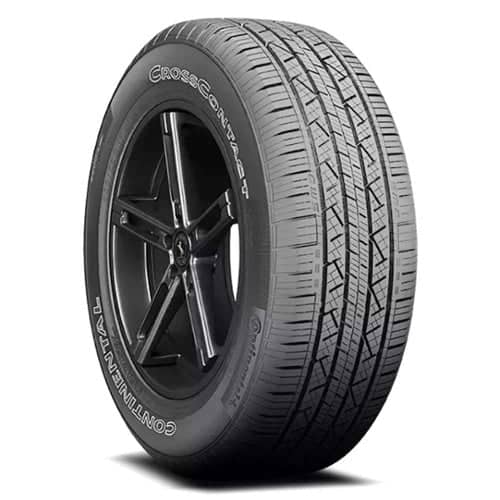
Category: Crossover/SUV All-Season • Best AWD Applications: Audi Q5/Q7, BMW X3/X5, Mercedes GLC/GLE, Volvo XC60/XC90, Lexus RX AWD • Typical Price: $200-320 per tire
The Continental CrossContact LX25 is OE specification on numerous premium AWD crossover and SUV applications, which means direct replacement compatibility with the factory tire specification including proper rolling diameter, load rating, and speed rating. For Audi Q5 and Q7 owners, BMW X3 and X5 owners, Mercedes GLC and GLE owners, and similar premium AWD SUV applications, the LX25 typically provides the most straightforward replacement path that maintains OE specifications.
The OE-spec heritage matters for AWD applications because Continental designs the LX25 with the rolling diameter consistency that AWD systems require. Replacing OE-spec tires with the same OE-spec product eliminates any rolling diameter variability that aftermarket alternatives might introduce. The 70,000 mile manufacturer warranty delivers strong economics for AWD applications where full-set replacement is the standard approach. Browse Continental CrossContact LX25 sizes.
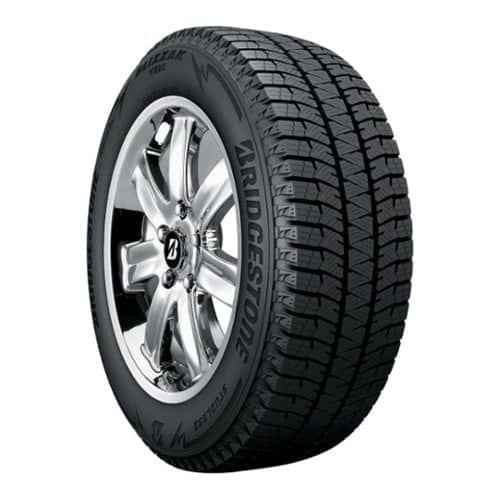
Category: Dedicated Winter / Studless Ice & Snow • Best AWD Applications: All AWD vehicles in severe winter regions where seasonal swaps are practical • Typical Price: $150-220 per tire
The Bridgestone Blizzak WS90 represents the dedicated winter tire approach for AWD applications in severe winter climates (Northeast, Midwest, Rocky Mountain region, Pacific Northwest mountain areas). The matched-set approach is essential for winter tires on AWD applications — running all four Blizzak WS90 tires through winter, then swapping back to all four all-season tires for warmer months, maintains the matched-set requirement across the full year regardless of which set is on the vehicle.
For Subaru Outback, Forester, Crosstrek, and similar Subaru AWD applications operating in serious winter conditions, dedicated Blizzak WS90 tires through winter deliver substantially better snow and ice performance than all-season alternatives while preserving the AWD tire matching requirement. The seasonal swap economics work out favorably across multiple seasons: two sets of matched tires (winter + all-season) lasting 5+ years of total service vs. one set of all-season tires lasting 3-4 years through year-round operation. For deeper winter vs all-season analysis, see our 2026 winter vs all-season tires guide. Browse Bridgestone Blizzak WS90 sizes.
Five mistakes appear consistently across AWD vehicle owners that either trigger drivetrain damage or waste money through over-replacement.
1. Replacing only two tires on AWD because "that's what we do on FWD/RWD." The most common mistake — applying FWD/RWD tire replacement habits to AWD applications. The economic difference between replacing two tires ($400-600) and four tires ($800-1200) seems substantial, but the drivetrain damage risk ($2,000-$5,000) makes the full-set approach the economically correct choice for full-time AWD systems. Toyota Dynamic Torque Control, Honda Real Time AWD, and similar on-demand systems may tolerate pair replacement, but verify against your specific vehicle's tolerance before assuming it's safe.
2. Buying different tire brands or models across the four positions. Even when all four tires are technically the same size (e.g., 235/65R17), different brands and models can have meaningfully different rolling diameters, tread compound characteristics, and sidewall stiffness. AWD systems detect these differences as wheel speed variation and engage compensation mechanisms. Stick with the same brand, model, size, and construction across all four tires.
3. Ignoring tire rotation discipline on AWD applications. AWD vehicles need tire rotation every 3,000-5,000 miles (vs. 5,000-7,500 miles for FWD/RWD) precisely to maintain matched tread depth across all four positions. Skipping rotations causes individual tires to wear at different rates based on drivetrain power distribution and vehicle weight distribution, producing the tread depth variation that triggers AWD drivetrain damage. The shorter rotation interval pays off in extended tire matching and avoided drivetrain repair.
4. Using temporary spare tires for extended periods on AWD. Donut spares and temporary spares are smaller in overall diameter than full-size tires. Operating an AWD vehicle on a temporary spare for more than the manufacturer-specified short distance (typically 50-100 miles at limited speed) generates AWD system stress similar to mismatched full-size tires. For AWD applications, prioritize getting back to a matched full-size tire as quickly as possible after a flat tire incident.
5. Driving on AWD with one severely underinflated tire. Tire pressure differences produce rolling diameter variations that the AWD system detects as wheel slip. One tire 10 PSI below the others creates approximately 1% rolling diameter variation — comparable to tread depth differences that exceed AWD tolerances. Maintain consistent pressure across all four tires within manufacturer specification, particularly important during cold weather seasonal pressure dynamics covered in our cold weather pressure guide.
Tire |
Category |
Best AWD Applications |
Full-Set Price (4 tires) |
|---|---|---|---|
Michelin CrossClimate2 |
3PMSF All-Weather |
Subaru, Honda CR-V, Toyota RAV4 year-round |
$760 - $1,120 |
Michelin Defender2 |
Grand Touring All-Season |
Warm climate AWD, long-life focus |
$640 - $960 |
Michelin Pilot Sport All Season 4 |
UHP All-Season |
Audi Quattro, BMW xDrive, Porsche AWD |
$960 - $1,520 |
Continental CrossContact LX25 |
Premium Crossover/SUV All-Season |
Audi Q5/Q7, BMW X3/X5, Mercedes GLC/GLE |
$800 - $1,280 |
Bridgestone Blizzak WS90 |
Dedicated Winter |
Severe winter AWD applications, seasonal swap |
$600 - $880 |
For most full-time AWD systems, yes — replacing all four tires together is the standard recommendation. Subaru Symmetrical AWD, Audi Quattro, Honda SH-AWD, Acura SH-AWD, Porsche AWD, and similar full-time systems require tread depth variation within 2/32 of an inch maximum across all four tires. When variation exceeds this tolerance, the AWD system's center differential, viscous coupling, or clutch pack engages continuously to compensate, generating heat that progressively destroys drivetrain components. Repair costs run $2,000-$5,000+ when this damage develops. Exceptions exist for on-demand AWD systems (Toyota Dynamic Torque Control, Honda Real Time AWD, Mazda i-Activ AWD) that tolerate 4/32" variation and operate primarily in FWD mode, and for scenarios where existing tires have less than 25% wear and the new replacement falls within tolerance. Always verify the specific tolerance in your vehicle's owner's manual.
Putting one new tire on a Subaru with three worn tires creates rolling diameter mismatch that exceeds Subaru's 2/32" tolerance specification when the existing tires have more than approximately 2/32" of wear (typical after 12,000-15,000 miles of driving). The Subaru Symmetrical AWD system detects the diameter mismatch as continuous wheel slip and engages the center differential or viscous coupling to compensate. Under normal driving, this continuous engagement generates heat that progressively damages the AWD components. The damage develops over weeks to months of operation rather than immediately, with symptoms (handling issues, drivetrain noises, dashboard warnings) typically appearing only after substantial internal damage. Subaru viscous coupling or differential repair runs $2,500-$4,000. The economic decision typically favors either replacing all four tires together (around $700-$1,000) or using tire shaving service ($25-$60 to shave the new tire down to match the existing tires).
Replacing two tires on the same axle (both fronts or both rears) maintains diameter consistency within each axle pair, but creates diameter difference between the front pair and rear pair. For full-time AWD systems (Subaru Symmetrical, Audi Quattro, Honda SH-AWD), this front-to-rear difference still produces AWD system compensation and the associated drivetrain damage risk. Some on-demand AWD systems with looser 4/32" tolerances (Toyota Dynamic Torque Control, Honda Real Time AWD, Mazda i-Activ AWD) may tolerate the front-to-rear difference at typical wear levels, particularly if the system engages rear axle only when slip is detected at the front axle. The safer approach for any full-time AWD system: replace all four together. The acceptable approach for on-demand AWD systems with looser tolerances: match the axle pair difference to within the manufacturer's tolerance specification, typically 4/32" maximum.
Tire shaving is a specialty service that removes precise amounts of tread from a new tire to match the rolling diameter of existing worn tires. A new tire with 10/32" tread depth can be shaved down to match three existing tires with 5/32" tread depth, eliminating the rolling diameter variance that would otherwise damage AWD systems. The service typically costs $25-$60 per tire at specialty retailers (Tire Rack offers nationwide shipping; many dedicated tire retailers including Performance Plus Tire can arrange shaving). Tire shaving is worth it when three existing tires have substantial remaining life (8/32"+ tread depth, less than 25% wear) and a single tire needs replacement due to unexpected damage. The trade-off: the shaved tire has reduced tread life equal to the existing tires, so all four tires reach end-of-life together. The economics typically favor shaving over full-set replacement when existing tires have less than 25% wear, and favor full-set replacement when existing tires have more than 35-40% wear.
AWD vehicles need tire rotation every 3,000-5,000 miles, or every 4-6 months, whichever comes first. This is substantially shorter than the 5,000-7,500 mile interval for FWD and RWD applications. The shorter interval prevents the gradual tread depth variation that triggers AWD drivetrain damage from continuous compensation engagement. The tighter rotation discipline pays off in two ways: extended tire matching (the AWD tire matching requirement is maintained longer through frequent rotation) and avoided drivetrain repair (the $2,000-$5,000 repair cost prevention more than justifies the additional rotation cost). For Subaru, Audi, Honda SH-AWD, and similar full-time AWD systems, lean toward the 3,000-4,000 mile end of the range. For Toyota, Honda Real Time AWD, Mazda, and similar on-demand systems with looser tolerances, the 4,000-5,000 mile end of the range is acceptable. See our 2026 tire rotation frequency guide for deeper drivetrain-specific detail.
No — AWD vehicles require all four tires to be the same brand, model, size, and construction type. Even when the tire size specifications match (e.g., all four 235/65R17), different brands and models can produce different rolling diameters due to variations in tread block height, sidewall stiffness, and carcass dimensions. The variation between brands (sometimes 1/4" or more in actual rolling circumference) can exceed AWD system tolerances even when the technical specifications appear identical. The same principle applies to mixing tire models within the same brand — Michelin Defender2 and Michelin CrossClimate2 are both Michelin tires, but they have different rolling diameter specifications and shouldn't be mixed on AWD applications. Stick with the same brand, model, size, and construction across all four positions on AWD vehicles. If you damage one tire and the specific tire you need is unavailable, either wait for stock or replace all four with an available matched set.
No — the AWD tire matching requirement comes from vehicle manufacturers (Subaru, Audi, BMW, Honda, Toyota, Mercedes, Volvo, Porsche, and similar manufacturers) rather than tire shops. The manufacturer specifications are published in vehicle owner's manuals and represent the manufacturer's engineering specification for AWD system protection. Tire shops simply communicate the manufacturer's requirement to customers — they don't invent the requirement to sell more tires. The reason the requirement seems counterintuitive (why can't I just replace one tire?) reflects the substantial engineering difference between AWD drivetrains and FWD/RWD drivetrains. The manufacturer specification ranges from 2/32" tolerance (most strict, Subaru and Honda SH-AWD) to 4/32" tolerance (more flexible, Toyota and Mazda on-demand systems), and ignoring the specification produces real drivetrain damage that costs $2,000-$5,000+ to repair. The financial economics favor the manufacturer's requirement substantially.
The best tire brand for AWD applications depends on the specific vehicle, operating conditions, and climate. Michelin CrossClimate2 is the most-recommended tire for Subaru, Honda CR-V AWD, and Toyota RAV4 AWD applications in transitional and moderate winter climates because of the 3PMSF certification and year-round capability. Michelin Pilot Sport All Season 4 is the standard answer for Audi Quattro, BMW xDrive, Mercedes 4MATIC, and similar premium European AWD applications requiring UHP all-season performance. Continental CrossContact LX25 is OE specification on numerous premium AWD SUV applications (Audi Q5/Q7, BMW X3/X5, Mercedes GLC/GLE) and provides the most direct OE replacement. For severe winter AWD applications, the Bridgestone Blizzak WS90 paired with all-season alternatives for warmer months delivers the strongest year-round capability through seasonal tire swaps. The key principle: pick a tire that delivers consistent rolling diameter across the matched set rather than mixing brands or models that might introduce diameter variability.



