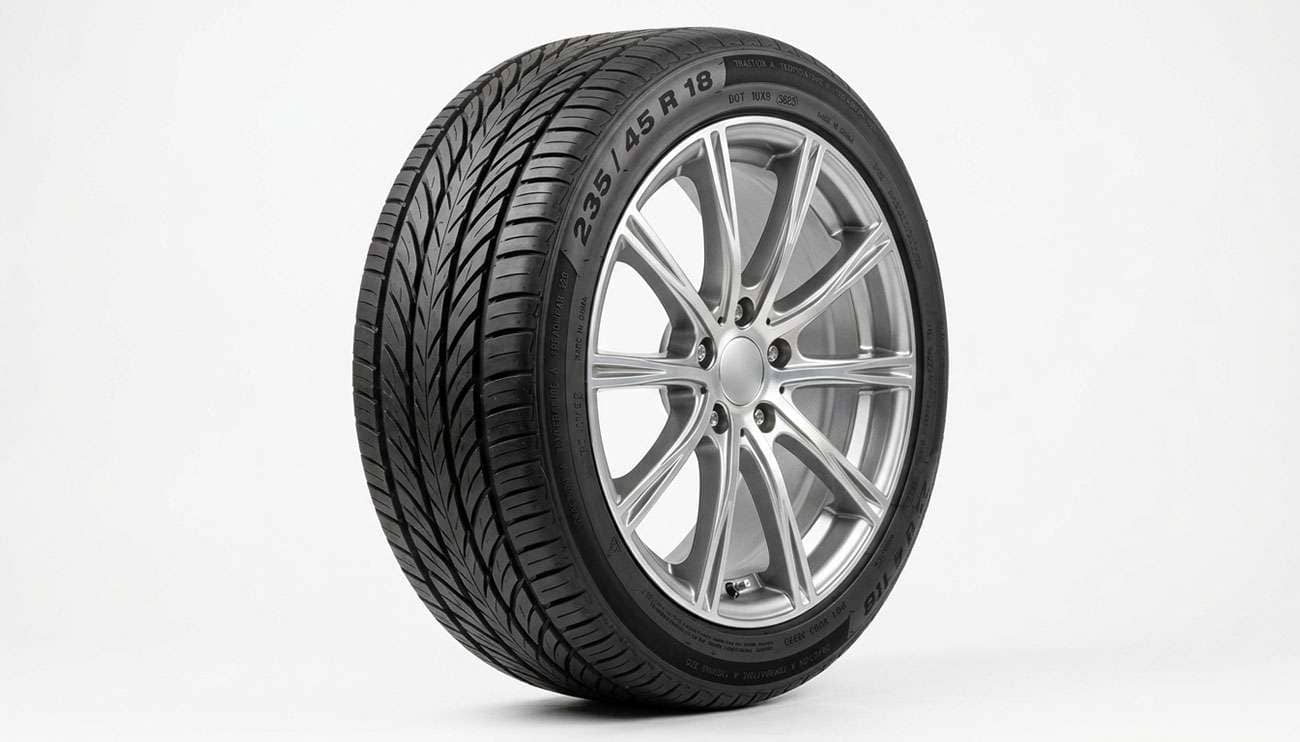
There is no single best 235/45R18, because this one size gets bolted to three very different kinds of car. Grand touring tires built for quiet and treadwear, ultra high performance tires built for grip, and a broad middle tier that splits the difference. Prices run from roughly $75 to nearly $500 a corner. The right answer depends entirely on which of those three jobs your car is asking the tire to do, and that is a question you can answer in about thirty seconds.
Here is the part nobody puts in front of you when you search this. Ranked lists for this size often open with winter tires. Those are excellent tires, and if you park outside in Minnesota you should own a set. But 235/45R18 is overwhelmingly a spring-through-fall size on sport sedans, compact luxury cars, and electric vehicles. The great majority of tires built in it carry a ZR speed rating, which tells you what the size is really for.
Most people landing on this question need an all-season, and they need to know which kind. So let us start there: the decision first, then the picks.
Answer the question in the first column and the rest of the table answers itself.
What Your Car Is |
Category to Buy |
What You Get |
What You Give Up |
Price Band |
|---|---|---|---|---|
Daily commuter sedan, highway miles, want it quiet |
Grand touring all-season |
Lowest noise, best ride, 60,000 to 80,000 mile warranties |
Steering response and dry limit grip |
$146 to $232 |
Sport sedan you actually drive, or a car that came with summer tires |
Ultra high performance |
Sharpest turn-in, shortest wet and dry stopping |
Treadwear, ride comfort, and road noise |
$130 to $241 |
Something in between, or you split the difference |
High performance all-season |
Most of the grip, most of the comfort |
Not the best at either extreme |
$118 to $224 |
Electric car, extra weight, instant torque |
EV-specific |
Higher load capacity, lower rolling resistance, foam noise damping |
Price, and a narrower menu |
$100 to $292 |
Selling the car, or need four tires today |
Value performance |
Legal, DOT-approved rubber for under $90 a corner |
Wet grip, tread life, and noise |
$74 to $130 |
The single most common mistake in this size is buying up a category you do not need. A quiet commuter on a grand touring tire is a better car than the same commuter on an ultra high performance tire that costs more, wears out in half the time, and roars on the freeway. Buy the category that matches the driving, then buy the best tire you can afford inside that category.
If you are not sure whether you want all-season or summer rubber underneath all this, our breakdown of summer tires versus all-season tires settles that question before you shop.
This is the right category for most people. Touring tires prioritize a quiet ride, long tread life, and predictable all-season traction. They are what your car probably wants unless it came from the factory wearing summer tires.
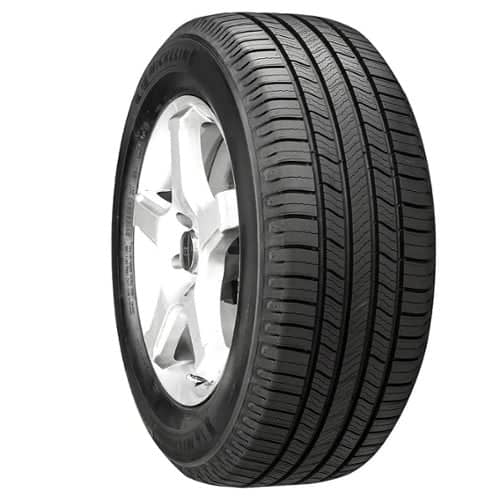
Michelin Defender2 at $227.87 is the treadwear play. Michelin builds this line around lasting, and if you keep cars a long time and hate shopping for tires, this is the one that makes the math work despite the sticker.
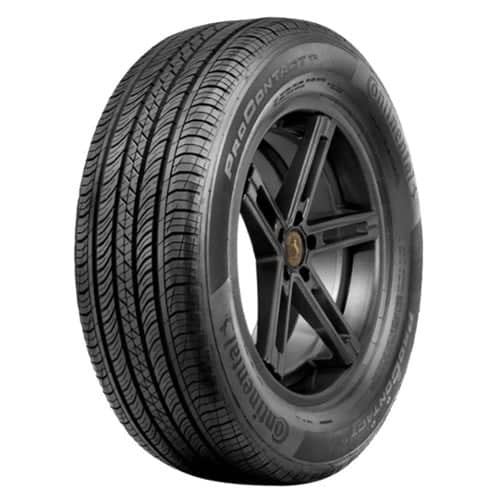
Continental ProContact TX starting at $146.21 is the value pick of the premium group and my most-recommended tire in this size. It is original equipment on a lot of the cars that wear 235/45R18 from the factory, which means it was engineered against the exact suspension you have.
Tire |
Price |
Category |
Best For |
|---|---|---|---|
Continental ProContact TX |
$146.21 |
Touring |
OE replacement, best all-around value |
Goodyear Assurance ComforTred Touring |
$147.58 |
Touring |
Ride comfort over broken pavement |
Yokohama AVID Ascend |
$157.10 |
Touring |
Quiet highway cruising |
Pirelli P7 All Season Plus 3 |
$162.96 |
Touring |
European sedans wanting a firmer feel |
Bridgestone Turanza EL400-02 |
$211.89 |
Touring |
OE-matched replacement on Japanese sedans |
Michelin Defender2 |
$227.87 |
Touring |
Maximum tread life |
Michelin Primacy Tour A/S |
$230.99 |
Touring |
Luxury sedans, lowest noise in the group |
If touring is where you are landing, our roundup of the best touring tires for daily commuters compares these lines across sizes with road-tested notes.
A large share of what is built in this size is engineered for grip rather than mileage. If your car came with a W or Y speed rating from the factory, or if you enjoy a back road, this is your category.
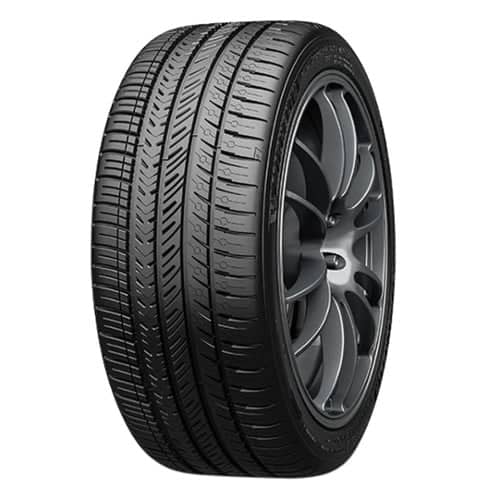
Michelin Pilot Sport A/S 4 at $224.99 is the tire I point most people to when they want performance without giving up winter capability. It is the benchmark ultra high performance all-season, and it is not close.
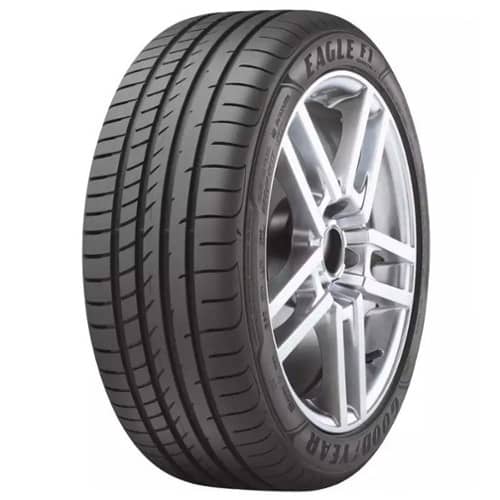
Goodyear Eagle F1 Asymmetric 2 at $145.75 is the value story of this entire article. Genuine flagship-lineage performance rubber for less than a lot of touring tires cost. It is an older design at this point, which is exactly why the price is what it is.
Tire |
Price |
Category |
Best For |
|---|---|---|---|
Kumho Ecsta PS31 |
$130.35 |
Ultra high performance |
Lowest price on a real UHP tire |
Goodyear Eagle F1 Asymmetric 2 |
$145.75 |
Ultra high performance |
Best grip per dollar |
Toyo Proxes 4 Plus |
$171.87 |
Ultra high performance |
UHP with better-than-usual tread life |
Hankook Ventus S1 Noble2 H452 |
$181.16 |
Ultra high performance |
Quiet UHP for luxury sport sedans |
Nokian ZLine A/S |
$184.44 |
Ultra high performance |
Performance in cold and wet climates |
Yokohama Advan Sport A/S Plus |
$198.99 |
Ultra high performance |
Dry handling with all-season rating |
Michelin Pilot Sport A/S 4 |
$224.99 |
Ultra high performance |
The overall benchmark |
One thing to check before you order in this category: the speed rating on your door placard. Dropping below your factory rating changes how the tire behaves at sustained speed and can affect your insurance position. Our guide to tire speed ratings covers what the letters actually mean. For a broader comparison across sizes, I put together nine best all-season performance tires with the testing notes behind these picks.
I am going to be straight with you about this category. There are 235/45R18 tires available at $74.16. They are DOT approved, they hold air, and they will pass inspection. They are not the same tire as a $200 Michelin, and the difference shows up in wet stopping distance, which is the one number that matters most when things go wrong.
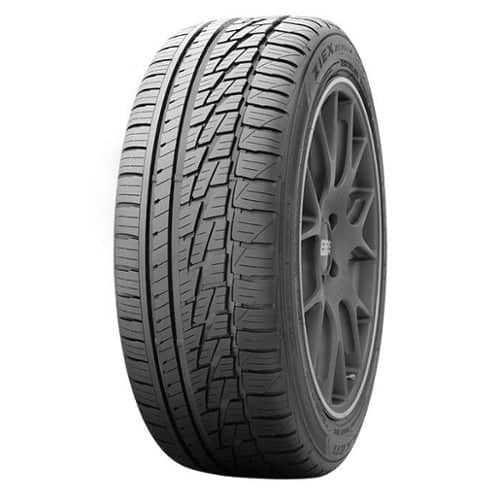
That said, budget is a real constraint and there is a smart way to spend here. My advice is to skip the absolute bottom and land in the $117 to $130 band, where you get established brands with real engineering behind them.
Tire |
Price |
Category |
Notes |
|---|---|---|---|
Accelera PHI R |
$74.16 |
Ultra high performance |
Lowest price in the size, short-term use |
Lionhart LH-503 |
$81.08 |
High performance |
Common budget pick, adequate dry grip |
Hercules Roadtour 455 Sport |
$86.53 |
Touring |
Better ride than most at this price |
Falken Ziex ZE950 A/S |
$117.94 |
High performance |
Best true value in the size, real brand engineering |
Goodyear Efficient Grip Performance |
$118.42 |
Performance |
Premium brand at a value price |
General Exclaim HPX A/S |
$127.91 |
Touring |
Continental-owned brand, solid all-around |
If you do buy at the bottom, buy all four. Mixing a cheap pair with a premium pair on the same axle set is worse than four consistent budget tires, because the car gets unpredictable exactly when you need it not to be.
Worth its own section because 235/45R18 is one of the highest-volume EV sizes in the country, and EVs ask different things of a tire. More curb weight, instant torque off the line, and no engine noise to mask road roar.
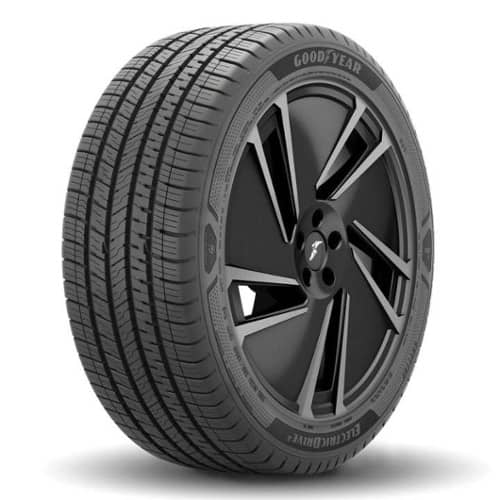
EV-specific options in this size run from the Lexani Volt-EC at $99.93 up to the Hankook iON evo IK01 at $291.99, with the Goodyear ElectricDrive 2 SCT at $260.99 and the Yokohama Advan Sport A/S EV at $211.99 in between.
You are not required to buy an EV-specific tire. What you are required to do is match the load index on your door placard, because an EV in this size frequently calls for an XL load rating that a standard-load tire will not meet. Check that number before anything else. A tire that is too light for the car is a tire that runs hot, and heat is what kills tires.
Yes, and by a wide margin. Industry fitment databases list 235/45R18 as a factory size on roughly 174 vehicle models from 58 manufacturers. Nearly every major tire brand makes something in it, usually several somethings across different categories.
What that means for you practically: you will never have trouble finding this size, you will always have real competition on price, and you will not get stuck paying whatever one supplier decides to charge. That is not true of every size. Plenty of tire sizes have a dozen options total and no price pressure at all.
It sits in the same tier of popularity as 225/45R18, 245/45R18, 235/55R18, and 225/40R18, which together cover most of the sport sedan and compact luxury market. If you are cross-shopping among those, our writeup on which 225/45R18 tires are good covers the size directly below this one.
Sport sedans, compact luxury cars, and a large share of the electric fleet. The size is a factory fitment across a wide swath of the market, most commonly on:
That list is a starting point, not a fitment. Trim level changes tire size more often than model does, and the same nameplate in the same year can leave the factory on three different sizes. The number on the placard inside your driver's door frame is the only one that counts. If your placard says something else, buy what the placard says.
Firestone runs from $192.99 to $255.77 in this size. Here is the lineup with current pricing.
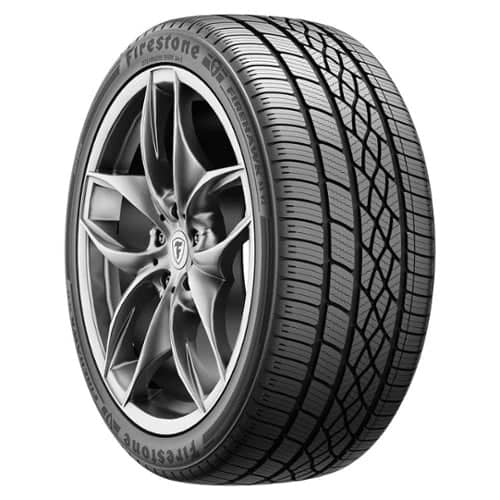
Firestone Model |
Price |
Category |
Best For |
|---|---|---|---|
All Season |
$192.99 |
Performance |
Basic year-round replacement |
Weathergrip |
$203.99 |
Touring |
Three-peak rated all-weather, real snow capability |
Firehawk AS |
$213.69 |
High performance |
Sport sedans wanting all-season |
Firehawk AS V2 |
$214.99 |
High performance |
Updated Firehawk, better wet grip |
Champion Fuel Fighter |
$216.72 |
Touring |
Fuel economy and tread life |
Firehawk Indy 500 |
$224.67 |
Ultra high performance |
Dry grip, the enthusiast Firestone |
Winterforce 2 |
$255.77 |
Winter |
Dedicated winter use only |
Worth noting what that price range tells you. Firestone in this size starts where several other brands' premium tires start. You can buy a Continental ProContact TX or a Goodyear Eagle F1 Asymmetric 2 for less than the least expensive Firestone here. Firestone makes good tires, and the Weathergrip in particular is a genuinely useful all-weather option if you see snow but do not want a second set of wheels. But if price is what brought you to this section, there are better values available in this size.
Moderately wide for a passenger car, and narrow for anything else. 235 millimeters is the section width, which works out to 9.3 inches across the widest part of the sidewall.
For context on where that sits: a compact economy car typically runs 195 to 215. A mid-size or sport sedan runs 225 to 245. A performance car runs 255 to 305. A half-ton truck runs 265 to 285. So 235 lands right in the middle of the passenger car range, which is a large part of why it is such a widely available size.
The 45 in the middle matters as much as the 235. That is the aspect ratio, meaning the sidewall stands 45 percent as tall as the tire is wide, which comes out to 4.16 inches. An aspect ratio of 45 or below is considered low profile, so this is a low-profile tire, with the handling benefits and the pothole vulnerability that come with it.
Overall, a 235/45R18 stands about 26.3 inches tall, rolls 82.7 inches per revolution, and turns roughly 766 times per mile. It is approved for wheel widths from about 7.5 to 9.0 inches.
For this size specifically, I would rank it Michelin, Continental, Goodyear, Bridgestone, Pirelli, then the strong second tier of Hankook, Yokohama, Toyo, and Kumho.
But reliability is a slippery word with tires, so let me define what I mean. A reliable tire brand is one where the tire you buy in year five performs like the tire the magazines tested in year one, where the warranty gets honored without an argument, and where the compound does not go hard and glassy at 20,000 miles. By that definition Michelin has been the most consistent name in the business for a long time, and Continental is right behind it while typically costing less.
The more useful frame is this: within a category, the tier of the tire matters more than the badge on it. A mid-tier Michelin touring tire and a mid-tier Continental touring tire are far more alike than a Michelin touring tire and a Michelin ultra high performance tire. Pick the category first, then pick the brand.
The five I would actually buy in this size, one per job:
For a wider look at brand-level track records, our 15 best tire brands ranked by safety and performance goes brand by brand.
No, not as a direct swap. A 235/45R18 is 3.6 percent taller than a 235/40R18, which puts it outside the industry standard 3 percent tolerance for a replacement size.
The numbers: a 235/40R18 stands 25.40 inches tall. A 235/45R18 stands 26.33 inches. That is 0.93 inches of additional overall diameter, or roughly half an inch of extra radius at the top and bottom of the tire.
What that actually causes:
Going the other direction, replacing a 235/45R18 with a 235/40R18, has the same problem in reverse and adds one more: less sidewall between your $400 wheel and the next pothole.
If you want to change size on this wheel, the right move is to stay inside 3 percent. From a 235/45R18, that means 225/45R18 at -1.5 percent or 245/45R18 at +1.4 percent are both safe. Our piece on 245/45R18 in inches walks through that wider option with the full dimensional comparison.
The best 235/45R18 is the one that matches what your car is doing, and this size gets fitted to cars doing three different things. For most drivers, a premium touring tire like the Continental ProContact TX at $146.21 is the right answer and the one I recommend most often. For anyone with a sport sedan or factory summer rubber, the Michelin Pilot Sport A/S 4 at $224.99 is the benchmark. If the budget is tight, the Falken Ziex ZE950 A/S at $117.94 is where I would stop rather than going lower.
The one thing I would not do is start from a ranked list before you know your category. This size covers commuters, sport sedans, and EVs, and a list that does not ask which one you have cannot answer the question. Check the placard, pick the category, then pick the tire.
Shop all 235/45R18 tires at Performance Plus Tire, or call us with your year, make, model, and trim and we will match you to the right category before you spend a dollar.
It depends on your car. For a daily commuter, the Continental ProContact TX at $146.21 is the best value in a premium touring tire. For a sport sedan or a car that came with summer tires, the Michelin Pilot Sport A/S 4 at $224.99 is the benchmark ultra high performance all-season. On a tight budget, the Falken Ziex ZE950 A/S at $117.94 is the lowest price at which you still get real engineering.
Very. Industry fitment data lists it as a factory size on roughly 174 vehicle models across 58 manufacturers, and nearly every major tire brand builds several options in it across different categories. That means consistent availability and genuine price competition, which is not true of every tire size.
Firestone runs from $192.99 for the All Season up to $255.77 for the Winterforce 2 in this size. The Firehawk AS is $213.69, the Firehawk AS V2 is $214.99, and the Firehawk Indy 500 is $224.67. Note that Firestone starts where several competing brands' premium tires start, so there are lower-priced premium options available in this size.
Sport sedans, compact luxury cars, and a large share of electric vehicles. Common fitments include the Tesla Model 3 on its standard 18-inch wheel, BMW 3 Series, Audi A3 and A4, Mercedes C-Class, Honda Accord Sport, Mazda6, Subaru WRX, Lexus IS, Kia Stinger, and Acura TLX. Trim level changes the size more often than the model does, so confirm against the placard in your driver's door frame.
Moderately wide for a passenger car, narrow for a truck. 235 millimeters is 9.3 inches of section width. Economy cars run 195 to 215, sport sedans run 225 to 245, and performance cars run 255 and up, so 235 sits in the middle of the passenger car range.
Not as a direct swap. A 235/45R18 stands 26.33 inches tall versus 25.40 inches for a 235/40R18, which is 3.6 percent taller and outside the industry standard 3 percent tolerance. Your speedometer would read about 3.6 percent slow, clearance drops by roughly half an inch, and stability control calibration drifts. Stay within 3 percent by using 225/45R18 or 245/45R18 instead.
In this size, Michelin has the most consistent long-term track record, with Continental close behind at a lower typical price, followed by Goodyear, Bridgestone, and Pirelli. Hankook, Yokohama, Toyo, and Kumho make up a strong second tier. That said, the category of tire matters more than the brand: a mid-tier touring tire from any premium brand will serve a commuter better than a performance tire from the same brand.
Michelin Pilot Sport A/S 4 at $224.99 for best overall, Continental ProContact TX at $146.21 for best value, Goodyear Eagle F1 Asymmetric 2 at $145.75 for most grip per dollar, Michelin Defender2 at $227.87 for longest tread life, and Falken Ziex ZE950 A/S at $117.94 for the best real tire on a budget. Each wins a different job rather than one winning outright.