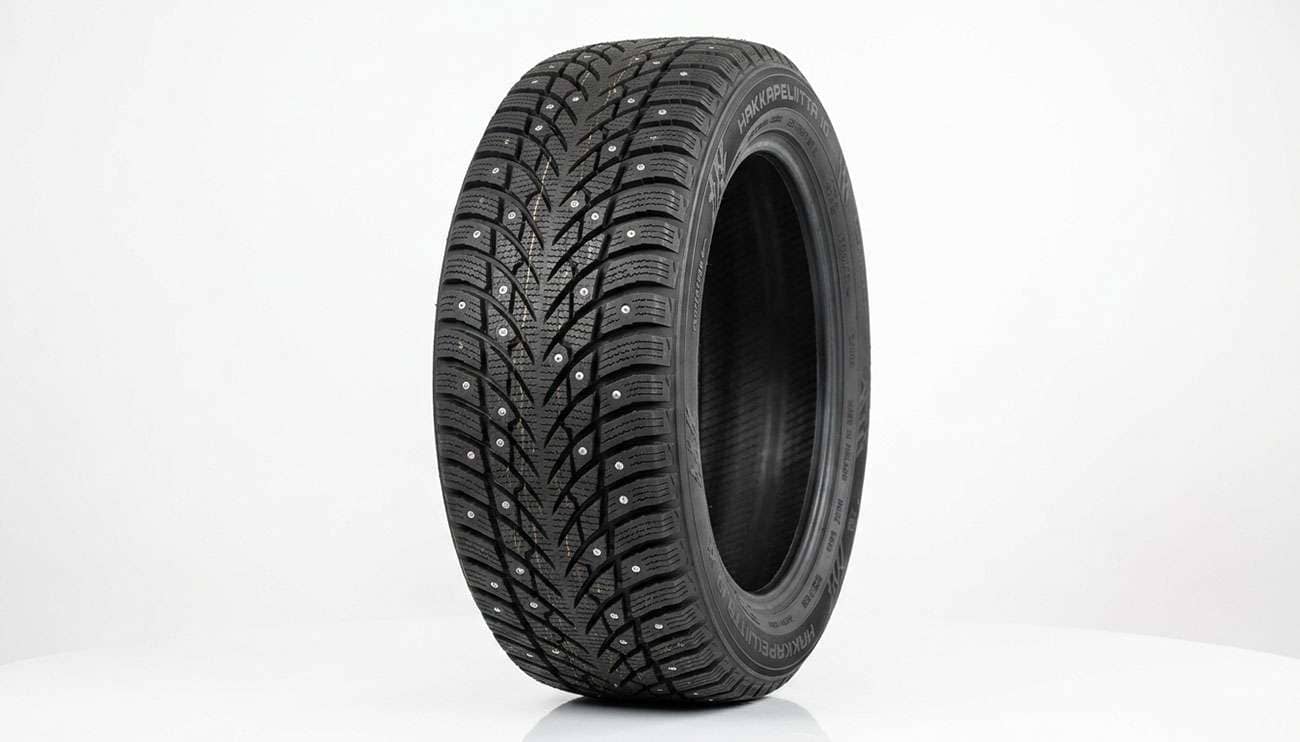
Short answer: on the first legal day in the state you are driving in, and not a day sooner. In most states the calendar decides it, not the weather. Thirty states set a fixed season, most opening October 1 or November 1 and closing between March 31 and May 1. California's runs November 1 through April 30. Seven states allow studs year-round, three only when roads are slick, eight ban or tightly restrict them, and two leave it a gray area. Most answers stop at "check your state." What it actually depends on is the rule type in every state on your route, and whether that state's end date can move.
I'm Hank Feldman. I opened Performance Plus Tire in Long Beach in 1971, and every fall since, somebody leans on the counter and asks: "It snowed in Mammoth last night, can I get my studs on today?" or "I'm moving to Spokane, are these legal up there?" Each has a different answer, and none depends on the weather report.
Your State's Rule |
When You Can Run Studs |
What Gets You a Ticket |
States |
|---|---|---|---|
Fixed calendar window (30 states) |
From the opening date to the closing date, snow or no snow |
Any day outside the window, even in a blizzard |
California, Washington, Oregon, New York, Pennsylvania and 25 more |
Year-round (7 states) |
Any day, within stud-size and vehicle limits |
Oversized studs, or studs on a vehicle the law excludes |
Colorado, Kentucky, New Hampshire, North Carolina, South Carolina, Vermont, Wyoming |
Conditions only (3 states) |
Only when snow, ice or other conditions make the road slick |
Running them on clear, dry roads |
Alabama, Georgia, New Mexico |
Banned or restricted (8 states) |
Only for exempt vehicles, certain visitors, or certain counties |
Running ordinary studs as a resident |
Hawaii, Illinois, Louisiana, Maryland, Michigan, Minnesota, Mississippi, Wisconsin |
Gray area (2 states) |
No season; the law only tolerates studs that do not damage the road |
Unclear, so ask before you drive on them |
Florida, Texas |
Find your row first. Then check the row for every state you will cross this winter, because the rule follows the pavement, not your license plate.
Your Winter Roads |
Best Tire Choice |
Why |
|---|---|---|
Glare ice near freezing, steep or shaded roads, in a state that allows studs |
Studded winter tires on all four wheels |
Studs grip best on wet ice right around 32 degrees F, where rubber struggles most |
Packed snow, slush, plowed highways |
Studless winter tires with the 3PMSF symbol |
Holds its own with studs on packed snow and grips better on bare pavement |
You live in, or regularly cross, a ban or restricted state |
Studless winter tires with the 3PMSF symbol |
Legal in all 50 states, with no deadline or visitor rule to track |
A few mountain trips a season from a mild-weather home |
3PMSF all-weather tires plus chains |
One set all year, and chains cover chain control |
Heavy-duty pickup over a state's stud weight or pressure limit |
Studless LT winter tires with the 3PMSF symbol |
Several states bar studs on heavier trucks; studless keeps you legal and keeps the load range |
Here is every state, checked against each state's own vehicle code or transportation department as of October 2026. The windows are the days studs are legal on public roads. Statutes change, so if a date is make-or-break for you, confirm it with that state's DOT before you book the install.
State |
When Studs Are Legal |
Limits and Exceptions |
|---|---|---|
Alabama |
Only when roads are slick |
No calendar window |
Alaska |
North of 60 degrees: Sept 16 to April 30. South: Oct 1 to April 14 |
Anchorage waits until Oct 1; state can extend by order |
Arizona |
Oct 1 to May 1 |
Studs max 3 percent of contact area |
Arkansas |
Nov 15 to April 15 |
1/16 inch max; $25 to $50 fine |
California |
Nov 1 to April 30 |
CHP can extend; studs never replace chains |
Colorado |
Year-round |
Up to 3/4-ton single-tired vehicles; 1/16 inch max |
Connecticut |
Nov 15 to April 30 |
Repeat fines up to $200 |
Delaware |
Oct 15 to April 15 |
Fines start at $25 |
Florida |
No season set |
Gray area: only studs that do not damage the road |
Georgia |
Only when roads are slick |
No calendar window |
Hawaii |
Banned |
Mauna Kea summit roads only |
Idaho |
Oct 1 to April 30 |
Lightweight studs only at sale |
Illinois |
Banned |
Rural mail carriers and some disability-plate vehicles, Nov 15 to April 1 |
Indiana |
Oct 1 to May 1 |
3/32 inch max |
Iowa |
Nov 1 to April 1 |
1/16 inch max; $30 fine |
Kansas |
Nov 1 to April 15 |
Up to 3/4-ton single-tired vehicles |
Kentucky |
Year-round |
No state stud law |
Louisiana |
Banned |
Chains allowed when needed |
Maine |
Oct 2 to April 30 |
Commissioner can extend by permit |
Maryland |
Nov 1 to March 31, five western counties only |
Allegany, Carroll, Frederick, Garrett, Washington; out-of-state vehicles allowed |
Massachusetts |
Nov 2 to April 30 |
Fine up to $50 |
Michigan |
Restricted |
Only studs meeting a state road-wear standard; ask a local shop |
Minnesota |
Banned |
Visitors 30 days or less in six months; rural mail carrier permits |
Mississippi |
Banned |
No exceptions for cars |
Missouri |
Nov 1 to March 31 |
No exceptions in statute |
Montana |
Oct 1 to May 31 |
1/16 inch max |
Nebraska |
Nov 1 to April 1 |
School buses, mail carriers, emergency vehicles exempt |
Nevada |
Oct 1 to April 30 |
Retractable studs retracted off-season |
New Hampshire |
Year-round |
No state stud law |
New Jersey |
Nov 15 to April 1 |
Set by MVC rule |
New Mexico |
Only when roads are slick |
No calendar window |
New York |
Oct 16 to April 30 |
3/32 inch max |
North Carolina |
Year-round |
1/16 inch max |
North Dakota |
Oct 15 to April 15 |
1/16 inch max |
Ohio |
Nov 1 to April 15 |
Retractable studs retracted off-season |
Oklahoma |
Nov 1 to April 1 |
Vehicles rated 2 tons or less |
Oregon |
Nov 1 to March 31 |
ODOT can adjust; $165 fine |
Pennsylvania |
Nov 1 to April 15 |
Governor can extend; $35 to $55 fine |
Rhode Island |
Nov 15 to April 1 |
1/16 inch max; $100 fine |
South Carolina |
Year-round |
1/16 inch max |
South Dakota |
Oct 1 to April 30 |
Retractable studs retracted off-season |
Tennessee |
Oct 1 to April 15 |
Not over 9,000 lbs |
Texas |
No season set |
Gray area: no stud law; road-damage ban applies |
Utah |
Oct 15 to March 31 |
Not over 9,000 lbs GVWR |
Vermont |
Year-round |
No date window in law |
Virginia |
Oct 15 to April 15 |
10,000 lbs or less; 1/16 inch max |
Washington |
Nov 1 to March 31 |
$137 fine; no 2026 extension; $5 per new studded tire |
West Virginia |
Nov 1 to April 15 |
No studs on tires above 40 psi |
Wisconsin |
Banned |
Out-of-state cars passing through up to 30 days, Nov 15 to April 1 |
Wyoming |
Year-round |
Approved stud types only |
If two sources give you dates a day apart, here is why. Many states write the law backward, as a ban period. Massachusetts bans studs "between May the first and November the first," so one reading lets you mount on November 1 and another says the 2nd. Kansas allows studded tires to April 15 but add-on stud devices only to April 1. When in doubt, use the later start and the earlier end, and you will never be on the wrong side of the line.
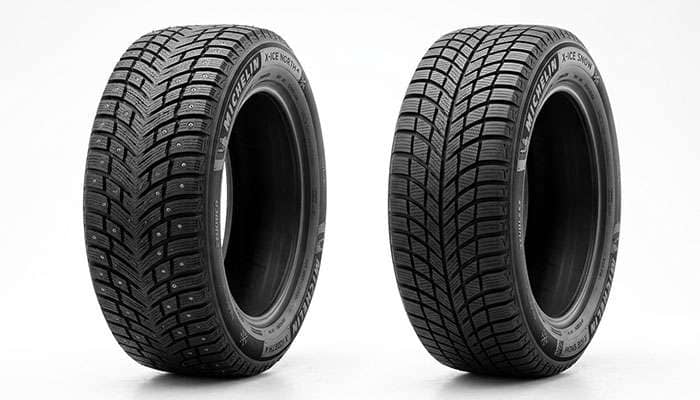
In 14 states, yes. Northern Alaska opens first, on September 16. Arizona, Idaho, Indiana, Montana, Nevada, South Dakota, Tennessee, and southern Alaska open October 1. Maine opens October 2. Delaware, North Dakota, Utah, and Virginia open October 15, and New York follows on October 16. The seven year-round states are open any day.
Everywhere else with a season, you wait for November. California, Iowa, Kansas, Missouri, Nebraska, Ohio, Oklahoma, Oregon, Pennsylvania, Washington, and West Virginia open November 1, and Massachusetts on the 2nd. Arkansas, Connecticut, New Jersey, and Rhode Island hold out until November 15.
An early storm does not open the season. If it snows in Washington on October 25, your studs are still illegal until November 1. For winter tires without studs, timing is about temperature, not law, and our guide on when to put winter tires on covers that side of it.
The end date is where the tickets get written. Nobody gets pulled over for studs in January. They get pulled over on April 2.
Four states close on March 31: Missouri, Oregon, Utah, and Washington. Iowa, Nebraska, New Jersey, Oklahoma, and Rhode Island close April 1. Southern Alaska closes April 14. Nine states close April 15, nine more on April 30 (northern Alaska among them), Arizona and Indiana on May 1, and Montana holds out until May 31.
Some states let an official move the deadline when winter hangs on. Washington's DOT can set additional periods, Oregon's DOT can adjust the season for specific areas, and California's CHP commissioner can extend it in bad-weather areas. Alaska's commissioner can issue emergency orders, Pennsylvania's governor can extend by executive order, and Maine's transportation commissioner can extend by permit.
Notice the word "can." In March 2026, Washington's DOT said conditions did not support a statewide extension. Most fixed-window states give nobody the power to extend at all. Until your state announces one in writing, the date in the table is the date.
Yes, from November 1 through April 30, anywhere in the state. That is Caltrans' own wording, and it applies in Long Beach the same as on Echo Summit.
Here is where California drivers trip up: studs do not get you through chain control. Caltrans says studded snow tires are not traction devices and cannot replace chains. Studded tires marked M+S count as snow tires, so at R1 a light vehicle with snow tires on the drive wheels rolls through, as long as it carries chains. At R2, a two-wheel-drive car with studs still chains up, and at R3 everybody does. Our guide to whether you need chains with 4WD or AWD in California breaks down every level.
For most Southern California drivers, I steer them away from studs. Most of your winter miles are dry freeway getting to the snow, the surface where studs are worst. A studless or 3PMSF all-weather tire plus chains in the trunk covers a weekend in Mammoth or Big Bear better.
This is the part nobody puts in front of you: the law that applies is the law of the road under your tires, not the state on your registration. Each state decides whether to cut visitors any slack, and most do not.
Washington's DOT says flatly there is no individual exception or out-of-state waiver. If your studs are legal in Idaho until April 30, they are still illegal the minute you cross into Washington after March 31.
A few ban states do carve out visitors. Wisconsin lets cars with out-of-state registrations pass through for up to 30 days, inside its November 15 to April 1 window. Minnesota lets nonresidents use studs "occasionally," which the statute defines as no more than 30 days in any six months, and the exception disappears if you work or go to school in Minnesota. Maryland allows vehicles registered out of state to use them. Illinois, Louisiana, Mississippi, and Hawaii offer no visitor exception at all.
A Montana driver with studs is legal at home until May 31 and illegal in Washington or Oregon from April 1. Check every state on the route.
On light trucks, usually. On heavy-duty trucks, check the fine print, because several states draw the line by weight or pressure, not by season.
Colorado and Kansas allow studs only on passenger vehicles and single-tired vehicles rated at three-quarter ton or less. Oklahoma limits them to vehicles rated two tons or less. Tennessee and Utah bar them on vehicles over 9,000 pounds, Virginia over 10,000 pounds, and Washington on vehicles of 10,000 pounds or more, most of them with exceptions for emergency vehicles. West Virginia bars studs on any tire whose recommended pressure tops 40 psi, except on school buses, and many heavy-duty LT tires run well above that.
If you drive a one-ton pickup or haul a camper, check your door-jamb weight rating before you buy studs. A studless LT winter tire with the right load range keeps you legal and keeps the capacity your truck needs.
On one surface, yes. On most others, no.
A stud is a tungsten carbide pin set in a metal jacket, pressed into a molded hole in the tread so it sticks out about a millimeter. Near freezing, ice carries a thin film of meltwater, and rubber rides on that film the way a tire hydroplanes on a flooded freeway. The pin punches through it and bites the ice underneath.
That is why studs shine on glare ice around 32 degrees F and fade as it gets colder. A 2002 review prepared for the Washington State Department of Transportation found the stud advantage largest on smooth, wet ice near freezing and shrinking as ice gets colder and drier. One Alaska study it cites found studs performing about like ordinary highway tires below 0 degrees F.
On packed snow, the same review found mixed results, with some tests showing studless tires stopping shorter. On bare pavement, studs work against you: the pins hold part of the tread off the road. Older testing on concrete found studded tires needing 11 to 16 percent more distance to stop on dry pavement and up to 32 percent more on wet.
Here is the shop-floor version. If your winter is plowed highways, slush, and packed snow, a studless winter tire with the three-peak mountain snowflake symbol covers you in every state with no calendar to watch. Studs earn their keep on glare ice, week after week. Still deciding? Our studded vs. studless winter tire breakdown walks through the tradeoff.
Because the pin that bites ice also chews pavement, and the state pays for the pavement.
On bare asphalt, carbide tips pluck tiny pieces of stone from the surface. Engineers call it raveling. Thousands of cars a day running in the same two wheel paths turn that into ruts. In a 2021 technical brief, the Washington State Department of Transportation put studded-tire damage to its asphalt at $8 million to $10 million a year, and noted that pavement gets scheduled for resurfacing once ruts reach half an inch.
Ruts also hold water, and a rutted lane in a spring rain is a hydroplaning lane for every driver on it. The season windows are a trade: a few months of ice grip against the rest of the year's road wear. That is also why Washington, Oregon, and Idaho limit stud weight at the point of sale. Lighter studs do less damage.
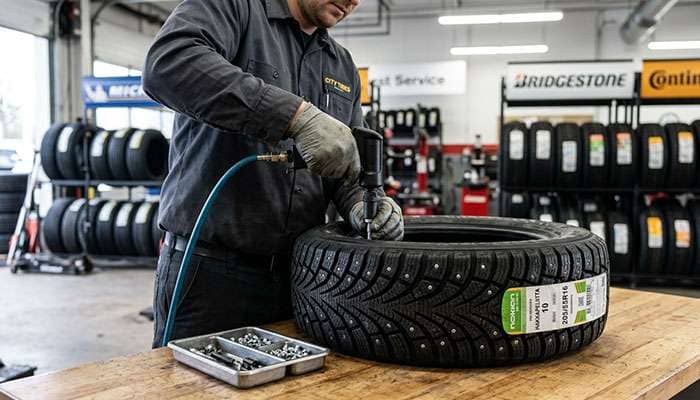
Gently, for the first few hundred miles. Most people never hear this, and it decides how many studs you still have in February.
When a shop installs studs, the tread is lubricated so each stud slides into its hole. The rubber then has to close down around the stud's flange to lock it in. Until it does, a hard launch, a panic stop, or a fast on-ramp can lever studs loose or throw them out.
Typical manufacturer guidance runs about 300 miles (500 km): the first 60 miles or so slow and easy, with no hard acceleration, braking, or cornering, and some makers say to stay under about 60 mph for the rest. That is why I tell customers to mount studs at the start of the window, not the day before the first storm. Do your break-in miles on dry roads.
Two more rules from the U.S. Tire Manufacturers Association: only new tires should be fitted with studs, and studded tires belong on all four wheel positions. Studs on one axle give the two ends of the car very different grip on ice, and that is how a car swaps ends.
Leaving studs on into May feels free. The bill comes due in this order.
1. A ticket. Washington's fine is $137 and Oregon's is $165. Anchorage writes $50 per tire. Pennsylvania's climbs the longer you wait: $35 through May, $45 in June, $55 from July on.
2. Studs ground down on dry pavement. Every bare mile shortens the carbide. The Washington review found that once protrusion drops below about 0.6 mm, a stud does next to nothing on ice. You bought them for January and spent them in April.
3. Longer stops in spring rain. On wet concrete, older testing showed studded tires needing up to 32 percent more distance to stop.
4. Thrown studs and empty holes. Warm rubber and highway speed work studs loose, and since studs belong only in new tires, you cannot simply re-stud a worn set.
5. Winter rubber wearing away. Winter compounds stay soft in the cold and wear fast on warm pavement, and tread depth is what makes a winter tire work in deep snow. Check yours against our tread depth replacement guide before counting on another season.
6. A new set next fall. Add it up and a set that should have carried you through several winters is done early. The cheapest move on this list is pulling them on time.
Do this in September, not the morning of the first storm.
Step 1: Look up the window for every state you will drive in. Start with the table above, then confirm with that state's DOT, because legislatures do change dates.
Step 2: Book the install for the first week of your window. Shops in snow country get slammed the week the first storm hits. Go early and you get your appointment plus dry-road break-in time.
Step 3: Stud new tires only. Most studdable winter tires ship without studs, so order early enough for the shop to stud them before mounting.
Step 4: Mount them on all four wheels. Matching grip front and rear keeps the car balanced on ice.
Step 5: Drive the first 300 miles gently. Easy starts, easy stops, moderate speeds.
Step 6: Inspect last season's set before it goes back on. Look for cracks, cuts, bulges, and missing studs. If a sidewall shows damage, read our guide on tire sidewall damage and whether it is safe to drive first.
Step 7: Put the removal date on your calendar. Treat an extension as a bonus, not a plan.
Step 8: Keep them on their own wheels. A dedicated winter set turns the swap into a lug-nut job, so you actually do it on time. Our guide to winter wheel and tire packages covers how to size one.
When you are ready to pick a set, browse our winter tires. If your state bans or limits studs, look for the mountain snowflake on a studless model.
The day you can put studded tires on is printed in a statute, not in the forecast. Thirty states give you a fixed window, seven never close, three open only when the road turns slick, and eight ban or tightly restrict them. The window that matters is the one for the pavement you are on, which is why a winter road trip means checking every state on the map, not just home.
Mount them early in your window so the studs seat on dry roads, run them on all four wheels, and pull them on the closing date. If your state bans studs, your truck is over the weight line, or your winter is mostly slush and plowed highway, a studless winter tire with the mountain snowflake does the job in every state, every day. After fifty-plus years of fall rushes at the counter, that is the advice I give my own family.
Studded tires are legal in Washington from November 1 through March 31. Tickets can be written starting April 1 unless WSDOT announces an extension, and the fine is $137.
Not in a state with a fixed window, unless an official announces an exception. Massachusetts lets the registrar authorize earlier use when weather requires it, and a few other states allow extensions, but none of them happen automatically.
Hawaii, Illinois, Louisiana, Maryland, Michigan, Minnesota, Mississippi, and Wisconsin ban or tightly restrict studded tires for ordinary drivers, with narrow exceptions for certain vehicles, counties, or visitors.
You can be ticketed. Washington's fine is $137, Oregon's is $165, Rhode Island's is $100, and Pennsylvania's rises from $35 to $55 the longer the studs stay on.
No. The U.S. Tire Manufacturers Association says only new tires should be fitted with studs. The stud holes in a used tire collect grit and pebbles, and a stud pushed in on top of that will not seat properly.
Yes. The U.S. Tire Manufacturers Association recommends studded tires on all wheel positions so the front and rear have matching grip on ice.