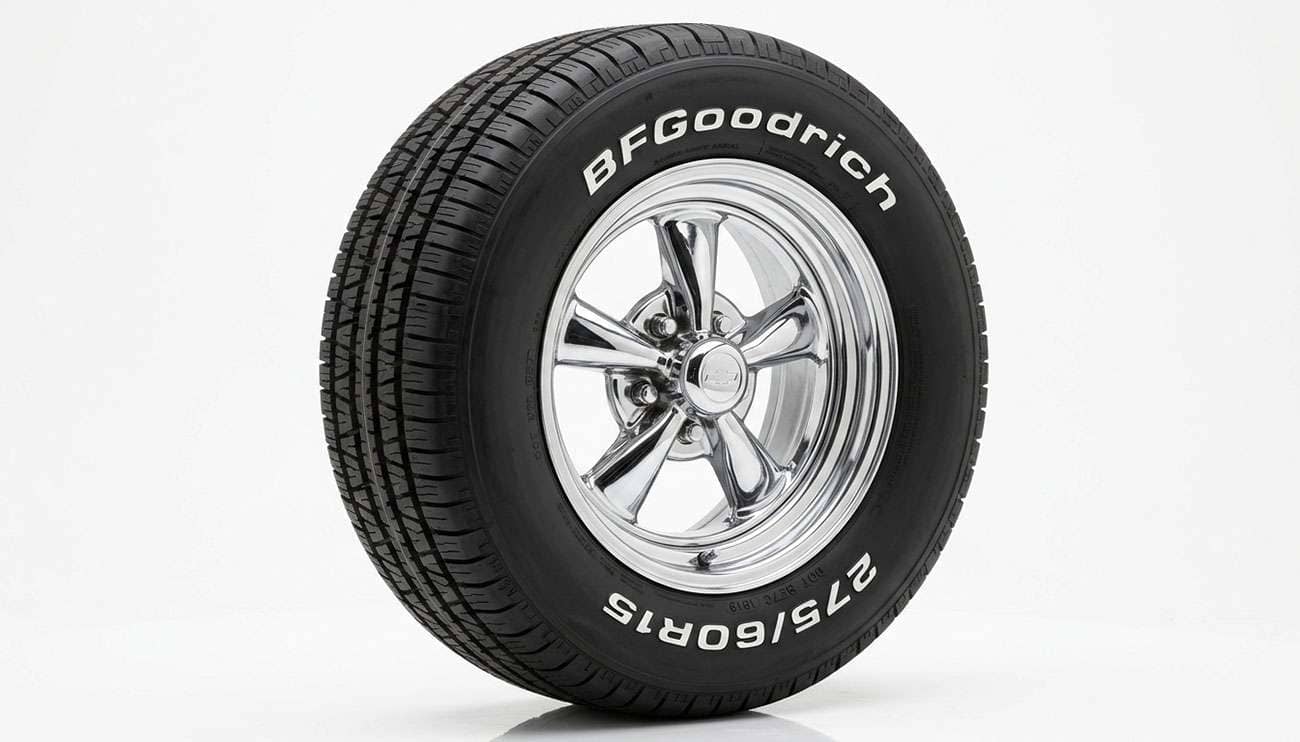
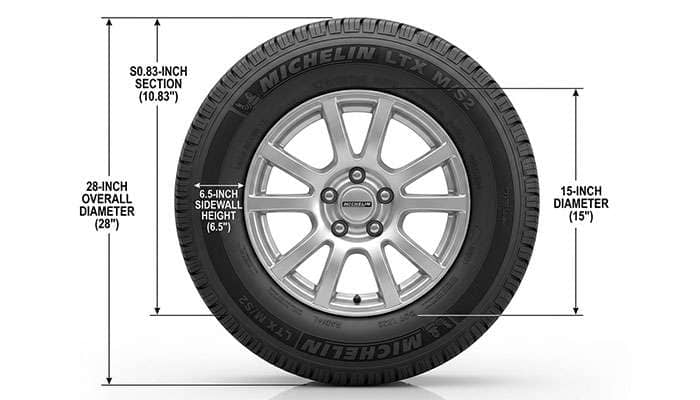
A 275/60R15 is equivalent to a tire that measures 28.0 inches in overall diameter, 10.83 inches in section width, and rides on a 15-inch wheel with a 6.5-inch sidewall. In flotation terms it works out to roughly a 28x10.8R15, and it sits squarely in the territory of the classic 60-series raised-white-letter muscle car tire. The circumference comes to about 88 inches, which puts it at approximately 720 revolutions per mile. If you came here trying to figure out what this size really is and what you can safely swap it for, this guide breaks down every number and every comparison with the actual math behind it.
This is worth getting precise about because the 275/60R15 lives in a different world than the 275-series sizes most charts show you. The widely covered 275/60R20 is a 33-inch truck tire. Drop that same 275-width, 60-aspect tire onto a 15-inch wheel and you get a 28-inch-tall street and strip tire, the kind that has been bolted to the back of muscle cars and hot rods for decades. Same first two numbers, five inches of difference in overall height. Let's work through exactly what that means.
Here is the complete dimensional breakdown of a 275/60R15, converted from metric to the inch measurements you actually use when checking clearance and fitment:
One caveat that matters for tight builds: the 28.0-inch figure is the calculated nominal diameter. Actual molded dimensions vary by a few tenths of an inch between manufacturers and even between a performance radial and a drag radial in the same size. A street tire and a DOT drag tire stamped 275/60R15 can measure differently because of tread depth and carcass construction. When clearance is critical, measure the specific tire you intend to run rather than relying on the nominal number.
This is a metric tire size, so unlike an imperial size such as 28x10.50R15 it does not state its dimensions directly. Each value is either a measurement or a percentage that you convert. Here is what each part is telling you.
The first number is the section width in millimeters, measured at the widest point of the inflated tire. At 275 mm, that converts to 10.83 inches. This is the tread-to-pavement width that gives the tire its footprint and its planted look on a muscle car or a street machine. It is also the number that drives most clearance questions, since width is what contacts the inner fender, the leaf spring, or the quarter panel before height ever becomes an issue.
The 60 is the aspect ratio, and it is a percentage rather than a measurement. It means the sidewall height equals 60 percent of the section width. So the sidewall measures 275 mm times 0.60, which equals 165 mm, or 6.5 inches. A 60-series sidewall is a balanced choice: tall enough to give a forgiving ride and some traction-friendly flex at the strip, but short enough to keep the steering and the launch from feeling vague. If the aspect ratio concept is new to you, our breakdown of tire aspect ratio decoded explains exactly how that one number reshapes a tire.
The R stands for radial construction, and the 15 is the wheel diameter in inches. To find the overall tire height, you take the wheel diameter and add two sidewalls: 15 inches plus 6.5 inches plus 6.5 inches equals 28.0 inches. That 15-inch wheel is the entire reason this size stays short. The same 275/60 tire on a 20-inch wheel grows to nearly 33 inches simply because there are five more inches of wheel in the middle.
With an 88-inch circumference, a 275/60R15 turns about 720 times per mile. That figure feeds directly into your speedometer reading and your effective gear ratio, which matters if you are swapping into this size from something taller or shorter. For rim width, a 275-section tire is happiest on an 8-inch-wide wheel, and it will mount and perform correctly anywhere from 7 to 9 inches. Go narrower and the tread crowns; go wider and you start stretching the carcass.
There are three useful ways to answer "what is a 275/60R15 equivalent to," depending on what you are trying to match.
The flotation (inch) equivalent is approximately a 28x10.8R15. Flotation sizing states dimensions in inches directly, so a 275/60R15 translates almost exactly to a 28-inch-tall, roughly 10.8-inch-wide tire on a 15-inch wheel. If you are cross-shopping a metric performance radial against an inch-sized tire, that is your reference point.
The classic equivalent is the old 60-series raised-white-letter muscle tire. Before metric sizing took over, this footprint was sold under alphanumeric designations in the G60-15 range, the fat rear tire that defined the muscle car and pro-street look. A modern 275/60R15 is the direct descendant of that tire, which is why it remains the go-to rear size for street and strip builds. For more on how period sizing maps to modern rubber, see our guide to the most popular vintage tire sizes.
The direct-swap equivalents are the sizes that fall within 3 percent of the 28.0-inch diameter, which is the accepted window for a safe substitution without throwing off your speedometer or your gearing. A 285/60R15 at 28.46 inches and a 255/60R15 at 27.05 inches both sit close enough to consider, with the differences laid out in the comparisons below. At Performance Plus Tire we stock this size in everything from street radials to drag tires; you can browse the full lineup of 275/60R15 tires at Performance Plus Tire.
These are the head-to-head comparisons that come up most often with this size. The table puts the core numbers side by side, and the sections below answer the specific questions buyers ask.
Feature |
275/60R15 |
255/60R15 |
285/60R15 |
275/50R15 |
|---|---|---|---|---|
Overall Diameter |
28.0 in |
27.1 in |
28.5 in |
25.8 in |
Section Width |
10.83 in |
10.04 in |
11.22 in |
10.83 in |
Sidewall Height |
6.5 in |
6.0 in |
6.7 in |
5.4 in |
Revs Per Mile |
720 |
746 |
709 |
781 |
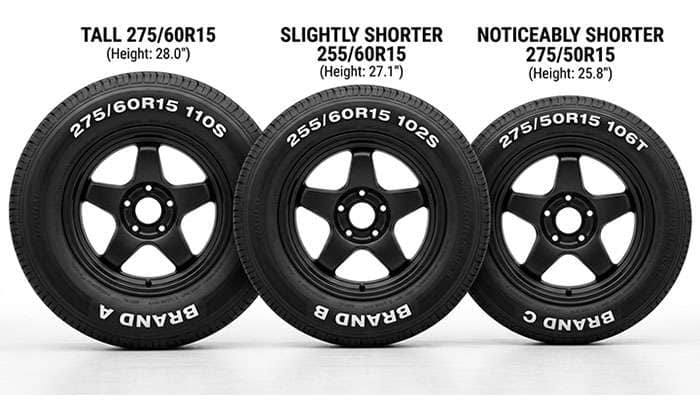
The difference between a 255/60R15 and a 275/60R15 comes down to width first and height second. The 275 is 0.79 inches wider (10.83 vs 10.04 inches) because of the 20 mm larger section width. It is also 0.94 inches taller overall (28.0 vs 27.1 inches), since a wider tire at the same 60-percent aspect ratio carries a proportionally taller sidewall. The practical result is that the 275 gives you a bigger contact patch and a slightly taller stance, while the 255 is the lighter, narrower option that fits more easily under a stock car. The two are close enough in diameter, about 3.4 percent apart, that swapping affects your speedometer only marginally.
A 275/50R15 is exactly as wide as a 275/60R15 at 10.83 inches, because both share the 275 mm section width. What changes is height. Dropping the aspect ratio from 60 to 50 shortens the sidewall from 6.5 to 5.4 inches and brings the overall diameter down from 28.0 to 25.8 inches, a 2.2-inch reduction. So if you want the same tread width but a shorter, lower-profile look that tucks better and sharpens steering response, the 275/50R15 delivers it. If you want more sidewall for ride quality and a taller stance, the 60-series is the call.
At the same aspect ratio and wheel diameter, a 285 is taller than a 275. Comparing a 285/60R15 to a 275/60R15, the 285 measures 28.5 inches versus 28.0 inches, making it about 0.5 inches taller, and it is also 0.39 inches wider. This happens because the sidewall is a percentage of the width: a wider tire at the same aspect ratio automatically gets a taller sidewall. The rule only holds when the aspect ratio matches, though. A 285/50 could easily end up shorter than a 275/60, so always compare the full size rather than just the width number.
No. A 275/60R15 is a 28-inch tire, not a 33. The confusion comes from the 275 width appearing on much larger sizes: a 275/60R20, for example, stands almost exactly 33 inches tall because it adds a 20-inch wheel to the same 275/60 proportions. The width alone tells you nothing about overall height; the wheel diameter and aspect ratio do. A 275-width tire is only a 33-inch tire when it is built on a tall enough wheel and sidewall combination, which the 15-inch version is not. If you want the genuine 33-inch member of this family, that is the 275/60R20 and what it is equivalent to.
Yes. Stepping up from the 15-inch world to the 20-inch sizes that share this width, a 285/60R20 measures 33.46 inches in diameter against 32.99 inches for a 275/60R20, making the 285 about 0.5 inches taller. It is the same principle at work as the 15-inch comparison above: the extra 10 mm of width adds a proportionally taller sidewall at the matching 60 aspect ratio. The height gap is small but real, and on a truck it translates to a bit more ground clearance and a slightly slower speedometer reading.
Whenever you change tire size, two questions decide whether the swap is clean or a problem: does the new diameter stay close enough to the original, and does the extra width physically fit. Here is how to evaluate both.
The 3% rule is the guideline that a replacement tire's overall diameter should stay within 3 percent of the original. Inside that window your speedometer, odometer, anti-lock braking, and traction-control calibrations remain accurate enough to drive on without recalibration. Outside it, your speedometer reads progressively further off and your effective gear ratio shifts noticeably. For a 28.0-inch 275/60R15, the 3 percent window runs roughly from 27.2 to 28.8 inches, which is why a 285/60R15 (28.5) is a safe swap while jumping to something an inch taller is not. We cover the math in full in our explainer on the 3 percent rule for tires.
In most cases, yes, but verify clearance first. Going from a 275 to a 285 at the same aspect ratio and wheel adds 10 mm of width, which is about 5 mm of extra tire on each side, plus roughly half an inch of overall height. That stays inside the 3 percent diameter window, so it will not meaningfully affect your speedometer. The question is fitment: that extra width can be the difference between clearing the inner fender and rubbing at full lock or under suspension compression, especially on a lowered car or one with a tight wheel well. Measure your current clearance before committing, and remember a wider tire usually wants the next rim width up to sit correctly. Our deeper look at the 275 vs 285 tire comparison walks through the trade-offs.
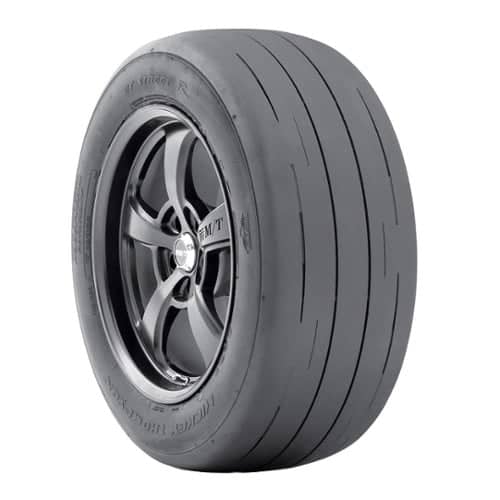
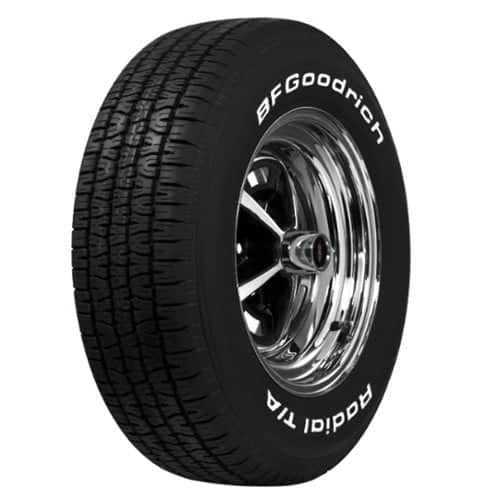
Because this is a classic muscle and street-strip size, the available tread choices reflect that. For a street-driven car that wants the period-correct raised-white-letter look with real performance, the BFGoodrich Radial T/A and the Cooper Cobra Radial G/T are the long-standing favorites. If the car sees the strip, the Mickey Thompson ET Street R and Sportsman S/T give you DOT-legal drag traction, while the Diamond Back Redline option delivers a vintage redline aesthetic on a modern radial casing. This size is a staple on rear-staggered builds, so if you are running a narrower front and a fat rear, our guide to the muscle car staggered setup covers how to size it correctly. And if you are still deciding what belongs under a classic, our overview of what tires muscle cars use from street to strip lays out the full picture.
A 275/60R15 is equivalent to a 28.0-inch-tall, 10.83-inch-wide tire on a 15-inch wheel, which translates to a flotation size of roughly 28x10.8R15 and carries on the legacy of the classic 60-series muscle car tire. Its closest direct swaps within the 3 percent rule are the 285/60R15, which adds about half an inch of height and width, and the 255/60R15, which is a touch narrower and shorter. It is emphatically not a 33-inch tire; that figure belongs to the 275/60R20, five inches of wheel away. Whether you are matching a replacement, planning a staggered setup, or chasing a period-correct look, the numbers here give you everything you need to choose with confidence.
The essentials to remember about the 275/60R15 size and its equivalents:
A 275/60R15 measures approximately 28.0 inches in overall diameter, 10.83 inches in section width, and has a 6.5-inch sidewall height on a 15-inch wheel. Its circumference is about 88 inches, and it completes roughly 720 revolutions per mile.
Not on a 15-inch wheel. A 275/60R15 is a 28-inch tire, not a 33. The 275-width size that measures close to 33 inches is the 275/60R20, which is taller only because it uses a 20-inch wheel. Width alone does not determine height — the wheel diameter and aspect ratio do.
A 275/60R15 is 0.79 inches wider (10.83 vs 10.04 inches) and 0.94 inches taller (28.0 vs 27.1 inches) than a 255/60R15. The 275 gives a larger contact patch and a slightly taller stance, while the 255 is narrower and fits more easily under a stock car. The two are within about 3.4 percent in diameter.
A 275/50R15 is 10.83 inches (275 mm) wide, exactly the same width as a 275/60R15, because both share the 275 mm section width. The difference is height: the 275/50R15 stands 25.8 inches tall versus 28.0 inches for the 60-series, due to its shorter 5.4-inch sidewall.
At the same aspect ratio and wheel diameter, a 285 is taller. A 285/60R15 measures 28.5 inches versus 28.0 inches for a 275/60R15, about 0.5 inches taller, because the sidewall is a percentage of the width. This only holds when the aspect ratios match, so always compare the complete tire size.
Usually yes, but check clearance first. Moving from a 275 to a 285 at the same aspect ratio and wheel adds about 5 mm of width per side and roughly half an inch of height, which stays within the 3 percent diameter rule so your speedometer is barely affected. The concern is whether the extra width clears your fenders and suspension, especially on a lowered vehicle.
Yes. A 285/60R20 measures 33.46 inches in diameter compared to 32.99 inches for a 275/60R20, making it about 0.5 inches taller. The wider tire carries a proportionally taller sidewall at the same 60 aspect ratio.