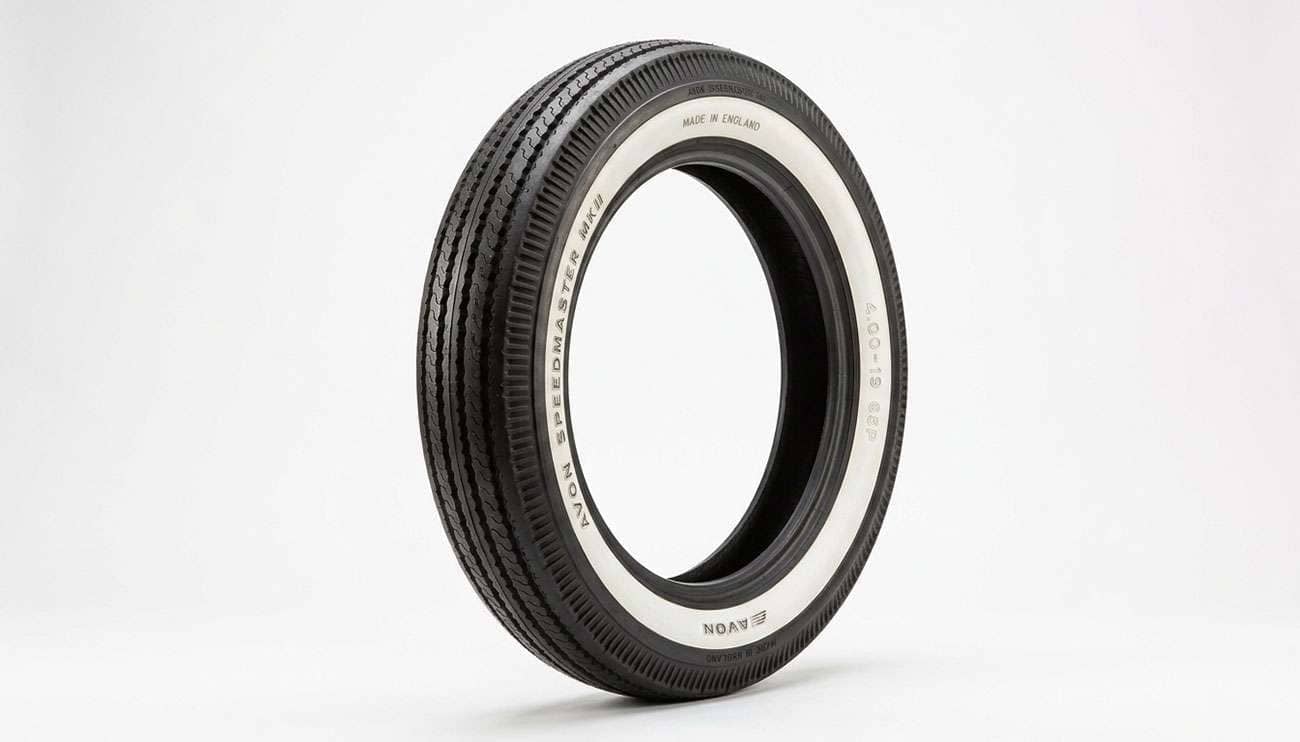
Spend any time shopping for tires for a classic bike and you'll feel the sticker shock fast. A modern motorcycle tire might run you well under a hundred dollars, yet a period-correct vintage tire can climb past four hundred for a single tire. I get the question constantly: why does an old-style tire cost more than something built with decades of newer technology? It feels backwards.
It isn't, though. Once you understand what goes into producing these tires and how few of them get made, the pricing makes complete sense. Look at our own vintage motorcycle lineup and you'll see the spread plainly: a small Coker scooter tire sits around forty dollars, while a hand-detailed Firestone clincher whitewall runs close to five hundred. That range tells the whole story. Let me break down the five real drivers behind it, the way I explain it to customers building a restoration.
Start with the single biggest factor: tooling. Every tire size and tread pattern requires its own mold, and a tire mold is an expensive piece of precision equipment. When a manufacturer makes millions of one modern size, that mold cost gets spread across millions of tires, pennies apiece. A vintage motorcycle size might see a production run of a few hundred tires a year, and that same mold cost has to be recovered across that tiny batch.
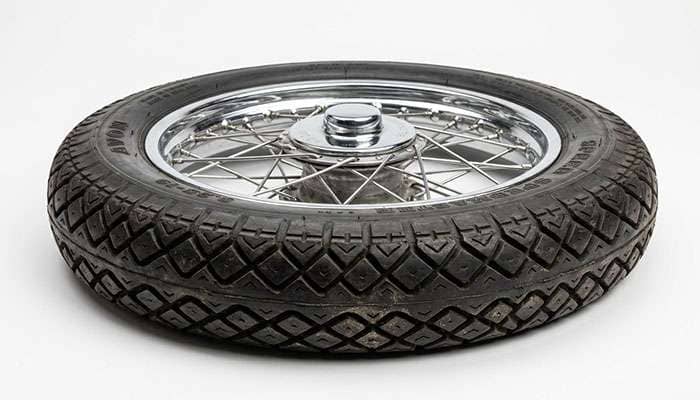
That's the core of it. Specialists like Coker keep period-correct molds alive specifically to reproduce tread patterns the original makers retired generations ago. A tire like the Coker Classic Motorcycle Diamond Tread exists because someone maintains the tooling to make that exact pattern, and the price reflects spreading real tooling and setup costs over a small run. Our companion piece on Coker tires for restoration projects digs into how that reproduction work happens.
Vintage motorcycle tires also can't ride along on modern production lines, because the sizes and the way they're built are genuinely different. We're talking clincher tires, beaded-edge designs, narrow scooter sizes, and tube-type bias-ply casings that share almost nothing with a current radial. You'll see sizes like 28x2.25, 350-19, and 500-16 in our vintage lineup, formats most modern factories aren't set up to run at all.
Bias-ply construction itself is a different animal from the radials that dominate today, and producing it takes dedicated processes. If you want the full picture on that, our breakdown of radial versus bias-ply construction lays out why the two aren't interchangeable. The short version is that building a low-volume, old-architecture tire requires equipment and steps that don't benefit from any modern economy of scale, and you pay for that. Decoding the sizing itself trips a lot of people up too, which is why we put together a guide on motorcycle tire sizes.
Then there's genuine new-old-stock. Some of what you'll find isn't a reproduction at all, it's an actual unused tire manufactured decades ago and stored ever since. You'll spot these in our catalog flagged as NOS, like the Firestone Zig Zag NOS and a few of the Firestone clincher pieces.
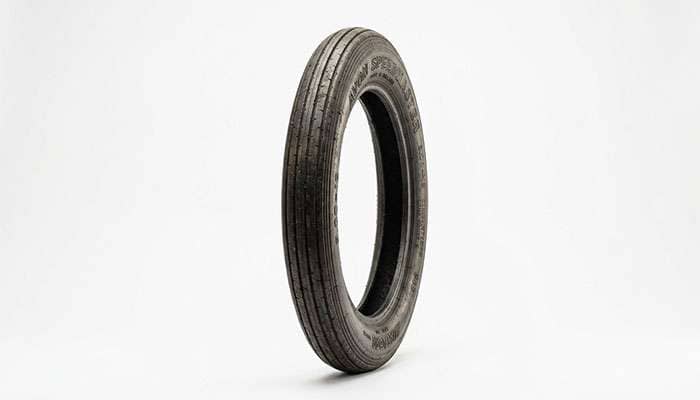
With NOS tires, you're paying a scarcity premium. There is a fixed, shrinking supply in the world and no more being made, so the price reflects rarity as much as production cost. For a concours restoration where authenticity is everything, that premium is the whole point. I'll add the obvious technical caveat I give every customer: age matters as much as tread, so weigh originality against safety. Our article on whether vintage tires are safe to use covers exactly where that line sits, and vintage tire speed ratings are worth understanding before you ride hard on old rubber.
Look closely at the high end of the range and you'll notice the most expensive tires share something: detail work. Whitewalls, double pinstripes, raised sidewall lettering, and all-white constructions take extra material and extra hands to produce correctly. That Coker Double Pinstripe whitewall and the all-white Firestone clinchers cost more than a plain blackwall in the same size for a straightforward reason: there's simply more work in them.
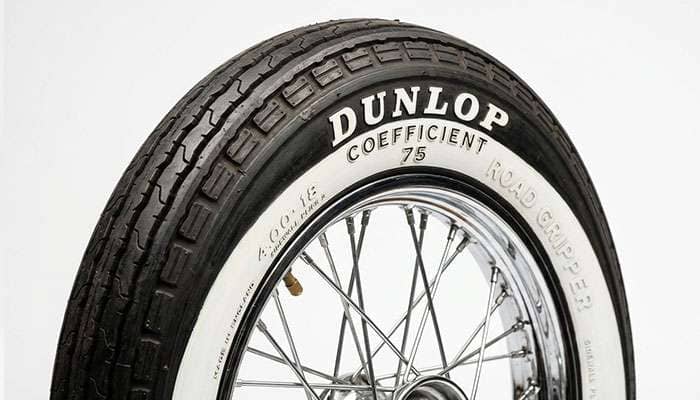
A whitewall isn't paint, it's a layer built into the tire, and getting it clean, even, and period-correct adds steps to an already small-batch process. The script and lettering you see molded into authentic reproductions exist to match what rolled off the line originally. None of that is cheap to do well at low volume, and on a show-quality restoration it's exactly what separates a correct bike from an almost-correct one.
Finally, the plain economics of the niche. The market for vintage motorcycle tires is tiny compared with modern tires, and the turnover is slow. A shop carrying these ties up money in inventory that may sit a long while before the right restorer comes along needing that exact size. Specialist sourcing, careful storage, and low turnover all carry cost, and that gets reflected in the price.
This is the same dynamic that drives up vintage-correct tire pricing on the car side, only more pronounced, because the motorcycle audience is smaller still. It isn't a markup for its own sake. It's what it costs to keep rare, correct rubber available for the handful of people who need it on any given month.
So how do you spend smart? It comes down to what your build actually needs. Here's how I frame the cost drivers and where each one is worth paying for.
Cost Driver |
Why It Adds Cost |
Worth Paying For When |
|---|---|---|
Low-volume mold |
Tooling spread over a tiny production run |
You need the correct size and tread, period |
Oddball size or construction |
Can't share modern production lines |
Your rim and geometry require it |
NOS scarcity |
Fixed, shrinking supply, none being made |
Authenticity matters for a concours build |
Whitewall or detailing |
Extra material and labor at low volume |
The look completes a show-quality restoration |
Reproduction blackwall |
Lowest detailing, modern reproduction |
You want correct fit on a rider, not a show bike |
If you're building a rider rather than a trailer queen, a straightforward reproduction blackwall in the correct size, like one of the lower-cost Coker or Phoenix options, gets you authentic geometry and feel without the detailing premium. Save the NOS and the show-grade whitewalls for the projects where originality is the entire goal. For a baseline on tire value generally, our take on how much a good tire should cost is a useful gut check.
Vintage motorcycle tires cost what they do because almost everything about making them runs against modern economies of scale: low-volume molds, old-school construction, scarce new-old-stock, hand-applied detailing, and a small, slow market. It isn't a gouge, it's the real cost of keeping correct rubber alive for classic bikes. The good news is the range is wide, so you can match your spend to your goal, a correct rider on the affordable end or a concours-perfect tire at the top. Browse our vintage motorcycle tire selection and our Fitment Team will help you land on the right tire for your build and your budget.
It comes down to scale. Modern tires spread mold and production costs over millions of units, while a vintage size might see only a few hundred made a year, so each one carries far more of the fixed cost. Add old-style construction, scarce new-old-stock, hand-applied detailing like whitewalls, and a small market, and the higher price makes sense.
Usually, yes. A modern reproduction in a period-correct pattern is made to current standards and isn't limited by a fixed supply, so it often costs less than genuine new-old-stock. NOS tires carry a scarcity premium because no more are being produced, which is why collectors pay more for authenticity on show builds.
Only if the look matters to your build. A whitewall is built into the tire and adds material and labor, so it costs more than an equivalent blackwall. For a concours or show-correct restoration it can be essential, but for a rider you can choose a correct-size blackwall and save the difference without affecting fit or handling.
Price reflects rarity, detailing, and production cost more than safety. What matters for safety is correct sizing for your rim, appropriate construction, and the age and condition of the rubber. A pricier NOS tire can actually be older than a fresh reproduction, so always weigh authenticity against age and inspect condition before riding.