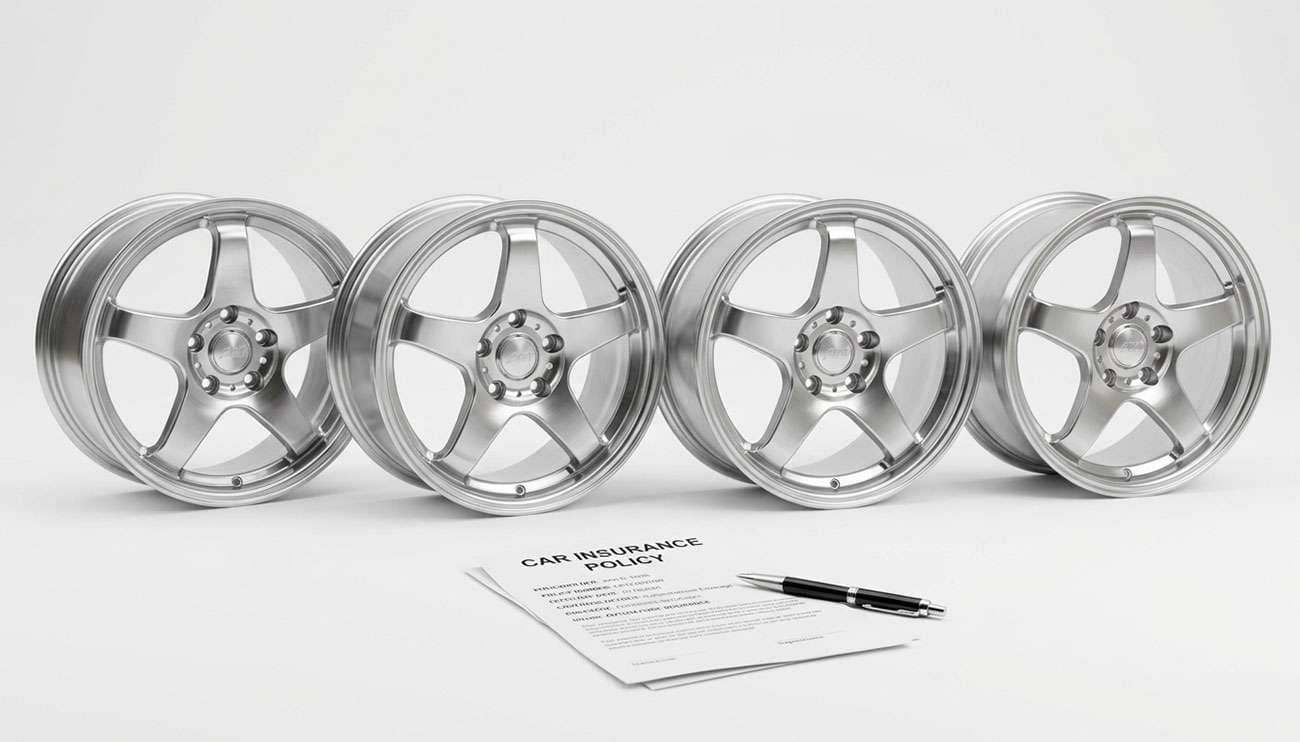
Short answer: in almost every case, no. You do not have a legal duty to call your insurance company the week you bolt on new wheels. And that is the wrong thing to be worried about anyway. An insurer can unwind your policy over what you told them on the application. It generally cannot unwind it over something you did eight months later that they never asked about. Wheels rarely move your rate at all. What they move is what you get paid. Stay quiet and the policy holds up fine right until the day somebody backs into your car, and then the check is written for the steel wheels your car was born with.
I have been standing behind this counter a long time. I have watched a lot of guys find this out the hard way, always at the worst possible moment, always with the same look on their face. So let us go through it properly. Find your situation in the table.
Change You Made |
Changes Your Rate? |
Changes Your Coverage? |
Should You Call? |
|---|---|---|---|
Aftermarket wheels, same overall diameter |
Almost never |
Yes. Value above the factory wheel is uninsured |
Yes, to add coverage. Not because you are required to |
Larger diameter wheels, plus-sized |
Rarely, but some carriers ask |
Yes, same gap, usually a bigger one |
Yes |
Factory optional wheels from your own brand |
No |
Usually not. They are still factory equipment |
No |
Second set of winter wheels and tires |
No |
Only the set on the car at the time of loss is covered |
Ask about the set in your garage |
Lift kit or leveling kit |
Often yes |
Yes |
Yes, without question |
Lowering springs or coilovers |
Often yes |
Yes |
Yes, without question |
Engine tune, supercharger, turbo |
Yes, significantly |
Yes |
Yes. This is the one that gets claims denied |
Exhaust, intake, cosmetic body parts |
Generally no |
Value above stock is uninsured |
Only if the parts are expensive |
Wrap, paint, window tint |
No |
A full wrap is custom equipment |
Only for an expensive wrap or custom paint |
Notice the pattern. The column that says "should you call" is almost never driven by an obligation. It is driven by money. That is the whole story, and it is the part the insurance websites bury.
Pull your policy out. Go find the section that says you must notify the company whenever you modify the vehicle. I will wait.
You probably will not find one. A standard personal auto policy in this country asks you questions when you apply and when you renew. It asks who drives the car, where it is garaged, how far you commute, what the vehicle is. It does not typically impose a running duty to phone in every part you bolt on between renewals. There are policy forms that include a change-notification provision, and there are carriers with their own wording, so this is genuinely a read-your-own-contract situation. But the blanket claim you see everywhere, that you are legally required to report any modification or your coverage evaporates, is not how most personal auto policies are written.
Here is the distinction that matters, and almost nobody draws it correctly:
Those are three completely different outcomes and the internet mashes them into one scary paragraph. If you bought your policy in March with the factory wheels on the car and put a set of Torq Thrusts on it in November, you did not misrepresent anything in March. There was nothing to misrepresent. The wheels did not exist yet.
Where it does bite you is renewal. If the renewal paperwork asks whether the vehicle has been modified and you check no, you have now made a statement. That is a different situation than saying nothing, and it is worth two minutes of your attention once a year.
Practically speaking, no. Let me explain why, because understanding the actual legal test takes most of the fear out of this.
The remedy insurers reach for when somebody lied to get a policy is called rescission. It voids the contract from the beginning, as though it never existed. It is a serious move and courts treat it that way. To get there, an insurer generally has to show two things: that there was a false statement or concealment in the application, and that it was material.
Material has a specific meaning here. The test is usually whether the fact would have changed the premium charged or changed the decision to write the risk at all. Not whether it is interesting. Not whether it is a modification. Whether it would have moved the underwriting needle.
States split into roughly three camps on how hard that is to prove. Some allow rescission for a material misrepresentation full stop. Some require the misrepresentation to have been knowing or reckless. Some require it to have been intentional or fraudulent. California, for one, is on the strict end, where its Insurance Code treats concealment as grounds to rescind whether it was intentional or not. Other states run the other direction. New York limits an insurer's ability to retroactively void the liability portion of an auto policy at all, on public policy grounds, because that coverage exists to protect people the driver might hurt.
Many states also cap the window. Once a contestability period runs out, the insurer loses the right to reach back and undo the policy over application answers.
Now put a set of wheels into that test. You would have to convince a court that a wheel swap, disclosed or not, would have changed whether the carrier wrote the policy or what they charged for it. For same-size wheels on a daily driver, that is a very hard argument to make, because for most carriers it is simply not a rating factor. Courts already consider rescission a drastic remedy and are reluctant to grant it. Nobody is unwinding your policy over a set of chrome smoothies.
The story changes with a built engine, a big lift, or a car that has been turned into something the carrier never agreed to insure. That is a real risk and I am not going to pretend otherwise. But wheels are not that.
Usually not, and I want to be honest about this because a lot of guys avoid calling their agent out of fear the premium jumps the second they say the word "aftermarket."
Rating on a personal auto policy runs mostly on things that have nothing to do with your wheels. Driver history, age, credit in states that permit it, garaging address, annual mileage, the vehicle's own loss history as a model, and what coverages and limits you picked. A same-diameter wheel change does not touch any of those.
What can nudge things:
The wheels themselves are not the rating problem people think they are. The bigger thing to understand is how they interact with your factory coverage, which brings us to the part that actually costs money. If you are weighing what you gain and give up going away from factory equipment, our breakdown of OEM versus aftermarket wheels covers the tradeoffs honestly.
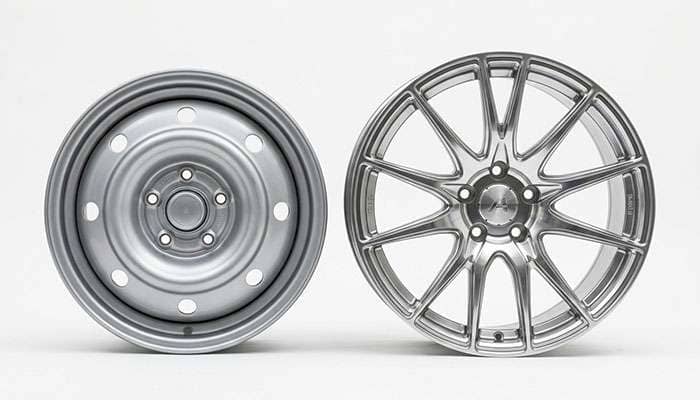
Here it is. A standard policy pays to restore the vehicle with the equipment it was built with. Factory-installed. That is the promise. Not the equipment currently attached to it.
So the loss happens. Somebody sideswipes you in a parking lot, or a thief takes the wheels off the car overnight, which happens more than people think. You are covered. The policy is in force, nobody is accusing you of anything, the adjuster is perfectly polite. And the settlement gets written on the factory wheel.
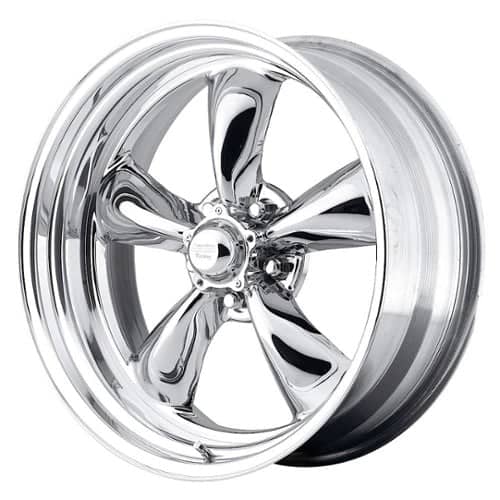
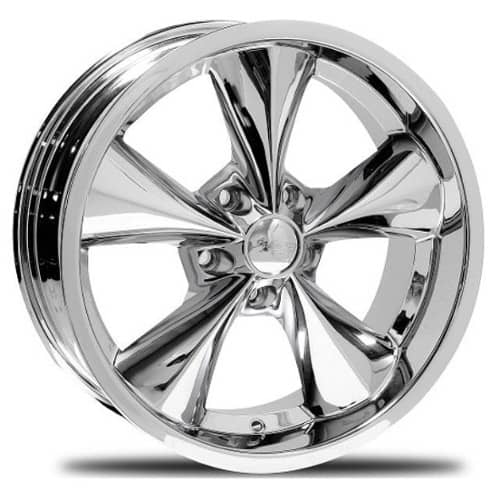
Let me put real numbers on it, because that is the only way this lands. A set of four American Racing VN405 TorqThrust II in 15x10 with a 5x114.3 bolt pattern runs $600.21 each in polished. Four of those is a little over $2,400 before you have put a single tire on them. A set of Boyd Coddington Junkyard Dog wheels in 15x6, 5x114.3 with a minus 6 offset is $275 apiece in chrome, so $1,100 for the set.
Now consider what the factory wheels on a lot of these cars were worth. On plenty of vehicles the answer is a plain steel wheel with a hubcap. If the carrier settles on factory value, that $2,400 set of Torq Thrusts becomes a few hundred dollars, and the difference comes out of your pocket. Nobody did anything wrong. The policy did exactly what it says on the page.
The fix is an endorsement, usually called custom parts and equipment coverage or something close to it depending on the carrier. It is inexpensive, limits commonly run from around $1,000 up to $5,000, and some policies carry a small automatic amount already. Look at your declarations page. If it is not printed there, you do not have it.
Note that number against the set prices above. A common automatic allowance of about $1,000 does not cover a $2,400 set. Getting the endorsement is step one. Getting the limit right is step two, and that is the one people skip.
There is a second route worth knowing about, and it is not insurance at all. A road hazard or wheel and tire protection plan bought at the point of sale covers the damage insurance is worst at handling, the pothole and debris strikes that fall under your deductible anyway. It does not replace an insurance endorsement, it fills a different gap. We laid out how those work in our guide to how a tire and rim warranty works, and whether the math favors you in our look at buying a road hazard warranty.
This one is new enough that I have not seen anybody write about it, and it is going to matter more every year.
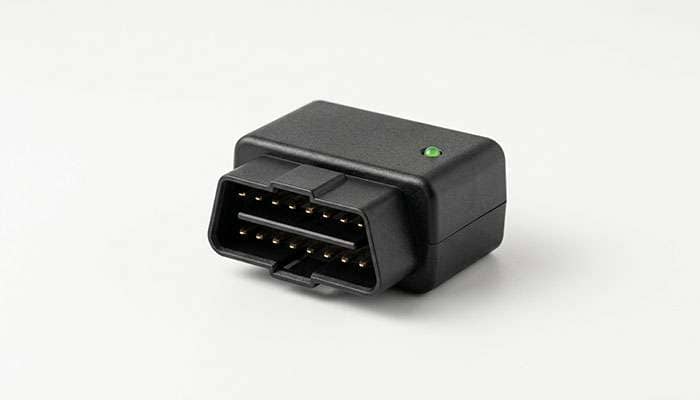
A lot of drivers are on a usage-based program now. Snapshot, Drive Safe and Save, the mileage-based policies, all of them. You get a discount for letting the carrier watch how and how much you drive. Fine. But those programs get their data three different ways, and only two of them care what wheels are on your car.
Here is what that means in practice. Go up in overall rolling diameter and the car travels farther per revolution than the computer assumes. The speedometer reads low and the odometer counts slow. On a pay-per-mile policy, you are logging fewer miles than you actually drove. On a behavior-scored program, your recorded speeds are lower than your real ones.
I want to be careful here, because the instinct is to think that sounds like a bonus. It is not. You are on a program where your premium is priced off data the carrier believes is accurate, and it is not accurate anymore. Undercounted mileage is understated exposure. That is the exact kind of fact that could be called material if it ever got examined, and it is the one wheel-related change I would genuinely pick up the phone about.
The good news is the fix is simple. If you kept overall diameter within a percent or so of stock, which is what proper plus-sizing is supposed to do, the error is negligible and nobody cares. If you went up two inches in tire height on a truck, the error is not negligible. And a related note while we are here: changing rolling diameter also means your pressure sensors may need attention, which we covered in our guide to TPMS sensors for aftermarket wheels.
I have spent this whole article telling you to relax. Here is the short list where I would not.
Guys get nervous on this call and end up either saying too little or babbling and volunteering things nobody asked. Keep it simple. You are not confessing. You are buying coverage.
Say this: "I have added aftermarket wheels and tires to the vehicle. I want to make sure they are covered for their actual value. What does that require?"
That is it. You have framed it as a purchase, which is what it is, and you have asked them to solve it.
Have this ready when you call, because the person on the other end needs numbers, not adjectives:
Then get the answer in writing. An email confirming the endorsement is on the policy and what the limit is. Verbal assurances from a call center do not appear on a declarations page eighteen months later.
One last thing while you have them: ask what happens to your warranty position, because that is a separate can of worms from insurance and people conflate the two constantly. We took that apart in whether aftermarket wheels void your warranty.
Everything above is about your insurance company. Your lender or leasing company is a separate party with separate paperwork, and this is where I see people get genuinely caught out.
A lease agreement typically requires the vehicle be returned in its original condition, normal wear excepted. That does not mean you cannot put wheels on a leased car. It means keep the factory wheels. Box them up, stack them in the garage, and put them back on before turn-in. I have seen wear-and-tear assessments at lease end that cost more than the wheels did, purely because the originals went to a swap meet two years earlier. If you are running a leased vehicle, our piece on why you would get a wheel and tire package on a lease walks through doing it the right way.
Financed vehicles are looser, since you own the car, but the loan agreement usually requires you to maintain it and not diminish its value. Wheels almost never trip that. The thing to watch is the total loss scenario, where the lender is paid out on the vehicle's value and your custom equipment sits outside that settlement unless you covered it separately. Gap insurance covers the difference between what you owe and what the car is worth. It does not cover your wheels.
And keep your factory set regardless of what you drive. Storage space is cheaper than replacement wheels, they make trade-in and resale cleaner, and if you ever do have a claim conversation, having the originals on hand takes an argument off the table before it starts.
Do you have to tell your insurance if you change your rims? In most cases you are under no obligation to pick up the phone, and nobody is voiding your policy over a set of wheels. The fear is misplaced. What is not misplaced is the money.
Every day you drive on uninsured wheels, you are carrying the full value of that set yourself. Not because anyone deceived you and not because you broke a rule, but because a standard policy covers the car the factory built and you have improved on it. One endorsement, one phone call, one email confirming the limit. That is the entire job, and it costs less than a single wheel.
Read your own declarations page and talk to your own agent, because policy wording and state law both vary more than any article can account for. But go into that call knowing what you are actually buying and what you are actually risking. That is worth more than all the scare copy on the internet put together.
In most cases you are not required to. Standard personal auto policies ask questions at application and renewal rather than imposing an ongoing duty to report every modification, though wording varies by carrier so you should check your own policy. You should still call, but for a different reason: without a custom parts and equipment endorsement, your insurer only owes you the value of the factory wheels.
Usually not. Auto insurance rates run primarily on driver history, garaging location, annual mileage, coverage limits, and the vehicle model's own loss history. A same-diameter wheel change touches none of those. Adding custom parts coverage costs a small amount because you are buying additional protection, and desirable wheels in a high-theft area can be an underwriting consideration. Suspension changes and power adders are what actually move rates.
Realistically no. To void a policy an insurer generally must prove a false statement in the application that was material, meaning it would have changed the premium charged or the decision to insure the vehicle at all. For a set of wheels that is a very difficult case to make, and courts treat rescission as a drastic remedy. Built engines and major suspension changes are a genuinely different risk.
Wheel theft falls under comprehensive coverage, so yes, subject to your comprehensive deductible. But without a custom parts and equipment endorsement the settlement is based on the factory wheels the vehicle was built with, not what you paid. On a car that came with steel wheels, an expensive aftermarket set can settle for a small fraction of its replacement cost.
Call if the change increased overall rolling diameter and you are enrolled in a usage-based program that uses an OBD-II device or connected car data, because your speedometer and odometer will now under-report. Programs that track through a smartphone app use GPS and are unaffected. Proper plus-sizing that keeps overall diameter within about one percent of stock produces negligible error.
No, and you should not try. Altering the vehicle before an inspection creates exactly the credibility problem you want to avoid, and it will not increase what you are paid. Keep your factory wheels for lease turn-in and resale, but photograph and report the loss with the vehicle in the condition it was in when the damage happened.
Ready to build your set the right way? Browse our full range of custom wheels, and give us your year, make, and model and we will get the fitment exactly right the first time.