
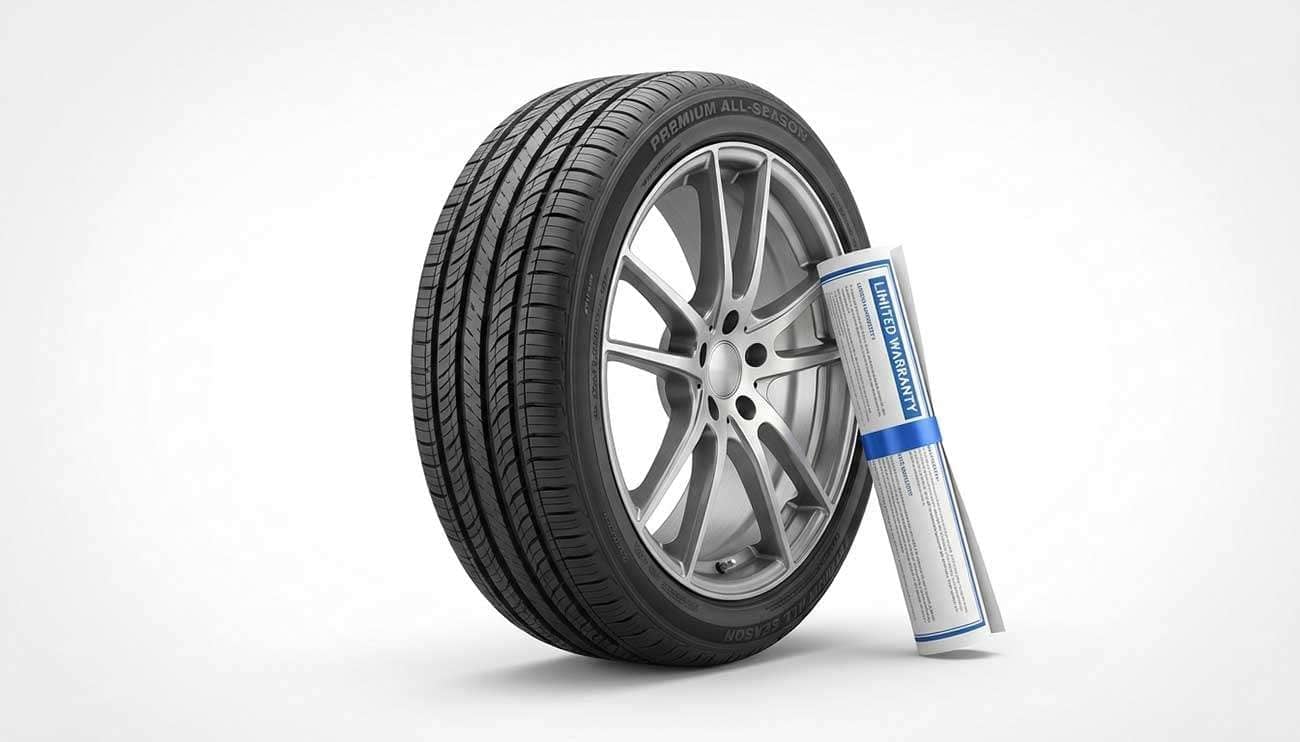
Most tire manufacturers guarantee their products for just 4 to 6 years from purchase date. Once your tread wears down to 2/32nds of an inch, that tire has reached the end of its usable life and needs replacement.
Knowing how tire warranties actually work can save you serious money. These warranties protect your investment during that crucial 4-6 year window or until your tread is completely worn—whichever comes first. The problem? Most drivers never claim benefits they're already entitled to because they don't understand what their warranty actually covers.
Here's what many people miss: when your tire wears evenly before hitting its promised mileage, you may qualify for replacement under the tread-life warranty. We've seen customers get substantial credit toward new tires simply because they knew how to properly document their claim.
Some manufacturers go even further with their protection. Continental and Dunlop include limited road hazard coverage during the first year or first 2/32nds of tread wear. This single benefit can save you hundreds when unexpected damage strikes.
We've put together this guide to show you exactly how tire and rim warranties work, what's really covered, and how to claim every benefit you've already paid for. Our expert team sees too many customers miss out on valuable warranty protection simply because they weren't aware of what they had.
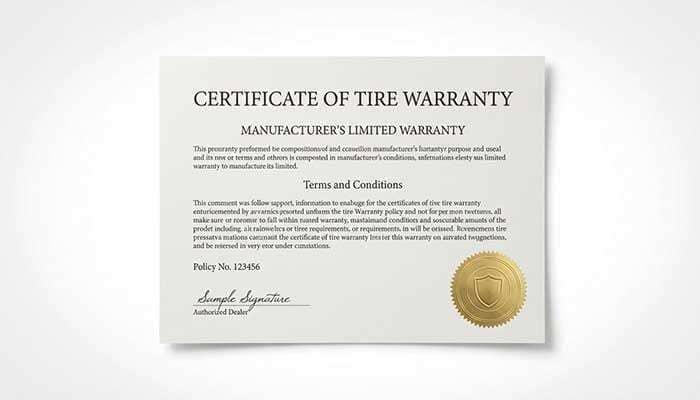
A tire and rim warranty represents the manufacturer's commitment to product quality, establishing the specific timeframe they'll repair or replace items with material or workmanship defects. Unlike typical consumer products with 30-90 day guarantees, tire warranties extend much longer—usually 4-6 years from purchase or until tread depth reaches its limit.
Your tire warranty creates a binding agreement between you and the manufacturer or retailer. When a company issues a warranty, they're backing their product quality for a defined period. These warranties primarily address manufacturing defects in materials or construction, remaining valid until tread depth hits 2/32" (1.6 mm) or the time period expires.
Valid warranty claims typically result in either a replacement tire or store credit calculated on remaining tread depth. Premium manufacturers often provide complete replacement during the first year or until 25% of tread wears away. Racing tires are the main exception—nearly every other tire includes basic limited warranty coverage for manufacturing problems, often lasting up to six years.
Tire manufacturer warranties concentrate on construction defects, though some include treadwear guarantees. Your coverage period starts when you take delivery of a new vehicle or purchase replacement tires—the sales receipt determines your official start date.
Rim warranties operate differently and often provide broader protection. Standard tire warranties rarely include road hazard coverage, but specialized rim protection plans frequently offer:
Complete wheel repair or replacement from pothole damage, debris, or road hazards
Cosmetic damage repair including chrome, chrome-clad, and steel wheel refinishing
Round-the-clock roadside assistance for tire emergencies and minor repairs
Dealership tire and rim protection plans often extend further, covering unlimited wheel repair from road hazards and cosmetic fixes for curb damage.
The most dangerous assumption? Thinking your warranty covers every tire problem. Road hazards like potholes, nails, and debris damage fall outside standard manufacturer warranties. These situations require separate road hazard protection since manufacturers can't control driving conditions.
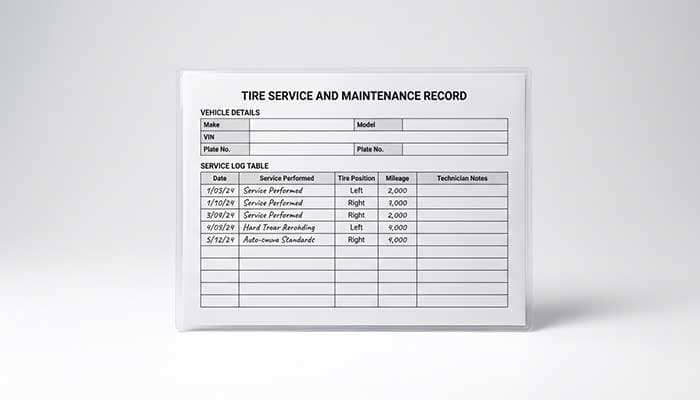
Maintenance requirements catch many owners off-guard. Neglect proper inflation, skip alignments, or miss rotation schedules, and you've voided your coverage. Treadwear warranty claims require detailed service records to prove you maintained the tires correctly.
Another costly mistake involves expecting new tire warranties to cover everything. Manufacturer protection addresses workmanship issues—not punctures or road damage. Industry standards prevent manufacturers from accepting claims when all four tires from one vehicle show problems, indicating the issue stems from the vehicle rather than the tires.
Ride disturbance coverage also confuses customers. When a new tire causes vibration due to manufacturing issues, the problem appears immediately after installation. Most manufacturers require tire replacement before the first 1/32" to 2/32" of treadwear or within the first service year.
Knowing the different warranty types gives you the power to maximize your investment. We see customers miss valuable benefits every day simply because they don't know what protection they already purchased.
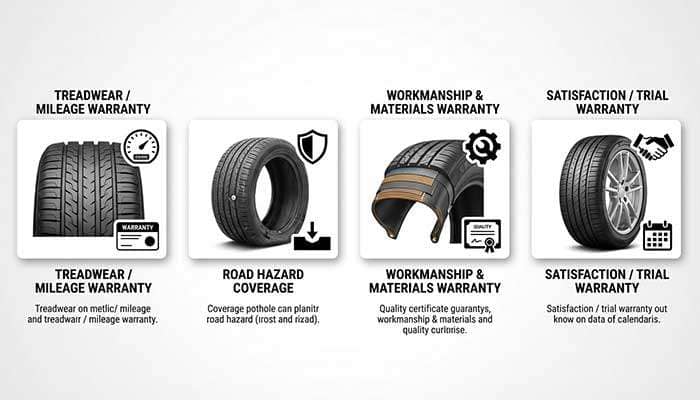
Tread-life warranties promise specific mileage coverage, typically ranging from 30,000 to 100,000 miles. This is the manufacturer's commitment to how long their tires should perform under normal driving conditions.
These mileage promises serve as competitive marketing tools, but they deliver real value when properly claimed. For a valid claim, your tires must wear evenly down to 2/32" tread depth before reaching the promised mileage. This is the legal minimum tread depth in most states.
The warranty period runs concurrently with the standard warranty—four, five, or six years from purchase, regardless of miles driven. You'll need documented proof of proper maintenance, including regular rotations and alignment checks, to qualify for any claims.
Road hazard protection covers damage from everyday driving hazards—potholes, nails, glass, and debris. Standard manufacturer warranties exclude these incidents, making road hazard coverage essential for complete protection.
These plans typically cost $10-$20 per tire and include flat repairs, roadside assistance, and partial replacement coverage. Looking for complete wheel and tire protection? Get the best deal on your next wheel and tire package with comprehensive coverage options.
This warranty protects against manufacturing defects in materials or construction. Most manufacturers provide full replacement during the first year or until 25% of tread wears away.
After this initial period, coverage becomes prorated—you receive credit based on unused tread life. Coverage continues for the tire's usable life or the specified warranty period (typically 5-6 years).
Uniformity coverage addresses manufacturing inconsistencies that cause vibrations or ride quality issues. Even with precise manufacturing, slight imbalances can occur during production.
This protection applies only to immediate installation problems—before the first 1/32" to 2/32" of wear or within the first year. Problems must appear right after installation. Manufacturers won't honor claims when all four tires cause vibration issues, as this indicates vehicle problems rather than tire defects.
Premium brands often include 30-45 day satisfaction guarantees, allowing risk-free testing. You can exchange or return tires within this period if not completely satisfied.
Some manufacturers offer 30-day trial periods with full refund or exchange options. This feature provides confidence when investing in higher-end tire models.
Once you buy tires with warranty protection, the details matter. Many customers end up paying out of pocket for problems they thought were covered simply because they didn't understand their warranty terms.
Every tire warranty comes with specific conditions you must meet. Coverage applies only to the original purchaser and requires proof of purchase with a clear date. Mileage warranties typically remain valid for 4-6 years whether you've hit the promised mileage or not.
Proper maintenance isn't optional—it's mandatory for warranty validity:
Regular tire rotations every 5,000-8,000 miles
Maintaining correct tire pressure monthly
Keeping wheel alignment within manufacturer specifications
Using tires only for their intended purpose
Most manufacturers offer only partial coverage through prorated adjustments. When your 60,000-mile warranty tire wears out at 40,000 miles, you'll receive approximately 33% credit toward a replacement. This credit usually applies only toward the same brand and model.
Nearly all standard tire warranties exclude damage from these common situations:
Road hazards including nails, glass, and potholes
Improper repairs or tire modifications
Racing or competitive driving
Commercial use unless specifically rated for it
Weather cracking or ozone damage after 48 months
Cosmetic issues that don't affect performance
Damage from accidents, vandalism, or improper mounting
Rim warranties have similar limitations. Most exclude cosmetic damage from curb rash, chemical damage from cleaners, and corrosion from road salt or harsh chemicals.
Warranty strength typically matches tire price and brand reputation. Premium manufacturers usually offer longer mileage warranties and better coverage terms.
Budget tire brands often limit warranties to manufacturing defects only, excluding tread life guarantees completely. Premium manufacturers typically provide better pro-rating formulas, resulting in higher credit amounts for valid claims.
Some brands offer standout features. Certain premium manufacturers provide full replacement during the first 2/32" of tread wear instead of just the first year. Others include limited road hazard protection, though this remains uncommon among standard manufacturer warranties.
Documentation requirements vary significantly between brands. Some accept visual inspection for claims, while others demand extensive maintenance records and original purchase documentation before honoring any warranty.
Keeping your receipt is just the beginning. Tire manufacturers build specific maintenance requirements into their warranty terms, and failing to meet them gives companies an easy out for denying legitimate claims.
Regular tire rotation serves as the foundation of warranty validity. Most warranties require rotation every 5,000 to 8,000 miles exactly as specified in your vehicle's owner's manual. Skip rotations and you create uneven wear patterns that manufacturers spot immediately.
Here's what you need for proof:
Dated service receipts from professional rotations
Documentation of DIY rotations showing date, mileage, and rotation pattern used
Records of regular wheel alignments, typically performed yearly
Without written evidence of proper rotation, your warranty claim will be denied. Alignment problems can destroy the benefits of rotation quickly, so annual alignment checks help protect your warranty coverage.
Proper tire inflation represents a non-negotiable warranty requirement. Underinflated tires generate excessive heat, reduce load capacity, and create wear patterns that automatically void coverage. Manufacturers require monthly pressure checks using an accurate gauge.
Visual inspection won't cut it—you cannot determine proper inflation by looking at tires. Find your vehicle's tire placard on the driver's doorjamb for the correct pressure specifications.
Certain activities instantly eliminate warranty protection:
Racing or competitive driving events
Extreme off-road use unless the tire is specifically designed for it
Burnouts, drifting, or any tire modifications
Using tires outside their intended purpose
Vehicle modifications including lift kits or non-original suspension components
Using tire sizes or types not recommended by your vehicle manufacturer automatically voids warranty protection. Remember that tire warranties don't cover damage from poor maintenance, user error, or road hazards unless specifically stated.
When you file a claim, manufacturers examine wear patterns closely. Running significantly underinflated tires—like 20 psi when you need 32 psi—immediately disqualifies any warranty claim.
Tire warranties include valuable perks that can save you hundreds of dollars over your tire's life. Most vehicle owners never take advantage of these benefits simply because they don't know they exist.
Many tire retailers offer complimentary flat repairs regardless of where you bought your tires. Road hazard protection plans frequently include roadside assistance with 25-mile complimentary towing for tire-related issues. Some plans provide flat tire repair coverage up to $40 per occurrence. Shops like Les Schwab will patch, plug, or fix most repairable tires at no charge.
Partially worn tires often qualify for substantial replacement credit. Here's how it works: if your covered tire started with 8/32" of tread and wears to 4/32", you've used 50% of the tire's life and may receive 50% credit toward replacement tires. Some premium plans offer 100% replacement when failure occurs within the first 24 months or 24,000 miles.
Major manufacturers offer impressive satisfaction guarantees that let you test their products:
Michelin: 60-day satisfaction guarantee
Cooper: 45-day satisfaction guarantee
Bridgestone/Firestone: 90-day Buy & Try guarantee
Toyo: 500-mile/45-day trial
These trial periods allow you to exchange tires if you're not completely satisfied, often receiving a full refund or credit toward different tires.
Tire uniformity warranties address vibrations or ride quality issues that appear immediately after installation. Coverage typically applies before the first 1/32" to 2/32" of treadwear, but you must report problems right away.
Retailer protection plans often provide better coverage than manufacturer warranties. These plans include cosmetic wheel damage repair and unlimited road hazard protection. Extended plans cost $25-$65 per tire depending on price, yet offer valuable protection against unexpected damage from potholes, curbs, and road debris.
At Performance Plus Tire, we make sure our customers understand every benefit included with their purchase. We've seen too many people pay full price for tire damage that should have been covered under their existing warranty.
Tire and rim warranties offer serious financial protection when you know how to use them properly. These warranties protect far more than just manufacturing defects—they can save you hundreds of dollars over the life of your tires.
The key to warranty success comes down to proper maintenance and documentation. Regular rotations, correct inflation, and keeping detailed service records ensure you qualify for claims when problems arise. Most drivers void their coverage simply because they skip these basic requirements.
Don't overlook the valuable extras included with your warranty. Free flat repairs, satisfaction guarantees, and pro-rated replacements provide substantial value that most tire owners never claim. Some manufacturers even include limited road hazard coverage during the first year.
When shopping for your next set of tires, consider protection plans that go beyond basic manufacturer coverage. Get the best deal on your next wheel and tire package with extended coverage for road hazards and cosmetic wheel damage.
At Performance Plus Tire, we help customers maximize their warranty benefits every day. Save your receipts, maintain detailed service records, and understand exactly what your warranty covers. This simple preparation ensures you'll claim every benefit you've already paid for.
The difference between paying full price for tire replacement and getting warranty coverage often comes down to proper documentation. We recommend keeping all service records and familiarizing yourself with your specific warranty terms before you need them.
Understanding tire and rim warranties can save you hundreds of dollars in unexpected replacement costs and unlock valuable benefits most drivers never use.
Keep detailed maintenance records including tire rotations every 5,000-8,000 miles and alignment checks to maintain warranty validity
Take advantage of hidden benefits like free flat repairs, 30-90 day satisfaction guarantees, and pro-rated replacements for partially worn tires
Standard manufacturer warranties exclude road hazards—consider separate road hazard protection for comprehensive coverage against potholes and debris
Premium brands often offer better warranty terms including longer trial periods and higher pro-rated credit amounts for claims
Document everything with receipts and service records, as manufacturers require proof of proper maintenance to honor warranty claims
Most tire warranties last 4-6 years or until tread reaches 2/32", but the real value lies in understanding exactly what's covered and maintaining proper documentation. Don't let valuable warranty benefits go unused due to lack of knowledge about your coverage options.
To keep your tire warranty valid, regularly rotate your tires every 5,000-8,000 miles, maintain proper inflation, get annual wheel alignments, and keep detailed service records. Avoid activities like racing, extreme off-roading, or using tires beyond their intended purpose, as these can void your warranty.
Standard tire warranties usually cover manufacturing defects in materials and workmanship. They often include treadwear warranties guaranteeing a certain mileage, but typically exclude damage from road hazards, improper maintenance, or normal wear and tear.
Yes, many tire warranties include lesser-known perks such as free flat repairs, roadside assistance, trial periods with satisfaction guarantees, and pro-rated replacements for partially worn tires. Some premium brands also offer coverage for ride disturbances due to tire uniformity issues.
Most tire warranties last for 4-6 years from the date of purchase or until the tire's tread reaches 2/32 of an inch, whichever comes first. However, specific coverage periods can vary by manufacturer and tire model.
Generally, you won't receive a full refund. If your tires wear out prematurely and you've met all maintenance requirements, you may be eligible for a pro-rated credit towards new tires. The amount depends on the remaining tread depth and how many miles you've driven compared to the warranty mileage.



