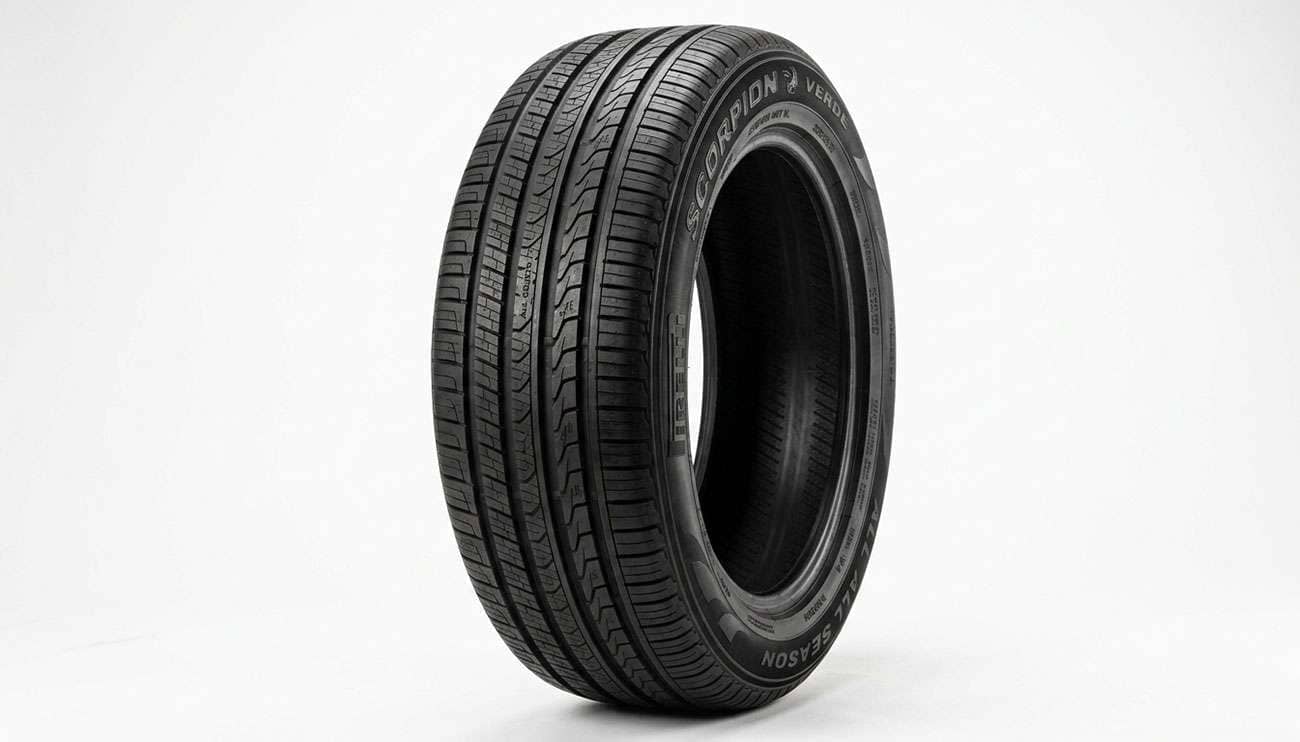
Yes, Pirelli Scorpion Verde All Seasons are good tires: quiet, comfortable, easy on fuel, and chosen by half the luxury SUV makers in Europe as factory equipment. But if you are reading this, you are probably not really asking whether they are good. You are standing at 35,000 miles with a worn set, a dealer quote that made you blink, and the real question: do I have to buy the exact same expensive tire again? The answer depends on the small letters molded into your sidewall, whether you lease or own, and whether you know that Pirelli now sells a newer tire that beats the Verde for less money, with a warranty the Verde never had.
Here is what fifty years in this business has taught me about tires like this one. The Scorpion Verde is not really a retail tire that happens to come on new cars. It is a factory tire that happens to be sold at retail, and that changes everything about how you should shop for it. Every glowing spec you read was negotiated between Pirelli and an automaker; every frustration in the owner reviews, the price, the wear on heavy SUVs, the missing mileage warranty, traces back to the same arrangement. I am Hank Feldman, and we stock the entire Scorpion family at Performance Plus Tire, the original Verde and every generation after it, so I have no reason to steer you anywhere but right. Let us find your row.
Your Situation |
Verdict |
What You End Up Buying |
|---|---|---|
Leased vehicle or under factory/CPO warranty |
Stay with the OE-marked Verde; matching the factory spec avoids turn-in and warranty arguments |
The same OE-marked Scorpion Verde AS your car came with |
You own the car and plan to keep it |
The newer Scorpion AS Plus 3 is a better tire for less money, with a real warranty |
A set of Scorpion AS Plus 3s and change left over |
Porsche N-spec or a staggered performance SUV setup |
Honor the letter, or move to the matching Zero-family successor deliberately, as a full set |
N-marked Verdes, or a complete set of Scorpion Zero AS Plus 3s |
Your Verdes are run-flats |
Stay run-flat for convenience, or convert to standard tires as a full set with a roadside plan |
Four run-flats, or four standard tires plus an inflator kit |
Snow-belt winters with real ice and slush |
The Verde is a mild all-season with no severe-snow rating; plan beyond it |
Pirelli's 3PMSF-rated Scorpion Weatheractive, or a dedicated winter set |
One damaged tire on an AWD vehicle |
Match what is on the car exactly, marking included, or replace across the axle |
An identical OE-marked Verde, before deeper tread differences force a bigger purchase |
Verde is Italian for green, and the name is the whole engineering brief. When the luxury SUV boom collided with tightening fuel economy rules, automakers went to their tire suppliers with a strange shopping list: a tire for a 5,000-pound vehicle that rides silently, corners respectably, and, above all, rolls with as little resistance as possible, because every tenth of a mile per gallon matters when regulators are watching the fleet average. Pirelli's answer was the Scorpion Verde family: a silica-rich, low rolling resistance compound in a light casing, tuned for comfort and efficiency first.
It worked. The Verde became factory equipment across a remarkable slice of the luxury lot: Audi Q5s and Q7s, Porsche Cayennes and Macans, BMW X5s, Volvo XC90s, Range Rovers, Mercedes GLEs. When you see the same tire on that many badges, understand what it means: this tire is exceptionally good at passing automaker approval tests. Quietness, ride, rolling resistance, all measured, all excellent. What automaker tests weigh far less heavily is the thing you are living with right now: how many miles the tire delivers on a heavy SUV, and what it costs to replace. Those became your problem the day the odometer started rolling, and they are why you are here.
Walk out to your car and look for a small marking after the size: AO for Audi, MO for Mercedes, a star for BMW, N0 or another N-number for Porsche, VOL for Volvo. That letter is a homologation mark, and it means your specific tire was tuned and certified for your specific vehicle. This is not badge engineering; an MO Verde and an AO Verde in the same size can carry different compounds, different sidewall constructions, and different tread tweaks, because each automaker approved its own recipe. The letter is the automaker's signature on the tire.
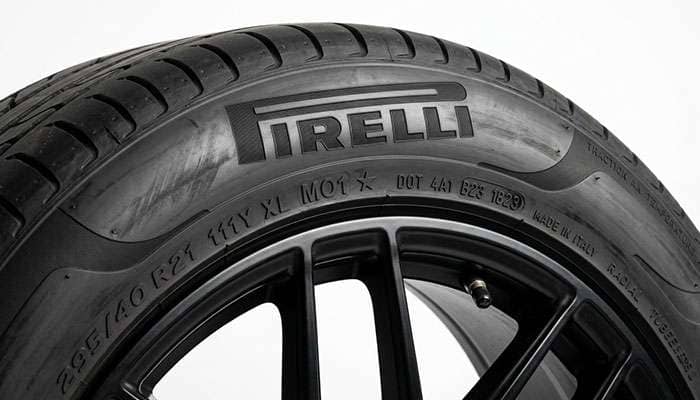
So when does the letter still bind you? Here is my honest framework after decades of these conversations. The letter matters when someone else has a claim on the car: a lease company inspecting at turn-in, a factory or CPO warranty you might invoke, a Porsche dealer who will note non-N tires in the service file. It matters on staggered fitments and air-suspension vehicles where the automaker's tuning assumptions run deep. And it matters when you are replacing fewer than four tires, because mixing marked and unmarked versions of the same tire on one axle is mixing two slightly different tires whether the sidewall admits it or not.
When you own the car outright, plan to keep it, and are replacing all four? The letter is a preference, not a law. Nothing in your warranty obligates a replacement tire brand, and a high-quality tire in the correct size, load index, and speed rating is fully legitimate. The dealer quoting you the OE-marked set at a premium is not lying to you; he is just answering a question you may have outgrown.
Judged for what it is, yes. The Verde AS is genuinely quiet, one of the most comfortable tires you can put on a heavy SUV, composed in the rain at sane speeds, and measurably easy on fuel, which on a big vehicle is real money over a set's life. If your driving is highway cruising and school runs in a mild climate, this tire's manners are the reason luxury SUVs feel the way they do on the showroom test drive.
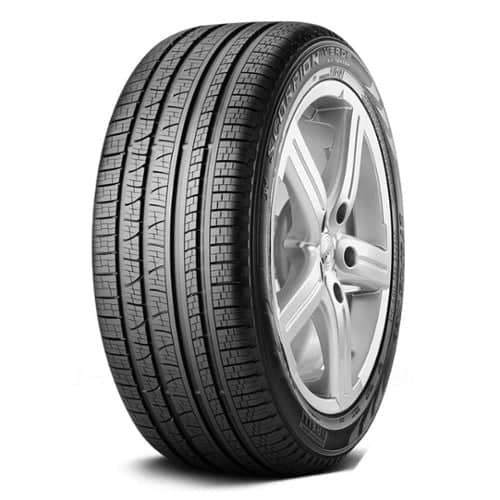
Now the honest limits, because a tire built to a fuel-economy brief pays for it somewhere. Outright grip is modest; push a Cayenne the way the badge invites and the Verde signals surrender earlier than the sportier P Zero side of Pirelli's catalog. Winter is the bigger caveat: the Verde AS carries the M+S stamp but no Three-Peak Mountain Snowflake, and that low rolling resistance compound firms up in serious cold. Light snow at careful speeds is fine; a snow-belt winter is not its job. And wear on heavy metal is the complaint that fills the forums: original sets on 5,000-pound SUVs and heavier electric vehicles are commonly finished between 25,000 and 40,000 miles, which brings us to the paperwork problem nobody at the dealership mentions.
The Scorpion Verde AS in its OE form carries no treadwear mileage warranty. Owners who called Pirelli about early wear have reported being told exactly that: factory-fitment Scorpions have no mileage coverage. The retail-market Plus versions of the Verde carried a 65,000-mile warranty, and the newest generation goes further still, which is precisely why the next section exists.
While your OE Verdes were wearing down, Pirelli kept engineering. The Scorpion AS Plus 3 is the current-generation touring tire for CUVs and SUVs, and it was designed for the retail buyer rather than the automaker: a new longer-wearing compound, full-depth siping with interlocking 3D sipes in the shoulders so the tire keeps its wet and cold-weather bite as it wears instead of losing it, and a treadwear warranty of up to 70,000 miles on most sizes. Here is the ladder as we actually stock it.
Spec |
Scorpion Verde AS (OE era) |
Verde AS Plus II |
Scorpion AS Plus 3 |
|---|---|---|---|
Design brief |
Automaker approval: comfort, quiet, fuel economy |
Retail update of the Verde formula |
Retail touring: tread life and all-season grip |
Mileage warranty |
None on OE-fitment tires |
65,000 miles |
Up to 70,000 miles on most sizes |
Siping |
Conventional |
Improved pitch and siping |
Full-depth with 3D interlocking shoulder sipes |
OE homologation marks |
Widely available: AO, MO, star, N-spec, VOL |
Rarely |
Generally none; pure replacement tire |
In our catalog |
162 sizes, from about 176 dollars |
40 sizes, from about 161 dollars |
37 sizes, from about 241 dollars |
Read the warranty row twice, because it is the whole argument. The OE-marked tire your dealer quotes at a premium promises you zero miles of coverage. The newer retail tire, often quoted lower once you shop outside the service lane, promises up to 70,000. For an owner keeping the car, that is not a close call; the Plus 3 is the better tire and the better deal. The OE Verde earns its keep in the rows where the letter binds you, and nowhere else.
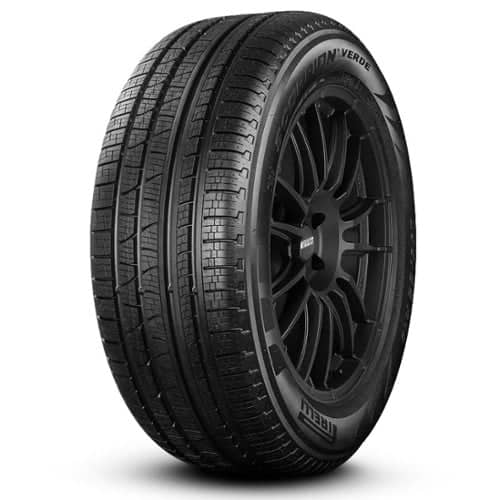
Plenty of Verdes shipped as run-flats, especially under BMWs, and if yours did, you have a second decision stacked on the first. Run-flats carry reinforced sidewalls that support the car for a limited distance after a puncture, which is why your trunk has no spare. The price for that convenience is a stiffer ride, a heavier tire, a higher replacement cost, and a sidewall that, once damaged, is done arguing; our guide to the disadvantages of run-flat tires walks through the whole trade honestly.
The rule if you convert to standard tires: do it as a complete set of four, never mixed, and put an inflator kit or a proper spare solution in the car the same day, because you just gave up your limp-home ability. The rule if you stay: remember that a run-flat's stiff sidewall hides low pressure from your eye, so the monthly pressure check matters double, and any sidewall bubble or cut is an immediate replacement, not a watch-it situation; our sidewall damage guide explains why that is true of every tire and doubly true of these.
Plan around 25,000 to 40,000 miles for an OE set on a heavy luxury SUV, with the heavier and more powerful the vehicle, the sooner the end. Retail Plus-line sets on lighter crossovers routinely do better, into the 50,000s, which is what their warranties suggest. If those OE numbers sound short next to the family-SUV tires your neighbor brags about, like the long-wearing sets we covered in our Michelin Defender 2 review, remember the brief: the Verde traded wear for silence and fuel economy on purpose. Your SUV's engineers signed off on the trade; nobody asked you, and that is the point of this article.
Three habits stretch whatever set you own. Rotate every 5,000 miles where the fitment allows it; note that staggered setups cannot rotate front to rear, which is exactly why performance SUVs eat rear tires in pairs. Check cold pressures monthly against the door placard, because a tire loses about one psi a month through normal seepage and an underinflated Verde wears its shoulders and drinks the fuel it was designed to save. And keep the alignment honest, especially on big wheels; luxury SUVs on 20s and 21s find every pothole, and a small toe error feathers this tire's quiet tread into a hum you will blame on the tire. Speaking of big wheels, if you are weighing wheel sizes at replacement time, our breakdown of 20-inch versus 18-inch wheels covers what the extra inch really costs in ride and tire price. After any install, re-torque the lugs at 50 to 100 miles per Tire Industry Association guidance.
Let me price the mistakes I see from behind the counter, because they run in both directions.
Overpaying for a letter you no longer need: an owner out of warranty, keeping the car, pays the service-lane premium for OE-marked Verdes out of habit. Across a set of four on a luxury SUV that is commonly several hundred dollars over the Plus 3, spent on a tire with no mileage warranty replacing a tire that just wore out early. That is paying extra to repeat the experience.
Ignoring a letter that still binds you: a leased Macan goes back with non-N tires, and the turn-in inspection writes a bill that erases every dollar saved. A single unmarked tire slipped onto an AWD Audi next to three marked ones creates a subtle mismatch, and all-wheel-drive systems are unforgiving bookkeepers: most manufacturers want all four tires within a small tread-depth window, because a persistent circumference difference makes the center coupling work full-time, and that repair is priced in thousands. One cheap decision, one expensive letter.
And the winter miscalculation: running the mild Verde through a real snow-belt season because the sidewall says M+S. The tire will not warn you politely. If your winter is genuine, the answer is Pirelli's 3PMSF-rated Weatheractive, a proper winter set, or a different all-weather entirely; our Michelin CrossClimate 2 review covers the strongest crossover alternative in that lane. Match the tire to the winter you actually have, not the one on the brochure.
Step 1: Read your sidewall. Note the exact size, load index, speed rating, any homologation letter, and whether the tire is a run-flat. That one minute defines your whole decision.
Step 2: Establish who has a claim on the car. Lease, factory warranty, or CPO coverage: stay OE-marked. Owned outright and staying in the family: you are free.
Step 3: If you are free, price the Scorpion AS Plus 3 in your size next to the dealer's OE quote, warranty included in the comparison. That comparison usually ends the conversation.
Step 4: Replacing fewer than four on AWD? Match what is on the car exactly, letter and all, and measure the remaining tread so the new tire is not circles ahead of its axle mate.
Step 5: Whatever you mount: placard pressures, monthly checks, 5,000-mile rotations where the fitment allows, alignment on install, re-torque at 50 to 100 miles. Quiet tires stay quiet when the maintenance is boring.
So, are Pirelli Scorpion Verde tires good? They are exactly as good as the job they were hired for: making a heavy luxury SUV feel serene and sip fuel, which they do as well as anything ever has. The catch was never quality; it was that the tire answers to your car's manufacturer, not to you, right down to the missing mileage warranty. Once the letter on the sidewall stops binding you, the newer Scorpion AS Plus 3 does the Verde's job with a longer-wearing compound, smarter siping, and up to 70,000 miles of paper behind it, usually for less than the service lane wants for the original. Know which owner you are, and the decision makes itself.
We stock the whole ladder, more than 240 sizes across the Scorpion Verde AS, the Plus generations, the AS Plus 3, and the winter-rated Weatheractive. Browse the full Pirelli tire lineup at Performance Plus Tire, and if you want a second opinion on that dealer quote, call the shop with your sidewall reading; we have talked a lot of people out of paying for letters they did not need, and a few into keeping the ones they did.
The short version, from a guy who reads sidewalls for a living.
• The Verde is a factory tire sold at retail: Engineered to automaker approval tests for quiet, comfort, and fuel economy, with tread life and price as the trades.
• The sidewall letter decides your purchase: AO, MO, star, N-spec, and VOL markings bind leased, warrantied, staggered, and partially-replaced cars; owners keeping their vehicles are free.
• OE Verdes carry no mileage warranty: Expect 25,000 to 40,000 miles on a heavy SUV; the retail Plus line carried 65,000-mile coverage the factory tire never had.
• The Scorpion AS Plus 3 usually wins for keepers: Newer compound, full-depth 3D siping, up to 70,000-mile warranty, and typically less money than the OE-marked quote.
• Respect the winter and the run-flat questions separately: No 3PMSF on the Verde means snow-belt drivers need the Weatheractive or a winter set, and run-flat conversions happen four at a time with a roadside plan.
Only in light snow at careful speeds. The Scorpion Verde AS carries an M+S stamp but no Three-Peak Mountain Snowflake certification, and its low rolling resistance compound firms up in serious cold. Snow-belt drivers should choose Pirelli's 3PMSF-rated Scorpion Weatheractive or run a dedicated winter set.
Original-equipment sets on heavy luxury SUVs commonly last 25,000 to 40,000 miles, with heavier and more powerful vehicles wearing them faster. Retail Plus-line versions on lighter crossovers routinely reach the 50,000s. Rotations, correct cold pressures, and alignment decide where in the range a set lands.
Factory-fitment Scorpion Verdes carry no treadwear mileage warranty, and owners who have contacted Pirelli about early wear on OE sets report being told exactly that. The retail Verde AS Plus versions carried a 65,000-mile warranty, and the current Scorpion AS Plus 3 carries up to 70,000 miles on most sizes.
Yes, if you are replacing all four tires and no lease, factory warranty, or CPO agreement obligates the OE-marked spec. Match your size, load index, and speed rating and the AS Plus 3 is a fully legitimate replacement, typically with better tread life and a warranty the OE tire lacks. Keep the OE marking when replacing fewer than four on an AWD vehicle.
Those are homologation marks: N-numbers for Porsche, MO for Mercedes, a star for BMW, AO for Audi, VOL for Volvo. Each indicates the tire was tuned and certified to that automaker's specification, so two identically sized Verdes with different marks can carry different compounds and constructions. The mark matters most on leased, warrantied, and staggered-fitment vehicles.
No, but convert as a complete set of four, never mixed, and add an inflator kit or spare solution the same day since your car likely has no spare. Staying with run-flats keeps the limp-home convenience at the cost of a firmer ride and higher replacement price, and makes monthly pressure checks doubly important.