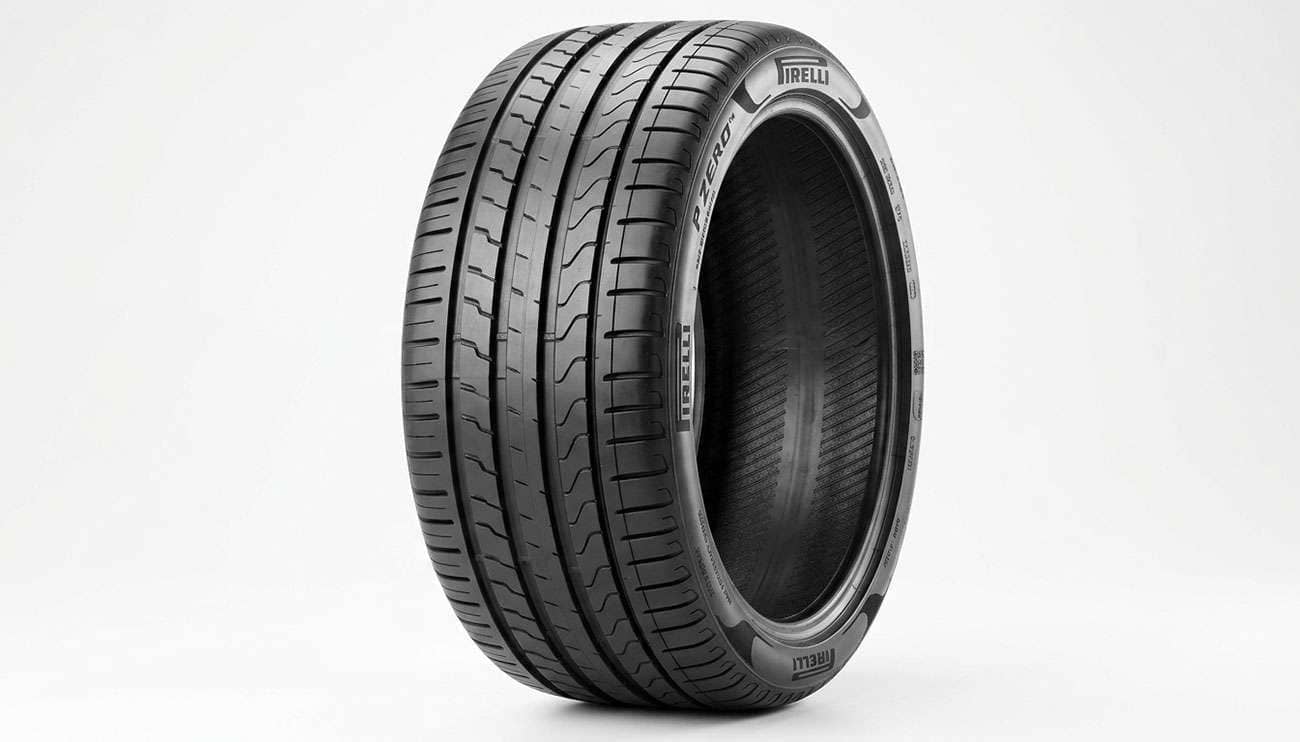
Yes, Pirelli P Zero PZ4 tires are good, and on the right car they are flat-out excellent. The PZ4 is Pirelli's fourth-generation P Zero, a max-performance summer tire built from Formula 1 know-how and bolted on at the factory to cars like the Porsche 911, Ferrari, and Lamborghini. You get razor-sharp dry grip, strong wet traction, and a ride that stays civilized for how much tire this is. The trade-offs are a premium price, moderate tread life, and no business in snow. Buy them for what they are.
I have mounted and balanced more P Zeros than I care to count, so let me give it to you the way I would across the counter. Below I answer every question folks actually type in about the PZ4: what the name means, how it differs from a plain P Zero, how long it lasts, whether it runs flat, how it stacks up against Michelin, and why the price makes people blink. No fluff, just the shop-floor truth.
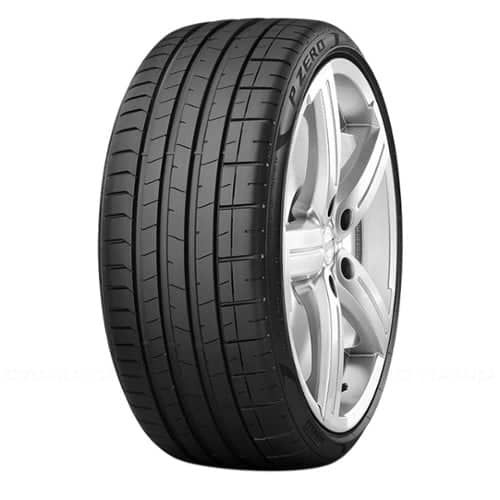
PZ4 simply means the fourth generation of the P Zero. That is all it is: Pirelli's shorthand for the current, latest version of their flagship max-performance summer tire. When you see "P Zero (PZ4)" on a sidewall or a listing, you are looking at the newest P Zero design, with an updated tread pattern, compound, and construction over the P Zeros that came before it.
The PZ4 also comes in tailored flavors. You will run into P Zero PZ4-Sport and P Zero PZ4-Luxury, which are the same fourth-generation family tuned differently: Sport leans harder into handling response, while Luxury dials in a quieter, more comfortable ride for big performance sedans. Both are summer tires, and both are built for warm, dry, and wet roads, not winter.
Here is where the shelf gets confusing, so let me clear it up. "P Zero" is the family name that Pirelli has used for decades across many generations and sub-models. "PZ4" is the specific fourth-generation version of that family. So a plain "P Zero" listing is often an earlier generation or a different family member, while "P Zero PZ4" is the current-gen tire.
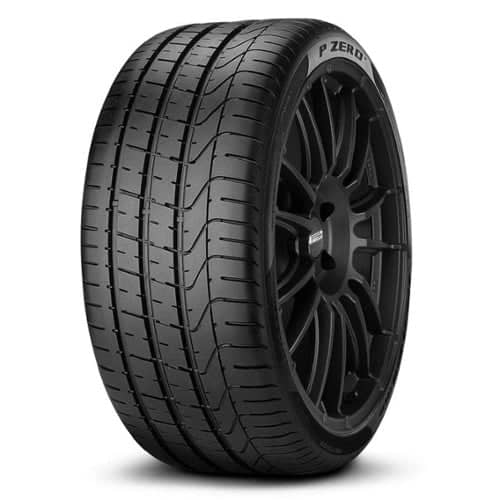
The broader P Zero family is deep. It includes the summer PZ4, the track-focused P Zero Corsa and Trofeo R, the P Zero Nero and Nero GT, plus P Zero All Season and P Zero Winter versions for drivers who want the name in other seasons. The important takeaway: match the exact model to your use. If you want the current street max-performance summer tire, the PZ4 is the one. If you want grip in the cold, that is a different P Zero entirely.
Feature |
P Zero PZ4 |
Older / Other P Zero |
|---|---|---|
Generation |
Current, fourth generation |
Earlier gen or a different family model |
Category |
Max-performance summer |
Varies (Corsa track, Nero, All Season, Winter) |
Best use |
Modern sports and luxury cars, warm-weather street |
Depends on the exact model |
What to buy |
If you want the latest street summer tire |
Only for a specific application or older OE match |
On the question that matters, the PZ4 delivers. Dry grip is the headline: the silica-and-carbon tread compound bites hard, so braking is short and cornering is stable and confident when you push. Wet performance is genuinely strong for a max-performance summer tire, with wide grooves and smart siping that clear water and resist hydroplaning better than a lot of people expect from a tire this sticky. And because so many PZ4 sizes are engineered as original equipment, the ride is composed and the road noise is kept down, especially on the Luxury versions with Pirelli's noise-cancelling foam.
Now the honest part, because a favorable review still has to be straight. This is a summer tire. Once temperatures sit consistently below about 45 degrees F, the compound goes hard and grip drops off, and it has no place in snow or ice. It is also not built to be a long-mileage economy tire. You are trading tread life for grip, which is exactly the deal a performance driver wants and exactly the wrong tire for someone who just wants cheap miles. Set your expectations right and the PZ4 is one of the best in its class. For where this tire fits in the bigger picture, our guide on summer tires versus all-season tires lays out the trade cleanly.
The PZ4 is built for high-performance and luxury vehicles, and in many cases it is the exact tire the automaker chose from the factory. You will find P Zero PZ4 fitments as original equipment on cars like the Porsche 911, Boxster, and Cayman, Ferrari and Lamborghini exotics, the Audi A8 and S-cars, BMW performance models and the X5, Jaguar and Mercedes-Benz sedans and SUVs, Bentley, and plenty of sport crossovers.
In plain terms: if you drive a sports car, a hot luxury sedan, an exotic, or a performance SUV, the PZ4 is squarely in your lane, and often it is what the engineers who built the car already picked. If you are matching a factory tire, look for the manufacturer marking on the sidewall (letters like N for Porsche, F for Ferrari, MO for Mercedes, AO for Audi, and the star for BMW). Buying the marked version keeps the handling exactly as the automaker tuned it.
Straight answer: plan on somewhere around 20,000 to 30,000 miles for most drivers, and understand that number moves a lot with your car, your right foot, and your roads. A heavy performance car driven hard will chew through a set faster than a lighter sedan driven gently. That range is normal and expected for a max-performance summer tire, because the same soft, grippy compound that makes the PZ4 shine is the reason it does not last like a touring tire.
One thing to know before you buy: most summer P Zero PZ4 tires do not carry a mileage tread-wear warranty, which is standard for the max-performance category and different from Pirelli's all-season tires, some of which do. So do not shop the PZ4 on a warranty number. Shop it on grip, fitment, and the fact that it is the tire your car was likely designed around. To understand how tread-wear numbers and mileage really work, see our explainer on how to read tire treadwear ratings and our guide to how many miles car tires last.
No. PZ4 does not mean run-flat. PZ4 just means fourth-generation P Zero. Run-flat is a separate construction offered on some PZ4 sizes, not all of them, so whether your specific size is a run-flat depends on the exact tire, not on the PZ4 name.
When a PZ4 is built as a run-flat, the sidewalls are reinforced so you can keep driving after a sudden loss of air, generally for about 50 miles at up to 50 mph, enough to get you off the highway and to help. Pirelli also offers some PZ4 sizes with a noise-cancelling foam liner and self-sealing technology instead. If you specifically need or want a run-flat, look for the run-flat marking on the size you are buying and confirm it before you order. Our breakdown of run-flat tire pros and cons covers whether that construction is right for you.
This is the matchup everybody asks about, and the honest answer is that both are top of the class. Yes, Pirelli is as good as Michelin in this category; they are two of the best max-performance summer tires money buys, and you cannot go wrong with either. They just have slightly different personalities.
The Pirelli P Zero PZ4 is very often the original-equipment choice, so its strength is matching the exact feel the automaker engineered, with a refined, composed ride and a huge library of car-specific fitments. The Michelin Pilot Sport 4S is the darling of the aftermarket, praised for its outright grip and, in many tests, slightly better tread life. If your car came on PZ4 from the factory and you love how it drives, stick with the PZ4. If you are shopping purely on ultimate grip and longevity in the aftermarket, the PS4S earns its reputation. For the full head-to-head, read our track-tested comparison of the Michelin Pilot Sport 4S versus Pirelli P Zero PZ4, our review of whether Michelin Pilot Sport 4S tires are good, and our take on whether Pirelli tires are good overall.
Feature |
Pirelli P Zero PZ4 |
Michelin Pilot Sport 4S |
|---|---|---|
Category |
Max-performance summer |
Max-performance summer |
Biggest strength |
OE-matched feel, refined ride |
Outright grip, tread life |
Best for |
Keeping factory tuning, luxury sport |
Aftermarket grip and longevity |
Verdict |
Excellent |
Excellent |
Because you are paying for a specialized, low-volume, motorsport-derived tire, not a commodity. Here is what actually drives the price. First, most P Zero PZ4 sizes are homologated as original equipment, meaning Pirelli custom-tunes the compound and construction for a specific car and stamps it with that maker's marking. That engineering work and small production runs cost money.
Second, the compounds are soft, high-silica, high-grip formulas borrowed from Pirelli's Formula 1 program, and premium materials are not cheap. Third, the tire often carries extra technology such as run-flat sidewalls, noise-cancelling foam, or self-sealing liners. And fourth, the sizes are big and specialized: a P Zero PZ4 for common cars runs into the low hundreds per tire, while large exotic and staggered fitments climb well past that. You are buying the same tire the factory picked for a supercar, and that is priced accordingly.
So, are Pirelli P Zero PZ4 tires good? For the driver they were built for, absolutely. The PZ4 is Pirelli's current fourth-generation P Zero, a max-performance summer tire with F1-bred grip, strong wet manners, a refined ride, and factory fitments on some of the best cars in the world. Know the trade-offs going in: it is summer-only, tread life is moderate, and the price reflects a specialized OE-grade tire. If you drive a sports car, a performance sedan, an exotic, or a sport SUV and you want grip that matches how the machine was engineered, the PZ4 is a smart, safe buy. If you want cheap all-year miles, this is not your tire, and that is not a knock, it is just the wrong tool for that job.
Shop Pirelli P Zero PZ4 tires and check fitment for your vehicle at Performance Plus Tire.
Yes. The Pirelli P Zero PZ4 is a top-tier max-performance summer tire with excellent dry and wet grip, a refined ride, and factory fitments on many high-end cars. Just remember it is summer-only and tread life is moderate, which is normal for the category.
PZ4 means the fourth generation of the P Zero. It is Pirelli's shorthand for the current version of their flagship max-performance summer tire, offered in Sport and Luxury tunings.
P Zero is the family name used across many generations and models. PZ4 is the specific fourth-generation version. A plain P Zero listing is often an earlier generation or a different family member such as Corsa, Nero, All Season, or Winter, while P Zero PZ4 is the current street summer tire.
Most drivers see roughly 20,000 to 30,000 miles, though it varies with the vehicle, driving style, and roads. Most summer PZ4 sizes carry no mileage tread-wear warranty, which is standard for a max-performance summer tire.
No. PZ4 means fourth-generation P Zero. Run-flat is a separate construction offered on some PZ4 sizes only. A run-flat PZ4 can be driven about 50 miles at up to 50 mph after a loss of air, but you must confirm run-flat on the specific size you buy.
Both are excellent max-performance summer tires. The Pirelli P Zero PZ4 is the stronger choice for matching factory tuning and a refined ride, while the Michelin Pilot Sport 4S is favored for outright aftermarket grip and often better tread life. You cannot go wrong with either.