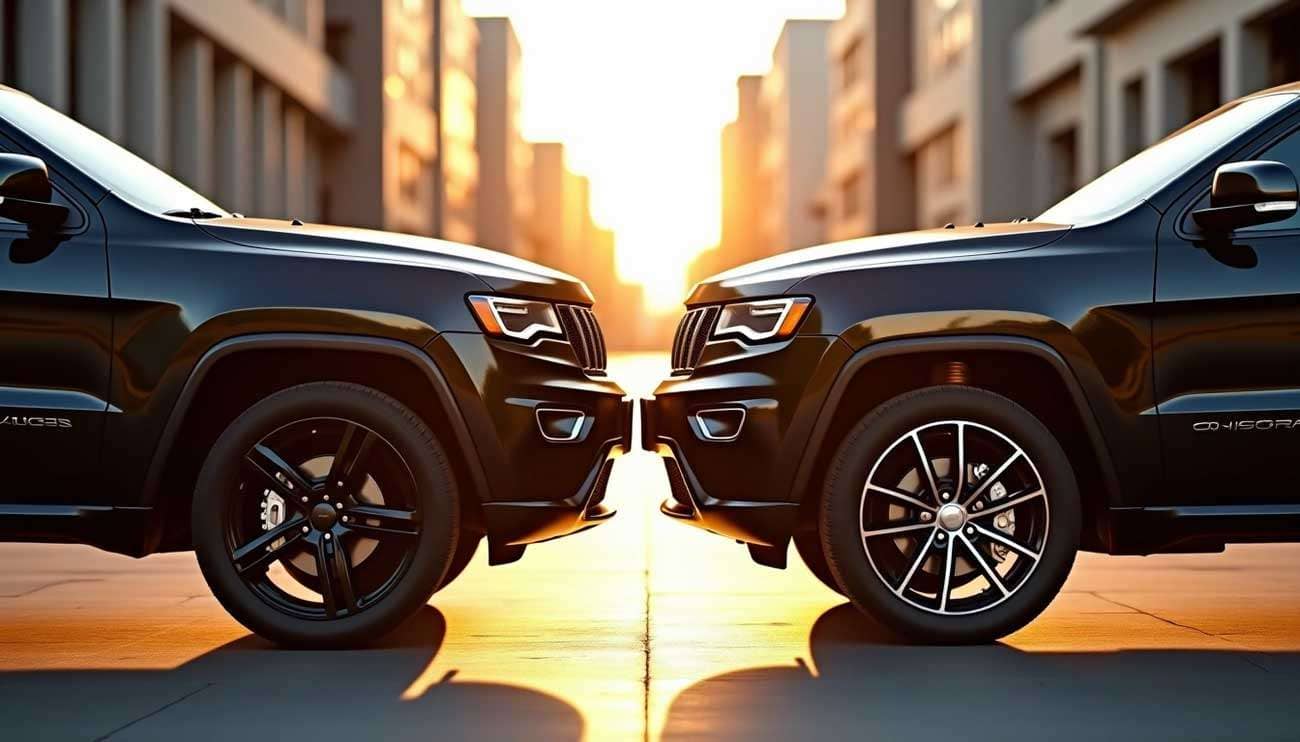
The choice between 18 vs 20 inch wheels affects much more than your vehicle's looks. Consumer Reports suggests that plus-sizing your tires could boost performance, especially in handling and cornering. Most drivers feel drawn to 20-inch wheels because they add a bold, sporty look to their cars.
20-inch wheels offer benefits that go beyond mere esthetics. These wheels' smaller sidewalls provide better road rigidity. Your vehicle gains more lateral stability and shows less body-roll compared to similar 18-inch tires. The steering response becomes sharper and more immediate, with minimal delay.
Drivers who like high-speed performance will find that 20-inch wheels help their vehicles stay more stable, especially at higher speeds. The improved handling that comes with 20-inch wheels needs careful evaluation against factors like ride comfort and price differences.
Let's explore what you should know about picking between 18 and 20-inch wheels for your truck, SUV, or sedan. Understanding these key differences will help you pick the right wheels that match your style, comfort, and performance needs.

The physical dimensions of 18 and 20 inch wheels make all the difference in your vehicle's performance and looks.
The numbers "18" and "20" show the wheel's diameter in inches—not the overall tire diameter. This difference is vital because it determines the amount of rubber between your wheel and the road.
You'll get more tire sidewall with 18-inch wheels—that's the rubber part extending from the wheel rim to the tread. The 20-inch wheels have thinner sidewalls but keep a similar overall diameter. A 285/75R18 tire comes with an 8.42" sidewall, while a 285/65R20 has just a 7.28" sidewall. The total height between these tire sizes barely differs—a 285/75R18 reaches 34.84 inches while a 285/65R20 measures 34.57 inches.
Wheel experts call this relationship between wheel size and sidewall "plus-sizing." Moving up from 18 to 20-inch wheels (a "plus two" upgrade) means the shorter sidewall makes up for the bigger wheel diameter. Your speedometer and vehicle gearing stay accurate this way.
Each wheel size has its own characteristics based on how they're built:
18-inch wheels: Come with thicker sidewalls and more rubber between wheel and road
20-inch wheels: Give you a larger diameter with thinner, less flexible sidewalls
These differences show up in real-life driving. The 20-inch wheels will give you better stability at high speeds and grip better in tight corners because their sidewalls bend less.
You'll notice right away how wheel size changes your vehicle's look. The 20-inch wheels fill out the wheel wells better, giving that sporty look many drivers want. That's why many people upgrade despite the trade-offs.
Trucks and SUVs show the biggest visual changes with different wheel sizes. The actual ground clearance between properly sized 18 and 20-inch wheel/tire combinations stays almost the same—usually within half an inch.
Bigger wheels give you more room between the wheel and brake parts. The larger diameter often means better brake caliper clearance. This helps if you've upgraded your braking system.
The wheel diameter affects more than just looks. The 18-inch wheels work better off-road because their sidewalls flex more—especially when you lower tire pressure for better grip. One driver put it this way: "If you want to air-down off-road for max traction, 20's don't give you enough sidewall to do it. 18's are good in this respect...".
The sidewall height also determines how likely your wheels are to get damaged. The taller sidewalls on 18-inch setups protect your expensive wheels better from potholes and curbs. This makes them a smarter choice if you drive on rough roads.
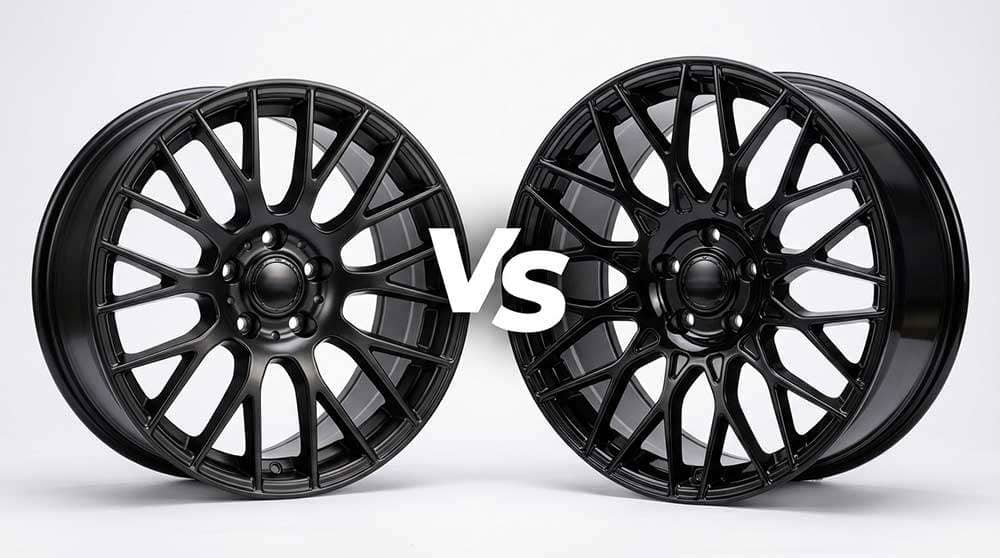
Your vehicle's handling changes noticeably between 18 and 20 inch wheels due to their physical differences. These differences extend beyond looks and shape your daily driving experience in many ways.
20-inch wheels excel at cornering performance. Your vehicle becomes more stable at higher speeds with better traction in tight corners because the sidewalls bend less. Simple physics explains this - shorter sidewalls on 20-inch wheels flex less under pressure.
"A larger wheel contributes to a more stable cornering feel... a larger wheel on the same car has a shorter tire wall which bends less than a longer tire wall when exposed to cornering forces". Drivers feel more confident on backroads and winding highways thanks to reduced tire movement.
18-inch setups come with taller sidewalls that offer more flexibility. This flexibility might reduce cornering precision, but proves valuable for off-road driving where that compliance helps.
Steering feel marks the biggest difference between these wheel sizes. 20-inch wheel setups make steering "better, tighter, and more responsive with less delay". Shorter sidewalls create this direct connection to the road.
Drivers who love performance often choose this precise steering feedback. One forum member shared, "I've read that one of the advantages of the factory 20's is that they make the steering feel stiffer and more direct". Another driver pointed out a tradeoff: "With 18's a lot of the small bumps and rough road sections felt much milder".
18-inch wheels offer a more forgiving steering experience. This setup filters out some road texture and small irregularities. Drivers who value comfort over sporty feel will appreciate this setup, especially on long drives.
When comparing these wheel sizes, think about your driving preferences. Performance-focused drivers usually pick 20-inch wheels for their quick response and connected feel. Daily commuters might prefer 18-inch wheels that offer a more relaxed driving experience.
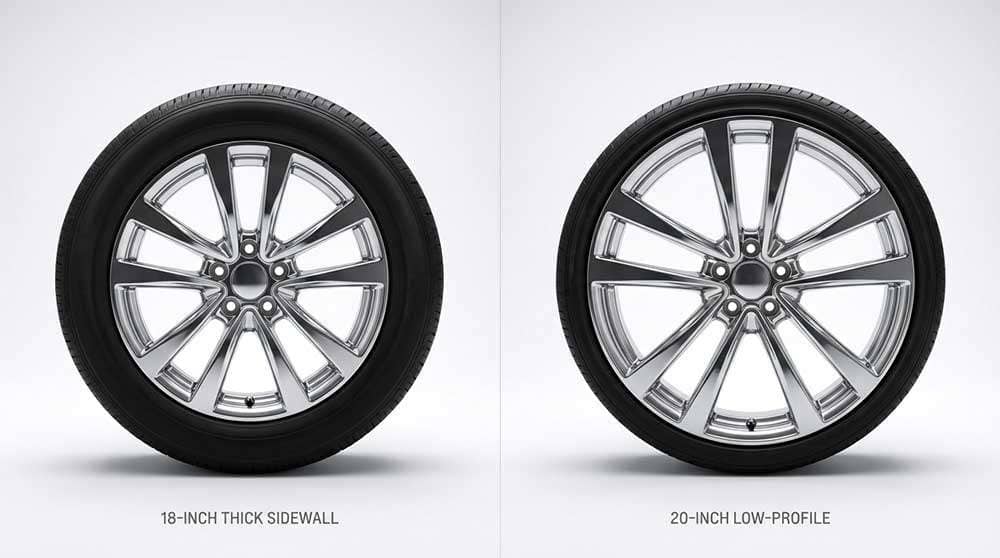
Drivers will experience the difference between 18 and 20-inch wheels immediately when they hit the road. The tire sidewall height is the life-blood of ride comfort, and this affects how your vehicle handles road imperfections.
Sidewall height directly affects how your car absorbs impacts. 18-inch wheels have taller sidewalls that function as natural shock absorbers—these tires cushion bumps, potholes, and road irregularities effectively. The rubber flexes and dampens vibrations before they reach your cabin.
The ride becomes notably harsher with 20-inch wheels. The shorter sidewall has less rubber to absorb road imperfections, and more of the road's texture transfers into the vehicle. A firsthand account from one owner describes it well: "My experience is that the 18's provide a smoother ride with less noise and vibration".
Noise patterns are different with each size. 18-inch tires run quieter because additional rubber cushions the road contact. 20-inch wheels often create more road noise since the tire has less material to dampen sounds from the pavement.
Road conditions affect how much you'll notice these differences. City streets with pothole-ridden surfaces make 20-inch wheels noticeably uncomfortable. The shorter sidewalls can't handle repeated impacts as well, and you'll feel each imperfection.
Highway driving becomes more nuanced between the two sizes. 20-inch wheels offer better stability at high speeds, while 18-inch wheels deliver a more cushioned experience. One driver explained the choice by stating, "Every surface imperfection was noticeable, and the ride was significantly rougher compared to the 18-inch with all-terrain tires".
Regions with poor infrastructure make 18-inch wheels the better choice. More rubber between the road and your wheel protects against pothole damage and provides consistent comfort. 20-inch wheels make sense in areas with well-maintained roads, especially for drivers who prefer that sporty, connected feel.
Wheel size significantly affects your wallet—not just at purchase, but over time through fuel consumption. Your vehicle's gas mileage drops when you move to bigger wheels, and this difference adds up noticeably on your yearly fuel budget.
The basic physics is simple: heavier wheels need more energy to move, which equals more fuel consumption. Consider how much extra weight 20-inch wheels add versus 18-inch options. An 18-inch wheel/tire combination typically weighs about 71 pounds, while a 20-inch setup weighs approximately 80.5 pounds.
Each wheel adds about 2.4 extra pounds of rotating mass that the engine must continuously move. This weight penalty hits you in two ways—more energy to accelerate and more fuel burned to maintain speed.
Rolling resistance plays an important role here too. Wider tires on 20-inch wheels create more contact with the road, and more tire surface meeting asphalt generates increased resistance. Your engine works harder to overcome this resistance, which lowers overall efficiency.
Test data reveals 20-inch wheels reduce fuel economy by 1-2 MPG compared to 18-inch equivalents. A recent test showed a vehicle getting 21 MPG with 20-inch wheels achieved 23.2 MPG after switching to 18-inch wheels. This 2+ MPG difference becomes quite substantial over time.
Your wallet feels the difference after running the numbers. An average of 15,000 miles yearly and current gas prices, 2 MPG less fuel efficiency costs an extra $200-$300 annually at the pump.
Electric vehicles experience even more dramatic effects. Tesla reports that Model 3 cars with 20-inch wheels see range reductions of 10-15% versus 18-inch options. EV owners should pay close attention to wheel selection.
The fuel economy penalty might be acceptable if you value the handling and styling benefits of larger wheels. Drivers who prioritize efficiency or own electric vehicles, however, should think over the lasting impact on their fuel or electricity costs before selecting 20-inch wheels.

The purchase price is the start of your wheel investment story. Money matters extend well beyond the showroom floor—you need to factor in replacement tires, repairs, and how your wheel choice affects long-term costs.
A substantial gap exists in tire pricing between these sizes. The BFGoodrich All-Terrain T/A KO2 makes a good example—the 18-inch version costs about $237.96, while the 20-inch version jumps to $308.99 for similar sizes. This pattern holds true across most tire brands and models.
The numbers look more dramatic when you buy a full set. Four 18-inch tires run about $951.84, while 20-inch equivalents cost $1,235.96—nearly $300 more right from the start. Premium performance tires show even wider gaps.
Finding the right size matters too. 18-inch tires give you more options to choose from and better availability. 20-inch tires might need special orders that leave you waiting, especially in rural areas.
Shorter sidewalls on 20-inch wheels raise the stakes for road damage. Less rubber cushion means potholes and curbs are more likely to harm your wheels directly.
18-inch setups protect themselves better naturally. The extra sidewall rubber works as armor against road hazards. A pothole that might bend a 20-inch wheel might only cause a brief thump on an 18-inch setup.
Repair costs favor the smaller wheel choice. The wheels themselves are cheaper to replace, and tire repairs happen less frequently. 20-inch wheels also demand more precise alignment and careful mounting, which drives up maintenance costs.
The experts at Performance Plus Tire can help you weigh these cost factors. Sometimes the styling benefits of 20-inch wheels justify the extra expense—other times, the practical choice makes more sense for your budget.
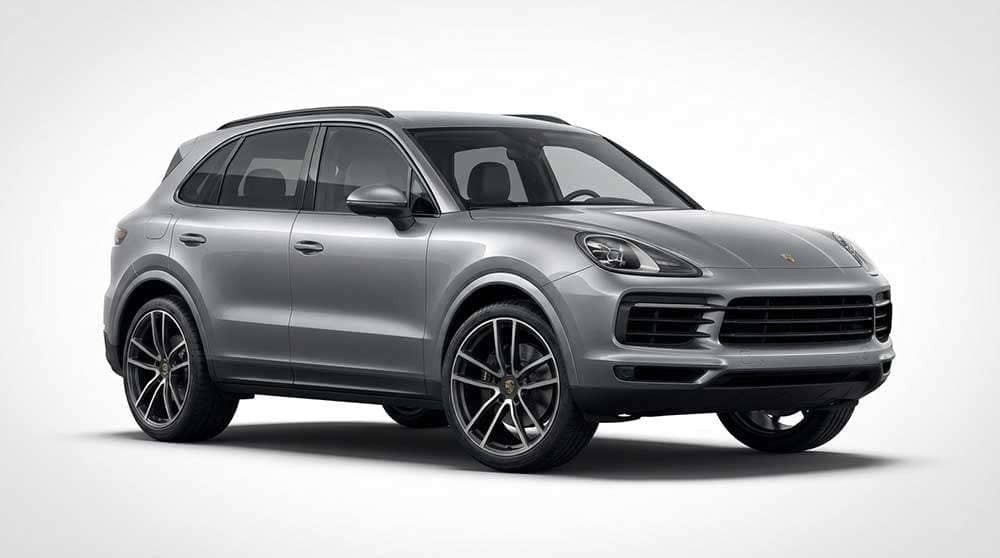
Different vehicles respond differently to wheel size changes. The type of vehicle you drive affects whether 18 or 20-inch wheels work best for your needs.
Trucks and SUVs show the most dramatic differences between 18 and 20-inch wheels. Off-road enthusiasts should stick with 18-inch wheels. The deeper sidewalls let you air down on rough terrain for maximum grip, and the extra rubber protects your expensive wheels from trail hazards.
20-inch wheels make sense for mostly pavement-bound trucks, and daily drivers gain from the sharper handling and aggressive look. The improved road feel shines during highway driving and urban commuting.
Heavy-duty applications favor 18-inch wheels. Load-carrying capacity stays stronger with more sidewall support, and the suspension works with more rubber cushion to handle weight. The stock 2020 F-150 came with LT275/65R18 tires on many trim levels for good reason.
Consider exploring 17 vs 18 inch wheel options as well. These slightly smaller sizes could better fit your truck's intended purpose.
Sports cars and performance sedans respond well to larger wheels. The stiffer sidewalls on 20-inch setups maximize the handling potential engineers built into these vehicles, and cornering precision increases noticeably during aggressive driving.
Luxury sedans split the difference between comfort and performance. Many manufacturers offer 18-inch wheels as standard for everyday comfort, while 20-inch options target drivers who prize handling above all else.
Factory recommendations matter here. BMW and Mercedes typically tier their wheel sizes by trim level. Base models use 17-18 inch wheels, while premium trims showcase 20-inch options.
Electric vehicles need special wheel planning. The Tesla Model 3's range drops 10-15% with heavier 20-inch wheels compared to 18-inch Aero options. Drivers who want maximum range should pick the 18-inch setup.
The Kia Telluride works well with both sizes, using 245/60R18 tires for smaller builds and 245/50R20 for larger setups. Both configurations share the same 5x114.3mm bolt patterns.
The experts at Performance Plus Tire are a great way to get advice about which size matches your vehicle's needs and your driving style best.
Characteristic |
18-Inch Wheels |
20-Inch Wheels |
|---|---|---|
Sidewall Height |
Taller sidewalls (e.g., 8.42" for 285/75R18) |
Shorter sidewalls (e.g., 7.28" for 285/65R20) |
Cornering Stability |
More flexible sidewalls with less rigidity |
Enhanced stability with reduced body roll |
Steering Response |
Reduced direct feedback |
Quick response with minimal delay |
Ride Comfort |
Smoother experience with better absorption |
Firm ride that transfers more road feel |
Road Noise |
Quieter operation from rubber cushioning |
More noticeable road noise |
Fuel Economy |
Higher efficiency |
Uses 1-2 MPG more than 18" wheels |
Weight |
Lighter build at 71 lbs with tire |
Heavier construction at 80.5 lbs with tire |
Off-Road Capability |
Excellent off-road performance with proper deflation |
Restricted off-road use |
Tire Costs |
Budget-friendly with easy availability |
Costs 20-60% more per tire |
Damage Risk |
Good protection from road hazards |
Higher vulnerability to pothole damage |
Visual Appeal |
Conservative stance |
Sportier, bold appearance |
Maintenance Needs |
Regular maintenance schedule |
Needs frequent checks and alignment |
A close look at 18 and 20-inch wheels reveals unique benefits based on your driving priorities. The 20-inch wheels deliver better cornering stability and more responsive steering. They also create that aggressive, head-turning look many drivers love. These performance gains come with some downsides - a rougher ride, more fuel usage, and much higher costs when you need replacements.
Daily city drivers who deal with potholes and rough roads will appreciate 18-inch wheels. These wheels absorb shocks better, run quieter, and resist damage more effectively. The precise handling of 20-inch wheels might appeal more to performance enthusiasts and highway drivers who don't mind the trade-offs.
Your vehicle type should influence this choice heavily. Truck and SUV owners who go off-road should stick with 18-inch wheels for better terrain handling. Luxury sedan drivers looking for style and performance might prefer how 20-inch wheels respond.
Larger wheels definitely create that aggressive stance you might want. You should think about practical factors like tire availability, replacement costs, and damage risks. The right choice comes down to your driving style, budget, and style priorities.
Need help deciding what works best for you? The wheel and tire experts at Performance Plus Tire can guide you through these options. They'll help you find the sweet spot between style, performance, and everyday practicality for your vehicle.
The debate between 18 and 20-inch wheels shows something important about car modifications - every choice has its give and take. Your choice should match how you use your car rather than just following trends, whether you value comfort, precise handling, or visual appeal most.
Understanding the trade-offs between 18 and 20-inch wheels helps you make an informed decision based on your driving priorities and budget.
• 20-inch wheels deliver superior handling with tighter steering response and better cornering stability, but sacrifice ride comfort and fuel economy
• 18-inch wheels provide smoother daily driving with better shock absorption, quieter operation, and significantly lower tire replacement costs
• Fuel economy drops 1-2 MPG with 20-inch wheels due to increased weight and rolling resistance compared to 18-inch setups
• 20-inch tires cost 20-60% more to replace and face higher damage risk from potholes due to shorter protective sidewalls
• Choose 18-inch for off-road capability, daily comfort, and budget-conscious ownership; select 20-inch for performance driving and aggressive styling
The decision ultimately depends on whether you prioritize everyday practicality and cost savings (18-inch) or enhanced performance and visual appeal (20-inch). Consider your typical driving conditions, maintenance budget, and whether you value comfort over handling precision when making this choice.
20-inch wheels offer improved handling, especially during cornering, and provide a more aggressive, sporty appearance. They also tend to have better stability at higher speeds. However, these benefits come with trade-offs in ride comfort and fuel efficiency.
18-inch wheels generally provide a smoother, more comfortable ride due to their taller sidewalls which better absorb road imperfections. In contrast, 20-inch wheels with shorter sidewalls offer less cushioning, resulting in a firmer ride that transmits more road feedback to the driver.
Typically, 20-inch wheels negatively affect fuel economy more than 18-inch wheels. Drivers often report a decrease of 1-2 MPG when switching from 18-inch to 20-inch wheels, primarily due to increased weight and rolling resistance.
Maintenance costs are generally higher for 20-inch wheels. Tires for 20-inch wheels are usually 20-60% more expensive than their 18-inch counterparts. Additionally, 20-inch wheels are more susceptible to damage from road hazards, potentially leading to higher repair costs.
For off-road driving, 18-inch wheels are generally preferred. Their taller sidewalls allow for better "airing down" of tires to increase traction on loose surfaces. They also provide more cushioning against rough terrain and are less prone to damage from obstacles encountered off-road.