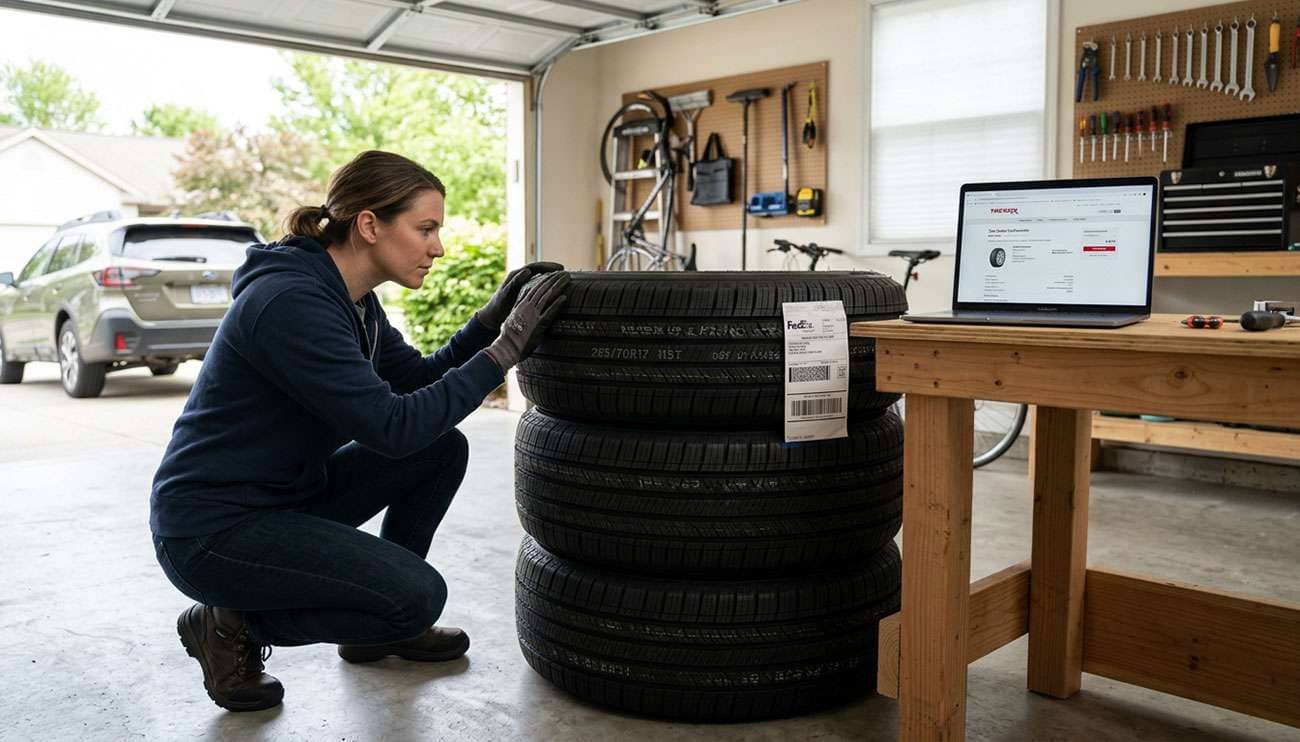
Yes, it is okay to buy tires online, but the tire is only half of what you are buying. The other half is the seller. Buy from an authorized dealer and the manufacturer warranty comes with it. Buy from an unauthorized reseller and it may not. Then check three things no checkout page checks for you: the load index, the DOT date on the tire, and what your local shop charges to mount it.
I have sold tires over a counter in Long Beach since 1971, and we sell them online too, so weigh my opinion accordingly. Most answers to this question say to buy from a reputable site and leave it there. That is good advice as far as it goes, but "reputable" is not the word in the warranty paperwork. The word is "authorized." I want you to know what that means before you click the button, and what to do when the truck drops four tires on your porch.
Where you buy decides who stands behind the tire. Find your seller and read across.
Where You Buy |
Manufacturer Warranty |
Who Handles a Problem |
Main Thing to Check |
|---|---|---|---|
Authorized online tire retailer |
Yes, with your receipt |
The seller, then the manufacturer |
Return terms and date code |
Online retailer with local installers |
Yes, if the seller is authorized |
Seller for the tire, installer for the mounting |
The installer's full price |
Marketplace listing from an authorized store |
Usually |
That store and the marketplace |
Who the seller actually is |
Marketplace third-party reseller |
May not apply |
Mostly you |
Dealer status and date code |
Auction site or classified, used tires |
No |
You |
Age and repairs you cannot verify. I would skip it |
Do this before anybody mounts anything. Once a tire is mounted, your options shrink fast.
Check |
Where to Look |
What You Want |
If It Fails |
|---|---|---|---|
Size |
Sidewall and invoice |
Matches the order and your door placard |
Do not mount. Call the seller |
Load index |
Number right after the size |
At or above the factory number |
Do not mount. Call the seller |
Speed rating |
Letter after the load index |
At or above the factory letter |
Call before mounting |
DOT date |
Last four digits of the DOT number |
Recent. Ask questions past three years |
Call before mounting |
Condition |
Tread, sidewalls, and beads |
No cuts, plugs, or crushed beads |
Take photos and call the same day |
Matching set |
All four tires |
Same model and same load index |
Do not mount a mixed set |
Not by itself. The warranty does not care whether you clicked a button or shook a hand. It cares who sold you the tire and whether you can prove it.
Read the language. Michelin's says plainly that "Unauthorized tire dealers cannot provide the Michelin Promise Plan." Continental limits its coverage to tires "Purchased from an authorized Continental brand tire dealer." Bridgestone covers the original purchaser and has you present the tire to an authorized retailer for an adjustment. So before you buy, look the seller up on the manufacturer's dealer locator, or ask the seller in writing if they are authorized for that brand. A low price from a reseller on a marketplace may come with a warranty you cannot use.
Coverage runs from the purchase date, not from the day the tire was built. Michelin gives you 6 years from purchase, and Continental gives you 72 months. Mileage claims pay on a sliding scale, so read how tire mileage warranty proration works before you count on one.
One more thing for you online buyers. A warranty claim does not always mean shipping a tire across the country. Bridgestone's process runs through an authorized retailer, so ask the manufacturer where to take it before you box anything up.
This is the step almost nobody talks about, and it is the one that could matter most. Tires get recalled. The manufacturer can only reach you if it knows who bought them.
Federal rule 49 CFR Part 574 covers this. An independent dealer has three choices: hand you a filled-out registration form, send a paper form to the manufacturer within 30 days, or send the information electronically within 30 days and say so on your invoice. So look at your paperwork. If there is a form, send it in. If the invoice says it was registered, you are done. If you find neither, go to the manufacturer's website and register the tires yourself.
Most people never do. In 2015 the National Transportation Safety Board found only about 10 percent of tires sold through independent dealers were being registered. Here is how to stay out of that group:
Older than most folks expect. No federal rule puts a sell-by date on a tire, and a new tire is new until it goes into service. It can sit in a warehouse for two or three years and still be sold that way, and that goes for a store as much as a website. The difference is that in a store, you can read the date before you pay.
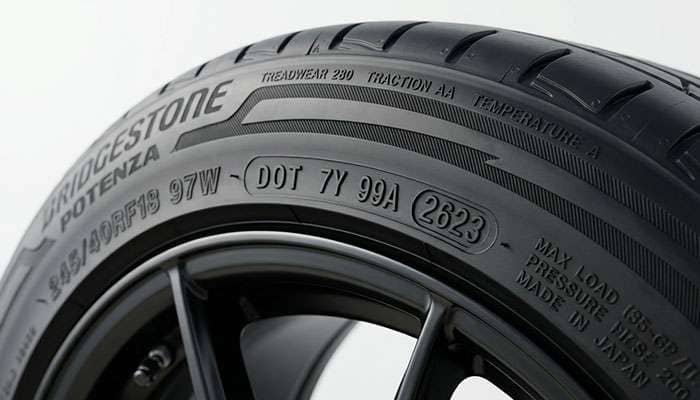
Look for the last four digits of the DOT number. A code of 3224 means the 32nd week of 2024. Our guide to reading DOT tire date codes shows you where to find it. The aging clock starts at manufacture, not at purchase, and several automakers say to replace tires at 6 years while many tire makers set 10 years as the outside limit. Our piece on the 5-year tire rule lays out those zones.
Here is my rule of thumb. Under two years old, I do not think about it. Two to three years is fine if the tire was stored well. Past three, I want an answer from the seller before that tire goes on a wheel. Ask about date codes before you order, because a seller can often pull a fresher set if you ask first.
Age matters most to the low-mileage driver. If you drive 8,000 miles a year on a 60,000-mile tire, the tread would take 7.5 years to wear out. A tire that shows up three years old will age out long before you use it up. That driver is the one who should be pickiest about dates.
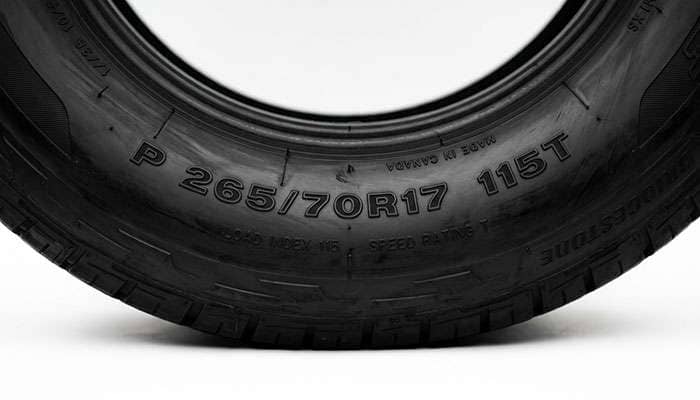
The size will. The rest of the spec is on you. The same size can come in very different load ratings, and that is the part a quick search skips over. Every one of the 60 most common sizes on the market comes in more than one load index. Look at the spread in these four:
Size |
Load Index Range |
Load Per Tire |
Spread |
|---|---|---|---|
225/65R17 |
100 to 107 |
1,764 to 2,149 lb |
385 lb |
245/60R18 |
98 to 109 |
1,653 to 2,271 lb |
618 lb |
265/70R17 |
112 to 123 |
2,469 to 3,417 lb |
948 lb |
275/60R20 |
114 to 126 |
2,601 to 3,748 lb |
1,147 lb |
A tire can match your size perfectly and still fall short on capacity. Search by your vehicle instead of the size, then confirm the load index against the placard in your door or your factory tire. If the number you are looking at is lower, read whether a lower load index tire is safe first.
Vehicle search also has limits, so watch for these cases:
The price in the cart is not the price on the car. Here is what usually gets added.
Line Item |
Usual Cost |
Notes |
|---|---|---|
Mount and balance |
$60 to $180 for four |
Higher on large, low-profile, and run-flat tires |
Carry-in fee for outside tires |
$100 to $200 for four |
Replaces the line above at many shops, and may bundle stems and disposal |
Valve stems, TPMS service, disposal |
$30 to $80 total |
Ask if these are included |
Road force balancing |
$20 to $50 more per axle |
Worth it if you are sensitive to vibration |
Alignment |
Ask for a quote |
Worth doing if your old tires wore unevenly |
So add roughly $90 to $280 to the cart before you compare. Local shops quote out-the-door prices, and online carts usually do not. Our breakdown of tire mounting and balancing cost has the numbers by tire type, and why online tire prices beat local shops covers the other side of that math.

Not every shop will touch outside tires. Independent shops are usually the most willing, and mobile installers build a business on it. Some national chains refuse or charge more, and dealerships are the least likely. Their worry is liability on a tire they did not sell, and I understand that, because I have stood on that side of the counter. Call first. Ask if they mount customer tires, what the all-in price is, and whether they will accept a delivery.
A store sale often includes things that do not show up in the price. Free rotations, rebalancing, and flat repairs for the life of the tire are common at the bigger chains. Over 50,000 miles, that is real money. If you are comparing a local deal with an online one, ask what comes with it.
Act the same day. Keep the box or wrapping, take photos, and call before you do anything else. Do not take it to the shop and hope. Once a tire is mounted, most sellers will not take it back.
Since you should read the fine print on anybody's store, here is ours. Report shipping damage within 24 hours. Returns have to be requested within 30 days, new and in the original packaging, and they carry a 20 percent restocking fee plus shipping unless we made the mistake. Special orders cannot be returned, and we do not take back mounted tires. Plenty of sellers do something similar, and some are more generous. Know the terms before you buy. If a tire shows a cut or a bulge, do not try to judge it by eye. Learn how to read tire sidewall damage and get it replaced.
New tires from an authorized store on a marketplace can be fine. The trouble is that the listing page looks the same whether the seller is an authorized dealer or a guy with a garage. Click through to the seller's name, then check that name against the manufacturer's dealer locator.
I worry less about counterfeits than about old stock. An honest-looking listing can ship you tires that are six years old, and you will not know until they arrive. Used tires are a different story. I do not recommend them from anybody, because you cannot know how they were stored, what they have hit, or how they were repaired.
Here is the case where online is not just okay, it is the only way. Try walking into a neighborhood tire shop and asking for a bias-ply wide whitewall in a 1950s size. They will look at you like you asked for a buggy whip. Collector tires have always been a specialty mail-order business, and that is a big part of what we do. I bought Lucas Classic Tires this past year, so we take that side of the business seriously.
Classic buyers should still read the warranty, since Michelin's limited warranty excludes its classic tires. Find a shop that is comfortable mounting tube-type or bias-ply tires before the box arrives, and ask about the date code here too. Low-volume sizes can sit a long while.
Most of these go fine. When one goes wrong, it goes wrong in steps.
Every one of those is avoidable, and most take about five minutes.
After all these years behind a counter, I am comfortable telling you that buying tires online is fine. It is a good deal when you do the work a good counterman used to do for you: confirm the spec, check the date, and know who stands behind the tire. If you want to see what is available for your car, start in our tire store, and call us if you have a question. We have been answering them since 1971.
Yes, if the seller is authorized for the brand and you confirm the load index, speed rating, and date code. Budget for installation, read the return terms, and inspect the tires before anyone mounts them.
Yes, when they come from an authorized dealer. Manufacturers such as Michelin and Continental tie coverage to authorized sellers, so a third-party reseller may not qualify. Keep your receipt and rotation records.
Many will, but call first. Independent shops and mobile installers are usually the most willing. Some chains refuse outside tires or charge a carry-in fee of about $25 to $50 per tire.
No federal rule sets a limit. As a rule of thumb, under two years is fine, two to three years is acceptable if stored well, and past three years you should ask the seller before mounting.
Often, but compare out-the-door prices. Add roughly $90 to $280 for mounting, balancing, and service items, and remember that a local deal may include free rotations and flat repairs.
Check the size, load index, speed rating, DOT date, and condition on every tire, and make sure all four match. Photograph each full DOT number before mounting so you can register the tires.