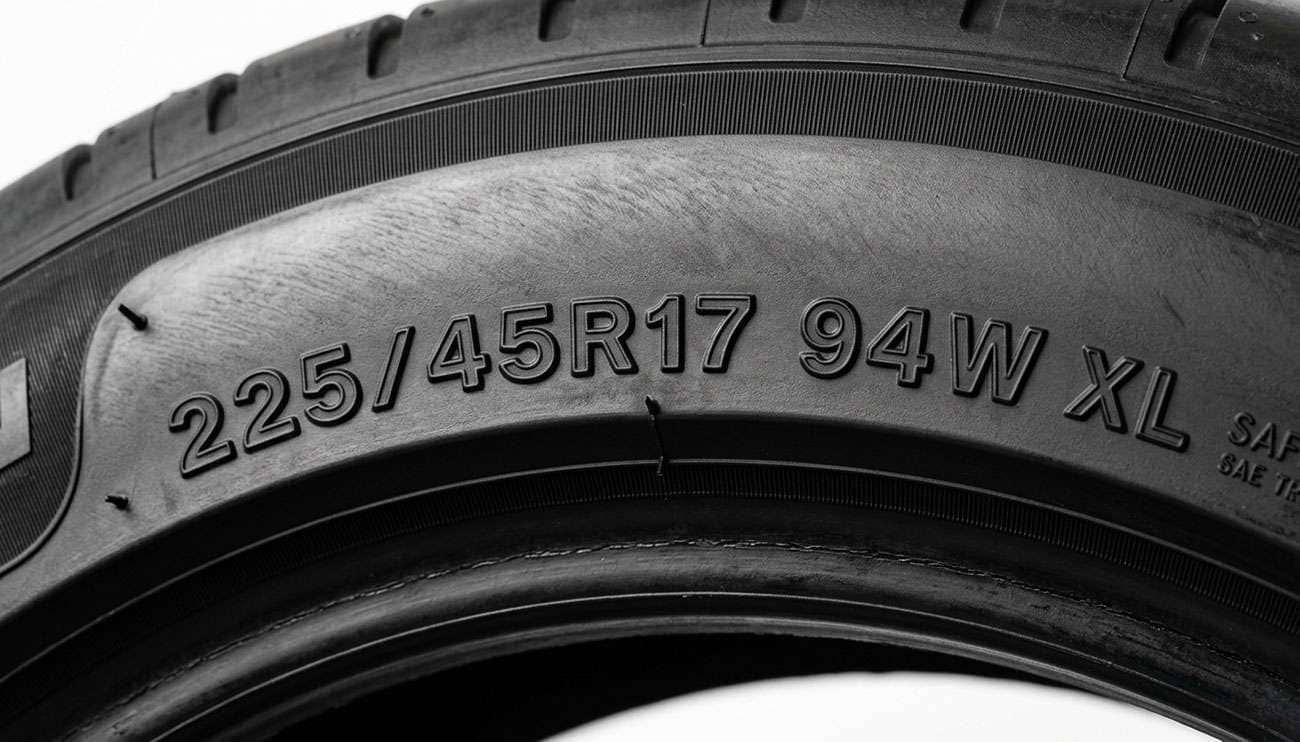
Short answer: no, not below the load index on your door placard. But the number on the sidewall is not the whole answer, and that is the part most guides skip. A load index is the weight a tire carries at one reference pressure: 35 or 36 psi for a standard load tire, 41 or 42 psi for an XL. What actually matters is what the replacement carries at the pressure you run, compared with what your axle puts on it. That is why a tire with a higher number can still come up short, and why a P-metric tire on a truck gives up 10 percent before you start.
I'm Dennis Feldman, and I handle fitment for Performance Plus Tire. The lower-load-index question usually shows up with a good reason behind it: the size you want is cheaper in a standard load version, the plus-size you picked only comes with a smaller number, or the tire you like is not made in your exact spec. The rule is simple. The reasons behind it are what keep you from getting fooled by the number.
Your Situation |
What the Number Hides |
Lower Index OK? |
|---|---|---|
Same size and type as factory, just a lower index |
Each step down is about 2.5 to 3 percent less capacity at the same pressure |
No. The placard index is the floor |
Standard load tire replacing a factory XL |
Same load as XL at the same pressure up to 36 psi; the XL's higher number needs 42 psi |
No, if the placard calls for XL |
Plus-sizing to a lower-profile tire |
Most lower-profile standard load sizes carry less than the factory size |
Only as an XL that meets factory capacity at the pressure you set |
P-metric tire on a pickup, van, or SUV |
Its rated capacity is divided by 1.10 on these vehicles |
No. The margin is already thin |
EV or heavy SUV that came on HL tires |
An HL tire carries more than an XL in the same size |
No. Replace HL with HL |
Going higher than the factory index |
Extra capacity is reserve, not a requirement |
Yes, if size, speed rating, and rim width also fit |
The load index is a code for the maximum weight one tire can carry. A 91 means 1,356 pounds. A 94 means 1,477 pounds. A 115 means 2,679 pounds. The scale is not linear in any neat way, but in the passenger range each step is worth about 2.5 to 3 percent.
What the index leaves off the sidewall is the condition attached to that number. The rated load is the load at a reference pressure, called the maximum load pressure. For a P-metric standard load tire it is 35 psi. For a Euro-metric standard load tire it is 36 psi. For XL tires it is 41 psi (P-metric) or 42 psi (Euro-metric). Below that pressure the tire carries less, following a load-inflation table published by the Tire and Rim Association in the U.S. and the European Tire and Rim Technical Organization in Europe.
Here is the mechanism. A tire does not hold your car up with rubber. It holds it up with air. The casing is a pressure vessel, and the load it can carry depends on how much air the casing can contain and how far the sidewall flexes with each revolution. Less air means more flex, more flex means more heat, and heat is what breaks down the bond between the rubber and the cords inside. The load index tells you how much weight the casing can carry at the pressure it was designed around. Run it softer and you are working with a smaller number than the one on the sidewall.
If you want the difference between load index and the letter-grade load range used on LT tires, our explainer on load range vs. load index lays the two systems side by side.
It is the most common version of this question, and the honest answer is that you cannot know without the math, which is exactly why the rule is "no."
Federal motor vehicle safety standard FMVSS 110 sets how an automaker picks the factory tire. Two requirements matter here. The vehicle's maximum load on a tire cannot exceed the load rating on that tire's sidewall. And the normal load on the tire, roughly the car's curb weight plus a few occupants, cannot exceed 94 percent of what the tire carries at the placard pressure. That 94 percent rule guarantees at least 6 percent of headroom at normal loads. It does not guarantee much more, and at the vehicle's full rated load the factory tire can be close to its limit.
Now drop one index. On a 94, that is 1,477 pounds down to 1,433, a 3 percent cut. You have just spent half of the minimum headroom the regulation requires, before you add a passenger, a trunk full of luggage, or a single psi of under-inflation. Drop two steps and you are past it.
Some cars have more reserve than the minimum, and on those a one-step drop would still carry the weight. The trouble is that you cannot see the reserve from the sidewall. You would need the vehicle's axle ratings, the tire's capacity at your placard pressure, and how you actually load the car. The tire maker, the automaker, and the industry all solve that problem the same way: the replacement must meet or exceed the factory tire's load capacity. Tire makers write it into their warranties, too. Goodyear's limited warranty, for example, excludes damage from overloading and says never to fit tires with less load capacity than the placard shows.
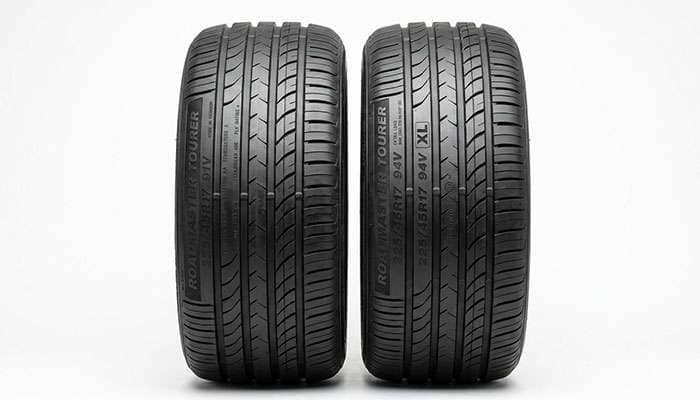
Only when you put more air in them. This is the single most misunderstood point in this whole topic.
An XL, or extra load, tire has a reinforced casing that can safely hold more pressure. At the same pressure, it carries the same load as a standard load tire of the same size. In the standard load tables, a P235/75R15 carries about 2,028 pounds at 35 psi whether it is standard load or XL. The XL keeps going: about 2,105 pounds at 38 psi and about 2,183 pounds at 41 psi. The standard load tire stops at 35. Its higher number is only real at the higher pressure.
That cuts both ways when you shop.
Replacing an XL with a standard load tire of the same size. If your door placard lists an XL tire, the automaker needed that reinforced casing, often because the car runs above 36 psi or because the full-load case needs the XL's higher rating. Some cars call for 40 psi or more on the door. A standard load tire stops gaining capacity at 36 psi no matter how much air you put in it. The cheaper standard load version of your size is a lower load index, and it is a no.
Replacing a standard load tire with an XL. That is fine, but it does not give you extra capacity unless you raise the pressure, and you should not raise it past what the vehicle and tire makers allow. At the placard pressure, the XL is doing the same job as the tire it replaced. Our comparison of SL vs. XL tires covers the ride and wear side of that choice.
This is where most people meet a lower load index without meaning to. Go to a bigger wheel with a shorter sidewall and the tire holds less air. Less air volume means less load capacity at the same pressure, so the standard load version of a lower-profile size usually carries a smaller index than the size it replaces.
Look at what the market offers in common plus sizes for two popular factory fitments, a 205/55R16 at load index 91 and a 215/55R17 at 94.
Plus Size |
Replaces Factory |
Usual Standard Load Index |
Usual XL Index |
Meets Factory Index? |
|---|---|---|---|---|
215/45R17 |
205/55R16 91 |
87 (1,201 lb) |
91 (1,356 lb) |
Only as XL |
225/45R17 |
205/55R16 91 |
91 (1,356 lb) |
94 (1,477 lb) |
Yes; XL adds margin |
225/40R18 |
205/55R16 91 |
88 (1,235 lb) |
92 (1,389 lb) |
Only as XL |
225/45R18 |
215/55R17 94 |
91 (1,356 lb) |
95 (1,521 lb) |
Only as XL |
235/45R18 |
215/55R17 94 |
94 (1,477 lb) |
98 (1,653 lb) |
Yes; XL adds margin |
245/35R20 |
215/55R17 94 |
91 (1,356 lb) |
95 (1,521 lb) |
Only as XL |
The market already knows this. In sizes like 225/40R18, 255/35R19, and 245/35R20, the large majority of tires on the market are XL, because the standard load versions fall short of the cars those sizes go on.
Now the catch from the last section. An XL plus-size tire only beats the factory number at XL pressure. A case written up in the tire trade press makes the point: a car that came on a 255/35R20 with a 95 index was offered a 93 replacement. The right tire was a 97 XL, and it had to be inflated to about 38 psi to match the factory tire's capacity at the placard pressure. Plus-size correctly and you will often run a few psi above the door sticker, set from the tire maker's load-inflation table. Our guide to plus-sizing tires walks through the diameter side of the same decision.
This is where a lower index runs out of room fastest, and the reason is a factor of 1.10 that rarely makes it into the conversation.
When a P-metric passenger tire goes on a pickup, van, or SUV, its rated load is divided by 1.10. That is in the Tire and Rim Association's rules, and FMVSS 110 applies the same derated number when it sets the reserve for these vehicles. The idea is that trucks see harder use than cars, so a passenger-type tire gets less credit on them. In practice, a P-metric tire on a truck carries about 91 percent of its sidewall number.
Run the numbers on a real truck. A 2020 Chevy Tahoe LT 4WD is rated for 4,100 pounds on the rear axle, or 2,050 pounds per rear tire. Its factory 275/55R20 carries a 111 index, 2,403 pounds on the sidewall. Divide by 1.10 and it is good for about 2,185 pounds on that truck. That is only 135 pounds over the axle requirement.
Three steps down and a fully loaded Tahoe is asking more of the rear tires than they can carry, and that is before you hitch a trailer. A passenger car with the same three-step drop might still squeak by. A truck does not have the room.
LT tires skip the derate, but they bring their own wrinkle: an LT tire's number is rated at a much higher pressure, often 80 psi for Load Range E, so at a truck's 35 psi placard it carries far less than the sidewall says. If you are weighing that switch, our breakdown of P-metric vs. LT tires covers how to set the pressure.
Not if you want to keep the capacity your car was built around. HL stands for High Load, a newer passenger tire category that shows up as an "HL" in front of the size on the sidewall. It was developed for vehicles that got heavier on the same platforms, and battery weight in electric cars is a big part of that.
The U.S. Tire Manufacturers Association uses a 245/40R19 to show the spread:
Same size, same 42 psi, and the HL carries 166 more pounds per tire than the XL. Put the XL on a car designed around the HL and you have dropped three load index steps, about 9 percent, without changing a single dimension on the sidewall. The association's guidance is to replace an HL tire with an HL tire of equal size and load capacity, and to follow the automaker's replacement recommendations. HL tires can also call for different approved rim widths than XL tires of the same size, which is one more reason not to treat them as interchangeable. For more on why EVs push tires this hard, see why EV tires are different.
Most will not, and it is not just caution. Tire makers and the trade say the same thing: a replacement tire must meet or exceed the load capacity of the original equipment tire. A shop that installs an underrated tire takes on the liability if that tire fails, and trade press has warned dealers about exactly that scenario for years.
There is a warranty angle for you, too. Tire limited warranties exclude damage caused by overloading. If an underrated tire fails from heat and flex, the failure itself is what the warranty excludes.
The federal tire selection rules are written for automakers, not for you at the counter, which is why you will not find a single line in them that says "a consumer may not buy a 93." What you will find is a placard on your door that the automaker certified against those rules. That placard is the spec.
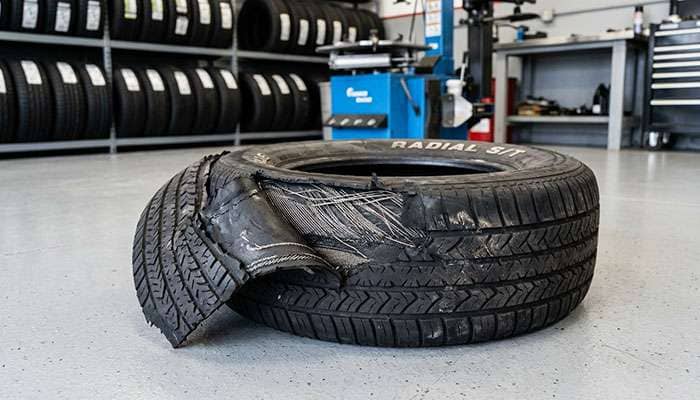
An underrated tire does not fail on the way home from the shop. It fails on the day everything stacks up. Here is how the damage builds.
Stage 1: more flex, more heat. An overloaded tire deflects more at the contact patch, every revolution. That flexing turns into heat. You will not feel it on a short drive around town. NHTSA's tire safety guidance lists overloading alongside under-inflation as a cause of the heat buildup that leads to failure.
Stage 2: wear you can see. Extra deflection wears the shoulders faster, the same pattern you would get from running low pressure. Handling gets vaguer, especially with a full load, and the car feels less sure under hard braking.
Stage 3: damage you cannot see. Heat cycles weaken the bond between the rubber and the steel and fabric cords inside. Hot pavement, highway speed, a full car, and a couple of psi of under-inflation all add heat at once. This is where a sidewall bulge or a tread separation starts, and if you spot a bulge, read our piece on tire sidewall damage and whether it is safe to drive before you go another mile.
Stage 4: failure at the worst time. A tread separation or blowout at speed on a loaded vehicle. On a truck or SUV, the rear tires carry the most weight when you are hauling or towing, which is why an overloaded rear axle is the classic place it happens. Then you are buying tires anyway, plus whatever the failure took with it, and the warranty will not help.
Whatever you save on a lower load index tire, it is not worth that.
Five minutes with the door open and a calculator settles it.
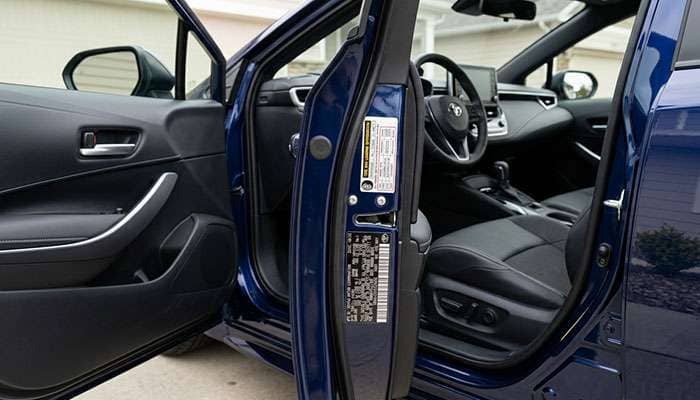
Step 1: Read the tire placard. It is on the driver's door jamb. It lists the factory tire size, the cold inflation pressure, and on many vehicles the load index and speed rating. If it says XL or HL, that is part of the spec.
Step 2: Read the certification label. Usually right next to the placard. It lists the gross vehicle weight rating and the gross axle weight rating, front and rear. Divide each axle rating by two. That is the most each tire on that axle is allowed to carry.
Step 3: Match or beat the factory index. Same size: same index or higher. Plus size: an index at least as high as the factory tire's, which usually means XL.
Step 4: Check capacity at your pressure, not the sidewall's. If the replacement's index only beats the factory number at XL pressure, set the pressure from the tire maker's load-inflation table, never above the sidewall maximum.
Step 5: Apply the truck rule. On a pickup, van, or SUV with P-metric tires, divide the sidewall capacity by 1.10 before you compare it with half the axle rating.
Step 6: Match the axle. Both tires on an axle should carry the same index. Staggered cars can run different indexes front and rear, as long as each axle meets its own requirement.
Step 7: Reset the TPMS if the pressure changed. If you raised the cold pressure to carry the load, have the monitoring system set to the new number so the warning still means something.
If you want to work from your vehicle's weight instead of the placard, our tire load index calculator takes curb weight, passengers, and cargo, adds a reserve, and gives you the minimum index per tire.
You can't safely go below the load index on your door placard, and the number alone will not always tell you when you already have. A load index is a capacity at one reference pressure. A standard load tire stops at 35 or 36 psi. An XL needs 41 or 42 psi to deliver its higher number. A P-metric tire on a truck gives up about 9 percent of its rating. An HL tire carries more than an XL that looks identical in every other way.
So the check is not "is the number on the new tire as big as the old one." It is "does the new tire carry what the old one carried, at the pressure I am going to run, on the vehicle I am putting it on." Get that right and the lower-priced version of your size, the plus-size you want, or the truck tire you are eyeing either passes or it does not, with no guessing.
No. One step is about 2.5 to 3 percent less capacity, and federal rules only require the factory tire to have about 6 percent of headroom at normal loads. Some vehicles have more reserve than that, but you cannot tell from the sidewall, so the industry rule is to match or beat the placard index.
The tire flexes more under the weight, builds more heat, and wears its shoulders faster. Over time the heat weakens the bond between the rubber and the cords inside, which can lead to a bulge, a tread separation, or a blowout, especially at highway speed with a full load. Tire warranties exclude damage from overloading.
No. A 91 carries 1,356 pounds and a 94 carries 1,477 pounds, about 8 percent less. If a size you want only comes as a 91 in standard load, look for the XL version, which usually adds three or four index points, and set the pressure from the tire maker's load-inflation table.
A higher index is safe as long as the size, speed rating, and rim width fit your vehicle, and it adds reserve capacity. If the higher number comes from XL construction rather than a bigger size, it only adds capacity at the higher XL pressure. Higher-capacity tires can ride a little firmer.
Yes, an XL tire carries a higher index than the standard load version of the same size, usually by three or four points. But it only reaches that higher load at its reference pressure of 41 or 42 psi. At the same pressure, it carries the same load as the standard load tire.
Keep the two tires on an axle the same. Different indexes front and rear are normal on staggered setups, as long as each axle's tires meet or beat that axle's requirement on the placard.