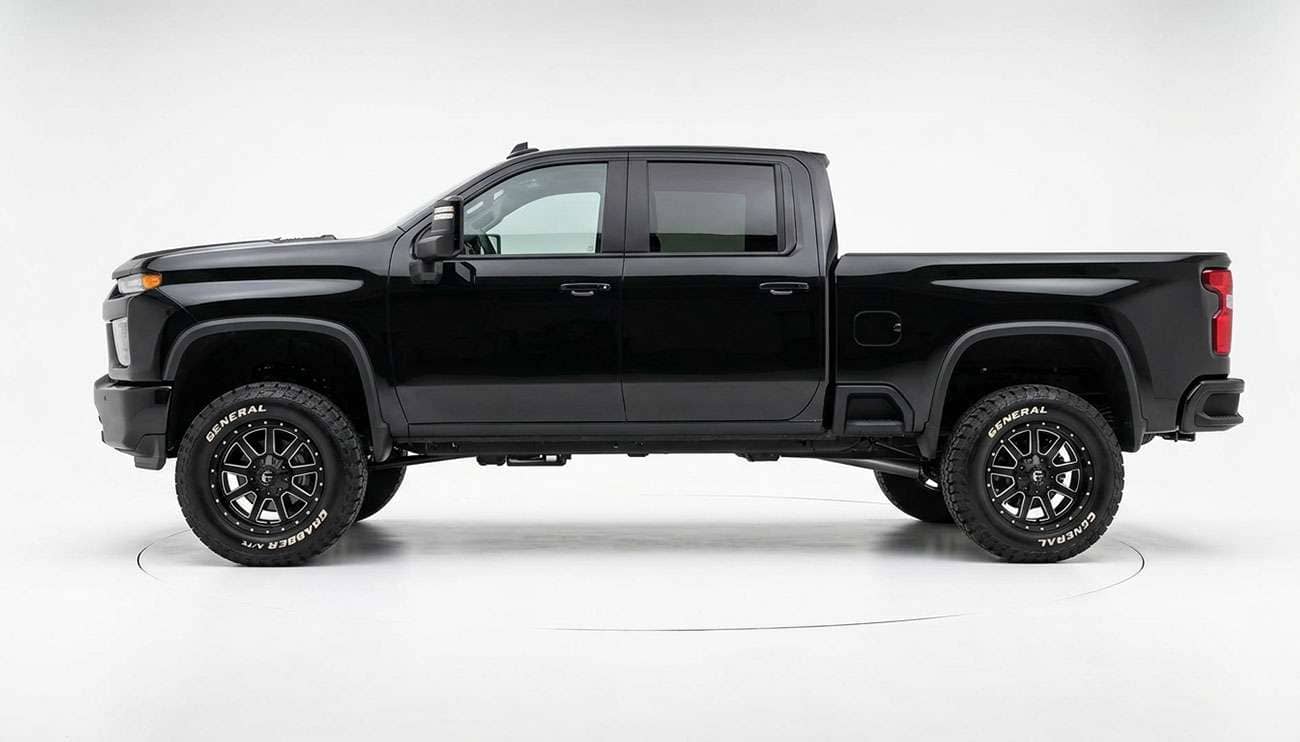
Off-road rim financing works one of two ways, and which one you get depends almost entirely on how big your order is and what your credit looks like. If you qualify for a point-of-sale installment loan, you borrow the purchase price and pay it back in fixed monthly payments, sometimes at zero percent during a promotional term. If you do not qualify, or your order is too large for the approval you were offered, you land in a lease-to-own agreement, where you are renting the wheels until you have paid enough to own them, and the total you pay is meaningfully more than the cash price.
That second sentence is the whole article, honestly. Everything else is detail. But it is detail worth having, because the difference between those two paths on a four-thousand-dollar wheel and tire package is thousands of dollars, and most of the people I talk to at the counter have no idea which one they are signing up for until the paperwork is in front of them.
I have been selling wheels a long time. I am not a financial advisor and I am not going to pretend to be one. What I can do is tell you what these agreements actually say, because I read them, and explain the one move that saves people the most money. Terms vary by provider and by state, so nothing here replaces reading your own agreement before you sign it.
Here is what most financing explainers miss. They talk about wheel financing like every purchase is the same size. It is not. A set of factory-replacement alloys for a sedan is a very different ticket than a lifted half-ton on twenty-twos with thirty-five-inch mud terrains, and the financing products behave differently at each level.
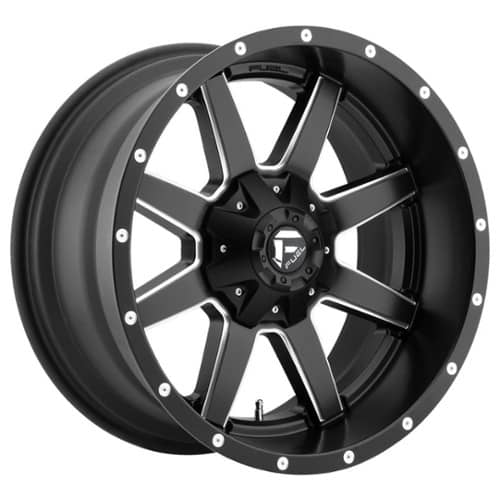
These are real current prices per wheel from our catalog, multiplied out to a set of four.
Build Tier |
Example Wheels |
Set of Four |
What Financing Usually Applies |
|---|---|---|---|
Entry steel or basic alloy |
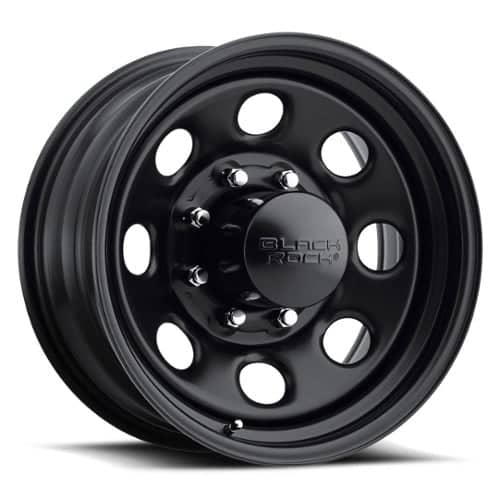
Black Rock 997 Type 8, from 89 per wheel |
356 to 946 |
Most people clear this on a standard installment approval |
Mid-tier off-road alloy |
Moto Metal MO970, from 97.92 per wheel |
392 to 2,012 |
Installment if credit is decent, lease-to-own if not |
Popular truck fitment |
Fuel Maverick D538, from 127.05 per wheel |
508 to 3,260 |
Often exceeds smaller approval limits once tires are added |
Large diameter or forged |
American Force, from 410 per wheel |
1,640 to 18,196 |
Frequently splits across products or requires a down payment |
Now add tires, because almost nobody buys off-road wheels without them. A set of thirty-five-inch mud terrains adds well over a thousand dollars to the ticket, sometimes closer to two. So a build that looked like a twelve-hundred-dollar wheel purchase is a three-thousand-dollar order by the time it ships mounted and balanced.
That number is the variable that decides your financing path. It is not your taste in wheels and it is not the brand. It is the total at checkout, measured against whatever approval amount a lender hands you.
There are three things people call financing, and they are not the same animal. Knowing which one you are looking at is most of the battle.
Product |
How It Works |
Typical Term |
What You End Up Paying |
|---|---|---|---|
Installment loan at checkout |
A lender pays the merchant, you repay in fixed monthly amounts |
3 to 36 months |
Cash price plus interest, anywhere from zero to well over thirty percent APR |
Lease-to-own or rent-to-own |
A company buys the wheels and leases them to you until you have paid for ownership |
12 to 24 months, often billed weekly or biweekly |
Commonly around twice the retail price, plus a processing fee |
Revolving credit |
A credit card or store line you charge the purchase against |
Open ended, minimum payments |
Depends entirely on how fast you clear the balance |
The word that trips people up is lease. Nobody reads that word and pictures a rental agreement on a set of wheels bolted to their own truck, but that is exactly what it is. You do not own them until the agreement says you own them. Our full breakdown on the real cost of lease-to-own wheels goes through a worked example line by line.
None of this makes lease-to-own a scam. It is a legitimate product that gets wheels on a truck for somebody who cannot get a traditional approval, and for a lot of folks that is genuinely the only door open. It just costs what it costs, and you deserve to know the number before you sign rather than after.
Every lease-to-own provider discloses a total cost of ownership. It is required. What they do not do is put it in the big print next to the weekly payment, and I understand why, because the weekly payment sounds great and the total does not.
Read the disclosures across the industry and a pattern shows up. On a term running somewhere between twelve and eighteen months, the total of payments commonly lands around double the retail price, and some published disclosures put it higher. There is usually a processing fee or initial rent payment due at signing, often around fifty dollars plus tax. Approval typically does not involve a traditional credit check, which is the entire appeal, but it does require a bank account and proof of income, usually a few months of it.
Run that against a real order. A three-thousand-dollar wheel and tire package on a lease-to-own agreement at a two-times multiplier is roughly six thousand dollars by the time you own it. Split across seventy-eight weeks that is about seventy-seven dollars a week, which sounds manageable, and that is the point. The payment is designed to sound manageable. The total is what you are actually agreeing to.
I am not telling you to walk away from it. I am telling you to find the total of payments in the agreement, write it on a napkin, and decide if the wheels are worth that number. Some days the honest answer is yes. Some days it is that you buy the Black Rock steelies now for four hundred dollars cash and the Fuels next year.
You will see zero percent advertised on nearly every wheel site including plenty of ours. It is real. It is also not for everybody, and the fine print does the work.
Zero percent promotional financing generally requires a hard or soft credit pull and a decent score, and the promotional rate typically applies only to specific term lengths on specific order sizes. Stretch the term longer than the promo allows and the rate reverts to something ordinary, which can run well into the twenties or thirties depending on the lender and your profile. Some lenders offer a range where zero percent is the best-case end of it and most approvals land somewhere in the middle.
The practical read: if your credit is in reasonable shape, apply for an installment product first and take the zero percent term if you get it. If you do not get it, that is your signal that lease-to-own is the likely path and you should go in knowing the multiplier. Our comparison of Affirm versus Progressive versus Snap versus Acima lays out how the major providers differ on approval criteria and cost. If your credit is rough, financing wheels with bad credit or no credit covers what is still available to you.
This one comes up at the counter constantly, and the answer is not the same for both products.
Installment loans from point-of-sale lenders generally involve a credit inquiry. Many run a soft pull for prequalification, which does not affect your score, and a hard pull only if you proceed. Once the loan exists, most of these lenders report it, which means on-time payments can help you and missed ones will hurt you.
Lease-to-own agreements are structured differently. Because they are leases rather than loans, most providers do not run a traditional credit check to approve you, and many do not report your payment history to the bureaus at all. That cuts both directions. You are not risking your score by taking the lease, but you are also not building anything with it. If your goal is repairing credit, a lease is not the tool for that job. Our piece on whether wheel financing hurts your credit gets into the specifics.
One thing that does bite people: applying to several lenders in a short window. Prequalification with soft pulls is fine, but stacking hard inquiries in a week is not doing you any favors. Apply once, see what you get, then decide.
Financing changes the math on whether you buy wheels by themselves or in a package with tires, and it usually pushes toward the package.
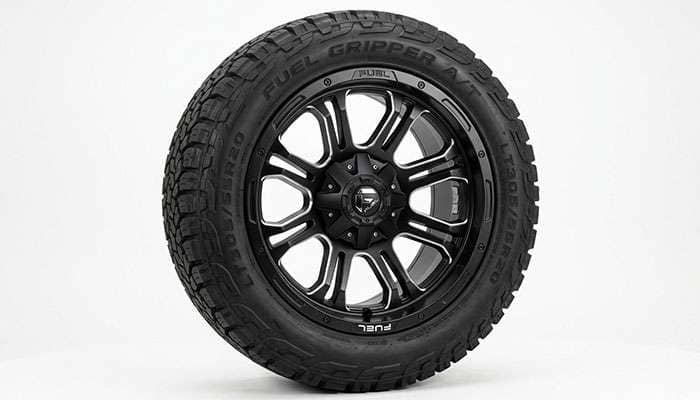
The reason is simple. Package pricing is generally better than buying the two separately, mounting and balancing is typically included, and you are running one financing application against one total instead of two applications against two smaller ones. Two separate agreements also means two sets of fees and two payment schedules to keep straight, which is how people end up missing a payment on something they could easily afford.
The argument against is approval limits. If your approval will not cover the full package, splitting can be the only way through, and there is no shame in that. Just be honest with yourself about whether you will actually come back for the tires or whether you will run the old ones down to the cords. Our comparison on whether wheel and tire packages are cheaper puts real numbers on the difference.
And before you finance anything, get the fitment right. A financed set of wheels that rubs at full lock is an expensive mistake you cannot easily undo, especially under a lease where returns get complicated. Sort out diameter, width, offset, and backspacing first. Our guide to off-road wheel sizes is the place to start.
If you take one thing away from this article, take this one. It is the single biggest lever in the whole process and hardly anybody uses it.
Nearly every lease-to-own agreement includes an early purchase option. Pay the agreement off inside a defined window, commonly around ninety to about a hundred days from signing, and you owe something close to the cash price plus a modest fee instead of the full total of payments. That is the difference between paying six thousand for a three-thousand-dollar package and paying somewhere in the neighborhood of thirty-two hundred.
The window is short and it starts ticking the day you sign, not the day the wheels arrive. So if you are taking a lease because you need the wheels this week but you have a tax refund or a bonus landing next month, that is a genuinely smart use of the product. Take the lease, get the truck sorted, kill the agreement inside the window.
What kills people is the opposite pattern: taking the lease with no plan, letting the window close, and riding the full term. Same wheels, roughly double the money, entirely avoidable. Ask the provider for the exact early purchase deadline in writing and put it on your calendar the day you sign.
Five things to check before you put your name on anything.
Check |
What You Are Looking For |
|---|---|
Total of payments |
A single dollar figure for what ownership costs. If you cannot find it, ask until somebody shows you |
Early purchase deadline |
The exact date, and the exact payoff amount on that date |
Payment frequency |
Weekly and biweekly drafts should line up with your pay cycle, not fight it |
Fees at signing |
Processing fees and initial rent payments, which are separate from the advertised payment |
State availability |
Lease-to-own is regulated differently by state and is not offered everywhere |
The one I would push hardest on is the total of payments. Every legitimate provider discloses it. If somebody is dancing around that question, that tells you something about who you are dealing with. For a wider view on whether the whole approach makes sense for you, is financing rims a good idea makes the case both directions.
Build your cart first, before you apply for anything. Wheels, tires, mounting, shipping, tax. You need the real total, not a guess, because the total is what determines your options.
Apply for the installment product first. If you get approved at zero percent or a low rate for a term you can carry, take it and stop reading.
If you do not, look at the lease-to-own offer and find two numbers: the total of payments, and the early purchase deadline with its payoff amount. Write both down.
Then ask yourself an honest question. Can you realistically clear that early payoff amount inside the window? If yes, the lease is a reasonable tool and you will pay close to cash price. If no, you are signing up for roughly double, and the better move might be a cheaper set of wheels now and the ones you want later.
Whatever you decide, get the fitment confirmed before you sign, because financed wheels that do not fit are the worst version of this whole thing. You can review the full range of off-road rim financing options and see what you qualify for before you commit to anything.
Off-road rim financing is not complicated once you know that there are really only two doors. One is a loan and costs the price plus interest. The other is a lease and commonly costs about double unless you use the early payoff window. Which door you walk through depends on your credit and on how big your build is, and off-road builds are big, which is exactly why this question matters more here than it does for a set of touring tires.
Find your total. Apply once. Read the total of payments. Put the early purchase deadline on your calendar. That is the whole playbook, and it will save some of you a couple thousand dollars on a set of wheels you were going to buy anyway.
It works through one of two products. An installment loan means a lender pays the merchant and you repay the amount in fixed monthly payments, sometimes at zero percent during a promotional term. A lease-to-own agreement means a company buys the wheels and leases them to you until you have paid enough to own them, which commonly totals around twice the retail price. Which one you get depends on your credit and your order total.
Yes, through lease-to-own providers. These agreements typically approve on the basis of an active bank account and verifiable income rather than a traditional credit check, usually requiring a few months of income history. The trade-off is cost, since the total of payments to own the wheels is meaningfully higher than the cash price.
It depends on the build. A set of four entry-level off-road wheels can start around 356 dollars, popular truck fitments commonly land between 500 and 3,300 for a set, and forged or large-diameter wheels run considerably higher. Adding off-road tires often adds more than a thousand dollars to the total, which is what pushes many buyers past standard approval limits.
Usually not. Because these are lease agreements rather than loans, many providers do not report payment history to the credit bureaus. That means on-time payments generally will not improve your score, though the absence of a hard credit inquiry also means applying will not lower it. If building credit is the goal, an installment product that reports to the bureaus is the better fit.
It is a clause in most lease-to-own agreements that lets you pay the lease off early, commonly within about ninety to a hundred days of signing, for something close to the cash price plus a modest fee rather than the full total of payments. The window starts on the signing date, so ask for the exact deadline and payoff amount in writing when you sign.
Together is usually better when your approval covers it. Package pricing tends to beat buying the two separately, mounting and balancing is typically included, and you run one application and one payment schedule instead of two sets of fees. Splitting makes sense mainly when the approval amount will not cover the full order.