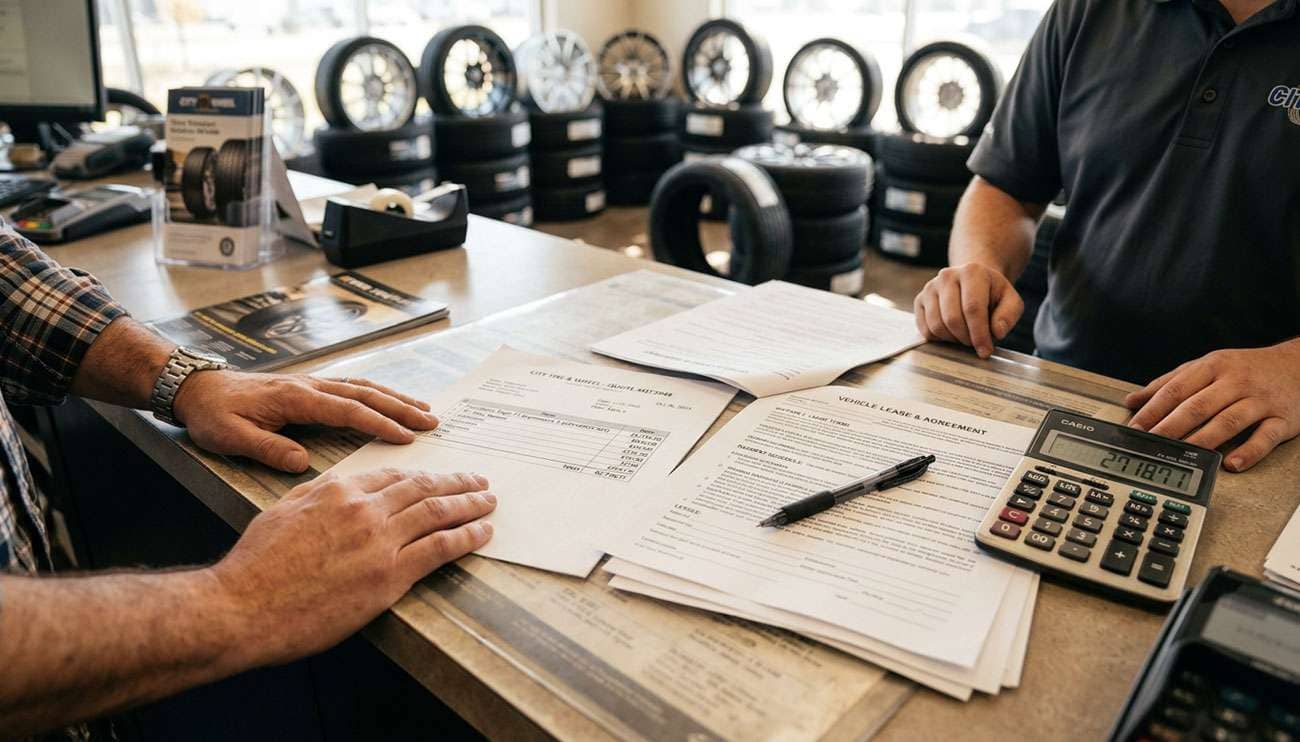
I have stood on the customer side of a parts counter for a long time, and I can tell you the exact moment people stop reading. It is when the payment number appears. Somebody has spent half an hour on finish and fitment, the screen says fifty-eight dollars every two weeks, and that is the last figure they look at before they sign.
Here is the number they did not look at. Progressive Leasing's own help center says a twelve-month lease-to-own total includes the retail cash price plus the lease cost for the full term, and that this amount could cost more than double the retail cash price. Acima's support page says the same thing in plainer words: complete all your lease renewal payments and you will pay approximately double the original invoice price.
That is not a critic saying it. That is the leasing companies, in their own published material, telling you the full-term price is roughly two times cash. Nobody is hiding it. It just does not appear anywhere near the payment display, and almost nobody does the multiplication.
So let us do the multiplication. Real wheels, real tires, real prices out of our own catalog, and every exit ramp along the way.
First thing to understand, because it explains why this cost is so easy to miss: a lease-to-own agreement has no interest rate. Not a low one. None. There is no APR on the paperwork because legally there is no loan.
What happens instead is that the leasing company buys the wheels and tires from us, then rents them to you with an option to own. The charge for that is called the cost of lease, sometimes shown as a factor rate, and Snap describes it as a percentage figured on the total cost of the leased merchandise. It does the same job interest does. It just is not interest, so it does not have to be disclosed the way interest is.
That single difference is why comparing offers is hard. An installment loan gives you a rate and a total you can check against another rate. A lease gives you a payment and a schedule. Two very different products can show you the same comfortable biweekly figure while one costs a thousand dollars more by the end.
Which means the only number worth comparing across offers is the total of payments. Everything else is presentation.
Let us build something ordinary. Not a show truck, just a clean twenty-inch setup for a half-ton, using current catalog pricing.
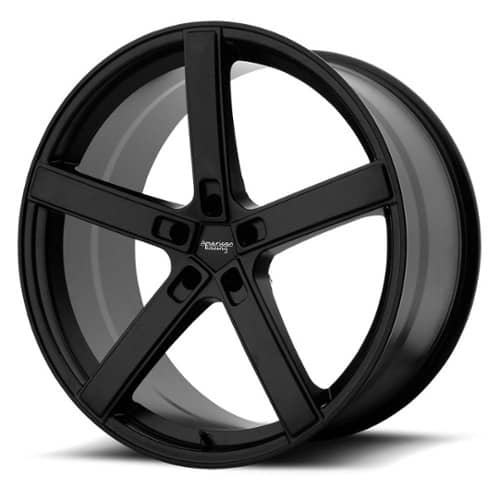
Four American Racing AR920 Blockhead wheels in satin black, twenty inch, run $215.79 each. That is $863.16 for the set. Four Sumitomo Encounter HT2 tires in 275/55R20 run $229.99 each, or $919.96. Wheels and tires together come to $1,783.12.
Then the parts everybody forgets until the invoice prints. Four TPMS sensors at roughly $39.99 each is $159.96. A set of lug nuts runs around $39.95. Mounting and balancing on a twenty-inch package lands in the neighborhood of $140. Call the whole thing about $2,100 out the door.
Now here is that same $2,100 cart, four different ways.
How You Pay |
Up Front |
Total You Pay |
Premium Over Cash |
|---|---|---|---|
Cash |
About $2,100 |
About $2,100 |
None |
Installment loan |
Little or nothing |
Cash price plus disclosed interest |
Calculable before you sign |
Lease, bought out in 90 days |
Small initial payment |
Cash price plus limited lease cost and a small fee |
Modest |
Lease, run to full term |
Small initial payment |
Roughly $4,200 |
Roughly another $2,100 |
Read the bottom row again. On a twenty-one hundred dollar package, riding the lease to the end of the term means the lease cost alone is about what the wheels and tires cost. You pay for the setup twice. Once for the parts, once for the privilege of paying over twelve months.
I want to be fair about this, because it is easy to make it sound like a trick. It is not a trick. Every dollar of it is disclosed in the agreement, the providers publish the doubling on their own websites, and for a lot of people the ability to get safe tires this week genuinely outweighs the premium. But you ought to know you are making that trade before you make it, not in month eight when you are still paying on tires that are already half worn.
Step up two inches and the same percentages start moving real money.
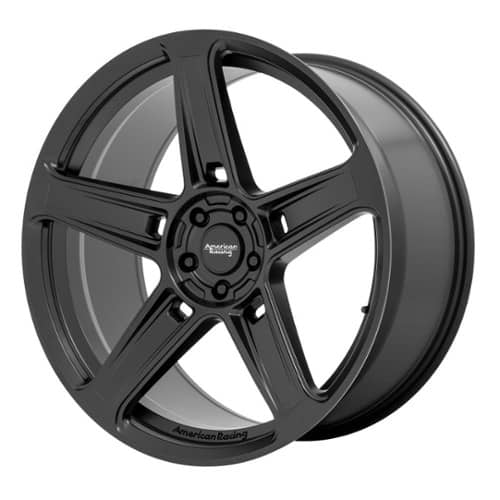
Four American Racing AR936 Hellion wheels in satin black, twenty-two inch, are $359.04 each, so $1,436.16 for the set. Four Toyo Open Country H/T II tires in 285/45R22 are $298.94 each, or $1,195.76. Wheels and tires together: $2,631.92. Add sensors, hardware, mounting and balancing and you are at roughly $2,900.
Run that to full term at the doubling the providers describe and you are looking at something close to $5,800. The lease cost by itself is now about twenty-nine hundred dollars. That is more than the entire twenty-inch package cost, spent on nothing but the financing structure.
And here is the part that catches people sideways. Snap and Acima approvals top out around five thousand dollars. Folks see that number and assume it is a spending limit that protects them. It is not. That ceiling applies to the merchandise, not to what you will end up paying. A $2,900 cart sits comfortably under a $5,000 approval while the total of payments sails right past it.
The approval amount tells you what you can take home. It tells you nothing about what it will cost.
Every one of these agreements has an early purchase option, and it is far and away the most valuable line in the document. Across the major providers it runs roughly ninety to one hundred days from when you take delivery.
Acima spells out what theirs costs: inside the ninety days, you buy the merchandise for the Acima Cash Price plus a small purchase fee that varies by state and is typically around twenty-five dollars. Acima also notes that the Acima Cash Price includes a markup over the merchant invoice price, so it is not quite the same figure as paying us directly, but it is close, and it is nowhere near double.
So on the twenty-inch package, exercising the early buyout takes you from roughly $4,200 down to something in the neighborhood of the original $2,100 plus a modest lease cost and that small fee. Same wheels, same tires, about two thousand dollars different.
The catch is that ninety days is not very long, and it sneaks up on you. My advice, and I give this to everybody who leases out of our shop: put the buyout date in your phone the same day you sign, with a reminder two weeks ahead. Not because you are definitely going to use it, but because a deadline you know about is a decision and a deadline you forget about is just a bill.
If you can put aside a little each payday during those first three months, that is the single highest-return thing you can do with the money. There is no investment on earth paying what skipping the back nine months of lease cost pays.
Now here is the piece I almost never see written down anywhere, and it matters to a lot of people, because plenty of folks miss the ninety-day window and assume the door has closed.
It has not. Acima's own support material explains that after the ninety days you can still buy out the merchandise by paying a lump sum percentage of whatever your remaining total lease amount is at that point. The percentage varies by state, and Acima says it is generally sixty-five percent.
Put numbers on that. Say your twenty-inch package carries a total lease amount around $4,200 across twelve months, so roughly $350 a month. You get to month four and realize what this is costing you. You have paid about $1,050. Your remaining total lease amount is about $3,150. At sixty-five percent, buying out costs you around $2,048.
Add what you already paid and you are at roughly $3,100 all in, against $4,200 if you ride it out. Missing the ninety-day window cost you real money, no question, but taking the mid-lease buyout still saved you about eleven hundred dollars over doing nothing.
That is a phone call. One phone call, at any point in the term, to ask what your buyout figure is today. Most people never make it because nobody told them the option existed after the first window closed. Now you know.
There is a hard ceiling on this whole conversation, and you hit it faster than you would think. Pull the median wheel price out of our catalog by diameter and the picture is clear.
Diameter |
Typical Price Per Wheel |
Set of Four |
Fits a $5,000 Lease Approval? |
|---|---|---|---|
17 inch |
$292 to $363 |
$1,170 to $1,450 |
Yes, with tires and services |
20 inch |
$388 to $535 |
$1,550 to $2,140 |
Yes, with tires and services |
22 inch |
$534 to $964 |
$2,140 to $3,860 |
Usually, but it gets tight at the top |
24 inch |
$1,038 to $1,744 |
$4,150 to $6,980 |
Often no, before tires are added |
26 inch |
$1,745 to $2,008 |
$6,980 to $8,030 |
No |
At twenty-four inches, a set of four wheels by itself can eat the entire lease approval before you have picked a single tire. At twenty-six it is not close. So if you are building something on big diameters, the no-credit-needed lease lane is frequently not available to you at all, regardless of how good your application looks.
That pushes big-rim builds toward an installment loan, where approval scales with creditworthiness rather than stopping at a flat ceiling. Worth knowing before you fall in love with a twenty-six-inch setup and then find out the payment route you were counting on tops out three thousand dollars short.
Let me say something about how these offers get presented, because it is not deceptive exactly, but it is engineered.
The payment figure is designed to be comparable and comfortable. Providers structure payments around your paydays specifically so the number feels absorbable. Fifty-eight dollars every two weeks does not feel like anything. It feels like a couple of lunches.
Fifty-eight dollars every two weeks for twelve months is $1,508. On a package that cost eight hundred dollars, that is the whole story, and the payment display never shows it to you.
There are a few other things that live in the fine print rather than on the screen:
None of this is hidden. All of it is disclosed. It is just disclosed in a document nobody reads at a moment when everybody has already decided. Our breakdown of what mounting and balancing actually costs will help you build a realistic out-the-door number before you get to that screen, and what four new tires really cost covers the rubber side.
Run your figures through the Performance Plus Tire financing calculator before you commit to a lane. Two minutes with the total of payments beats any amount of advice from me.
I have spent this whole article on the cost, so let me be straight about the other side, because I would be doing you a disservice if I left you thinking lease-to-own is always the wrong answer. It is not.
When your tires are unsafe right now. Cords showing, a sidewall bulge, tread down to nothing in the rain. A premium on financing is a bad deal. A blowout at seventy is a worse one. Get safe rubber under the vehicle and sort the money out after.
When the alternative is a worse product. If the choice is leasing a decent set or paying cash for the cheapest tires on the wall, the lease may genuinely be the better call over the life of the setup. We went into this in detail in our piece on the hidden costs of cheap rims.
When credit is not an option. If installment financing is not available to you, the comparison is not lease versus loan. It is lease versus going without. That changes the arithmetic entirely.
When you can realistically hit the ninety-day buyout. Used that way, a lease is a short bridge with a modest toll, not a twelve-month doubling. This is the smartest way to use the product and it is available to more people than use it.
What I would not do is lease a discretionary cosmetic upgrade to full term. If the current wheels are safe and you just want a different look, save for a few more months, or look at whether a package brings the number down, or step down a diameter. A twenty-inch setup you own beats a twenty-four-inch setup you are still paying double for next spring.
The honest summary is short. Progressive says a full-term lease can cost more than double the cash price. Acima says complete all the payments and you pay approximately double. On a $2,100 twenty-inch package that is about $4,200. On a $2,900 twenty-two-inch package it is around $5,800.
You have three exits, and they are worth a lot of money. Buy out inside the ninety-day window and you pay close to cash. Miss it and call anyway, because the roughly sixty-five percent lump sum buyout still saves real money in month four or month six. Do nothing and you pay for your wheels twice.
Compare the total of payments, never the payment. Calendar the buyout date the day you sign. And if you are going big on diameter, check the ceiling before you get attached, because past twenty-two inches the lease lane frequently is not open at all.
When you are ready to price something out properly, take a look at our wheel and tire packages and let our team build you a real out-the-door number. Knowing the total before you choose how to pay is most of the battle. If you want more on the financing side generally, our guide on whether financing rims is a good idea and our overview of tire payment plans on a tight budget both go deeper, and what custom wheels cost covers the pricing side in more detail.
One note on accuracy. Lease terms, cost of lease factors, buyout percentages, purchase fees, and approval ceilings vary by provider and by state, and they change over time. The figures above reflect what the providers publish and what our catalog shows as of publication, and the example totals are illustrations rather than quotes. Read your actual agreement and confirm your own numbers before you sign anything.
If you run the lease to the end of the term, roughly double. Progressive Leasing's help center states that a twelve-month lease-to-own total could cost more than double the retail cash price, and Acima states that completing all lease renewal payments means paying approximately double the original invoice price. On a $2,100 wheel and tire package that works out to around $4,200. Exercising an early buyout brings it far closer to the cash price.
A lease-purchase agreement is not a loan, so there is no APR to disclose. Instead the leasing company charges a cost of lease, sometimes shown as a factor rate, which Snap describes as a percentage figured on the total cost of the leased merchandise. It does the same job interest does, but because it is structured as rental charges rather than interest it is presented as a payment schedule instead of a rate. That is why you should compare the total of payments rather than the payment amount.
Yes, and most people do not realize it. Acima's support material explains that after the ninety days you can purchase the merchandise by paying a lump sum percentage of your remaining total lease amount, which varies by state but is generally sixty-five percent. On a $4,200 total lease amount with about $1,050 already paid, that buyout runs roughly $2,048, bringing your all-in cost to around $3,100 instead of $4,200. Call your provider and ask for your current buyout figure.
Usually not. Promotional initial payments of a dollar or nineteen dollars lower the amount you hand over on day one, but the fine print on these offers typically states that they do not reduce the total cost of the lease-purchase agreement. They also do not change the number of payments or the amount required to acquire ownership. Treat a low initial payment as a lower barrier to starting, not as a discount.
Lease-to-own approvals through providers like Snap and Acima generally top out around five thousand dollars in merchandise. Typical twenty-four-inch wheels run roughly $1,038 to $1,744 each, so a set of four alone lands between about $4,150 and $6,980 before tires, sensors, or mounting. Twenty-six-inch sets run higher still. Larger builds usually need an installment loan, where the approval amount scales with creditworthiness rather than stopping at a fixed ceiling.
No, and this trips up a lot of people. The approval amount caps the value of merchandise you can take home, not the total of payments you will make to own it. A $2,900 cart sits comfortably under a $5,000 approval while the full-term total climbs to roughly $5,800. Always calculate the total of payments separately from the approval figure.
Yes, and you generally should. Mounting, balancing, alignment, TPMS sensors, and hardware can be added to the cart and included in the financed or leased total. Paying for services separately afterward is the expense that most often catches people off guard, because they budgeted for wheels and tires and forgot the labor. Add everything before checkout so the total you are comparing is the real one.
When your current tires are genuinely unsafe and waiting is the bigger risk, when traditional financing is not available to you so the real comparison is leasing versus going without, or when you can realistically exercise the ninety-day buyout and treat the lease as a short bridge. Where it makes least sense is a discretionary cosmetic upgrade run to full term, since that is where you pay for the setup twice with no safety benefit driving the decision.