

Quality tires carry serious price tags—ranging from $50 to $1,000 per tire. When you're looking at complete wheel and tire packages that can easily run $800 to $1,000, the question becomes obvious: should you finance those rims or find another way to pay?
The numbers tell an interesting story. AAA reports that vehicle maintenance costs exceed $8,500 annually. A single new tire, including mounting and balancing, typically costs between $100 and $300. These expenses explain why over one-third of independent tire dealers now provide no credit check financing options. The reality many dealers won't mention upfront is this: financing wheels and tires for a year or longer often means paying two to three times the cash price.
Financing appeals to drivers with credit challenges or tight monthly budgets. The choice between providers like Snap Finance, Progressive Leasing, or Affirm can make a significant difference in your final costs. Small monthly payments look attractive, but understanding the true cost of these arrangements helps you make smarter decisions about your wheel and tire purchases.
Wheel financing breaks down the cost of new rims into manageable monthly payments instead of requiring the full amount upfront. This approach lets you get the wheels you want today while preserving cash flow for other vehicle needs and expenses.
Getting approved for wheel financing follows a simple process that most customers complete in minutes:
Choose your wheels or wheel-tire package from our selection
Add items to your cart and select a financing option at checkout
Fill out a quick application with basic personal details
Get an instant approval decision (typically within seconds)
Accept the terms and complete your purchase
Applications require standard information like your name, address, phone number, email, Social Security Number, date of birth, and income details. Once approved, your wheels ship quickly and you start making payments based on your chosen agreement terms.
We work with financing partners that offer two main approaches:
Traditional wheel financing works like a standard auto loan. You borrow money to buy the wheels outright and repay through fixed monthly installments. Interest rates range from 0% to 36% APR depending on your credit profile. Companies like Affirm provide payment terms from 3 to 36 months, plus "Pay in 4" options that divide purchases into four interest-free biweekly payments.
No-credit-needed financing serves customers with credit challenges. These programs typically require lower down payments between $0-$59 with approval amounts up to $6,500. Many retailers offer "90 days same as cash" promotions where paying the full balance within 90 days eliminates additional fees.
Traditional financing makes you the wheel owner immediately while you pay off the loan. You'll need decent credit for the best rates, with interest being your main additional cost.
Lease-to-own programs work differently. The financing company buys the wheels from the retailer and leases them to you. You make regular payments (weekly, biweekly, or monthly) that align with your paycheck schedule. You gain ownership only after completing all payments or using an early buyout option.
Lease-to-own programs offer better accessibility because they evaluate factors beyond credit scores, including income stability and banking history. This makes them valuable for the estimated 35% of Americans who don't qualify for traditional financing.
Many vehicle owners want wheel upgrades but face sticker shock when they see the price tags. The hesitation makes sense – complete wheel and tire packages represent a substantial investment that can strain most budgets.
Financial flexibility drives most financing decisions. Rather than wiping out savings accounts or emergency funds, financing spreads costs across 3 to 36 months. Most plans require minimal down payments – usually between $0 and $59 – letting you upgrade immediately while preserving cash for other priorities.
Worn tires create dangerous driving conditions that demand immediate attention. When tire damage strikes unexpectedly, financing becomes a safety solution. Delaying essential tire replacements puts you at risk for blowouts, loss of traction, or accidents caused by inadequate grip. Quality wheels and tires provide the foundation for safe vehicle operation, particularly when driving on challenging road surfaces.
Financing unlocks access to premium wheels and tires that deliver superior value. Higher-quality products provide:
Extended service life that reduces long-term replacement costs
Better performance, handling, and safety capabilities
Enhanced fuel economy that saves money at the pump
Rather than compromising on basic options that barely meet your needs, financing helps you choose wheels and tires that match your driving requirements and vehicle specifications.
Attractive monthly payments often hide the true expense of financing wheels and tires. Most dealers focus on those small payment amounts while glossing over the complete financial picture. Understanding these additional costs helps you make better decisions about wheel purchases.
Wheel financing carries interest rates that can reach 30% to 300% APR, especially with lease-to-own programs. These rates turn a $1,000 wheel set into a $3,000 expense when you complete the payment plan. The rate you receive depends heavily on your credit profile and the provider you select.
Beyond interest charges, financing agreements include multiple fees that quickly add up:
Processing fees for application and account setup
Late payment penalties that compound if you miss deadlines
Early termination fees charged if you end the agreement before completion
Documentation charges for paperwork and account maintenance
These fees rarely appear in initial payment calculations but significantly impact your total cost.
A $800 wheel and tire package financed over 12 months at 25% APR results in a total payment of $1,600 – double the cash price. Extend that to 24 months and you're looking at even higher total costs due to accumulating interest charges.
Lease-to-own programs show even steeper markups. That same $800 purchase could cost $2,400 or more over an 18-month agreement. The difference between cash purchases and financed purchases represents money that could fund additional vehicle upgrades or maintenance needs.
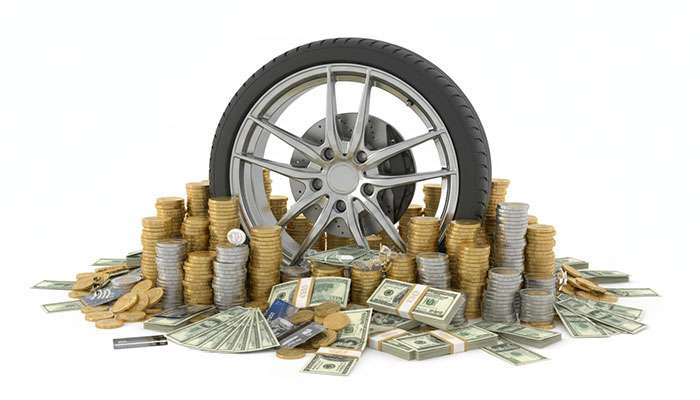
Financing isn't your only option when you need new wheels and tires. Several alternatives can save you money while still getting the products you need. Each approach works best for different situations and financial circumstances.
Setting aside money specifically for wheel and tire purchases gives you complete control without interest charges. Start by calculating how much you need and divide that amount by the number of months until your next planned upgrade. Even small monthly contributions add up quickly. A $50 monthly deposit creates a $600 fund in one year – enough to cover many quality tire sets. This method works especially well when you're planning ahead rather than responding to emergencies.
Credit cards with 0% introductory APR periods provide short-term financing without interest charges. Many cards offer 12-18 months of interest-free purchases, giving you time to pay off the balance. Pay the full amount before the promotional period ends to avoid high interest rates kicking in. This strategy requires discipline and planning to ensure you can clear the balance on time.
Cash payments give you leverage for better deals. Many tire retailers offer discounts for paying upfront because it eliminates credit processing fees and risk. Ask directly about cash discounts before making your purchase decision. These savings typically range from 5-10% off the listed price, which adds up quickly on expensive wheel and tire packages.
Seasonal promotions and manufacturer rebates can reduce your wheel costs significantly. Black Friday, Memorial Day, and Labor Day typically bring the deepest discounts. Sign up for email alerts from retailers like Performance Plus Tire to catch these limited-time offers. Combining sale prices with manufacturer rebates sometimes cuts costs by 20-30% compared to regular pricing.

Selecting the right financing provider can save you hundreds of dollars on your wheel purchase. Each company offers different terms, approval requirements, and total costs. Here's what you need to know about the most popular options.
Snap Finance operates as a lease-to-own program designed for customers with credit challenges. Unlike Affirm's traditional loan structure with 0-36% APR rates, Snap eliminates credit checks entirely. Snap's best feature is their 100-day payment option that can significantly reduce your total cost. Affirm takes a different approach, offering transparent pricing with no late fees or hidden penalties.
Progressive Leasing requires no credit history to get approved. While Affirm reviews your credit profile to set rates, Progressive looks at income stability and banking history instead. Progressive matches payments to your payday schedule, but Affirm provides fixed monthly payments over 3-36 months. When you need wheels immediately, Progressive's instant approval often beats Affirm's stricter qualification process.
Customers with credit difficulties find the most success with Snap Finance and Progressive Leasing. Both companies approve applicants with limited or damaged credit histories. Katapult offers another lease-to-own option with only $45 required at checkout. These providers focus on more than your credit score and evaluate multiple factors when making approval decisions.
Calculate your total repayment amount, including all fees, before making any commitment. Look for early buyout options within 90-101 days to reduce overall costs. Set up automatic payments to avoid missed payment fees and protect your credit. For financing solutions tailored to your specific needs, Performance Plus Tire offers multiple financing solutions worth considering.
Wheel financing serves specific situations but requires careful evaluation of your individual needs and financial circumstances. Emergency replacements and safety concerns justify the additional costs, while premium upgrades for style alone rarely make financial sense when you consider the total expense.
Calculate the complete repayment amount, including all fees and interest charges, before making any commitment. Look for early buyout options within 90-101 days, as these can significantly reduce your overall costs. Lease-to-own programs provide accessibility for those with credit challenges, but their higher costs require careful examination of all terms and conditions.
At Performance Plus Tire, we understand that financing decisions vary based on your specific situation. We offer multiple financing solutions tailored to different credit profiles and budget requirements at https://www.performanceplustire.com/Financing, helping you choose the option that makes the most sense for your needs.
The smartest approach combines understanding your true costs with realistic planning. Wheels that cost $800-$1,000 upfront can easily reach $2,400 or more through financing - money that could purchase multiple sets or fund other vehicle improvements. When safety isn't an immediate concern, saving ahead for these purchases remains the most economical choice for most drivers.
Whether you choose to finance or save, make sure your decision aligns with both your current needs and long-term financial goals. Quality wheels and tires represent important investments in your vehicle's performance and safety, regardless of how you choose to pay for them.
Understanding the true cost of rim financing can save you thousands of dollars and help you make smarter purchasing decisions for your vehicle.
• Financing rims typically costs 2-3 times the cash price due to high interest rates (30-300% APR) and hidden fees • Emergency tire replacements justify financing, but premium upgrades are better saved for to avoid excessive costs • Snap Finance and Progressive Leasing serve bad credit buyers, while Affirm offers better rates for good credit • Early buyout options within 90-101 days can dramatically reduce total financing costs if available • Calculate the complete repayment amount including all fees before signing any financing agreement
While financing provides immediate access to quality wheels when safety is at stake, the math rarely favors financing for non-emergency purchases. A $800 wheel set can easily cost $2,400 through financing – enough to buy three complete sets with cash. Smart buyers either save ahead or use early buyout options to minimize the financial impact of these necessary but expensive vehicle upgrades.
Financing rims can provide immediate access to quality wheels, especially in emergencies. However, it often results in paying 2-3 times the cash price due to high interest rates and fees. It's generally better to save up and pay cash if possible, unless safety is an immediate concern.
Be wary of hidden costs like high interest rates (30-300% APR), processing fees, late payment penalties, and early termination fees. Calculate the total repayment amount, including all fees, before signing any agreement. Look for early buyout options within 90-101 days to potentially reduce overall costs.
Options like Snap Finance and Progressive Leasing cater to those with bad credit, using alternative approval factors. Affirm offers more traditional financing with transparent APR rates. Each has pros and cons, so compare total costs, payment terms, and approval requirements to find the best fit for your situation.
A complete set of rims typically costs between $800 to $1,000. However, when financed, the total cost can easily double or triple due to interest and fees. For example, an $800 set could end up costing $1,600 to $2,400 through financing.
Financing can provide immediate access to higher quality rims that might otherwise be out of reach. It can also help in emergencies when safety is a concern and immediate replacement is necessary. Additionally, some financing options may help build credit if payments are made on time.



