

Neglecting tire rotation puts you at serious risk of a dangerous blowout while driving. This critical maintenance task ranks among the most overlooked procedures by vehicle owners, yet it directly impacts your safety and tire performance.
Your tires need rotation every 6,000 to 8,000 miles, roughly every six months for optimal results. The specific interval depends on your vehicle's drivetrain configuration. Front-wheel drive (FWD) and rear-wheel drive (RWD) vehicles require rotations every 5,000 to 7,500 miles. All-wheel drive (AWD) vehicles need more frequent attention—every 3,000 to 5,000 miles.
Skipping regular tire rotations creates serious consequences beyond uneven wear patterns. Your tire manufacturer's warranty becomes void without proper maintenance records. More importantly, worn tires significantly increase your risk of experiencing a sudden blowout.
This guide covers the correct tire rotation procedures from start to finish. You'll learn how to select the right rotation pattern for your vehicle and execute each step safely. Whether you plan to handle the work yourself or want to understand what your mechanic should be doing, these techniques will help you maintain your tires properly and keep your vehicle running safely for thousands of miles.
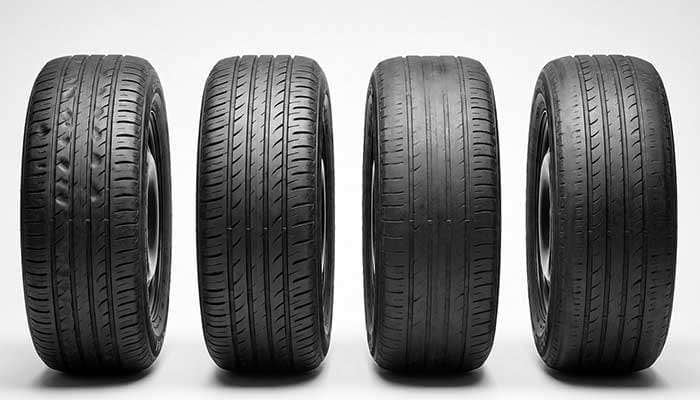
Tire rotation represents one of the most critical maintenance procedures that vehicle owners routinely skip. This simple service directly affects your driving safety, vehicle performance, and long-term costs.
Your vehicle's tires don't wear evenly across all positions. Front tires on front-wheel drive vehicles wear nearly 50% faster than rear tires because they handle steering, braking, and power delivery simultaneously. Engine placement, terrain conditions, braking habits, and alignment issues all contribute to this uneven wear pattern.
Worn tread depth creates dangerous driving conditions. When tires lose their ability to channel water effectively, hydroplaning becomes a serious risk. The National Highway Traffic Safety Administration reports that inadequate tread depth causes more than 25% of all tire-related accidents. Consumer Reports discovered that half of all passenger vehicles currently have at least one tire with insufficient tread.
Uneven wear compromises your vehicle's handling characteristics. Expect reduced traction in wet or snowy conditions, longer stopping distances, and unpredictable steering response. The risk of tire blowout increases dramatically with uneven wear—these dangerous failures cause approximately 11,000 accidents each year.
Regular tire rotation significantly improves your vehicle's performance and fuel economy. Evenly worn tires maintain consistent road contact, providing better grip and stability during challenging weather conditions.
Unevenly worn tires create additional rolling resistance that forces your engine to work harder. This increased resistance burns more fuel with every mile you drive. Properly rotated tires with balanced wear patterns reduce engine strain and improve fuel efficiency.
Balanced tread depth also eliminates vibrations and road noise that make driving uncomfortable and can mask other vehicle problems. Well-maintained tires respond predictably during emergency maneuvers and give you confidence behind the wheel.
The benefits of consistent tire rotation extend well beyond preventing uneven wear. You can extend your tires' lifespan by up to 30% when all four tires wear at similar rates. With quality tire sets costing hundreds of dollars, this maintenance pays for itself many times over.
Regular rotation preserves your tire warranty coverage. Many manufacturers void warranties when proper rotation schedules aren't maintained. This service also protects expensive vehicle components including suspension systems, brakes, wheel bearings, and axles from premature wear.
Additional benefits include:
Better vehicle handling and responsiveness during emergency situations
Consistent braking performance across all four tires
Quieter, more comfortable driving experience with reduced vibrations
Enhanced traction in rain and snow conditions
Prevention of tread cupping that causes dangerous traction loss
Regular tire rotation maintains optimal traction and handling under all driving conditions. Since tires represent your only contact point with the road, their condition affects every aspect of your driving experience—safety, comfort, efficiency, and performance all depend on proper tire maintenance.
Tire maintenance schedules depend heavily on your specific vehicle configuration and driving conditions. Getting the timing right protects your investment and ensures maximum safety on the road.
Your vehicle's drivetrain determines the optimal rotation frequency. Most vehicles perform best with rotations every 5,000 to 8,000 miles, which conveniently aligns with every other oil change or roughly twice per year.
Front-wheel drive and rear-wheel drive vehicles distribute power unevenly across the tires. This uneven power distribution creates different wear rates depending on tire position, requiring rotations every 5,000 to 7,500 miles.
All-wheel drive systems present unique challenges since power can shift to any wheel at any time. The unpredictable wear patterns demand more frequent attention. We recommend rotations every 3,000 to 5,000 miles for vehicles that regularly engage AWD systems.
Aggressive driving conditions accelerate these intervals. Heavy towing, frequent off-road use, or challenging terrain requires more frequent rotations to prevent premature tire failure.
Extending rotation intervals to 10,000 miles creates more problems than it solves. While some mechanics suggest this extended interval, tire manufacturers and automotive experts consistently advise against it.
Long intervals between rotations allow uneven wear patterns to become permanent. Most drivers start noticing increased road noise and handling problems after 6,000 miles. Tread depth differences often exceed the critical 2/32-inch threshold well before 10,000 miles.
Your tire warranty depends on following recommended maintenance schedules. Many manufacturers void warranty coverage when proper rotation schedules aren't maintained.
Several symptoms indicate your tires need rotation before reaching the scheduled mileage:
Uneven tread wear patterns - Front and rear tires showing dramatically different wear levels
Vibration while driving - Highway-speed vibrations caused by unbalanced tread wear
Vehicle pulling to one side - Steering wheel requires constant correction to maintain straight travel
Increased road noise - Humming or drumming sounds that worsen with speed
Reduced traction performance - Longer stopping distances, poor handling, or hydroplaning on wet roads
Chronic pressure loss - Repeatedly low tire pressure often signals uneven wear issues
Monthly tire inspections help identify these problems early. Check tread depth and pressure regularly to catch warning signs before they become safety hazards.
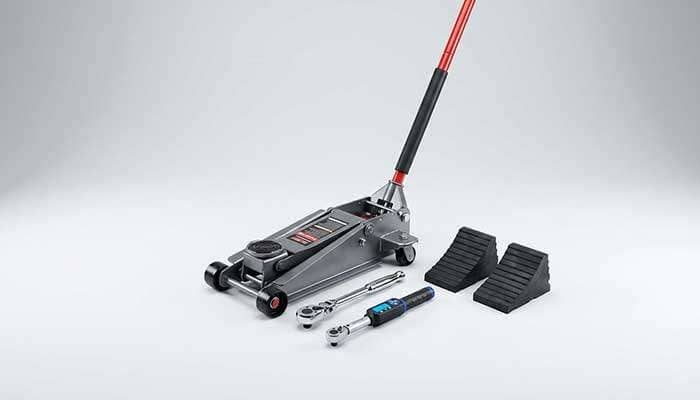
Proper preparation makes tire rotation safer and more efficient. Having the right tools and understanding the costs upfront ensures this maintenance task goes smoothly, whether you tackle it yourself or visit a professional shop.
A successful tire rotation requires specific equipment to safely lift your vehicle and remove the wheels. For DIY tire rotation, you'll need:
Jack and jack stands (minimum of two, four recommended)
Lug wrench or impact wrench for removing lug nuts
Torque wrench to properly tighten lug nuts
Wheel chocks for safety
Tire pressure gauge
Tire marker or crayon (optional for labeling)
Most importantly, locate your wheel lock key if your vehicle has locking lug nuts. This task must be performed on level, firm ground to prevent the vehicle from falling off the stands.
The complete rotation process takes 20-30 minutes, though beginners should allow extra time. Electric impact wrenches speed up the process significantly, but a traditional 4-way lug wrench works just as effectively.
Professional tire rotation costs vary by service provider. Most shops charge between $20 and $50 for basic tire rotation service. Dealerships typically charge higher rates ($30-$50), while independent shops offer more competitive pricing ($20-$35).
Many tire retailers provide complimentary rotations when you purchase tires from them. This benefit often extends for several years or the tire's lifetime, creating substantial long-term savings.
High-end service centers may charge $100-$150 for precision torque tool service. Larger vehicles like trucks or SUVs often incur higher costs due to their size and more complex rotation requirements.
Tire rotation rarely requires wheel alignment afterward. Most drivers need alignment checks every 40,000-50,000 miles. Schedule an alignment only when experiencing:
Vehicle pulling to one side
Steering wheel vibrations
After hitting curbs or large potholes
Tire balancing isn't automatically needed during every rotation. Additional balancing expenses are unnecessary unless you notice driving vibrations.
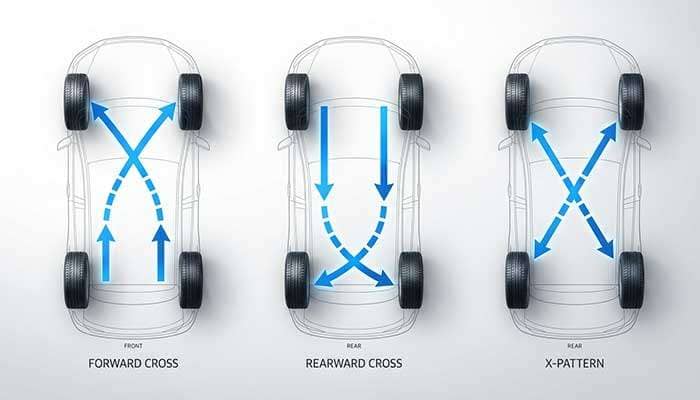
Selecting the correct rotation pattern maximizes your tires' lifespan and ensures even wear across all four positions. Your vehicle's drivetrain and tire design determine which method delivers optimal results.
The Tire & Rim Association recommends three primary rotation patterns for vehicles with non-directional tires of the same size:
Rearward Cross: Rear tires move straight forward while front tires cross diagonally to the rear positions. This pattern works best for rear-wheel, four-wheel, and all-wheel drive vehicles.
Forward Cross: Front tires move straight back while rear tires cross diagonally to the front positions. Front-wheel drive vehicles benefit most from this pattern.
X-Pattern: All four tires move diagonally, creating an X-shaped swap. This versatile method works as an alternative to either cross pattern.
Specialized vehicle configurations use two additional patterns:
Front-to-Rear: Tires move straight forward or backward while staying on the same side of the vehicle.
Side-to-Side: Tires swap left-to-right positions but remain on the same axle.
Your vehicle's power delivery system determines the optimal rotation approach. Front-wheel drive vehicles experience heavier wear on front tires because they handle acceleration, steering, and braking forces. The Forward Cross pattern addresses this by moving less-worn rear tires to the front positions.
Rear-wheel and four-wheel drive vehicles create more stress on rear tires due to power delivery. These vehicles perform best with the Rearward Cross pattern.
All-wheel drive vehicles often benefit from the X-Pattern rotation, which helps balance wear across all tire positions.
Directional tires feature tread patterns designed to rotate in only one direction, marked by arrows on the sidewall. These tires excel in wet conditions by efficiently channeling water away from the contact patch.
Directional designs limit rotation options significantly. These tires can typically only move front-to-rear on the same side of the vehicle. Correcting significant uneven wear requires dismounting and remounting tires in the correct direction—a more complex process requiring professional service.
Non-directional tires offer maximum flexibility, allowing for various rotation patterns including diagonal swaps.
Vehicles with full-size matching spares can use 5-tire rotation patterns. Front-wheel drive vehicles with matching spares benefit from forward cross patterns that include the spare tire. Rear-wheel or four-wheel drive vehicles work best with rearward cross patterns incorporating the spare.
Dual rear wheel trucks require specialized rotation methods. The most common approach uses "corner" or "side-up" rotation, where two rear tires (left or right side) move to the front positions while front tires move to the rear. The next rotation moves the opposite rear tires forward.
Owners of dual-wheel trucks with polished wheels often prefer rotating only the front tires side-to-side while leaving rear wheels in place to preserve their appearance.
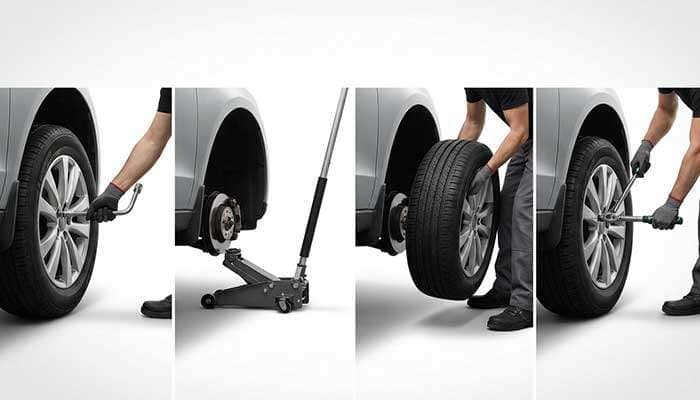
Proper tire rotation demands precision and careful attention to safety. This step-by-step process will guide you through the complete procedure, whether you're handling the work yourself or want to understand exactly what your service technician should be doing.
Start by parking on level, solid ground and engaging your parking brake. The key step here is loosening the lug nuts while your tires remain on the ground. This prevents the wheels from spinning when you apply force. Turn each lug nut counterclockwise with your lug wrench, but don't remove them completely—just break the initial resistance.
Position your jack at the manufacturer's designated lift points. Raise one corner at a time, immediately securing each lifted section with a jack stand placed on a solid frame member. Never work under a vehicle supported only by a hydraulic jack. Once all corners are properly supported on stands, remove the lug nuts completely and pull each tire straight toward you.
Follow the correct rotation pattern for your vehicle's drivetrain. Front-wheel drive vehicles typically use a forward cross pattern—front tires move straight back while rear tires cross to the front positions. Rear-wheel drive vehicles reverse this process with a rearward cross pattern. All-wheel drive vehicles often benefit from an X-pattern rotation for balanced wear.
Place each tire in its new position and thread the lug nuts on by hand. Lower the vehicle until the tires barely touch the ground while still supported by the jack stands. Now tighten the lug nuts using a star or crisscross pattern to ensure even pressure distribution. This sequence prevents wheel warping and potential brake component damage.
Check tire pressure with a reliable gauge and adjust to your vehicle's specifications. Vehicles equipped with Tire Pressure Monitoring Systems (TPMS) may require sensor reset after rotation. This process varies—some vehicles need a simple button press, others require driving 10-15 minutes at highway speeds, and some need specialized TPMS tools.
The entire rotation procedure combines safety preparation, proper lifting techniques, correct pattern application, careful reinstallation, and system calibration. While this maintenance task appears straightforward, each step requires attention to detail to ensure your tires wear evenly and your vehicle maintains optimal road safety.
Tire rotation ranks among the most important yet neglected maintenance procedures for vehicle owners. This simple service delivers substantial benefits that directly impact your safety, performance, and wallet.
Regular rotations extend tire lifespan by up to 30% while maintaining optimal traction and handling across all driving conditions. The process preserves your tire warranty coverage and protects other vehicle components from premature wear.
Your vehicle's drivetrain determines the correct rotation schedule and pattern. Front-wheel drive vehicles need forward cross rotations every 5,000-7,500 miles. Rear-wheel drive vehicles require rearward cross patterns at similar intervals. All-wheel drive vehicles demand more frequent rotations—every 3,000-5,000 miles.
Neglecting this maintenance creates serious safety hazards. Uneven tread depth increases hydroplaning risk and can lead to dangerous blowouts. These risks far outweigh any convenience of skipping rotations.
Professional tire rotation typically costs $20-$50, though many tire retailers provide complimentary service when you purchase tires through them. The investment delivers exceptional value through extended tire life and improved safety performance.
The step-by-step process we've outlined enables you to handle rotations yourself or understand what your service technician should be doing. This maintenance safeguards your vehicle's performance while protecting your tire investment.
Your tires provide the only contact point between your vehicle and the road surface. Their condition affects every aspect of your driving experience—safety, comfort, efficiency, and performance. Make tire rotation a regular part of your maintenance schedule, and you'll enjoy safer, more reliable driving for thousands of miles ahead.
Master these essential tire rotation principles to maximize safety, performance, and tire lifespan while protecting your investment.
• Rotate tires every 5,000-8,000 miles - FWD/RWD vehicles need rotation every 5,000-7,500 miles, while AWD requires more frequent 3,000-5,000 mile intervals
• Use correct rotation patterns by drivetrain - Forward cross for FWD, rearward cross for RWD/4WD, and X-pattern for AWD vehicles ensures optimal wear distribution
• Prevent dangerous safety risks - Regular rotation prevents uneven wear that causes 25% of tire-related accidents, hydroplaning, and potentially deadly blowouts
• Extend tire life by 30% - Proper rotation significantly increases tire lifespan while maintaining warranty coverage and improving fuel efficiency
• Follow the 5-step process safely - Engage parking brake, loosen nuts before lifting, apply correct pattern, reinstall with star-pattern tightening, and check pressure/reset TPMS
Regular tire rotation is your vehicle's most overlooked yet critical maintenance task. This simple service prevents dangerous blowouts, extends tire life substantially, and ensures optimal handling in all driving conditions.
For most vehicles, rotate tires every 5,000 to 8,000 miles or about every six months. Front-wheel and rear-wheel drive vehicles typically need rotation every 5,000 to 7,500 miles, while all-wheel drive vehicles require more frequent rotations, around every 3,000 to 5,000 miles.
Regular tire rotation extends tire lifespan by up to 30%, improves vehicle handling and fuel efficiency, maintains even tread wear, preserves tire warranty, and enhances safety by reducing the risk of blowouts and improving traction in various driving conditions.
To rotate tires at home, you'll need a jack and jack stands, a lug wrench or impact wrench, a torque wrench, wheel chocks, a tire pressure gauge, and your vehicle's wheel lock key if applicable. Ensure you have a level, firm surface to work on for safety.
The rotation pattern depends on your vehicle's drivetrain. For front-wheel drive vehicles, use a forward cross pattern. Rear-wheel and four-wheel drive vehicles benefit from a rearward cross pattern. All-wheel drive vehicles often use an X-pattern rotation. Always consult your vehicle's manual for the recommended pattern.
Typically, you don't need an alignment after a routine tire rotation. However, it's recommended to have your alignment checked every 40,000-50,000 miles or if you experience uneven tread wear, vehicle pulling to one side, or steering wheel vibrations. An alignment may be necessary after hitting curbs or large potholes.



