Tires for the same vehicle can vary in cost by more than $200 each. With many brands and types available, buying tires can feel overwhelming.
We're here to simplify the process. Learning how to choose the right tire for your vehicle doesn't have to be complicated. This piece will walk you through different types of tires and explain tire ratings. We'll show you how to choose tires that match your driving needs and budget. Making the right choice can save you money while keeping you safe on the road.
Before you buy tires, you need to know what tires does my car need. Every vehicle requires specific tire dimensions and performance ratings. The wrong size or rating can affect handling and safety, and may even void warranties.
Your vehicle manufacturer specifies the exact tire requirements for your car. You can find this information in several locations:
Owner's manual
Driver's side door jamb (most common location)
Interior of glove box door
Fuel filler door
Rear passenger door jamb
Engine compartment
The driver's side door jamb displays a placard with your recommended tire size and inflation pressure. The current tires might differ from the original equipment specifications if you didn't purchase your vehicle new or if it came customized. Comparing the sidewall information with the manufacturer's placard helps verify whether previous owners changed the tire size in such cases.
Your vehicle's trim level matters when selecting tires. Trim refers to the options package equipped on your vehicle, often marked with letters or numbers like DX, EX, LX, Sport, or Hybrid. Tires can vary based on year, make, model, and trim level. A base model sedan might require different tires than the sport trim of the same vehicle.
The sidewall of your current tires contains a complete tire code. This code helps you select the correct replacement tires. A tire code looks like this: P225/45R18 95H.
The first letter indicates tire type. "P" stands for passenger vehicle tires, which include cars, SUVs, crossovers, and minivans. "LT" means light truck, designed for vehicles built to handle cargo loads or tow trailers. "T" designates a temporary spare tire. Some tires have no letter prefix, which indicates a Euro-metric tire measured in millimeters.
The three-digit number that follows the letter represents tire width in millimeters. To cite an instance, "225" means the tire measures 225 millimeters from sidewall to sidewall.
You'll find the aspect ratio after the slash. This two-digit number represents the tire's height as a percentage of its width. An aspect ratio of 45 means the tire's height equals 45% of its width. The bigger the aspect ratio, the taller the tire's sidewall.
The letter "R" indicates radial construction, where rubber cords are laid out at 90 degrees from the direction of travel. Almost all passenger vehicle tires use radial construction. You might see "B" for bias-ply or "D" for diagonal construction on occasion.
The next number shows wheel diameter in inches. "18" means the tire fits an 18-inch wheel rim in our example. This measurement must match your vehicle's wheel size.
The final two characters form the service description. The number is the load index and the letter is the speed rating in "95H."
Load index indicates the maximum weight a single tire can support when inflated properly. A load index of 95 corresponds to 1,521 pounds per tire. This equals a total capacity of 6,084 pounds for a vehicle with four tires. Load indices for passenger cars range from 75 to 105. A load index of 89 supports 1,279 pounds, while 100 holds up to 1,764 pounds.
Some tires carry an "XL" marking, which stands for Extra Load. These reinforced tires support higher weights than standard tires of the same size when inflated to higher pressures. Extra Load tires are specified for heavier vehicles like SUVs.
Speed rating defines the maximum speed at which a tire can carry its load safely. An "H" rating means the tire can handle speeds up to 130 mph. A "T" rating allows up to 118 mph, while "V" permits 149 mph. Speed ratings range from "L" at 75 mph to "Y" at 186 mph. Tires capable of speeds above 149 mph may display "ZR" in the size designation.
Your new tires must meet or exceed both the load index and speed rating specified by your vehicle manufacturer when replacing tires. Tires with lower ratings can compromise safety and vehicle performance.
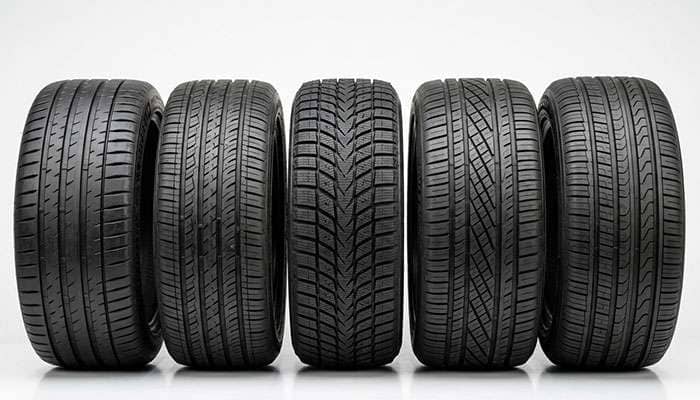
Choosing the right type of tire matters as much as selecting the correct size. Different types of tires serve distinct purposes. Understanding these categories helps you match tires to your specific driving conditions.
All-season tires blend characteristics from both summer and winter tires to provide year-round performance. The tread design combines large tread blocks for dry traction with smaller grooves that channel water away and reduce hydroplaning risk. The rubber compound remains flexible enough in cold temperatures for adequate traction yet firm enough in warm conditions to maintain durability.
Siping plays a most important role in all-season performance. These small slits in tread blocks create biting edges that improve traction on wet and mildly snowy surfaces. But this versatility comes with compromises. The rubber compound can stiffen in temperatures below 45°F. This results in decreased traction and handling. All-season tires may not deliver the same grip and responsiveness as dedicated summer tires in high temperatures.
All-season tires work well for moderate climates where temperatures don't dip below 45°F often. They eliminate the need to swap tires seasonally. This saves time and storage hassle.
Summer tires prioritize handling precision and road grip in warm conditions. The specialized rubber compound remains flexible above 40°F while providing maximum traction on wet and dry surfaces. Tread patterns feature shallower, straighter grooves with solid, continuous ribs that maximize rubber contact with the road.
This design delivers superior cornering, braking and acceleration compared to all-season options. Summer tires excel at preventing hydroplaning at highway speeds. But they become hazardous below 45°F and provide no traction in snow or ice. The shallow tread depth limits rotation options and can cause faster wear.
Winter tires feature three specialized elements that distinguish them from other types. The tread rubber compound stays flexible in extreme cold and maintains grip when all-season or summer tires stiffen. Deeper tread depths reduce snow buildup and provide better traction. Unique patterns channel snow, slush and water. Biting edges created by thousands of tiny slits called sipes provide traction on ice.
The performance difference proves substantial. Winter-equipped vehicles stopped 23 feet shorter on ice compared to all-season tires from just 12 mph in testing. Install a full set of four when mounting winter tires. Changing only front tires increases rear skid likelihood. Rear-only installation causes front tires to lose traction and steering control.
All-terrain tires balance on-road comfort with off-road capability. They use firmer compounds than mud-terrains coupled with heavy siping across tread lugs. This enables 45,000 to 65,000 miles of treadwear. These tires remain quiet with handling characteristics comparable to highway tires.
Mud-terrain tires feature fewer, larger tread lugs with more spacing between them. This design ejects mud and rocks but fails to expel water on rainy pavement and creates more road noise. Mud-terrains use softer compounds for improved off-road traction but wear faster on pavement. Fuel efficiency is different by at least 1 mile per gallon between all-terrain and mud-terrain radials of the same size.
Run-flat tires feature reinforced sidewalls that support vehicle weight even after air pressure loss. Most models allow driving up to 50 miles at 50 mph when punctured. Two systems exist: self-supporting sidewalls with reinforced construction and support ring systems employing a hardened rubber ring.
The main advantage involves safety and convenience. You can reach home or a repair shop without changing a tire roadside. Vehicles equipped with run-flats lack spare tires, which frees trunk space. The downside has stiffer ride quality due to reinforced sidewalls and higher replacement costs. Most run-flat tires display "Do Not Repair" messages on sidewalls and require full replacement rather than patches.
Selecting tires involves more than matching size specifications. Your personal driving patterns, local weather and financial strategy determine which tires deliver the best performance and value for your situation.
The way you drive affects how long your tires last. Aggressive behaviors like rapid acceleration, hard braking and sharp cornering accelerate wear. Gentle driving on smoother roads helps tires achieve their intended lifespan. You extend tire longevity and boost safety when you maintain consistent speed and avoid abrupt maneuvers.
Your typical routes matter just as much. City roads create unique challenges through frequent stops, starts and tight turns that accelerate tread wear. Potholes and curb impacts just need stronger sidewalls. Highway driving maintains steadier speeds on better-maintained surfaces and creates less stress on tire components. Urban drivers benefit from tires built to withstand harsh conditions and impacts. Highway-focused drivers should prioritize tires designed for sustained speeds that resist heat buildup during long stretches.
Annual mileage plays a role in tire selection. Drivers covering limited distances may find budget tires adequate for their needs. Premium options deliver better cost-per-mile value through extended lifespan when you travel long distances often. Carrying heavy loads often or navigating rough terrains can reduce tire lifespan sharply, whatever the quality or cost.
Temperature dictates tire performance more than most drivers realize. Temperatures below 44°F require winter tires as standard rubber compounds harden and lose effectiveness. The performance difference proves dramatic. A vehicle traveling 31 mph needs 52 yards to stop with summer tires on snow compared to just 26 yards with proper winter tires.
Hot and dry climates just need summer or performance tires that dissipate heat well. Summer tires feature heat-resistant compounds that prevent softening and reduce dry braking distance by up to 20-60 feet compared to all-season tires. Winter tires provide 30-50% better traction in snow and 30% shorter stopping distance on ice compared to all-season tires.
Premium tires have higher upfront costs, but their boosted durability means they cover more miles before needing replacement. Consumer Reports' testing shows that high-quality premium tires achieve 70,000 to 85,000 miles regularly, with two top-rated Michelin models projecting to 85,000 miles of tread life. Many budget options wear out after just 20,000 to 30,000 miles. You might replace budget tires twice or even three times while one set of premium tires remains serviceable.
This longevity results in a more economical cost per mile. Frequent replacements add up and negate original savings from budget options.
Premium tire manufacturers offer treadwear warranties guaranteeing 40,000 to 80,000 miles. These warranties often include road hazard protection and free replacements for manufacturing defects. Many budget brands provide limited coverage, sometimes just manufacturing defects for a short period. Specific examples include Bridgestone Turanza QuietTrack at 80,000 miles, Goodyear Assurance MaxLife at 85,000 miles and Michelin Defender T+H at 80,000 miles. Warranty protection represents a vital cost factor when comparing tires given these differences.
The government-created UTQG system provides standardized ratings that help you compare tires between brands. Note that this Uniform Tire Quality Grading serves as a comparative assessment tool rather than a safety rating or mileage guarantee.
The UTQG system grades tires using three criteria: treadwear, traction and temperature. You can find this information on the paper label affixed to the tread or molded into the tire sidewall. The Department of Transportation developed this system, but manufacturers conduct their own testing and assign ratings. This creates an important limitation: you can only make accurate comparisons between tires from the same manufacturer.
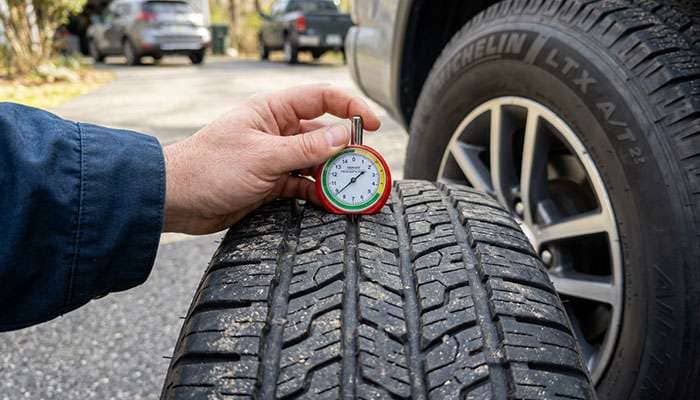
Treadwear ratings appear as three-digit numbers like 320 or 800. This numeric index compares tire durability against a baseline tire graded 100. A tire rated 200 should wear twice as long as one graded 100. A tire with an 800 rating should last twice as long as one rated 400. Manufacturers measure tread life on specified government test courses under controlled convoy conditions, the testing methodology shows.
Actual tread life varies substantially based on road surfaces, driving habits and climate. These ratings provide relative comparisons rather than mileage predictions. The manufacturer's treadwear warranty in miles offers a more user-friendly measure for most consumers because the manufacturer must pay if the tire doesn't achieve the promised miles.
Traction grades measure a tire's straight-line braking on wet pavement under controlled conditions on asphalt and concrete test surfaces. The grades range from highest to lowest: AA, A, B and C. About 15% of UTQG-rated tires earn an AA rating, 75% receive an A and 7% get a B. Most ultra-high-performance tires achieve AA. Most standard car tires earn an A grade.
These grades evaluate wet stopping performance only. They do not indicate cornering on wet surfaces or traction on ice and snow. A tire graded C may demonstrate poor traction performance.
Temperature ratings measure a tire's resistance to heat generation and its capacity to dissipate heat under controlled laboratory conditions. Federal safety standards require all passenger tires to meet at least a C rating. Grades range from A (highest) to C, with specific speed correlations. Grade A tires dissipate heat at speeds exceeding 115 mph. B-rated tires handle 100 to 115 mph, and C-rated tires manage 85 to 100 mph. NHTSA data shows that 62% of tires sold carry an A temperature rating, 34% earn a B and 4% receive a C.
Consumer reviews submitted by drivers like you reveal patterns in performance satisfaction and help pinpoint what works for specific conditions. These real-life experiences complement laboratory ratings by showing how tires perform during daily driving, various weather conditions and over extended periods. Test results from independent organizations provide objective performance data beyond manufacturer claims and help you verify whether a tire's ratings translate into actual road performance.
Once you understand tire specifications and types, you need a systematic approach to select your specific tires. These six steps will help you choose tires that match your vehicle and budget.
You need to verify the exact tire size, load index and speed rating your vehicle requires. The information on your door jamb placard should match what's in your owner's manual. Some retailers like Costco will only install tires that meet manufacturer-specified fitments. They require proper size authorization, equal or greater speed rating and equal or greater load index. You should confirm these specifications before shopping to prevent compatibility issues.
Rank what matters most: tread life, wet traction, ride comfort or price. Your earlier assessment of driving habits and climate now guides which tire category suits you best. Match your priorities to tire strengths rather than choosing based on brand recognition alone.
Online tire selectors work when you enter your vehicle's year, make and model. These tools filter options to tires that fit your vehicle. Many retailer websites let you compare tires side-by-side and view prices, features, warranties and specifications at once. Customer reviews give you real-life performance insights beyond laboratory ratings. Reviews reveal how tires perform during extended use and in different conditions.
Price differences for the same tires can exceed $450 per set. Bridgestone Alenza Sport tires for a Toyota Highlander ranged from $930 at Costco to over $1400 at other outlets. Warehouse clubs like BJ's, Costco and Sam's Club offer the lowest prices. Online retailers SimpleTire.com and Tirerack.com also provide competitive pricing with vast selection. But you should factor installation costs into online purchases, as total prices may exceed warehouse club deals once mounting and balancing are included.
Local shops like Performance Plus Tire may offer competitive pricing on certain models. Stores that specialize in particular brands quote their best prices for those specialties. Request quotes that include mounting, balancing, valve stems and disposal fees to compare accurately.
Tire warranties cover 4 to 6 years from purchase date or until tread wears to 2/32 inch. Treadwear warranties range from 40,000 to 80,000 miles but require regular maintenance like rotations and alignments. You should check whether road hazard coverage is included. Some manufacturers offer 30-day satisfaction guarantees that allow returns for refunds or exchanges.
Coordinate delivery with your chosen installer if you order online. Installation requires an appointment. You should confirm the installer can accommodate your tire brand and size before ordering.
Strategic timing and smart shopping tactics can cut your tire expenses by a lot. Once you know how to choose the right tire for your vehicle, applying these money-saving strategies will give you the best deal possible.
Spring and fall deliver the biggest discounts as retailers clear inventory during seasonal transitions. March through April and October through November feature the most aggressive pricing. Holiday promotions around Memorial Day, Labor Day, Black Friday, and Cyber Monday offer additional savings opportunities. Manufacturer rebates appear often and range from $60 to $100 on sets of four tires. Some promotions reach $200. Start shopping when your tread depth hits 4/32 inch. This gives you time to wait for these promotional periods.
Most major retailers have price matching policies. Discount Tire beats competitor prices and has free lifetime rotation and balancing. Mavis refunds the difference plus 5% if you find lower prices within 30 days. Survey respondents who negotiated saw a 63% success rate at getting better deals. Median savings were $37 per tire.
Wheel and tire packages can save up to $400 compared to separate purchases. Retailers like Performance Plus Tire offer complete packages that eliminate compatibility concerns and reduce total cost.
Check tire pressure monthly and rotate every 5,000 to 7,500 miles. Proper maintenance extends tire life substantially and maximizes your investment. This delays replacement costs.
Right now, you have everything you need to choose the perfect tires for your vehicle. You understand tire specifications and know which type suits your driving conditions. You can read ratings with confidence. Most importantly, you've learned smart shopping strategies that save hundreds of dollars per set.
Compare prices among retailers and time your purchase around seasonal promotions. These simple tactics substantially reduce your tire expenses. Performance Plus Tire and other reputable retailers can help match you with the right tires at competitive prices, whether you shop online or prefer local expertise.
Check your current tire tread depth today. You'll have plenty of time to find the best deals before you need replacements.
Master these essential tire selection strategies to make informed decisions that protect your safety and wallet:
• Check your vehicle's door jamb placard first - This contains your exact tire size, load index, and speed rating requirements that must be matched for safety and warranty compliance.
• Match tire type to your driving conditions - All-season tires work for moderate climates, while winter tires are essential below 45°F and summer tires excel in warm weather performance.
• Compare prices across multiple retailers - Identical tires can vary by over $450 per set, with warehouse clubs like Costco typically offering the lowest prices including installation.
• Time your purchase strategically - Shop during spring (March-April) and fall (October-November) transitions when retailers offer the deepest discounts and manufacturer rebates.
• Factor in long-term value over upfront cost - Premium tires lasting 70,000-85,000 miles often cost less per mile than budget options requiring replacement every 20,000-30,000 miles.
The key to successful tire buying lies in understanding your specific vehicle requirements, matching those needs to appropriate tire types, and leveraging smart shopping tactics. When you combine proper tire selection with strategic purchasing timing, you'll maximize both safety and savings on this critical vehicle investment.
Q1. How can I find out what tire size my car needs? You can find your vehicle's tire size in several places: check the driver's side door jamb (most common location), look in your owner's manual, or examine the sidewall of your current tires. The door jamb placard displays your recommended tire size along with the proper inflation pressure. This information includes the tire width, aspect ratio, wheel diameter, load index, and speed rating that your vehicle requires.
Q2. What should I look for when buying tires for wet road conditions? For excellent wet road performance, focus on tires with high traction grades (AA or A ratings) in the UTQG system, which measure straight-line braking ability on wet pavement. Look for tread designs with grooves that effectively channel water away to reduce hydroplaning risk. All-season tires with adequate siping (small slits in tread blocks) provide good wet traction for most drivers, while summer performance tires offer superior wet grip in warmer climates.
Q3. Do expensive tires actually last longer than budget options? Yes, premium tires typically deliver better long-term value despite higher upfront costs. High-quality premium tires regularly achieve 70,000 to 85,000 miles of tread life, while many budget options wear out after just 20,000 to 30,000 miles. This means you might replace budget tires two or three times during the lifespan of one premium set, making premium tires more economical on a cost-per-mile basis.
Q4. When is the best time to buy tires to get discounts? The best times to buy tires are during spring (March-April) and fall (October-November) when retailers clear inventory during seasonal transitions. Holiday promotions around Memorial Day, Labor Day, Black Friday, and Cyber Monday also offer significant savings. Manufacturer rebates during these periods typically range from $60 to $100 on sets of four tires, with some promotions reaching $200.
Q5. How often should I rotate my tires to maximize their lifespan? You should rotate your tires every 5,000 to 7,500 miles and check tire pressure monthly. Proper maintenance through regular rotations and maintaining correct air pressure extends tire life significantly, maximizing your investment and delaying replacement costs. This routine maintenance is essential regardless of whether you choose budget or premium tires.