
When you purchase a warranty on new tires, you're getting protection for one of your vehicle's most important components. Most drivers look at price and performance when shopping for tires, but understanding warranty coverage can save you hundreds of dollars over your tires' lifetime.
Tire warranties protect you against premature wear, material defects, and even road hazards. Most tire manufacturers establish that a tire's usable life ends either six years from purchase or when tread depth reaches 2/32nds of an inch. Some warranties come standard with your tire purchase, while others are available as additional protection. A tire mileage warranty guarantees specific mileage performance before tread wears out, typically covering tires for 4-6 years from purchase.
Understanding tire warranties is important before making a purchase. We'll explain what new tire warranties actually cover, the different types available, and how to maintain your coverage. Whether you're wondering about warranty value or need to file a claim, we provide expert guidance to help you make the right decisions about tire warranty protection.

A tire warranty represents a manufacturer's commitment to repair or replace tires with defects in materials or workmanship. Tire warranties differ from typical consumer goods that offer 30-90 day guarantees because tires face extreme conditions and temperature variations throughout their service life.
Tire manufacturers design these warranties to address the unique challenges tires encounter. Road surfaces, weather conditions, and driving habits all affect tire performance in ways that standard product warranties don't account for. This extended protection acknowledges that tires are engineered components requiring specialized coverage terms.
Tire manufacturers provide limited warranties lasting 4-6 years from the purchase date or until the tread wears out, whichever happens first. The warranty period begins at delivery for new vehicles and at purchase for replacement tires. Most tiremakers have established that a tire's usable life spans either six years from purchase or until tread depth reaches 2/32 inches.
For tires with mileage warranties, coverage can range from 50,000-80,000 miles depending on the tire model and brand. Many manufacturers offer tread-life warranties guaranteeing specific mileage before wear-out. Bridgestone, for instance, extends coverage up to 5 years from the purchase date, requiring proof of purchase.
Should no proof of purchase exist, manufacturers may use the tire's DOT identification code (showing manufacture date) stamped on the sidewall to determine warranty eligibility. Once tread wears down to 2/32" (1.6 mm), warranties expire regardless of time passed.
Standard limited warranties protect against manufacturing defects under normal driving conditions. Here's what you can expect:
Materials and workmanship defects - Coverage lasts 4-6 years from purchase, protecting against manufacturing flaws that cause premature failure. Most manufacturers replace defective tires at no cost during the first year or first 25% of treadwear, whichever comes first.
Treadwear/mileage warranties - These guarantee tire longevity up to specified mileage. If your tires wear evenly but prematurely, you receive prorated credit toward replacement. Coverage applies only to the original owner and vehicle.
Uniformity warranties - Manufacturing inconsistencies affecting ride quality are covered during the first 2/32" of tread wear or approximately one year. These address issues like vibrations or pulling that appear early in tire life.
Road hazard warranties - Less common but valuable protection against damage from potholes, nails, glass and road debris. Coverage typically extends for the first 2/32" of treadwear or 12 months.
Satisfaction guarantees - Trial periods of 30-60 days allow you to return tires if not satisfied. Michelin offers a generous 60-day satisfaction guarantee, demonstrating manufacturer confidence in their products.
Each warranty type serves different needs and comes with specific eligibility requirements that must be met for claims to be honored.
Yes, almost all new tires include a manufacturer's limited warranty covering defects in materials and workmanship. This standard coverage protects against manufacturing flaws rather than wear from normal use or road hazards. Specialty racing and rally tires are the main exceptions to this rule.
Not all warranty types come standard with your tire purchase. Road hazard protection, for example, is frequently offered as an optional add-on. Treadwear and mileage warranties typically don't apply to tires fitted as Original Equipment on new vehicles unless the manufacturer specifically includes them.
Warranty details vary significantly between manufacturers and even between different tire models from the same brand. Each warranty type has specific eligibility requirements and documentation needs that must be met for claims to be honored. You'll want to review the warranty booklet or online details for each tire model you're considering.
The key is knowing what protection comes standard versus what you might need to purchase separately. This helps you make informed decisions about additional coverage based on your driving habits and budget.
Tire warranties come in several different types, each designed to protect you against specific problems. Knowing the differences helps you choose tires with the right protection for your driving needs.
Treadwear warranties guarantee your tires will deliver a specific number of miles before wearing down to 2/32 inch tread depth. Coverage ranges from 30,000 miles up to 100,000 miles depending on the tire model. When your tires wear out early despite proper care, you get prorated credit toward new tires.
Here's how it works: Your tires carry an 80,000-mile warranty but wear out at 56,000 miles, giving you approximately 70% credit toward replacement tire cost. These warranties require strict maintenance—you must maintain proper inflation, rotate tires regularly, and keep detailed service records. Coverage applies only to the original owner and original vehicle.
Road hazard warranties protect against damage from potholes, nails, glass, and debris that makes tires irrepairable. Most manufacturers don't include this coverage automatically, but it's valuable protection that typically lasts for the first year or first 2/32" of tread wear.
Tire Rack offers free two-year road hazard protection with flat tire repair coverage up to $40 per incident. Bridgestone, Continental, Hankook, and Kumho now include road hazard protection on select tire models. This coverage provides peace of mind, especially when driving on rough roads or construction areas.
Nearly every tire manufacturer provides this basic coverage against manufacturing defects and material flaws. During the first year or first 25% of tread wear, many manufacturers replace defective tires at no cost. After this period, replacements become prorated based on remaining tread life.
This warranty typically runs for the tire's usable life or 4-6 years from purchase. Coverage applies only to manufacturing problems—not damage from accidents, poor maintenance, or road hazards.
Uniformity warranties address manufacturing problems that affect ride quality, including vibrations or vehicle pulling. These issues usually show up early, so coverage is limited to the first 1/32" to 2/32" of tread wear or the first year.
Uniformity problems should appear almost immediately after installation. When they do, the problem tire must be identified and replaced quickly to maintain warranty eligibility.
Premium tire brands offer trial periods that let you test your tires risk-free. These satisfaction guarantees typically last 30 to 60 days. Goodyear offers a 60-day satisfaction guarantee, Michelin provides a similar 60-day trial, and Hankook offers both 30-day and 100-day trials on different product lines.
During the trial period, you can return unsatisfactory tires for a refund or exchange them for a different set from the same manufacturer. These guarantees show manufacturer confidence in their product quality.
Tire warranties look good on paper, but understanding how they actually work when you need to make a claim makes all the difference. Knowing the practical side of warranty coverage helps you get the value you deserve from your tire investment.
Most tire warranties work on a prorated basis - you get credit based on how much tread life remains. Many manufacturers offer a "free replacement period" during the first 2/32" of tread wear or within the first year. After that, replacement becomes prorated based on usage.
Here's how the math works: if your tires carried a 40,000-mile warranty but wore out at 30,000 miles, you'd receive credit for the remaining 25% of unused mileage. This credit applies toward new tires from the same manufacturer. You'll still pay for mounting, balancing, and taxes on the replacement tires.
Filing a warranty claim means having the right paperwork ready. You'll need:
Original purchase receipt with purchase date and installation mileage
Tire rotation records - manufacturers typically require rotations every 5,000-6,000 miles
Vehicle information including make, model, and current odometer reading
Photographs of damaged or worn tires, especially for road hazard claims
Warranty claims must be processed through your original dealer or an authorized location. If you can't return to your original dealer, some manufacturers will help you find a comparable location in your area.
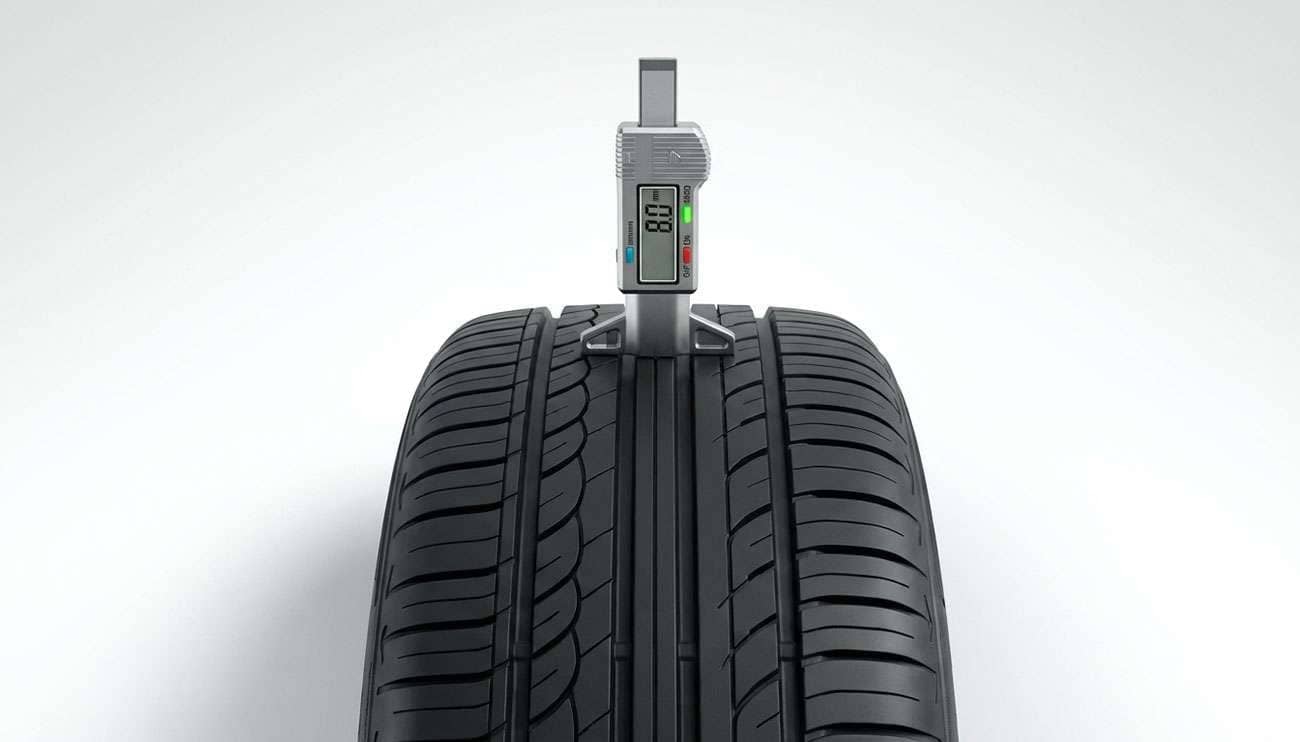
Warranty eligibility depends on remaining tread depth. Tires reach the legal wear limit at 2/32" of remaining tread depth, visible when tread blocks wear down to the built-in wear indicators.
For treadwear warranty claims, all four tires typically must be worn to 2/32" of remaining tread depth. Tires must show even wear across the tread - any difference of 2/32" or more across the main grooves can result in claim rejection.
Some manufacturers consider claims for tires with 3/32" to 4/32" remaining tread depth, projecting what the mileage would be at 2/32". Dealers use specialized gauges for accurate evaluation and may require RFV (Remaining Functional Value) measurements, sometimes with video documentation of the tire spinning on a balancing machine.

The best tire warranty becomes worthless if certain conditions aren't met. Tire manufacturers examine tires carefully before honoring claims, looking for signs that void your coverage. Knowing what invalidates your warranty helps protect your investment.
Neglecting basic tire maintenance is the most common way people void their warranty coverage. Skipping tire rotations will immediately invalidate your protection. Manufacturers require documented proof that you've followed their maintenance schedule.
Running significantly underinflated tires—such as 20 psi when you need 32 psi—immediately disqualifies any warranty claim. Failing to maintain proper alignment leads to irregular wear patterns that manufacturers recognize as user negligence rather than manufacturing defects.
Using tires beyond their design specifications automatically terminates warranty protection. This includes:
Commercial use when tires are designed for personal vehicles
Using tire sizes not recommended by your vehicle manufacturer
Vehicle modifications including lift kits or non-standard suspension components
Manufacturers can identify when tires have been used inappropriately through examination of wear patterns and damage indicators.
Certain activities instantly eliminate warranty protection:
Racing or competitive driving events will void your coverage, as will burnouts and drifting. Even though some vehicles are designed for off-road use, extreme off-roading invalidates standard tire warranties. Using snow chains or studs improperly can damage tires in ways not covered by warranties.
Tire warranties protect against manufacturing defects—not damage from user choices or driving conditions outside normal parameters.
Proper tire maintenance is essential to keep your warranty protection valid. Manufacturers require specific care standards to honor warranty claims when problems arise.
Keep your tire pressure between 28 and 36 PSI for optimal performance. Tires lose approximately 1 PSI each month, so check pressure monthly. Underinflated tires generate excess heat and reduce load capacity. Visual inspection won't tell you if pressure is correct.
Tire rotations should occur every 5,000-8,000 miles or every six months. This practice ensures even tread wear, extends tire life, and maintains proper suspension performance. Schedule alignment checks once or twice yearly to prevent irregular wear patterns.
Save every receipt and invoice from tire services. Organize documentation in a dedicated folder, whether physical or digital. Record your vehicle's mileage at each service appointment. Documentation is crucial for mileage warranty claims.
Check your tires monthly and before extended trips. Watch for excessive wear, low pressure, or damage such as cuts, bulges, and cracks. The quarter test works well—when you can see Washington's head, tread depth is around 4/32" and replacement time approaches.
Regular maintenance protects your warranty investment and ensures you get maximum value from your tire purchase.
Understanding tire warranties makes a real difference when purchasing new tires. These warranties offer valuable protection for your investment, potentially saving you hundreds of dollars over your tires' lifetime.
Tire manufacturers provide coverage lasting 4-6 years, protecting against manufacturing defects, premature tread wear, and sometimes road hazards. This protection requires proper maintenance on your part. Regular rotations, consistent pressure checks, and documented service records are essential for preserving your warranty coverage.
Documentation is your most powerful tool when filing warranty claims. Without proper purchase receipts and maintenance records, even the best warranty becomes worthless. Create a dedicated system for tracking all tire-related services from day one.
Different warranty types serve specific purposes. Treadwear warranties protect against premature wear, while road hazard coverage shields against unpredictable damage. Workmanship warranties address manufacturing flaws, and trial periods allow risk-free testing. Examining all coverage options before purchase helps you select tires with protection that matches your driving habits.
Your driving habits determine which warranty features matter most. City drivers might prioritize road hazard protection, while highway commuters could benefit more from generous mileage warranties. Taking time to evaluate your specific needs helps maximize the value of your tire purchase.
Warranties add value, but they require vigilance. Regular inspections for signs of wear or damage help catch problems early while they're still covered. Maintaining proof of proper care ensures manufacturers honor their commitments when issues arise.
When you shop for tires, look beyond just price and performance. Your warranty deserves consideration as part of the total value equation. Armed with this knowledge, you can confidently protect your tire investment for years to come.
Understanding tire warranties can save you hundreds of dollars and protect your investment throughout your tires' lifespan.
Most new tires include 4-6 year warranties covering manufacturing defects, with some offering mileage guarantees up to 100,000 miles
Proper maintenance is essential - regular rotations every 5,000-8,000 miles and monthly pressure checks prevent warranty voidance
Keep detailed records of all purchases and maintenance services, as documentation is required for successful warranty claims
Different warranty types serve specific purposes: treadwear for longevity, road hazard for damage protection, and satisfaction guarantees for risk-free trials
Prorated coverage means you receive credit based on remaining tread life, with free replacement typically offered in the first year
Remember that warranties protect against manufacturing defects, not damage from improper use, racing, or neglected maintenance. By following manufacturer guidelines and maintaining proper documentation, you can maximize the value of your tire warranty coverage.
Most new tire warranties last between 4-6 years from the date of purchase or until the tread wears down to 2/32 of an inch, whichever comes first. Some manufacturers offer mileage warranties ranging from 50,000 to 80,000 miles, depending on the tire model and brand.
A standard tire warranty typically covers defects in materials and workmanship. It may also include treadwear or mileage warranties, uniformity warranties, and in some cases, road hazard protection. Some manufacturers offer satisfaction guarantees with 30-60 day trial periods.
To maintain your tire warranty, keep your tires properly inflated, rotate them regularly (every 5,000-8,000 miles), align your wheels as needed, and inspect your tires monthly for signs of wear or damage. Most importantly, keep detailed records of all tire-related services and maintenance.
Several factors can void a tire warranty, including improper maintenance, lack of regular rotations, using tires for purposes beyond their design (like racing or extreme off-roading), and damage from improper use of snow chains or studs. Significant underinflation or overloading can also invalidate warranty coverage.
To file a warranty claim, you'll need to provide the original purchase receipt, tire rotation records, and vehicle information. Claims are typically processed through the original place of purchase or an authorized dealer. If your claim is approved, you may receive a prorated credit based on the remaining tread life, which can be applied towards the purchase of new tires.



