Selecting the wrong custom car wheels can seriously impact your vehicle's performance and even cause expensive damage. When it comes to choosing wheels for your car, understanding materials, specifications, and fitment requirements becomes essential for making the right decision.
The choices can feel overwhelming. Cast aluminum makes up approximately 90% of factory wheels, while forged options weigh 25-30% less. Each material offers different benefits depending on your driving needs and budget. We've put together this complete guide to walk you through everything you need to know about buying wheels for your car.
At Performance Plus Tire, we understand that selecting aftermarket wheels requires more than just picking an attractive design. Proper fitment involves critical measurements, material considerations, and matching wheels to your specific driving style. Our expert team has helped thousands of customers find the perfect wheels for their vehicles.
The guide covers all the essential factors for choosing custom wheels that fit perfectly and perform exactly as you need them to. From understanding wheel components to calculating load ratings, you'll have the confidence to select wheels that enhance both your vehicle's appearance and capabilities.
Walk into any wheel shop and ask for "rims," and you'll likely get what you need. The terminology gets used interchangeably in casual conversation, but understanding the actual difference between wheels and rims becomes critical when ordering aftermarket wheels or discussing repairs with a professional.
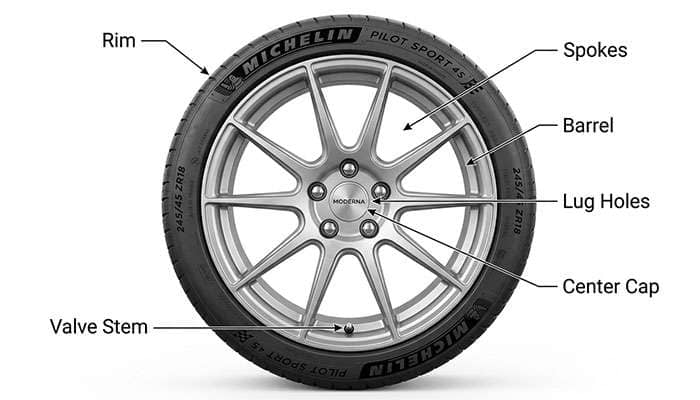
The rim represents just one component of the complete wheel assembly. When you look at custom car wheels, you're seeing an entire system of parts working together. The rim specifically refers to the outer edge of the wheel where the tire mounts. It forms the circular boundary that holds the tire bead in place and maintains an airtight seal.
A complete wheel assembly consists of several integrated components:
Rim: The outer edge holding the tire in place, maintaining air pressure through proper sealing
Hub: The central section connecting the wheel to your vehicle's axle, secured with lug nuts
Spokes: The structural arms connecting the hub to the rim, distributing weight and providing the wheel's distinctive appearance
Center Cap: The removable cover in the wheel's center, typically displaying the manufacturer's logo while protecting lug nuts and keeping dirt away from wheel bearings
Barrel: The cylindrical section of the wheel that the tire wraps around, creating the mounting surface
Valve Stem: A small metal stem allowing tire pressure monitoring and air inflation
Lug Holes: The openings surrounding the center where lug nuts secure the wheel to the vehicle, typically numbering 4, 5, 6, or 8 depending on the application
The barrel sits against the tire to retain air pressure. Spokes serve dual purposes: they maintain structural integrity while defining the wheel's visual character. When shopping for wheels for your car, recognizing these components helps you communicate specific needs or damage concerns to professionals.
Miscommunication costs time and money when ordering custom car wheels. Using "rim" and "wheel" interchangeably might work in conversation, but precision matters when placing orders or describing damage to a shop.
Consider this scenario: if your rim gets bent from hitting a pothole, you might only need rim repair rather than complete wheel replacement. The rim takes the initial impact after force passes through the tire. A cracked rim may qualify for repair, whereas damaged spokes or a compromised hub requires replacing the entire wheel assembly.
When buying aftermarket wheels, vendors need exact specifications. Asking for "rims" when you need complete wheel assemblies could result in receiving incomplete parts. Similarly, describing damage accurately determines whether you face a minor repair bill or a full replacement cost.
Road salt corrodes rims over time, particularly in areas experiencing harsh winters. Knowing whether the corrosion affects only the rim or has spread to other wheel components influences the repair approach. The distinction becomes especially important when researching how to buy wheels for your car online, where precise terminology ensures you order the correct parts.
Understanding wheel anatomy also clarifies why certain custom car wheels designs cost more than others. Multi-spoke designs require more intricate manufacturing than simple spoke patterns. The barrel depth affects tire fitment options. These details matter when evaluating custom car wheels prices and determining which features justify higher costs for your specific application.
Manufacturing processes determine whether custom car wheels enhance or limit your vehicle's capabilities. The method used to create aftermarket wheels affects weight, strength, and price - three factors that directly impact your driving experience.
Cast wheels dominate the market through a simple production method where molten aluminum pours into molds to cool and harden. This cost-effective process creates affordable wheels, though they carry more weight than other aluminum options. The casting process results in a random grain structure within the aluminum material.
Manufacturers can quickly replicate identical wheels from the same mold, keeping production costs low. Cast wheels offer the best balance between performance improvements and reasonable cost, making them popular among drivers seeking upgrades without breaking the bank. Budget-conscious drivers save significantly with cast aluminum wheels costing approximately 70-80% less than steel alternatives.
Forged wheels start as solid aluminum blocks heated and compressed under 8,000 to 10,000 tons of pressure. This compression aligns the metal's grain structure, eliminating porosity and creating denser material. The results speak for themselves: forged wheels typically weigh 10-20% less than comparable cast wheels.
The manufacturing process creates exceptional structural integrity, making forged wheels the strongest option for high-performance applications. Designers can use less alloy while maintaining strength since the material gains density through forging. Forged wheels resist cracking under impact better than cast alternatives, providing superior safety margins for demanding driving conditions.
Flow-formed wheels deliver middle ground performance, starting as cast wheels before additional processing. After initial casting, manufacturers heat the wheel and spin it at high speeds while applying pressure to strengthen the barrel. This approach produces wheels approaching forged-level performance at lower costs.
The process stretches and compresses aluminum, increasing tensile strength while reducing weight. Flow-formed wheels emerge 15% to 25% lighter than traditional cast wheels. Hydraulic rollers apply pressure to the inner barrel while spinning, forcing aluminum to match a steel tool. This method creates stronger, more precise wheels than standard casting delivers.
Steel wheels provide exceptional durability through straightforward stamping processes. They withstand extreme conditions without cracking or bending, making them ideal for off-road vehicles, work trucks, and harsh environments. The trade-off comes in weight: a steel wheel typically weighs 2.5-3 times more than a comparable aluminum wheel.
Heavier steel wheels actually provide better traction on snowy and icy roads during winter months. Steel wheels cost approximately 70-80% less than alloy alternatives. Their simple design and ease of repair appeal to budget-conscious drivers and fleet operators who prioritize functionality over appearance.
One-piece wheels, manufactured from a single piece of material, provide superior strength through their seamless design. The absence of joints contributes to reliability in high-performance applications. Manufacturing involves shaping a preform into the final design through flow forming or rotary forging.
Multi-piece wheels consist of two or three separate components bolted together. This modular approach allows manufacturers to mix and match different components, creating various widths and offsets from a single design. Multi-piece construction offers greater customization flexibility but may result in heavier wheels compared to one-piece alternatives.
Getting the right specifications matters more than selecting attractive spoke designs when buying aftermarket wheels. Four critical measurements determine whether custom car wheels will bolt onto your vehicle or cause clearance problems.
Bolt patterns use two numbers to describe wheel fitment. The first indicates lug count while the second specifies the diameter of the imaginary circle passing through each lug center. A 5x114.3 pattern means five lug holes spaced 114.3mm apart on this circle.
Most vehicles feature 4-, 5-, 6-, or 8-lug patterns. Measuring techniques vary by lug count. For 4-lug wheels, measure from the center of one hole directly across to the opposite hole's center. Five-lug patterns require measuring from one lug hole's center to the outer edge of the farthest hole. Six and eight-lug patterns return to center-to-center measurements across opposite holes.
Mismatched bolt patterns prevent wheel installation entirely. You cannot put any rims on any car without verifying this specification first.
Wheel diameter represents the distance between bead seat areas where tires seal onto the wheel. Width measures from inside bead seat to outside bead seat. These measurements determine which tire sizes fit your wheels for your car.
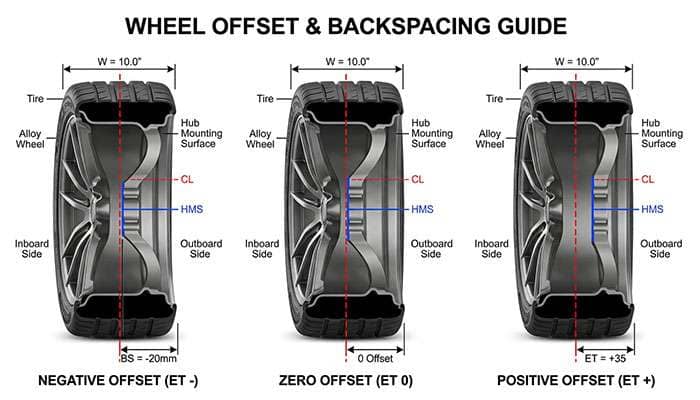
Offset measures the distance in millimeters from the wheel's centerline to the mounting surface. Three offset types exist. Positive offset positions the mounting surface toward the wheel face, pulling wheels inward. Negative offset places the mounting surface behind centerline, pushing wheels outward. Zero offset aligns the mounting surface with centerline.
Wrong offset creates clearance issues or reduces vehicle stability. New offset should stay within 5 millimeters of original specifications.
Backspacing measures in inches from the wheel's back edge to the mounting surface. Lower backspacing numbers push wheels farther from the vehicle. A wheel with 4.5 inches of backspacing positions tires farther out than one with 6 inches.
Both measurements describe the same wheel position using different reference points. Offset uses centerline while backspacing references the back edge.
Center bore diameter indicates the hole size where wheels mount onto vehicle hubs. Aftermarket wheels often feature larger center bores than factory hubs to fit multiple vehicle models.
Hub centric rings fill the gap between oversized wheel bores and smaller hubs. Without these rings, wheels rely solely on lug nuts for centering, causing steering wheel vibrations at highway speeds and uneven tire wear. Plastic rings suit street vehicles in areas with road salt, while metal rings handle high-heat racing applications better.
Matching aftermarket wheels to your actual driving style prevents costly mistakes and ensures you get the performance you need. The best custom car wheels for weekend track sessions differ significantly from those suited for daily commuting or off-road adventures.
Cast aluminum wheels serve daily drivers perfectly, offering reasonable weight savings over steel options while maintaining comfortable ride quality. They're also suitable for light off-roading applications. Staying close to factory wheel sizes delivers the best balance of comfort, handling, and tire life.
Large diameter wheels with low-profile tires create aggressive looks but reduce ride comfort on rough roads. When choosing rims for everyday use, comfort should take priority over appearance. Our experts at Performance Plus Tire can help match wheels to your daily driving requirements while maintaining the ride quality you expect.
Steel wheels excel for off-road conditions where their additional weight becomes an advantage rather than a liability. They bend rather than crack when damaged, making field repairs much easier. Budget-conscious off-roaders seeking maximum durability gravitate toward steel rims for their proven toughness.
Load ratings become critical for truck applications. Most cast wheels carry 2,000-pound ratings while forged wheels handle 2,500 to 3,500 pounds. Keep in mind that load ratings decrease as tire height increases due to added leverage on the wheel center. Beadlock wheels prevent tires from slipping off rims at low air pressures, providing secure tire-to-rim retention for serious trail driving.
Flow-formed wheels provide an excellent middle ground, reducing weight without forged-level costs. Forged rims suit drivers who regularly hit the track and demand the lightest, strongest wheels available.
Carbon fiber wheels weigh up to 50% less than aluminum alloy options without sacrificing strength. The material resists heat exceptionally well and proves five times stronger than steel. Carbon fiber wheels suit performance enthusiasts willing to invest heavily in track-focused performance.
Quality aftermarket wheels start around $750 to $1,200 for a complete set. Flow-formed options from Konig average $1,200 for 18-inch wheels. Enkei wheels range from $960 to $1,200, while Motegi flow-formed wheels cost $1,200 to $1,350.
Our wheels are also available in a range of prices to fit any budget, ensuring you can find the perfect match for your vehicle and driving needs.
Proper installation protects your investment and keeps you safe on the road. Several critical factors determine whether your custom car wheels meet legal standards and function reliably.
Calculate minimum load ratings by dividing your vehicle's Gross Axle Weight Rating by two. This determines what each wheel must safely support. Exceeding wheel load ratings can result in catastrophic structural failure, including cracks, bending, or complete wheel collapse.
Wheel load ratings appear stamped on the back side of aluminum wheels, either on spokes or near the bolt pattern. Never assume adequate tire load ratings compensate for insufficient wheel load capacity. The wheel must handle the load independently of the tire.
Wheel-off incidents occur within 175 to 3,000 miles after reinstallation, often due to loose or over-tightened lug nuts. Professional installers use calibrated torque wrenches and follow proper star-pattern tightening sequences.
Improperly installed wheels can lead to safety hazards such as wheel separation or tire blowouts. Re-torque lug nuts after 50 to 100 miles, as wheels settle and clamping force may decrease. This step is essential regardless of who performs the initial installation.
At Performance Plus Tire, our experienced technicians handle wheel installation with precision and care. We use state-of-the-art equipment to ensure your wheels are mounted correctly and perform safely.
DOT-compliant wheels feature specific markings including wheel load capacity, size, manufacturer name, date of manufacture, and part number. Street-legal vehicles require proper ground clearance, functional braking systems, and appropriate tire coverings.
Look for these markings before purchasing aftermarket wheels. Wheels without proper DOT markings may not be legal for street use and could create liability issues if involved in an accident.
Most vehicles built after 2007 include TPMS sensors. Aftermarket stems, seals, or band kits adapt stock sensors to custom rims. Programmable sensors offer flexible mounting when stock sensors don't fit new wheels.
Always recalibrate TPMS when changing tire size or load rating. Failure to recalibrate can result in inaccurate pressure readings and potential safety hazards. Our team can help ensure your TPMS system functions correctly with your new wheels.
Selecting custom car wheels that enhance your vehicle's performance and appearance requires understanding the key factors we've covered. Bolt patterns, offset measurements, and material construction all play essential roles in achieving proper fitment and optimal performance.
Material choice depends on your specific driving needs. Daily commuters benefit from cast aluminum wheels that balance performance with affordability. Track enthusiasts need the strength and weight savings of forged construction. Off-road drivers require the durability that steel wheels provide in harsh conditions.
At Performance Plus Tire, we are confident that we can provide you with the perfect set of wheels for your vehicle. Our expert team can help verify specifications and ensure proper fitment for your specific make and model. We understand that your vehicle is an extension of your personality, and the right wheels can make it stand out while delivering the performance you demand.
Take the time to measure correctly and choose quality wheels that match your driving requirements. Whether you're looking for enhanced appearance, improved performance, or both, the right custom wheels can transform your driving experience. Your vehicle deserves wheels that fit perfectly and perform exactly as you need them to.
Ready to upgrade your ride? The experts at Performance Plus Tire are here to guide you through the selection process and help you find wheels that deliver both style and performance.
Selecting the right custom car wheels requires understanding critical specifications and matching them to your specific driving needs for optimal performance and safety.
• Verify bolt pattern first - This non-negotiable measurement determines if wheels will physically fit your vehicle; mismatched patterns prevent installation entirely.
• Choose materials based on driving style - Cast aluminum suits daily drivers, forged wheels excel for track use, and steel wheels handle off-road conditions best.
• Match offset within
A rim is just the outer edge of the wheel where the tire mounts, while a complete wheel includes the rim, hub, spokes, barrel, center cap, valve stem, and lug holes. Understanding this distinction helps when ordering parts or describing damage to professionals, as you might only need rim repair rather than complete wheel replacement.
Cast aluminum wheels are ideal for daily driving, offering a good balance between performance and cost. They're approximately 70-80% less expensive than steel alternatives while providing reasonable weight savings. For everyday use, they deliver comfort and reliability without the premium cost of forged or flow-formed options.
The bolt pattern consists of two numbers: the number of lug holes and the diameter of the circle passing through their centers. For 4-lug wheels, measure center-to-center across opposite holes. For 5-lug patterns, measure from one hole's center to the outer edge of the farthest hole. This measurement is non-negotiable—mismatched patterns won't fit.
Offset measures the distance in millimeters from the wheel's centerline to the mounting surface. Positive offset pulls wheels inward, negative offset pushes them outward, and zero offset aligns with centerline. Wrong offset can cause clearance issues with suspension components or reduce vehicle stability, so new offset should stay within 5mm of original specifications.
Yes, hub centric rings are typically necessary when aftermarket wheels have larger center bores than your vehicle's hub. Without these rings, wheels rely solely on lug nuts for centering, which can cause steering wheel vibrations at highway speeds and uneven tire wear. They fill the gap between the oversized wheel bore and smaller hub for proper centering.