

Selecting the right Chevrolet Corvette Aftermarket Tires determines whether your Corvette performs as intended or becomes a source of constant frustration. Poor fitment choices lead to rubbing issues, compromised handling, and potentially dangerous driving conditions.
Corvette fitment presents unique challenges that separate it from typical wheel and tire selection. The C5 Corvette bolt pattern uses a distinctive 5x120.65 specification, requiring precise understanding of center bore dimensions at 70.3 mm. Body style variations add another layer of complexity. Base models feature narrowbody configurations, while Z06 and Grand Sport variants measure approximately 4 inches wider in front and 5 inches wider in the rear.
We've compiled this guide to walk you through the essential knowledge for Corvette tires and wheels. Our focus centers on proper fitment specifications that ensure your setup delivers both performance and reliability for your specific model.
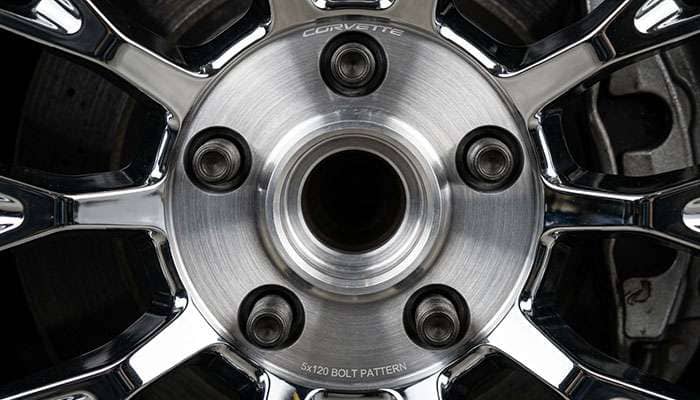
Corvette engineering demonstrates remarkable consistency across foundational specifications. Every model from the C1 generation through the C7 uses the identical 5x120.65mm bolt pattern. This consistency spans over six decades, making fitment knowledge applicable across multiple Corvette generations.
Chevrolet maintained the 5x120.65mm pattern from 1953 through 2019, encompassing the C1 through C7 generations. The C8 Corvette marked a significant departure with its adoption of the more common 5x120mm pattern. Performance variants introduce additional complexity. The ZR1 employs a 5x130mm rear bolt pattern specifically engineered to handle extreme downforce and power levels.
Center bore dimensions for the C5 Corvette measure precisely 70.3mm. This specification continues unchanged through the C6 generation. Lug thread specifications utilize M12x1.5 sizing for the C5, a standard that remained consistent from the C4 through C7 generations. The C8 switches to larger M14x1.5 hardware, supporting higher torque values. Lug torque specifications reflect this progression: 100 ft-lbs for the C5, 103 ft-lbs for the C6, and a substantial jump to 140 ft-lbs for the C8.
Base model C5 Corvettes accommodate wheel diameters from 17 to 20 inches. Factory width specifications range from 8.5 to 9.5 inches. Stock C5 base configurations feature 8.5Jx17 ET58 front wheels paired with 245/45R17 tires and 9.5Jx18 ET65 rear wheels mounted with 275/40R18 tires. Z06 variants utilize wider setups: 9.5Jx17 ET54 front wheels with 265/40R17 tires combined with 10.5Jx18 ET58 rear wheels featuring 295/35R18 tires. Aftermarket applications typically use offset ranges between +39 and +56.
The 0.65mm difference between these bolt patterns appears insignificant. This variance equals only 0.13mm per individual stud. Some owners successfully run 5x120 wheels using wobble lug nuts or hub centering rings. However, mounting 5x120mm wheels on 5x120.65mm hubs compromises proper centering. This mismatch creates vibrations at highway speeds and accelerates wear on wheel bearings and suspension components.

Body style identification determines your Corvette's wheel and tire limits before you start shopping. Understanding your specific model's configuration saves time and prevents costly fitment mistakes.
Base model Corvettes use narrowbody configurations across all generations. Z06, ZR1, and Grand Sport models feature factory widebody fenders that create additional clearance for wider wheels and tires. This extra space allows widebody models to run significantly larger rubber. Base C6 models typically accommodate 245mm front and 285mm rear tires, while widebody variants can fit 285mm fronts and 325mm rears.
Factory C5 and C6 suspension provides approximately 1 inch of total ride height adjustment. Stock positioning allows roughly half an inch of movement in either direction. Coilover systems dramatically expand this range. Base models can drop up to 2 inches, while Z06 models accept up to 1.5 inches of lowering. Air suspension offers on-demand height control but adds complexity through airlines, compressors, and electronic controls. Track builds benefit from coilovers' consistent damping characteristics. Show applications often prefer air systems for dramatic stance adjustments.
Early C5 Corvettes (1997-1999) came with 17x8.5" ET56 fronts mounting 245/45ZR-17 tires and 18x9.5" ET61 rears with 275/40ZR-18 rubber. Later models (2000-2004) kept identical tire sizes but switched to ET58 front and ET65 rear offsets. Z06 variants (2001-2004) used wider setups: 17x9.5" ET54 fronts with 265/40ZR-17 tires and 18x10.5" ET58 rears mounting 295/35ZR-18 tires.
Z06 brake systems demand minimum clearances of 18x9.5" front wheels with 53mm offset and 19x11" rear wheels with 73mm offset. Essex/AP Radical brake upgrades require 3mm spacers with specific wheel designs to prevent contact. Front brake clearance creates more fitment challenges than rear applications when installing Z06 calipers on base model Corvettes.

Selecting wheel and tire combinations requires balancing performance goals against practical limitations. Your choice between square and staggered setups fundamentally alters how your Corvette handles and performs on the road.
Square fitment runs identical wheel diameter, width, and offset on all four corners. This configuration allows tire rotation and produces neutral handling characteristics that reduce understeer tendencies. Staggered setups use wider rear wheels and tires for increased rear traction. However, staggered configurations prevent tire rotation and can induce understeer, particularly when wider rear tires overpower narrower fronts.
Standard staggered setups maintain the same diameter front and rear while varying width. Double-staggered configurations use both wider and larger diameter rear wheels, such as 18x9 fronts paired with 19x10 rears. Mild stagger uses 1.5 inches or less width difference, while aggressive stagger employs 2 inches or more.
Tire section width should measure roughly 1 to 1.4 inches wider than wheel width. A 9-inch wheel pairs with 245mm to 255mm tires, whereas a 10-inch wheel accommodates 275mm to 285mm rubber. These measurements ensure proper tire sidewall support and optimal contact patch performance.
Track applications benefit from square setups with 315/30 fronts and 335/30 rears on 18-inch wheels. Drag builds often downsize to 17/18-inch double-staggered configurations for meaty sidewalls. Browse Chevrolet Corvette aftermarket tires for performance-specific options that match your intended use.
C5 Corvettes require 0.5 to 1.5-inch diameter stagger front to rear for proper traction control and active handling function. Keep rolling diameter differences within 1-2% to maintain speedometer accuracy. Lower aspect ratios provide less sidewall cushioning but deliver sharper response and improved handling precision.
Fitment evaluation protects your investment and prevents expensive damage to your Corvette. Proper clearance calculations and testing methods eliminate guesswork and save both time and money.
Aftermarket wheels create rubbing problems on factory splash guards, especially on C8 models. Wheels using offsets below +35mm front consistently cause clearance issues. You can remove splash guards to eliminate contact, but this allows debris to collect in wheel wells. Lowered C6 Z06 models need minimum 25.75-inch floor-to-wheel-well height to prevent tire contact during suspension compression.
Backspacing determines inner clearance to suspension components. Calculate backspacing by adding 1 inch to wheel width, divide by 2, then add offset in inches for positive offset or subtract for negative offset. Remember that offset measurements use millimeters while backspacing uses inches.
Lowered Z06 models work best with -1.0 degree front camber and -0.8 degree rear camber combined with reduced toe settings. Track alignments require -2.5 to -2.8 degrees front camber with matching rear camber.
Drill factory hubs using transfer plates sized for 14mm drill bits, then press ARP-100-7717 studs. Another option uses Cadillac CTS hubs and redrilled rotors for reversible conversion.
Always check Chevrolet Corvette aftermarket tires against suspension components at full steering lock before permanent mounting.
You now have the complete knowledge needed to select the perfect wheels and tires for your Corvette. The bolt patterns, offsets, and clearance calculations form the foundation of proper fitment. Follow these specifications, and your setup will perform exactly as intended.
Test your fitment thoroughly before final installation. Don't skip the alignment adjustments for aggressive setups – they make the difference between a setup that looks good and one that performs exceptionally.
Ready to upgrade your Corvette? Explore Chevrolet Corvette aftermarket tires that match your specific driving style and performance goals. Whether you're building for the track, street, or show, proper fitment ensures your Corvette handles beautifully while delivering the aggressive stance you want.
Get the fitment right, and you'll enjoy improved handling, head-turning looks, and zero rubbing issues. Your Corvette deserves wheels and tires that perform as well as they look.
Understanding proper Corvette wheel and tire fitment prevents costly mistakes and ensures optimal performance for your specific model and driving style.
• Know your bolt pattern: C1-C7 Corvettes use 5x120.65mm, while C8 models switched to 5x120mm - this 0.65mm difference matters for proper centering and vibration-free operation.
• Identify your body style first: Base Corvettes are narrowbody, while Z06/Grand Sport models are widebody (4" wider front, 5" wider rear), dramatically affecting maximum tire width capacity.
• Choose setup based on driving goals: Square setups allow tire rotation and reduce understeer for track use, while staggered configurations provide more rear traction but prevent rotation.
• Calculate clearances carefully: Maintain 0.5-1.5" diameter stagger front-to-rear for proper traction control, and ensure backspacing clears suspension components to avoid rubbing issues.
• Test before permanent installation: Check fitment at full steering lock and suspension compression, especially on lowered vehicles where clearance becomes critical.
Whether you're building for the track, street, or show, these specifications ensure your Corvette handles properly while looking great. Remember that aggressive fitment often requires alignment adjustments and may sacrifice some comfort for performance gains.
Corvettes from C1 through C7 generations (1953-2019) use a 5x120.65mm bolt pattern. The C8 Corvette switched to the more common 5x120mm pattern. While the difference seems small at only 0.65mm, using the wrong pattern can cause vibrations and premature wear on wheel bearings and suspension components.
Base model Corvettes are narrowbody configurations, while Z06, ZR1, and Grand Sport models feature widebody fenders that are approximately 4 inches wider in front and 5 inches wider in the rear. This means widebody models can accommodate significantly larger tire widths - base models typically run 245mm front and 285mm rear tires, while widebody variants can fit 285mm fronts and 325mm rears.
Square setups use identical wheel sizes on all four corners, allowing tire rotation and producing neutral handling with reduced understeer. Staggered setups feature wider rear wheels and tires for increased rear traction but prevent tire rotation and can induce understeer. Square setups work well for track use, while staggered configurations suit street driving with more rear grip.
To calculate backspacing, add 1 inch to your wheel width, divide by 2, then add the offset in inches for positive offset or subtract for negative offset. This calculation helps ensure proper inner clearance to suspension components. Wheels with offsets below +35mm in the front often create clearance problems, especially on lowered vehicles.
Base C5 Corvettes (1997-2004) use 245/45ZR-17 front tires on 17x8.5" wheels and 275/40ZR-18 rear tires on 18x9.5" wheels. The C5 Z06 (2001-2004) runs wider configurations with 265/40ZR-17 fronts on 17x9.5" wheels and 295/35ZR-18 rears on 18x10.5" wheels to accommodate its increased performance capabilities.



